

OBD-II Code B1750: Manufacturer-Specific Circuit Fault (Turn Signal or Power Seat)
What B1750 means, why it triggers, and how to fix it like a pro
- Code B1750 is manufacturer-specific: on Subarus it means a shorted turn signal switch, while on GM vehicles it points to a failed power seat switch.
- Test the switch connector for 12V with the switch off; a 12V reading confirms a wiring short, while a 0V reading confirms the switch itself is dead.
- Never authorize a $1,000+ Body Control Module (BCM) replacement without first ruling out a $50 switch or a chafed wire.
- If you own a Toyota, stop diagnosing body circuits—code P1750 is a powertrain code indicating a Brake ECU Malfunction.
What Does B1750 Mean?
OBD-II code B1750 is a manufacturer-specific body control module (BCM) code indicating a fault in a body electrical circuit. Its meaning changes significantly depending on the vehicle's make. It most commonly points to a 'short to battery' in the right front turn signal circuit on Subaru vehicles, or a short in the driver's power seat adjustment switch circuit on General Motors vehicles. A 'short to battery' means a circuit receives unwanted voltage from a power source, causing a component to stay on when it should be off.
Technical definition: The SAE/ISO definition for B1750 is manufacturer-dependent. Subaru defines it as 'Right Front Turn Signal Circuit Short to Battery.' General Motors defines it as 'Driver Seat Rear Down Switch Circuit Short to Battery.' Toyota uses a similar-looking powertrain code, P1750, for a 'Brake ECU Malfunction,' which is completely unrelated.
Can I Drive With B1750?
Yes, But With Caution. Driving is possible, but creates a safety risk and is often illegal. A non-working turn signal significantly increases accident risk because other drivers cannot anticipate your movements. Hand signals are invisible at night and fail to meet legal requirements in many jurisdictions, risking a $100-$200 traffic ticket. An inoperative power seat becomes a safety hazard if you cannot achieve a proper driving position for full vehicle control. There is no risk of mechanical damage to the engine or transmission.
Common Causes
- Faulty Turn Signal / Multifunction Switch (Very Common) — The internal contacts of the switch controlling the turn signals wear out or break, causing a short circuit. This is the most frequent cause for Subaru and Ford vehicles logging this code.
- Defective Power Seat Switch (Very Common) — Specific to GM vehicles, the driver's seat adjustment switch fails internally. Plastic components and electrical contacts break from frequent use, creating a short that disables one or more seat functions.
- Shorted Wiring or Damaged Harness (Common) — A wire in the turn signal or power seat circuit rubs through its insulation and touches a power source. This happens in the steering column, under the seat, or at a connector due to vibration.
- Corrosion in Bulb Socket or Connectors (Common) — Moisture intrusion into the turn signal housing causes green or white corrosion on the bulb socket. This corrosion creates unintended electrical paths that the BCM interprets as a short circuit.
- Incorrect or Faulty Turn Signal Bulb (Less Common) — Installing an LED bulb without a proper load resistor alters the circuit's resistance and triggers a fault. A defective aftermarket bulb with an internal short also causes this code immediately after replacement.
- Bad Ground Connection (Less Common) — A loose or corroded ground wire prevents electrical current from returning to the battery properly. This creates high resistance and unusual voltage readings that mimic a short to power.
- Faulty Body Control Module (BCM) (Rare) — An internal failure in the BCM's driver incorrectly reports a short or fails to control the circuit. Consider this only after exhaustively ruling out wiring, switches, and bulbs.
Symptoms
- Right front turn signal stays on continuously or fails completely — The turn signal light remains lit even when the switch is off (short to power), or fails to illuminate entirely due to a blown fuse.
- Driver's power seat fails in one or more directions — On GM vehicles, the seat refuses to move in the specific direction controlled by the shorted switch, or multiple functions fail simultaneously.
- Rapidly blinking turn signal indicator ('hyper-flash') — The dashboard turn signal indicator blinks twice as fast as normal, indicating a bulb is out or the circuit has a resistance problem.
- Blown fuse for lighting or body accessories — A direct short to ground causes excessive current draw, instantly blowing the fuse for the affected system.
- Smoke or burning smell from the steering column or under the seat — A severe direct short circuit overheats wiring insulation, producing a distinct burning plastic smell or visible smoke.
Diagnostic Flowchart
Tap your situation to follow the diagnostic path that matches what you're seeing on this code.
Common Fixes & Costs
- Replace the Multifunction/Turn Signal Switch — Parts: $85-$150, Labor: $100-$150, ~1.0 hr book time (Intermediate)
- Replace the Power Seat Switch — Parts: $30-$80, Labor: $50-$100, ~0.5 hr book time (DIY)
- Replace the Turn Signal Bulb and/or Socket — Parts: $10-$40, Labor: $0-$50, ~0.3 hr book time (DIY)
- Repair Shorted Wiring — Parts: $10-$30, Labor: $150-$500, ~3.0 hr book time (Professional)
- Clean or Repair Ground Connection — Parts: $5-$15, Labor: $0-$75, ~0.5 hr book time (DIY)
Used vs. New Parts: Buying Guide
When a used part is worth it: A used OEM part from a salvage yard is a great value for older vehicles needing a common GM power seat switch or Subaru multifunction switch.
Donor-vehicle mileage cap: roughly under 100000 miles for the part to have meaningful remaining life.
Donor quality checklist:
- Match the part number exactly, as identical-looking switches often have different internal wiring.
- Avoid donors from flood-damaged vehicles or heavy rust-belt regions to prevent pre-existing corrosion.
- Ensure the salvage yard offers a minimum 30-day return policy.
Decision logic:
- If The vehicle is newer and the part is a known high-failure item → Buy a new OEM or premium aftermarket part to secure a warranty and guarantee longevity.
- If The vehicle is over 10 years old and the new OEM part costs over $150 → Purchase a used OEM part, which often outlasts cheap, low-tier aftermarket alternatives.
- If The part requires removing the steering wheel and airbag for installation → Buy a brand new part to avoid repeating a high-risk, labor-intensive installation.
Warranty tradeoff: Used parts offer a 30-90 day warranty covering only the part. New aftermarket parts offer 1-year to lifetime warranties. New OEM parts carry a 1-2 year warranty.
Worst-case if a used part fails: $200-$400 if a used part fails, requiring you to pay for repeat labor and a second replacement part.
What Happens If You Wait — Timeline
- 0-1 month: Symptom appears (e.g., turn signal stays on). The short is active when the ignition is on, causing a safety issue but no secondary damage. (MPG impact: 0%% · Added cost: $0)
- 1-4 months: The constant short creates a parasitic draw. The battery drains overnight, requiring jump-starts and straining the alternator. (MPG impact: 1-2%% · Added cost: $20-$50)
- 4-8 months: Repeated deep discharge cycles cause battery sulfation. The battery permanently loses capacity and requires replacement. (MPG impact: 1-2%% · Added cost: $150-$300)
- 8+ months: Constant current flow overheats wire insulation, melting it and causing shorts in adjacent wires or destroying the BCM. (MPG impact: 1-2%% · Added cost: $800-$2000)
Cost of Not Fixing It
- Immediate: Safety hazard due to inoperative turn signals, increasing accident risk and potential traffic tickets. (Added cost: $100-$200)
- 0-3 months: A 'short to power' causes a parasitic battery drain, leading to a dead battery and alternator strain. (Added cost: $150-$300)
- 3+ months: A persistent electrical short overheats wires, melts insulation, and destroys the Body Control Module (BCM). (Added cost: $800-$2000)
Diagnosis Steps
- Verify the Fault and Check for Other Codes
Confirm the symptom (e.g., turn signal stays on, seat won't move). Use an OBD-II scanner to read BCM codes. Note any communication codes (U-codes) or related component codes (like B1755 on GM), as these dictate the diagnostic path.
Tools: OBD-II Scan Tool (with BCM capability) (Beginner) - Inspect the Bulb, Socket, and Fuses
For turn signal issues, visually inspect the right front bulb for a broken filament and the socket for green corrosion. Check the vehicle's fuse box for blown fuses related to lighting or seats and replace them.
Tools: Flashlight, fuse puller (Beginner) - Perform a System Behavior Test
For a turn signal issue, activate the hazard lights. If they work correctly, the bulb and direct wiring are fine, isolating the problem to the multifunction switch. For a power seat, test all directions; failure in only one direction isolates the fault to that specific switch contact.
Tools: None (Beginner) - [PRO TIP] Test Switch Inputs and Circuit Voltage
Disconnect the multifunction or power seat switch. Using a multimeter set to DC Volts, probe the signal wire pin in the connector. With the switch deactivated, it must read 0V. If you read ~12V, a 'short to power' exists in the wiring harness. If it reads 0V, test the switch itself for continuity; infinite resistance (OL) when pressed confirms the switch is dead.
Tools: Multimeter, vehicle-specific wiring diagram (Advanced) - Visually Inspect Wiring Harnesses
If the switch tests good, inspect the wiring going to the turn signal housing or under the driver's seat. Look for chafed insulation, pinched wires, or stretched harnesses, especially where wires pass through the firewall or bend around seat tracks.
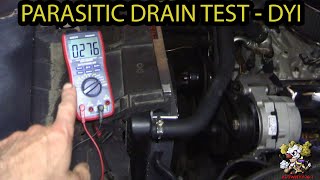
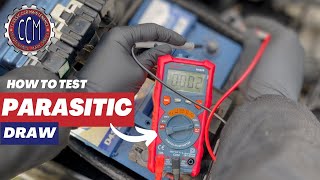
Tools: Flashlight, inspection mirror (Intermediate) - [PRO TIP] Parasitic Draw Test to Isolate the Short
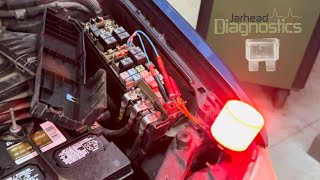
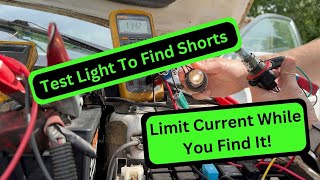
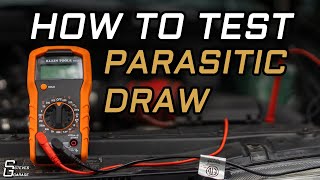
Disconnect the negative battery terminal and connect a multimeter in series set to Amps. Wait 30 minutes for modules to sleep. If the draw exceeds 85 milliamps, pull fuses one by one. The fuse that drops the amperage powers the shorted circuit, narrowing your search.
Tools: Multimeter with Amp function (Advanced) - [PRO TIP] Voltage Drop Test on Ground Circuit
Set a multimeter to DC Volts. Connect the black probe to the negative battery terminal and the red probe to the ground wire pin at the component's connector. Activate the circuit. A reading above 0.1V indicates high resistance in the ground circuit, which must be cleaned.
Tools: Multimeter (Advanced) - Isolate the BCM
Disconnect the wire for the affected circuit at the BCM connector. Check for voltage on the BCM output pin. If voltage is present when the circuit is commanded OFF, the BCM has an internal fault. Perform this only after ruling out all wiring and switch failures.
Tools: Advanced scan tool, multimeter, wiring diagram (Professional)
When This Code Triggers (Freeze-Frame Conditions)
- Battery Voltage: 11.5V - 14.5V (The fault logs during normal vehicle operation, not during a low-voltage engine cranking event.)
- Ignition Status: RUN (The code sets when the ignition is on and the BCM actively monitors the body circuits.)
- Component Status: OFF (The fault is detected when the component is commanded OFF, but the BCM still detects voltage on the circuit.)
- Fault Frequency Counter: >1 (The BCM logs how many times the fault occurs, distinguishing between an intermittent glitch and a hard failure.)
Related Codes
- B1755 — On GM vehicles, this code for 'Driver Seat Assembly Forward Switch Circuit Malfunction' appears alongside B1750. Seeing both confirms the entire seat switch assembly has failed.
- B1446 — A body code for 'Wiper Rear Motor Run Relay Circuit Short.' If it appears with a turn-signal B1750, it points to a failed multifunction switch, which controls both systems.
- U0140 — Indicates 'Lost Communication With Body Control Module.' If present, diagnose U0140 first. B1750 is just a symptom of the BCM being offline due to a power or network failure.
- B132B — On Ford vehicles, this code for 'Turn Signal Switch - Circuit Short To Battery' is the direct equivalent of B1750, requiring the same multifunction switch diagnosis.
Climate & Environmental Factors
- High Humidity / Salt Belt Regions: Moisture and road salt accelerate corrosion on electrical connectors and ground points, creating unintended electrical paths that trigger short codes.
- Extreme Cold: Plastic wiring insulation and switch components become brittle in sub-zero temperatures, making them susceptible to cracking and creating short circuits when operated.
How to Talk to a Mechanic About This Code
Say this: "I have a [Year/Make/Model] with a B1750 code. My symptom is [e.g., 'the right turn signal stays on' or 'the seat won't move']. Please start by testing the switch and related wiring for a short before considering a BCM replacement."
This directs the technician to the most likely and cheapest fixes first, preventing them from immediately quoting an expensive BCM replacement.
Avoid saying:
- 'My car has an electrical problem, can you fix it?' (Invites a lengthy, expensive diagnostic process).
- 'Just replace the turn signal switch.' (The problem could be the wiring; always require a diagnosis).
- 'Do whatever you think is best.' (Surrenders control over the repair cost).
Questions to ask before authorizing the repair:
- Did you test the switch for continuity and check for voltage on the signal wire?
- If it is a wiring short, exactly where did you find the damaged wire?
- Can you provide a detailed estimate breaking down parts and labor?
- What is the warranty on both the part and the labor?
Where to Take It: Dealer vs Independent vs Chain
- Dealer:
Recommended only for warranty work or known software updates. Otherwise, it is an unnecessarily expensive option.
Best for: Vehicles under warranty., Complex cases requiring a manufacturer-specific software reprogram of the BCM.
Downsides: Highest labor rates., Often defaults to replacing expensive modules rather than repairing wiring. (Typical cost: +50% vs. baseline) - Independent Shop:
Best overall fit. An experienced independent technician diagnoses switch and wiring faults much more cost-effectively than a dealer.
Best for: Out-of-warranty vehicles needing common switch replacements., Shops specializing in auto electrical diagnostics.
Downsides: Expertise varies. Vet the shop by reading reviews specifically mentioning electrical work. (Typical cost: +0% vs. baseline) - Chain Shop:
AVOID for diagnostics. Use only if you have already diagnosed the problem yourself as a bad bulb.
Best for: Simple bulb or fuse replacements.
Downsides: Technicians lack specialized experience for tracing electrical shorts., High pressure to upsell leads to unnecessary parts replacement. (Typical cost: -10% vs. baseline)
When to Walk Away From the Repair
If the estimated repair cost exceeds 40% of the car's private-party value, seriously consider selling the car as-is.
- Car worth $5000, fix is $250: Fix it. A switch replacement is a minor cost that restores critical safety functionality.
- Car worth $8000, fix is $1500: Get a second opinion. This quote likely involves an unnecessary BCM replacement. An electrical specialist can likely fix the wiring for under $500.
- Car worth $3000, fix is $800: Borderline. Consider the car's overall condition and any other needed maintenance before proceeding with a complex wiring repair.
What Scan Tool You Need for This Code
Minimum: A scanner capable of reading and clearing Body Control Module ('B') codes. Basic $20 code readers are insufficient.
A cheap code reader cannot communicate with the BCM. It will show 'No Codes Found' while the B1750 fault remains active.
Budget: BlueDriver Pro Scan Tool (~$100) — Connects via Bluetooth to read and clear BCM codes, view freeze-frame data, and confirm the fault.
Mid-range: Foxwell NT510 Elite (~$180) — Offers manufacturer-specific software and bidirectional controls to actively test components, confirming if a switch is at fault.
Professional: Autel MaxiCOM MK808BT (~$500) — Provides full BCM access and robust bidirectional controls to command circuits on and off, isolating the exact point of failure.
Rent vs buy: Auto parts store loaner tools rarely read B-codes. Buying a BlueDriver or Foxwell is a necessary investment for DIY electrical diagnostics.
How to Clear the Code After You Fix It
- Fix the underlying electrical fault (e.g., replace the switch or repair the wire).
- Use an OBD-II scan tool capable of reading BCM codes to clear the B1750 fault.
- Cycle the ignition off and then on.
- Operate the repaired component 5-10 times to ensure the code does not return.
Drive cycle (~15 minutes): A specific drive cycle is not required. A 15-minute drive with normal operation of the vehicle's accessories is sufficient to verify the repair.
Readiness monitors affected: None
Watch out for:
- Using a basic $20 code reader fails because it cannot communicate with the Body Control Module to clear the code.
- Disconnecting the battery clears the active memory, but the code returns immediately if the short circuit remains.
- Clearing the code without fixing the problem is useless; the BCM detects the short instantly upon startup.
Will This Fail Emissions / State Inspection?
No — by itself this code doesn't fail OBD inspection (but it can keep readiness monitors from setting, which causes a separate fail).
- California: B1750 does not fail the OBD-II smog check, but an inoperative turn signal fails the separate vehicle safety inspection.
- New York: New York combines emissions and safety inspections. An inoperative turn signal results in an automatic safety failure.
- Texas: In counties requiring safety inspections, all turn signals must function. A B1750 code causing a light failure leads to a failed inspection.
Most Commonly Affected Vehicles
- Subaru Forester (2015-2018) — Highly prone to right front turn signal circuit issues caused by a failed multifunction switch (OEM Part #83115SJ000).
- Subaru Outback (2015-2019) — Frequently logs B1750 for a 'Right Front Turn Signal Circuit Short to Battery' due to multifunction switch failure.
- Chevrolet Silverado, Tahoe, Suburban (2007-2014) — The code almost exclusively points to a fault in the driver's 8-way power seat switch assembly (OEM Part #12451497).
- GMC Sierra, Yukon (2007-2014) — Shares the GM platform and suffers identical power seat switch failures as Chevrolet models.
- Ford F-150 (2011-2014) — Known for failures in the non-latching multifunction switch that cause identical short-to-power symptoms.
- Toyota Corolla, Vitz, Premio (2000-2024) — IMPORTANT: Toyota logs P1750 (powertrain code) for a 'Brake ECU Malfunction.' This is completely unrelated to the B1750 body code.
- Cadillac Escalade (2007-2014) — Logs B1750 for a 'Driver Seat Rear Down Switch Circuit Short to Battery' fault, requiring the same switch replacement as Chevy/GMC.
Manufacturer-Specific Notes
- Subaru: B1750 is almost exclusively a right front turn signal short caused by the multifunction switch. Subaru has a history of switch-related electrical vulnerabilities, including major recalls for inhibitor and brake light switches.
- General Motors (Chevrolet, GMC, Cadillac): B1750 is tied to the driver's power seat switch. On 2021+ models, TSB #21-NA-131 notes a software glitch makes the seat inoperative, mimicking a failed switch and requiring a dealer reprogram.
- Ford: 2013-2014 F-150s use a unique 'non-latching' electronic multifunction switch that returns to center after pressing. These fail frequently but cannot be swapped for the older, reliable latching style due to wiring differences.
- Toyota: Toyota does not use the B1750 body code. They use the P1750 powertrain code for a 'Brake ECU Malfunction,' requiring diagnosis of the ABS and wheel speed sensors.
Real Owner Stories
2016 Subaru Forester at 75,000 miles
The right front turn signal indicator stayed on solid when headlights were on, but the external bulb did not work.
What they tried:
- Replaced the right front turn signal bulb.
- Checked the turn signal fuse.
- Inspected the bulb socket for corrosion.
Outcome: The owner purchased an OEM multifunction switch (Part #83115SJ000) for $110 and paid an independent shop $120 for 1 hour of labor to install it. This completely resolved the issue.
Lesson: On Subarus, a turn signal staying on solid almost always points to a failed multifunction switch, not a wiring fault.
2011 Chevrolet Silverado at 130,000 miles
The driver's power seat refused to move rearward or tilt down, logging a B1750 code.
What they tried:
- Visually inspected the wiring harness under the seat for chafing.
- Checked the seat motors for obvious damage.
Outcome: The owner ordered a Dorman power seat switch (Part #901-148) for $35. They removed the seat trim panel and replaced the switch in 30 minutes, restoring full seat function.
Lesson: For 2007-2014 GM trucks, a partially-functioning power seat is a classic symptom of a failed switch, making for a cheap and easy DIY repair.
2015 GMC Yukon with intermittent issues
The power seat worked intermittently, turn signals acted erratically, and the battery drained overnight.
What they tried:
- Replaced the power seat switch, but the problem returned.
- Received a $1,200 quote from a chain shop to replace the BCM.
Outcome: An auto electric specialist found the main wiring harness pinched by aftermarket trim. The intermittent short caused the erratic behavior and parasitic drain. The shop repaired the wires for $350.
Lesson: Intermittent electrical issues affecting multiple components indicate a wiring harness problem. Always rule out wiring shorts before replacing expensive modules.
How to Prevent This Code From Triggering
- Apply Dielectric Grease to Sockets and Seals (Whenever replacing a bulb or disconnecting a connector) — Dielectric grease seals out moisture, preventing the corrosion that creates unintended electrical paths and triggers short codes.
- Periodically Clean Key Ground Connections (Every 30,000 miles or during major service) — Cleaning chassis ground points to bare metal prevents high resistance that causes erratic voltage and confuses the BCM.
- Protect Wiring Harnesses in Vulnerable Areas (During any repair or accessory installation) — Securing wiring with plastic loom prevents chafing against sharp metal edges, eliminating the primary cause of wiring shorts.
- Practice Gentle Operation of Switches (Daily habit) — Avoiding yanking the turn signal stalk or jamming the seat switch reduces mechanical stress on internal plastic components, prolonging switch life.
Frequently Asked Questions
Can I fix a B1750 code myself?
Yes, if the fix involves replacing a GM power seat switch or a simple bulb, it is a straightforward DIY job. However, replacing a multifunction switch requires removing the airbag, and tracing a wiring short requires advanced electrical knowledge. Stop DIY and take the vehicle to an auto electrical specialist if you cannot locate the short.
What does 'short to battery' actually mean?
A 'short to battery' means a wire in a circuit has an unintended connection to a 12-volt power source. This energizes the circuit constantly, causing components like turn signals to stay on when they should be off. It often results from frayed wire insulation.
Can a bad ground cause a 'short to battery' code?
Yes. A poor ground connection increases circuit resistance, causing voltage to back up onto the ground side of the circuit. The BCM misinterprets this stray voltage as a short to power.
My turn signal blinks really fast. Is that related to B1750?
Yes. 'Hyper-flashing' is the vehicle's way of indicating a bulb is burned out or the circuit has a resistance problem. This resistance fault triggers the B1750 code.
Why did the code appear after I installed LED bulbs?
LED bulbs have significantly lower resistance than standard incandescent bulbs. The BCM interprets this drop in resistance as a short circuit fault. Install a 6-ohm load resistor in-line with the LED to fix the issue.
How much does it cost to diagnose a B1750 code?
Most repair shops charge a diagnostic fee covering the first hour of labor to pinpoint the short. This fee generally ranges from $125 to $185 depending on the shop's labor rate.
What's the difference between a B1750 and a P1750?
'B' codes (B1750) refer to the Body Control Module and systems like lights and seats. 'P' codes (P1750) refer to the Powertrain Control Module. On a Toyota, P1750 points to a brake system fault, which is entirely different from a B1750 body circuit fault.
Key Takeaways
- Code B1750 is manufacturer-specific: on Subarus it means a shorted turn signal switch, while on GM vehicles it points to a failed power seat switch.
- Test the switch connector for 12V with the switch off; a 12V reading confirms a wiring short, while a 0V reading confirms the switch itself is dead.
- Never authorize a $1,000+ Body Control Module (BCM) replacement without first ruling out a $50 switch or a chafed wire.
- If you own a Toyota, stop diagnosing body circuits—code P1750 is a powertrain code indicating a Brake ECU Malfunction.
Helpful Videos
Shop the Parts Behind B1750
Below are the parts most often responsible for code B1750, ranked by how frequently each one is the actual culprit (per the diagnosis above). Tap any to see what we have for your vehicle.


The information in this article is provided for general reference and educational purposes only. Vehicle specifications, procedures, and part compatibility can vary by production date, trim level, and region. Always consult your vehicle's factory service manual and verify part numbers before purchasing or performing repairs. Safety-critical components such as airbags, seat belts, and braking systems should be installed by a qualified professional.
- 🧭 Diagnostic Flowchart
- 🎬 Helpful Videos
- 🛍️ Shop This Part
- What Does B1750 Mean?
- Can I Drive With B1750?
- Common Causes
- Symptoms
- Common Fixes & Costs
- Used vs. New Parts: Buying Guide
- What Happens If You Wait — Timeline
- Cost of Not Fixing It
- Diagnosis Steps
- When This Code Triggers (Freeze-Frame Conditions)
- Related Codes
- Climate & Environmental Factors
- How to Talk to a Mechanic About This Code
- Where to Take It: Dealer vs Independent vs Chain
- When to Walk Away From the Repair
- What Scan Tool You Need for This Code
- How to Clear the Code After You Fix It
- Will This Fail Emissions / State Inspection?
- Most Commonly Affected Vehicles
- Manufacturer-Specific Notes
- Real Owner Stories
- 2016 Subaru Forester at 75,000 miles
- 2011 Chevrolet Silverado at 130,000 miles
- 2015 GMC Yukon with intermittent issues
- How to Prevent This Code From Triggering
- Frequently Asked Questions
- Can I fix a B1750 code myself?
- What does 'short to battery' actually mean?
- Can a bad ground cause a 'short to battery' code?
- My turn signal blinks really fast. Is that related to B1750?
- Why did the code appear after I installed LED bulbs?
- How much does it cost to diagnose a B1750 code?
- What's the difference between a B1750 and a P1750?
- Key Takeaways
- 🎟️ Get 5% Off