

OBD-II Code B1763: Varies by Manufacturer (Lighting, Seat, Airbag, or Radio Fault)
What B1763 means, why it triggers, and how to fix it
- Code B1763 has at least 4 completely different definitions depending on your vehicle's manufacturer, most commonly pointing to a Mitsubishi headlight switch, Kia/Hyundai airbag sensor, or VW radio.
- If the airbag warning light is illuminated, your vehicle's Supplemental Restraint System is 100% disabled and will not deploy in a collision.
- Always check the large yellow wiring connectors under the front seats first; a loose plug causes over 50% of seat and airbag-related B1763 codes on domestic trucks and SUVs.
- Do not pay for a $3,000 full seat replacement on a Kia or Hyundai without asking the dealer to check for Technical Service Bulletins (TSBs) that allow replacing just the $200 OCS sensor pad.
What Does B1763 Mean?
Code B1763 indicates the Body Control Module (BCM) detected an electrical short or open circuit in a specific comfort or safety system. The exact system depends entirely on your vehicle's manufacturer. It most frequently points to a failed headlight switch (Mitsubishi), a damaged passenger airbag sensor mat (Kia/Hyundai), or a jammed CD player (Volkswagen).
Technical definition: The official SAE J2012 definition for B1763 is manufacturer-controlled. Common definitions include 'Lighting Switch Circuit Malfunction' (Mitsubishi), 'Seat Driver Front Down Circuit Short to Battery' (Ford/GM/Hyundai/Fiat), 'Occupant Classification System ECU Defect' (Kia/Hyundai), or 'CD Player Load/Unload Fault' (Volkswagen).
Can I Drive With B1763?
Yes, But With Caution. Yes, you can drive with this code, but with significant safety warnings. The code does not affect engine operation. However, if the airbag warning light is on, the entire Supplemental Restraint System (SRS) is disabled as a fail-safe, meaning zero airbags will deploy in a collision. If the code affects your headlights, driving at night is unsafe and illegal. Address the safety implications promptly.
Common Causes
- Damaged Wiring or Loose Connector (Very Common) — Wires under the driver's seat (for seat/airbag faults) or in the steering column (for lighting faults) get pinched, frayed, or disconnected. On many trucks and SUVs, the main wiring harness connector under the seat coming loose is the primary trigger.
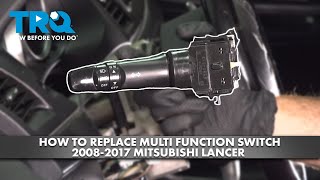
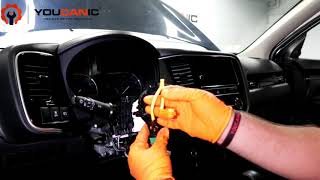
- Faulty Headlight/Combination Switch (Very Common) — The multi-function switch on the steering column that controls headlights and turn signals wears out internally or suffers cracked solder joints. This is the definitive cause for almost all Mitsubishi vehicles. 🎬 Watch: How to replace the Mitsubishi multi-function switch.
- Failed or Damaged Occupant Classification Sensor (OCS) Mat (Common) — On Kia and Hyundai models, the sensor mat in the passenger seat cushion that detects weight fails. This happens from internal wear, moisture, or physical damage caused by placing heavy, sharp objects (like toolboxes) on the seat.
- Faulty Power Seat Motor or Switch (Less Common) — The power seat adjustment switch fails, or the seat motor develops an internal short circuit, triggering a 'short to battery' fault on Ford, GM, and Fiat vehicles.
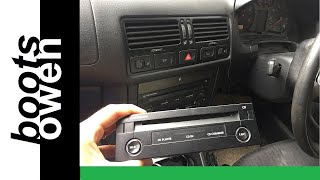
- Internal CD Player/Radio Fault (Less Common) — On Volkswagen models, this code indicates a mechanical or electronic failure within the radio head unit, such as a jammed CD loading mechanism or a failed internal motor.
- Internal OCS Control Module Failure (Less Common) — The Occupant Classification System ECU itself, a small module attached to the bottom of the seat cushion, fails electronically, triggering the same code as a faulty sensor mat.
- Blown Fuse (Rare) — A blown fuse for the affected circuit (radio, seats, SRS) sets this code. While rarely the root cause, it is the easiest first check.
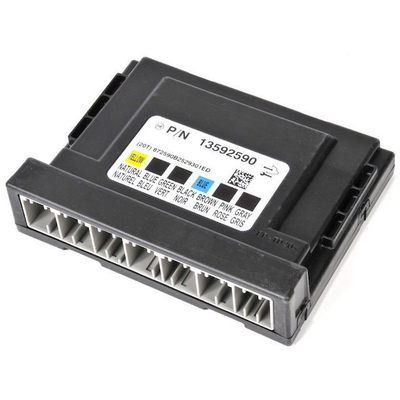
- Faulty Body Control Module (BCM) (Rare) — The BCM itself fails. Always rule out wiring and switches first, as BCM replacement requires expensive dealer programming.
Symptoms
- Airbag Warning Light is On — If the code relates to the occupant sensor, the airbag/SRS warning light illuminates. The passenger airbag 'OFF' light stays on regardless of whether someone is in the seat.
- Headlights, Fog Lights, or Turn Signals Fail — Headlights fail to turn on, or only specific functions of the combination switch (like high beams) work.
- Power Seat Controls are Inoperative — The power seat refuses to move in one or more directions.
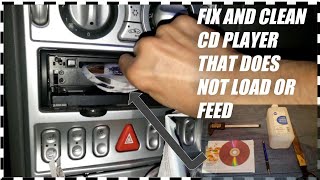
- CD Player Won't Accept or Eject Discs — The radio makes clicking noises, fails to load a CD, or displays a 'CDC Hardware Error' message.
- Check Engine Light or Warning Message — The vehicle displays a 'Service Air Bag' or similar message on the driver information center.
Diagnostic Flowchart
Tap your situation to follow the diagnostic path that matches what you're seeing on this code.
Common Fixes & Costs
- Repair Damaged Wiring or Reconnect Connector — Parts: $0-$20, Labor: $125-$200, ~1.0 hr book time (Intermediate)
- Replace Headlight Combination Switch — Parts: $40-$100, Labor: $75-$150, ~1.0 hr book time (DIY)
- Replace Passenger Seat Occupant Sensor Mat — Parts: $150-$300, Labor: $300-$450, ~2.5 hr book time (Professional)
- Replace Radio/CD Player Head Unit — Parts: $200-$500, Labor: $100-$250, ~1.2 hr book time (Intermediate)
- Replace Body Control Module (BCM) — Parts: $300-$700, Labor: $150-$400, ~2.0 hr book time (Professional)
DIY vs Professional
- Repair Damaged Wiring or Reconnect Connector — Beginner: Yes, for loose plugs. Splicing requires intermediate skills.
Tools: Flashlight, wire strippers, butt connectors, heat shrink tubing. - Replace Headlight Combination Switch — Beginner: Yes, with patience.
Tools: Screwdriver set, socket set, trim removal tools. - Replace Passenger Seat Occupant Sensor Mat — Beginner: No.
Tools: Socket set, hog ring pliers, upholstery tools, advanced scan tool for recalibration. - Replace Radio/CD Player Head Unit — Beginner: Yes.
Tools: Radio removal keys, screwdriver set, trim removal tools. - Replace Body Control Module (BCM) — Beginner: No.
Tools: Socket set, advanced bi-directional scan tool for programming.
Used vs. New Parts: Buying Guide
When a used part is worth it: Used parts make sense for simple, non-safety-critical components like a headlight switch or a basic radio head unit. They offer significant cost savings.
Donor-vehicle mileage cap: roughly under 100000 miles for the part to have meaningful remaining life.
Donor quality checklist:
- Match the part number exactly.
- Choose donors from dry climates to minimize corrosion risk.
- Verify the return policy.
Decision logic:
- If The faulty part is an airbag, OCS sensor mat, or BCM → Buy new. The high labor cost and critical safety function make the risk of a faulty used part too high.
- If The faulty part is a headlight switch or power seat switch → Buy used. Failure of a used switch is low-risk and saves money.
- If The faulty part is a VW radio with Component Protection → Buy aftermarket. Factor in the dealer cost to unlock a used OEM unit; an aftermarket radio with Apple CarPlay is often a better value.
Warranty tradeoff: Used parts from a salvage yard typically have a 30-90 day warranty. New OEM parts have a 1-year warranty.
Worst-case if a used part fails: $300-$600 (If a used OCS mat fails, you pay the 2.5 hours of labor a second time.)
What Happens If You Wait — Timeline
- Immediate: The primary function fails instantly. If it's an airbag fault, the SRS light comes on and ALL airbags are disabled. If it's a lighting fault, the headlights won't work. (MPG impact: 0%% · Added cost: $0 (Immediate high safety risk))
- 1-3 Months (If Ignored): If the fault is a 'short to battery', a continuous electrical path is created. This causes a parasitic drain that slowly kills the battery overnight. (MPG impact: 0%% · Added cost: $150 - $300 (Cost for a new battery and diagnostic time))
- 3-12 Months (If Ignored): A persistent short circuit generates excess heat, melting wire insulation or causing the Body Control Module (BCM) to fail from sustained electrical stress. (MPG impact: 0%% · Added cost: $400 - $1200 (Cost to replace a damaged BCM or wiring harness))
Cost of Not Fixing It
- Immediate (Airbag Fault): Total failure of the Supplemental Restraint System. Zero airbags will deploy in a collision, representing a critical safety risk. (Added cost: N/A (Extreme personal injury risk))
- Immediate (Lighting Fault): Failure of headlights or turn signals. This is illegal and extremely dangerous when driving at night. (Added cost: $100-$500 (Fines and potential insurance increase))
- 1-3 Months (Any Fault): A persistent short circuit creates a parasitic battery drain, leaving you stranded with a dead battery overnight. (Added cost: $150-$300 (Cost of a new battery and diagnostic time))
Diagnosis Steps
- Identify the Manufacturer-Specific Definition
Before touching the car, use a service manual or online database to determine if B1763 means a lighting, seat, airbag, or radio fault for your exact make and model. Diagnosis is impossible without this.
Tools: OBD-II Scanner, Internet Access (Beginner) - Visually Inspect Wiring and Connectors
For seat or airbag faults, look under the front seats for loose connectors (especially large yellow ones) or damaged wires. Push all connectors firmly together. For lighting faults, remove the steering column cover to inspect the switch wiring.
Tools: Flashlight (Beginner) - Check Related Fuses
Locate the fuse box and check all fuses related to the BCM, lighting, seats, SRS (airbag), and radio. Replace any blown fuses.
Tools: Owner's Manual, Fuse Puller (Beginner) - Test Component Functionality
Cycle through all functions of the suspected component. Do all headlight settings work? Does the seat move in all directions? If some functions work but others fail, the switch or motor is likely faulty.
Tools: Hands and Eyes (Beginner) - Test Circuit with a Multimeter
Unplug the failing switch and use a multimeter on the continuity setting. Test the pins corresponding to the failing function as you operate the switch. For a 'short to battery' fault, check for 12V+ on the signal wire with the key on; voltage present when it shouldn't be confirms a harness short.
Tools: Multimeter, Wiring Diagram (Intermediate) - Perform OCS Live Data Test (Airbag Faults)
[PRO TIP] For Kia/Hyundai airbag faults, use a scan tool to read SRS live data. Monitor 'Passenger Seat Status'. It should read 'Empty'. Place a 30+ lb object on the seat; the status must change to 'Occupied' within 10 seconds. If it doesn't, the OCS mat or module is faulty.
Tools: Advanced Scan Tool with SRS Live Data (Intermediate) - Perform Component Simulation Test (Airbag Faults)
[PRO TIP] Isolate an airbag component by disconnecting the battery, unplugging the component, and inserting a 2.2 Ω to 3.3 Ω resistor into the vehicle-side connector. Reconnect the battery and clear codes. If the code stays away, the bypassed component is faulty.
Tools: Appropriate Resistor (e.g., 2.2 ohm), SRS-capable Scan Tool (Advanced) - Check Live Data for VW Radio Fault
[PRO TIP] For a VW CD player fault, monitor live data from the radio module. Watch PIDs for the load/unload motor while commanding an eject. If the command sends but motor current remains zero, the internal radio mechanism is dead.
Tools: Advanced Scan Tool (VCDS/VAG-COM) (Advanced) - Test the Body Control Module (BCM)
If the component and wiring test perfectly, the BCM is suspect. Use a bi-directional scan tool to verify the BCM is receiving input signals correctly. This requires professional diagnosis.
Tools: Advanced Bi-Directional Scan Tool (Advanced)
When This Code Triggers (Freeze-Frame Conditions)
- System Voltage: 11.5-14.5V (Key On, Engine Running or Off)
- Ignition Status: ON (Fault detected during self-test at startup)
- Component Status: Open/Short/Invalid (BCM polls component and receives an out-of-range electrical reading)
- Vehicle Speed: 0 mph (Many body codes are set during the initial power-on self-test before driving)
Related Codes
- B1764 — On Mitsubishi, B1763 is 'Lighting Switch' while B1764 is 'Wiper Switch'. On GM/Ford, B1763 is 'Short to Battery' while B1764 is 'Short to Ground'.
- U0154 — Means 'Lost Communication With Restraint Occupant Classification System Module'. Seeing this with B1763 points to a dead OCS module or severed wiring, rather than a bad sensor mat.
- B00A0 — A general Ford code for 'Occupant Classification System'. B1763 acts as a sub-code to narrow the fault to a specific circuit.
- B1448 — A direct Hyundai/Kia code for 'OCS Sensor Mat Fault'. Seeing B1763 and B1448 together guarantees the passenger seat sensor pad has failed.
Climate & Environmental Factors
- High Humidity: Moisture penetrates electrical connectors and sensors, causing corrosion and intermittent short circuits. This frequently damages sensitive OCS sensors in rainy climates.
- Extreme Temperature Cycles: Repeated expansion and contraction from heat cycles causes microscopic cracks in printed circuit board solder joints, the exact cause of the massive Mitsubishi headlight switch recall.
- Cold Weather: Freezing temperatures make plastic wiring insulation and connectors brittle, causing them to crack or break when disturbed under a seat.
How to Talk to a Mechanic About This Code
Say this: "I have a [Your Vehicle Make] with an airbag light on, and my scanner shows code B1763. Based on my research, it's likely related to the Occupant Classification System. Please start by checking the under-seat connectors and for any related TSBs before quoting major parts."
This shows you've done your homework and guides the technician toward the most likely cause. Mentioning TSBs prompts them to look for manufacturer-approved, cost-effective repairs (like replacing just the OCS mat) instead of defaulting to expensive full seat replacements.
Avoid saying:
- 'My airbag light is on, can you just clear the code?'
- 'I have a B1763 code, just replace the seat.'
- 'Just fix whatever you find, I trust you.'
Questions to ask before authorizing the repair:
- What does code B1763 mean for my specific VIN?
- Did you check the wiring connectors under the seat first?
- If it's the OCS sensor, is there a Technical Service Bulletin (TSB) to replace just the sensor mat instead of the whole seat cushion?
- Does the replacement module require special programming or calibration, and is that included in the quote?
Where to Take It: Dealer vs Independent vs Chain
- Dealer:
Best for: Vehicles under warranty or covered by a recall., Complex airbag repairs requiring OCS sensor digital calibration., Volkswagen radio replacement requiring 'Component Protection' removal.
Downsides: Highest labor rates., May default to replacing large assemblies (entire seat) instead of smaller components. (Typical cost: +50% vs. baseline) - Independent Shop:
Best for straightforward, non-airbag, or non-VW radio faults. A good choice for an OCS mat replacement IF they have the necessary calibration tools.
Best for: Out-of-warranty vehicles where the cause is well-known (Mitsubishi headlight switch, truck under-seat connector)., Owners who have self-diagnosed a simple component failure.
Downsides: Quality varies widely; ensure they are comfortable with electrical and SRS diagnostics., May lack specialized tools for OCS calibration or VW Component Protection. (Typical cost: +0% vs. baseline) - Chain Shop:
AVOID. This code's complexity and safety-critical nature are poorly suited to the chain shop business model.
Best for: Potentially getting the code read for free.
Downsides: Technicians are often inexperienced with complex electrical or manufacturer-specific diagnostics., Very likely to misdiagnose a manufacturer-specific code like B1763. (Typical cost: -10% vs. baseline)
When to Walk Away From the Repair
If the estimated repair cost for a B1763 fault exceeds 50% of your car's private-party value, seriously consider selling the car as-is or trading it in.
- Car worth $3500, fix is $2800: Walk away. A $2,800 quote for an OCS seat replacement on a car worth only $3,500 is not economical.
- Car worth $15000, fix is $750: Fix it. A $750 repair for an OCS sensor mat on a $15,000 vehicle is only 5% of its value and restores a critical safety system.
- Car worth $8000, fix is $200: Fix it. A $200 repair for a faulty headlight switch is a small price to pay for a legally required safety feature.
What Scan Tool You Need for This Code
Minimum: A scanner that reads and clears Body ('B') and SRS (Airbag) codes. A basic engine-only code reader will NOT see or clear code B1763.
A $20 engine code reader cannot communicate with the Body Control Module or the SRS module. You will get a 'No Codes Found' message while your airbag light remains on.
Budget: Autel AutoLink AL619 / ML629 (~$80) — Reads and clears engine, ABS, and SRS (airbag) codes. This is the minimum required tool to confirm the B1763 code and clear it after a repair.
Mid-range: BlueDriver Bluetooth Pro / Foxwell NT604 Elite (~$120) — Reads all modules and provides live data streaming. Live data is crucial for diagnosing OCS sensor issues by watching the passenger seat weight status change in real-time.
Professional: Autel MaxiCOM MK808Z / Launch X431 Series (~$450-900) — Full bidirectional control. This level of tool is required to perform the OCS Zero Point Calibration after replacing a sensor mat on Kia/Hyundai models.
Rent vs buy: Auto parts stores offer free code reading, but their basic tools often cannot read SRS or Body codes. You will likely need to buy at least a budget SRS-capable scanner.
How to Clear the Code After You Fix It
- Ensure the ignition is off.
- Reconnect any disconnected components (battery, airbag connectors).
- Use an SRS-capable OBD-II scan tool to clear the code from the specific module (BCM or SRS).
- Cycle the ignition on and verify the warning light turns off after the initial self-check.
Drive cycle (~15 minutes): A formal drive cycle is not required for BCM or SRS faults. The system performs a self-test every time the ignition turns on. After clearing the code, a 15-minute test drive involving normal operation of the repaired component verifies the fix.
Readiness monitors affected: None (for SRS/BCM faults), If the battery was disconnected, engine-related readiness monitors reset and require a full drive cycle to become 'Ready' for emissions testing.
Before emissions retest: drive at least 50 miles to fully set monitors.
Watch out for:
- Using a standard engine code reader, which cannot access or clear SRS/BCM codes.
- Forgetting to reconnect the battery before trying to clear the code.
- Failing to perform the OCS recalibration procedure on Kia/Hyundai vehicles after replacing a seat sensor.
Will This Fail Emissions / State Inspection?
No — by itself this code doesn't fail OBD inspection (but it can keep readiness monitors from setting, which causes a separate fail).
- California: An airbag light itself will not fail the smog check. However, California is implementing broader safety inspections that may fail vehicles with active SRS indicators.
- New York: An illuminated airbag warning light is noted during the safety inspection but is considered an advisory only and is NOT a cause for failure.
- Texas: An airbag light will not cause a failure. Safety inspections are eliminated for most non-commercial vehicles in 2025, and emissions tests ignore the airbag system.
Most Commonly Affected Vehicles
- Mitsubishi Lancer, Outlander, L200 (2003-2017) — Almost exclusively uses B1763 to indicate a failure of the lighting switch on the steering column.
- Kia Sorento, Sedona, Soul, Optima (2011-2020) — Sets B1763 for a passenger Occupant Classification System (OCS) failure. The 2015-2018 Sedona has a specific recall (SC175) for this issue.
- Hyundai Accent, Elantra, Sonata (2011-2017) — Frequently sets B1763 for an 'Occupant Classification System ECU Defect' or a 'Seat Driver Front Down Circuit Short to Battery'.
- Ram 1500, 2500 (2013-2018) — Prone to airbag codes due to a loose yellow or gray wiring connector under the front seats getting kicked.
- Chevrolet / GMC Silverado, Sierra, Tahoe (2003-2014) — Experiences seat or airbag codes from wiring harnesses under the seat getting damaged by stored items.
- Ford F-150, C-Max, Fusion (2011-2018) — Sets this code for a 'Seat Driver Front Down Circuit Short to Battery' or an OCS airbag system fault.
- Volkswagen Golf, Jetta, GTI (2006-2014) — Indicates a 'CD Player Load/Unload Fault' due to a mechanical jam inside the factory radio.
- Fiat 500 (2010-2017) — Specifically points to 'Seat Driver Front Down Circuit Short To Battery', indicating a power seat motor or wiring fault.
Manufacturer-Specific Notes
- Mitsubishi: B1763 almost exclusively points to a faulty lighting switch assembly. A massive recall covered 2003-2008 models for cracked solder joints in the switch causing intermittent light failure.
- Kia / Hyundai: Overwhelmingly tied to the Occupant Classification System (OCS). TSBs exist allowing technicians to replace only the OCS sensor pad instead of the entire $3,000 seat cushion assembly.
- Ford / GM / Ram: On trucks and SUVs, B1763 is very often caused by a simple loose wiring connector under one of the front seats getting kicked by rear passengers.
- Volkswagen: B1763 has a unique definition: 'CD Player Load/Unload Fault'. The problem is entirely mechanical within the factory radio, completely unrelated to safety or lighting systems.
Real Owner Stories
2013 Ram 1500 with 110K miles - The Easy Fix
Airbag light came on intermittently after cleaning the interior.
What they tried:
- Checked fuses related to the SRS system.
- Looked under the passenger seat with a flashlight.
Outcome: Found a large yellow connector slightly unplugged. Pushed it firmly together until it clicked. Cleared the codes with an SRS scanner, and the light stayed off. Total cost: $0.
Lesson: For any seat-related B1763 code on a truck or SUV, physically check the large wiring connectors under the front seats first. They are frequently kicked loose.
2010 Mitsubishi Lancer with 85K miles - The Misdiagnosis
Headlights would not turn on, but high beams worked. Code B1763 was present.
What they tried:
- A general mechanic saw a generic 'Seat Circuit Fault' definition and spent an hour diagnosing perfectly working power seats.
- Owner took the car to a Japanese vehicle specialist.
Outcome: The specialist immediately identified B1763 on a Mitsubishi as a faulty headlight switch. Replaced the switch assembly in under an hour. Total cost: $200. The first shop's diagnostic fee was wasted.
Lesson: A generic code definition is useless and leads to misdiagnosis. Always confirm what the code means for your exact make and model.
2015 Kia Sorento with 70K miles - The Sensor Mat Failure
Airbag light was on constantly. The 'Passenger Airbag OFF' light stayed illuminated with an adult in the seat.
What they tried:
- Checked under-seat connectors.
- Took it to the dealer. Diagnosis confirmed B1763 pointing to a faulty OCS sensor mat.
Outcome: The dealer quoted $3,000 for a full lower seat cushion. The owner found TSB BOD205 online for replacing only the sensor mat. An independent shop performed the repair for $750 using the OEM pad.
Lesson: If a dealer quotes a full seat replacement for an OCS fault, demand they check for TSBs that allow replacing just the sensor pad at a fraction of the cost.
2010 VW GTI with 120K miles - The Unusual Cause
The 6-disc CD changer stopped accepting discs and displayed 'CDC Hardware Error'. Scan revealed B1763.
What they tried:
- Searched forums and found this code is specific to the CD player on VWs.
- Disconnected the battery for 30 minutes to reset the head unit, but the fault returned.
Outcome: The internal loading mechanism failed. The owner replaced the factory radio with an aftermarket unit with Apple CarPlay for $400.
Lesson: On Volkswagen models, B1763 is completely unrelated to safety systems and points directly to a mechanical failure inside the radio.
How to Prevent This Code From Triggering
- Avoid placing heavy, sharp, or wet items on the passenger seat (Daily habit) — Prevents physical damage and moisture intrusion to the delicate Occupant Classification System (OCS) sensor mat woven into the seat cushion.
- Keep the area under the front seats clear of objects (Monthly check) — Prevents items from rolling under the seat and snagging or disconnecting the critical wiring harnesses for the power seats and airbag system.
- Apply dielectric grease to disconnected connectors (During any related repair) — Applying dielectric grease to the seal blocks out moisture and prevents corrosion, which causes high resistance faults in airbag circuits.
Frequently Asked Questions
What are common misdiagnosis mistakes for B1763?
The biggest mistake is replacing a part before confirming what the code means for that specific vehicle. For example, a technician might see a generic 'Seat Circuit' definition and replace a seat motor on a Mitsubishi, when B1763 actually means a lighting switch problem for that brand. Always verify the manufacturer-specific definition first.
Can putting heavy items on the passenger seat really cause an airbag fault?
Yes. The passenger seat contains a delicate sensor mat (the OCS) to weigh the occupant. Placing concentrated weight, like a toolbox or a heavy backpack, bends and breaks the sensitive electronic grid in the mat, causing a permanent B1763 fault.
The dealer said I need a whole new seat for an OCS fault. Is that true?
Not always. While some manufacturers only sell the entire seat cushion assembly, brands like Kia have Technical Service Bulletins (TSBs) with procedures to replace only the sensor pad. Ask the service provider to check for relevant TSBs before agreeing to a $3,000 full seat replacement.
How do I reset the airbag light after the repair is complete?
Most vehicles require a specialized OBD-II scanner with SRS capabilities to clear the code from the Restraint Control Module. A standard engine code reader will not work, and disconnecting the battery is unreliable. If the fault is truly fixed, some modern vehicles will turn the light off automatically after a few ignition cycles.
Can I fix code B1763 myself?
If the problem is a loose connector under the seat, a blown fuse, or a jammed CD, yes. Replacing the headlight switch is also a manageable DIY job. However, if the problem involves airbag components or replacing the BCM, stop DIYing and take it to a professional due to safety implications and programming needs.
How much does it cost to diagnose code B1763?
A professional shop typically charges a diagnostic fee ranging from $125 to $180 to pinpoint the exact cause of the code.
Will clearing the code fix the problem?
No. Clearing the code only turns the light off temporarily. The code and warning light return immediately upon restarting the car if the hard fault remains.
What is 'Component Protection' on a Volkswagen radio?
It is an anti-theft feature. If you install a replacement radio, it detects it is in a new vehicle and enters a protected mode with no audio output. A VW dealer must use a special tool (ODIS) to remove this protection.
Key Takeaways
- Code B1763 has at least 4 completely different definitions depending on your vehicle's manufacturer, most commonly pointing to a Mitsubishi headlight switch, Kia/Hyundai airbag sensor, or VW radio.
- If the airbag warning light is illuminated, your vehicle's Supplemental Restraint System is 100% disabled and will not deploy in a collision.
- Always check the large yellow wiring connectors under the front seats first; a loose plug causes over 50% of seat and airbag-related B1763 codes on domestic trucks and SUVs.
- Do not pay for a $3,000 full seat replacement on a Kia or Hyundai without asking the dealer to check for Technical Service Bulletins (TSBs) that allow replacing just the $200 OCS sensor pad.
Helpful Videos


Shop the Parts Behind B1763
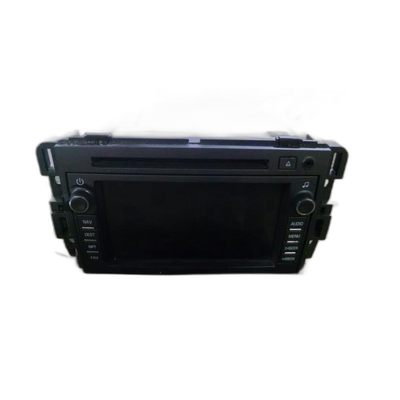
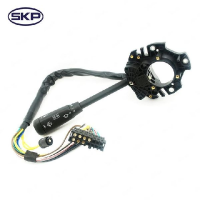
Below are the parts most often responsible for code B1763, ranked by how frequently each one is the actual culprit (per the diagnosis above). Tap any to see what we have for your vehicle.

The information in this article is provided for general reference and educational purposes only. Vehicle specifications, procedures, and part compatibility can vary by production date, trim level, and region. Always consult your vehicle's factory service manual and verify part numbers before purchasing or performing repairs. Safety-critical components such as airbags, seat belts, and braking systems should be installed by a qualified professional.
- 🧭 Diagnostic Flowchart
- 🎬 Helpful Videos
- 🛍️ Shop This Part
- What Does B1763 Mean?
- Can I Drive With B1763?
- Common Causes
- Symptoms
- Common Fixes & Costs
- DIY vs Professional
- Used vs. New Parts: Buying Guide
- What Happens If You Wait — Timeline
- Cost of Not Fixing It
- Diagnosis Steps
- When This Code Triggers (Freeze-Frame Conditions)
- Related Codes
- Climate & Environmental Factors
- How to Talk to a Mechanic About This Code
- Where to Take It: Dealer vs Independent vs Chain
- When to Walk Away From the Repair
- What Scan Tool You Need for This Code
- How to Clear the Code After You Fix It
- Will This Fail Emissions / State Inspection?
- Most Commonly Affected Vehicles
- Manufacturer-Specific Notes
- Real Owner Stories
- 2013 Ram 1500 with 110K miles - The Easy Fix
- 2010 Mitsubishi Lancer with 85K miles - The Misdiagnosis
- 2015 Kia Sorento with 70K miles - The Sensor Mat Failure
- 2010 VW GTI with 120K miles - The Unusual Cause
- How to Prevent This Code From Triggering
- Frequently Asked Questions
- What are common misdiagnosis mistakes for B1763?
- Can putting heavy items on the passenger seat really cause an airbag fault?
- The dealer said I need a whole new seat for an OCS fault. Is that true?
- How do I reset the airbag light after the repair is complete?
- Can I fix code B1763 myself?
- How much does it cost to diagnose code B1763?
- Will clearing the code fix the problem?
- What is 'Component Protection' on a Volkswagen radio?
- Key Takeaways
- 🎟️ Get 5% Off