

OBD-II Code B1788: Passenger Airbag System Fault
What B1788 means, why it triggers, and how to fix it
- Code B1788 completely disables the passenger-side airbag, requiring you to keep the front seat empty until repaired.
- On Toyota and Lexus vehicles, a $100-$200 Zero Point Calibration software reset fixes this code 80% of the time without replacing parts.
- If you own a 2020-2022 Subaru Outback or Legacy, B1788 is the primary trigger for Safety Recall WRA-24, entitling you to a free sensor replacement at the dealership.
- Ignore airbag diagnostics if you drive a Ford, Chrysler, Chevy, or VW; B1788 on these makes points to unrelated systems like power mirrors or headlights.
- Disconnecting the 12V battery will never clear an SRS hard code like B1788; you must use a bidirectional scan tool capable of accessing the airbag module.
What Does B1788 Mean?
Code B1788 indicates your car's computer detected a problem with the passenger seat's Occupant Classification System (OCS). This system determines if an adult is in the seat. When it registers an abnormal event—like a sharp impact, a collision, or an internal short—the computer disables the passenger airbag and illuminates the airbag warning light as a safety precaution.
Technical definition: The formal SAE/OBD-II definition varies significantly by manufacturer. For Toyota, Lexus, and Scion, it is 'Rear Occupant Classification Sensor RH Collision Detection', indicating the OCS ECU received a collision signal from the right-hand passenger seat sensor. For Subaru, it points to an 'Occupant Detection Sensor Power Supply' fault. For Ford, it means 'Mirror Passenger Down Circuit Short To Battery'. For Chrysler, 'Headlamp Leveling Motor Control Circuit Low'. For Chevrolet, it indicates high voltage in the driver's seat recline motor. For Volkswagen, it means 'Control Module Immobilizer deactivated' (a normal telematics code).
Can I Drive With B1788?
Yes, But With Caution. Yes, the vehicle is drivable, but the passenger-side airbag is completely disabled and will not deploy in a crash. Do not allow passengers in the front seat until the issue is repaired. In a frontal collision, an unbelted front-seat passenger's risk of fatality is reduced by 32% with a functional airbag; driving with this code active removes that critical protection.
Common Causes
- Defective ODS Sensor (Manufacturing Flaw) (Very Common) — On 2020-2022 Subaru Outback and Legacy models, a defective capacitor on the sensor's circuit board cracks and shorts out. This is covered under Subaru Safety Recall WRA-24. 🎬 Watch: News report on the Subaru Outback and Legacy recall.
- Collision or Impact to the Passenger Seat (Very Common) — The sensor is designed to detect crashes. Any accident, dropping heavy items on the seat, or forcefully yanking the seatback registers as a 'collision event', triggering the code and requiring a system recalibration.
- Moisture or Liquid Spills (Common) — On vehicles with capacitive OCS sensors, spilling liquid or sitting down with wet clothing alters the sensor's capacitance readings, causing a system fault.
- Electronic Devices on the Passenger Seat (Less Common) — Placing laptops, tablets, or cellphones on the passenger seat interferes with the electrostatic field used by capacitive OCS sensors, leading to an erroneous reading and triggering the airbag light.
- Faulty Occupant Classification Sensor Mat (Less Common) — The pressure-sensitive mat or bladder inside the seat cushion fails due to wear and tear, liquid damage, or physical breakdown over time.
- Wiring or Connection Issues Under the Seat (Rare) — The yellow SRS wiring harness or connectors under the passenger seat become loose, corroded, or damaged (often from kicking or shoving items under the seat), interrupting the signal.
- Faulty Occupant Classification System (OCS) ECU (Rare) — The control module that processes the seat sensor information fails. This is the least likely cause and should only be suspected after ruling out sensor and calibration issues.
Symptoms
- Airbag warning light is on — The primary red airbag indicator stays illuminated constantly while the fault is active.
- 'Passenger Airbag OFF' light is illuminated — The passenger airbag status indicator remains on 'OFF', even when an adult is sitting in the seat.
- Seat belt warning light behaves erratically — The seat belt reminder light and chime for the passenger seat triggers randomly or fails to trigger when occupied.
- Passenger airbag is disabled (scan-tool only — no driver-felt sign) — The passenger-side front airbag will not deploy in a crash, removing a critical safety restraint.
Common Fixes & Costs
- Recall Service (ODS Sensor Replacement) — Parts: $0, Labor: $0, ~0.8 hr book time (Professional)
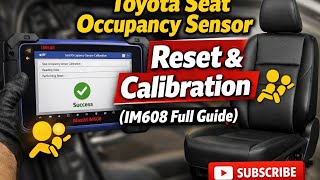
- Zero Point Calibration and Sensitivity Check 🎬 See how a technician performs a Zero Point Calibration. — Parts: $0, Labor: $100 - $200, ~1.0 hr book time (Professional)
- Replacement of the Occupant Classification Sensor Mat — Parts: $500 - $1200, Labor: $250 - $500, ~1.5 hr book time (Professional)
- Replacement of the Entire Front Passenger Seat Assembly — Parts: $1000 - $3000, Labor: $200 - $400, ~1.2 hr book time (Professional)
- Replacement of the Occupant Classification ECU — Parts: $400 - $1000, Labor: $100 - $200, ~0.8 hr book time (Professional)
Used vs. New Parts: Buying Guide
When a used part is worth it: Using used parts for critical SRS components is strongly discouraged. The unknown history of a salvage yard part poses an unacceptable safety risk. The only exception is a complete seat assembly from a certified automotive recycler.
Donor-vehicle mileage cap: roughly under 20000 miles for the part to have meaningful remaining life.
Donor quality checklist:
- Only consider parts from certified recyclers who verify the part was never deployed or flood-damaged.
- Match the part number exactly. Used ECUs require VIN programming by a professional.
Decision logic:
- If The part is a sensor, module, or electronic SRS component. → Buy new OEM. The risk of a used part failing is too high.
- If The part is a complete seat assembly from a low-mileage, non-collision vehicle. → This is viable, but the integrated OCS sensor must still be recalibrated to your vehicle by a professional.
Warranty tradeoff: Used parts carry significant reliability risks and short warranties. New OEM parts installed by a dealer are guaranteed safe and backed by a parts and labor warranty.
Worst-case if a used part fails: $2000+ The worst-case scenario is the failure of the airbag to deploy in a crash, leading to severe injury or death.
What Happens If You Wait — Timeline
- Immediate: The SRS module detects the fault, stores code B1788, illuminates the airbag warning light, and completely disables the passenger-side airbag. (MPG impact: 0%% · Added cost: $0)
- 0-6 Months: The vehicle operates normally but with a critical safety system disabled. The primary risk is the driver seating a passenger, forgetting the airbag will not deploy. (MPG impact: 0%% · Added cost: $0, but safety risk is extremely high.)
- Vehicle Inspection or Resale Attempt: The vehicle fails state safety inspections. When attempting to sell, the active airbag light reduces vehicle value by $1000 or more. (MPG impact: 0%% · Added cost: $1000+ in lost vehicle value.)
- In the Event of a Collision: The disabled passenger airbag fails to deploy, drastically increasing the risk of severe injury or fatality for the front passenger. (MPG impact: 0%% · Added cost: Potentially catastrophic medical, legal, and liability costs.)
Cost of Not Fixing It
- Immediate and Ongoing: The passenger-side airbag is disabled and will not deploy in an accident, presenting a critical safety risk. (Added cost: N/A)
- In Case of an Accident: Significantly increased risk of serious injury or fatality for the front passenger. Potential for insurance claim denial. (Added cost: Potentially thousands in medical bills and liability.)
- Vehicle Resale: An active airbag warning light significantly lowers the vehicle's resale value and makes it difficult to sell legally. (Added cost: $1000+)
Diagnosis Steps
- Check for Safety Recalls
Before any diagnosis, check your VIN on the NHTSA website. For 2020-2022 Subaru Outback and Legacy models, this code is almost certainly caused by a known defect covered under recall WRA-24. If active, the dealership repairs it for free.
Tools: Vehicle Identification Number (VIN), Smartphone/Computer (Beginner) - Read Codes with an SRS-Capable Scanner
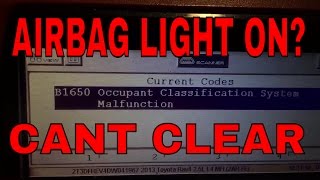
Use a bidirectional OBD-II scanner that reads Body (B) and SRS codes. A basic $20 engine code reader will not see B1788. 🎬 Watch: How to reset SRS lights using a scan tool. Confirm the code and check for related faults like B1650.
Tools: OBD-II Scanner (SRS-capable) (Beginner) - Inspect Under-Seat Connections
With the vehicle off, look under the front passenger seat. Check the bright yellow SRS connectors. Ensure they are fully seated and locked. Look for pinched wires or corrosion.
Tools: Flashlight (Beginner) - Attempt to Clear the Code
Using your scanner, clear the trouble code. If triggered by a one-time event (like dropping a heavy box on the seat), it may not return. If it returns immediately, a hard fault exists requiring calibration or repair.
Tools: OBD-II Scanner (SRS-capable) (Intermediate) - Perform Zero Point Calibration and Sensitivity Check
This is the standard fix for Toyota/Lexus vehicles. Using a professional scan tool, reset the system's baseline with an empty seat. Then, place a calibrated 30 kg (66.14 lb) weight on the seat to verify the sensor detects it correctly.
Tools: Professional Diagnostic Scan Tool, Calibrated 30 kg Weight (Advanced) - Live Data Verification
Access the OCS live data via the scan tool. With the seat empty, the reading must be between -3.2 kg and +3.2 kg. With the 30 kg weight applied, it must read between 27 and 33 kg. Readings outside this range dictate sensor replacement.
Tools: Professional Diagnostic Scan Tool, Calibrated 30 kg Weight (Advanced) - Advanced Sensor Circuit Testing
If calibration fails, test the sensor and wiring. Using a multimeter and the factory service manual, check for voltage (< 1V for short to positive), resistance (< 10Ω for open circuit), and insulation (> 1MΩ for short to ground) at the harness connectors.
Tools: Multimeter, Vehicle-Specific Repair Manual (Professional)
When This Code Triggers (Freeze-Frame Conditions)
- Event Type: Collision Detection Signal (The SRS module logs this event when it receives a signal from a seat sensor indicating a sharp impact or collision.)
- Seatbelt Status: Buckled or Unbuckled (The module records whether the passenger seatbelt was fastened at the time of the event.)
- Impact Data: Varies (In a major collision, the SRS module stores data like impact force and direction. For a B1788 triggered by a lesser impact, it simply flags an event.)
- System Status: Hard Code Stored (Once a collision event is recorded, the module stores a permanent 'hard code' that disables the affected system.)
Related Codes
- B1650 — A general 'Occupant Classification System Malfunction' code. B1788 is the specific fault causing B1650 to trigger. Fixing B1788 resolves B1650.
- B1785 — The driver's side equivalent of B1788 ('Occupant Classification Sensor Front Left Collision Detection').
- B1786 / B1787 — Codes for 'Occupant Classification Sensor Right/Left Front Collision Detection'. These help technicians identify exactly which of the multiple weight sensors in the passenger seat base registered the impact.
- B178D, B178E, B178F — On Subaru vehicles, these codes relate to specific faults within the Occupant Detection System (ODS). Their presence alongside B1788 confirms the failure covered by the WRA-24 recall.
Climate & Environmental Factors
- High Humidity and Moisture: On vehicles with capacitive OCS sensors, high humidity or direct moisture (spilled drinks, wet clothing) significantly alters the sensor's reading. Water has a much higher dielectric constant than air, causing the system to misinterpret occupancy and trigger a fault.
- Extreme Temperatures: Extreme cold affects the flexibility of bladder-style pressure sensors, while high temperatures accelerate the degradation of wiring insulation and electronic components, leading to intermittent faults.
How to Talk to a Mechanic About This Code
Say this: "I have an airbag warning light on, and my scanner is showing code B1788 for the passenger occupant classification system. If it's a Toyota or Lexus, please quote a Zero Point Calibration before suggesting part replacement. If it's a 2020-2022 Subaru, I've already checked for recall WRA-24."
This directs the shop to the most cost-effective first step (calibration) and prevents them from starting with a costly part replacement recommendation.
Avoid saying:
- 'My airbag light is on, can you just turn it off?'
- 'I have an airbag code, just replace whatever is broken.'
- 'My friend said it's probably just a loose wire under the seat.'
Questions to ask before authorizing the repair:
- Did you confirm the code is B1788 and not a different SRS code?
- For a Toyota/Lexus: Did you attempt the Zero Point Calibration, and did it fail? What were the failure readings?
- If recommending a sensor replacement, is the new part OEM?
- Does your quoted price include the mandatory post-replacement calibration?
- What is your warranty on SRS system repairs?
Where to Take It: Dealer vs Independent vs Chain
- Dealer:
Best for Subaru recall. For others, a qualified independent is more cost-effective.
Best for: Vehicles under warranty., 2020-2022 Subaru Outback/Legacy models to get the free WRA-24 recall service., Complex cases where an independent shop failed to calibrate the system.
Downsides: Highest labor rates., May default to expensive full seat assembly replacement. (Typical cost: +50% vs. baseline) - Independent Shop:
Excellent fit, provided the shop has the right diagnostic tools and SRS experience.
Best for: Out-of-warranty Toyota, Lexus, or Scion vehicles needing a Zero Point Calibration.
Downsides: Shop must have a professional-grade scanner capable of SRS calibration. Not all do. (Typical cost: +0% vs. baseline) - Chain Shop:
AVOID. The risk of an incorrect repair is too high for a critical safety system.
Best for: Not recommended for this type of repair.
Downsides: Technicians lack experience with complex SRS diagnostics., Unlikely to have specialized scan tools required for calibration., High pressure to sell parts rather than perform a calibration service. (Typical cost: -10% vs. baseline)
When to Walk Away From the Repair
If the estimated repair cost for the airbag system exceeds 40-50% of the car's private-party value, consider your options.
- Car worth $5000, fix is $2200: Walk away. A repair costing 44% of the car's value for a single safety system is not economical.
- Car worth $15000, fix is $200: Fix it. A Zero Point Calibration is a minor cost relative to the vehicle's value and restores a critical safety feature.
- Car worth $3000, fix is $1800: Walk away. The repair is 60% of the car's value. Sell the car as a 'mechanic's special'.
What Scan Tool You Need for This Code
Minimum: A scanner that reads and clears Supplemental Restraint System (SRS) codes. A basic engine code reader will NOT see this code.
A standard $20 OBD-II scanner only reads powertrain (P) codes. B1788 is a Body (B) code stored in the SRS module.
Budget: Autel AutoLink AL619 / ML629 (~$75) — Reads and clears SRS codes, including B1788. Sufficient to confirm the code, but CANNOT perform the Zero Point Calibration.
Mid-range: Foxwell NT630 Plus (~$120) — Reads and clears SRS codes on most vehicles. May not handle OCS Zero Point Calibration for Toyota.
Professional: Autel MaxiCOM MK808 / Launch C-Reader Elite for Toyota (~$400-600) — The minimum level required for a DIY fix on a Toyota/Lexus. Has bidirectional capability to perform the 'Zero Point Calibration' and 'Sensitivity Check'.
Rent vs buy: You cannot rent a scanner capable of SRS calibration. Given the tool cost, paying a shop $100-$200 for the 1-hour calibration procedure is almost always cheaper than buying a pro-level scanner.
How to Clear the Code After You Fix It
- Perform required repairs (e.g., sensor replacement, Zero Point Calibration).
- Use an SRS-capable OBD-II scan tool to access the Airbag/SRS module.
- Select the 'Clear Codes' or 'Erase DTCs' function.
- Cycle the ignition off, then on, and confirm the airbag warning light performs its self-check (on for a few seconds, then off) and stays off.
Drive cycle: No specific drive cycle is required. The SRS system performs a self-diagnostic check every time the vehicle is started. If the fault is corrected, the light stays off immediately.
Readiness monitors affected: None
Watch out for:
- Using a basic code reader that cannot communicate with the SRS module.
- Attempting to clear the code by disconnecting the vehicle's battery.
- Clearing the code without performing the necessary recalibration, causing the code to return immediately.
Will This Fail Emissions / State Inspection?
No — by itself this code doesn't fail OBD inspection (but it can keep readiness monitors from setting, which causes a separate fail).
- California: An airbag light will NOT fail a California smog inspection. The emissions test is separate from a safety inspection.
- New York: An active airbag warning light is noted on the inspection report as an advisory, but it is NOT a cause for inspection failure.
- Texas: The airbag system is NOT a required inspection item in Texas. A vehicle with an airbag light on will pass.
Most Commonly Affected Vehicles
- Subaru Outback, Legacy (2020-2022) — Subject to major safety recall WRA-24 (NHTSA 24V-227) for defective ODS sensors. The repair is free at a dealer.
- Toyota Sienna (2008-2020) — Very common after a minor collision or impact to the passenger seat. The standard fix is a Zero Point Calibration.
- Toyota Camry (2004-2018) — Subject to known OCS issues. Exerting force on the seatback triggers codes B1785-B1788, requiring recalibration.
- Lexus ES 350 (2013-2018) — Shares the Toyota OCS system, making it susceptible to calibration loss after an impact. The fix is a Zero Point Calibration.
- Subaru Forester (2012-2018) — Frequent issues with the capacitive ODS sensor, often triggered by moisture or electronics on the seat.
- Toyota FJ Cruiser (2007-2014) — Service manuals specifically detail the B1788 code and the required Zero Point Calibration using a 30 kg weight.
- Hyundai Elantra (2012-2015) — Known to have issues with side impact and occupant classification sensors presenting similar symptoms.
- Scion All models (2004-2016) — Uses the Toyota OCS system and experiences identical calibration faults.
Manufacturer-Specific Notes
- Toyota/Lexus/Scion: This code is extremely common and almost always related to the OCS losing its baseline. The fix is a 'Zero Point Calibration' software reset, not a parts replacement.
- Subaru: For 2020-2022 Outback and Legacy models, this code is the primary indicator for Safety Recall WRA-24. The repair is a free sensor replacement at a dealer.
- Ford: B1788 is defined as 'Mirror Passenger Down Circuit Short To Battery'. It points to a fault in the power mirror wiring, completely unrelated to airbags.
- Chrysler/Dodge/Jeep: B1788 is defined as 'Headlamp Leveling Motor Control Circuit Low'. It points to an issue with the automatic headlight leveling system.
- Chevrolet: B1788 is defined as 'Driver Seat Recline Motor Circuit High Voltage'. It points to a fault in the power seat motor circuit.
- Volkswagen: Code B1788F0 is defined as 'Control Module Immobilizer deactivated' in the Telematics module. It is a normal, low-priority code that does not require repair.
Real Owner Stories
2017 Toyota Sienna after minor rear-end collision
Airbag light illuminated immediately after a minor rear-end accident. No airbags deployed. Codes B1650 and B1788 were present.
Outcome: A professional shop used an Autel scanner to perform a 'Zero Point Calibration' on the Occupant Classification System. This recalibrated the passenger seat sensor's baseline, permanently clearing the codes.
Lesson: On Toyotas, any collision triggers this code and requires a seat sensor recalibration. This is a software fix, not a parts replacement.
2021 Subaru Outback with 30,000 miles
The airbag warning light and 'Passenger Airbag OFF' indicator illuminated randomly with no accident or spills.
Outcome: The dealer identified the vehicle as part of Subaru Safety Recall WRA-24. They replaced all four ODS sensors in the passenger seat free of charge in under two hours.
Lesson: For 2020-2022 Subaru Outback and Legacy models, B1788 is the primary indicator of a major safety recall. Always check your VIN before paying for diagnostics.
2021 Toyota Sienna with seats removed for camping
The owner removed the second-row seats for cargo space, triggering a persistent 'Airbag System Malfunction' message.
Outcome: The owner installed aftermarket 'airbag emulator dongles' containing a 2.2-ohm resistor into the vehicle's harness. This tricked the SRS module into thinking the system was intact, clearing the warning light.
Lesson: Removing seats with integrated airbags disables the entire SRS system. You must use a correctly-sized resistor emulator to restore functionality to the remaining airbags.
How to Prevent This Code From Triggering
- Avoid placing heavy, sharp, or concentrated loads on the passenger seat (Daily habit) — Prevents sudden impacts that trick the sensitive OCS sensor into logging a 'collision event', which triggers code B1788 and requires a system reset.
- Keep the passenger seat and under-seat area dry (As needed) — Moisture interferes with capacitive OCS sensors and causes corrosion on under-seat connectors. The Subaru WRA-24 recall was prompted by moisture ingress into a cracked capacitor.
- Do not place laptops or large electronics on the passenger seat (Daily habit) — Electronic fields generated by devices interfere with capacitive occupant classification sensors, causing erroneous readings and triggering the airbag light.
- Use caution when adjusting the seat or retrieving items from underneath (As needed) — Forcefully yanking the seat or kicking wiring dislodges or damages the sensitive yellow SRS connectors, causing an open circuit.
Frequently Asked Questions
Can I reset the B1788 code by disconnecting the battery?
No. SRS codes are stored in non-volatile memory and require a specific command from a bidirectional scan tool to clear.
Is it safe to drive with code B1788?
The vehicle drives normally, but the passenger airbag is disabled. It is highly unsafe for anyone to ride in the front passenger seat until repaired.
Is there a recall for the B1788 code?
Yes, Subaru Safety Recall WRA-24 covers 2020-2022 Outback and Legacy models for this exact issue. The repair is free at a dealership. Always check your VIN on the NHTSA website.
Why did the code appear if I wasn't in an accident?
Dropping a heavy bag on the seat, spilling a drink, or leaving a laptop on the cushion tricks the sensitive OCS sensor into logging a fault.
What is the most common mistake when diagnosing B1788?
Replacing the expensive seat sensor without first attempting a Zero Point Calibration. On Toyota and Lexus models, calibration fixes the issue the majority of the time.
Can leaving my phone or laptop on the passenger seat cause the airbag light to come on?
Yes, the electronic field from devices interferes with capacitive occupant sensors, causing erroneous readings and triggering the airbag light.
Can I perform the Zero Point Calibration myself?
It is not recommended. The procedure requires a professional-grade scan tool and calibrated weights. An error in calibration causes the airbag to fail during a crash.
Will replacing the sensor fix the problem?
Not by itself. Even after replacing a faulty sensor, the new components must be calibrated to the vehicle using a scan tool before the airbag light turns off.
Key Takeaways
- Code B1788 completely disables the passenger-side airbag, requiring you to keep the front seat empty until repaired.
- On Toyota and Lexus vehicles, a $100-$200 Zero Point Calibration software reset fixes this code 80% of the time without replacing parts.
- If you own a 2020-2022 Subaru Outback or Legacy, B1788 is the primary trigger for Safety Recall WRA-24, entitling you to a free sensor replacement at the dealership.
- Ignore airbag diagnostics if you drive a Ford, Chrysler, Chevy, or VW; B1788 on these makes points to unrelated systems like power mirrors or headlights.
- Disconnecting the 12V battery will never clear an SRS hard code like B1788; you must use a bidirectional scan tool capable of accessing the airbag module.
Helpful Videos


Shop the Parts Behind B1788
Below are the parts most often responsible for code B1788, ranked by how frequently each one is the actual culprit (per the diagnosis above). Tap any to see what we have for your vehicle.


The information in this article is provided for general reference and educational purposes only. Vehicle specifications, procedures, and part compatibility can vary by production date, trim level, and region. Always consult your vehicle's factory service manual and verify part numbers before purchasing or performing repairs. Safety-critical components such as airbags, seat belts, and braking systems should be installed by a qualified professional.
- 🎬 Helpful Videos
- 🛍️ Shop This Part
- What Does B1788 Mean?
- Can I Drive With B1788?
- Common Causes
- Symptoms
- Common Fixes & Costs
- Used vs. New Parts: Buying Guide
- What Happens If You Wait — Timeline
- Cost of Not Fixing It
- Diagnosis Steps
- When This Code Triggers (Freeze-Frame Conditions)
- Related Codes
- Climate & Environmental Factors
- How to Talk to a Mechanic About This Code
- Where to Take It: Dealer vs Independent vs Chain
- When to Walk Away From the Repair
- What Scan Tool You Need for This Code
- How to Clear the Code After You Fix It
- Will This Fail Emissions / State Inspection?
- Most Commonly Affected Vehicles
- Manufacturer-Specific Notes
- Real Owner Stories
- 2017 Toyota Sienna after minor rear-end collision
- 2021 Subaru Outback with 30,000 miles
- 2021 Toyota Sienna with seats removed for camping
- How to Prevent This Code From Triggering
- Frequently Asked Questions
- Can I reset the B1788 code by disconnecting the battery?
- Is it safe to drive with code B1788?
- Is there a recall for the B1788 code?
- Why did the code appear if I wasn't in an accident?
- What is the most common mistake when diagnosing B1788?
- Can leaving my phone or laptop on the passenger seat cause the airbag light to come on?
- Can I perform the Zero Point Calibration myself?
- Will replacing the sensor fix the problem?
- Key Takeaways
- 🎟️ Get 5% Off