

OBD-II Code B1795: Occupant Classification System ECU Malfunction
The Ultimate 2026 Guide to Diagnosing and Fixing Code B1795
- Code B1795 indicates a critical internal failure in the Occupant Classification System (OCS) ECU, instantly disabling the passenger-side airbag.
- Driving with code B1795 poses a severe safety risk; the passenger airbag will not deploy in a collision, leaving front-seat occupants unprotected.
- Ford, Lincoln, and Mercury vehicles use code B1795 to flag a Passive Anti-Theft System (PATS) fault, which triggers a flashing theft light and prevents the engine from starting.
- Fixing B1795 requires a professional bidirectional scan tool to perform a mandatory 'Zero Point Calibration' after replacing the $850+ seat cushion assembly or wiring harness.
What Does B1795 Mean?
Code B1795 indicates the Occupant Classification System (OCS) ECU has detected a critical internal error. This computer decides whether to activate the passenger airbag based on seat occupancy. When B1795 triggers, the system defaults to a failsafe mode, shutting the passenger airbag off to prevent incorrect deployment.
Technical definition: The SAE/ISO definition is 'Occupant Classification ECU Malfunction'. This indicates the OCS ECU failed an internal self-diagnostic test due to a circuitry, memory, or logic processing error. Note: On Ford vehicles, B1795 indicates a Passive Anti-Theft System (PATS) fault causing a no-start condition.
🎬 See this guide on identifying Ford PATS system faults.Can I Drive With B1795?
Yes, But With Caution. The vehicle drives normally, but the passenger airbag is disabled as a safety precaution. In a collision, the front passenger lacks airbag protection, drastically increasing the risk of fatal injury. Limit passenger seat use until the fault is repaired.
Common Causes
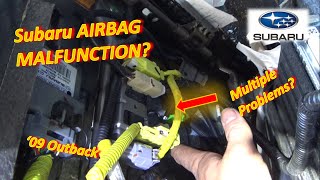
- Damaged or Loose OCS Wiring Harness (Very Common) — The under-seat wiring harness suffers damage from stored items, corrosion, or chafing. A loose connection at the ECU triggers this code, notably in Subaru models under recall WUM-98. 🎬 Watch: How to diagnose Subaru occupant detection system malfunctions.
- Moisture Intrusion in Seat Cushion (Common) — The seat cushion's capacitive sensor mat is highly sensitive to moisture. Spilled liquids or high condensation alter sensor readings, leading to OCS fault codes and frequent misdiagnosis (see Subaru TSB 07-108-16R).
- Faulty Occupant Classification ECU (Common) — The ECU fails its internal self-check and determines it is no longer reliable. This requires replacing the ECU, which is often integrated directly into the seat cushion assembly.
- Short Circuit in a Related Component (Less Common) — A short circuit in a connected part, like the passenger seat belt buckle switch, sends an invalid signal to the OCS module, causing it to incorrectly flag an internal fault and set code B1795.
- Software Corruption (Less Common) — The ECU's software corrupts due to voltage spikes or improper use of aftermarket scan tools. On Lexus models, this triggers a B1795 code requiring a reflash or ECU data exchange.
- Blown Fuse (Less Common) — A blown OCS module fuse (often labeled 'ECU-B') cuts power to the module, causing it to report a fault when the main SRS module attempts communication.
- Low Battery Voltage or Power Interruption (Rare) — A weak battery (below 12.0V at rest) causes temporary voltage drops and electronic glitches. Additionally, repeated power interruptions (e.g., ignition cycled OFF and ON 50 consecutive times) force the OCS ECU to log B1795 as a failsafe.
Symptoms
- Airbag Warning Light is On — The SRS (Supplemental Restraint System) or airbag light illuminates permanently on the dashboard.
- Passenger Airbag Off Light is On — The status light indicating the passenger airbag is disabled remains lit, even with an adult in the seat.
- No Drivability Problems — The engine, transmission, and braking systems operate perfectly. The fault isolates entirely to the passenger safety system.
- Code Cannot Be Cleared (scan-tool only — no driver-felt sign) — B1795 is a 'hard code' indicating a persistent fault. Attempting to clear it with a scan tool fails, or the code returns immediately upon the next ignition cycle.
Diagnostic Flowchart
Tap your situation to follow the diagnostic path that matches what you're seeing on this code.
Common Fixes & Costs
- Replace ODS Wiring Harness — Parts: $50-$150 (Free under recall WUM-98), Labor: $150-$250, ~1.2 hr book time (Intermediate)
- Repair Damaged Wiring or Connectors — Parts: $10-$30, Labor: $150-$300, ~2.0 hr book time (Intermediate)
- Replace Passenger Seat Cushion Assembly (with integrated ECU) — Parts: $850-$1600, Labor: $200-$350, ~1.5 hr book time (Professional)
- Replace Blown Fuse — Parts: $1-$5, Labor: $0-$50, ~0.2 hr book time (DIY)
- ECU Reprogramming or Data Transfer — Parts: $0, Labor: $100-$250, ~1.0 hr book time (Professional)
Used vs. New Parts: Buying Guide
When a used part is worth it: Purchasing a used OCS ECU and sensor mat is STRONGLY DISCOURAGED. The risk of acquiring a non-functional, counterfeit, or accident-compromised part is extremely high.
Donor-vehicle mileage cap: roughly under 10000 miles for the part to have meaningful remaining life.
Donor quality checklist:
- Verify the exact OEM part number. Slight variations are incompatible.
- Avoid parts from vehicles with flood damage; moisture permanently damages the sensor.
- There is no reliable way to verify the history of a used electronic safety component.
Decision logic:
- If The part is an integrated electronic safety component like an OCS module. → Always buy new OEM. Financial savings do not justify the immense safety risk and likelihood of premature failure.
- If You are considering a used part despite the risks. → Assume you will pay labor costs twice when the used part fails.
Warranty tradeoff: Used salvage parts offer a 30-90 day warranty that excludes labor. A new OEM part installed by a dealer is fully warrantied, ensuring correct calibration.
Worst-case if a used part fails: $1000-$2000+. If a used seat cushion assembly is faulty, you pay installation labor twice, plus the cost of the new OEM part.
What Happens If You Wait — Timeline
- Immediate (0 days): The B1795 code sets, the airbag warning light illuminates, and the SRS control module disables the passenger airbag as a failsafe. (MPG impact: 0%% · Added cost: $0)
- 1 day - 12 months: The vehicle fails annual state safety inspections (e.g., New York), preventing legal registration renewal. The risk of severe passenger injury is constant. (MPG impact: 0%% · Added cost: $35-$70 (for a failed inspection and re-test fee))
- In case of an accident: A frontal collision occurs. The passenger airbag does not deploy. The passenger suffers severe or fatal injuries that a functional airbag prevents. (MPG impact: 0%% · Added cost: $10,000 to Unlimited (representing medical bills, liability, and potential loss of life))
- After an accident: Insurance companies dispute or reduce personal injury payouts, arguing the vehicle's safety systems were knowingly inoperative, leading to significant personal liability. (MPG impact: 0%% · Added cost: Potentially thousands in denied claims or legal fees)
Cost of Not Fixing It
- Immediate & Ongoing: The passenger-side front airbag is disabled. In a frontal collision, it will not deploy, creating a life-threatening risk for the passenger. (Added cost: N/A)
- Next State Inspection: Vehicle fails annual safety inspections in states that check the airbag system (e.g., New York, Pennsylvania), preventing legal registration renewal. (Added cost: $35-$70 (for a failed inspection and re-test fee))
- In Case of Accident: Insurance claim disputes or reduced payouts for personal injury occur because a critical safety system was knowingly inoperative. (Added cost: Potentially thousands to unlimited)
Diagnosis Steps
- Check for Recalls and TSBs
Check your vehicle's VIN on the NHTSA database. The 2015-2018 Subaru Forester has a major recall (WUM-98) for a faulty OCS wiring harness. Hyundai and Kia offer extended warranties for OCS sensor mats. Review TSBs like Subaru's 07-108-16R to prevent misdiagnosis.
Tools: Vehicle VIN, Internet Access (Beginner) - Read All Related Trouble Codes
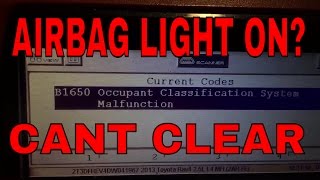
Use an advanced scan tool to read SRS and OCS/ODS module codes. If codes like B1650, B1771, B1760, or B1761 are present, diagnose and fix those first, as they trigger the B1795 code.
Tools: SRS-capable OBD-II Scanner (Beginner) - Inspect Under-Seat Wiring and for Moisture
Visually inspect the area under the front passenger seat. Look for pinched wires, loose connectors, and signs of moisture or liquid spills on the seat cushion. Unplug and replug the main OCS harness connector to ensure a solid connection.
Tools: Flashlight, Trim Removal Tools (Intermediate) - Inspect the Fuse
Locate the OCS fuse, often labeled 'ECU-B'. Check for continuity with a multimeter (resistance under 1Ω). Replace if blown. If it blows again, trace the short circuit.
Tools: Owner's Manual, Multimeter, Fuse Puller (Beginner) - [PRO TIP] Analyze OCS Live Data
Access the OCS module's live data PIDs using a bidirectional scan tool. With the seat empty, the occupant weight parameter must read 0 lbs/kg. Place a known weight (e.g., 50 lbs) on the seat and verify the reading increases. Unstable readings point to a faulty sensor mat or ECU.
Tools: Professional Bidirectional Scan Tool (Advanced) - [PRO TIP] Test Power and Ground at the ECU Connector
Disconnect the OCS ECU connector. Test for constant battery voltage (10-14V) at the '+B' pin and ignition-on voltage (10-14V) at the 'IG' pin. Check for continuity to ground at the 'GND' pin (resistance under 1Ω). This verifies the ECU receives necessary power.
Tools: Multimeter, Vehicle-Specific Wiring Diagram (Advanced) - Replace the OCS ECU / Seat Cushion Assembly
If wiring, fuses, and power sources test good, the OCS ECU has failed. On most vehicles, the ECU integrates into the passenger seat cushion and requires replacement as a complete assembly.
Tools: Mechanic's Tool Set (Advanced) - Perform Zero Point Calibration and Sensitivity Check
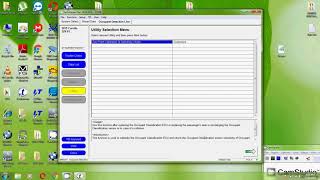
Calibration is mandatory after replacement. Use a professional scan tool to perform the 'Zero Point Calibration' to teach the ECU the empty seat's baseline weight. Then, perform a 'Sensitivity Check' using a calibrated 30 kg (66.14 lb) weight. The airbag light remains on without these steps.
Tools: Professional Scan Tool, Calibrated Weight (30 kg / 66.14 lb) (Professional)
When This Code Triggers (Freeze-Frame Conditions)
- Ignition Status: ON (The fault is detected during the initial system self-check that runs for several seconds after the ignition is turned on.)
- System Voltage: 10.5V - 14.5V (The self-test runs under normal battery voltage conditions. Very low voltage during startup triggers false codes, but B1795 usually indicates a persistent hardware fault.)
- Time After Ignition ON: < 10 seconds (The SRS/OCS module performs its primary check immediately at startup. If the fault is detected, the airbag light remains illuminated after the initial 6-second bulb check.)
- Fault Type: Internal ECU Error (Freeze frame data points to an internal processor, memory, or logic failure within the OCS module itself.)
Related Codes
- B1650 — B1650 is a general code for an 'Occupant Classification System Malfunction' set by the main airbag ECU. B1795 is the specific code set by the OCS ECU itself.
- B1771 — Indicates a 'Passenger Side Buckle Switch Circuit Malfunction'. Toyota, Lexus, and Subaru manuals state B1771 must be diagnosed and fixed before addressing B1795.
- B1760 — Points to a 'Sensor Mat Abnormal' fault, often caused by moisture. It appears with B1795 if the ECU fails to read signals from the sensor mat.
- B1448 — On Hyundai vehicles, this indicates an 'OCS Mat Defect'. It is covered by Hyundai's 15-year extended warranty on the OCS sensor.
Climate & Environmental Factors
- High Humidity: High ambient humidity increases the capacitance of the OCS sensor mat, causing incorrect readings to the ECU. Prolonged exposure leads to moisture ingress and permanent sensor failure.
- Condensation: Rapid temperature changes cause condensation within the seat cushion. Liquid water drastically alters the sensor's capacitance, leading to fault codes like B1760 or contributing to the B1795 ECU fault.
- Extreme Cold: Extreme cold makes wiring harness insulation brittle and susceptible to cracking if disturbed by items stored under the seat, causing open or short circuits.
How to Talk to a Mechanic About This Code
Say this: "My airbag light is on with code B1795, pointing to the Occupant Classification System. Please check for open recalls or TSBs for my VIN, and thoroughly inspect the under-seat wiring and connectors for damage or moisture before recommending a full seat cushion replacement."
This signals you want a proper diagnosis, not just a parts swap. It directs the shop to check the cheapest causes (recalls, wiring) before condemning the expensive ECU/seat assembly, saving diagnostic time and preventing misdiagnosis.
Avoid saying:
- 'My airbag light is on, can you fix it?'
- 'Just do whatever it takes to turn the light off.'
- 'I think I need a new passenger seat.'
Questions to ask before authorizing the repair:
- Did you check my VIN for recalls like the Subaru WUM-98 harness issue or Hyundai's 15-year warranty extension?
- What was the result of the physical inspection of the under-seat wiring and connectors?
- If recommending a seat cushion assembly, what specific tests confirmed the ECU failed internally?
- Does your estimate include the mandatory 'Zero Point Calibration' and 'Sensitivity Check'?
- What is the warranty on the new part and labor?
Where to Take It: Dealer vs Independent vs Chain
- Dealer:
Recommended. The dealer is the safest choice. They perform free recall work and are best equipped for the mandatory post-repair calibration.
Best for: Vehicles with potential recall (Subaru) or warranty extension (Hyundai/Kia) coverage., Complex diagnostics requiring manufacturer-specific tools (e.g., Toyota Techstream)., Guaranteed access to correct parts and calibration procedures.
Downsides: Highest labor rates., Quick to recommend the full (and most expensive) seat assembly replacement. (Typical cost: +50% vs. baseline) - Independent Shop:
Use with caution. Choose an independent shop ONLY if you verify they have a professional bidirectional scan tool and experience performing the 'Zero Point Calibration' for your specific model.
Best for: Out-of-warranty vehicles where cost is a primary concern., Shops specializing in your vehicle's make.
Downsides: Often lack the specialized scan tools to perform the final OCS calibration., Quality and expertise with sensitive SRS systems vary widely. (Typical cost: +0% vs. baseline) - Chain Shop:
AVOID. The requirement for specialized electronic calibration puts this repair beyond their scope of work.
Best for: Oil changes, tires, and brakes.
Downsides: Technicians lack the training and tools for SRS diagnostics and calibration., High risk of misdiagnosis or an incomplete repair. (Typical cost: -10% vs. baseline)
When to Walk Away From the Repair
If the estimated repair cost ($1,000-$2,000) exceeds 50% of your car's private-party value, consider alternatives. Ignoring this critical safety repair is not an option.
- Car worth $4000, fix is $1800: Borderline. The repair is 45% of the car's value. Get a second opinion, but consider selling the car 'as-is' with full disclosure about the airbag light.
- Car worth $12000, fix is $1800: Fix it. The repair is 15% of the car's value and essential for passenger safety and resale value.
- Car worth $2500, fix is $1500: Walk away. The repair is 60% of the car's value. It is not economically viable to fix.
What Scan Tool You Need for This Code
Minimum: A scan tool that reads and clears Supplemental Restraint System (SRS) / Airbag codes. Basic engine-only OBD-II readers will NOT work.
A basic SRS reader confirms B1795 is present but cannot perform the mandatory 'Zero Point Calibration' and 'Sensitivity Check'. Without calibration, the airbag light stays on, wasting money on parts.
Budget: Autel AutoLink AL619 / Foxwell NT630 Plus (~$120) — Reads and clears SRS/Airbag codes to confirm the B1795 fault. They CANNOT perform the mandatory OCS calibration. For diagnosis only.
Mid-range: Foxwell NT510 Elite (~$180) — Best choice for a serious DIYer. With the correct vehicle software pack, it reads/clears SRS codes and performs the essential 'Zero Point Calibration' for many models.
Professional: Autel MaxiCOM MK808 / MK808S (~$500) — Professional-grade tool that performs all necessary service functions like OCS Zero Point Calibration and Sensitivity Checks.
Rent vs buy: You cannot rent a tool capable of this job. Free loaner tools from auto parts stores cannot access the SRS module or perform calibration. Pay a qualified shop for the 1-hour labor of diagnosis and calibration.
How to Clear the Code After You Fix It
- Perform the physical repair (e.g., replace seat cushion assembly).
- Reconnect the vehicle battery.
- Use a manufacturer-specific scan tool to clear DTCs from BOTH the OCS module and the main SRS airbag module.
- Perform mandatory 'Zero Point Calibration' using the scan tool.
- Perform mandatory 'Sensitivity Check' with calibrated weights using the scan tool.
- Cycle ignition off, then on, and verify the airbag warning light turns off after the 6-second self-test.
Drive cycle (~5 minutes): A traditional 'drive cycle' is not required. The SRS system performs a complete self-diagnostic test every time the ignition turns on. Correct repair and calibration clear the code permanently.
Readiness monitors affected: This code does not affect emissions-related readiness monitors.
Watch out for:
- Using a generic OBD-II scanner that cannot access the OCS module or perform calibration.
- Failing to clear codes from both the OCS and main SRS modules after the repair.
- Skipping the mandatory 'Zero Point Calibration' and 'Sensitivity Check', preventing the airbag light from turning off.
Will This Fail Emissions / State Inspection?
No — by itself this code doesn't fail OBD inspection (but it can keep readiness monitors from setting, which causes a separate fail).
- California: An airbag light does NOT cause a failure of the California smog check. The test only covers emissions-related components.
- New York: An illuminated airbag warning light WILL cause a failure of the annual state safety inspection.
- Texas: An airbag light does NOT cause a failure of the Texas state safety inspection. The SRS system is not a required inspection item.
- General Note: Many states differentiate between an emissions test and a safety inspection. An airbag light fails the safety inspection in many jurisdictions, but not the emissions test.
Most Commonly Affected Vehicles
- Subaru Forester (2014-2018) — Highly prone to B1795. 2015-2018 models were recalled (WUM-98) for a faulty ODS wiring harness. TSB 07-108-16R is the essential diagnostic guide.
- Toyota 4Runner (2008-2018) — Service manuals specifically address B1795 as an OCS ECU internal malfunction. The OCS ECU is available as a separate part on some models (e.g., P/N 89952-35010).
- Toyota Sienna (2005-2010) — This code is a well-documented issue pointing to a failure of the Occupant Classification ECU.
- Toyota FJ Cruiser (2007-2014) — Detailed diagnostic procedures indicate this is a known fault pointing to the OCS ECU.
- Toyota RAV4 (2019-2025) — Newer models use this code to report an internal fault in the occupant detection computer, integrated into the 'front seat adjuster assembly RH'.
- Lexus ES 350 (2007-2012) — Documented cases show B1795 appearing after using aftermarket scan tools, suggesting a risk of software corruption.
- Lexus LS 460 (2011-2017) — Service manuals confirm B1795 as a primary code for an OCS ECU malfunction and specify saving data from the old ECU before installing a new one.
- Hyundai Accent, Sonata (2006-2015) — The OCS sensor mat is a known failure point. Hyundai offers a 15-year warranty extension on models like the Accent.
Manufacturer-Specific Notes
- Toyota, Subaru, Lexus: B1795 almost always means 'Occupant Classification ECU Malfunction'. Subaru issued TSB 07-108-16R to prevent unnecessary seat replacement and recall WUM-98 for a faulty harness.
- Ford, Lincoln, Mercury: B1795 indicates a fault with the Passive Anti-Theft System (PATS), typically the transceiver ring around the ignition cylinder. This causes a no-start condition and a flashing theft light.
- Lexus: B1795 triggers due to software corruption after using aftermarket scan tools. The ECU requires data recovery or reflashing using a factory tool like Techstream.
- Chrysler, Dodge, Jeep: B1795 is defined as 'Sensor Bus #2 Failure', indicating a communication problem between sensors and a control module, requiring network diagnosis.
Real Owner Stories
2016 Subaru Forester with intermittent airbag light
The airbag warning light illuminated intermittently. The vehicle previously had the WUM-98 recall service (harness replacement) performed, but the issue returned a year later.
What they tried:
- Returning to the dealer, who quoted a $2,000+ seat cushion replacement, blaming unproven water damage.
- Temporarily fixing the issue by jiggling the OCS wiring harness under the seat.
Outcome: The owner thoroughly cleaned the pins on the OCS harness connectors with electrical contact cleaner and reseated them firmly. The code did not return for at least 11 months.
Lesson: Even after a recall repair, the under-seat connector remains a weak point. Before paying for a costly seat replacement, thoroughly clean the connector pins to remove oxidation.
2007 Lexus IS 350 with a persistent B1795
Airbag light was on with code B1795. The owner suspected a faulty OCS ECU.
What they tried:
- Purchased a new OCS ECU (P/N 89952-0W060) and installed it.
- The B1795 code cleared, but a new code, B1797 ('Calibration Abnormal'), appeared immediately.
- Attempted Zero Point Calibration with a scan tool, but it failed with a wire error.
Outcome: The service manual revealed that data from the old ECU must be copied to the new one before calibration is possible. The owner required a dealer-level tool to transfer the software.
Lesson: On Lexus models, simply swapping the ECU is insufficient. The new ECU requires vehicle-specific data transferred from the old unit using Toyota Techstream before accepting calibration.
2013 Nissan Altima with uncleared airbag light
Airbag light was on with code B00A0-00, a related OCS unit fault. The owner assumed a simple sensor issue.
What they tried:
- Attempted OCS zero point calibration with professional Autel and Snap-On scan tools, but the procedure failed.
- Replaced the passenger seat occupancy sensor with a new OEM part (P/N 98853-3JA0A), but the code remained.
Outcome: A Nissan service bulletin revealed a known issue where the OCS control unit fails and blocks zero point calibration. The fix required replacing the OCS control unit, not the sensor mat.
Lesson: A failure to calibrate is not always a sensor mat problem. The ECU itself develops internal faults blocking calibration. Always check TSBs before replacing expensive sensor mats.
How to Prevent This Code From Triggering
- Avoid storing items under the passenger seat. (Daily habit) — Objects shift during driving and snag or pinch the sensitive OCS wiring harness, causing open or short circuits.
- Use waterproof seat covers on the passenger seat. (Always, especially with children or frequent passengers.) — The OCS sensor mat is highly susceptible to liquid damage. A waterproof cover prevents moisture from destroying the sensitive electronics.
- Protect under-seat wiring with loom or sleeves. (Once, during a vehicle check-up.) — Adding a flexible split-loom conduit protects exposed factory wiring from abrasion against the seat frame, reducing chafing risks.
- Be careful when moving the passenger seat. (Every time the seat is adjusted.) — Aggressively sliding the seat strains the wiring harness. Gentle adjustments prevent the harness from pulling taut or tearing.
- Periodically inspect and clean under-seat connectors. (Once every 1-2 years.) — Connectors loosen or develop oxidation over time. Disconnecting, spraying with electrical contact cleaner, and firmly reconnecting prevents intermittent faults.
Frequently Asked Questions
Is it safe to drive with code B1795?
While the car drives normally, it is unsafe for a front-seat passenger. The code disables the passenger airbag, creating a major safety risk in an accident. Do not use the front passenger seat until the repair is complete.
Will code B1795 prevent my car from starting?
On Toyota, Subaru, or Lexus vehicles, this code does not prevent the car from starting. However, on Ford vehicles, B1795 indicates an anti-theft system fault that causes a no-start condition and a flashing theft light.
Can I fix B1795 myself by clearing the code?
No. B1795 indicates a hard fault within a safety system computer. Clearing the code does not fix the underlying problem, and the airbag light returns immediately during the next system self-check.
What is the most common misdiagnosis for B1795?
The most expensive mistake is immediately replacing the entire passenger seat cushion assembly. Subaru TSB 07-108-16R urges technicians to thoroughly inspect the wiring harness and check for moisture before condemning the costly integrated ECU.
What is 'Zero Point Calibration' and why is it mandatory?
Zero Point Calibration is a mandatory reset procedure performed with a professional scan tool after replacing the OCS ECU or seat cushion. It teaches the new computer the baseline weight of the empty seat. Without this calibration, the system fails to operate and the airbag light remains on.
Can I replace the OCS sensor or ECU myself?
This is not recommended for DIY repair because it involves a critical safety system. Replacement requires a professional-grade scan tool to perform the mandatory final calibration. Incorrect installation causes the airbag system to fail during a crash.
Can a weak battery cause the B1795 code?
A failing battery causes widespread electronic issues, including false codes in sensitive modules like the OCS. If your battery is over 3 years old, test the voltage (12.6V engine off, 13.7-14.7V running) before proceeding with expensive repairs.
Why is the repair so expensive?
The high cost stems from the OCS ECU being permanently integrated into the passenger seat's bottom cushion on most modern cars. This requires purchasing the entire cushion assembly from the manufacturer, with parts often exceeding $1,000.
Key Takeaways
- Code B1795 indicates a critical internal failure in the Occupant Classification System (OCS) ECU, instantly disabling the passenger-side airbag.
- Driving with code B1795 poses a severe safety risk; the passenger airbag will not deploy in a collision, leaving front-seat occupants unprotected.
- Ford, Lincoln, and Mercury vehicles use code B1795 to flag a Passive Anti-Theft System (PATS) fault, which triggers a flashing theft light and prevents the engine from starting.
- Fixing B1795 requires a professional bidirectional scan tool to perform a mandatory 'Zero Point Calibration' after replacing the $850+ seat cushion assembly or wiring harness.
Helpful Videos

Shop the Parts Behind B1795
Below are the parts most often responsible for code B1795, ranked by how frequently each one is the actual culprit (per the diagnosis above). Tap any to see what we have for your vehicle.



The information in this article is provided for general reference and educational purposes only. Vehicle specifications, procedures, and part compatibility can vary by production date, trim level, and region. Always consult your vehicle's factory service manual and verify part numbers before purchasing or performing repairs. Safety-critical components such as airbags, seat belts, and braking systems should be installed by a qualified professional.
- 🧭 Diagnostic Flowchart
- 🎬 Helpful Videos
- 🛍️ Shop This Part
- What Does B1795 Mean?
- Can I Drive With B1795?
- Common Causes
- Symptoms
- Common Fixes & Costs
- Used vs. New Parts: Buying Guide
- What Happens If You Wait — Timeline
- Cost of Not Fixing It
- Diagnosis Steps
- When This Code Triggers (Freeze-Frame Conditions)
- Related Codes
- Climate & Environmental Factors
- How to Talk to a Mechanic About This Code
- Where to Take It: Dealer vs Independent vs Chain
- When to Walk Away From the Repair
- What Scan Tool You Need for This Code
- How to Clear the Code After You Fix It
- Will This Fail Emissions / State Inspection?
- Most Commonly Affected Vehicles
- Manufacturer-Specific Notes
- Real Owner Stories
- 2016 Subaru Forester with intermittent airbag light
- 2007 Lexus IS 350 with a persistent B1795
- 2013 Nissan Altima with uncleared airbag light
- How to Prevent This Code From Triggering
- Frequently Asked Questions
- Is it safe to drive with code B1795?
- Will code B1795 prevent my car from starting?
- Can I fix B1795 myself by clearing the code?
- What is the most common misdiagnosis for B1795?
- What is 'Zero Point Calibration' and why is it mandatory?
- Can I replace the OCS sensor or ECU myself?
- Can a weak battery cause the B1795 code?
- Why is the repair so expensive?
- Key Takeaways
- 🎟️ Get 5% Off