

OBD-II Code B1805: Passenger Airbag Circuit Malfunction
What B1805 means, why it triggers, and how to fix it
- Code B1805 disables your entire airbag system, meaning 0 airbags will deploy in a crash; do not drive the vehicle.
- Check the bright yellow wiring harness under the passenger seat first, as pinched or loose wires cause over 50% of these faults.
- Always disconnect the negative battery terminal and wait 15 minutes before inspecting any SRS components to prevent accidental deployment.
- Definitions vary by brand: B1805 is a passenger airbag short on Toyotas, but indicates a starter voltage drop below 1.5V on Peugeot and Citroen vehicles.
What Does B1805 Mean?
Code B1805 indicates the Airbag Control Module detected a short circuit in the passenger-side airbag wiring. This electrical fault instantly deactivates the supplemental restraint system (SRS) and illuminates the airbag warning light. The system disables itself to prevent unexpected airbag deployment. Note: This code's definition varies drastically between manufacturers (e.g., it is a starter fault on Peugeot/Citroen).
Technical definition: The SAE/ISO definition for B1805 is 'Short in Front Passenger Side Squib Circuit'. The squib is the pyrotechnic igniter that deploys the airbag. The control module constantly monitors this circuit's resistance. If resistance drops below the specified range (typically under 1.0 ohm), the module logs a hard fault and disables the SRS. Hard faults return instantly after clearing unless the physical short is repaired.
Can I Drive With B1805?
No — Do Not Drive. Do not drive the vehicle. Code B1805 disables the entire Supplemental Restraint System (SRS). In a collision, zero airbags will deploy and seatbelt pretensioners will not activate. This dramatically increases the risk of severe injury or death. Tow the vehicle to a repair shop.
Common Causes
- Damaged under-seat wiring harness or connectors (Very Common) — The bright yellow wiring harness under the passenger seat is the primary cause. Moving the seat or shoving items underneath pinches, chafes, or disconnects the airbag, seatbelt pretensioner, or Occupant Classification System (OCS) wiring.
- Defective passenger airbag module (squib) (Less Common) — The igniter (squib) inside the airbag assembly fails its internal resistance check. This is a non-serviceable part requiring complete airbag module replacement.
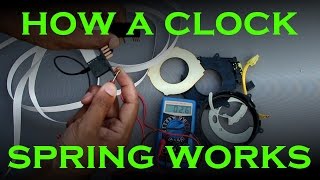
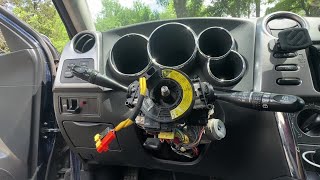
- Faulty clock spring (spiral cable) (Less Common) — While clock spring failures typically cause driver-side codes, internal shorts within a faulty spiral cable cross-circuit and trigger passenger-side codes on specific models (like the Toyota Yaris).
- Corroded Front Crash Sensor (Ford F-150) (Less Common) — On 2004-2008 Ford F-150s, the single front crash sensor suffers severe corrosion. 🎬 Watch: How to fix common Ford F-150 airbag sensor issues. This creates electrical noise that the SRS module misinterprets as a squib short.
- Faulty Airbag Control Module (SRS/ECU) (Rare) — The main SRS computer fails internally. Suspect this only after definitively ruling out all wiring, connectors, and peripheral sensors.
Symptoms
- Airbag warning light is on — The dashboard displays a solid red or amber airbag icon, indicating the SRS is completely disabled.
- Passenger airbag 'OFF' light is illuminated — The system defaults to disabling the passenger airbag as a fail-safe, illuminating the 'OFF' light even when an adult is seated.
- Horn or steering wheel buttons fail — If a faulty clock spring causes the cross-circuit, the horn, cruise control, or steering wheel radio buttons stop working.
- No start condition (Peugeot/Citroen only) — On Peugeot or Citroen models, B1805 indicates a 'Starter Fault' and prevents the engine from cranking, completely unrelated to the airbag system.
- Audible chime at startup — Some vehicles sound a repetitive chime for the first minute of operation to alert the driver of a critical SRS fault.
Diagnostic Flowchart
Tap your situation to follow the diagnostic path that matches what you're seeing on this code.
Common Fixes & Costs
- Repairing wiring or securing connectors under the passenger seat — Parts: $0-$50, Labor: $150-$300, ~1.5 hr book time (DIY)
- Replacing the passenger airbag module
— Parts: $400-$1200, Labor: $150-$300, ~2.0 hr book time
(Professional)
Toyota Matrix (2009-2013): OEM 73970-02080-B0 (Alt: N/A (OEM Only)) - Replacing the clock spring (spiral cable)
— Parts: $100-$400, Labor: $150-$300, ~1.5 hr book time
(Intermediate)
Toyota Yaris (2006-2011): OEM 84306-0K051 (Alt: Dorman 525-121) - Replacing the Airbag Control Module (SRS ECU)
— Parts: $300-$1500, Labor: $150-$350, ~2.0 hr book time
(Professional)
Varies: OEM Vehicle Specific (Alt: N/A (Use reset services like Safety Restore)) - Replacing the front crash sensor (Ford F-150)
— Parts: $50-$150, Labor: $75-$150, ~1.0 hr book time
(DIY)
Ford F-150 (2004-2008): OEM 6L3Z-14B004-AA (Alt: Motorcraft 8L3Z-14B004-A)
Used vs. New Parts: Buying Guide
When a used part is worth it: Never buy used airbag modules due to extreme safety risks. However, utilizing a 'reset service' for your original SRS Control Module is highly cost-effective. Used clock springs are acceptable for budget repairs but carry longevity risks.
Donor-vehicle mileage cap: roughly under 60000 miles for the part to have meaningful remaining life.
Donor quality checklist:
- Airbag modules: NEVER buy used/salvaged airbags. Unknown history makes them dangerous.
- Clock springs: Visually inspect for stress on the ribbon cable. Ensure exact part number matches.
- SRS Control Modules: Send your original module to a reputable service for a 'crash data reset' to avoid VIN programming issues.
Decision logic:
- If The part is an airbag inflator or cushion → Always buy new OEM. There are no safe aftermarket or used options.
- If The part is the SRS Control Module with crash data → Use a reset service on your original module to save money and avoid programming.
- If The part is a clock spring on a high-mileage vehicle → Purchase a new aftermarket part from a reputable brand for warranty protection.
Warranty tradeoff: Used SRS parts have no warranty. Aftermarket clock springs offer 1-year to lifetime warranties. New OEM parts carry a 1-year manufacturer warranty.
Worst-case if a used part fails: A faulty used airbag failing to deploy costs thousands in medical bills or worse. Financially, it requires repeat labor and purchasing a new part.
What Happens If You Wait — Timeline
- 0 Seconds: The SRS module detects the short circuit. The airbag warning light illuminates, and the entire SRS system is disabled. (MPG impact: 0%% · Added cost: $0)
- Immediate: The vehicle operates without passive safety systems. The risk of severe injury or death in a collision increases dramatically. Insurance claims may be denied. (MPG impact: 0%% · Added cost: Catastrophic safety risk.)
- At next state inspection: The vehicle automatically fails safety inspections in jurisdictions checking for functional SRS systems, preventing registration renewal. (MPG impact: 0%% · Added cost: $50-$150 (Failed inspection and re-inspection fees).)
- At time of sale: Resale value drops significantly. Buyers refuse to purchase or demand massive discounts for active airbag lights. (MPG impact: 0%% · Added cost: $500-$2500+ (Reduction in market value).)
Cost of Not Fixing It
- Immediate: The entire Supplemental Restraint System (SRS) is disabled. NO airbags will deploy and seatbelt pretensioners will not activate. (Added cost: Catastrophic safety risk.)
- At next vehicle inspection: The vehicle fails the safety portion of state inspections checking for illuminated airbag warning lights. (Added cost: $50-$150 (Failed inspection and re-inspection fees).)
- At time of resale: The vehicle's resale value diminishes significantly due to unresolved safety defects. (Added cost: $500-$2500+ (Reduction in vehicle value).)
Diagnosis Steps
- Safety First: Depower the SRS System
Disconnect the negative battery terminal and wait exactly 15 minutes. This discharges the backup power capacitors within the SRS module, preventing accidental airbag deployment.
Tools: 10mm wrench or socket (Beginner) - Read Codes with an SRS-Capable Scanner
Connect an advanced scanner capable of reading 'B' (Body) codes. Confirm B1805 is active and note any accompanying codes to narrow the diagnostic path.
Tools: SRS-capable OBD-II scanner (Beginner) - Visually Inspect Under the Passenger Seat
Slide the passenger seat fully forward and up. Inspect the bright yellow wiring harness and connectors for pinched wires, debris damage, or loose connections. Disconnect and securely reconnect them.
Tools: Flashlight (Beginner) - Inspect Passenger Airbag Connector (Glove Box)
Remove the glove box assembly to access the passenger airbag module. Inspect the yellow connector leading into the module for a secure fit, damage, or corrosion.
Tools: Screwdriver, trim removal tools, flashlight (Intermediate) - Check SRS Fuses
Locate the SRS fuses using the owner's manual. Visually inspect each fuse and test for continuity. Replace blown fuses only with the exact same amperage.
Tools: Fuse puller, multimeter (Beginner) - Test Squib Circuit with a Load Resistor (Advanced)
Disconnect the passenger airbag module connector. Insert a 2.0-2.5 ohm resistor across the vehicle-side harness terminals. Reconnect the battery, turn the ignition on, and clear codes. If B1805 changes to B1806 (Open Circuit), the wiring is good and the airbag module requires replacement.
Tools: SRS-capable scanner, 2.0-2.5 ohm resistor or SRS load tool (Advanced) - Measure Resistance from the SRS Module Connector (Professional)
Disconnect the battery and main SRS module connector. Measure resistance between the two passenger squib circuit pins. A reading below 1.0 ohm confirms a short circuit. NEVER probe an airbag directly.
Tools: Professional multimeter, vehicle-specific wiring diagram (Professional) - Check for Shorts to Ground/Power (Professional)
With the battery and SRS module disconnected, check for continuity between the squib wires and chassis ground (near 0 ohms indicates a short to ground). Reconnect the battery (ignition ON) and check for voltage on the squib wires (12V indicates a short to power).
Tools: Professional multimeter, vehicle-specific wiring diagram (Professional) - Scan Live Data PIDs (Peugeot/Citroen Only)
For Peugeot/Citroen vehicles, monitor BSI live data for 'Battery Voltage During Starting'. If the voltage drop is less than 1.5V during cranking, the BSI logs B1805. Investigate the starter, battery, and related cables.
Tools: Advanced diagnostic scanner with live data capability (Advanced)
When This Code Triggers (Freeze-Frame Conditions)
- SRS Module Status: Fault Detected (The SRS module detects the fault during its initial self-test at key-on.)
- Ignition Status: ON (The code sets the moment the ignition turns to the 'ON' or 'RUN' position.)
- System Voltage: 11.8V - 14.8V (The fault logs under normal battery voltage conditions, during cranking, or while running.)
- Time Since Start: < 5 seconds (The SRS self-test is rapid; the fault logs within seconds of starting the car.)
Related Codes
- B1806 — Means 'Open in Front Passenger Squib Circuit.' A wire is broken or unplugged, showing infinite resistance ('OL'), whereas B1805 shows near-zero resistance.
- B1807 — Indicates a 'Short to Ground'. A squib wire is touching the vehicle's metal frame. Diagnosed by checking continuity between the squib wire and chassis ground.
- B1808 — Means 'Short to B+'. The squib wire is touching a power source. Diagnosed by checking for battery voltage on the disconnected squib wire.
- B1810 — Indicates 'Short in Front Passenger Squib #2 Circuit.' Refers to the second stage of a dual-stage airbag. The diagnostic process is identical to B1805.
Climate & Environmental Factors
- High Humidity / Water Intrusion: Moisture from rain, sunroof leaks, or spills penetrates under-seat connectors or the SRS module, causing corrosion. This creates unintended electrical paths, resulting in short circuits.
- Extreme Cold: Freezing temperatures cause metal contacts within SRS connectors to contract, creating poor connections. This triggers an airbag light on cold starts that disappears once the interior warms up.
How to Talk to a Mechanic About This Code
Say this: "I have an airbag warning light and my scanner shows code B1805. I know this is a passenger airbag circuit short often caused by under-seat wiring. I'd like to book a diagnostic appointment to confirm the short's location."
This directs the shop to start with the most common and least expensive failure point, preventing immediate quotes for expensive airbag modules.
Avoid saying:
- 'My airbag light is on, can you fix it?'
- 'Just do whatever it takes to turn the light off.'
- 'I think I need a new airbag.'
Questions to ask before authorizing the repair:
- Did you find the fault in the under-seat wiring or connectors?
- If recommending a part replacement, how did you isolate the fault (e.g., using a load resistor)?
- Is the recommended part a new OEM part?
- Does the estimate include clearing the code and verifying the light stays off?
Where to Take It: Dealer vs Independent vs Chain
- Dealer:
A safe but expensive option. Necessary only if the fix requires vehicle-specific programming.
Best for: Vehicles under warranty., Complex SRS issues requiring proprietary module programming., Guaranteed fixes with OEM part warranties.
Downsides: Highest labor rates and part costs., More likely to recommend replacing entire harnesses rather than simple wiring repairs. (Typical cost: +50% vs. baseline) - Independent Shop:
Best fit for most cases. A reputable independent technician starts with simple wiring checks, saving money.
Best for: Out-of-warranty vehicles where the cause is likely wiring or a clock spring., Cost-conscious owners wanting proper diagnosis without dealer prices.
Downsides: Expertise varies. Some shops refuse airbag work due to liability. (Typical cost: +0% vs. baseline) - Chain Shop:
AVOID. The risk of improper repair on a critical safety system is too high.
Best for: Not suitable for this repair.
Downsides: Technicians lack specialized SRS training and diagnostic tools., High pressure to sell parts leads to misdiagnosis., Most decline airbag work due to liability. (Typical cost: -10% vs. baseline)
When to Walk Away From the Repair
If the estimated repair cost exceeds 50% of the car's private-party value, critically evaluate the decision. For safety issues, the calculation differs from non-essential repairs.
- Car worth $4000, fix is $2200: Walk away. The repair exceeds half the car's value, and the vehicle is unsafe to drive.
- Car worth $12000, fix is $1800: Fix it. The cost is within a reasonable percentage of the vehicle's value and restores a critical safety feature.
- Car worth $5000, fix is $250: Fix it immediately. This cheap wiring repair restores thousands in value and makes the car safe.
What Scan Tool You Need for This Code
Minimum: A scanner capable of reading and clearing SRS (Airbag) codes, often listed as 'ABS/SRS' or 'Multi-System'.
A basic $20 code reader only reads 'P' (Powertrain) codes. It cannot communicate with the SRS module to see 'B' (Body) codes like B1805.
Budget: BlueDriver Pro (~$100) — Connects via Bluetooth to read and clear SRS codes, view live data, and generate repair reports for DIY confirmation.
Mid-range: Foxwell NT630 Plus / Autel ML629 (~$150) — Dedicated handheld units providing code definitions and live data streams to diagnose intermittent faults.
Professional: Autel MaxiCOM MK808 (~$450) — Offers full system diagnostics and bidirectional controls essential for complex wiring issues or programming new modules.
Rent vs buy: Auto parts store loaner tools typically do not read SRS codes. For a one-time issue, paying a shop's $100-$200 diagnostic fee is more cost-effective than buying a mid-range scanner.
How to Clear the Code After You Fix It
- Ensure the underlying electrical fault is properly repaired.
- Reconnect the negative battery terminal.
- Use an SRS-capable OBD-II scan tool to access the 'B' (Body) or SRS module.
- Select the function to 'Clear' or 'Erase' fault codes.
- Cycle the ignition off, then on, and verify the airbag warning light turns off after the 6-second bulb check.
Drive cycle (~1 minutes): The SRS system performs a complete self-test every time the ignition turns on. No driving is required. If the repair was successful, the light remains off immediately.
Watch out for:
- Using a basic engine code reader that cannot communicate with the SRS module.
- Failing to fix the root cause, causing the code to return instantly.
- Assuming disconnecting the battery clears a 'hard fault' from the SRS module's memory.
Will This Fail Emissions / State Inspection?
No — by itself this code doesn't fail OBD inspection (but it can keep readiness monitors from setting, which causes a separate fail).
- California: An airbag light will NOT fail the emissions-only SMOG check, but the vehicle is legally unsafe to operate.
- New York: An illuminated airbag light is immediate grounds for rejection of the annual safety inspection.
- Texas: The annual safety inspection does not fail a vehicle for an airbag light. Only the 'Check Engine' light causes automatic failure in emissions counties.
Most Commonly Affected Vehicles
- Toyota Matrix (2009-2013) — Service manuals specifically define B1805 as 'Short in Passenger Squib Circuit'. Diagnosis requires checking resistance and isolating shorts to ground or power.
- Toyota Yaris (2006-2011) — Owners report B1805/52 appearing even after the spiral cable recall, indicating the root cause is frequently under-seat wiring or the passenger airbag assembly itself.
- Toyota FJ Cruiser (2007-2014) — Official documents list B1805/52 as 'Short in Front Passenger Side Squib Circuit'. Follow standard Toyota SRS diagnostic procedures.
- Ford F-150 (2004-2008) — A corroded front crash sensor behind the grille causes various SRS codes. Another frequent failure is the passenger airbag 'OFF' indicator light bulb burning out.
- Hyundai Sonata (2011-2015) — High volume of complaints trace back to damaged wiring harnesses under the passenger seat for the OCS or airbag squib.
- Nissan Altima (2007-2012) — Known for Occupant Classification System (OCS) sensor issues. Damage to the shared under-seat wiring harness triggers B1805.
- Peugeot / Citroen 208, 3008, Spacetourer (2012-2019) — B1805 is a 'Starter Fault'. The BSI module expects a voltage drop >1.5V during cranking; failure to detect this logs the code and causes a no-start condition.
- Dodge Charger (2011-2014) — B1805 is defined as 'Passenger Door Lock/Unlock Switch - Stuck'. The Body Control Module sets this if it detects illogical voltage for over 30 seconds. It is not an airbag fault.
Manufacturer-Specific Notes
- Toyota / Lexus / Scion: Often displays as B1805/52. The '/52' suffix provides specific diagnostic routing for Techstream software, but refers to the exact same passenger squib short.
- Peugeot / Citroen: Defines B1805 as a 'Starter Fault.' Triggers when the BSI module fails to detect a voltage drop greater than 1.5V during engine cranking.
- Dodge / Chrysler / Jeep: On models like the Charger, B1805 points to a stuck passenger door lock/unlock switch. It is a Body Control Module (BCM) code, not an SRS code.
- General Motors (GM): On early 2000s GM vehicles, B1805 indicates a fault within the primary ignition switch circuit where the SRS module misses the 'on' signal.
- Honda / Acura: Indicates 'Power Seat Control Unit Lost Communication with Gauge Control Module', resulting in inoperable power seats. This is a network error, not an airbag fault.
- Ford: On 2004-2008 F-150s, front crash sensor corrosion causes various SRS faults. While B1805 is typically a passenger squib short, sensor corrosion is a frequent culprit.
Real Owner Stories
2011 Hyundai Elantra at 110K miles
Airbag light stayed on permanently. Scanner read code B1805.
What they tried:
- Suspected the clock spring due to forum advice.
- Performed a visual inspection under the passenger seat before ordering parts.
- Found the yellow airbag connector slightly loose and wires pinched by the seat rail.
Outcome: Disconnected the battery, repositioned the wiring away from the rail, and securely reconnected it. Cleared the code. The light stayed off. Cost: $0.
Lesson: Always check the under-seat wiring first. It is a free, 5-minute inspection that prevents hundreds of dollars in unnecessary parts.
2005 Ford F-150 at 155K miles
Airbag light flashed code '4-2', pointing to the front crash sensor. Scanner confirmed an SRS fault.
What they tried:
- Purchased a new front crash sensor for $40.
- Attempted to replace the sensor behind the grille.
- Discovered the connector and wiring were completely corroded and crumbled upon removal.
Outcome: Sourced a new pigtail connector, spliced it onto the harness using weatherproof connectors, and installed the new sensor. Code cleared permanently.
Lesson: On vehicles prone to corrosion, inspect the wiring and connector before ordering the sensor. The connection itself is often the failure point.
2015 Peugeot 308 with 70K miles
Car would not crank, but could be bump-started. No airbag light. Scanner pulled code B1805 'Starter Fault'.
What they tried:
- Replaced the battery and starter motor with no change.
- Shop checked all wiring between the starter, battery, and BSI module.
Outcome: Traced to an internal failure in the BSI module, which failed to detect voltage drop during starting. The BSI required expensive replacement and programming.
Lesson: Code definitions vary by brand. For Peugeot/Citroen, B1805 is a starting system issue. Never replace airbag parts for a no-start symptom.
How to Prevent This Code From Triggering
- Never store items under the front seats. (Daily habit) — Objects shift during driving and snag, pinch, or disconnect the sensitive SRS wiring harnesses located under the seats, causing over 50% of these faults.
- Address all water leaks immediately. (As needed.) — Leaking sunroofs or door seals allow water to saturate carpets and reach SRS modules or connectors, causing corrosion and electrical shorts.
- Secure wiring after any interior repair. (After any DIY or professional repair.) — Ensure all yellow SRS wiring is properly routed in original clips, away from moving seat rails or pedals, to prevent future chafing.
Frequently Asked Questions
Is it safe to drive with code B1805?
No. The airbag warning light signifies the entire Supplemental Restraint System (SRS) is offline. In an accident, zero airbags will deploy and seatbelt pretensioners will fail. Tow the vehicle to a repair facility.
Can I fix code B1805 myself?
You can safely perform visual inspections and ensure under-seat connectors are secure. However, due to the extreme danger of accidental deployment, component replacement or direct circuit testing requires a qualified professional.
Will clearing the code fix the problem?
No. B1805 is a 'hard code' indicating a persistent electrical fault. The SRS module performs a self-check at startup, and the light will return instantly until the physical short is repaired.
What is the most common misdiagnosis for B1805?
Mechanics often mistakenly replace expensive parts like the clock spring or airbag module without testing. The actual problem is frequently a simple broken wire or loose connector under the passenger seat.
Can a bad seat weight sensor (OCS) cause a B1805 code?
A faulty OCS sensor usually sets its own specific code. However, because OCS and airbag squib wiring share the same under-seat harness, physical damage often triggers a B1805 alongside an OCS code.
My Toyota shows code B1805/52. What does the '/52' mean?
The '/52' is a sub-code used by Toyota's dealership software (Techstream) to reference specific service manual tests. For independent mechanics, B1805 and B1805/52 point to the exact same passenger squib short.
Why does my scanner say B1805 is a starter fault but my airbag light is on?
Your scanner is displaying the Peugeot/Citroen definition. If you drive a Toyota, Ford, or Hyundai with an illuminated airbag light, ignore the scanner's text and diagnose an SRS fault.
How much does it cost to diagnose code B1805?
Repair shops typically charge a diagnostic fee of $100 to $200. This covers a professional SRS scan and initial wiring inspections to locate the short.
Key Takeaways
- Code B1805 disables your entire airbag system, meaning 0 airbags will deploy in a crash; do not drive the vehicle.
- Check the bright yellow wiring harness under the passenger seat first, as pinched or loose wires cause over 50% of these faults.
- Always disconnect the negative battery terminal and wait 15 minutes before inspecting any SRS components to prevent accidental deployment.
- Definitions vary by brand: B1805 is a passenger airbag short on Toyotas, but indicates a starter voltage drop below 1.5V on Peugeot and Citroen vehicles.
Helpful Videos



Shop the Parts Behind B1805
Below are the parts most often responsible for code B1805, ranked by how frequently each one is the actual culprit (per the diagnosis above). Tap any to see what we have for your vehicle.



The information in this article is provided for general reference and educational purposes only. Vehicle specifications, procedures, and part compatibility can vary by production date, trim level, and region. Always consult your vehicle's factory service manual and verify part numbers before purchasing or performing repairs. Safety-critical components such as airbags, seat belts, and braking systems should be installed by a qualified professional.
- 🧭 Diagnostic Flowchart
- 🎬 Helpful Videos
- 🛍️ Shop This Part
- What Does B1805 Mean?
- Can I Drive With B1805?
- Common Causes
- Symptoms
- Common Fixes & Costs
- Used vs. New Parts: Buying Guide
- What Happens If You Wait — Timeline
- Cost of Not Fixing It
- Diagnosis Steps
- When This Code Triggers (Freeze-Frame Conditions)
- Related Codes
- Climate & Environmental Factors
- How to Talk to a Mechanic About This Code
- Where to Take It: Dealer vs Independent vs Chain
- When to Walk Away From the Repair
- What Scan Tool You Need for This Code
- How to Clear the Code After You Fix It
- Will This Fail Emissions / State Inspection?
- Most Commonly Affected Vehicles
- Manufacturer-Specific Notes
- Real Owner Stories
- 2011 Hyundai Elantra at 110K miles
- 2005 Ford F-150 at 155K miles
- 2015 Peugeot 308 with 70K miles
- How to Prevent This Code From Triggering
- Frequently Asked Questions
- Is it safe to drive with code B1805?
- Can I fix code B1805 myself?
- Will clearing the code fix the problem?
- What is the most common misdiagnosis for B1805?
- Can a bad seat weight sensor (OCS) cause a B1805 code?
- My Toyota shows code B1805/52. What does the '/52' mean?
- Why does my scanner say B1805 is a starter fault but my airbag light is on?
- How much does it cost to diagnose code B1805?
- Key Takeaways
- 🎟️ Get 5% Off