

OBD-II Code B1810: Driver-Side Airbag Circuit Fault
The Ultimate 2026 Guide to B1810: What it means, why it triggers, and how to fix it for good.
- Code B1810 disables your entire airbag system due to a short circuit in the driver's steering wheel airbag, making the vehicle unsafe to drive.
- A failed spiral cable (clock spring) causes over 80% of B1810 codes due to internal ribbon wires snapping from constant steering wheel rotation.
- If your horn or steering wheel buttons fail simultaneously with the airbag light, the spiral cable is definitively the broken component.
- Installing a cheap aftermarket clock spring frequently results in immediate failure, forcing a repeat $150-$300 labor charge to install the correct OEM part.
- Never test an airbag module with a multimeter, as the electrical current triggers deployment; always use a 2.2 Ohm simulator tool to safely verify the circuit.
What Does B1810 Mean?
Code B1810 signifies the Supplemental Restraint System (SRS) module detected a short circuit in the driver's side airbag electrical loop. A short circuit means electrical current flows along an unintended path. Because the system cannot guarantee the airbag will function correctly, it deactivates the entire SRS as a safety precaution, illuminating the dashboard airbag warning light permanently.
Technical definition: While the official SAE definition is generic, manufacturers like Toyota, Lexus, and Subaru use B1810 to indicate a 'Short in Driver Side Squib 2nd Step Circuit'. The squib is the pyrotechnic initiator that ignites the propellant to inflate the airbag. Modern dual-stage airbags use two squibs that fire with different force depending on crash severity. This code points to a short in the second-stage deployment circuit, which is critical for proper airbag response in severe impacts.
Can I Drive With B1810?
No — Do Not Drive. No, it is not safe to drive. A B1810 code indicates a critical fault in the Supplemental Restraint System (SRS). The SRS control module disables the entire airbag system as a fail-safe. In a crash, zero airbags deploy, and seatbelt pretensioners deactivate. Driving with this code exposes occupants to a significantly higher risk of serious injury or death. An active airbag warning light also causes an automatic failure of safety inspections in states like New York, Pennsylvania, and Virginia.
Common Causes
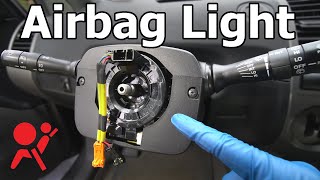
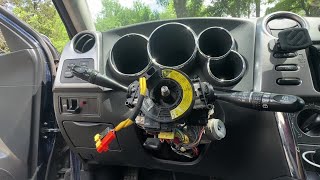
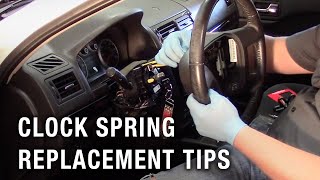
- Faulty Spiral Cable (Clock Spring) (Very Common) — The spiral cable is a delicate ribbon of wires coiled within the steering column, maintaining electrical connections while the wheel turns. 🎬 Watch: How to replace a clock spring when your horn fails. Constant rotation fatigues these thin wires, causing them to break or short out against each other.
- Defective Driver's Airbag Module (Inflator/Squib) (Common) — The airbag module housing the squib (inflator charge) develops an internal short circuit due to manufacturing defects, age, moisture intrusion, or physical damage.
- Failed Aftermarket Spiral Cable (Common) — Installing a cheap, non-OEM spiral cable causes immediate or premature failure. These parts have incorrect resistance values or poor-quality wiring that quickly shorts out, triggering B1810 right after installation.
- Damaged Wiring or Loose Connectors (Less Common) — The wiring connecting the SRS control module to the spiral cable becomes pinched, frayed, or corroded. Loose or improperly seated yellow SRS connectors also cause intermittent shorts.
- Damage During Unrelated Repairs (Less Common) — The delicate clock spring breaks easily during repairs requiring steering wheel or dashboard removal (e.g., A/C evaporator replacement). Failing to center the clock spring during installation snaps the internal ribbon on the first turn.
- Faulty Airbag Control Module (SRS/ECU) (Rare) — The main SRS computer fails internally, incorrectly reporting a short circuit. After a collision, the module stores hard crash data and requires professional resetting or replacement.
- Corroded SRS Module Grounding Point (Rare) — The SRS control module requires a clean ground connection to the chassis. On vehicles like the Ford F-150, the module sits under the center console where moisture accumulates, corroding the housing and grounding points.
Symptoms
- Airbag Warning Light is On Continuously — The primary symptom. The light remains on continuously while the engine runs, indicating the SRS module confirmed a hard fault.
- Horn Not Working — The horn's wiring passes through the spiral cable. A failure here causes the horn to stop working simultaneously with the airbag light appearing.
- Steering Wheel Buttons Inoperative — Cruise control, radio volume, and phone buttons fail because their wiring bundles with the airbag circuits inside the spiral cable.
- Rubbing or Clicking Noise When Turning — A broken internal ribbon in the spiral cable creates a distinct rubbing, grinding, or clicking sound inside the steering column as you turn the wheel.
Diagnostic Flowchart
Tap your situation to follow the diagnostic path that matches what you're seeing on this code.
Common Fixes & Costs
- Replace Spiral Cable (Clock Spring) — Parts: $70-$450, Labor: $150-$300, ~1.5 hr book time (Intermediate)
- Replace Driver's Airbag Module — Parts: $400-$1200, Labor: $100-$200, ~1 hr book time (Professional)
- Repair Wiring or Connector — Parts: $10-$50, Labor: $150-$400, ~2 hr book time (Intermediate)
- Replace Airbag Control Module (SRS ECU) — Parts: $200-$800, Labor: $150-$300, ~1.5 hr book time (Professional)
- SRS Module Grounding Point Repair — Parts: $5, Labor: $100-$250, ~1.2 hr book time (Intermediate)
Used vs. New Parts: Buying Guide
When a used part is worth it: For the spiral cable (clock spring), a used OEM part from a low-mileage, non-accident vehicle is a cost-effective alternative to a new OEM part. Never purchase a used driver's airbag module due to extreme safety risks.
Donor-vehicle mileage cap: roughly under 60000 miles for the part to have meaningful remaining life.
Donor quality checklist:
- Verify the donor vehicle was not involved in a front-end collision.
- Match the part number exactly, including any sub-revisions, as features vary.
- Avoid parts from flood-damaged or high-humidity environments to prevent corrosion issues.
Decision logic:
- If The required part is the airbag module (squib) itself. → Buy new OEM only. The risk of a faulty, damaged, or improperly stored explosive device is too high.
- If The required part is the spiral cable (clock spring) and the vehicle is a high-value or newer model. → Buy new OEM. The cost of repeat labor ($150-$300) to replace a failed used or cheap aftermarket part outweighs the initial savings.
- If The vehicle is older (>10 years) and the budget is the primary concern. → A used OEM clock spring is preferable to a new, low-quality aftermarket part.
Warranty tradeoff: Used parts typically have a 30-90 day warranty, which does not cover labor costs. New OEM parts carry a 1-year/12,000-mile warranty.
Worst-case if a used part fails: $250-$600. This represents the cost of repeat labor to install another part plus the cost of the replacement part itself after a cheap aftermarket clock spring fails prematurely.
What Happens If You Wait — Timeline
- 0 Seconds: The SRS module detects the short circuit during its initial self-check. The airbag warning light illuminates, and the entire supplemental restraint system is immediately disabled. (MPG impact: 0%% · Added cost: $0 - Safety Risk is Maximum)
- First Drive to Next Inspection: The vehicle operates without functional airbags or seatbelt pretensioners. In many jurisdictions, the vehicle automatically fails its next mandatory safety inspection. (MPG impact: 0%% · Added cost: $50-$100 in failed inspection and re-inspection fees.)
- In Case of a Minor Collision: Due to disabled pretensioners, the seatbelt does not lock effectively, causing minor occupant injury. The lack of airbag deployment complicates insurance claims. (MPG impact: 0%% · Added cost: $500 - $5,000+ in potential medical bills and increased insurance premiums.)
- In Case of a Major Collision: In a moderate to severe crash where airbags are critical for survival, they will not deploy. The risk of severe, life-altering injury or death increases by an estimated 40-50%. (MPG impact: 0%% · Added cost: Potentially infinite. This represents the catastrophic cost of ignoring a critical safety system failure.)
Cost of Not Fixing It
- Immediate: Complete deactivation of the entire Supplemental Restraint System (SRS). No airbags will deploy in a collision, and seatbelt pretensioners deactivate. (Added cost: N/A - Extreme safety risk)
- Next state inspection: Automatic failure of the vehicle's safety inspection in many states, preventing legal registration renewal. (Added cost: $20-$70 in re-inspection fees plus the eventual cost of the required repair.)
- In case of an accident: Drastically increased risk of serious injury or death for all vehicle occupants due to the lack of functioning airbags and pretensioners. (Added cost: Potentially infinite medical bills and loss of life.)
Diagnosis Steps
- Read the Codes
Use an SRS-compatible OBD-II scanner to confirm B1810. Note related codes. B1811 (open circuit) or B1800 (first stage short) appearing simultaneously definitively point to a shared component like the spiral cable.
Tools: OBD-II Scanner (SRS compatible) (Beginner) - Check Horn and Steering Wheel Controls
Test the horn, cruise control, and steering wheel buttons. If any malfunction, the spiral cable (clock spring) is the primary suspect.
Tools: None (Beginner) - Analyze Live Data PIDs
Using an advanced scan tool, access SRS live data for 'Driver Squib 2 Resistance'. Normal is 2.0-3.5 Ohms. A reading under 1.0 Ohm confirms an active short circuit.
Tools: Advanced OBD-II Scanner with Live Data (Advanced) - Visually Inspect Connectors & Perform Wiggle Test
Disconnect the negative battery terminal and wait 15 minutes. Remove the steering column covers. Inspect the yellow SRS connectors for damage, corrosion, or looseness. Reconnect the battery and monitor live data while gently wiggling the connectors to spot intermittent shorts.
Tools: Socket set, trim removal tools, Advanced OBD-II Scanner (Intermediate) - Test the Airbag Module with a Simulator
Never use a multimeter on the airbag module. Disconnect the driver's airbag and connect a 2.2 Ohm airbag simulator to the vehicle-side connector. Reconnect the battery and clear codes. If B1810 stays away, the airbag module is faulty. If it returns, the fault is upstream.
Tools: 2.2 Ohm Airbag Simulator Tool (Professional) - Perform Resistance Sweep Test on Spiral Cable
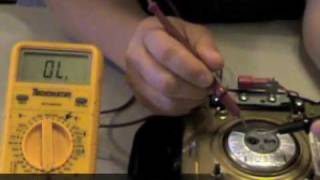
With the battery and spiral cable disconnected, connect a high-precision multimeter to the input and output pins for the 2nd stage squib circuit. Slowly rotate the spiral cable lock-to-lock. Resistance spikes or drops to 0 Ohms indicate internal failure.
Tools: High-Precision Multimeter, Service Manual (Advanced) - Check for Shorts in Harness
Use a multimeter to check the wiring harness between the SRS module and the spiral cable. Resistance under 1 kOhm between the circuit wires or to ground confirms a harness short.
Tools: Multimeter, Service Manual (Advanced) - Inspect the SRS Control Module
If all components test good, inspect the main SRS control module. Check for water intrusion or corrosion on the housing and grounding points.
Tools: Socket set, multimeter (Professional)
When This Code Triggers (Freeze-Frame Conditions)
- System State: Key On (The SRS module performs a primary self-check the moment the ignition is turned to the 'ON' or 'RUN' position.)
- Time After Key On: 0-7 seconds (The fault is detected during the initial system check before the engine starts. The airbag light illuminates and fails to turn off after the standard 6-7 second bulb check.)
- System Voltage: 11.5V - 14.5V (The code sets under normal vehicle battery voltage. It is not typically caused by a low voltage condition.)
- Vehicle Speed: 0 mph (The B1810 fault is a static electrical check identified while the vehicle is stationary during the startup sequence.)
Related Codes
- B1811 — The direct partner to B1810. B1810 indicates a SHORT circuit, while B1811 indicates an OPEN circuit. Diagnosis is identical, but multimeter results are opposite.
- B1800 / B1801 — Codes for the FIRST-stage inflator circuit in the same driver's airbag. Seeing codes for both stages at once makes it highly probable the fault lies in a shared component like the spiral cable.
- B1812 / B1813 — Part of the same diagnostic family indicating more specific shorts. B1812 indicates a 'Short to Ground', and B1813 indicates a 'Short to Battery'.
- B1906 — Indicates a fault in the seatbelt pretensioner circuit. Appears with airbag codes if there is a general SRS module fault or widespread wiring issue.
Climate & Environmental Factors
- High Humidity / Water Intrusion: High humidity and direct water leaks accelerate corrosion on electrical connectors and grounding points for the SRS control module. Spilled drinks or moisture from the floor directly cause SRS faults in vehicles where the module sits under the center console.
- Age and Thermal Cycles (Hot/Cold): Extreme temperature fluctuations cause the plastics and delicate ribbon cable inside the clock spring to become brittle over time, accelerating fatigue and failure.
How to Talk to a Mechanic About This Code
Say this: "I have an airbag warning light on, and my scanner shows code B1810, which points to the driver's side airbag circuit. My horn and steering wheel controls are also not working. I'd like to schedule a diagnostic to confirm if the spiral cable has failed."
This signals that you have done your research, identifies the most likely failed part, and focuses the technician's diagnostic time. It protects you from a shop that might try to upsell an unnecessary airbag module replacement.
Avoid saying:
- 'My airbag light is on, can you fix it?' (Too vague, invites a wide-ranging and expensive diagnostic process).
- 'Just replace whatever is broken.' (Gives the shop a blank check to replace multiple parts).
- 'I think I need a new airbag.' (Incorrectly suggests the most expensive fix first).
Questions to ask before authorizing the repair:
- Did you test the circuit with a resistor/simulator to rule out the airbag module itself?
- If the clock spring is the issue, are you using a new OEM part or an aftermarket one? What is the warranty on the part?
- Does the repair estimate include clearing the SRS codes and confirming the light stays off after repair?
- Will you provide me with the old part?
Where to Take It: Dealer vs Independent vs Chain
- Dealer:
Recommended only if the vehicle is under warranty, subject to a recall, or a complex European brand requiring programming.
Best for: Vehicles under the 5-year/60,000-mile safety restraint warranty., Complex vehicles (e.g., BMW, Land Rover) where the clock spring requires coding to the car., If a recall is active for the clock spring or SRS module.
Downsides: Highest labor rates and part costs, often 1.5-2x an independent shop., Defaults to replacing an entire assembly when a smaller component is the issue. (Typical cost: +75% vs. baseline) - Independent Shop:
Best fit for the vast majority of B1810 repairs. An experienced independent mechanic diagnoses and replaces a clock spring efficiently, often for half the cost of a dealership.
Best for: Most out-of-warranty vehicles where the B1810 code is a very common and well-understood clock spring failure., Vehicle owners seeking a balance between cost and quality, especially when using OEM parts.
Downsides: Shop quality and technician experience with SRS systems varies. Vet shops based on reviews and ASE certifications. (Typical cost: +0% vs. baseline) - Chain Shop:
Avoid for B1810. This is a critical safety system repair that requires specific expertise. The risk of misdiagnosis or improper installation is too high.
Best for: Simple jobs like tires and oil changes.
Downsides: Technician skill for complex electrical and safety system diagnostics is lacking., High pressure to upsell and lacks the correct diagnostic tools to properly read, diagnose, and clear SRS codes. (Typical cost: -10% vs. baseline)
When to Walk Away From the Repair
If the estimated repair cost for the B1810 code exceeds 50% of the car's private-party value, strongly consider selling the vehicle as-is rather than repairing it.
- Car worth $4000, fix is $800: Fix it. The repair cost is only 20% of the car's value and is necessary for safety and legal operation.
- Car worth $2500, fix is $1300: Walk away. The repair is over 50% of the vehicle's value. It is not economically sensible to proceed.
- Car worth $15000, fix is $1500: Fix it. This is a routine cost for a modern vehicle and is well below the walk-away threshold.
What Scan Tool You Need for This Code
Minimum: A scanner that reads and clears Supplemental Restraint System (SRS) codes. Basic engine-only code readers will not work for B1810.
A standard $20 OBD-II reader only accesses the Powertrain Control Module. It cannot communicate with the SRS module, so it won't see or clear the B1810 code.
Budget: BlueDriver Pro or MUCAR BT200 (~$100) — Connects to your smartphone via Bluetooth. Reads and clears SRS codes, views live data from the SRS module, and generates repair reports.
Mid-range: Foxwell NT510 Elite / Autel MaxiLink ML629 (~$180) — Dedicated handheld units offering comprehensive diagnostics for SRS, ABS, Engine, and Transmission. Provides live data graphing and manufacturer-specific code details.
Professional: Autel MaxiCOM MK808 / Launch CRP129E (~$450-600) — Offers full-system, bi-directional control to test components actively. Essential for a professional shop or programming a new SRS module.
Rent vs buy: Most auto parts stores do NOT rent out scanners capable of reading SRS codes due to liability. If this is a one-time repair, it is more cost-effective to pay a shop the $100 diagnostic fee.
How to Clear the Code After You Fix It
- Ensure the physical fault has been correctly repaired.
- Reconnect the negative battery terminal.
- Use an OBD-II scan tool with SRS/Airbag capability to access the SRS control module.
- Select the function to 'Clear Codes' or 'Erase DTCs' within the SRS module.
- Cycle the ignition off, then on, and verify the airbag warning light illuminates for 6-7 seconds and then turns off.
Drive cycle (~10 minutes): A specific drive cycle is not required to clear the B1810 code, but a short test drive is recommended. Drive for 10 minutes, including full lock-to-lock turns, to ensure no intermittent connections in the new parts trigger the light again.
Readiness monitors affected: None. SRS codes are separate from the powertrain control module and do not affect emissions readiness monitors.
Watch out for:
- Using a basic OBD-II scanner that cannot communicate with the SRS module.
- Assuming disconnecting the battery clears a hard SRS fault code from the module's memory.
- The code returning immediately indicates the physical repair was unsuccessful or incorrect.
Will This Fail Emissions / State Inspection?
No — by itself this code doesn't fail OBD inspection (but it can keep readiness monitors from setting, which causes a separate fail).
- California: An airbag light will NOT cause a failure of the California Smog Check, which is strictly an emissions test.
- New York: An illuminated SRS/airbag warning light is grounds for failure of the NYS safety inspection.
- Texas: An airbag warning light is NOT an item on the Texas vehicle inspection checklist and will NOT cause a failure.
- Pennsylvania: An illuminated airbag light causes an automatic failure of the annual safety inspection.
- Virginia: The airbag readiness light is a required check. If the light is on, the vehicle fails its safety inspection.
Most Commonly Affected Vehicles
- Toyota Corolla (2009-2016) — Extremely common failure of the spiral cable, often triggering B1810 and B1801 simultaneously. Subject to a major recall (NHTSA Campaign ID 14V168000).
- Toyota Prius (2010-2015) — Known for spiral cable failures. Using cheap aftermarket clock springs on these models causes repeat failures and additional fault codes.
- Toyota Sienna (2011-2017) — Prone to spiral cable issues that trigger B1810 or the related B1811 code.
- Ford F-150 (2004-2014) — Clock spring failures are common. The SRS module location under the center console makes it susceptible to corrosion from moisture, triggering this code.
- Subaru Impreza / WRX / Forester (2005-2014) — Subaru defines B1810 as 'SHORT IN DRIVER'S AIRBAG DUAL STAGE 2ND STEP'. The spiral cable is a common point of failure.
- BMW 3-Series / 5-Series (2012-2018) — Clock spring (steering wheel cassette) failure is a known issue. Replacement is expensive as the new part requires coding to the vehicle's specific options.
- Lexus GS / IS / ES Series (2006-2013) — Shares the same SRS design philosophy as Toyota and is equally susceptible to spiral cable faults causing B1810.
- Mazda 3 / 6 Series (2010-2018) — Spiral cable failure is a known issue, presenting with the airbag light plus loss of steering wheel controls.
- Land Rover Discovery / Range Rover Sport (2005-2013) — B1810 links to driver's airbag circuit faults, with the rotary coupler (clock spring) being a frequent cause.
Manufacturer-Specific Notes
- Toyota/Lexus/Subaru: Consistently uses B1810 to mean 'Short in Driver Side Squib 2nd Step Circuit'. A recall for faulty spiral cables was issued for many 2006-2010 Toyota models, a primary cause of this code.
- Acura/Honda: On some models, B1810 indicates a 'Power Seat Control Unit Lost Communication with MICU', an entirely different issue related to the power seat memory.
- Jeep: On certain Jeep vehicles, B1810 defines as 'Driver Door Ajar Input Circuit Low', a fault related to the door latch sensor, not the airbag system.
- Suzuki: On models like the Wagon R and Jimny, B1810 defines as 'Fuel Level Sensor Circuit/Open', causing the fuel gauge light to blink instead of the airbag light.
- Chevrolet/GM: On some models, B1810 refers to a fault in the power thigh support motor circuit for the driver's seat, completely unrelated to the SRS system.
- Land Rover: B1810 on some Land Rover models points to a 'Driver's Seatbelt Buckle Switch' fault, requiring diagnosis to differentiate from a clock spring issue.
- Ford: The clock spring is covered under the factory 'Safety Restraint Warranty' which is 5 years or 60,000 miles.
Real Owner Stories
2008 Toyota Corolla with 126k miles - The Aftermarket Part Gamble
SRS light came on. A shop quoted $600 for an OEM clock spring replacement. To save money, the owner bought a mid-range aftermarket clock spring for $230 total repair cost.
Outcome: The shop recommended replacing the new aftermarket part with a genuine OEM part at an additional cost of $600. The initial savings were lost, and the owner paid for the repair twice.
Lesson: Supplying your own parts, especially non-OEM safety components like clock springs, is a gamble. A faulty part leads to immediate failure, forcing you to pay for labor again.
2010 Ford F-150 - Horn is the Telltale Sign
The horn on the steering wheel stopped working, but the horn still worked when locking the truck with the key fob. The airbag light was also on.
Outcome: Replacing the clock spring resolved both the horn issue and the airbag light. The clock spring's internal ribbon cable had a partial failure affecting only specific circuits.
Lesson: If your steering wheel horn doesn't work but the alarm horn does, the clock spring is the most likely culprit, even if other steering wheel controls seem fine.
2012 Subaru Impreza - The Intermittent Fault
Airbag light came on intermittently, sometimes staying off for days. Code B1810 was stored as a history code. The horn and steering wheel controls always worked.
Outcome: The connector pins for the spiral cable had become slightly loose. Disconnecting, cleaning with electrical contact cleaner, and reconnecting the harness securely fixed the intermittent short.
Lesson: An intermittent B1810 code without other symptoms is often caused by a poor electrical connection rather than a completely failed part. A wiggle test is a valuable diagnostic step.
How to Prevent This Code From Triggering
- Keep Cabin Dry and Address Water Leaks Promptly (Annual Inspection) — Moisture from leaking windshields or sunroof drains seeps into connectors or the SRS control module, causing corrosion and short circuits.
- Apply Dielectric Grease to SRS Connectors During Service (When disconnected) — Applying a small amount of silicone dielectric grease to the connector pins before reassembly creates a moisture-proof barrier, preventing future corrosion.
- Avoid Turning Steering Wheel with Linkage Disconnected (During unrelated repairs) — If the steering rack is disconnected, turning the steering wheel past its normal limits snaps the delicate ribbon cable inside the clock spring.
- Be Gentle with Steering Column Wiring (Daily habit / During repairs) — Avoid tangling phone chargers around the steering column where they snag and damage the clock spring or its wiring.
Frequently Asked Questions
Is it safe to drive with code B1810?
No. This code means the entire airbag system is disabled as a fail-safe. In an accident, no airbags will deploy, drastically increasing the risk of severe injury or death.
Are all airbags disabled if the warning light is on?
Yes. When the SRS module detects a critical fault like B1810, it deactivates the entire system to prevent unpredictable behavior. Assume none of your airbags will function until the fault is repaired.
Will clearing the code fix the problem?
No. B1810 indicates a hard electrical fault. The code reappears immediately upon the SRS module's next self-test until the underlying physical problem is fixed.
Can a weak or dead battery cause the airbag light to come on?
Yes. The SRS module is voltage-sensitive, and a weak battery triggers random codes. However, B1810 is a specific short-circuit fault, meaning a genuine physical failure is far more likely than a simple voltage drop.
What are the most common mistakes when fixing a B1810 code?
The biggest mistake is installing a cheap aftermarket clock spring, which often fails immediately. Another error is failing to center the new clock spring during installation, causing the internal ribbon cable to snap.
Why did my horn and steering wheel buttons stop working when the airbag light came on?
The electrical wiring for the airbag, horn, and steering wheel controls passes through the spiral cable (clock spring). When this part fails, it breaks the connection for multiple systems at once.
My car was part of the Takata recall. Is this code related?
Unlikely. The Takata recall was for faulty inflators that rupture, whereas B1810 is an electrical circuit fault. However, an issue could have been created during the recall repair if a connector was damaged.
Can I reset the airbag light myself after a repair?
No, standard OBD-II readers cannot clear SRS codes. You must use an advanced scanner with SRS capabilities or visit a professional shop. Once the hard fault is repaired and the code is cleared, the light stays off.
Key Takeaways
- Code B1810 disables your entire airbag system due to a short circuit in the driver's steering wheel airbag, making the vehicle unsafe to drive.
- A failed spiral cable (clock spring) causes over 80% of B1810 codes due to internal ribbon wires snapping from constant steering wheel rotation.
- If your horn or steering wheel buttons fail simultaneously with the airbag light, the spiral cable is definitively the broken component.
- Installing a cheap aftermarket clock spring frequently results in immediate failure, forcing a repeat $150-$300 labor charge to install the correct OEM part.
- Never test an airbag module with a multimeter, as the electrical current triggers deployment; always use a 2.2 Ohm simulator tool to safely verify the circuit.
Helpful Videos
Shop the Parts Behind B1810
Below are the parts most often responsible for code B1810, ranked by how frequently each one is the actual culprit (per the diagnosis above). Tap any to see what we have for your vehicle.



The information in this article is provided for general reference and educational purposes only. Vehicle specifications, procedures, and part compatibility can vary by production date, trim level, and region. Always consult your vehicle's factory service manual and verify part numbers before purchasing or performing repairs. Safety-critical components such as airbags, seat belts, and braking systems should be installed by a qualified professional.
- 🧭 Diagnostic Flowchart
- 🎬 Helpful Videos
- 🛍️ Shop This Part
- What Does B1810 Mean?
- Can I Drive With B1810?
- Common Causes
- Symptoms
- Common Fixes & Costs
- Used vs. New Parts: Buying Guide
- What Happens If You Wait — Timeline
- Cost of Not Fixing It
- Diagnosis Steps
- When This Code Triggers (Freeze-Frame Conditions)
- Related Codes
- Climate & Environmental Factors
- How to Talk to a Mechanic About This Code
- Where to Take It: Dealer vs Independent vs Chain
- When to Walk Away From the Repair
- What Scan Tool You Need for This Code
- How to Clear the Code After You Fix It
- Will This Fail Emissions / State Inspection?
- Most Commonly Affected Vehicles
- Manufacturer-Specific Notes
- Real Owner Stories
- 2008 Toyota Corolla with 126k miles - The Aftermarket Part Gamble
- 2010 Ford F-150 - Horn is the Telltale Sign
- 2012 Subaru Impreza - The Intermittent Fault
- How to Prevent This Code From Triggering
- Frequently Asked Questions
- Is it safe to drive with code B1810?
- Are all airbags disabled if the warning light is on?
- Will clearing the code fix the problem?
- Can a weak or dead battery cause the airbag light to come on?
- What are the most common mistakes when fixing a B1810 code?
- Why did my horn and steering wheel buttons stop working when the airbag light came on?
- My car was part of the Takata recall. Is this code related?
- Can I reset the airbag light myself after a repair?
- Key Takeaways
- 🎟️ Get 5% Off