

OBD-II Code B1813: Driver's Airbag Firing Circuit Fault
The Ultimate Guide to Diagnosing and Fixing a B1813 Fault
- Code B1813 disables your entire airbag system, meaning the driver's airbag will not deploy in a collision.
- A broken clock spring inside the steering column causes over 90% of B1813 faults.
- Test your horn and steering wheel buttons; if they are dead alongside the airbag light, replace the clock spring immediately.
- Call your dealership before paying for repairs, as Hyundai, Toyota, and VW offer 10-to-15-year extended warranties for clock spring failures on many models.
- Never probe airbag connectors with a standard multimeter, as the voltage can trigger an accidental 200-mph airbag deployment.
What Does B1813 Mean?
B1813 indicates the Supplemental Restraint System (SRS) module detected a critical electrical fault in the driver's side airbag circuit. Specifically, it is a 'short to B+', meaning a wire in the circuit is incorrectly receiving positive battery voltage. This dangerous condition risks unintended deployment, prompting the SRS module to preemptively disable the airbags and illuminate the warning light.
Technical definition: The official SAE/ISO definition is 'Short to B+ in Driver Side Squib (Dual Stage – 2nd Step) Circuit'. This specifies a fault within the second-stage deployment circuit of a dual-stage driver's airbag. The 'squib' is the pyrotechnic igniter inside the airbag module that initiates deployment upon receiving an electrical signal from the SRS control module.
Can I Drive With B1813?
No — Do Not Drive. Operating a vehicle with an active B1813 code is unsafe. The illuminated SRS warning light signifies the vehicle's computer has disabled the entire airbag system to prevent accidental deployment. In a collision, the driver's airbag will not deploy, drastically increasing the risk of serious injury or death. Repair the vehicle immediately.
Common Causes
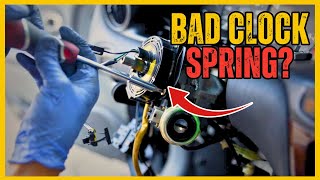
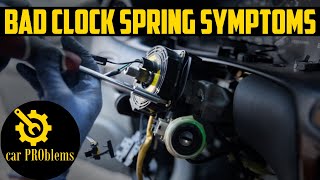
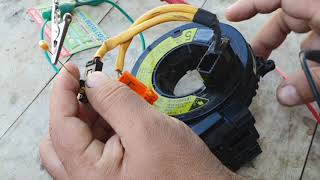
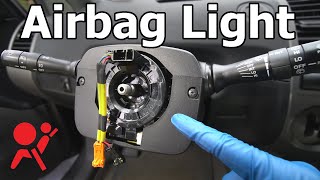
- Faulty Airbag Clock Spring (Spiral Cable) (Very Common) — The clock spring is a coiled ribbon cable maintaining electrical contact for the airbag, horn, and steering controls while the wheel turns. Constant rotation causes metal fatigue, snapping internal wires. This causes over 90% of B1813 codes.
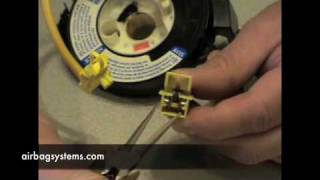
- Damaged or Corroded Wiring/Connectors (Common) — The yellow-sheathed SRS wiring harness is vulnerable to damage and moisture. Corrosion on connector pins under the driver's seat, at the steering column base, or behind the airbag module creates a short to power.
- Improper Steering Column Repairs (Uncommon) — If the steering wheel is removed for repairs and over-rotated while disconnected from the steering rack, the internal clock spring ribbon snaps instantly, causing an immediate short or open circuit.
- Blown SRS-Related Fuses (Uncommon) — A short circuit often blows a related fuse as a protective measure. While replacing the fuse is necessary, it usually blows again until the primary short (like a broken clock spring) is fixed.
- Defective Driver's Airbag Module (Squib) (Less Common) — The airbag inflator module contains the pyrotechnic squib. This robust component sometimes fails internally, developing a short circuit that triggers the B1813 code.
- Aftermarket Steering Wheel Installation (Rare) — Installing an aftermarket steering wheel requires bypassing the original airbag with a resistor. Incorrect installation or a faulty adapter harness creates a short in the circuit.
- Faulty SRS (Airbag) Control Module (Rare) — The SRS control module rarely fails, but internal electronic damage causes it to misinterpret signals or generate false fault codes. Consider this only after ruling out the clock spring and wiring.
- Low Vehicle Battery Voltage (Rare) — A severe voltage drop from a dead battery or failing alternator sometimes causes the SRS module to store erroneous codes. If the code returns immediately after clearing with a fully charged battery, it is a hard fault, not a voltage issue.
Symptoms
- Airbag / SRS Warning Light is On — The primary symptom. A dashboard light showing an airbag icon, a person with a seatbelt, or 'SRS' remains permanently illuminated.
- Horn Does Not Work — The horn's electrical circuit runs through the clock spring. A broken clock spring severs the horn's connection simultaneously with the airbag circuit.
- Steering Wheel Controls and Cruise Control Fail — Buttons for cruise control, radio volume, or phone calls stop functioning. Because these circuits share the clock spring's ribbon cable, their failure alongside an airbag light pinpoints the clock spring as the culprit.
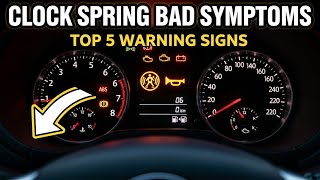
- Grinding or Scraping Noise When Turning — A physically snapped clock spring ribbon scrapes against its plastic housing inside the steering column, creating an audible noise as the wheel turns. 🎬 Watch: 5 common signs your clock spring has failed.
Diagnostic Flowchart
Tap your situation to follow the diagnostic path that matches what you're seeing on this code.
Common Fixes & Costs
- Replace the Airbag Clock Spring (Spiral Cable) — Parts: $35-$300, Labor: $125-$250, ~1.5 hr book time (Intermediate)
- Repair or Clean Wiring Connectors — Parts: $5-$50, Labor: $100-$250, ~1.0 hr book time (Intermediate)
- Replace Blown SRS Fuse — Parts: $1-$10, Labor: $0-$75, ~0.2 hr book time (Beginner)
- Replace the Driver's Airbag Module — Parts: $200-$1000, Labor: $100-$250, ~1.0 hr book time (Professional)
- Replace the SRS Airbag Control Module — Parts: $200-$1200, Labor: $150-$350, ~1.5 hr book time (Professional)
Used vs. New Parts: Buying Guide
When a used part is worth it: A used OEM clock spring from a low-mileage, non-crashed vehicle is a cost-effective alternative for older vehicles on a tight budget, provided you accept the risk of a shorter lifespan.
Donor-vehicle mileage cap: roughly under 60000 miles for the part to have meaningful remaining life.
Donor quality checklist:
- Verify the donor vehicle was not in a frontal collision; heat from airbag deployment damages the connector.
- Avoid parts from flood-damaged or rust-belt vehicles due to corrosion risk.
- Match the part number exactly, accounting for steering wheel audio controls.
Decision logic:
- If The vehicle has a warranty extension for the clock spring (Hyundai, VW, Toyota) → Go to the dealer for a free OEM replacement.
- If Safety is the top priority and you want maximum lifespan → Buy a new OEM part from a dealer. Expect a 10+ year lifespan.
- If You need a reliable repair but OEM cost is prohibitive → Buy a new, high-quality aftermarket part from a reputable brand (e.g., Dorman).
- If The part is extremely cheap ($10-$20 on eBay/Amazon) → Avoid. These are low-quality counterfeits with high failure rates. The risk of airbag failure is not worth the savings.
Warranty tradeoff: Used Parts: 30-90 day warranty. Aftermarket New: 1-year to limited lifetime warranty. OEM New: 1-year/12,000-mile warranty.
Worst-case if a used part fails: $200-$500 if a cheap aftermarket part fails, requiring repeat labor and a replacement part.
What Happens If You Wait — Timeline
- Instant: Code B1813 sets during the power-on self-test. The SRS warning light illuminates, and the control module disables the entire airbag system. (MPG impact: 0%% · Added cost: $0)
- 0-2 weeks: The driver's airbag WILL NOT deploy in a crash. Other functions like the horn or steering wheel controls fail intermittently as the clock spring degrades further. (MPG impact: 0%% · Added cost: N/A (Safety Risk))
- 2 weeks - 6 months: The vehicle fails annual state safety inspections, preventing legal registration renewal. (MPG impact: 0%% · Added cost: $50-$200 in fines and fees)
- 6+ months: The driver becomes accustomed to the warning light. If a new, unrelated SRS fault occurs, the already-on light provides no warning, compounding the safety risk silently. (MPG impact: 0%% · Added cost: The cost of the eventual mandatory repair.)
Cost of Not Fixing It
- Immediate: Total failure of the airbag system. The driver's airbag WILL NOT deploy in a collision, drastically increasing the risk of serious injury or death. (Added cost: N/A (Safety Risk))
- Next Vehicle Inspection: Guaranteed failure of state safety inspections in jurisdictions like Virginia, Texas, and New York, preventing legal registration renewal. (Added cost: $50-$200 in re-inspection fees and lost time.)
- Long-Term (6+ months): Ignoring the light masks new, unrelated SRS faults that occur later. The safety risk compounds silently. (Added cost: The cost of the eventual mandatory repair.)
Diagnosis Steps
- Confirm the Code with an SRS-Capable Scanner
Use an OBD-II scanner capable of reading Supplemental Restraint System (SRS) codes. Standard engine readers cannot see 'B' codes. Confirm B1813 is active.
Tools: SRS-Capable OBD-II Scanner (Beginner) - Test Steering Wheel Functions
With the ignition on, test the horn, steering wheel audio controls, and cruise control. If these are dead, a faulty clock spring is definitively the root cause.
Tools: None (Beginner) - Perform a Visual Inspection
Inspect the bright yellow SRS wiring harnesses and connectors under the driver's seat and at the steering column base. Look for loose connections, chafed wires, or green corrosion.
Tools: Flashlight (Beginner) - CRITICAL SAFETY STEP: De-energize the SRS System
Disconnect the negative battery terminal. Wait a MINIMUM of 20 minutes. This discharges the SRS module's backup capacitors, preventing accidental airbag deployment during testing.
Tools: Wrench set (Beginner) - Inspect Clock Spring and Airbag Connectors
Remove the steering column covers and unbolt the driver's airbag module. Visually inspect the connectors at the clock spring and airbag module for bent pins, corrosion, or melted plastic.
Tools: Screwdriver set, trim removal tools, small socket set (Intermediate) - Test for Voltage at the SRS Module Connector
Disconnect the SRS module connector. Reconnect the battery and turn the ignition 'ON'. Using a multimeter set to DC Volts, probe the driver's squib circuit terminals (D2+/D2-). Any reading above 1V confirms a short to power in the harness or clock spring.
Tools: Multimeter, vehicle-specific wiring diagram (Advanced) - Isolate the Fault with a Resistor
Disconnect the clock spring connector at the steering column base. Insert a 2.0-3.3 ohm SRS load tool into the main harness side of the connector. Clear codes. If B1813 does NOT return, the clock spring or airbag is faulty. If it DOES return, the main wiring harness is shorted.
Tools: SRS load tool or 2.0-3.3 Ohm resistor set, SRS-capable scanner (Professional) - Advanced: Measure Squib Circuit Resistance
With the system de-energized and airbag disconnected, measure the squib resistance (typically 1.8-3.3 ohms). A reading of 0 ohms indicates a shorted airbag module. CAUTION: Never use a standard multimeter for this; its voltage output can deploy the airbag. Use only specialized high-impedance SRS tools.
Tools: High-impedance SRS multimeter, service manual (Professional)
When This Code Triggers (Freeze-Frame Conditions)
- SRS Module State: Self-Test Active (The B1813 code sets during the initial power-on self-test of the SRS module, occurring within the first 6 seconds of turning the ignition key to 'ON'.)
- Vehicle Speed: 0 mph (Because the fault is detected during the startup self-check before the vehicle is in motion, vehicle speed is zero.)
- Battery Voltage: 11.5-12.5V (The code sets with the engine off, reflecting the static state of the battery before the alternator engages.)
- Fault Type: Current/Active (B1813 indicates a hard electrical short. It registers as a 'Current' fault immediately and will not clear until physically repaired.)
Related Codes
- B1811 — Indicates an 'Open' in the driver-side squib circuit (a broken wire). It is the opposite of B1813 (short to power), but both codes point directly to a snapped clock spring.
- B1812 — Indicates a 'Short to Ground' in the same circuit. The signal wire is touching the vehicle's chassis instead of a positive voltage source.
- B1810 — Indicates a 'Short' between the two wires of the squib circuit (D2+ and D2-) touching each other, rather than an external power or ground source.
- B0001 — A generic SAE code for 'Driver Frontal Stage 1 Deployment Control'. It often appears alongside B1813, pointing to the same driver's airbag circuit.
Climate & Environmental Factors
- Temperature Extremes: Extreme cold makes the plastic ribbon inside the clock spring brittle, accelerating wear and causing it to snap under the stress of normal steering rotation.
- High Humidity: Sustained high humidity promotes corrosion on the delicate pins of SRS connectors, creating high resistance or a short circuit that triggers the B1813 code.
How to Talk to a Mechanic About This Code
Say this: "I have an airbag warning light on and my scanner shows code B1813. My horn and steering wheel controls have also stopped working, so I strongly suspect a failed clock spring. I'd like to schedule a diagnostic appointment to confirm this and get a quote for a clock spring replacement."
This signals you have done your research and prevents a costly 'shotgun' approach to repairs, like unnecessarily replacing the airbag module.
Avoid saying:
- 'My airbag light is on, can you just fix it?'
- 'I have an airbag code, just replace whatever you think is broken.'
- 'I need you to replace my airbag.'
Questions to ask before authorizing the repair:
- Can you confirm the B1813 code is active?
- Since my horn and buttons are also out, have you confirmed the clock spring is the failure point before recommending a more expensive part?
- Could you please show me the old part when the repair is complete?
- Does your repair estimate include OEM or aftermarket parts?
- What is the warranty on the parts and labor for this repair?
Where to Take It: Dealer vs Independent vs Chain
- Dealer:
Go here FIRST to check if your VIN is covered by a free warranty extension. Otherwise, it is a reliable but expensive option.
Best for: Vehicles under a recall or warranty extension for the clock spring (Hyundai, VW, Toyota)., Complex cases where the SRS module is suspected after ruling out the clock spring.
Downsides: Highest labor rates and part costs., Unwilling to install customer-supplied or aftermarket parts. (Typical cost: +50% vs. baseline) - Independent Shop:
Best fit for most cases. A clock spring replacement is a common repair for a reputable independent mechanic with an SRS scanner.
Best for: Most out-of-warranty vehicles., Cost-conscious owners seeking aftermarket part options.
Downsides: Quality and experience with SRS systems varies. Vet the shop's reviews. (Typical cost: +0% vs. baseline) - Chain Shop:
AVOID for this code. B1813 diagnosis requires specific knowledge not always present at a quick-lube chain.
Best for: Simple jobs like oil changes and tires.
Downsides: Technician skill with safety-critical systems like airbags is inconsistent., Business model encourages upselling unnecessary services. (Typical cost: -10% vs. baseline)
When to Walk Away From the Repair
If the estimated repair cost exceeds 50% of the car's private-party value, consider selling or trading in the vehicle. This repair is non-negotiable for safety, so 'not fixing it' is not an option.
- Car worth $8000, fix is $700: Fix it. The repair cost is well below the 50% threshold and is critical for safety.
- Car worth $3000, fix is $1600: Walk away. The repair cost is over 50% of the car's value. Sell the car 'as-is' or trade it in.
- Car worth $4000, fix is $2200: Borderline. This repair represents 55% of the car's value. If the car is otherwise in excellent condition, fixing it is reasonable. If it has other pending issues, walk away.
What Scan Tool You Need for This Code
Minimum: A scanner that reads and clears Supplemental Restraint System (SRS/Airbag) codes. Standard engine code readers will not work.
A basic $20 engine code reader cannot communicate with the SRS module. It will not see the B1813 code and cannot clear the airbag light.
Budget: BlueDriver Pro (~$100) — Reads and clears SRS/airbag codes for most major brands via a smartphone Bluetooth connection.
Mid-range: Autel MaxiCOM MK808 / Foxwell NT630 Plus (~$250-400) — Offers full system diagnostics, reading SRS codes on a wider range of vehicles with detailed live data.
Professional: Autel MK808S / Innova 5610 (~$450-600) — Bi-directional tools allowing advanced diagnostics and comprehensive vehicle coverage.
Rent vs buy: Auto parts store loaner scanners often do NOT read SRS codes. Buying a budget-friendly SRS scanner like the BlueDriver pays for itself by avoiding a single $150 shop diagnostic fee.
How to Clear the Code After You Fix It
- Ensure the physical repair is complete and all connectors are seated.
- Reconnect the vehicle's battery.
- Turn the ignition to the 'ON' position, but do not start the engine.
- Connect an SRS-capable OBD-II scan tool.
- Navigate to the Supplemental Restraint System (SRS) module.
- Select 'Clear DTCs' or 'Erase Fault Codes'.
- Turn the ignition off, wait 10 seconds, then turn it back on to confirm the light performs its 6-second self-check and turns off permanently.
Drive cycle: No drive cycle is required. The SRS system performs a self-test at every key-on event. If the repair is successful, the light stays off immediately.
Readiness monitors affected: None. SRS readiness is separate from OBD-II emissions readiness monitors. An airbag fault does not affect emissions testing.
Watch out for:
- Using a standard engine code reader that cannot access the SRS module.
- Assuming disconnecting the battery clears a hard SRS fault code; it must be cleared with a scan tool.
- Forgetting to clear the code after the repair, leaving the light on as a 'historic' code.
Will This Fail Emissions / State Inspection?
No — by itself this code doesn't fail OBD inspection (but it can keep readiness monitors from setting, which causes a separate fail).
- California: An airbag light will NOT cause a failure of the smog check, which only tests emissions. The vehicle passes but remains unsafe to drive.
- New York: An illuminated airbag light is cause for automatic failure of the annual safety inspection.
- Texas: An illuminated airbag light is grounds for FAILURE of the annual safety inspection.
- Pennsylvania: A vehicle will not fail the safety inspection for an illuminated airbag light, although it is a critical safety issue.
- Virginia: A vehicle fails the safety inspection if the airbag readiness light stays on continuously or fails to illuminate during startup.
- General Rule: In most states with mandatory safety inspections, an illuminated airbag light is an automatic failure. In emissions-only states, it is not checked.
Most Commonly Affected Vehicles
- Toyota Tacoma (2005-2015) — Extremely common failure of the spiral cable. Part 84306-04080 (w/o audio controls) or 84306-0E010 (w/ audio controls).
- Lexus IS250 / IS350 (2006-2013) — Clock spring failure is a known issue, causing intermittent airbag lights and dead steering wheel buttons before total failure.
- Chevrolet Silverado 1500 (2007-2014) — Clock spring and steering wheel position sensor failures are frequent problems on this truck platform.
- Hyundai Sonata (2011-2014) — Hyundai issued a warranty extension for the clock spring to 15 years/unlimited miles. Dealers replace it for free if it causes the airbag light.
- Volkswagen Jetta / Passat / Golf / Tiguan (2010-2018) — VW extended the clock spring warranty to 15 years/150,000 miles due to high failure rates.
- Toyota Corolla (2009-2013) — The clock spring is a frequent failure item, leading to airbag lights and loss of cruise control.
- Toyota 4Runner (2003-2009) — Owners frequently report spiral cable failures leading to an illuminated airbag light and inoperative horn.
- Ford F-150 / Super Duty (1999-2008) — A flashing airbag light is sometimes caused by a burnt-out bulb in the passenger airbag deactivation switch, interpreted as a circuit fault.
Manufacturer-Specific Notes
- Toyota / Lexus: This code is almost exclusively caused by a failed 'spiral cable' (clock spring). Diagnosis in Toyota service manuals focuses heavily on voltage checks at the SRS ECU.
- General Motors (GM): On some GM vehicles, B1813 means 'Driver's Thigh Support Motor (LF) has an electrical fault'. It is critical to use a scanner that provides the full, vehicle-specific code definition.
- Hyundai / Kia: Due to widespread failures, Hyundai/Kia extended the clock spring warranty to 15 years with unlimited mileage for many models. Dealer diagnosis and repair are often free.
- Subaru: Subaru service documents list B1813 as 'Short in Driver's Airbag Dual Stage - 2nd Step Circuit (To +B)'. Their diagnostic procedure mirrors Toyota's.
Real Owner Stories
2011 Toyota Tacoma at 150K miles - The Classic Clock Spring Failure
Airbag light came on simultaneously with the horn and steering wheel radio controls failing.
What they tried:
- Scanned the code and confirmed B1813.
- Recognized the combination of symptoms pointed directly to the clock spring.
Outcome: Purchased an aftermarket clock spring for $40 and replaced it in an hour. The repair fixed all symptoms, and the light stayed off after clearing the code.
Lesson: When the airbag light appears alongside dead horn and steering wheel buttons, the clock spring is the definitive culprit.
2013 Hyundai Sonata at 96K miles - The Warranty Win
Airbag light illuminated. All steering wheel functions worked correctly.
What they tried:
- Researched the issue online before buying parts or scanners.
Outcome: Discovered Hyundai issued a 15-year/unlimited mileage warranty extension for clock springs. The local dealer confirmed coverage and replaced the part for free.
Lesson: Always search for 'warranty extension' or 'recall' for your specific vehicle before paying for a B1813 repair.
2006 Lexus IS250 - The Misdiagnosis and Wasted Money
Airbag light on, code B1813. Horn and controls worked intermittently.
What they tried:
- A general mechanic diagnosed a faulty driver's airbag module.
- The shop replaced the airbag module for $800.
- The light and code returned immediately.
Outcome: A Lexus specialist correctly identified the clock spring as the cause. A new OEM clock spring permanently fixed the issue. The owner wasted $800 on an unnecessary airbag.
Lesson: Never replace the airbag module before exhaustively testing the highly failure-prone clock spring.
Ford F-150 - The Corroded Connector Fix
Airbag light on with code B1813 after heavy rain. Steering wheel functions worked perfectly.
What they tried:
- Performed a detailed visual inspection of the SRS wiring instead of blindly replacing the clock spring.
Outcome: Found green corrosion on a yellow connector pin under the driver's seat. Cleaned the pins with contact cleaner, applied dielectric grease, and reconnected. The code cleared permanently.
Lesson: If only the airbag light is on but other steering functions work, thoroughly inspect the yellow SRS connectors for corrosion before buying parts.
How to Prevent This Code From Triggering
- Correct Installation During Repairs (During any steering column service) — Ensuring the clock spring is perfectly centered during installation prevents the internal ribbon from snapping when the steering wheel turns to full lock.
- Secure the Clock Spring During Service (When steering wheel is removed) — Securing the clock spring with tape prevents it from accidentally spinning and losing its center position while disconnected.
- Apply Dielectric Grease to Connectors (When connectors are exposed for service) — Applying dielectric grease to the seals of SRS connectors blocks moisture and prevents corrosion that causes shorts.
- Address Cabin Water Leaks Promptly (As needed) — Water leaking from a bad windshield seal drips onto under-dash wiring, causing corrosion and electrical shorts in SRS connectors.
Frequently Asked Questions
Is it safe to drive my car with code B1813?
No, it is extremely unsafe. An active B1813 code means the computer has disabled the entire airbag system. The driver's airbag will not deploy in a crash, leading to severe injury or death.
Can I just reset the airbag light?
You can clear the code with an SRS scanner, but it will return instantly. B1813 signifies a permanent electrical short that must be physically repaired.
I replaced the clock spring and the light is still on. What now?
If the code returns after clearing, the new clock spring is either defective or was snapped by improper centering during installation. Otherwise, the fault lies in the yellow wiring harness between the steering column and the SRS module. Rarely, the driver's airbag module itself has failed.
My horn and steering wheel buttons also stopped working. Is that related?
Yes, absolutely. The airbag, horn, and all steering wheel-mounted controls wire through the clock spring. When they all fail simultaneously, a broken clock spring is the definitive cause.
What is the most common misdiagnosis for B1813?
The most costly mistake is replacing the expensive driver's airbag module when the actual problem is the cheaper, failure-prone clock spring. Always diagnose the clock spring thoroughly first.
Why are airbag connectors always yellow?
This is an industry-wide safety standard. Bright yellow wiring and connectors warn technicians they are handling a sensitive, high-stakes safety system requiring special de-energization procedures.
Can I replace the clock spring myself?
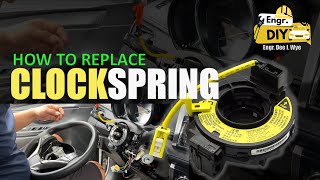
This is a job for an experienced DIY mechanic, but not a beginner. It requires removing the steering wheel and the airbag module. If handled incorrectly, you could accidentally deploy the airbag, causing serious injury, or damage other expensive components.
Will a bad clock spring drain my battery?
It is possible, but highly unlikely. A 'short to B+' draws a tiny amount of current (milliamps) and is usually only active when the ignition is on. It will not drain a healthy battery overnight.
Key Takeaways
- Code B1813 disables your entire airbag system, meaning the driver's airbag will not deploy in a collision.
- A broken clock spring inside the steering column causes over 90% of B1813 faults.
- Test your horn and steering wheel buttons; if they are dead alongside the airbag light, replace the clock spring immediately.
- Call your dealership before paying for repairs, as Hyundai, Toyota, and VW offer 10-to-15-year extended warranties for clock spring failures on many models.
- Never probe airbag connectors with a standard multimeter, as the voltage can trigger an accidental 200-mph airbag deployment.
Helpful Videos
Shop the Parts Behind B1813
Below are the parts most often responsible for code B1813, ranked by how frequently each one is the actual culprit (per the diagnosis above). Tap any to see what we have for your vehicle.



The information in this article is provided for general reference and educational purposes only. Vehicle specifications, procedures, and part compatibility can vary by production date, trim level, and region. Always consult your vehicle's factory service manual and verify part numbers before purchasing or performing repairs. Safety-critical components such as airbags, seat belts, and braking systems should be installed by a qualified professional.
- 🧭 Diagnostic Flowchart
- 🎬 Helpful Videos
- 🛍️ Shop This Part
- What Does B1813 Mean?
- Can I Drive With B1813?
- Common Causes
- Symptoms
- Common Fixes & Costs
- Used vs. New Parts: Buying Guide
- What Happens If You Wait — Timeline
- Cost of Not Fixing It
- Diagnosis Steps
- When This Code Triggers (Freeze-Frame Conditions)
- Related Codes
- Climate & Environmental Factors
- How to Talk to a Mechanic About This Code
- Where to Take It: Dealer vs Independent vs Chain
- When to Walk Away From the Repair
- What Scan Tool You Need for This Code
- How to Clear the Code After You Fix It
- Will This Fail Emissions / State Inspection?
- Most Commonly Affected Vehicles
- Manufacturer-Specific Notes
- Real Owner Stories
- 2011 Toyota Tacoma at 150K miles - The Classic Clock Spring Failure
- 2013 Hyundai Sonata at 96K miles - The Warranty Win
- 2006 Lexus IS250 - The Misdiagnosis and Wasted Money
- Ford F-150 - The Corroded Connector Fix
- How to Prevent This Code From Triggering
- Frequently Asked Questions
- Is it safe to drive my car with code B1813?
- Can I just reset the airbag light?
- I replaced the clock spring and the light is still on. What now?
- My horn and steering wheel buttons also stopped working. Is that related?
- What is the most common misdiagnosis for B1813?
- Why are airbag connectors always yellow?
- Can I replace the clock spring myself?
- Will a bad clock spring drain my battery?
- Key Takeaways
- 🎟️ Get 5% Off