

OBD-II Code B1830: Comprehensive Guide to Airbag & Body Circuit Faults
What B1830 means, why it triggers, and how to fix it like a pro
- Code B1830 disables your entire Supplemental Restraint System (SRS), meaning zero airbags will deploy in a crash.
- Manufacturer definitions vary wildly: B1830 indicates a curtain airbag short on Toyota/Subaru, a door lock failure on Ford/Chrysler, and a power mirror fault on Honda.
- For SRS-related B1830 codes, 80% of failures stem from chafed wiring harnesses, corroded connectors, or an internally shorted airbag squib.
- On 2007-2009 GM trucks, a water-damaged airbag module (SDM) under the driver's seat shorts the Class 2 data line, mimicking a $1,200 Body Control Module failure.
- Always disconnect the negative battery terminal and wait 30 minutes before touching SRS components to prevent lethal accidental airbag deployment.
What Does B1830 Mean?
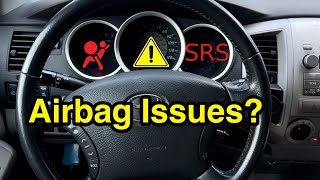
B1830 is a Body (B-series) trouble code primarily indicating a fault within the Supplemental Restraint System (SRS). It signals the vehicle's computer detected a short circuit in an airbag inflator module (squib), frequently a side curtain airbag. When active, the airbag warning light illuminates and the entire SRS deactivates to prevent unintended deployment.
Technical definition: The official SAE/ISO definition for code B1830 varies significantly by manufacturer, causing frequent misdiagnosis. For Toyota, Lexus, and Subaru, it means 'Short in Curtain Shield Airbag Squib Circuit'. For Ford, it means 'Door Unlock Disarm Switch Circuit Failure'. For Chrysler/Dodge/Jeep, it relates to 'All Doors Unlock Control - Circuit Short To Ground'. On specific Honda models, it indicates a power mirror position sensor fault. This guide focuses on the most common SRS-related definition while detailing these critical variations.
Can I Drive With B1830?
No — Do Not Drive. No. While the vehicle physically drives, the B1830 code signifies the entire Supplemental Restraint System (SRS) is disabled. In a crash, zero airbags will deploy and seatbelt pretensioners will not activate, dramatically increasing the risk of serious injury or death. This critical safety failure requires immediate attention, and the vehicle automatically fails safety inspections with the airbag light on.
Common Causes
- Damaged or Corroded Wiring/Connectors (Very Common) — The wiring harness leading to airbag components routes through tight spaces like door hinges, roof pillars, and under seats. Chafing, pinching, or stretching causes a short circuit. Corrosion on connector pins, especially for modules located under the carpet, is a frequent culprit.
- Faulty Airbag Assembly (Squib) (Common) — The 'squib' is the small pyrotechnic initiator inside an airbag or seat belt pretensioner with a specific internal resistance (typically 2-3 ohms). If this component develops an internal short circuit, its resistance drops below the acceptable range, triggering B1830.
- Water-Damaged Airbag Control Module (GM Specific) (Common) — On 2007-2009 GM trucks and SUVs, water containing road salt leaks into the cab and saturates the carpet padding under the driver's seat. This directly corrodes the Sensing and Diagnostic Module (SDM), shorting the Class 2 data line and triggering electrical issues often misdiagnosed as a bad BCM.
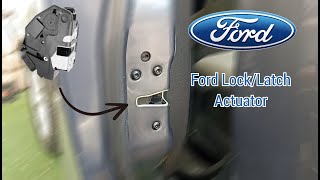
- Faulty Door Latch or Unlock Switch (Ford/Chrysler Specific) (Common) — On Ford and Chrysler vehicles, this code is unrelated to airbags. It indicates a failure in the door locking and alarm system. A shorted door latch assembly or its wiring triggers this specific code on those models.
- Faulty Clock Spring (Less Common) — The clock spring is a coiled ribbon cable behind the steering wheel maintaining electrical contact for the driver's airbag, horn, and steering wheel controls. A short circuit within this ribbon triggers an SRS fault code.
- Faulty Airbag Control Module (SRS Module) (Less Common) — The main computer for the airbag system fails internally. It is highly susceptible to damage from water intrusion, as it mounts low under the front seats or center console.
- Incorrect SRS Module Installation/Programming (Rare) — If the SRS module was recently replaced with a used unit, it requires VIN-specific programming. An unprogrammed module detects a mismatch with the car's components and sets a fault code.
- Cracked Solder Joints on Overhead Console (Subaru Specific) (Rare) — On 2007-2009 Subaru models, the airbag light triggers due to cracked solder joints on the circuit board for the overhead passenger airbag status indicator lights.
Symptoms
- Airbag / SRS Warning Light is On — This is the primary and often only symptom. The light confirms the airbag system has a fault and is completely disabled.
- Power Door Locks Malfunction (Ford/Chrysler) — On vehicles where B1830 relates to the body control module, power door locks fail to actuate or the alarm system acts erratically.
- Horn or Steering Wheel Controls Not Working — If a broken clock spring causes the short circuit, the horn, cruise control, or radio buttons also stop working.
- Passenger Airbag Off Light Stays On — The system fails to correctly identify a passenger in the seat, forcing the passenger airbag to remain deactivated.
- Intermittent No Crank or Bizarre Electrical Issues (GM Specific) (also visible on scanner) — When the airbag module (SDM) shorts the Class 2 data line on GM trucks, it causes a no-start condition, flickering instrument cluster lights, or door locks cycling on their own, mimicking a bad Body Control Module (BCM).
Diagnostic Flowchart
Tap your situation to follow the diagnostic path that matches what you're seeing on this code.
Common Fixes & Costs
- Repairing Damaged Wiring or Connectors — Parts: $5-$20, Labor: $150-$300, ~1.5 hr book time (Intermediate)
- Replacing a Curtain Airbag Assembly — Parts: $300-$600, Labor: $200-$400, ~4.1 hr book time (Professional)
- Replacing the Airbag Control Module (SRS/SDM) — Parts: $200-$700 (new), $50-$150 (used), Labor: $150-$300 (plus potential programming fees), ~2 hr book time (Professional)
- Replacing a Door Latch Assembly (Ford/Chrysler) — Parts: $150-$350, Labor: $150-$250, ~1.8 hr book time (Intermediate)
- Replacing the Clock Spring — Parts: $50-$450, Labor: $100-$200, ~1.5 hr book time (Intermediate)
- SRS Airbag Module Reset (After Accident) — Parts: $50-$95 (for mail-in service), Labor: $50-$100 (for removal and reinstallation), ~1 hr book time (Intermediate)
Used vs. New Parts: Buying Guide
When a used part is worth it: For airbag modules and clock springs, a used OEM part from a certified auto recycler is a cost-effective option for older vehicles. Match part numbers exactly. Used parts make sense when a new OEM part is prohibitively expensive.
Donor-vehicle mileage cap: roughly under 100000 miles for the part to have meaningful remaining life.
Donor quality checklist:
- Verify the donor vehicle was not involved in a flood or fire.
- Ensure the part is a non-deployed, original OEM component. Aftermarket airbags are not safe.
- Match the part number exactly. Superseded numbers from the manufacturer are acceptable.
- Purchase from a certified recycler who provides a warranty and guarantees the part is recall-free.
Decision logic:
- If The part is a pyrotechnic device (airbag assembly/squib). → Strongly favor new OEM. The risk of a used part failing to deploy is too high. Used is only a last resort if new is unavailable.
- If The part is an electronic module (SRS module) or clock spring and budget is a primary concern. → A used part from a certified donor with a warranty is a reasonable choice, but requires professional VIN programming.
- If The vehicle is newer or has low mileage. → Buy new OEM to ensure maximum safety, reliability, and to avoid compatibility issues.
Warranty tradeoff: Used parts from recyclers typically offer a 30-90 day warranty. New aftermarket parts have a 1-year to limited lifetime warranty. New OEM parts carry the manufacturer's warranty, typically 12 months.
Worst-case if a used part fails: $500-$2000 if a used part is faulty or incompatible, covering repeat labor, programming fees, and another replacement part.
What Happens If You Wait — Timeline
- Immediate: Airbag light illuminates. The entire Supplemental Restraint System (SRS) is disabled by the control module as a safety precaution. Airbags will NOT deploy in a crash. (MPG impact: 0%% · Added cost: $0)
- First State Inspection: Vehicle automatically fails its mandatory safety inspection in most states, preventing legal registration renewal. (MPG impact: 0%% · Added cost: $50-$200 in potential fines and re-inspection fees.)
- 1-6 months (If caused by GM water leak): The corroding SDM begins to short the Class 2 data line, causing intermittent and bizarre electrical issues: flickering lights, instrument cluster failure, no-start conditions, mimicking a bad BCM. (MPG impact: 0%% · Added cost: $500-$1500 if misdiagnosed. A shop incorrectly replaces the BCM or spends hours on electrical diagnosis before finding the true cause.)
- 6+ months (If caused by GM water leak): Severe corrosion compromises the SDM seal, potentially allowing enough water intrusion to cause a major short. In rare cases documented by GM, this leads to unintended deployment of seatbelt pretensioners or airbags while parked or driving. (MPG impact: 0%% · Added cost: $2000-$4000+ for replacement of deployed components (airbags, seatbelts, headliner) and module, plus potential for causing an accident.)
Cost of Not Fixing It
- Immediate: Total failure of the Supplemental Restraint System (SRS). Airbags will not deploy in a crash, drastically increasing the risk of serious injury or death. (Added cost: N/A)
- 0-6 months: Failure to pass mandatory state safety inspections, preventing vehicle registration renewal. (Added cost: $50-$200 in fines or late fees, depending on jurisdiction.)
- Ongoing: (GM-specific) A corroded airbag module corrupts the vehicle's data bus, leading to cascading electrical failures like no-start conditions or erratic instrument cluster behavior. (Added cost: $500-$1500 for incorrect diagnosis and replacement of the wrong module.)
Diagnosis Steps
- Read the Fault Codes with a Capable Scanner
Use an OBD-II scanner capable of reading SRS/Airbag (B-prefix) codes. Confirm the B1830 code and note its exact definition. Look for related codes (like B1831, B1832, B1833) that pinpoint the exact fault (e.g., open circuit vs. short to ground).
Tools: SRS-Capable OBD-II Scanner (Beginner) - CRITICAL SAFETY STEP: Disable the SRS System
Before touching any airbag components, you MUST disconnect the negative battery terminal and wait exactly 30 minutes. This discharges the backup power supply (capacitors) in the SRS module, preventing lethal accidental deployment.
Tools: Wrench Set (Beginner) - Perform a Thorough Visual Inspection
Inspect the wiring and connectors associated with the component identified by the code. Check under seats, in door jambs, and along roof pillars for chafed wires. On 2007-2009 GM trucks, pull back the driver-side carpet and inspect the airbag module (SDM) for white or green corrosion.
Tools: Flashlight, Trim Removal Tools (Beginner) - Inspect Connectors
With the battery disconnected, unplug the primary yellow connector for the component in question. Look for bent, pushed-out, or corroded pins. Ensure the shorting bar (which bridges terminals when unplugged) is not damaged. Re-seat the connector firmly until it clicks.
Tools: Flashlight, Pick Tool (Intermediate) - Isolate the Fault with a Resistor (Professional Method)
Substitute the airbag with a special SRS load tool or a 2.0-3.0 ohm resistor. Connect the resistor to the vehicle's harness connector. Reconnect the battery, clear the codes, and see if B1830 returns. If it stays off, the airbag squib itself is internally shorted. If the code returns, the fault is in the wiring or SRS module.
Tools: 2-3 Ohm Resistor or SRS Load Tool (Advanced) - Diagnose GM Class 2 Data Line (Pro-Tip)
On a GM truck with BCM-like symptoms, unplug the SDM (airbag module) under the driver's seat. If the strange electrical issues stop and other modules come back online, the water-damaged SDM is the culprit.
Tools: Basic Hand Tools (Intermediate) - Check for Shorts to Ground/Power (Advanced)
With the SRS module and airbag component disconnected, use a multimeter to check the harness. Test for continuity between each circuit wire and a clean chassis ground. The reading must be infinite (OL). A low resistance reading confirms the wire is shorted to ground.
Tools: Digital Multimeter, Vehicle-Specific Wiring Diagram (Professional) - Test Squib Resistance (Advanced)
WARNING: This carries a risk of accidental deployment. With the airbag completely disconnected from the vehicle, measure resistance across its two pins using a high-quality digital multimeter. A healthy squib reads 2.0 to 3.5 ohms. A reading near 0 ohms confirms an internal short.
Tools: Digital Multimeter (Advanced)
When This Code Triggers (Freeze-Frame Conditions)
- System State: Ignition ON (The SRS module performs a self-test every time the ignition turns to the 'ON' position.)
- Warning Light Check: First ~7 seconds (The code sets if a fault is detected during the initial system check, causing the airbag light to remain illuminated.)
- System Voltage: 11-14V (The test runs under normal vehicle operating voltage. B1830 indicates a persistent hardware fault, not a transient voltage drop.)
- Component Resistance: < 2.0 Ohms (The module continuously monitors airbag squib circuit resistance. B1830 sets when resistance drops below the specified threshold (typically ~2.0 ohms), confirming a short circuit.)
Related Codes
- B1831 — The direct companion code to B1830, indicating an 'Open' in the same curtain airbag circuit. B1830 suggests two wires are touching, while B1831 suggests a wire is cut or unplugged.
- B1832 / B1833 — These codes provide detail on the short circuit. B1832 specifies a 'Short to Ground', and B1833 specifies a 'Short to Power/+B'. This helps a technician determine if the wire is shorted to the metal frame or a power wire.
- U-Series Codes (e.g., U1000, U0170) — On GM vehicles with a corroded airbag module, loss of communication (U-series) codes appear in many other modules. The shorted airbag module corrupts the entire Class 2 data bus.
- B0050 - B0060 series — Relates to driver and passenger seat belt sensors and pretensioners. A fault here triggers general SRS codes alongside B1830 if multiple faults exist.
Climate & Environmental Factors
- High Humidity / Water Intrusion: Moisture combined with road salt is a primary cause of corrosion on electrical connectors and module circuit boards. Water wicks up carpet padding and directly attacks low-mounted SRS modules.
- Road Salt (Winter Climates): Road salt dramatically accelerates corrosion of the vehicle's undercarriage and exposed electronic modules. GM issued campaign 09184B for vehicles in 'salt belt' states due to salt-laden water corroding the SDM.
- Extreme Cold: Very cold temperatures cause electrical connectors to contract, leading to intermittent open or short circuits. It also lowers battery voltage on startup, occasionally causing sensitive modules to log faults.
- Temperature Fluctuations: Repeated heating and cooling cycles cause wire insulation to become brittle and crack over time, especially where bent or stretched.
How to Talk to a Mechanic About This Code
Say this: "I have an airbag light on and my scanner shows code B1830. I know this code has different meanings. For my [Your Car's Make], I believe it points to a short in a curtain airbag circuit. Can you perform a diagnostic to confirm the fault location before recommending parts?"
This signals you understand the code's ambiguity. It directs the technician to perform a specific, logical diagnosis (e.g., check wiring/component resistance) rather than immediately quoting an expensive part. It prevents misdiagnosis based on another manufacturer's definition.
Avoid saying:
- 'My airbag light is on, can you just fix it?'
- 'I have a B1830 code, just replace the airbag.'
- 'I heard this is a common problem, what do you recommend?'
Questions to ask before authorizing the repair:
- Can you show me the wiring or component that has failed?
- If it's the airbag, did you test the circuit with a resistor to confirm the airbag itself is shorted, and not the wiring?
- If you are replacing a component, will you be using a new OEM part or a salvaged one?
- What is the warranty on the part and the labor for this specific repair?
Where to Take It: Dealer vs Independent vs Chain
- Dealer:
A safe, but expensive, option. Best for the GM-specific data line issue or if a new SRS module requires VIN programming.
Best for: Vehicles under warranty., Complex manufacturer-specific issues (like the GM SDM data-bus corruption)., Repairs requiring module programming that independent shops cannot perform.
Downsides: Highest labor rates, typically 1.5-2x more than independent shops., Defaults to replacing an entire assembly when a smaller component or wiring fix is possible. (Typical cost: +50% vs. baseline) - Independent Shop:
The best choice for most scenarios. An experienced technician diagnoses both the airbag and non-airbag versions of this code efficiently.
Best for: Out-of-warranty vehicles where cost is a major factor., Diagnosing common wiring or component-level faults., Shops with ASE-certified technicians and positive reviews for electrical or SRS work.
Downsides: Quality and expertise vary widely., Lacks the expensive, specialized tools to program a new SRS module. (Typical cost: +0% vs. baseline) - Chain Shop:
AVOID. An airbag system fault is safety-critical and requires a level of diagnostic expertise not found at chain shops.
Best for: Simple, routine maintenance like oil changes or tires.
Downsides: Technician skill is highly variable., Lacks the in-depth diagnostic tools and training for complex, safety-critical SRS issues., Business model encourages replacing parts rather than performing detailed electrical diagnosis. (Typical cost: -10% vs. baseline)
When to Walk Away From the Repair
If the estimated repair cost exceeds 50% of the car's private-party value (from Kelley Blue Book), sell or trade in the vehicle instead of repairing it.
- Car worth $4500, fix is $2200: Walk away. The repair cost is nearly 50% of the car's value. Selling a car with an airbag light reduces its value by 20-40%, but that is a better financial outcome than sinking $2200 into an older vehicle.
- Car worth $15000, fix is $800: Fix it. The repair cost is a small fraction of the vehicle's value and restores a critical safety feature.
- Car worth $2500, fix is $750: Borderline. While the cost is below the 50% threshold, consider the car's overall condition. If other major repairs are looming, sell it. If the car is otherwise reliable, the repair is justifiable.
What Scan Tool You Need for This Code
Minimum: A scan tool that reads and clears Supplemental Restraint System (SRS) / Airbag codes. A basic engine-only code reader shows 'No Codes' and is useless for B1830.
The B1830 code is a 'B' (Body) code stored in the SRS module, not the engine control module. Only a scanner designed to access the SRS system reads the code, shows its manufacturer-specific definition, and clears the light post-repair.
Budget: Autel AutoLink AL619 / Foxwell NT630 Plus (~$80) — Reads and clears codes from the four basic systems: Engine, Transmission, ABS, and SRS. This is the minimum required to diagnose B1830 and turn off the light.
Mid-range: BlueDriver Pro / Innova 5610 (~$120) — Offers live data graphing to monitor sensor inputs and provides detailed repair reports based on a large database of fixes. The Innova offers limited bidirectional tests.
Professional: Autel MaxiCOM MK808 / XTOOL D7 (~$450-600) — Offers full-system diagnostics and powerful bidirectional controls. Necessary if you replace and program a new SRS control module, as it performs the required VIN coding and system initializations.
How to Clear the Code After You Fix It
- Ensure the physical fault (e.g., shorted wire, bad squib) is properly repaired.
- Reconnect the negative battery terminal.
- Use an SRS-capable OBD-II scan tool to access the Airbag Control Module.
- Select the function to 'Clear Codes' or 'Erase DTCs'. A standard engine code reader will not work.
- Cycle the ignition off, then on again, and observe the airbag light. It illuminates for ~7 seconds for a self-test and then turns off.
Drive cycle (~10 minutes): An SRS 'drive cycle' verifies the fix. After clearing the code, perform 3-5 full ignition cycles (from OFF to ON, wait 10 seconds, then OFF). If the light remains off after multiple self-tests, the repair is confirmed. No driving pattern is required.
Readiness monitors affected: None
Watch out for:
- Thinking disconnecting the battery clears a hard SRS code (it won't).
- Using a basic engine code reader that cannot communicate with the SRS module.
- Clearing the code without fixing the underlying physical fault, causing the code to return immediately.
Will This Fail Emissions / State Inspection?
No — by itself this code doesn't fail OBD inspection (but it can keep readiness monitors from setting, which causes a separate fail).
- California: An airbag light does NOT cause a failure of the California Smog Check, as it is an emissions-only test.
- New York: An illuminated airbag warning light is an advisory item only and is NOT cause for rejection during the NYS safety inspection.
- Texas: The airbag system is not a required inspection item in Texas. A vehicle with an airbag light on passes the state safety inspection.
- Virginia / Pennsylvania: In states with strict annual safety inspections, an illuminated airbag light is an automatic failure.
Most Commonly Affected Vehicles
- GM (Chevrolet, GMC) Silverado, Sierra, Tahoe, Suburban (2007-2009) — Extremely prone to this code due to water intrusion corroding the airbag module (SDM) under the driver's seat (GM TSB 09184B). This shorts the Class 2 data line, causing bizarre electrical problems misdiagnosed as a faulty BCM.
- Toyota Tacoma (2005-2015) — Frequently points to a short in the driver or passenger side curtain shield airbag circuit. The fault is the airbag squib itself or wiring in the A-pillar. A recall covers 2005-2009 models for a faulty spiral cable.
- Toyota Highlander (2008-2013) — Service manuals list B1830 as a primary code for a 'Short in Driver Side Curtain Shield Squib Circuit'. Also part of a 2023 spiral cable recall.
- Subaru Crosstrek, Impreza, Legacy (2007-2017) — Consistently indicates a 'short in curtain airbag RH squib circuit'. On 2007-2009 models, inspect the overhead console for cracked solder joints on the passenger airbag indicator light PCB.
- Ford Focus, F-150, Explorer (2000-2015) — B1830 is unrelated to airbags and indicates a 'Door Unlock Disarm Switch Circuit Failure', pointing to a faulty door latch mechanism or wiring in the door.
- Chrysler / Dodge 300, Journey, Grand Caravan (2010-2019) — Seen alongside other body control codes and relates to power door lock malfunctions ('All Doors Unlock Control - Circuit Short to Ground'), not the airbag system.
- Honda Pilot (2009-2015) — Uniquely indicates a fault with the 'Right Mirror Horizontal Sensor Open', completely unrelated to the airbag system.
- Hyundai Elantra (2011-2020) — Inspecting wiring harnesses, particularly where they pass through the door jamb, reveals chafing and shorts that cause various electrical faults, including SRS codes.
Manufacturer-Specific Notes
- General Motors (GM): On 2007-2009 trucks and SUVs, a corroded airbag module (SDM) under the driver's seat shorts the Class 2 data line, causing no-start conditions and electrical chaos mimicking a bad BCM (Campaign #09184B).
- Toyota / Lexus / Subaru: Consistently points to a 'Short in Curtain Shield Airbag Squib Circuit'. The problem is the airbag itself, wiring in the pillar, or the main SRS ECU.
- Ford: B1830 is unrelated to airbags. It means 'Door Unlock Disarm Switch Circuit Failure', pointing to a problem with the Body Control Module (BCM) or the door latch assembly.
- Chrysler / Dodge / Jeep: Relates to body electrical systems. It means 'All Doors Unlock Control - Circuit Short to Ground' or indicates an 'AV Comm Circuit' failure related to the multifunction switch.
- Honda: On models like the 2009-2015 Pilot, B1830 is unrelated to safety systems and points to a fault in the power side mirror position sensor circuit.
Real Owner Stories
2008 GMC Sierra 1500 with 155K miles
Airbag light was on, and the truck intermittently would not start. The instrument cluster flickered, and door locks cycled on their own. The owner suspected a bad Body Control Module (BCM).
What they tried:
- Replaced the battery, but the issues persisted.
- Took it to a shop that diagnosed a bad BCM and quoted $1200 for replacement.
- Owner found GM TSB 09184B online and checked the airbag module (SDM) under the driver's seat.
- Found the carpet damp and the SDM connector covered in white and green corrosion.
Outcome: Owner unplugged the corroded SDM, and the no-start and electrical issues immediately vanished. He replaced the SDM with a used unit from a junkyard for $75 and had a local shop program it for $100. Total cost was $175 instead of a misdiagnosed $1200 BCM replacement.
Lesson: On 2007-2009 GM trucks, if you have an airbag light accompanied by bizarre electrical problems, the water-damaged SDM under the driver's seat is the #1 suspect. Always check for corrosion here before replacing the BCM.
2010 Toyota Tacoma with 110K miles
Airbag light came on for no apparent reason. No other symptoms were present.
What they tried:
- Used an SRS-capable scanner, which returned code B1830: 'Short in Curtain Shield Airbag Squib Circuit (Driver Side)'.
- Visually inspected the wiring along the driver's side A-pillar and under the seat but found no obvious damage.
- Disconnected the battery, unplugged the driver's curtain airbag connector, and substituted a 2.2-ohm resistor into the harness side.
- After reconnecting the battery and clearing the codes, the B1830 code did not return.
Outcome: The test proved the fault was within the airbag assembly itself, not the wiring or module. The owner had a professional shop replace the driver's side curtain airbag assembly. The part cost $450 and labor was $300. The light was cleared and the system returned to normal.
Lesson: For Toyota/Subaru, B1830 almost always points to the curtain airbag. Using a simple 2-3 ohm resistor safely isolates the fault to either the wiring or the airbag squib itself, preventing unnecessary parts replacement.
2011 Ford Focus with 85K miles
Airbag light came on, but the owner also noticed the driver's side power door lock intermittently failed to lock with the remote.
What they tried:
- A basic code reader showed no codes. An auto parts store used a more advanced scanner.
- The scanner pulled code B1830, defined as 'Door Unlock Disarm Switch Circuit Failure'.
- The owner found forum posts linking this code on Fords to a faulty door latch assembly.
Outcome: Based on the dual symptoms, the owner replaced the driver's door latch assembly. He bought an aftermarket Dorman latch for $180 and installed it in 2 hours. The door lock worked perfectly, and the airbag light went away after a few ignition cycles.
Lesson: Always verify the manufacturer-specific definition of a code. On Ford and Chrysler vehicles, B1830 is NOT an airbag fault but points to the door lock system. Co-occurring symptoms are a huge clue.
How to Prevent This Code From Triggering
- Periodically clean cowl and sunroof drains. (Once a year, or twice if parked under trees.) — Clogged drains are the primary cause of water entering the cabin on GM trucks, which then soaks the carpet and corrodes the under-seat airbag module. Use compressed air or a flexible wire to clear leaves and debris.
- Apply dielectric grease to critical connectors. (Whenever a connector is disconnected for service.) — Applying a small amount of non-conductive dielectric grease to the connector's seal (not the pins themselves) helps keep moisture out, preventing corrosion on sensitive SRS module and component connectors.
- Inspect and secure under-seat wiring. (Any time the seats are moved for cleaning or access.) — Items rolling under the seat or aggressive vacuuming easily snag, stretch, or unplug the yellow SRS connectors. Ensure wiring is properly secured and not pinched by seat tracks.
- Address any water leaks immediately. (As needed.) — A damp carpet is a death sentence for low-mounted electronics. Leaks from windshield seals, door seals, or third brake lights must be fixed promptly before they saturate carpet padding and damage modules.
- Consider applying a conformal coating to exposed modules. (Once, for vehicles in high-risk environments.) — For vehicles in extremely humid or salt-belt states, a professional applies a silicone or acrylic conformal coating to the circuit board of a module (like the GM SDM) to provide an extra layer of protection against moisture and corrosion.
Frequently Asked Questions
Can I reset the airbag light myself by disconnecting the battery?
No. The B1830 code is a 'hard code' stored in the SRS module's memory. It will not clear on its own or by disconnecting the battery. You must use an SRS-capable scan tool to clear the code after the repair is complete.
What is the difference between a B1830 (short) and B1831 (open)?
A 'short' (B1830) means electrical current found an unintended path, like two wires touching. An 'open' (B1831) means the path is broken entirely, like a cut wire or unplugged connector.
My car was in a minor accident and the airbag light is on. Why?
After any collision, the SRS control module records 'crash data', permanently locking the system. This data must be cleared by a professional service that resets the module itself; it cannot be cleared with a standard scan tool.
What is an airbag squib and what does it do?
A squib is the small, electrically-activated pyrotechnic initiator inside an airbag module. When the SRS module detects a crash, it sends current to the squib, igniting a chemical propellant to rapidly inflate the airbag.
Is it safe to test an airbag squib with a multimeter?
Testing a live airbag squib with a multimeter risks accidental deployment. The safest professional method substitutes the airbag with a 2-3 ohm resistor to test the circuit. If you must test the squib directly, ensure it is completely disconnected from the vehicle.
What are the most common misdiagnoses for a B1830 code?
The primary mistake is assuming B1830 always means an airbag fault, as it relates to door locks on Ford and Chrysler. The second mistake is replacing the BCM on 2007-2009 GM trucks when the true cause is a water-damaged airbag module (SDM) shorting the data line.
Will my car pass inspection with the airbag light on?
No. In virtually all states with mandatory safety inspections, a vehicle automatically fails if the airbag warning light is illuminated.
Why did the light come on after my battery died?
Low system voltage during a battery failure occasionally causes the SRS module to store a temporary fault code. However, a 'hard code' like B1830 indicates a persistent hardware fault that was likely already present and needs repair.
Key Takeaways
- Code B1830 disables your entire Supplemental Restraint System (SRS), meaning zero airbags will deploy in a crash.
- Manufacturer definitions vary wildly: B1830 indicates a curtain airbag short on Toyota/Subaru, a door lock failure on Ford/Chrysler, and a power mirror fault on Honda.
- For SRS-related B1830 codes, 80% of failures stem from chafed wiring harnesses, corroded connectors, or an internally shorted airbag squib.
- On 2007-2009 GM trucks, a water-damaged airbag module (SDM) under the driver's seat shorts the Class 2 data line, mimicking a $1,200 Body Control Module failure.
- Always disconnect the negative battery terminal and wait 30 minutes before touching SRS components to prevent lethal accidental airbag deployment.
Helpful Videos
Shop the Parts Behind B1830
Below are the parts most often responsible for code B1830, ranked by how frequently each one is the actual culprit (per the diagnosis above). Tap any to see what we have for your vehicle.



The information in this article is provided for general reference and educational purposes only. Vehicle specifications, procedures, and part compatibility can vary by production date, trim level, and region. Always consult your vehicle's factory service manual and verify part numbers before purchasing or performing repairs. Safety-critical components such as airbags, seat belts, and braking systems should be installed by a qualified professional.
- 🧭 Diagnostic Flowchart
- 🎬 Helpful Videos
- 🛍️ Shop This Part
- What Does B1830 Mean?
- Can I Drive With B1830?
- Common Causes
- Symptoms
- Common Fixes & Costs
- Used vs. New Parts: Buying Guide
- What Happens If You Wait — Timeline
- Cost of Not Fixing It
- Diagnosis Steps
- When This Code Triggers (Freeze-Frame Conditions)
- Related Codes
- Climate & Environmental Factors
- How to Talk to a Mechanic About This Code
- Where to Take It: Dealer vs Independent vs Chain
- When to Walk Away From the Repair
- What Scan Tool You Need for This Code
- How to Clear the Code After You Fix It
- Will This Fail Emissions / State Inspection?
- Most Commonly Affected Vehicles
- Manufacturer-Specific Notes
- Real Owner Stories
- 2008 GMC Sierra 1500 with 155K miles
- 2010 Toyota Tacoma with 110K miles
- 2011 Ford Focus with 85K miles
- How to Prevent This Code From Triggering
- Frequently Asked Questions
- Can I reset the airbag light myself by disconnecting the battery?
- What is the difference between a B1830 (short) and B1831 (open)?
- My car was in a minor accident and the airbag light is on. Why?
- What is an airbag squib and what does it do?
- Is it safe to test an airbag squib with a multimeter?
- What are the most common misdiagnoses for a B1830 code?
- Will my car pass inspection with the airbag light on?
- Why did the light come on after my battery died?
- Key Takeaways
- 🎟️ Get 5% Off