

OBD-II Code B1863: Body Control Module Ground Circuit Fault
The Ultimate 2026 Guide to Meaning, Diagnosis, and Repair
- Code B1863 disables your vehicle's airbags and seatbelt pretensioners, requiring immediate repair before driving.
- Always disconnect the negative battery terminal and wait exactly 15 minutes before touching any yellow SRS wiring to prevent accidental airbag deployment.
- Do not replace a $300+ seatbelt pretensioner or airbag without first testing the under-seat electrical connectors, which cause 80% of B1863 faults.
- Use a 2.5-ohm SRS dummy resistor to test the circuit; if the code clears with the resistor installed, the component has failed, but if it remains, the wiring is broken.
What Does B1863 Mean?
B1863 is a Body Diagnostic Trouble Code (DTC) signifying an open circuit in a ground connection for a specific Electronic Control Unit (ECU). While the official definition is "Ground ECU Circuit Open," its practical meaning varies by manufacturer. It most often points to a fault within the Supplemental Restraint System (SRS), such as the Airbag Control Module, but also refers to Trailer Brake Control Modules (TBC) on heavy-duty trucks. The control module detects a complete loss of continuity on a ground wire, preventing it from verifying the status of a critical safety component.
Technical definition: The SAE definition for B1863 is "Ground ECU Circuit Open". This indicates the control module detects infinite resistance on a ground circuit that should connect to the vehicle's chassis. The specific module and circuit vary by manufacturer. On a Mercedes-Benz, it means 'Belt pretensioner resistance too high', while on a Lexus, it means 'Short to B+ in Driver Side Knee Airbag Squib Circuit'.
Can I Drive With B1863?
No — Do Not Drive. Driving with code B1863 is unsafe. This fault causes the SRS control module to disable the airbags and seatbelt pretensioners entirely as a fail-safe. In the event of a collision, your primary safety devices will not deploy, dramatically increasing the risk of serious injury or death. There is no risk of mechanical damage to the engine, but it is an automatic failure of any safety inspection, leading to fines of $50 to $500 depending on your state.
Common Causes
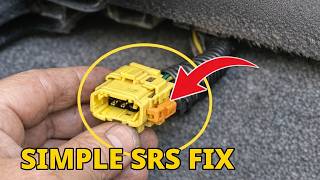
- Loose or corroded electrical connector (Very Common) — The yellow SRS connectors located under the driver and passenger seats are highly susceptible to being kicked, loosened by seat movement, or corroded by spilled liquids. 🎬 Watch: How to fix an airbag light after interior detailing. This intermittent connection is the primary trigger for the fault.
- Damaged or broken wiring (Common) — Wires fray, pinch, or break from repeated movement under seats, within door harnesses, or in the steering column. This creates an open circuit or high resistance that the module detects as a ground fault.
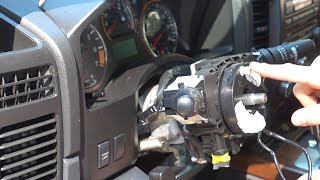
- Faulty Clock Spring (Common) — The clock spring maintains electrical connection to the driver's airbag and steering wheel controls. Over time, these thin internal ribbon wires fatigue and break, causing an open circuit and triggering an airbag light.
- Faulty Seat Belt Pretensioner or Buckle (Common) — On many vehicles, this code points directly to a high-resistance fault in the seat belt pretensioner's internal electrical circuit. The component itself fails and requires replacement.
- Water Intrusion and Corrosion (Less Common) — Leaks from sunroofs, windshields, or flood damage introduce moisture to the SRS control module or its connectors, which are often located under the carpet. This leads to rapid pin corrosion and circuit failures.
- Poor Chassis Ground Connection (Less Common) — The main ground point where the module or harness bolts to the vehicle's frame rusts or loosens. This prevents a solid ground connection and causes a variety of electrical issues, including a B1863 code.
- Improper Repairs or Aftermarket Installations (Less Common) — The code triggers after installing aftermarket equipment where wiring is tapped incorrectly. Swapping factory seats for aftermarket racing seats without proper simulators also causes this fault.
- Failed Control Module (Rare) — The control module itself fails internally. This is the last item to suspect after all wiring, connectors, and components pass rigorous electrical testing.
Symptoms
- Airbag or SRS warning light is on — The light illuminates constantly and returns instantly after clearing if the fault remains unrepaired, indicating a hard fault.
- Horn, Cruise Control, or Steering Wheel Buttons Inoperative — If the fault stems from a failed clock spring, you lose functionality of the horn and steering wheel-mounted controls 🎬 See how to replace a clock spring to fix your horn. simultaneously with the airbag light appearing.
- Trailer Brake Fault Message — On Ford Super Duty and Ram trucks, a 'TRAILER BRAKE MODULE FAULT' message appears on the instrument cluster, as the code relates to the towing system instead of the airbags. 🎬 Watch: Troubleshooting Ford Super Duty trailer brake control module failures.
- Seatbelt warning light flashes or stays on — If the fault relates to the seatbelt buckle or pretensioner circuit, the seatbelt warning light illuminates in conjunction with the main SRS light.
Diagnostic Flowchart
Tap your situation to follow the diagnostic path that matches what you're seeing on this code.
Common Fixes & Costs
- Clean and Re-seat Connectors — Parts: $0-$15, Labor: $50-$150, ~0.8 hr book time (DIY)
- Repair or Replace Wiring Harness Connector Pigtail
— Parts: $20-$60, Labor: $150-$300, ~1.5 hr book time
(Intermediate)
: OEM - Replace Clock Spring
— Parts: $70-$450, Labor: $120-$250, ~1.5 hr book time
(Intermediate)
: OEM
: OEM - Replace Seat Belt Buckle/Pretensioner
— Parts: $150-$450, Labor: $150-$300, ~1.2 hr book time
(Intermediate)
: OEM
: OEM - Reset or Replace Airbag Control Module (SRS Module)
— Parts: $50-$1300, Labor: $150-$300, ~1.8 hr book time
(Professional)
: OEM
DIY vs Professional
- Clean and Re-seat Connectors 🟢 Beginner
Tools: Socket set (for seat bolts), trim removal tools, electronic contact cleaner, flashlight. - Repair or Replace Wiring Harness Connector Pigtail 🟢 Beginner
Tools: Wire strippers, soldering iron and solder (or OEM-approved crimpers/connectors), heat shrink tubing, heat gun, digital multimeter. - Replace Clock Spring 🟢 Beginner
Tools: Socket set, torque wrench, steering wheel puller (vehicle-dependent), trim removal tools, small screwdriver or punch. - Replace Seat Belt Buckle/Pretensioner 🟢 Beginner
Tools: Socket set, torque wrench, trim removal tools. - Reset or Replace Airbag Control Module 🟢 Beginner
Tools: Advanced OBD-II scanner with programming capabilities, access to manufacturer software.
Used vs. New Parts: Buying Guide
When a used part is worth it: For non-pyrotechnic parts like wiring pigtails or the SRS control module (if from a reputable source that guarantees it is crash-free). Used parts are a cost-effective option for older, lower-value vehicles where the cost of new OEM parts is prohibitive.
Donor-vehicle mileage cap: roughly under 100000 miles for the part to have meaningful remaining life.
Donor quality checklist:
- For SRS Modules: Must have the exact same part number and be guaranteed to have no crash data stored. A module from a deployed vehicle is useless without a professional reset.
- For Clock Springs: Visually inspect for any signs of damage or stress. Ensure it comes from a vehicle with similar mileage or less.
- For Seat Belt Pretensioners: It is HIGHLY DISCOURAGED to buy used pyrotechnic devices. There is no way to verify their history or integrity. The risk of failure or accidental deployment is too high.
Decision logic:
- If The part is a pyrotechnic device (airbag, seat belt pretensioner) → Always buy new OEM or a certified remanufactured part. The safety risk is not worth the savings.
- If The part is an SRS Control Module → Favor a professional reset service for your original module or buy a new, programmable unit. A used module is a gamble that requires VIN programming and may not work.
- If The part is a clock spring or wiring connector → A new aftermarket part offers a good balance of cost and reliability with a warranty. A used part from a low-mileage donor is acceptable if on a tight budget.
Warranty tradeoff: Used parts from junkyards typically have a 30-90 day warranty at best. New aftermarket parts often carry a 1-year to lifetime warranty. New OEM parts carry a 12-month/12,000-mile warranty.
Worst-case if a used part fails: $500-2000 if a used part fails. This includes the cost of repeat labor, a new replacement part, and potentially another diagnostic fee.
What Happens If You Wait — Timeline
- 0 Seconds: SRS light illuminates on the dashboard. The SRS control module detects the open ground circuit during its initial self-test. The entire supplemental restraint system is immediately disabled as a fail-safe. (MPG impact: 0%% · Added cost: $0)
- Immediate - First Drive: You are driving without any functioning airbags or seatbelt pretensioners. The risk of serious injury or death in a collision is dramatically increased. (MPG impact: 0%% · Added cost: Potential for thousands in uncovered medical/legal bills in an accident.)
- First State Inspection: The vehicle automatically fails its annual safety inspection in most states. This results in fines, an inability to renew your vehicle's registration, and re-inspection fees. (MPG impact: 0%% · Added cost: $50 - $500 in fines and fees.)
- 6+ Months: If the root cause was a minor issue like a loose connector, prolonged driving and vibration leads to further wire damage. If the cause was moisture, corrosion worsens, requiring a more expensive harness replacement. (MPG impact: 0%% · Added cost: $150 - $400 as a simple connector cleaning turns into a harness pigtail replacement.)
Cost of Not Fixing It
- Immediate: Complete deactivation of the Supplemental Restraint System (SRS). Airbags and seatbelt pretensioners will not deploy in a collision, drastically increasing the risk of serious injury or death. (Added cost: N/A)
- First Inspection: Guaranteed failure of the vehicle's safety inspection in most states that require one. This leads to fines, inability to renew registration, and legal liability. (Added cost: $50 - $500 in fines and re-inspection fees, depending on the state.)
- In an Accident: Significantly increased medical costs due to more severe injuries. Potential for insurance claim denial or complications, as a critical safety system was knowingly inoperative. (Added cost: Potentially thousands to hundreds of thousands in medical bills and legal fees.)
Diagnosis Steps
- Read the Full Manufacturer-Specific Code
Use an advanced OBD-II scanner capable of accessing the SRS module. Note the full description, such as 'Driver Side Seat Belt Pretensioner Resistance Too High'. This description is essential for targeted diagnosis.
Tools: Advanced OBD-II Scanner (SRS capable) (Beginner) - Check for Technical Service Bulletins (TSBs)
Search for your specific make, model, year, and 'B1863 TSB'. Manufacturers like Mercedes-Benz and Lexus have documented issues with connectors and issued specific repair procedures that save hours of diagnostic time.
Tools: Internet access (Beginner) - Perform a Visual Inspection (Battery Disconnected)
CRITICAL SAFETY STEP: Disconnect the negative battery terminal and wait exactly 15 minutes for the SRS backup capacitors to discharge. Visually inspect the wiring and yellow SRS connectors associated with the component identified in Step 1 for damage, corrosion, or a loose fit.
Tools: Flashlight, Socket Set (Beginner) - [PRO TIP] Harness Wiggle Test with Live Data
Reconnect the battery and use your scanner to view live data for the suspect circuit's resistance. Carefully wiggle the wiring harness and connectors related to the fault. A jump or spike in the resistance value on your scanner pinpoints the location of the intermittent open circuit.
Tools: Advanced OBD-II Scanner (Live Data capable) (Intermediate) - Test the Ground Circuit Resistance
With the battery disconnected, unplug the connector at both the component and the control module. Measure the resistance of the ground wire between the component connector and a known-good, unpainted chassis ground. The resistance must be less than 1 ohm. A reading of 'OL' confirms a broken wire.
Tools: Digital Multimeter, Wiring Diagram (Intermediate) - Isolate the Faulty Component with a Dummy Resistor
With the battery disconnected, unplug the suspect component and plug a 2.0-3.0 ohm SRS resistor tool into the vehicle's harness connector. Reconnect the battery and clear the codes. If the B1863 code disappears, the component itself is faulty. If the code remains, the problem lies in the wiring or module.
Tools: SRS Resistor Test Kit (2.0-3.0 Ohm), Advanced OBD-II Scanner (Advanced) - [PRO TIP] Load Test the Circuit
An ohmmeter is easily fooled by a wire with only one intact strand. Perform a voltage drop test under load by connecting a 12V headlight bulb in series with the ground wire and a 12V power source. If the bulb is dim or fails to light, the wire has high resistance and cannot carry current.
Tools: 12V Test Light (Headlight Bulb), Power Probe or Jumper Wires, Wiring Diagram (Advanced) - [ADVANCED] Check Squib/Pretensioner Circuit Resistance
With the component disconnected and battery off, measure the resistance across the two pins on the harness side of the connector. A reading of 'OL' points to a broken wire. WARNING: NEVER probe the airbag or pretensioner directly with a multimeter; it supplies enough current to trigger deployment.
Tools: Digital Multimeter, SRS-approved Resistor Set (Advanced) - [ADVANCED] Verify Chassis Ground Integrity
Measure the resistance between the ground pin on the harness connector and a clean, unpainted point on the vehicle's chassis. A good ground connection has a resistance of less than 0.5 Ohms. A higher reading indicates corrosion or a loose ground strap.
Tools: Digital Multimeter, Wiring Diagram (Advanced) - Test the Control Module
If all wiring passes a load test and the fault code persists with a dummy resistor installed, the control module is the culprit. Module replacement requires programming to the vehicle's VIN and configuration by a dealer or specialized repair shop.
Tools: Advanced Diagnostic Tools, Factory Service Manual (Professional)
When This Code Triggers (Freeze-Frame Conditions)
- System State: Power-On Self-Test (POST) (The code sets within the first 5-10 seconds after turning the ignition key to the 'ON' position. The SRS module performs a self-check of all components, and if high resistance is detected, the light illuminates immediately.)
- Vehicle Speed: 0 mph (The initial fault is almost always detected while the vehicle is stationary during startup.)
- Battery Voltage: 10.5V - 15V (The SRS module requires stable voltage to operate. The B1863 fault check is performed as long as voltage is within the normal operating range.)
- Component Status: Current & Stored (B1863 is typically a 'hard fault,' meaning the condition is present at all times. On a scan tool, it shows as a 'Current' or 'Active' code that cannot be cleared until the physical repair is made.)
Related Codes
- B1864 — This is the direct passenger-side equivalent of B1863 on many vehicles, particularly Mercedes-Benz. Diagnosis is identical, just performed on the opposite side of the vehicle.
- B1861 — On Toyota/Lexus vehicles, this code indicates an 'Open in Driver Side Knee Airbag Squib Circuit'. B1863 on the same car is a 'Short to B+'. They point to the same component but different failure modes.
- B1010 — On Mercedes-Benz, this code for 'Supply Voltage Too Low' appears with B1863. If you see B1010, test the vehicle's main battery and charging system first, as low voltage causes erroneous faults.
- B0001 — On many GM and Honda vehicles, this code for 'Driver Airbag Deployment Control Circuit' with a sub-code for high resistance is the equivalent of a B1863 fault. It often points to a faulty clock spring.
Climate & Environmental Factors
- Extreme Cold: Causes electrical connectors and wires to contract, creating intermittent loose connections and high resistance faults. The SRS light appears on cold starts and disappears as the vehicle's interior warms up.
- High Humidity / Water Intrusion: Moisture from spills or window leaks enters connectors and modules. This leads to rapid corrosion on the electrical pins, increasing resistance and causing an open circuit fault.
- Road Salt (Corrosion): In 'salt belt' regions, salt-laden moisture dramatically accelerates the corrosion process. This is especially damaging to under-carpet components like the SRS control module and under-seat connectors.
How to Talk to a Mechanic About This Code
Say this: "I have an SRS warning light and my scanner shows code B1863. I know this often points to a wiring or connector issue under the seat, rather than a failed component. I'd like to book a diagnostic appointment to have you test the circuit resistance and inspect the harness before quoting a major part replacement."
This signals that you are an informed customer. It directs the technician to diagnose the most common and cheapest failure point first (wiring), preventing them from immediately quoting an expensive part like a seatbelt pretensioner or SRS module. It sets a clear expectation for a diagnostic process rather than just parts replacement.
Avoid saying:
- 'My airbag light is on, can you fix it?'
- 'Just do whatever it takes to turn the light off.'
- 'My car has a B1863, please replace the airbag.'
Questions to ask before authorizing the repair:
- What specific tests did you perform to confirm the wiring is good and the component has failed?
- Did you perform a 'wiggle test' on the harness while watching live data?
- Can you show me the resistance reading from the component you are replacing?
- Is this repair covered by any warranty or recall?
- What is the warranty on the recommended repair and the new part?
Where to Take It: Dealer vs Independent vs Chain
- Dealer:
Recommended if the issue is a known TSB, requires module programming, or is covered by warranty. Otherwise, a qualified independent shop is more cost-effective.
Best for: Vehicles under warranty or covered by a specific recall/service campaign., Complex manufacturer-specific faults (e.g., Nissan OCS calibration, Lexus ZLJ program)., Repairs that require mandatory VIN-programming of a new SRS control module.
Downsides: Highest labor rates., May default to replacing an entire assembly (e.g., full seat harness) instead of repairing a single wire or connector. (Typical cost: +50% vs. baseline) - Independent Shop:
Best fit for most B1863 situations. An experienced independent technician specializing in electrical diagnostics is perfectly equipped to handle this common fault and will likely be more willing to perform a targeted wiring repair.
Best for: Out-of-warranty vehicles where the cause is likely a common wiring or connector issue., Owners who want a more detailed diagnostic process rather than just part replacement., Cost-conscious repairs.
Downsides: Shop quality and diagnostic skill can vary widely; vet them carefully., May lack expensive, specialized tools for module programming or calibration on very new or obscure models. (Typical cost: +0% vs. baseline) - Chain Shop:
AVOID. This is a critical safety system repair that requires diagnostic expertise beyond the scope of most chain shops. The risk of an incorrect repair or misdiagnosis is too high.
Best for: Simple, unrelated maintenance like oil changes or tires.
Downsides: Technicians may lack the specialized training for SRS diagnostics., Business model often encourages replacing parts rather than performing detailed electrical diagnosis, leading to high costs and potential misdiagnosis., High risk of being sold unnecessary services. (Typical cost: -10% vs. baseline)
When to Walk Away From the Repair
If the estimated repair cost exceeds 50% of the car's private-party value, you should seriously consider selling the car 'as-is' instead of repairing it.
- Car worth $4000, fix is $2000: Walk away. The repair cost is 50% of the car's value, and other age-related issues are likely.
- Car worth $12000, fix is $800: Fix it. The repair cost is well below the threshold and preserves the value and safety of the vehicle.
- Car worth $2500, fix is $1500: Walk away. A repair costing 60% of the car's value is not a sound financial decision.
What Scan Tool You Need for This Code
Minimum: A scan tool that can read and clear codes from the Supplemental Restraint System (SRS) module. Basic engine-only (OBD-II) code readers will not work for this code.
A standard $20 OBD-II reader can only access Powertrain (P) codes related to the engine and emissions. B1863 is a Body (B) code stored in a separate SRS computer that basic readers cannot communicate with.
Budget: Autel AutoLink AL619 (~$80) — Reads and clears codes from the Engine, ABS, and SRS modules. It retrieves the specific B1863 fault and turns off the light after the repair is complete.
Mid-range: Foxwell NT630 Plus / BlueDriver Pro (~$120) — In addition to reading/clearing SRS codes, these tools display live data streams. This is crucial for performing a 'wiggle test' to find intermittent wiring faults by watching the circuit's resistance value in real-time.
Professional: Autel MaxiCOM MK808S / Foxwell NT809 (~$450-600) — Offers full-system diagnostics with bidirectional control. This allows a user to send commands to modules and test components actively. Some models offer advanced functions like module programming, which is necessary if the SRS module itself needs to be replaced.
Rent vs buy: Most auto parts stores read engine codes for free but their standard tools cannot read SRS codes. Their 'loaner tool' program may have a more advanced scanner available for a deposit, which is refunded upon return. For a critical safety code like B1863, buying a capable scanner (starting around $80) is a worthwhile investment for proper diagnosis and to confirm the fix was successful.
How to Clear the Code After You Fix It
- Ensure the physical fault (e.g., broken wire, bad connector) has been properly repaired.
- Reconnect the negative battery terminal if it was disconnected for the repair.
- Use an SRS-capable OBD-II scan tool to access the Airbag/SRS control module.
- Select the option to 'Clear Codes' or 'Erase Faults'.
- Cycle the ignition off for 10-15 seconds, then turn it back on. The SRS light should illuminate for a few seconds for its self-test and then turn off.
Drive cycle (~10 minutes): An extensive drive cycle is not required for the SRS system. After clearing the code with a scanner, the system performs a self-test upon the next ignition cycle. If the repair was successful, the light stays off. If the fault persists, the light reappears immediately.
Readiness monitors affected: None
Watch out for:
- Disconnecting the battery will NOT clear a B1863 code. SRS faults are stored in non-volatile memory and must be cleared with a proper scan tool.
- Using a basic engine code reader will not work; it cannot communicate with the SRS module.
- If the code returns immediately after clearing, the root cause of the open circuit has not been fixed.
Will This Fail Emissions / State Inspection?
No — by itself this code doesn't fail OBD inspection (but it can keep readiness monitors from setting, which causes a separate fail).
- California: An airbag light does not cause a failure of the emissions (smog) check itself. However, if the technician performs a courtesy safety check, they will note it. A separate safety inspection is not required.
- New York: An illuminated airbag warning light is an automatic failure of the annual safety inspection. The system must be fully functional to pass.
- Texas: An airbag warning light is NOT an item on the official state safety inspection checklist and will not cause a failure.
- Virginia: An illuminated airbag light causes the vehicle to fail the state safety inspection. The SRS system is considered a critical safety component and must be in working order.
Most Commonly Affected Vehicles
- Mercedes-Benz E-Class (W210), CL-Class (W215), SL-Class (R230) (1996-2006) — Extremely common for B1863 to mean 'Belt pretensioner resistance too high'. TSB P-B-91.29/56b addresses this, requiring the replacement of the connector pigtail under the seat due to fretting corrosion.
- Ford F-250/F-350 Super Duty (2008-2016) — B1863 specifically indicates an open ground circuit in the Trailer Brake Control (TBC) module, not the airbag system. The fault often appears only when a trailer with electric brakes is connected.
- Toyota / Lexus IS 250/350, IS F, RAV4 (2006-2013) — Translates to a 'Short to B+ in Driver Side Knee Airbag Squib Circuit'. Lexus issued Customer Support Program (ZLJ) for 2006-2008 IS models to replace a faulty spiral cable wiring harness connector due to a design flaw.
- Chevrolet / GMC Silverado / Sierra 1500/2500/3500 (2007-2014) — Presents as a 'Service Airbag' message. Common causes are failed front impact sensors or issues with the seat position sensor harness under the driver's seat.
- Volkswagen Jetta / Golf (MK5, MK6) (2005-2014) — Caused by a bad electrical connector under the driver or passenger seat, leading to side airbag fault codes with high resistance. The common professional fix is to remove the connector and solder the wires directly.
- Dodge / Ram Ram 1500/2500/3500 (2010-2018) — Similar to Ford, this code points to the integrated Trailer Brake Control (ITBC) module. Users report issues with the module itself or the wiring harness leading to it.
- Honda Accord, Civic, Odyssey (2003-2012) — Prone to SRS lights caused by faulty seat belt buckle sensors or poor connections under the seat. Honda offers a lifetime warranty on seat belt components that fail during normal use on many models.
- Nissan Altima, Sentra, Rogue (2013-2019) — Displays SRS lights due to faults in the Occupant Classification System (OCS) under the passenger seat. TSB NTB19-071D addresses an issue where the OCS sensor unit fails calibration.
Manufacturer-Specific Notes
- Mercedes-Benz: Code B1863 almost always means 'Belt pretensioner driver's side resistance too high'. The cause is overwhelmingly the yellow electrical connector under the seat, not the pretensioner itself. A TSB (P-B-91.29/56b) exists for this exact issue.
- Ford: On Super Duty trucks, B1863 is not an airbag code. It specifically refers to the Trailer Brake Control (TBC) module ground circuit and often only sets when a trailer with electric brakes is connected to the 7-pin plug.
- Toyota / Lexus: This code translates to 'Short to B+ in Driver Side Knee Airbag Squib Circuit'. The problem was so common that Lexus issued a Customer Support Program (ZLJ) to replace the faulty wiring harness connector free of charge on affected IS models.
- Nissan: On modern Nissans, an SRS light with high resistance codes is often caused by a failure in the Occupant Classification System (OCS) sensor mat under the passenger seat, which requires a special dealer tool to recalibrate after replacement.
Real Owner Stories
2002 Mercedes E-Class (W210) with SRS Light
SRS light came on. A scan revealed code B1863, 'Belt pretensioner driver's side resistance too high'.
What they tried:
- Cleaned and re-seated the seatbelt connector behind the B-pillar trim with no success.
- Swapped the seatbelt buckle with a known-good one, but the light stayed on.
Outcome: The issue is extremely common on this model and is almost always the electrical connector pigtail for the pretensioner under the seat, not the pretensioner itself. The solution is to replace the connector pigtail to resolve the high resistance.
Lesson: For this specific Mercedes model, B1863 almost always points to a bad connector under the seat. Do not replace the expensive seat belt pretensioner until the connector and its wiring are proven good.
2015 Subaru Forester with SRS light after Interior Detailing
Immediately after a professional interior detailing, the SRS airbag warning light came on. The seats were still damp.
What they tried:
- The owner correctly suspected moisture was the cause and let the car sit and dry out completely.
Outcome: Even after the seats dried, the light remained on. The moisture caused a temporary high-resistance fault in the under-seat connectors, which the SRS module logs as a 'hard fault'. The system required a reset using an SRS-capable scan tool to clear the code.
Lesson: Moisture from spills or cleaning triggers a persistent SRS fault. The light will not go away on its own. You must fix the source of the moisture and then clear the codes with an appropriate scanner.
2008 Lexus IS250 with Airbag Light and Steering Control Issues
Airbag light appeared, and shortly after, steering wheel buttons stopped working, accompanied by a clicking sound when turning the wheel.
What they tried:
- A scan showed a fault related to the driver's airbag circuit.
Outcome: A decorative thread had been ingested by the clock spring, shredding the delicate internal ribbon cable and causing an open circuit. This simultaneously disabled the driver's airbag and the steering wheel controls. The clock spring assembly was replaced for $370.
Lesson: A faulty clock spring is a very common cause for an airbag light, especially when accompanied by loss of horn or steering wheel button functions.
Ford F-350 Super Duty with 'Trailer Brake Module Fault'
The message 'TRAILER BRAKE MODULE FAULT' appeared on the dash, and a scan tool revealed code B1863. The issue only occurred when a trailer with electric brakes was connected.
What they tried:
- Forum research revealed that on Ford Super Duty trucks, this code points specifically to the Trailer Brake Control (TBC) module.
Outcome: The fault was within the TBC module itself. The owner sent the original module to a repair service for a fraction of the cost of a new OEM part. The repair service fixed the internal ground circuit open, and the code was resolved.
Lesson: The meaning of a DTC is completely different depending on the vehicle manufacturer. For Ford trucks, B1863 is a TBC issue, not an SRS issue.
How to Prevent This Code From Triggering
- Apply Dielectric Grease to Connectors (Once, or whenever connectors are serviced) — Dielectric grease seals out moisture and oxygen, preventing the corrosion on connector pins that leads to high resistance faults.
- Secure Under-Seat Wiring (During cleaning or inspection) — Use zip ties to secure loose SRS wiring harnesses, ensuring they do not get snagged or stressed when the seat is moved.
- Exercise Caution During Interior Cleaning (Every cleaning) — Avoid directly spraying cleaning liquids near under-seat areas. Moisture wicking into the yellow SRS connectors is a primary cause of corrosion and faults.
- Do Not Modify SRS Wiring (Always) — Never tap into or splice SRS wires for aftermarket accessories. The system is highly sensitive to changes in resistance, and improper modification triggers a fault.
Frequently Asked Questions
Is it safe to drive my car with code B1863?
No. This code indicates a critical fault that disables your airbags and seatbelt pretensioners. They will not deploy in an accident, significantly increasing the risk of severe injury.
What does 'resistance too high' or 'open circuit' actually mean?
It means the airbag control module sent an electrical signal to check a component and received no signal back. The system expects 2-3 ohms of resistance to confirm the circuit is intact. 'High resistance' means there is a break, such as a broken wire or unplugged connector.
What is the most common misdiagnosis for B1863?
The most expensive mistake is replacing a major component like a seat belt pretensioner or SRS module when the actual problem is a faulty connector. Always test the wiring thoroughly before condemning a $300+ part.
Will disconnecting the battery reset the airbag light?
No. The SRS module stores crash data and serious fault codes in non-volatile memory. The light returns immediately once the battery is reconnected, requiring an SRS-capable scanner to clear.
Can I use a used SRS control module from a junkyard?
It is generally not recommended. A used module must be physically identical and reprogrammed to your car's specific VIN. If the donor vehicle was in a crash, the module is useless until professionally reset.
What is an SRS dummy resistor and can I use one?
An SRS dummy resistor is a 2-3 ohm diagnostic tool that plugs into a harness connector in place of an airbag or pretensioner. It simulates a functional component to help technicians isolate whether a fault is in the wiring or the part itself. It must never be left in the vehicle permanently.
My airbag light came on after my seat got wet. Could that cause B1863?
Yes. Moisture from spills or rain easily enters the under-seat SRS connectors. This causes corrosion on the pins, creating high resistance and triggering the B1863 fault code.
Key Takeaways
- Code B1863 disables your vehicle's airbags and seatbelt pretensioners, requiring immediate repair before driving.
- Always disconnect the negative battery terminal and wait exactly 15 minutes before touching any yellow SRS wiring to prevent accidental airbag deployment.
- Do not replace a $300+ seatbelt pretensioner or airbag without first testing the under-seat electrical connectors, which cause 80% of B1863 faults.
- Use a 2.5-ohm SRS dummy resistor to test the circuit; if the code clears with the resistor installed, the component has failed, but if it remains, the wiring is broken.
Helpful Videos
Shop the Parts Behind B1863
Below are the parts most often responsible for code B1863, ranked by how frequently each one is the actual culprit (per the diagnosis above). Tap any to see what we have for your vehicle.



The information in this article is provided for general reference and educational purposes only. Vehicle specifications, procedures, and part compatibility can vary by production date, trim level, and region. Always consult your vehicle's factory service manual and verify part numbers before purchasing or performing repairs. Safety-critical components such as airbags, seat belts, and braking systems should be installed by a qualified professional.
- 🧭 Diagnostic Flowchart
- 🎬 Helpful Videos
- 🛍️ Shop This Part
- What Does B1863 Mean?
- Can I Drive With B1863?
- Common Causes
- Symptoms
- Common Fixes & Costs
- DIY vs Professional
- Used vs. New Parts: Buying Guide
- What Happens If You Wait — Timeline
- Cost of Not Fixing It
- Diagnosis Steps
- When This Code Triggers (Freeze-Frame Conditions)
- Related Codes
- Climate & Environmental Factors
- How to Talk to a Mechanic About This Code
- Where to Take It: Dealer vs Independent vs Chain
- When to Walk Away From the Repair
- What Scan Tool You Need for This Code
- How to Clear the Code After You Fix It
- Will This Fail Emissions / State Inspection?
- Most Commonly Affected Vehicles
- Manufacturer-Specific Notes
- Real Owner Stories
- 2002 Mercedes E-Class (W210) with SRS Light
- 2015 Subaru Forester with SRS light after Interior Detailing
- 2008 Lexus IS250 with Airbag Light and Steering Control Issues
- Ford F-350 Super Duty with 'Trailer Brake Module Fault'
- How to Prevent This Code From Triggering
- Frequently Asked Questions
- Is it safe to drive my car with code B1863?
- What does 'resistance too high' or 'open circuit' actually mean?
- What is the most common misdiagnosis for B1863?
- Will disconnecting the battery reset the airbag light?
- Can I use a used SRS control module from a junkyard?
- What is an SRS dummy resistor and can I use one?
- My airbag light came on after my seat got wet. Could that cause B1863?
- Key Takeaways
- 🎟️ Get 5% Off