

OBD-II Code B1886: Passenger Seat Belt Pretensioner Circuit Resistance Low
The Ultimate Guide to Diagnosing and Fixing B1886
- Code B1886 indicates a short circuit (resistance below 1.5 ohms) in the passenger seat belt pretensioner, instantly disabling the entire airbag system.
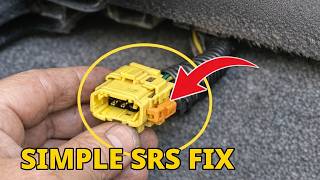
- The most frequent cause is a loose or moisture-corroded yellow connector under the front passenger seat, often triggered by interior detailing or spilled drinks.
- Always disconnect the negative battery terminal and wait 30 minutes before touching any yellow SRS wiring to prevent accidental explosive deployment.
- On 2011-2014 Dodge and Jeep vehicles, B1886 often misdirects mechanics because it actually indicates a short in the power liftgate pinch sensor, not the airbag.
What Does B1886 Mean?
B1886 means the vehicle's Restraints Control Module (RCM) detected abnormally low electrical resistance in the passenger's seat belt pretensioner circuit. This fault instantly disables the entire airbag system as a safety precaution.
Technical definition: The official SAE/ISO definition is 'Seatbelt Passenger Pretensioner Circuit Low Resistance on Squib'. The squib is the electrically-activated explosive charge that fires the pretensioner. The RCM continuously sends low-current pulses to monitor this circuit. If resistance drops below 1.5 ohms, it indicates a short circuit, setting B1886 and disabling the system to prevent accidental deployment.
Can I Drive With B1886?
Yes, But With Caution. Yes, the car will drive normally, but the airbag warning light confirms the entire Supplemental Restraint System (SRS) is disabled. In a crash, airbags and seat belt pretensioners will NOT deploy. Studies show frontal airbags reduce fatalities by up to 32%, and driving without them dramatically increases the risk of serious injury. The pretensioner eliminates belt slack to prevent the occupant from hitting the dashboard; without it, both seatbelt and airbag effectiveness are severely compromised.
Common Causes
- Loose or Corroded Connector Under Passenger Seat (Very Common) — The yellow SRS connector under the passenger seat is the most frequent culprit. Passenger foot movement, stored items, or moisture from spilled drinks and wet shoes cause the pins to corrode or loosen, creating a low-resistance short circuit.
- Damaged Wiring Harness (Common) — Wires leading to the seat belt pretensioner frequently pinch, fray, or short together where they pass through the seat frame tracks or under the carpeting.
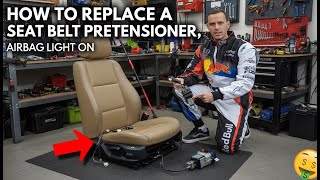
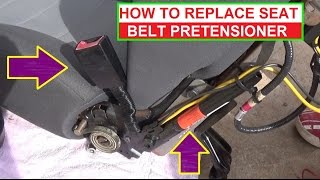
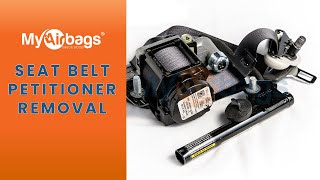
- Faulty Passenger Seat Belt Pretensioner (Common) — The pretensioner assembly itself can fail internally. The internal wiring or the explosive squib develops a short, forcing the RCM to read a resistance value below the 1.5-ohm threshold.
- Faulty Occupant Classification System (OCS) Sensor (Less Common) — On some vehicles, the passenger seat weight sensor (OCS) ties into the SRS circuit. A failure in the OCS module or sensor mat causes resistance issues that the RCM interprets as a pretensioner fault.
- Previous Improper Repairs or Aftermarket Parts (Less Common) — Using the wrong diagnostic resistor to bypass a component or installing an incorrect aftermarket seat causes resistance mismatches. The RCM requires a specific resistance range (typically 1.5 to 3.1 ohms), and non-OEM parts trigger the code.
- Faulty Restraints Control Module (RCM) (Rare) — The RCM itself rarely fails, but an internal short or processing error causes it to incorrectly interpret the resistance reading. Consider this only after ruling out all wiring and pretensioner issues.
Symptoms
- Airbag Warning Light On (Steady or Intermittent) — The primary symptom is an illuminated airbag light. If it flickers when the passenger seat is adjusted, it strongly indicates a loose connection under the seat.
- SRS System Disabled — The entire safety system turns off as a fail-safe. No airbags or pretensioners will activate in an accident.
- Warning Message on Instrument Cluster — Modern vehicles display specific messages like 'Service Airbag System' or 'Check Restraint System' in the driver information center.
- Slack Seat Belt After a Crash — While the normal inertia lock functions during sudden stops, the pyrotechnic pretensioner is disabled. In a collision, the belt will not actively retract to secure the passenger.
Diagnostic Flowchart
Tap your situation to follow the diagnostic path that matches what you're seeing on this code.
Common Fixes & Costs
- Repair Under-Seat Connector and Wiring — Parts: $5-$50, Labor: $120-$250, ~1.5 hr book time (Intermediate)
- Rebuild Original Pretensioner (Mail-in Service) — Parts: $75-$120, Labor: $80-$150, ~1.0 hr book time (DIY)
- Replace Passenger Seat Belt Assembly
— Parts: $250-$600, Labor: $150-$300, ~1.5 hr book time
(Professional)
: OEM
: OEM - Replace Occupant Classification System (OCS) Sensor Mat — Parts: $600-$1800, Labor: $200-$400, ~3.0 hr book time (Professional)
- Replace Restraints Control Module (RCM) — Parts: $500-$800, Labor: $150-$250, ~1.5 hr book time (Professional)
Used vs. New Parts: Buying Guide
When a used part is worth it: Never. Buying a used pyrotechnic safety component from a junkyard carries extreme liability and safety risks.
Donor quality checklist:
- Only accept new OEM parts or professionally rebuilt units from certified companies.
- Avoid any part from a flood-damaged vehicle, as internal moisture compromises the explosive squib.
Decision logic:
- If The part is a pyrotechnic pretensioner → Buy a new OEM part or use a certified mail-in rebuild service.
- If Budget is the primary concern → Choose a mail-in rebuild service for your original part ($75-$120) rather than risking a junkyard part.
Warranty tradeoff: Junkyard parts offer 30-day warranties and massive safety risks. New OEM parts carry 1-year warranties. Rebuilt units often include limited lifetime warranties.
Worst-case if a used part fails: Catastrophic injury or death if the used part fails to deploy in an accident.
What Happens If You Wait — Timeline
- Immediate: Code B1886 sets. The airbag warning light illuminates, and the entire SRS system is disabled as a fail-safe. (MPG impact: 0%% · Added cost: $0)
- Next State Inspection: The vehicle automatically fails safety inspections in strict states, making it illegal to operate. (MPG impact: 0%% · Added cost: $50-$200 in fines and fees.)
- After an Accident: Airbags and pretensioners fail to deploy. Insurance companies may reduce payouts due to negligence. (MPG impact: 0%% · Added cost: Potentially catastrophic medical and liability costs.)
Cost of Not Fixing It
- Immediate: The entire Supplemental Restraint System is disabled. Airbags and pretensioners will not deploy in a crash. (Added cost: N/A)
- Next Vehicle Inspection: The vehicle automatically fails safety inspections in strict states (e.g., VA, NY, PA), making it illegal to drive. (Added cost: $50-$200)
- After an Accident: Insurance companies may reduce payouts or deny medical coverage if a critical safety system was knowingly left inoperative. (Added cost: Potentially thousands in uncovered medical bills and liability.)
Diagnosis Steps
- Read the Specific SRS Code
Use an OBD-II scanner with SRS/Airbag capabilities to confirm B1886 is the active code. Note any 'U' codes, which indicate communication errors.
Tools: OBD-II Scanner with SRS capability (Beginner) - Perform a Thorough Visual Inspection
Look under the front passenger seat for the yellow SRS wiring. Check for unplugged connectors, wires pinched by the seat track, or green/white corrosion on the pins.
Tools: Flashlight, Inspection mirror (Beginner) - Disconnect Battery and Reseat the Connector
Disconnect the negative battery terminal and wait 30 minutes to discharge the SRS backup capacitors. Unplug the yellow connector under the seat, clean the pins, and reconnect it firmly. Reconnect the battery and attempt to clear the code.
Tools: Wrench set, Contact cleaner (Beginner) - Isolate the Fault with a Dummy Resistor
With the battery disconnected, unplug the pretensioner. Insert a 2.0-3.0 ohm airbag diagnostic resistor into the vehicle-side harness. Reconnect the battery and clear codes. If B1886 disappears, the pretensioner is faulty. If it remains, the wiring or RCM is faulty.
Tools: Airbag diagnostic resistor set, OBD-II Scanner (Intermediate) - Check Live Data PIDs
Use a bi-directional scan tool to view live data from the RCM. Locate the passenger pretensioner resistance PID. Normal is 1.5 to 3.1 Ohms. A value below 1.5 Ohms confirms the short. Wiggle the under-seat harness; if the resistance jumps to normal, you found the wiring break.
Tools: Bi-directional OBD-II Scanner (Advanced) - Check Wiring for Shorts
With the battery, RCM, and pretensioner disconnected, use a multimeter to test for continuity between the two pretensioner harness wires. It should read Open Line (infinite). Test each wire against a chassis ground. Any continuity indicates a short circuit requiring repair.
Tools: Digital Multimeter, Wiring diagram (Advanced) - PRO TIP: Pin-Drag Test the Connector
Female terminals lose tension over time. Insert a matching male terminal into each female pin socket. You should feel consistent drag. A loose terminal causes intermittent low-resistance faults and must be re-tensioned or replaced.
Tools: Terminal pin kit (Professional) - PRO TIP: Waveform Analysis
Back-probe the pretensioner wires at the RCM with an oscilloscope. A healthy circuit shows a clean 5 Hz square wave at ~40 mA. A short to ground corrupts this waveform, instantly confirming a wiring issue.
Tools: Automotive oscilloscope, Back-probe pins (Professional)
When This Code Triggers (Freeze-Frame Conditions)
- System Status: Fault Present at Power-Up (The RCM runs a self-test at every ignition-on event; B1886 sets immediately before the vehicle moves.)
- Passenger Seat Status: Occupied or Unoccupied (The pretensioner circuit is monitored continuously regardless of passenger presence.)
Related Codes
- B1881 — Indicates 'Passenger Pretensioner Circuit Open' (High Resistance). If inserting a 2-ohm test resistor changes B1886 to B1881, it confirms the short is inside the pretensioner assembly itself.
- B1883 — Indicates 'Passenger Pretensioner Circuit Short to Ground'. B1886 is a short between the two circuit wires; B1883 is a short from one wire directly to the vehicle chassis.
- B1887 — The driver's side equivalent. If B1887 and B1886 appear simultaneously, suspect a central failure like a faulty RCM or a shared ground issue rather than two broken seat belts.
- U0151 — Indicates 'Lost Communication With Restraints Control Module'. If present with B1886, the RCM is likely losing power or failing internally.
Climate & Environmental Factors
- High Humidity and Water Leaks: Moisture from spilled drinks, wet shoes, or leaking sunroof drains pools under the carpet. This saturates the low-lying SRS connectors, causing immediate pin corrosion and short circuits.
- Cold Weather: Extreme cold causes metal contacts within connectors to contract, exposing intermittent loose connections that pass inspection at warmer temperatures.
How to Talk to a Mechanic About This Code
Say this: "I have an airbag light on and my scanner shows code B1886 for the passenger seat belt pretensioner. Please start by inspecting the yellow connector and harness under the seat before quoting a full seat belt replacement."
This directs the technician to the cheapest, most likely fix first and prevents unnecessary $500 seat belt replacements.
Avoid saying:
- My airbag light is on, can you just fix it?
- I think I need a new seat belt.
Questions to ask before authorizing the repair:
- Did you inspect the yellow connector under the passenger seat for corrosion?
- Did you use a diagnostic resistor to confirm the fault is in the pretensioner itself and not the wiring?
- If my vehicle is a Dodge/Chrysler, did you confirm this code is for the seat belt and not the power liftgate?
Where to Take It: Dealer vs Independent vs Chain
- Dealer:
Best for: Vehicles under the 5-year/60k-mile SRS warranty, Complex diagnostics involving the RCM or OCS
Downsides: Highest labor rates, More likely to replace a full assembly rather than repair a wire (Typical cost: +50% vs. baseline) - Independent Shop:
Best fit for most cases. A reputable independent shop can easily repair this common wiring fault at a significant savings.
Best for: Out-of-warranty vehicles, A likely connector or wiring issue
Downsides: Must verify the shop has SRS-capable scan tools. (Typical cost: +0% vs. baseline) - Chain Shop:
Avoid. The critical nature of the SRS system requires specialized diagnostic steps beyond the scope of quick-lube chains.
Downsides: Technicians lack experience with pyrotechnic safety systems., High pressure to upsell unnecessary components. (Typical cost: -10% vs. baseline)
When to Walk Away From the Repair
If the repair cost exceeds 50% of the car's value, consider selling. However, because B1886 disables the airbags, the repair is mandatory if you plan to keep driving the vehicle.
- Car worth $5000, fix is $800: Fix it. This is a standard repair cost for a pretensioner replacement.
- Car worth $3000, fix is $1800: Walk away. The fault is likely a major component like the OCS sensor or RCM, exceeding half the car's value.
What Scan Tool You Need for This Code
Minimum: A scanner that reads and clears SRS/Airbag 'B' (Body) codes. Basic $20 engine readers will show 'No Codes Found'.
Standard readers only pull 'P' (Powertrain) codes. You need a tool that communicates with the Restraints Control Module.
Budget: Autel AutoLink AL619 (~$70) — Reads and clears SRS codes. It confirms B1886 is present and clears it after the physical repair is done.
Mid-range: BlueDriver Pro (~$120) — Reads SRS codes and streams live data to your phone, allowing you to monitor pretensioner resistance while wiggling wires.
Professional: XTOOL D7 (~$450) — Provides bi-directional control, manufacturer-specific definitions (crucial for Dodge/Jeep), and OCS re-calibration capabilities.
Rent vs buy: Buy. Auto parts stores loan basic OBD-II scanners, but they typically cannot read or clear SRS/airbag codes due to liability.
How to Clear the Code After You Fix It
- Ensure the physical wiring or component fault is corrected.
- Reconnect the vehicle battery.
- Use an SRS-compatible OBD-II scan tool to erase the B1886 code from the RCM.
- Cycle the ignition off, then on, and confirm the airbag warning light turns off after its 7-second self-check.
Drive cycle (~10 minutes): No specific drive cycle is required for the SRS system. A 10-minute test drive confirms the light does not return due to intermittent wiring movement.
Readiness monitors affected: Catalyst Monitor, Evaporative System Monitor, O2 Sensor Monitor
Before emissions retest: drive at least 50 miles to fully set monitors.
Watch out for:
- Clearing the code without a physical repair fails instantly; the RCM detects the short on the next startup.
- Disconnecting the battery does not clear hard SRS codes from the RCM's memory.
- Disconnecting the battery resets emissions monitors, requiring a 50-mile drive cycle before a smog check.
Will This Fail Emissions / State Inspection?
Yes — this code typically fails an OBD-II emissions inspection.
- California: Will NOT fail a smog check. California emissions inspections do not check SRS/airbag faults.
- New York: Will fail the safety inspection. An illuminated airbag light is an automatic failure.
- Texas: Will NOT fail the safety inspection. The airbag warning light is not a required inspection item.
- Virginia / Pennsylvania: Will fail the safety inspection. These states mandate automatic rejection for any active SRS warning light.
Most Commonly Affected Vehicles
- Ford F-150, Explorer, Escape (2004-2015) — Extremely prone to under-seat connector failures. The wiring harness chafes against the seat frame, requiring a pigtail connector replacement.
- Dodge / Ram Durango, Grand Caravan (2011-2014) — CRITICAL: On these models, B1886 often indicates a 'Liftgate Pinch Sensor Circuit Short' rather than an airbag issue. Manufacturer-specific scanners are required to avoid misdiagnosis.
- Mazda Mazda3, CX-5 (2004-2014) — Suffer from loose or corroded under-seat connectors due to terminal coating degradation and physical stress.
- Honda Accord, Civic (2003-2012) — Often caused by a failing seat belt buckle switch integrated with the pretensioner circuit. Replacement parts are highly specific to interior color and manufacturing origin.
- Chevrolet / GMC Silverado, Equinox (2007-2019) — Wiring harness routing makes it susceptible to moisture damage. Some 2018-2019 Equinox models require a shielded harness to prevent electromagnetic interference from wiper motors.
- Subaru Outback, Legacy (2020-2022) — Subject to a recall for a faulty Occupant Detection System (ODS) sensor that shorts due to moisture, triggering SRS codes and requiring dealer re-calibration.
Manufacturer-Specific Notes
- Dodge / Jeep / Chrysler: On 2011-2014 Durango and Grand Caravan models, B1886 frequently refers to a fault in the power liftgate pinch sensor circuit, not the airbag system. Always verify the code definition with a high-end scanner.
- Ford: The yellow under-seat connector is notoriously sensitive. Ford issued TSBs to replace the original pigtail with a robust updated part. Ford's SRS warranty covers these components for 5 years or 60,000 miles.
- GM (Chevrolet / GMC): On 2018-2019 Equinox models, activating the windshield wipers causes electromagnetic interference that triggers intermittent airbag lights, requiring a newly shielded wiring harness (TSB 16-NA-261).
Real Owner Stories
2011 Ford F-150 with ~120K miles
The airbag light came on intermittently when the passenger seat was adjusted.
What they tried:
- Checked under the passenger seat and found the yellow connector was slightly loose.
- Disconnected the battery, cleaned the pins, and reconnected it securely using a zip tie to prevent movement.
Outcome: The light went out after clearing the code and did not return. The fix cost nothing but time.
Lesson: Always check the simplest cause first. A zip tie is a cheap, effective way to prevent under-seat connectors from wiggling loose.
2015 VW Golf GTI after interior detailing
The airbag light illuminated immediately after a mobile detailing service shampooed the carpets.
What they tried:
- Suspected dampness was causing a short circuit.
- Ran the car with the heat and passenger heated seat on full blast for over an hour to aggressively dry the floorboard.
Outcome: After drying the wiring harness, the faults cleared and the lights went off permanently.
Lesson: Moisture is a primary cause of SRS faults. If the code appears after a spill or cleaning, thoroughly dry the under-seat area before replacing parts.
2012 Dodge Grand Caravan with B1886
A standard OBD-II scanner showed code B1886, leading the owner to assume a passenger seat belt failure.
What they tried:
- Inspected the under-seat wiring and found no issues.
- Took the vehicle to a shop with a manufacturer-specific scanner before buying a $300 seat belt.
Outcome: The advanced scan revealed the true definition for this specific vehicle: 'Liftgate Pinch Sensor Circuit Short'. The mechanic repaired a damaged wire in the tailgate harness.
Lesson: On Chrysler/Dodge/Jeep vehicles, verify B-code definitions with a high-quality scanner to avoid replacing airbag parts for a liftgate issue.
How to Prevent This Code From Triggering
- Secure the Under-Seat Connector (Once) — Using a zip tie to secure the wiring harness to the seat frame prevents passenger foot movement from wiggling the connector loose.
- Use Caution During Interior Cleaning (Every cleaning) — Avoiding excessive water near the floorboards prevents moisture from wicking into low-lying SRS connectors and causing corrosion.
- Periodically Clean Sunroof Drains (Annually) — Clogged drains cause water to overflow into the cabin, saturating under-seat electronics and triggering short circuits.
Frequently Asked Questions
Is it safe to drive with code B1886?
No. The code signifies your entire airbag and restraint system is disabled. In an accident, no airbags will deploy and seat belts will not pre-tension, drastically increasing injury risk.
Can I just clear the code to turn the airbag light off?
No. B1886 is a hard code related to a critical safety system. The RCM performs a self-check at every ignition cycle and will immediately turn the light back on until the physical short circuit is repaired.
Will the airbag deploy unexpectedly because of this code?
No. The system fails in a safe mode. When the RCM detects low resistance, it disables the entire system specifically to prevent accidental explosive deployment.
What is the most common misdiagnosis for B1886?
Mechanics often replace the expensive seat belt assembly without testing the circuit, missing the actual fault in the cheap under-seat wiring. On Dodge/Jeep vehicles, it is frequently misdiagnosed as an airbag issue when it's actually a power liftgate fault.
I replaced the seat belt but the light is still on. Why?
The fault was likely in the wiring harness, not the seat belt itself. Additionally, SRS codes must be manually cleared from the RCM using a specialized scanner; the light will not turn off automatically.
Can I use a seat belt from a junkyard?
This is highly discouraged. Used pretensioners may have internal faults, incompatible resistance values, or hidden deployment damage. Only use new OEM parts or professionally rebuilt units.
Why is the airbag connector always yellow?
Global industry standards dictate all SRS wiring is bright yellow. This warns technicians to disconnect the battery and follow safety procedures before handling pyrotechnic systems.
My airbag light came on after I cleaned my car's interior. What happened?
Aggressive vacuuming jostles the under-seat connector, or liquid cleaners introduce moisture into the pins. This creates a short circuit that triggers the B1886 code.
Key Takeaways
- Code B1886 indicates a short circuit (resistance below 1.5 ohms) in the passenger seat belt pretensioner, instantly disabling the entire airbag system.
- The most frequent cause is a loose or moisture-corroded yellow connector under the front passenger seat, often triggered by interior detailing or spilled drinks.
- Always disconnect the negative battery terminal and wait 30 minutes before touching any yellow SRS wiring to prevent accidental explosive deployment.
- On 2011-2014 Dodge and Jeep vehicles, B1886 often misdirects mechanics because it actually indicates a short in the power liftgate pinch sensor, not the airbag.
Helpful Videos

Shop the Parts Behind B1886
Below are the parts most often responsible for code B1886, ranked by how frequently each one is the actual culprit (per the diagnosis above). Tap any to see what we have for your vehicle.



The information in this article is provided for general reference and educational purposes only. Vehicle specifications, procedures, and part compatibility can vary by production date, trim level, and region. Always consult your vehicle's factory service manual and verify part numbers before purchasing or performing repairs. Safety-critical components such as airbags, seat belts, and braking systems should be installed by a qualified professional.
- 🧭 Diagnostic Flowchart
- 🎬 Helpful Videos
- 🛍️ Shop This Part
- What Does B1886 Mean?
- Can I Drive With B1886?
- Common Causes
- Symptoms
- Common Fixes & Costs
- Used vs. New Parts: Buying Guide
- What Happens If You Wait — Timeline
- Cost of Not Fixing It
- Diagnosis Steps
- When This Code Triggers (Freeze-Frame Conditions)
- Related Codes
- Climate & Environmental Factors
- How to Talk to a Mechanic About This Code
- Where to Take It: Dealer vs Independent vs Chain
- When to Walk Away From the Repair
- What Scan Tool You Need for This Code
- How to Clear the Code After You Fix It
- Will This Fail Emissions / State Inspection?
- Most Commonly Affected Vehicles
- Manufacturer-Specific Notes
- Real Owner Stories
- 2011 Ford F-150 with ~120K miles
- 2015 VW Golf GTI after interior detailing
- 2012 Dodge Grand Caravan with B1886
- How to Prevent This Code From Triggering
- Frequently Asked Questions
- Is it safe to drive with code B1886?
- Can I just clear the code to turn the airbag light off?
- Will the airbag deploy unexpectedly because of this code?
- What is the most common misdiagnosis for B1886?
- I replaced the seat belt but the light is still on. Why?
- Can I use a seat belt from a junkyard?
- Why is the airbag connector always yellow?
- My airbag light came on after I cleaned my car's interior. What happened?
- Key Takeaways
- 🎟️ Get 5% Off