

OBD-II Code B1935: Passenger Airbag Circuit / Heated Seat Fault
What B1935 means, why it triggers, and how to fix it
- On 2007-2014 GM trucks and SUVs, B1935 indicates a heated seat fault, not an airbag issue; test the seat heating elements for resistance between 2.5 and 11.5 ohms before replacing SRS parts.
- An illuminated airbag warning light completely disables the vehicle's Supplemental Restraint System, meaning zero airbags will deploy in a collision.
- If you smell burning plastic in a GM vehicle with this code, immediately disconnect the battery and inspect the heated seat module under the passenger seat for a melted connector.
- On 1999-2005 Ford vehicles, B1935 is a confirmed passenger airbag circuit fault, often signaled by the dashboard airbag light flashing a '35' pattern.
- Never probe yellow airbag connectors with a multimeter or attempt repairs without first disconnecting the negative battery terminal and waiting 15 minutes for the backup power to discharge.
What Does B1935 Mean?
Code B1935 indicates the vehicle's computer detects low electrical resistance in a specific circuit. On most vehicles, this points to a short in the passenger-side airbag inflator circuit. However, on 2007-2014 General Motors trucks and SUVs, this exact code signals a failure in the heated seat system for either the driver or passenger.
Technical definition: The SAE/ISO definition for B1935 is "Air Bag Passenger Inflator Circuit Resistance Low on Squib". The Restraint Control Module detects electrical resistance in the passenger airbag deployment circuit below the specified range (typically under 1.5 ohms), indicating a short circuit to ground or power.
Can I Drive With B1935?
No — Do Not Drive. Do not drive the vehicle. An illuminated airbag warning light disables the entire Supplemental Restraint System (SRS) as a fail-safe, meaning no airbags will deploy in a crash. Ignoring this light removes critical safety features and turns a minor collision into a high-risk event. Replacing a single deployed airbag costs $1,000 to $2,000, a financial risk easily avoided by fixing the initial fault.
Common Causes
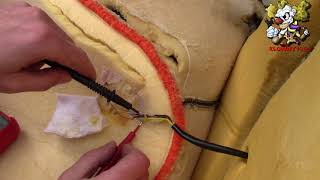
- Broken Heated Seat Element (GM Vehicles) (Very Common) — On 2007-2014 GM trucks and SUVs, the most frequent cause is a broken wire inside the heating element pad of the driver's or passenger's seat. Repeated flexing from entering and exiting the vehicle breaks the delicate internal wiring, creating an open or shorted circuit. 🎬 See this walkthrough on replacing GM front seat heating elements.
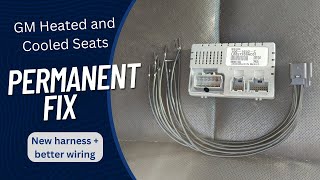
- Burnt Heated Seat Module Connector (GM Vehicles) (Very Common) — The high electrical current drawn by heated and cooled seats causes the main power and ground pins on the control module's connector (under the passenger seat) to overheat, melt, and lose connection. This is a well-documented fire hazard on GM's GMT900 platform.
- Damaged Under-Seat Wiring Harness (Common) — Wiring under the front seats gets pinched, cut, or chafed by the seat's movement on its rails or by items stored underneath. This causes a short circuit in either the airbag's yellow loom or the heated seat wiring.
- Faulty Passenger Airbag Module (Squib) (Less Common) — The passenger airbag inflator module itself develops an internal short circuit. The entire airbag unit must be replaced, as it is a non-serviceable pyrotechnic device. This is the primary cause on Ford and other non-GM vehicles.
- Corroded or Loose Airbag Connectors (Less Common) — Electrical connectors for the airbag system become loose or corroded, especially under the seats where they are exposed to moisture from spills or wet shoes. Minor corrosion alters resistance readings and triggers the code.
- Faulty or Water-Damaged Restraint Control Module (RCM) (Rare) — Water intrusion from a leaking sunroof or window corrodes the Restraint Control Module (usually located under the center console). Alternatively, the module fails internally and falsely reports a resistance issue after all wiring and squibs test perfectly.
Symptoms
- Airbag Warning Light On — The SRS warning light stays illuminated on the dashboard, indicating a fault that completely disables the vehicle's airbags.
- Heated Seat Inoperative (GM Vehicles) — The affected heated seat fails to warm up. The indicator light on the switch turns on briefly, then the system shuts itself off as the module detects the fault.
- Burning Plastic Smell (GM Vehicles) — A distinct electrical burning smell emanates from under the passenger seat, indicating the heated seat module connector is actively melting due to high resistance.
- Flashing Airbag Light (Ford Vehicles) — The airbag light flashes a specific pattern (Lamp Fault Code 35) corresponding to the B1935 code before staying on continuously.
- Erratic Electrical Behavior — A failing Restraint Control Module causes strange electrical behavior, such as battery drain, other warning lights illuminating, or a faint repetitive clicking sound from behind the dashboard.
Diagnostic Flowchart
Tap your situation to follow the diagnostic path that matches what you're seeing on this code.
Common Fixes & Costs
- Replace Heated Seat Element Pad (GM) — Parts: $50-$150, Labor: $200-$450, ~2.5 hr book time (Intermediate)
- Replace Burnt Connector Pigtail (GM) — Parts: $30-$60, Labor: $150-$250, ~1.2 hr book time (Intermediate)
- Repair Damaged Wiring Harness — Parts: $10-$30, Labor: $150-$300, ~1.5 hr book time (DIY)
- Replace Passenger Airbag Module — Parts: $400-$1,000, Labor: $150-$300, ~1.5 hr book time (Professional)
- Replace Restraint Control Module (RCM) — Parts: $200-$600, Labor: $150-$300, ~1.5 hr book time (Professional)
Used vs. New Parts: Buying Guide
When a used part is worth it: For GM heated seat elements, a used part from a low-mileage donor vehicle is a viable budget option. For any airbag component (module, clockspring, RCM), buying used is strongly discouraged due to extreme safety risks.
Donor-vehicle mileage cap: roughly under 80000 miles for the part to have meaningful remaining life.
Donor quality checklist:
- Verify the part number matches exactly for control modules.
- Never buy a used airbag; its history is unknown and it is illegal to sell in some states.
- Ensure a used RCM has been cleared of all crash data by a professional service.
Decision logic:
- If The part is an airbag, clockspring, or Restraint Control Module → Buy new OEM or a professionally remanufactured unit. The safety risk of a used part is not worth the savings.
- If The part is a GM heated seat element and the vehicle has high mileage → A used element from a reputable salvage yard is an acceptable repair strategy.
- If The part is a wiring pigtail or connector → Always buy new to ensure a reliable, safe electrical connection.
Warranty tradeoff: Salvage yards offer 30-90 day functional warranties. New aftermarket parts offer 1-year to lifetime warranties. New OEM parts usually have a 12-month/12,000-mile warranty.
Worst-case if a used part fails: 1500
What Happens If You Wait — Timeline
- Immediate (Airbag Fault): The airbag warning light illuminates. The entire SRS is disabled as a fail-safe. No airbags will deploy in a crash. (MPG impact: 0%% · Added cost: $0)
- Immediate (GM Heated Seat - Broken Element): The airbag light illuminates and the heated seat stops working. The fault is stable and does not degrade further. (MPG impact: 0%% · Added cost: $0)
- 1-4 Weeks (GM Heated Seat - Melting Connector): The heated seat becomes intermittent. A faint burning plastic smell is noticeable as high resistance generates heat and chars the connector. (MPG impact: 0%% · Added cost: $30-$60)
- 1-6+ Months (GM Heated Seat - Severe Connector Meltdown): The connector melts completely, creating a permanent open circuit. The burning smell intensifies, posing a serious vehicle fire risk. (MPG impact: 0%% · Added cost: $500 - $3,000+)
Cost of Not Fixing It
- Immediate: The entire Supplemental Restraint System (SRS) is disabled. No airbags will deploy in a collision, significantly increasing the risk of serious or fatal injury. (Added cost: 0)
- 1-6 months (GM Heated Seat Fault): A melting connector under the seat poses a legitimate fire hazard, leading to interior damage or a full vehicle fire. (Added cost: $2,000 to Total Vehicle Loss)
- In Case of a Collision: Injuries that would have been prevented by airbags occur. Settlements for airbag non-deployment cases range from $50,000 to over $1,000,000. (Added cost: $5,000 - $1,000,000+)
Diagnosis Steps
- Identify Your Vehicle's System
Determine if your vehicle is a 2007-2014 GM model (Tahoe, Suburban, Silverado, Yukon). If so, focus exclusively on the heated seat system. For Ford, Chrysler, or other makes, focus on the passenger airbag circuit. Misidentifying the system guarantees a misdiagnosis.
Tools: Vehicle knowledge (Beginner) - Check SRS and Heated Seat Fuses
Locate the fuses for the airbag system (SRS) and heated seats (labeled SEATS or HVAC/ECAS) in the owner's manual. Pull the fuses and visually inspect them for a blown filament.
Tools: Owner's manual, fuse puller (Beginner) - Visual Inspection Under Both Front Seats
Move the front seats fully forward and up. On GM vehicles, look for a melted or charred connector on the silver control module under the passenger seat. On all vehicles, inspect the yellow airbag wiring loom for chafed wires or loose connections.
Tools: Flashlight (Beginner) - Read Advanced Scan Tool Data
Use a professional scan tool to read live data. For GM vehicles, look for symptom byte '0E' with the code, confirming a heated seat circuit malfunction. For airbag faults, view the specific resistance value (in Ohms) the module is detecting.
Tools: Advanced OBD-II scanner with SRS/Body capabilities (Intermediate) - Test Heated Seat Element Resistance (GM)
Disconnect the heating element connector under the seat. Measure resistance with a multimeter set to Ohms (Ω). A healthy cushion element reads 3.5-11.5 ohms; a back element reads 2.5-8.5 ohms. A reading of 'OL' (Open Loop) means the element is broken.
Tools: Multimeter (Intermediate) - Inspect Airbag Connectors (Non-GM)
Disconnect the negative battery terminal and wait 15 minutes. Carefully disconnect the yellow airbag connectors under the seat and behind the dashboard. Look for corrosion or spread pins, then reconnect them securely until they click.
Tools: Socket set, trim removal tools (Intermediate) - Analyze Airbag Circuit Resistance Values (Non-GM)
View the live resistance PID for the passenger airbag squib on a scan tool. A healthy circuit reads 1.5 to 3.5 ohms. Code B1935 flags a value below the threshold (often under 1.5 ohms), proving a short to ground or internal squib fault.
Tools: Advanced OBD-II scanner with SRS live data (Advanced) - Perform a 'Wiggle Test' with Live Data
Have a helper sit in the passenger seat and move around while you watch the live resistance PID. Wiggle the under-seat harness. A momentary spike or drop in resistance pinpoints a hidden wiring short.
Tools: Advanced OBD-II scanner, helper (Advanced) - Use an Airbag Simulator (Advanced)
Disconnect the battery and the passenger airbag. Plug an airbag simulator (a 2.0 to 3.3-ohm resistor) into the vehicle's harness. If the code clears, the wiring is good and the airbag module itself is faulty.
Tools: Airbag simulator/resistor set, socket set (Professional)
When This Code Triggers (Freeze-Frame Conditions)
- System Self-Test: Key-On, Engine-Off (KOEO) (The SRS module performs a resistance check of all components within the first 10 seconds of ignition. A fault sets the code immediately.)
- Heated Seat Switch (GM): On (On GM vehicles, the code sets the moment the heated seat is activated and the module detects out-of-spec resistance from the faulty element.)
- Battery Voltage: 11.5V - 14.5V (The Restraint Control Module requires stable system voltage to perform accurate resistance checks; erratic voltage triggers false codes.)
- Vehicle State: Stationary (The fault is detected during the initial key-on self-test before the vehicle begins moving.)
Related Codes
- B1934 — The direct driver-side equivalent of B1935's generic definition: 'Air Bag Driver Inflator Circuit Resistance Low'. On non-GM vehicles, B1934 points to the driver's airbag; B1935 points to the passenger's.
- B2425 / B2430 — GM-specific codes for heated seat circuit malfunctions. B2425 specifies the DRIVER seat; B2430 specifies the PASSENGER seat. They frequently appear alongside B1935 to confirm the seat fault.
- B0081 — A Passenger Presence System (PPS) code that often appears with B1935 on GM vehicles. If both appear, the primary suspect is the under-seat wiring harness, which routes both systems together.
- B1913 / B1925 — Ford-specific codes indicating 'Air Bag Circuit Short to Ground' (B1913) or 'Short to Battery' (B1925). They help pinpoint the exact nature of the low resistance fault.
Climate & Environmental Factors
- High Humidity / Water Intrusion: Moisture from leaking sunroofs, windows, or floor spills enters under-seat connectors. This corrodes the pins, altering circuit resistance and triggering the B1935 code.
- Extreme Cold: Cold weather causes plastic and metal components to contract, loosening marginal electrical connectors. Additionally, increased use of heated seats in cold climates accelerates wear on the heating elements.
How to Talk to a Mechanic About This Code
Say this: "I have an airbag light on and my scanner shows code B1935. I have a [Year/Make/Model]. I know this code means different things depending on the manufacturer, so I want to ensure we diagnose the correct system."
This proves you are an informed customer and prevents the shop from starting with a generic, potentially incorrect diagnostic path.
Avoid saying:
- 'My airbag light is on, can you fix it?'
- 'I think I need a new passenger airbag.'
- 'Just do whatever it takes to turn the light off.'
Questions to ask before authorizing the repair:
- Can you provide a written, itemized estimate showing the parts and labor breakdown?
- If the problem is on my GM vehicle, have you confirmed whether it's the heated seat circuit or the airbag circuit?
- If you find additional problems during the repair, will you contact me for approval before proceeding?
- What is the warranty on the parts and labor for this specific repair?
Where to Take It: Dealer vs Independent vs Chain
- Dealer:
Best for: Vehicles under warranty, Complex electrical issues on newer cars, Confirming manufacturer-specific code definitions (especially for Chrysler/Jeep)
Downsides: Labor rates are often 25-50% higher than independent shops., May be quicker to replace an entire assembly rather than repair a specific wire. (Typical cost: +40% vs. baseline) - Independent Shop:
Best fit for most scenarios. An experienced independent mechanic is likely familiar with the GM heated seat quirk, providing a cost-effective repair.
Best for: Out-of-warranty vehicles, especially common models like GM trucks or Ford F-150s, Well-documented problems like the GM heated seat issue, Owners seeking better value and direct communication with the technician
Downsides: Quality and diagnostic capabilities vary widely; look for ASE certifications., May lack the latest manufacturer-specific scan tools for uncommon vehicles. (Typical cost: +0% vs. baseline) - Chain Shop:
Avoid for this code. B1935 requires specific diagnostic knowledge beyond the scope of a typical chain shop, increasing the risk of a costly misdiagnosis.
Best for: Simple, routine maintenance like oil changes or tires.
Downsides: Technician experience with complex electrical or SRS diagnostics is limited., High pressure to upsell services leads to misdiagnosis. (Typical cost: -10% vs. baseline)
When to Walk Away From the Repair
If the total estimated repair cost for the B1935 code and any other known issues exceeds 50% of your car's private-party value, consider selling or trading it in.
- Car worth $5000, fix is $2800: Walk away. The repair cost is over 50% of the vehicle's value. The disabled airbag system makes it unsafe and is a major red flag for buyers.
- Car worth $15000, fix is $900: Fix it. The repair cost is well under the threshold and restores a critical safety system, preserving the vehicle's value.
- Car worth $3500, fix is $1600: Borderline. Get a second opinion. If the fix is for a GM heated seat, the cost might be justifiable. If it's for an airbag module on an older Ford, it may not be worth it.
What Scan Tool You Need for This Code
Minimum: A scan tool that reads and clears Supplemental Restraint System (SRS) / Airbag codes. A basic engine-only code reader will not see B-codes (Body codes) like B1935.
A standard $20 OBD-II reader only communicates with the Engine Control Unit (ECU). Code B1935 is stored in the Restraint Control Module (RCM) or Body Control Module (BCM).
Budget: BlueDriver Pro (~$99) — Reads and clears SRS/airbag, ABS, and transmission codes on many vehicles. Connects to a smartphone app and provides repair reports.
Mid-range: Autel AutoLink AL619 / Foxwell NT630 Plus (~$120-180) — Dedicated handheld units excellent for SRS diagnostics. They read and clear codes, view live sensor data, and pinpoint faults without needing a smartphone.
Professional: Autel MaxiCOM MK808 / XTOOL D7 (~$400-600) — Provides full-system diagnostics and bidirectional control. Allows a technician to command the heated seat module on/off or view manufacturer-specific data streams from the RCM.
Rent vs buy: Auto parts stores offer free code reading, but their loaner tools are typically basic engine code readers that CANNOT read SRS codes. You must buy an SRS-capable scanner or pay for a professional diagnosis.
How to Clear the Code After You Fix It
- Perform the repair with the battery disconnected
- Reconnect the battery
- Use an SRS-capable scan tool to clear the Diagnostic Trouble Code (DTC)
- Cycle the ignition off and on to confirm the airbag light turns off after the initial self-check
Drive cycle: Not applicable. The SRS module performs a self-test at every key-on event. If the repair is successful, the code clears immediately and does not return.
Readiness monitors affected: None
Watch out for:
- Using a basic OBD-II engine code reader that cannot access the SRS or BCM modules.
- Assuming disconnecting the battery clears an SRS code (it does not).
- The code returning immediately, indicating the root cause was misdiagnosed or not fixed.
Will This Fail Emissions / State Inspection?
No — by itself this code doesn't fail OBD inspection (but it can keep readiness monitors from setting, which causes a separate fail).
- California: An illuminated airbag light is a safety issue, not an emissions issue, and does not cause a smog check failure. However, it remains a critical safety failure.
- New York: The airbag warning light is checked for proper operation. An illuminated light is an advisement to the customer but is NOT grounds for inspection failure.
- Texas: During the annual safety inspection, the airbag warning lamp must function correctly. If the light remains on, the vehicle fails the safety inspection.
Most Commonly Affected Vehicles
- Chevrolet / GMC / Cadillac Full-Size SUVs (Tahoe, Suburban, Yukon, Escalade) (2007-2014) — Extremely common for B1935 to indicate a fault in the heated seat system, either a broken element or a burnt module connector. Addressed in GM TSB #PIT5215A.
- Chevrolet / GMC Silverado / Sierra 1500 (2007-2013) — Shares the GMT900 platform. B1935 is a well-documented heated seat code, often triggered by a fault in the driver's seat despite the generic 'passenger' definition.
- Ford F-150 / F-250 / F-350 Super Duty (1999-2005) — The code correctly points to a passenger airbag circuit fault. The airbag light flashes a 'code 35' (LFC) as an indicator.
- Ford Mustang (1998-2004) — Reliably indicates a low resistance fault in the passenger airbag circuit. Diagnostic procedure focuses entirely on the SRS.
- Jeep / Chrysler / Dodge Various Models (Wrangler, Sebring, etc.) (2007-2017) — B1935 is NOT an airbag code on these makes. It means 'Passenger Door Lock/Unlock Switch Circuit Stuck' or 'AV Control Unit'. Requires a manufacturer-specific scan tool.
Manufacturer-Specific Notes
- General Motors (Chevrolet, GMC, Cadillac): On 2007-2014 GMT900 trucks and SUVs, B1935 is a heated seat code, NOT an airbag code. Generic scan tools incorrectly define it. The actual problem is a broken heating element or burnt connector.
- Ford: B1935 reliably points to a passenger airbag circuit fault. The system flashes a 'code 35' (Lamp Fault Code) with the airbag light as an additional diagnostic indicator.
- Jeep / Chrysler / Dodge: B1935 indicates unrelated body faults, such as 'AV Control Unit Malfunction' or 'Passenger Door Lock Switch Stuck'. It has nothing to do with airbags or heated seats.
Real Owner Stories
2009 GMC Yukon Denali with B1935 and inoperative driver's heated seat.
The driver's side heated seat failed, while the passenger side worked. The airbag light was on with code B1935. The owner was confused because the code definition pointed to a passenger airbag issue.
Outcome: A dealership diagnosed a failed heating element in the driver's seat back. Replacing the element restored the heated seat and cleared the B1935 code.
Lesson: On GMT900 vehicles, B1935 often points to the DRIVER'S seat despite the generic 'passenger' code name. The heating element itself must be tested directly.
1999 Ford F-150 with a flashing airbag light (Code 35).
After a minor accident, the owner replaced deployed airbags with used parts. The airbag warning light flashed a 'code 35' pattern (3 flashes, pause, 5 flashes) and stayed on.
Outcome: Code 35 corresponds directly to DTC B1935. The original RCM still had crash data stored and needed to be replaced or professionally cleared to reset the system.
Lesson: On older Ford trucks, a flashing '35' specifically means B1935. Replacing airbag components after deployment is insufficient; the RCM must be replaced or cleared.
2010 Cadillac Escalade with both heated/cooled seats not working.
Both front heated and cooled seats failed, storing a B1935 code. The owner noticed a faint burning plastic smell from under the passenger seat.
Outcome: The owner replaced the melted connector with a new Ford Motorcraft WPT-928 pigtail. They modified the wiring to split the electrical load across two power and ground pins, preventing repeat failure.
Lesson: A burning smell points directly to a melting connector under the passenger seat, posing a severe fire hazard. Splitting the current load across unused pins provides a robust, long-term repair.
How to Prevent This Code From Triggering
- Protect Under-Seat Wiring (Once, or after any seat service) — Secure harnesses away from moving parts using zip ties or split-loom tubing to prevent chafing and shorts caused by seat rails.
- Minimize Stress on GM Heated Seat Elements (Daily habit) — Avoid 'plopping' down into the seat or putting a knee on the cushion. This reduces the flexing that fatigues and breaks delicate heating element wires.
- Keep Sunroof Drains Clear (Twice a year (spring and fall)) — Clogged drains cause water to overflow into the headliner and drip onto the Restraint Control Module or under-seat connectors. Clear tubes with compressed air.
- Apply Dielectric Grease to At-Risk Connectors (During any related repair) — Applying dielectric grease to under-seat connector pins seals out moisture and prevents corrosion that leads to resistance faults.
- Avoid Storing Items Under Seats (Daily habit) — Objects sliding under the seat are the primary cause of disconnected or damaged wiring for both airbag and heated seat systems.
Frequently Asked Questions
Can I just clear the B1935 code?
You can clear the code with a scanner, but it will return instantly if the underlying electrical fault remains. Because it relates to a constantly monitored safety or body circuit, clearing the code does not fix the problem.
Is it safe to drive with the airbag light on from a B1935 code?
No. When the airbag warning light is on, the entire SRS system is disabled as a safety precaution. None of the airbags will deploy in an accident, dramatically increasing the risk of injury.
What is the most common misdiagnosis for B1935?
On 2007-2014 GM trucks and SUVs, generic scanners define B1935 as an airbag fault. This leads mechanics to inspect expensive airbag components when the true cause is a broken heated seat element or burnt connector.
The code says 'Passenger Airbag', but my DRIVER'S heated seat is broken. Why?
On GM vehicles like the Yukon and Silverado, B1935 is a generic code used for the heated seat system. It triggers for faults in either the driver's or passenger's seat. Your scanner is simply displaying the generic OBD-II definition, not GM's specific use.
My scanner says B1935 is an airbag code, but my heated seat stopped working. What's the problem?
You likely own a 2007-2014 GM truck or SUV, where B1935 specifically indicates a heated seat circuit fault. Your scanner is using a generic definition. Focus your diagnosis on the heated seat elements and under-seat connectors.
Why does the airbag light flash a pattern on my Ford?
On many Ford vehicles, a flashing airbag light is a Lamp Fault Code (LFC) that provides a diagnostic hint. For B1935, it typically flashes a '35' pattern (three flashes, pause, five flashes). This confirms the specific low-resistance fault registered by the Restraint Control Module.
Can I replace an airbag myself to fix this?
Only certified professionals should work on airbag systems, as they are explosive pyrotechnic devices. Mishandling causes accidental deployment, leading to severe injury or death. Always disconnect the battery and wait 15 minutes before any nearby work, though this does not eliminate all risks.
Key Takeaways
- On 2007-2014 GM trucks and SUVs, B1935 indicates a heated seat fault, not an airbag issue; test the seat heating elements for resistance between 2.5 and 11.5 ohms before replacing SRS parts.
- An illuminated airbag warning light completely disables the vehicle's Supplemental Restraint System, meaning zero airbags will deploy in a collision.
- If you smell burning plastic in a GM vehicle with this code, immediately disconnect the battery and inspect the heated seat module under the passenger seat for a melted connector.
- On 1999-2005 Ford vehicles, B1935 is a confirmed passenger airbag circuit fault, often signaled by the dashboard airbag light flashing a '35' pattern.
- Never probe yellow airbag connectors with a multimeter or attempt repairs without first disconnecting the negative battery terminal and waiting 15 minutes for the backup power to discharge.
Helpful Videos

Shop the Parts Behind B1935
Below are the parts most often responsible for code B1935, ranked by how frequently each one is the actual culprit (per the diagnosis above). Tap any to see what we have for your vehicle.



The information in this article is provided for general reference and educational purposes only. Vehicle specifications, procedures, and part compatibility can vary by production date, trim level, and region. Always consult your vehicle's factory service manual and verify part numbers before purchasing or performing repairs. Safety-critical components such as airbags, seat belts, and braking systems should be installed by a qualified professional.
- 🧭 Diagnostic Flowchart
- 🎬 Helpful Videos
- 🛍️ Shop This Part
- What Does B1935 Mean?
- Can I Drive With B1935?
- Common Causes
- Symptoms
- Common Fixes & Costs
- Used vs. New Parts: Buying Guide
- What Happens If You Wait — Timeline
- Cost of Not Fixing It
- Diagnosis Steps
- When This Code Triggers (Freeze-Frame Conditions)
- Related Codes
- Climate & Environmental Factors
- How to Talk to a Mechanic About This Code
- Where to Take It: Dealer vs Independent vs Chain
- When to Walk Away From the Repair
- What Scan Tool You Need for This Code
- How to Clear the Code After You Fix It
- Will This Fail Emissions / State Inspection?
- Most Commonly Affected Vehicles
- Manufacturer-Specific Notes
- Real Owner Stories
- 2009 GMC Yukon Denali with B1935 and inoperative driver's heated seat.
- 1999 Ford F-150 with a flashing airbag light (Code 35).
- 2010 Cadillac Escalade with both heated/cooled seats not working.
- How to Prevent This Code From Triggering
- Frequently Asked Questions
- Can I just clear the B1935 code?
- Is it safe to drive with the airbag light on from a B1935 code?
- What is the most common misdiagnosis for B1935?
- The code says 'Passenger Airbag', but my DRIVER'S heated seat is broken. Why?
- My scanner says B1935 is an airbag code, but my heated seat stopped working. What's the problem?
- Why does the airbag light flash a pattern on my Ford?
- Can I replace an airbag myself to fix this?
- Key Takeaways
- 🎟️ Get 5% Off