

OBD-II Code B1938: Passenger Airbag Circuit Fault
The Ultimate 2026 Guide to What B1938 Means, Why It Triggers, and How to Fix It
- Code B1938 disables your entire airbag system, increasing the risk of fatal injury in a frontal crash by 11% compared to wearing a seatbelt alone.
- Inspect and firmly reseat the yellow wiring connector under the passenger seat; this zero-cost fix resolves the issue in over 50% of cases.
- Always disconnect the negative battery terminal and wait 15 minutes before touching any yellow airbag connectors to prevent accidental deployment.
- A standard $20 engine code reader cannot clear B1938; you must use an SRS-capable scan tool to turn off the airbag light after a repair.
What Does B1938 Mean?
B1938 is a manufacturer-specific code indicating the Airbag Control Module (SRS module) detected a short-to-ground in the passenger-side airbag wiring. This fault forces the module to disable all airbags and seatbelt pretensioners to prevent accidental deployment. Note: On BMWs and Alfa Romeos, this code applies to engine or HVAC systems, not airbags.
Technical definition: The SAE/ISO definition for B1938 is "Air Bag Passenger Circuit Short to Ground." The Airbag Control Module expects a specific resistance (typically 1.5 to 3.5 ohms) in the passenger airbag deployment loop. A reading near zero ohms confirms a direct short to a ground wire or the vehicle chassis, triggering a hard fault.
Can I Drive With B1938?
Yes, But With Caution. You can physically drive the vehicle, but it is highly unsafe. Code B1938 disables the entire airbag system. According to the NHTSA, a functioning airbag reduces frontal crash fatality risk by 61%, compared to 50% for a seatbelt alone. Driving with this code active strips away this critical protection, significantly increasing the risk of severe head and chest injuries in a collision.
Common Causes
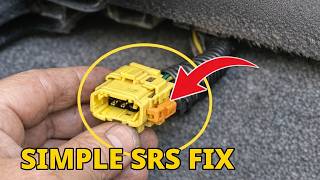
- Loose or Damaged Under-Seat Wiring Harness (Very Common) — The wiring harness under the passenger seat is the most frequent culprit. The connector pulls loose or wires chafe when the seat moves, items are shoved underneath, or during interior detailing. 🎬 Watch: How to fix the under-seat connector after a detail.
- Corroded Connectors or Water-Damaged SRS Module (Common) — Spilled drinks, melted snow, or sunroof leaks introduce moisture into the sensitive yellow airbag connectors or the main control module (often located under the seat or center console), causing corrosion and direct shorts.
- Failed Occupant Detection System (ODS) Sensor (Common) — The sensor mat inside the passenger seat cushion, which detects passenger weight, fails internally or its harness degrades. This is a heavily documented recall issue on 2015-2018 Subaru models.
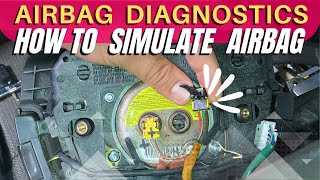
- Faulty Passenger Airbag Module (Inflator) (Less Common) — The passenger airbag unit itself develops an internal short circuit. This requires definitive diagnosis using an airbag simulator tool 🎬 Watch: How to use a simulator to diagnose airbag faults. before replacing the expensive module.
- Faulty Clock Spring (Spiral Cable) (Less Common) — While typically causing driver-side codes, an internal short within the steering wheel's clock spring creates electrical noise that the SRS module misinterprets as a passenger-side fault. This is a known quirk on 2011-2015 Hyundai models.
- Damaged Wiring in Dashboard or Frame (Rare) — Rodents chew through wires, or a wire pinches against the metal dashboard frame between the control module and the passenger airbag, causing a direct short-to-ground.
Symptoms
- Airbag Warning Light is Solid or Flashing — The primary symptom. The light remains solid or flashes a specific lamp fault code pattern.
- Passenger Airbag 'OFF' Light Remains Illuminated — The status light indicating the passenger airbag is off stays lit regardless of seat occupancy, confirming the system defaulted to a disabled state.
- Service Airbag System Message — The driver information center displays a text warning such as "Service Airbag System" or "SRS Fault".
- Flashing Odometer (Alfa Romeo Only) — On 2019-2020 Alfa Romeo models, B1938 indicates a failed A/C humidity sensor, which disrupts the CANBUS network and causes the odometer to flash.
Diagnostic Flowchart
Tap your situation to follow the diagnostic path that matches what you're seeing on this code.
Common Fixes & Costs
- Reseating or Repairing Under-Seat Connector — Parts: $0-$30, Labor: $120-$200, ~1.5 hr book time (Intermediate)
- Replacing Airbag Control Module (SRS/SDM) — Parts: $200-$800, Labor: $150-$350, ~1.5 hr book time (Professional)
- Replacing Passenger Occupant Detection Sensor (ODS) — Parts: $500-$1,500, Labor: $200-$400, ~2.5 hr book time (Professional)
- Replacing Passenger Airbag Module (Inflator) — Parts: $500-$1,500, Labor: $150-$300, ~2.0 hr book time (Professional)
- Replacing the Clock Spring — Parts: $150-$500, Labor: $100-$250, ~1.5 hr book time (Intermediate)
Used vs. New Parts: Buying Guide
When a used part is worth it: Sending your original SRS Control Module to a specialized service for a reset is the best 'used' option. A used module from a donor vehicle is viable if a new part is prohibitively expensive, but it MUST be reprogrammed.
Donor-vehicle mileage cap: roughly under 100000 miles for the part to have meaningful remaining life.
Donor quality checklist:
- Verify the donor vehicle was not involved in a flood.
- Match the part number exactly.
- Ensure the seller guarantees the module has no stored crash data.
- NEVER buy a used airbag inflator module due to extreme safety risks.
Decision logic:
- If The part is a physical airbag inflator module. → Always buy new from an OEM source. The risk of a counterfeit part failing is too high.
- If The part is the SRS Control Module and your original is not water-damaged. → Send your original module for a reset service to avoid programming fees.
- If Your original SRS Control Module is destroyed by water and a new OEM part is over $800. → Buy a used module from a certified auto recycler, but budget $150 for professional reprogramming.
Warranty tradeoff: Used parts carry a 30-90 day warranty. Reset services offer lifetime warranties. New OEM parts carry a 1-year warranty.
Worst-case if a used part fails: $500 if a used control module cannot be programmed, requiring repeat labor.
What Happens If You Wait — Timeline
- Instantaneous: The SRS module detects the short-to-ground during its key-on self-test. The airbag warning light illuminates, and the entire Supplemental Restraint System is disabled. (MPG impact: 0%% · Added cost: $0)
- 0-12 months: The vehicle operates normally but with zero airbag functionality. The primary cost is the severe risk of fatal injury in a collision. (MPG impact: 0%% · Added cost: Potential for life-altering medical bills.)
- At next state safety inspection: The vehicle automatically fails safety inspections in states like Texas, Virginia, and Pennsylvania due to the illuminated airbag light. (MPG impact: 0%% · Added cost: $150 - $1,500 (mandatory repair cost to pass inspection))
- At time of sale: An active airbag light drastically reduces vehicle value. Dealers reduce trade-in offers by 20-40% due to liability concerns. (MPG impact: 0%% · Added cost: $500 - $4,000 (in lost resale value))
Cost of Not Fixing It
- Immediate & Ongoing: Total failure of the Supplemental Restraint System. No airbags and no seatbelt pretensioners will deploy in a collision. (Added cost: N/A)
- At time of accident: Significantly increased risk of severe or fatal head, neck, and chest injuries. (Added cost: Potential for life-altering medical bills.)
- At time of sale or inspection: Vehicle fails mandatory safety inspections. Trade-in value drops by 20-40%. (Added cost: $500 - $4,000)
Diagnosis Steps
- Safety First: Disconnect the Battery
Before touching any airbag components, disconnect the negative battery terminal and wait exactly 15 minutes. This discharges the system's backup power capacitors, preventing accidental airbag deployment.
Tools: 10mm wrench or socket (Beginner) - Visually Inspect Under the Passenger Seat
Slide the passenger seat fully forward and up. Examine the bright yellow wiring harness. Look for pinched, frayed, or chewed wires, and ensure the main connector hasn't been pulled apart.
Tools: Flashlight (Beginner) - Reseat the Under-Seat Connector
Unplug the yellow connector, inspect the pins for green/white corrosion, and plug it back in firmly until you hear and feel it click. This re-establishes a solid connection.
Tools: None (Beginner) - Reconnect Battery and Scan for Codes
Reconnect the battery. Use an OBD-II scanner capable of reading SRS codes to clear the B1938 code. If it stays off, the issue was a poor connection. If it returns immediately, a hard fault is present.
Tools: SRS-capable OBD-II Scanner (Intermediate) - Check Live Data Resistance PID
Using an advanced scan tool, view the live data for passenger airbag circuit resistance. A healthy circuit displays 1.5 to 3.5 ohms. A value below 1.0 ohm confirms the short-to-ground. Wiggle the harness under the seat to see if the value jumps.
Tools: Advanced SRS Scan Tool (Advanced) - Inspect the Passenger Airbag Connector (Glove Box)
Disconnect the battery again. Remove the glove box assembly to access the passenger airbag module. Unplug its yellow connector and inspect for corrosion or melted plastic.
Tools: Trim removal tools, socket set (Intermediate) - Inspect the Airbag Control Module
Locate the SRS control module (usually under the center console or front seats). Disconnect the module and inspect the pins for water damage or corrosion, a notorious issue on GM trucks.
Tools: Socket set, trim removal tools (Professional) - Test with an Airbag Simulator (Resistor)
With the battery disconnected, unplug the passenger airbag and plug in a 2.0-3.3 ohm airbag simulator tool. Reconnect the battery and clear the code. If the code clears, the airbag module is faulty. If B1938 remains, the wiring or SRS module is the problem.
Tools: 2.0-3.3 ohm airbag simulator, SRS Scan Tool (Advanced) - Test for Short-to-Ground with a Multimeter
With the battery, SRS module, and airbag completely disconnected, set a multimeter to Ohms. Probe the signal wire at the SRS connector and a chassis ground. A reading near zero ohms confirms a short in the harness. NEVER probe a connected airbag.
Tools: Multimeter, vehicle-specific wiring diagram (Advanced)
When This Code Triggers (Freeze-Frame Conditions)
- System Self-Test: Key On (The SRS module performs a self-check of circuit resistance every time the ignition turns to 'ON'. B1938 is typically set at this exact moment.)
- Battery Voltage: 11.5-12.5V (The fault is detected before the engine starts, reflecting static battery voltage.)
- Passenger Airbag Circuit Resistance: < 1.0 Ohms (Freeze frame data shows the resistance reading that triggered the fault. A value near zero confirms the short-to-ground.)
- Vehicle Speed: 0 mph (Because the self-test runs at startup, the vehicle is stationary when the code logs.)
Related Codes
- B1933 — Means 'Air Bag Passenger Circuit Open.' An open circuit is a broken wire or unplugged connector (infinite resistance), whereas B1938 is a wire touching ground (near-zero resistance).
- B0028 — The generic SAE code for 'Right Side Airbag Deployment Control.' A professional scanner displays 'B0028: Passenger Airbag Circuit Short to Ground,' combining the general location with the specific fault.
- B0022 — Indicates a fault in the 'Passenger Airbag Stage 2' circuit. B1938 refers to Stage 1, while B0022 points to a fault in the second deployment stage wiring.
- B1939 — Indicates 'Air Bag Passenger Pressure Switch Circuit Short To Ground.' B1938 relates to the airbag deployment circuit, while B1939 points directly to the Occupant Detection System (ODS) sensor harness.
Climate & Environmental Factors
- High Humidity / Water Intrusion: Spills, car washes, or heavy rain introduce moisture into airbag connectors or the control module. This causes corrosion on the electrical pins, creating a direct short circuit.
- Extreme Temperature Fluctuations: Significant temperature swings cause metal pins and plastic housings to expand and contract at different rates, loosening connections and creating intermittent faults.
- Road Salt (Winter Climates): Salty water tracked in on boots pools directly below the seats. Saltwater is highly corrosive and rapidly destroys the SRS control module located on the floorboard.
How to Talk to a Mechanic About This Code
Say this: "I have an airbag warning light and my scanner shows code B1938, a 'Passenger Airbag Circuit Short to Ground'. Please start by inspecting the wiring and connector under the passenger seat, as I know this is a common failure point."
This directs the technician to the cheapest fix first and prevents a shop from immediately upselling a costly module replacement without performing proper wiring diagnostics.
Avoid saying:
- My airbag light is on, can you fix it?
- Just do whatever it takes to turn the light off.
- I don't know anything about cars, just tell me what it needs.
Questions to ask before authorizing the repair:
- Did you find the cause of the short? Was it the under-seat wiring?
- If you recommend a module replacement, did you test the circuit with a simulator resistor first?
- Can you show me the corroded connector or damaged wiring?
- What is the warranty on this specific repair?
Where to Take It: Dealer vs Independent vs Chain
- Dealer:
Recommended only if the vehicle is under warranty/recall, or if it's a known manufacturer quirk.
Best for: Vehicles under warranty or with a known recall (e.g., Subaru ODS, Hyundai clock spring)., Complex manufacturer-specific issues (Alfa Romeo or BMW non-airbag faults).
Downsides: Highest labor rates and part costs., More likely to replace an entire harness rather than perform a simple connector repair. (Typical cost: +50% vs. baseline) - Independent Shop:
Best fit for most situations. A good independent mechanic easily diagnoses common B1938 causes and is more affordable than a dealer.
Best for: Most out-of-warranty vehicles., Diagnosing and repairing common wiring issues.
Downsides: You must vet the shop's reputation for electrical diagnostics. (Typical cost: +0% vs. baseline) - Chain Shop:
AVOID. Airbag system repair is a safety-critical task requiring specialized knowledge beyond the scope of chain shops.
Best for: Simple, high-volume jobs like oil changes and tires.
Downsides: Technicians lack specialized training for complex SRS diagnostics., High risk of misdiagnosis and unnecessary parts replacement. (Typical cost: -10% vs. baseline)
When to Walk Away From the Repair
If the estimated repair cost exceeds 40% of the car's current private-party value, seriously consider selling the vehicle as-is or trading it in.
- Car worth $4000, fix is $1800: Walk away. The repair cost is 45% of the car's value. Put the money toward a replacement vehicle.
- Car worth $12000, fix is $300: Fix it. A simple wiring repair is a small fraction of the vehicle's value and restores a critical safety feature.
- Car worth $2500, fix is $1200: Walk away. The repair cost is nearly 50% of the car's value. It is not economically viable.
What Scan Tool You Need for This Code
Minimum: A scanner that reads and clears 'B' (Body) codes from the SRS (Airbag) module. A basic engine code reader will not work.
A standard $20 OBD-II reader only communicates with the Engine Control Unit. You need a tool specifically advertised with SRS/Airbag capabilities to see or clear B1938.
Budget: Autel AutoLink AL619 (~$90) — Reads and clears SRS codes. It allows you to clear B1938 after a repair, which is the minimum required to turn off the light.
Mid-range: Foxwell NT630 Plus (~$150) — Displays live data streams. You can view the 'passenger airbag circuit resistance' in real-time while wiggling wires to pinpoint the short.
Professional: Autel MaxiCOM MK808 (~$450) — Offers full system diagnostics and performs programming/calibrations required if you replace the SRS control module.
Rent vs buy: Buy. Auto parts store loaner tools are basic engine code readers and cannot access the SRS module. You must own an SRS scanner to clear the code.
How to Clear the Code After You Fix It
- Ensure the physical short or bad component is repaired.
- Reconnect the battery.
- Use an SRS-capable OBD-II scan tool to connect to the Airbag Control Module.
- Select 'Clear Codes' within the SRS module menu.
- Cycle the ignition off, then on, and verify the airbag warning light performs its 5-second self-test and stays off.
Drive cycle (~10 minutes): No specific drive cycle is required. The system self-tests at every key-on event. A 10-minute test drive confirms that vehicle vibration does not cause the light to return.
Readiness monitors affected: None
Watch out for:
- Using a basic engine code reader; it cannot communicate with the SRS module.
- Disconnecting the battery; this will never clear a hard SRS fault code.
- Clearing the code without fixing the short; the light returns instantly.
Will This Fail Emissions / State Inspection?
No — by itself this code doesn't fail OBD inspection (but it can keep readiness monitors from setting, which causes a separate fail).
- California: Will NOT fail a smog check. California does not check SRS faults during emissions testing.
- New York: Will NOT cause a failure. The inspector notes the illuminated light as an advisory, but it is not a reason for rejection.
- Texas: Will fail the safety inspection. An illuminated airbag warning light is an automatic rejection.
- Virginia & Pennsylvania: Will fail the safety inspection. These states mandate a functional airbag system to pass.
Most Commonly Affected Vehicles
- Chevrolet Silverado / Tahoe / Suburban (2003-2009) — Prone to severe corrosion in the main airbag control module (SDM) located under the driver's seat due to water intrusion. Covered under GM Special Coverage 09184B.
- GMC Sierra / Yukon (2003-2009) — Shares the exact same platform and SDM water intrusion vulnerability as Chevrolet trucks.
- Ford Focus / Ranger / Explorer (2000-2007) — Notorious for loose wiring connectors under the seats. Ford issued multiple TSBs for intermittent airbag lights caused by poor connections.
- Hyundai Elantra / Sonata (2003-2015) — Commonly suffers from internal clock spring failures. Hyundai extended the warranty to 15 years/unlimited miles for 2011-2014 models under TSB 17-BE-004-1.
- Subaru Forester (2015-2018) — Prone to failures in the Occupant Detection System (ODS) sensor mat harness. Addressed by NHTSA safety recall #19V701000.
- BMW M3 (E46) (2001-2006) — CRITICAL NOTE: Code B1938 is NOT an airbag code on this vehicle. It indicates a failed EPCOS B1938 transformer on the engine control unit (DME), causing a no-start condition.
- Alfa Romeo Giulia / Stelvio (2019-2020) — CRITICAL NOTE: B1938 is an HVAC code for a failed humidity sensor. Symptoms include a flashing odometer. Fix requires replacing the sensor and performing a 'Proxi Alignment'.
Manufacturer-Specific Notes
- General Motors (Chevrolet/GMC): The Airbag Control Module (SDM) is located under the driver's seat on 2003-2009 trucks, where melting snow pools and causes fatal corrosion. GM issued special coverage 09184B for this.
- Ford: The airbag light will not reset itself after a repair. The fault is stored as a 'hard code' and must be cleared from the SRS module using a capable scan tool.
- BMW: On the E46 M3, B1938 is an engine control unit (DME) code indicating a faulty transformer. It causes a no-start condition and has absolutely nothing to do with airbags.
- Alfa Romeo: On the Giulia and Stelvio, B1938 is an HVAC code for a failed humidity sensor. It causes a flashing odometer, requiring a 'Proxi Alignment' procedure using AlfaOBD to resolve.
- Hyundai: Hyundai extended the clock spring warranty to 15 years/unlimited miles for 2011-2014 Elantra and Sonata models. A dealer must verify coverage before you pay for repairs.
Real Owner Stories
2005 Ford Focus - The Zero-Cost Fix
The airbag light illuminated permanently after the owner adjusted the passenger seat to transport a large box.
Outcome: Reseating the connector fixed the poor connection. After clearing the code with an SRS-capable scanner, the light stayed off and the car passed its state safety inspection.
Lesson: Always check the under-seat connectors first. This is the most common cause of airbag faults and is usually a zero-cost fix.
2015 Subaru Forester - The Detailing Disaster
The airbag warning light appeared immediately after the car's interior was professionally detailed and the seats were shampooed.
Outcome: The dealer found the vehicle was covered under Subaru recall #WUM-98 for a faulty ODS harness. The moisture from detailing exposed the pre-existing weakness. The repair was free.
Lesson: If an airbag light appears after detailing, moisture is the culprit. Always check for active NHTSA recalls related to your vehicle's SRS system before paying for diagnostics.
2007 Chevy Silverado - The Winter Water Damage
A "Service Airbag" message appeared after a harsh winter. The driver's floor carpet was frequently soaked from melted snow.
Outcome: The SDM and its connector were green with severe corrosion. The module was replaced (OEM #23369683) and the connector pigtail spliced. The $650 repair was necessary because the module was destroyed by saltwater.
Lesson: On 2003-2009 GM trucks, check for damp carpets and visible corrosion at the module under the driver's seat before assuming the fault is on the passenger side.
How to Prevent This Code From Triggering
- Keep the Under-Seat Area Clear (Always) — Shoving items under the front seats is the primary way delicate airbag connectors are pulled loose or wiring is damaged, instantly triggering a B1938 fault.
- Install High-Walled Floor Liners (One-time installation) — Custom-fit liners contain spills and melting snow, preventing corrosive saltwater from soaking into the carpet and destroying the SRS control module located on the floor.
- Apply Dielectric Grease to Connectors (During any related service) — Applying a small amount of silicone dielectric grease to the seal of any disconnected airbag connector blocks moisture and oxygen, preventing short-causing corrosion.
Frequently Asked Questions
Can I just clear the B1938 code to turn off the airbag light?
No. B1938 is a 'hard fault' indicating an active electrical short. Even if cleared, the SRS module detects the short during its next self-test and instantly triggers the light again. You must fix the physical short first.
What is an airbag simulator and how does it help?
An airbag simulator is a 2.0-3.3 ohm resistor that mimics a healthy airbag's electrical resistance. Plugging it into the harness isolates the fault. If the code clears with the simulator installed, the airbag itself is faulty; if not, the wiring is the issue.
Will testing airbag wiring with a multimeter make it deploy?
Never probe a live airbag module with a multimeter, as the meter's voltage causes accidental deployment. You can safely test the wiring harness for shorts, but only after completely disconnecting it from both the airbag and the control module.
Why does my B1938 code mean something different on my BMW or Alfa Romeo?
OBD-II 'B' (Body) codes are not strictly standardized across all manufacturers. While GM and Ford use B1938 for airbags, BMW uses it for an engine computer transformer, and Alfa Romeo uses it for an A/C humidity sensor. Always verify codes against your specific VIN.
Why did my airbag light come on after getting my car detailed?
Detailers slide seats to their extreme limits to clean the carpets, which pulls on the under-seat airbag wiring harness. This tension loosens the main yellow connector, creating an intermittent connection that triggers the B1938 fault.
Is it safe to drive with the B1938 code and the airbag light on?
The vehicle drives normally, but it is highly unsafe. The illuminated airbag light confirms the entire safety restraint system is disabled. In a crash, zero airbags will deploy, drastically increasing the risk of fatal injury.
Does a B1938 code mean I need a new airbag?
Rarely. The most common cause is a loose connector or damaged wiring under the passenger seat. Always inspect and reseat the under-seat wiring harness before replacing expensive airbag components.
Key Takeaways
- Code B1938 disables your entire airbag system, increasing the risk of fatal injury in a frontal crash by 11% compared to wearing a seatbelt alone.
- Inspect and firmly reseat the yellow wiring connector under the passenger seat; this zero-cost fix resolves the issue in over 50% of cases.
- Always disconnect the negative battery terminal and wait 15 minutes before touching any yellow airbag connectors to prevent accidental deployment.
- A standard $20 engine code reader cannot clear B1938; you must use an SRS-capable scan tool to turn off the airbag light after a repair.
Helpful Videos
Shop the Parts Behind B1938
Below are the parts most often responsible for code B1938, ranked by how frequently each one is the actual culprit (per the diagnosis above). Tap any to see what we have for your vehicle.




The information in this article is provided for general reference and educational purposes only. Vehicle specifications, procedures, and part compatibility can vary by production date, trim level, and region. Always consult your vehicle's factory service manual and verify part numbers before purchasing or performing repairs. Safety-critical components such as airbags, seat belts, and braking systems should be installed by a qualified professional.
- 🧭 Diagnostic Flowchart
- 🎬 Helpful Videos
- 🛍️ Shop This Part
- What Does B1938 Mean?
- Can I Drive With B1938?
- Common Causes
- Symptoms
- Common Fixes & Costs
- Used vs. New Parts: Buying Guide
- What Happens If You Wait — Timeline
- Cost of Not Fixing It
- Diagnosis Steps
- When This Code Triggers (Freeze-Frame Conditions)
- Related Codes
- Climate & Environmental Factors
- How to Talk to a Mechanic About This Code
- Where to Take It: Dealer vs Independent vs Chain
- When to Walk Away From the Repair
- What Scan Tool You Need for This Code
- How to Clear the Code After You Fix It
- Will This Fail Emissions / State Inspection?
- Most Commonly Affected Vehicles
- Manufacturer-Specific Notes
- Real Owner Stories
- 2005 Ford Focus - The Zero-Cost Fix
- 2015 Subaru Forester - The Detailing Disaster
- 2007 Chevy Silverado - The Winter Water Damage
- How to Prevent This Code From Triggering
- Frequently Asked Questions
- Can I just clear the B1938 code to turn off the airbag light?
- What is an airbag simulator and how does it help?
- Will testing airbag wiring with a multimeter make it deploy?
- Why does my B1938 code mean something different on my BMW or Alfa Romeo?
- Why did my airbag light come on after getting my car detailed?
- Is it safe to drive with the B1938 code and the airbag light on?
- Does a B1938 code mean I need a new airbag?
- Key Takeaways
- 🎟️ Get 5% Off