

OBD-II Code B1945: Airbag Crash Sensor #2 Ground Circuit Open
The Ultimate 2026 Guide to Meaning, Diagnosis, and Repair
- Code B1945 disables the passenger-side airbag, creating an immediate safety hazard that automatically fails state vehicle inspections.
- The most common cause is a corroded ground connection, so test the wiring circuit before spending $250 to $450 on a replacement sensor.
- Always disconnect the negative battery terminal and wait 15 minutes before touching SRS components to prevent accidental airbag deployment.
- On 2011-2021 Jeep Grand Cherokees, B1945 indicates a power liftgate pinch sensor failure, requiring a liftgate diagnosis rather than an airbag repair.
What Does B1945 Mean?
Code B1945 signifies the Restraints Control Module (RCM) detects an open circuit in the ground wiring for the front passenger-side crash sensor (Sensor #2). This sensor detects frontal collision forces and signals the RCM to deploy airbags. An open circuit acts like a cut wire, blocking the electrical signal and disabling the entire system.
Technical definition: SAE/OBD-II defines B1945 as "Air Bag Crash Sensor #2 Ground Circuit Open". The RCM continuously monitors the passenger-side impact sensor's electrical ground circuit. If resistance exceeds the manufacturer's threshold (typically >2.0-3.0 ohms), the RCM flags the fault, stores B1945, and illuminates the airbag warning light.
Can I Drive With B1945?
No — Do Not Drive. Driving with this code is extremely unsafe. A B1945 fault disables the Supplemental Restraint System (SRS). The passenger-side airbags will not deploy in a collision, drastically increasing the risk of fatal injury. Driving causes no further mechanical damage, but the safety risk is immediate. An active airbag light automatically fails state safety inspections.
Common Causes
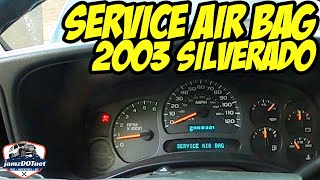
- Damaged, Corroded, or Loose Wiring/Connectors (Very Common) — The front crash sensor wiring sits near the radiator core support, exposing it to road salt, 🎬 Watch: How to replace a corroded front impact sensor. moisture, and debris. This exposure is the leading cause of corrosion, broken wires, and loose connector pins that trigger the code.
- Improperly Mounted or Rusted Sensor Ground (Common) — The sensor's metal case forms part of the ground circuit and must bolt securely to the chassis. Loose mounting bolts or rust between the sensor and the frame create high resistance, which the RCM interprets as an open circuit.
- Faulty Front Crash Sensor #2 (Passenger Side) (Common) — Internal corrosion from moisture seeping past a cracked housing, or physical damage from a minor front-end collision, destroys the sensor's internal circuitry.
- Water Intrusion from Unrelated Components (Rare) — A cracked windshield washer fluid reservoir, clogged sunroof drains, or a deteriorated cowl seal drips fluid onto the sensor or its connector, causing severe corrosion and an open circuit fault.
- Previous Collision or Improper Repair (Rare) — Front-end accident repairs often leave wiring pinched, stretched, or improperly reconnected. Technicians also forget to reset the airbag module after minor incidents where sensors tripped but airbags didn't deploy.
- Low Vehicle Battery Voltage (Rare) — The SRS is highly sensitive to system voltage. A dying battery or a poor connection from a recent jump-start causes the RCM to store erroneous fault codes.
- Faulty Airbag Control Module (RCM) (Very Rare) — An internal fault within the RCM causes it to falsely report a sensor circuit problem. Consider this only after thoroughly testing the sensor, wiring, and grounds.
- Damaged Clock Spring (Very Rare) — A faulty clock spring typically triggers driver-side codes, but in complex shared-network scenarios, it contributes to system-wide communication issues. This presents alongside a non-working horn or inoperative steering wheel controls.
Symptoms
- Solid or Flashing Airbag Warning Light — A solid light indicates a persistent fault. A flashing light indicates a more severe or intermittent issue. Both mean the system is disabled.
- Failed Vehicle Safety Inspection — In regions with mandatory vehicle safety inspections, an illuminated airbag warning light is an automatic failure.
- Airbag Light Flashes a Two-Digit Code — On older Ford, Lincoln, and Mercury vehicles, the airbag light flashes four times, pauses, then flashes five times (Code 45) before staying solid.
- Horn or Steering Wheel Controls Inoperative — If a failing clock spring causes the network fault, the horn, cruise control, or radio buttons work intermittently or not at all.
- Airbags Will Not Deploy (scan-tool only — no driver-felt sign) — Code B1945 confirms the SRS is compromised. The passenger airbag will not deploy in an accident.
Diagnostic Flowchart
Tap your situation to follow the diagnostic path that matches what you're seeing on this code.
Common Fixes & Costs
- Clean Sensor Mounting Point and Repair Ground Wire — Parts: $5-$30, Labor: $100-$250, ~1.5 hr book time (Intermediate)
- Replace Front Crash Sensor #2
— Parts: $70-$300, Labor: $100-$150, ~1.0 hr book time
(DIY)
Ford F-150 (1997-2003): OEM F65Z-14B005-AC (Alt: {"brand": "Dorman", "number": "590-001"})
Chevrolet Silverado (2000-2007): OEM 85598007 (Alt: {"brand": "Dorman", "number": "590-201"}, {"brand": "ACDelco", "number": "13540601"}) - Repair Damaged Wiring Harness or Connector — Parts: $25-$75, Labor: $150-$350, ~2.0 hr book time (Advanced)
- Reset Airbag Module After Minor Collision — Parts: $0, Labor: $50-$150, ~0.5 hr book time (Professional)
- Replace Airbag Control Module (RCM) — Parts: $500-$1000, Labor: $150-$300, ~1.5 hr book time (Professional)
Used vs. New Parts: Buying Guide
When a used part is worth it: Buying a used crash sensor is strongly discouraged. It only makes sense as a temporary diagnostic tool for a DIYer to confirm if the sensor is the issue before buying a new part.
Donor-vehicle mileage cap: roughly under 40000 miles for the part to have meaningful remaining life.
Donor quality checklist:
- Verify the donor vehicle had no front-end damage, flooding, or fire.
- Avoid parts from regions with heavy road salt use.
- Match the OEM part number exactly.
- Purchase only from a certified recycler who guarantees the part.
Decision logic:
- If The part is for a safety system (airbags, brakes, seatbelts). → Always buy new OEM or OEM-equivalent. The safety risk is not worth the cost savings.
- If Vehicle is older and budget is extremely limited. → A used sensor diagnoses the issue, but installing it permanently carries significant liability and safety risks.
- If A new part is unavailable or on backorder. → A certified, recycled OEM non-deployed sensor is a temporary alternative.
Warranty tradeoff: Used parts have a 30-90 day warranty covering only the part. New aftermarket parts offer 1-year warranties. New OEM parts carry the manufacturer's warranty.
Worst-case if a used part fails: Incalculable. If a used sensor fails to trigger deployment in an accident, the cost is severe injury or death.
What Happens If You Wait — Timeline
- Immediate (0 seconds): The RCM detects the open ground circuit, illuminates the airbag light, and disables the passenger airbag system. (MPG impact: 0%% · Added cost: $0)
- 1 week - 6 months: Minor corrosion or a cracked sensor housing allows more moisture to penetrate, turning a simple ground-cleaning fix into a complex wiring or sensor replacement. (MPG impact: 0%% · Added cost: $150-$400)
- At Next Vehicle Inspection: The vehicle fails mandatory safety inspections due to the illuminated airbag light, preventing legal registration. (MPG impact: 0%% · Added cost: $50-$150)
- During a Collision: The passenger airbag fails to deploy, resulting in a drastically increased risk of serious or fatal injury. (MPG impact: 0%% · Added cost: Incalculable (Risk to human life))
Cost of Not Fixing It
- Immediate: The passenger-side airbag system is disabled. In a frontal collision, the airbag will not deploy, drastically increasing the risk of fatal injury. (Added cost: N/A (Safety Risk))
- At Next Inspection: The vehicle fails mandatory state safety inspections, preventing legal registration or sale. (Added cost: Cost of re-inspection and potential fines.)
- Long-Term: There is no progressive mechanical damage. The primary cost is the critical safety risk of driving without a functional airbag system. (Added cost: N/A)
Diagnosis Steps
- Confirm Fault Code with SRS-Capable Scanner
Use an SRS-compatible OBD-II scanner to verify B1945 is active. Document any other codes present. Note the exact code definition provided by the scanner, as manufacturers like Jeep repurpose this code.
Tools: OBD-II Scanner (SRS compatible) (Beginner) - Safety Precaution: Disconnect Battery
CRITICAL: Disconnect the negative battery terminal and wait 15 minutes before touching any wiring. This discharges the airbag system's backup capacitor, preventing accidental deployment and serious injury.
Tools: Wrench Set (Beginner) - Perform Detailed Visual Inspection
Locate crash sensor #2 (passenger side, near the radiator support). Inspect the sensor, connector, and wiring harness for green/white corrosion, cracked housings, or chafed wires.
Tools: Flashlight, Inspection Mirror (Beginner) - Check Sensor Mounting and Ground Point
Ensure the sensor bolts tightly to the frame. Remove the bolts and inspect the mounting surface for rust. Clean the sensor's mounting point and bolt threads with a wire brush to guarantee a solid metal-to-metal ground.
Tools: Wrench Set, Wire Brush (Intermediate) - Test Ground Circuit Continuity at the Connector
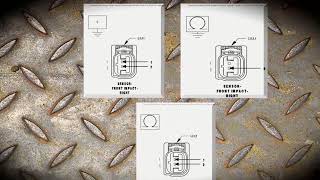
Unplug the sensor connector. Identify the ground wire using a wiring diagram. Set a multimeter to Ohms (Ω). Place one probe on the ground pin and the other on a clean chassis ground bolt. A reading under 3.0 ohms is good. 'OL' (Open Line) indicates a broken ground wire.
Tools: Multimeter, Vehicle-Specific Wiring Diagram (Advanced) - PRO TIP: Test Sensor Internal Resistance
Measure the resistance between the two pins on the disconnected sensor. Compare your reading to the manufacturer's specification (e.g., 527 ohms, or 'OL' for open). An infinite reading on a sensor requiring resistance indicates internal failure.
Tools: Multimeter, OEM Service Manual (Advanced) - PRO TIP: Pinpoint Test at the RCM Connector
If local wiring tests good, locate the RCM and disconnect its main harness. Measure continuity from the RCM's crash sensor #2 ground pin back to the sensor connector. A reading over 3.0 ohms confirms a break in the main harness.
Tools: Multimeter, Vehicle-Specific Wiring Diagram, Depinning Tools (Professional) - Advanced Test: Use a Resistor Simulator
Plug an airbag simulator tool (2.0-3.5 ohm resistor) into the vehicle-side harness connector. Reconnect the battery, clear codes, and cycle the ignition. If B1945 stays away, the sensor is bad. If it returns, the wiring or RCM is faulty.
Tools: Airbag System Resistor Simulator Kit, SRS-Capable Scanner (Advanced) - Check for a Shorted 5V Reference Circuit
If communication fails entirely, another sensor on a shared 5-volt reference circuit is shorted. Check for 5 volts at the reference wire on the MAP or TPS sensor. If missing, unplug sensors one by one until voltage returns to identify the shorted component.
Tools: Multimeter, Wiring Diagram (Professional)
When This Code Triggers (Freeze-Frame Conditions)
- Ignition Status: ON (The SRS module performs a self-test immediately upon key-on.)
- System Voltage: 11.5V - 14.5V (The RCM checks for sufficient power supply during its initial check.)
- Time Since Key-On: < 5 seconds (The fault is detected and the airbag light illuminates within seconds of starting the vehicle.)
- Component Resistance: > 3.0 Ohms (The code triggers when the RCM detects resistance in the sensor's ground circuit higher than the manufacturer's threshold.)
Related Codes
- B1944 — Indicates 'Air Bag Crash Sensor #1 Ground Circuit Open.' This is the identical problem on the driver's side front crash sensor.
- B1942 — Indicates 'Air Bag Crash Sensor #2 Feed/Return Circuit Open.' B1945 points to the ground wire, while B1942 points to the power feed or signal return wire going from the RCM to the passenger sensor.
- B1941 — The driver's side equivalent of B1942. Seeing B1941 and B1945 simultaneously suggests widespread wiring damage or a failed RCM.
- B1946 / B1947 — Manufacturer-specific codes unrelated to the airbag system, typically used for 'Climate Control A/C Post Evaporator Sensor' circuit faults.
Climate & Environmental Factors
- Road Salt (Winter Climates): Salt spray directly attacks front crash sensors and wiring harnesses on the radiator support, causing severe corrosion that destroys the ground connection.
- High Humidity & Moisture: Prolonged humidity accelerates corrosion. Moisture penetrates cracked sensor housings and electrical connectors, degrading internal circuits and triggering open circuit faults.
- Extreme Temperature Fluctuations: Rapid hot-to-cold changes cause plastic sensor housings to become brittle and crack, allowing moisture to enter and destroy the sensor.
How to Talk to a Mechanic About This Code
Say this: "I have an airbag warning light and my scanner shows code B1945 for the passenger crash sensor ground circuit. Please test the sensor's ground circuit continuity and inspect the connector before recommending a sensor replacement."
This directs the technician to perform a proper diagnosis instead of replacing the most expensive part. It shows you understand the common failure points (wiring/ground).
Avoid saying:
- 'My airbag light is on, can you fix it?'
- 'I think I need a new airbag sensor.'
- 'Just do whatever it takes to turn the light off.'
Questions to ask before authorizing the repair:
- What was the result of the ground continuity test in ohms?
- Did you find any corrosion on the sensor connector or wiring harness?
- If recommending a sensor replacement, how did you rule out the wiring and the RCM?
- Is the replacement sensor a new, OEM part?
Where to Take It: Dealer vs Independent vs Chain
- Dealer:
A safe but expensive choice. Recommended if the fault is the RCM, which requires dealer programming.
Best for: Vehicles under warranty., Complex cases requiring manufacturer-specific software for RCM programming., Highest assurance of an OEM-correct repair.
Downsides: Highest labor rates and parts costs., Quicker to replace entire components rather than perform detailed wiring repairs. (Typical cost: +50% vs. baseline) - Independent Shop:
Best fit for most situations. An experienced independent technician easily diagnoses bad grounds or wiring issues at a lower cost than a dealer.
Best for: Out-of-warranty vehicles., Diagnosing and repairing common wiring, connector, and sensor issues.
Downsides: Shop expertise with SRS systems varies. Ensure the shop has ASE-certified technicians., Lacks specialized tools for RCM programming on all models. (Typical cost: +0% vs. baseline) - Chain Shop:
AVOID. Airbag system repair requires diagnostic expertise not typically found at chain shops.
Best for: Routine maintenance like oil changes or tires.
Downsides: Technicians lack specialized training for SRS diagnostics., Business model encourages replacing parts rather than detailed electrical diagnosis., High potential for misdiagnosis. (Typical cost: -10% vs. baseline)
When to Walk Away From the Repair
If the estimated repair cost exceeds 40-50% of your car's private-party value, consider selling or trading it in. This is especially true for safety-related issues that make the car difficult to sell privately.
- Car worth $4000, fix is $700: Fix it. The repair cost is well below the 50% threshold and restores a critical safety feature.
- Car worth $3000, fix is $1500: Walk away. The repair cost is 50% of the car's value. It is not financially sound to invest this much into an older vehicle.
- Car worth $15000, fix is $1200: Fix it. This is a low-cost repair compared to the vehicle's value and is necessary for safety.
What Scan Tool You Need for This Code
Minimum: A scanner that reads and clears Supplemental Restraint System (SRS/Airbag) codes.
A standard $20 OBD-II reader only communicates with the Engine Control Unit (ECU). It cannot see fault codes from the SRS module. You need a tool specifying SRS/Airbag compatibility.
Budget: Autel AutoLink AL619 / ML629 (~$80) — Reads and clears codes from the Engine, ABS, and SRS modules. It confirms B1945 and clears it after repair.
Mid-range: BlueDriver Pro Bluetooth Scanner (~$120) — Connects to your smartphone and accesses SRS codes. It offers live data graphing and repair reports with verified fixes.
Professional: Foxwell NT630 Plus / Autel MaxiCOM MK808S (~$250-550) — Full-system, bidirectional scan tools. They provide deep diagnostic capabilities, component testing, and module programming essential for ruling out a faulty RCM.
Rent vs buy: Auto parts stores do NOT rent out SRS-capable scanners due to liability. Buying a budget pick like the Autel AL619 is cheaper than paying for a single diagnostic hour at a shop.
How to Clear the Code After You Fix It
- Ensure the physical fault has been fully repaired.
- Reconnect the battery.
- Use an SRS-capable OBD-II scan tool to access the Restraints Control Module (RCM).
- Select the function to 'Clear Codes' or 'Reset SRS'.
- Cycle the ignition off, then back on. The airbag light illuminates for a few seconds for its self-test and then turns off. If it stays on, the fault persists.
Drive cycle (~1 minutes): No complex drive cycle is required. The RCM performs a complete self-test every time the ignition turns to the 'ON' position.
Watch out for:
- Using a basic OBD-II scanner that cannot communicate with the SRS/airbag module.
- Attempting to clear the code without fixing the underlying electrical fault.
- Assuming disconnecting the battery clears SRS fault codes from the module's non-volatile memory.
Will This Fail Emissions / State Inspection?
No — by itself this code doesn't fail OBD inspection (but it can keep readiness monitors from setting, which causes a separate fail).
- California: An airbag light will NOT fail a California smog check. CA does not have a mandatory safety inspection for non-commercial vehicles.
- New York: An illuminated airbag light is an ADVISORY during the annual safety inspection but is NOT a cause for failure.
- Texas: An airbag light will NOT fail a Texas vehicle inspection. Airbag system functionality is not an inspected item.
Most Commonly Affected Vehicles
- Ford F-150 (1997-2003) — Presents as flash code 45. The cause is almost always corrosion on the sensor's mounting bolts due to its exposed location on the radiator support.
- Ford Expedition / Ranger (1998-2006) — Shares the F-150 SRS architecture. Highly susceptible to flash code 45 caused by a poor ground connection from rust.
- Chevrolet Silverado / Avalanche (2000-2007) — Front crash sensors fail due to internal corrosion. The plastic housing cracks, allowing moisture to destroy the internal circuitry.
- Jeep Grand Cherokee (2011-2021) — CRITICAL: On these models, B1945 refers to a 'Power Liftgate Pinch Sensor 2 Circuit' fault, entirely unrelated to the airbag system. The pinch sensor part number is typically 68165048AC.
- Nissan Altima (2007-2024) — Frequently cited for this fault. Airbag sensor and clock spring replacements are common, high-cost repairs on this platform.
- Honda Accord (2003-2022) — Despite high reliability, older Accords frequently require front impact sensor replacements due to environmental corrosion.
- Volkswagen Jetta / Atlas (2011-2023) — Wiring harness degradation near the front bumper frequently triggers B1945 on VW platforms.
- Dodge Journey (2009-2020) — Front impact sensor failure is a documented repair for persistent airbag light issues on this platform.
Manufacturer-Specific Notes
- Ford: On 1990s and 2000s models (F-150, Expedition, Ranger), this fault displays as airbag light flash code 45. The diagnostic monitor triggers if resistance exceeds 2.0-3.0 ohms between the RCM and the sensor's case ground, making mounting point cleaning the critical first step.
- General Motors (Chevrolet/GMC): On early 2000s trucks, front crash sensors fail from internal corrosion. The plastic housing physically cracks, allowing moisture to destroy the circuit board.
- Jeep/Chrysler/Dodge: CRITICAL: On the Jeep Grand Cherokee (2011-2021), this code indicates a 'Power Liftgate Pinch Sensor 2 Circuit' failure. It has nothing to do with the airbags. Use a proper diagnostic scan tool to identify the reporting module.
- Nissan: Airbag system faults are a recurring, high-cost complaint on the Altima platform. An airbag clock spring replacement alone costs between $590 and $650.
Real Owner Stories
1998 Ford F-150 with Airbag Flash Code 45
The airbag light flashed a '4-5' code, and a scan revealed DTC B1945.
Outcome: After cleaning the ground connection and reconnecting the battery, the airbag light turned off permanently. The fix cost nothing but time.
Lesson: On older Ford trucks, the most common cause of B1945 is a poor ground connection due to rust. Always clean the mounting point before replacing the sensor.
2015 Jeep Grand Cherokee with B1945 and Liftgate Problems
A B1945 code appeared alongside an erratic power liftgate that failed to close properly. The airbag light was NOT on.
Outcome: Replacing the liftgate pinch sensor (part # 68165048AC) completely resolved the issue.
Lesson: Code definitions are manufacturer-specific. For a Jeep Grand Cherokee, B1945 is a liftgate issue, preventing a costly and incorrect airbag repair.
2005 Chevrolet Silverado with Persistent Airbag Light
The airbag light illuminated after heavy rain. A mechanic found code B1945.
Outcome: The mechanic spliced in a new pigtail connector, permanently clearing the code. The initial sensor replacement was unnecessary.
Lesson: On GM trucks exposed to moisture, inspect connectors and wiring for corrosion before replacing the sensor to save hundreds of dollars.
2013 Kia Rio with Airbag Light After Battery Died
The airbag warning light illuminated immediately after a jump-start.
Outcome: Clearing the historical low voltage code with the scan tool resolved the problem permanently.
Lesson: A dead battery causes the airbag module to store a low voltage fault code. Clear the codes first before attempting physical repairs.
How to Prevent This Code From Triggering
- Apply Dielectric Grease to Connectors (During any related service or every 2-3 years) — Dielectric grease seals electrical connectors, preventing moisture and road salt from corroding the metal pins.
- Regular Undercarriage and Engine Bay Washing (Monthly, especially in winter climates) — Washing away road salt and brine prevents corrosive agents from destroying the sensor and wiring harness.
- Inspect and Clean Vehicle Drains (Annually (Fall)) — Clogged sunroof or cowl drains cause water to overflow and drip onto SRS components, causing severe corrosion.
- Periodic Visual Inspection (During every oil change) — Visually inspecting front crash sensors catches cracked housings or chafed wires before they cause a hard failure.
Frequently Asked Questions
Is it safe to drive my car with code B1945?
No. The airbag warning light signifies the system is disabled. In a collision, the passenger airbag will not deploy, dramatically increasing the risk of severe injury or death. Have the vehicle inspected immediately.
What's the difference between a solid and a flashing airbag light?
A solid light indicates a current, persistent fault. A flashing light signifies a more urgent problem, and on older Fords, it flashes a specific two-digit diagnostic code. Both mean the system is unsafe.
What is the most common mistake when diagnosing B1945?
The most frequent misdiagnosis is replacing the expensive crash sensor without testing the circuit. The actual cause is usually a corroded ground wire or damaged connector. Always test ground continuity first.
Can I just clear the B1945 code to turn the light off?
No. Clearing the code only extinguishes the light temporarily. The RCM performs a self-test every time you start the vehicle, so the code returns immediately if the physical fault remains.
How much does it really cost to fix code B1945 in 2024?
A simple ground cleaning costs $150-$250 at a shop. Replacing the sensor typically costs $250-$450 for parts and labor. If the RCM requires replacement and programming, expect to pay over $800.
Where is the B1945 crash sensor #2 located?
Crash Sensor #2 is the passenger-side front impact sensor. It is a small box bolted directly to the vehicle's frame, typically on the radiator core support behind the front bumper.
Can I fix the B1945 code myself?
Yes, if you have electrical diagnostic skills and the issue is a visible bad ground. However, you MUST disconnect the battery and wait 15 minutes before working to prevent accidental, injury-causing airbag deployment.
My airbag light came on after my car battery died. Are they related?
Yes. Low battery voltage or jump-start voltage spikes cause the sensitive airbag module to store historical fault codes. Clear the codes first; if the light stays off, the battery was the sole cause.
Key Takeaways
- Code B1945 disables the passenger-side airbag, creating an immediate safety hazard that automatically fails state vehicle inspections.
- The most common cause is a corroded ground connection, so test the wiring circuit before spending $250 to $450 on a replacement sensor.
- Always disconnect the negative battery terminal and wait 15 minutes before touching SRS components to prevent accidental airbag deployment.
- On 2011-2021 Jeep Grand Cherokees, B1945 indicates a power liftgate pinch sensor failure, requiring a liftgate diagnosis rather than an airbag repair.
Helpful Videos

Shop the Parts Behind B1945
Below are the parts most often responsible for code B1945, ranked by how frequently each one is the actual culprit (per the diagnosis above). Tap any to see what we have for your vehicle.



The information in this article is provided for general reference and educational purposes only. Vehicle specifications, procedures, and part compatibility can vary by production date, trim level, and region. Always consult your vehicle's factory service manual and verify part numbers before purchasing or performing repairs. Safety-critical components such as airbags, seat belts, and braking systems should be installed by a qualified professional.
- 🧭 Diagnostic Flowchart
- 🎬 Helpful Videos
- 🛍️ Shop This Part
- What Does B1945 Mean?
- Can I Drive With B1945?
- Common Causes
- Symptoms
- Common Fixes & Costs
- Used vs. New Parts: Buying Guide
- What Happens If You Wait — Timeline
- Cost of Not Fixing It
- Diagnosis Steps
- When This Code Triggers (Freeze-Frame Conditions)
- Related Codes
- Climate & Environmental Factors
- How to Talk to a Mechanic About This Code
- Where to Take It: Dealer vs Independent vs Chain
- When to Walk Away From the Repair
- What Scan Tool You Need for This Code
- How to Clear the Code After You Fix It
- Will This Fail Emissions / State Inspection?
- Most Commonly Affected Vehicles
- Manufacturer-Specific Notes
- Real Owner Stories
- 1998 Ford F-150 with Airbag Flash Code 45
- 2015 Jeep Grand Cherokee with B1945 and Liftgate Problems
- 2005 Chevrolet Silverado with Persistent Airbag Light
- 2013 Kia Rio with Airbag Light After Battery Died
- How to Prevent This Code From Triggering
- Frequently Asked Questions
- Is it safe to drive my car with code B1945?
- What's the difference between a solid and a flashing airbag light?
- What is the most common mistake when diagnosing B1945?
- Can I just clear the B1945 code to turn the light off?
- How much does it really cost to fix code B1945 in 2024?
- Where is the B1945 crash sensor #2 located?
- Can I fix the B1945 code myself?
- My airbag light came on after my car battery died. Are they related?
- Key Takeaways
- 🎟️ Get 5% Off