

OBD-II Code B1974: A Manufacturer-Specific Body Control Module Fault
The Ultimate Guide to Diagnosing and Fixing B1974 on Your Vehicle
- Code B1974 is manufacturer-specific: it indicates a failed power liftgate latch on Dodge/Jeep, a faulty power seat switch on Ford, or a rearview mirror software bug on Land Rover.
- On Dodge, Jeep, and Chrysler vehicles, replace the power liftgate latch assembly (approx. $220-$430) only after verifying the hinge wiring is intact and no TSB software updates apply.
- On Ford vehicles, test the power seat switch for continuity; dirty internal copper contacts cause the majority of these failures and can often be cleaned for under $10.
- Perform a free system reset before buying parts: disconnect the negative battery terminal for 20 minutes or cycle the Dodge liftgate handle three times with the power on.
What Does B1974 Mean?
B1974 is a Body Control Module (BCM) code indicating a circuit malfunction, but its exact meaning depends entirely on your vehicle's manufacturer. On Ford, Lincoln, and Mercury vehicles, it indicates a shorted power seat switch. On Dodge, Jeep, and Chrysler models, it signals a failed power liftgate latch. On 2019-2020 Land Rovers, it represents a harmless rearview mirror software bug. The BCM triggers B1974 when it receives an illogical signal, detects a short, or loses communication with the affected component.
Technical definition: The official SAE/OBD-II definition for code B1974 is manufacturer-specific. The most common definitions include: "Passenger's Seat Recline Forward Switch Circuit Short to Battery" (Ford/Lincoln), "Power Liftgate Close Direction - Ratchet Secondary Switch Performance" (Dodge/Jeep/Chrysler), and "Rear View Mirror Module Signal Invalid" (Jaguar/Land Rover).
Can I Drive With B1974?
Yes, But With Caution. Yes, the vehicle is safe to drive because B1974 does not affect engine or braking systems. However, do not occupy a power seat stuck in a heavily reclined position. If a power liftgate fails to latch securely, strap it shut before driving to prevent dangerous exhaust fumes from entering the cabin.
Common Causes
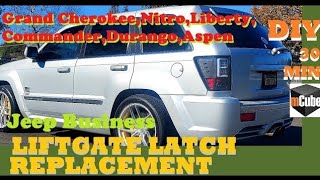
- Faulty Power Liftgate Latch Assembly (Very Common) — In Dodge, Jeep, and Chrysler vehicles, the entire latch assembly frequently fails. 🎬 Watch: How to replace the liftgate latch on Jeep and Dodge. It contains multiple position sensors and the motor that cinches the gate shut. Failure of any internal component triggers B1974.
- Faulty Component Switch (Seat, Liftgate, etc.) (Very Common) — The switch that operates the feature (e.g., the power seat adjustment switch) wears out internally, suffers from cracked solder joints, or sustains liquid damage, leading to a short or open circuit.
- Liftgate/Seat Path Obstruction or Misalignment (Common) — If a liftgate's path is blocked by cargo or its alignment is off, the drive motor stops. This causes the position sensors to send an illogical signal to the control module, setting the code. The same happens if an object jams a power seat's tracks.
- Wiring Harness Damage (Common) — Wires located in high-movement areas sustain damage. This includes wires under a power seat pinched by tracks, or wires inside the flexible rubber liftgate conduit that break from repeated flexing.
- Weak Liftgate Support Struts (Common) — As gas-charged liftgate struts weaken, the motor works harder to open the gate. This increased strain causes the motor to stall, which the module interprets as a fault. This is highly prevalent in cold weather.
- Control Module Software Glitch (Less Common) — A software error within the Body Control Module (BCM) or Power Liftgate Module triggers false codes. A dealer software update resolves these issues, notably on Land Rover, Chrysler, and Jeep vehicles.
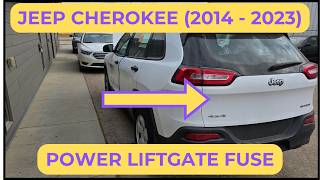
- Blown Fuse (Less Common) — A blown fuse disables the entire circuit, 🎬 See this guide to find your Jeep power liftgate fuse. preventing the BCM from receiving any signal from the affected component.
- Low Battery Voltage (Rare) — A failing battery causes low system voltage. Sensitive electronics interpret this electrical instability as a circuit fault and set a 'ghost' code like B1974.
Symptoms
- Power Liftgate Malfunction — The rear liftgate fails to open or close electronically, gets stuck partway, fails to latch properly, or reverses direction unexpectedly.
- Power Seat Won't Adjust — The passenger or driver seat fails to move in one or all directions when pressing the control switch.
- Check Engine or Service Light On — A warning light on the dashboard illuminates to alert the driver of a stored Body Control Module fault.
- Audible Clicking/Grinding from Latch — The latch area emits repeated clicking, buzzing, or grinding noises as it fails to engage or cinch correctly.
- 'Liftgate Ajar' Warning on Dash — The vehicle displays a 'gate ajar' warning light even when physically closed, keeping interior cargo lights on and draining the battery.
- Inoperative Rearview Mirror Features — On certain Land Rover vehicles, this code stores in the rearview mirror module but causes no actual symptoms or loss of function.
- Invalid BCM Data (scan-tool only — no driver-felt sign) — Live data from the BCM for the affected component fails to change state on a scan tool when the switch is operated.
Diagnostic Flowchart
Tap your situation to follow the diagnostic path that matches what you're seeing on this code.
Common Fixes & Costs
- Replace Power Liftgate Latch Assembly — Parts: $100-$250, Labor: $120-$180, ~1 hr book time (Intermediate)
- Replace Power Seat Switch — Parts: $30-$120, Labor: $70-$150, ~0.7 hr book time (DIY)
- Repair Damaged Wiring — Parts: $10-$30, Labor: $150-$300, ~2 hr book time (Intermediate)
- Update or Reprogram Control Module — Parts: $0, Labor: $125-$250, ~1 hr book time (Professional)
- Replace Body Control Module (BCM) — Parts: $400-$800, Labor: $120-$180, ~1.2 hr book time (Professional)
Used vs. New Parts: Buying Guide
When a used part is worth it: For a power seat switch, a used OEM part from a reputable salvage yard is a cost-effective and reliable choice. For a power liftgate latch, a used part is a gamble due to high failure rates; buy new OEM or reputable aftermarket parts.
Donor-vehicle mileage cap: roughly under 100000 miles for the part to have meaningful remaining life.
Donor quality checklist:
- Match the part number exactly, as there are many variations based on vehicle options.
- For electronic parts like latches, ensure the donor vehicle was not scrapped due to flood or fire damage.
- Inspect electrical connectors on the used part for any signs of corrosion or pushed-out pins.
Decision logic:
- If The part is a simple mechanical switch (e.g., basic power seat switch) → Used is a reasonable option to save money.
- If The part is a complex electro-mechanical assembly with a high failure rate (e.g., Dodge/Jeep power liftgate latch) → New (OEM or reputable aftermarket like Dorman) is strongly recommended for reliability.
- If The vehicle is new or has low mileage → Buy new OEM to ensure longevity and compatibility.
Warranty tradeoff: Used parts typically come with a 30-90 day warranty. New aftermarket parts often have a 1-year to limited lifetime warranty. New OEM parts usually carry a 1-2 year warranty.
Worst-case if a used part fails: $200-$500 if a used part fails shortly after installation, primarily due to repeated labor costs.
What Happens If You Wait — Timeline
- 0-1 month: Code is set, and a warning light appears. The fault is intermittent; the seat or liftgate fails occasionally, especially in cold weather. Function often restores by retrying. (Added cost: $0)
- 1-6 months: The failure becomes frequent. The liftgate requires multiple button presses to close, or the 'Liftgate Ajar' light stays on, causing interior lights to remain lit and draining the battery. (Added cost: $150-$250 (for a new battery if drained completely))
- 6-12 months: The component fails completely. The liftgate refuses to operate electronically. If the gate fails to seal properly, water begins intruding into the rear cargo area during rain. (Added cost: $50-$350 (for new liftgate seal or initial water leak repair).)
- 12+ months: Long-term water intrusion from a poorly sealed liftgate causes significant damage. Mold and mildew develop, and moisture corrodes other electronic modules located in the rear of the vehicle, leading to complex electrical problems. (Added cost: $1,500-$6,000+ (for professional water damage remediation, mold removal, and replacement of other damaged electronic modules).)
Cost of Not Fixing It
- Immediate: Loss of function for the specific component (seat fails to adjust, liftgate fails to operate electronically). Security risk if liftgate cannot be secured. Safety risk if seat is stuck in an unsafe position. (Added cost: Negligible)
- 0-3 months: If the liftgate is ajar, the battery drains due to interior lights staying on. Continued attempts to operate a failing liftgate motor causes further damage to the latch or wiring. (Added cost: $50-$250 (for a new battery or wiring repair))
- 3+ months: For a liftgate that fails to seal, long-term water intrusion causes mold, rust, and damage to interior components and electronics in the rear of the vehicle. Exhaust fumes enter the cabin. (Added cost: $500-$2000+ (for water damage remediation or replacing other damaged modules))
Diagnosis Steps
- Verify the Symptom and Check for Obstructions
Confirm which feature fails to work. Check for physical blockages. Look under the power seat for items jamming the mechanism. For a liftgate, ensure cargo clears the path and the latch striker aligns properly.
Tools: Flashlight (Beginner) - Check for Technical Service Bulletins (TSBs)
Check for TSBs related to your vehicle's year, model, and symptoms before replacing expensive modules. Manufacturers frequently release software updates to fix intermittent bugs causing these codes.
Tools: Phone or Computer (Beginner) - Check Fuses and Perform a System Reset
Locate the fuse box and inspect the fuse for the affected component. If intact, perform a system reset. For a Dodge/Jeep liftgate, cycle the outside handle three times slowly with the power on. Alternatively, disconnect the negative battery terminal for 20 minutes.
Tools: Fuse puller, Owner's manual, 10mm wrench (Beginner) - Scan for Manufacturer-Specific Live Data
Use a professional-grade scan tool to read live data from the BCM or PLGM. Monitor the real-time status of the affected switch (e.g., 'Secondary Ratchet Switch'). Watching this data while operating the component definitively pinpoints if the BCM receives the signal.
Tools: Advanced OBD-II Scan Tool (Intermediate) - Inspect the Wiring and Connectors
Visually inspect the wiring going to the non-working part. Look under the seat for pinched or broken wires. For a liftgate, pull back the flexible rubber conduit between the body and hatch to inspect wires for breaks. Unplug connectors and check for green corrosion.
Tools: Flashlight, Trim removal tools (Intermediate) - Test the Switch for Continuity
Use a multimeter to test a suspected bad switch for continuity. Disconnect the switch, set the multimeter to Ohms, and probe the pins while pressing the button. The reading must change from open (O.L.) to closed (~0 Ohms).
Tools: Multimeter, Trim removal tools, Vehicle-specific wiring diagram (Intermediate) - Advanced: Manually Actuate and Monitor Latch Switches
With the scan tool monitoring the 'Secondary Ratchet Switch' status, use a screwdriver to manually click the latch into its fully latched positions. The switch status on the scan tool must change state. If it fails to change, the latch assembly or wiring is faulty.
Tools: Advanced OBD-II Scan Tool, Screwdriver (Advanced) - Advanced: Test Circuit Voltage and Resistance
Test the circuits directly at the latch connector. Measure resistance between the ground pin and the logic ground circuit wire; it must read under 5.0 Ohms. Measure voltage of the latch secondary position sense circuit; it must read 0 volts.
Tools: Multimeter, Vehicle-specific wiring diagram (Advanced)
When This Code Triggers (Freeze-Frame Conditions)
- System Voltage: 11.5V - 14.5V (During component activation (e.g., pressing seat or liftgate switch))
- Component Status: Commanded ON (The BCM was attempting to operate the affected component.)
- Time Since Engine Start: > 10 seconds (The fault is typically logged shortly after a key cycle when the feature is first used.)
- Ambient Temperature: Any (However, liftgate faults are more common in cold weather due to increased load on the motor.)
Related Codes
- B1970 — Appears with B1974 on Dodge/Jeep vehicles. B1970 refers to the 'Ratchet Primary Switch' (fully-latched position). If both codes appear, the entire latch assembly has failed.
- B1975 — Another Dodge/Jeep liftgate code for 'Latch Cinch - Ratchet Secondary Switch Performance'. This means the secondary switch gave an implausible reading specifically during the final 'soft-close' phase.
- B1978 — Points to a 'Sector Switch Performance' problem. A B1978 code means the module is unsure of the latch's internal park position, while B1974 points specifically to the latching mechanism's position switches.
- B1972, B1973, B1975-B1979 — On Ford vehicles where B1974 indicates a seat switch fault, these codes correspond to different directional inputs from the power seat switch, indicating a fault in that specific circuit.
Climate & Environmental Factors
- Cold Weather: Cold temperatures significantly increase the likelihood of power liftgate faults. The gas in the support struts becomes less effective, increasing the load on the liftgate motor. This extra strain causes the motor to stall, setting code B1974.
- High Humidity / Water Intrusion: Moisture leads to corrosion on electrical connectors and pins for switches, latches, and the BCM itself. A corroded BCM connector causes bizarre electrical issues, including false trouble codes.
How to Talk to a Mechanic About This Code
Say this: "I have a B1974 code on my [Vehicle Make]. On this vehicle, it relates to the [power liftgate latch / passenger seat switch]. I need a diagnostic to confirm if the fault is the component itself, the wiring, or a software issue before authorizing a part replacement."
This signals you've done your research, understand the code is manufacturer-specific, and know the common failure points (e.g., wiring vs. latch assembly). It directs the technician toward a specific, efficient diagnostic path and prevents them from starting from scratch or suggesting unrelated repairs.
Avoid saying:
- 'Just fix whatever's wrong'
- 'My check engine light is on, can you look at it?' (too vague — invites upsell)
- 'Whatever you recommend'
Questions to ask before authorizing the repair:
- For a Dodge/Jeep: Did you check for any TSBs related to a Power Liftgate Module software update?
- For a Dodge/Jeep: Did you inspect the wiring inside the flexible boot between the liftgate and the body for breaks?
- For a Ford: Did the seat switch fail a continuity test, or did you find a short in the wiring under the seat?
- Can you show me the failed part or the damaged wiring before I approve the repair?
- What is the warranty on the recommended new part and your labor?
Where to Take It: Dealer vs Independent vs Chain
- Dealer:
Recommended if a software update is a known possibility for your vehicle. Otherwise, a qualified independent shop is more cost-effective.
Best for: Vehicles under warranty, Known software-related issues (TSBs) for Chrysler, Jeep, and Land Rover models, Complex electrical issues requiring manufacturer-specific tools
Downsides: Highest labor rates, May default to replacing an entire assembly (e.g., liftgate latch) when a simpler wiring repair would suffice (Typical cost: +50% vs. baseline) - Independent Shop:
Best fit for most B1974 repairs, offering a good balance of expertise and value. Choose a shop with strong reviews for electrical diagnostics.
Best for: Out-of-warranty vehicles, Diagnosing and repairing common B1974 causes like bad switches, failed latch assemblies, and broken wires
Downsides: Shop quality and diagnostic capabilities vary; ensure they are experienced with modern auto-electrical systems., May not have access to the newest TSBs or module flashing capabilities. (Typical cost: +0% vs. baseline) - Chain Shop:
Not recommended. The manufacturer-specific nature and diagnostic complexity of B1974 are poorly suited to the chain shop model.
Best for: Simple jobs like battery or fuse replacement
Downsides: Technicians lack the specific training for body electrical diagnostics., High risk of misdiagnosis, leading to unnecessary replacement of expensive parts like the BCM or latch assembly. (Typical cost: -10% vs. baseline)
When to Walk Away From the Repair
If the estimated repair cost exceeds 40-50% of the car's Kelley Blue Book (KBB) private-party value, pause and consider alternatives to a major repair.
- Car worth $7000, fix is $650: Fix it. This repair is well below the threshold and restores important vehicle functionality.
- Car worth $4000, fix is $1800: Walk away. The repair cost is approaching half the vehicle's value. This money would be better put toward a replacement vehicle.
- Car worth $15000, fix is $800: Fix it. The repair cost is a small fraction of the vehicle's value.
What Scan Tool You Need for This Code
Minimum: A scanner that can read manufacturer-specific Body Control Module (BCM) codes and, crucially, display live data from body system sensors.
A basic $20 engine code reader cannot access the BCM. It shows 'No Codes Found' even with an active B1974. You must see the live status of the specific switch to determine if the fault is the switch, wiring, or module.
Budget: BlueDriver Pro Scan Tool (~$100) — Reads and clears BCM codes on many domestic and import models. It displays live data from the BCM, allowing you to watch the switch status in the app as you operate it, which is essential for diagnosis. It is not bidirectional.
Mid-range: Foxwell NT510 Elite (~$180) — Provides manufacturer-specific diagnostics for one chosen car brand, with deep access to BCM live data and error codes. Crucially, it offers bidirectional control, allowing you to command the liftgate motor or other actuators directly from the tool to test their function.
Professional: Autel MaxiCOM MK808S (~$500) — A full-system diagnostic tablet that scans all vehicle modules, including the BCM and PLGM. It offers comprehensive live data graphing, manufacturer-specific codes, and full bidirectional controls to test any component in the system.
Rent vs buy: Buy if you plan to do your own maintenance and diagnostics regularly. The free rental scanners from auto parts stores are typically basic engine code readers and will NOT be able to diagnose a B-series code. You need a tool with BCM/body system capabilities.
How to Clear the Code After You Fix It
- Reconnect battery if disconnected for the repair.
- Use an OBD-II scan tool to clear the Diagnostic Trouble Code from the Body Control Module.
- Operate the repaired component (e.g., cycle the power liftgate or power seat) multiple times to confirm the fix.
Drive cycle (~10 minutes): A specific drive cycle is not typically required for a B-series code. After clearing the code, simply start the vehicle and operate the affected function (power seat, liftgate) through its full range of motion several times. The code returns immediately if the fault persists.
Readiness monitors affected: None
Watch out for:
- Simply clearing the code with a scanner fails to fix the underlying electrical or mechanical problem; the code returns on the next self-test.
- Forgetting to perform a system reset (like the Dodge 3-cycle liftgate handle pull) or a battery disconnect leaves the module in a fault state even after a repair.
Will This Fail Emissions / State Inspection?
No — by itself this code doesn't fail OBD inspection (but it can keep readiness monitors from setting, which causes a separate fail).
- California: This code itself does not cause a Smog Check failure, as it is a 'B' (Body) code, not a 'P' (Powertrain) code. However, an illuminated 'Check Engine' or other malfunction light on the dashboard results in an automatic failure.
- New York: The NYS inspection checks for the presence and operation of required safety equipment. While the B-code itself isn't checked, an illuminated dashboard warning light results in a failure.
- Texas: During a Texas vehicle safety inspection, any illuminated warning light on the dashboard is a reason for failure. The inspector verifies the function of items like the horn, lights, and wipers, but not specifically power seats or liftgates.
Most Commonly Affected Vehicles
- Dodge Durango (2011-2021) — Extremely prone to B1974 for the power liftgate latch secondary switch. The latch assembly often fails internally. Weakening lift struts also contribute to the issue over time.
- Jeep Grand Cherokee (2014-2021) — Shares a platform with the Durango and suffers from identical power liftgate issues. TSBs suggest a Power Liftgate Module (PLGM) reprogram fixes intermittent operation.
- Chrysler Town & Country / Dodge Grand Caravan (2011-2016) — These minivans use a similar power liftgate design and are known for failures in the latch assembly and breaks in the wiring harness within the flexible conduit.
- Ford Explorer, F-150, Expedition (2004-2014) — On many Ford models, B1974 points specifically to a short in the passenger's seat recline forward switch circuit. Diagnosis focuses on the switch and its connector.
- Land Rover Range Rover Evoque (2019-2020) — TSB SSM74298 notes that code B1974-86 stores due to a software error in the Rear View Mirror Module. It has no effect on function and requires a software update.
- Chrysler Pacifica (2017-2019) — A known TSB addresses intermittent liftgate operation with a software flash for the Power Liftgate Module (PLGM), which must be investigated before replacing the latch assembly.
- Cadillac / Chevrolet / GMC Escalade / Suburban / Yukon (2007-2014) — This generation of GM SUVs is widely known for power liftgate system failures, including faulty latch assemblies and broken wiring in the hinge area.
- Chrysler Pacifica (2004-2008) — On these earlier crossover models, this code associates with the power seat switch assemblies. Failures in the switch pack or underlying wiring are common.
Manufacturer-Specific Notes
- Dodge / Ram / Jeep / Chrysler: B1974 almost always means 'Power Liftgate Close Direction - Ratchet Secondary Switch Performance'. The cause is frequently a bad latch assembly or a physical obstruction.
- Ford / Lincoln / Mercury: These manufacturers typically use the definition 'Passenger's Seat Recline Forward Switch Circuit Short to Battery'. Diagnosis focuses on testing the seat switch and wiring directly beneath the seat.
- Jaguar / Land Rover: On the 2019-2020 Range Rover Evoque, code B1974-86 is a known software bug documented in TSB SSM74298. Dealers are instructed not to replace parts.
- Chrysler (Modern): On 2017+ Pacifica minivans, intermittent liftgate problems frequently resolve with a PLGM software update from a dealer. This is a primary diagnostic step before condemning the latch assembly.
Real Owner Stories
2012 Dodge Grand Caravan at 110K miles - Liftgate Won't Close
The power liftgate opened correctly but failed to close electronically. When the close button was pressed, it lowered slightly, hit the latch striker, and then reversed back to the open position.
What they tried:
- Initially thought the motor was bad.
- Searched online forums and found information about the latch being 'out-of-sync'.
Outcome: The owner used a long, flat-blade screwdriver to manually push the spring-loaded catch inside the latch assembly, which allowed the main latch disc to rotate back to the open position. This re-synced the mechanical position of the latch with the electronic control module. The power liftgate then functioned normally. Cost was $0.
Lesson: If a Dodge/Chrysler liftgate fails after being manually manipulated, the latch mechanism is likely just out of sync. A simple mechanical reset with a screwdriver often fixes the problem without needing any parts.
2017 Ford Expedition with 'Liftgate Ajar' Warning
The dashboard displayed a 'Liftgate Ajar' warning, causing the interior lights to stay on and the backup camera guidelines to disappear. The owner was unaware that the rear liftgate glass could open independently.
What they tried:
- Suspected a bad liftgate sensor.
- Posted on a forum for advice before taking it to a shop.
Outcome: Forum members pointed out the separate release button for the rear glass. The owner located the button, opened the glass, and closed it firmly. This properly seated the glass, extinguished the 'Ajar' warning, and restored all related functions. The fix was immediate and cost $0.
Lesson: Always check the simplest things first. For 'Liftgate Ajar' warnings, confirm that both the main liftgate AND the rear liftglass (if equipped) are securely latched before assuming a sensor or wiring is bad.
2020 Range Rover Evoque with B1974-86 after PDI
Shortly after purchase, a routine scan showed a permanent, non-clearable B1974-86 code stored in the Body Control Module. There were no symptoms; the rearview mirror and all its features worked perfectly.
What they tried:
- The technician initially considered replacing the rearview mirror module.
Outcome: The technician found Land Rover's Technical Service Bulletin (SSM74298), which stated that this specific code on 2019-2020 Evoque models is a known software error. The bulletin explicitly instructs dealers NOT to replace any parts. The code is a ghost fault to be ignored until a future software update is released.
Lesson: On modern, complex vehicles, always check for TSBs before replacing parts. A trouble code, even a permanent one, is sometimes a known software bug with no actual performance issue.
Ford F-150 with Intermittent Power Seat Failure
The passenger seat intermittently failed to recline forward, triggering the B1974 code. Other seat functions worked normally. The owner noticed the problem worsened after the truck had been cleaned or on humid days.
What they tried:
- Spraying contact cleaner into the switch provided a temporary fix that lasted only a few days.
- Considered replacing the entire switch assembly for over $100.
Outcome: Following a guide, the owner disassembled the seat switch. The internal copper contacts were dirty and slightly corroded. The contacts were cleaned with fine-grit sandpaper and contact cleaner, then reassembled. The seat function was fully restored, and the code did not return. Cost was under $10 for cleaning supplies.
Lesson: For 'short to battery' or circuit malfunction codes on switches, the issue is often dirt, moisture, or corrosion on the internal contacts. Disassembling and cleaning the switch is a highly effective and low-cost repair.
How to Prevent This Code From Triggering
- Lubricate Liftgate Latch and Hinges (Once per year) — Dirt and grime build up in the latch mechanism, causing it to bind. A binding latch forces the motor to work harder, leading to premature failure. Using a quality silicone or gel lubricant keeps moving parts free and reduces strain.
- Clean and Protect Power Seat Switches (Every 1-2 years or after a spill) — Spilled liquids and dust get inside seat switches, causing corrosion and short circuits on the contact points. Periodically using compressed air to clean crevices prevents this.
- Inspect and Clean Liftgate Support Struts (Every 6 months) — The shafts of gas struts accumulate dirt, damaging seals and allowing nitrogen gas to leak. Wiping the strut shafts preserves the seals. Weak struts overload the liftgate motor, a primary cause of B1974 in cold weather.
- Periodically Inspect High-Movement Wiring Harnesses (Every 2-3 years) — Wires running from the vehicle body to the liftgate constantly flex, causing them to fatigue and break over time. A quick visual inspection of the rubber conduit provides an early warning of potential wiring failure.
- Avoid Manually Forcing Power Mechanisms (Daily habit) — Manually slamming a power liftgate shut or forcing a stuck power seat damages plastic gears in the motors or causes electro-mechanical components to go out of sync, triggering fault codes.
Frequently Asked Questions
Can I fix a B1974 code myself?
If the cause is a blown fuse, a simple obstruction, or a bad seat switch, it is a manageable DIY fix. Replacing a liftgate latch is possible for an intermediate DIYer with the right tools. However, diagnosing complex wiring shorts or reprogramming modules requires a professional shop with manufacturer-specific software.
How much does it cost to diagnose a B1974 code?
Most repair shops charge a standard diagnostic fee, typically between $100 and $200. This fee covers the time to scan the vehicle with an advanced tool, interpret the manufacturer-specific data, and pinpoint the exact cause.
What is the most common misdiagnosis for B1974?
On Dodge/Jeep vehicles, the most common mistake is replacing the liftgate latch assembly without first checking for a potential software update (TSB) or thoroughly testing the wiring harness in the hinge area. A frayed wire perfectly mimics the symptoms of a failed latch.
My liftgate is stuck closed. How can I open it manually?
Most SUVs and minivans have a manual release inside the vehicle. You must remove a small plastic cover on the interior liftgate trim panel. Behind it, you will find a lever or cable to actuate the latch manually.
Will clearing the code fix the problem?
No, clearing the code only turns off the warning light temporarily. The BCM runs its self-test on that circuit again, and if the underlying electrical or mechanical fault remains, the code returns immediately.
Can a weak liftgate strut really cause this electrical code?
Yes. The power liftgate module monitors the motor's performance. If weak struts fail to provide enough assistance, the motor works harder, drawing more current and moving slower. The module interprets this extra strain as an obstruction or motor fault, triggering B1974.
The code is for a seat switch, but my seat works fine. What's going on?
The fault is likely intermittent or isolated to a specific function of the switch you rarely use, like 'recline forward'. On some vehicles like the Land Rover Evoque, B1974 is a 'ghost' code caused by a software bug that has no effect on function.
Why does the code definition say 'Short to Battery'?
This specific Ford definition means the control module detects 12V+ on the signal circuit when it expects to see an open circuit or ground. This happens when a wire's insulation rubs through and touches an adjacent power wire, or when the switch fails internally.
Can a bad battery cause body codes like B1974?
Yes. A failing battery provides unstable voltage, especially in cold weather. Sensitive electronic modules like the BCM malfunction during low voltage conditions, setting spurious 'ghost' codes. Always ensure your battery and charging system are healthy when diagnosing complex electronic issues.
Key Takeaways
- Code B1974 is manufacturer-specific: it indicates a failed power liftgate latch on Dodge/Jeep, a faulty power seat switch on Ford, or a rearview mirror software bug on Land Rover.
- On Dodge, Jeep, and Chrysler vehicles, replace the power liftgate latch assembly (approx. $220-$430) only after verifying the hinge wiring is intact and no TSB software updates apply.
- On Ford vehicles, test the power seat switch for continuity; dirty internal copper contacts cause the majority of these failures and can often be cleaned for under $10.
- Perform a free system reset before buying parts: disconnect the negative battery terminal for 20 minutes or cycle the Dodge liftgate handle three times with the power on.
Helpful Videos

Shop the Parts Behind B1974
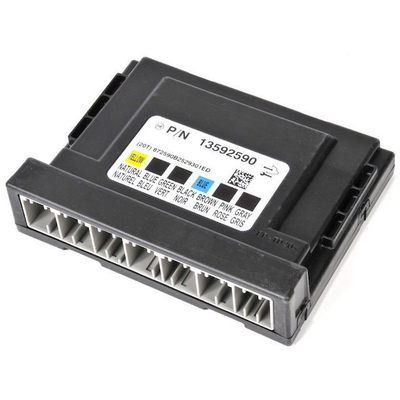
Below are the parts most often responsible for code B1974, ranked by how frequently each one is the actual culprit (per the diagnosis above). Tap any to see what we have for your vehicle.



The information in this article is provided for general reference and educational purposes only. Vehicle specifications, procedures, and part compatibility can vary by production date, trim level, and region. Always consult your vehicle's factory service manual and verify part numbers before purchasing or performing repairs. Safety-critical components such as airbags, seat belts, and braking systems should be installed by a qualified professional.
- 🧭 Diagnostic Flowchart
- 🎬 Helpful Videos
- 🛍️ Shop This Part
- What Does B1974 Mean?
- Can I Drive With B1974?
- Common Causes
- Symptoms
- Common Fixes & Costs
- Used vs. New Parts: Buying Guide
- What Happens If You Wait — Timeline
- Cost of Not Fixing It
- Diagnosis Steps
- When This Code Triggers (Freeze-Frame Conditions)
- Related Codes
- Climate & Environmental Factors
- How to Talk to a Mechanic About This Code
- Where to Take It: Dealer vs Independent vs Chain
- When to Walk Away From the Repair
- What Scan Tool You Need for This Code
- How to Clear the Code After You Fix It
- Will This Fail Emissions / State Inspection?
- Most Commonly Affected Vehicles
- Manufacturer-Specific Notes
- Real Owner Stories
- 2012 Dodge Grand Caravan at 110K miles - Liftgate Won't Close
- 2017 Ford Expedition with 'Liftgate Ajar' Warning
- 2020 Range Rover Evoque with B1974-86 after PDI
- Ford F-150 with Intermittent Power Seat Failure
- How to Prevent This Code From Triggering
- Frequently Asked Questions
- Can I fix a B1974 code myself?
- How much does it cost to diagnose a B1974 code?
- What is the most common misdiagnosis for B1974?
- My liftgate is stuck closed. How can I open it manually?
- Will clearing the code fix the problem?
- Can a weak liftgate strut really cause this electrical code?
- The code is for a seat switch, but my seat works fine. What's going on?
- Why does the code definition say 'Short to Battery'?
- Can a bad battery cause body codes like B1974?
- Key Takeaways
- 🎟️ Get 5% Off