

OBD-II Code B2002: Manufacturer-Specific Body Fault
What B2002 means, why it triggers, and how to fix it
- Use an advanced OBD-II scan tool capable of reading Body (B) codes to get the exact manufacturer-specific definition for your vehicle before attempting any repairs.
- Inspect the wiring harnesses and connectors under the front seats, as damaged or loose wires here cause over 50% of SRS-related B2002 codes.
- Check for Technical Service Bulletins (TSBs) first; for example, 2019-2020 Mazda3 models require a 1-hour dealer software update rather than a hardware replacement.
- Do not drive passengers if the B2002 code triggers an airbag warning light, as the SRS system is disabled and will not deploy in a collision.
What Does B2002 Mean?
B2002 is a manufacturer-specific body control module (BCM) code. Its definition changes completely depending on your vehicle's make. It points to a fault in a body-related electrical circuit, such as an airbag system, a power sliding door, the main electrical supply unit, or a communication network.
Technical definition: SAE/ISO does not provide a universal definition for B2002; the vehicle manufacturer assigns it. For example, Honda defines it as 'Left Power Sliding Door Control Unit EEPROM Error'. Toyota defines it as 'Open in Seat Belt Motor RH Circuit'. Mazda defines it as 'Electrical supply unit (ESU) internal malfunction'. Isuzu defines it as 'Warning Light Circuit Abnormality'.
Can I Drive With B2002?
Yes, But With Caution. Driving is possible, but a key safety or convenience feature is disabled. If related to the SRS (airbag) system, airbags or seatbelt pre-tensioners will not deploy in a crash. Repair the vehicle promptly to ensure occupant safety. If the fault involves a power sliding door, driving is safe, but you lose that functionality.
Common Causes
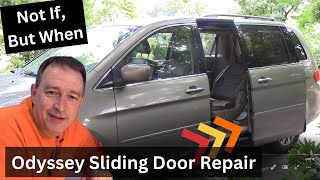
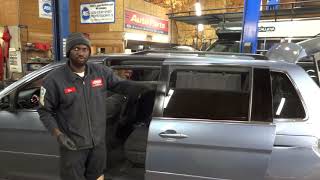
- Faulty Control Module or Component (Manufacturer-Dependent) (Very Common) — This is the most frequent cause, but the specific part depends on the car. For a Honda Odyssey, it is the power sliding door control unit. 🎬 Watch this complete DIY repair for Odyssey sliding doors. For a Toyota, it is the seat belt motor assembly. For a Mazda3, it is the Electrical Supply Unit (ESU).
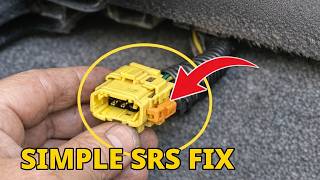
- Wiring Harness Damage or Corrosion (Common) — A broken wire, loose connector, or short circuit in the wiring leading to the affected component triggers this code. Wires under the passenger seat are highly vulnerable to damage from moving seats, stored items, or water intrusion from spills and leaks. 🎬 See how to fix under-seat SRS connectors after cleaning.
- Low Battery Voltage (Less Common) — Modern vehicles are highly sensitive to system voltage. A weak or dying battery causes various electronic modules, including the BCM and SRS controller, to malfunction and generate spurious fault codes during startup.
- Blown Fuse (Less Common) — A blown fuse for the specific circuit (e.g., SRS, power doors) cuts power and triggers this code. This is often a symptom of a larger electrical short circuit that requires investigation.
- Software Glitch (Rare) — The code is sometimes triggered by a software issue within the control module that requires reprogramming, not replacement. Mazda issued TSB 09-033/20 for 2019-2020 Mazda3 models for this exact issue.
- Aftermarket Accessory Interference (Rare) — Improperly installed aftermarket accessories, such as remote starters or alarms, interfere with the vehicle's CAN bus network or electrical circuits, leading to unexpected body codes like B2002.
Symptoms
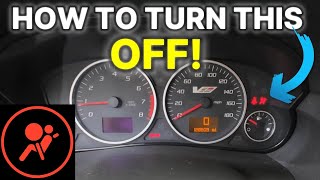
- Warning Light on Dash — This is often the only symptom. It illuminates a general check engine light, an airbag/SRS light, or a specific warning message related to the faulty system.
- Malfunctioning Power Sliding Door — On vehicles like the Honda Odyssey, the power sliding door stops working, opens or closes erratically, or fails to latch properly.
- Airbag or Seatbelt System Fault — On Toyotas, the airbag warning light illuminates, and the seatbelt pre-tensioner fails to function in a crash. On some Fords, the airbag light flashes a two-digit code.
- Various Unrelated Electrical Issues — On Mazdas where the code points to an Electrical Supply Unit, you experience a range of strange electrical problems with lights, windows, or locks.
- Fault Code in Body or SRS Module (scan-tool only — no driver-felt sign) — The B2002 code, along with its manufacturer-specific definition, is stored in the Body Control Module (BCM) or Supplemental Restraint System (SRS) module.
Diagnostic Flowchart
Tap your situation to follow the diagnostic path that matches what you're seeing on this code.
Common Fixes & Costs
- Replace Power Sliding Door Control Unit (Honda) — Parts: $50 - $200, Labor: $100 - $150, ~1.0 hr book time (Intermediate)
- Repair or Replace Seat Belt Assembly/Motor (Toyota) — Parts: $80 - $450, Labor: $150 - $250, ~1.5 hr book time (Intermediate)
- Reprogram Control Module (Mazda) — Parts: $0, Labor: $150 - $200, ~1.0 hr book time (Professional)
- Repair Damaged Wiring or Connectors — Parts: $10 - $30, Labor: $150 - $400, ~2.0 hr book time (Intermediate)
- Replace Body Control Module / Electrical Supply Unit (Mazda) — Parts: $300 - $550, Labor: $150 - $250, ~1.5 hr book time (Professional)
Used vs. New Parts: Buying Guide
When a used part is worth it: For non-safety components like a Honda Odyssey sliding door control unit, a used part from a reputable recycler is a great cost-saving option. For safety components like seatbelt assemblies or airbag modules, favor new OEM parts or professional mail-in repair services.
Donor-vehicle mileage cap: roughly under 100000 miles for the part to have meaningful remaining life.
Donor quality checklist:
- Verify the donor vehicle had no crash event and the airbags were not deployed.
- Match the part number exactly. For control modules, even a slight variation means incompatibility.
- Be aware that a used BCM or SRS module likely requires reprogramming to your vehicle's VIN by a professional.
Decision logic:
- If The part is a critical safety component (airbag, seatbelt pretensioner). → Favor new OEM or a professional mail-in repair service for your original part.
- If The part is a convenience module (e.g., door controller) and a direct part number match is available. → A tested used part is a highly cost-effective choice.
- If The part is a BCM or other module that requires VIN programming. → Buy new OEM unless you have confirmed access to a professional who can reprogram a used unit.
Warranty tradeoff: Used parts typically have a 30-90 day warranty. New OEM parts carry a 1-year or longer warranty. Mail-in repair services for SRS components often provide a lifetime warranty.
Worst-case if a used part fails: $300 - $800 if a used module fails after installation, requiring repeat labor costs and a new part.
What Happens If You Wait — Timeline
- Immediate: Code is set and a warning light illuminates. If the fault is in the SRS, airbags and seatbelt pretensioners are disabled. The car remains drivable. (MPG impact: 0%% · Added cost: $0 (but immediate and severe safety risk))
- 1-3 months: If the fault is in a BCM, intermittent electrical issues begin, like power locks/windows failing occasionally. A minor short creates a parasitic drain on the battery. (MPG impact: 0%% · Added cost: $0 - $250 (potential cost of a new battery if drained completely))
- 3-6 months: The faulty component fails completely. A persistent parasitic drain from a faulty BCM leads to repeated dead batteries and potential alternator strain. (MPG impact: 0%% · Added cost: $250 - $500 (cost of new battery plus diagnostic time for the drain))
- 6+ months: Ignoring a fault in a major control module leads to cascading failures. A significant short circuit damages other connected modules on the CAN network, turning a single-part repair into a complex, multi-module replacement. (MPG impact: 0%% · Added cost: $800 - $2500+)
Cost of Not Fixing It
- Immediate: If related to the SRS system, airbags and seatbelt pretensioners will not deploy in an accident, drastically increasing the risk of serious injury or death. (Added cost: N/A (Safety Risk))
- 0-6 months: If the fault is in a BCM, it causes unpredictable electrical behavior, such as a parasitic battery drain that kills the battery, or failure of lights, locks, or wipers. (Added cost: $150 - $300 (New Battery))
- 6+ months: A persistent electrical short in a faulty module or wiring overloads other related components, leading to cascading failures that are more complex and expensive to repair. (Added cost: $500 - $2000+)
Diagnosis Steps
- Identify the Manufacturer-Specific Definition
Use a high-quality OBD-II scanner that reads manufacturer-specific Body (B) codes. A basic code reader only shows 'B2002' without context. You must know if it relates to airbags, doors, or communication networks before proceeding.
Tools: Advanced OBD-II Scanner (Beginner) - Check for Technical Service Bulletins (TSBs)
Search online for TSBs related to your vehicle's make, model, year, and the B2002 code. A TSB for the 2019-2020 Mazda3 indicates a software update is the required fix, saving you from unnecessary hardware replacement.
Tools: Internet access (Beginner) - Perform a Visual Inspection
Inspect the related component and its wiring based on the specific definition. For a seatbelt code, check under both front seats for loose connectors, damaged wires, or signs of water intrusion. For a sliding door code, inspect the wiring harness where it flexes.
Tools: Flashlight (Beginner) - Check Fuses and Battery Voltage
Test the battery with a multimeter to ensure it reads above 12.4V with the engine off. Locate the fuse box and inspect the fuses related to the system identified in Step 1 (e.g., 'SRS', 'Power Door'). Replace any blown fuses.
Tools: Multimeter, Fuse puller (Beginner) - Reset the System
Disconnect the negative battery terminal for 30 minutes, then reconnect it. Clear the codes with your scanner. If B2002 returns immediately, the fault is a hard failure requiring physical repair.
Tools: Wrench set, OBD-II Scanner (Intermediate) - Test the Circuit (Basic)
Using a multimeter, test for proper voltage and ground at the connector of the suspect component. Consult the vehicle's service manual to know which pins to test and the expected values. This confirms if the component receives power.
Tools: Multimeter, Vehicle Service Manual (Advanced) - [PRO TIP] Test Seatbelt Pretensioner Resistance
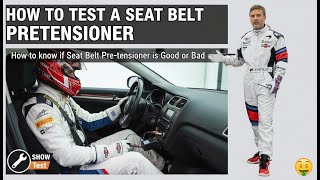
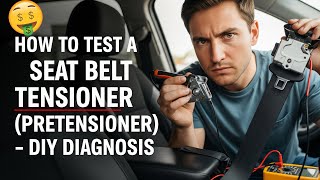
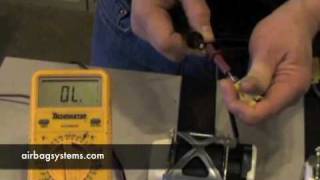
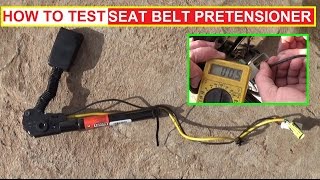
For SRS codes related to a seatbelt pretensioner, disconnect the battery and wait 15 minutes. Disconnect the pretensioner connector. Set your multimeter to the lowest Ohm (Ω) setting. A functional squib has a resistance between 2.0 and 3.0 Ohms. 'OL' indicates a blown squib requiring replacement. Never apply voltage to an SRS component.
Tools: Multimeter, Trim Removal Tools (Advanced) - [PRO TIP] Test Harness Continuity
If component resistance is good, check for continuity in the signal wire between the component and the control module. Disconnect both ends of the harness, jump two pins on the component connector, and measure resistance at the ECU connector. A reading below 1 Ω indicates intact wiring.
Tools: Multimeter, Vehicle Wiring Diagrams, Jumper Wire (Advanced)
When This Code Triggers (Freeze-Frame Conditions)
- System Voltage: 11.5V - 14.5V (The fault logs during startup (KOEO/KOER) if voltage is low, or during normal operation if there is a circuit fault.)
- Fault Status: Present / Active (The code logs when the control module performs a self-test and detects a fault, usually immediately at key-on.)
- Ignition Cycle Counter: Varies (Freeze frame data shows exactly how many ignition cycles have occurred since the fault was first detected.)
- Component-Specific Data: Varies (For an SRS code, it logs seat occupancy or seatbelt buckle status. For a door module, it logs the door's position when the fault occurred.)
Related Codes
- B1B02 — On Chrysler/Jeep vehicles, this code points specifically to the Driver Airbag Squib 1 Circuit. Diagnosis focuses exclusively on the clockspring and steering wheel airbag wiring.
- B0020 / B0028 — These are common codes for side airbag deployment circuits. Diagnosis involves inspecting wiring and sensors in the door or side of the seat, rather than the seatbelt retractor.
- U0100 — This code means 'Lost Communication With ECM/PCM'. If a U-code appears alongside B2002, diagnose the U-code first. A communication failure prevents the BCM from reporting correctly, triggering a B2002 as a symptom.
- P2002 — Do not confuse with P2002. The 'P' indicates a powertrain code, specifically 'DPF Efficiency Below Threshold'. This is an emissions system code completely unrelated to the body control B2002 code.
Climate & Environmental Factors
- High Humidity / Water Intrusion: Moisture from window leaks, spills, or flooding seeps under carpets and into electrical connectors for seatbelt pretensioners. This causes corrosion, increasing resistance and triggering SRS fault codes.
- Road Salt: In winter climates, liquid road salt brine splashes onto the vehicle's undercarriage and wicks into exposed electrical modules and ground points. This highly corrosive solution destroys sensitive electrical terminals.
How to Talk to a Mechanic About This Code
Say this: "I have a B2002 code in my [Make, Model, Year]. My research shows this is a manufacturer-specific code. I need a diagnostic using a scanner that reads specific body/SRS codes to get the full definition. For my car, it likely points to an issue with the [airbag system/power door/BCM]. Please confirm the specific fault and quote me for diagnosis before any repair."
This signals you understand the code's complexity and require more than a simple free scan. It directs the technician to the correct system, saving diagnostic time, and establishes that you expect a specific diagnosis and quote before authorizing repairs.
Avoid saying:
- 'Just fix my airbag light.'
- 'My check engine light is on, can you look at it?' (This is a body code, not a check engine light issue)
- 'Whatever you recommend, just get the light off.'
Questions to ask before authorizing the repair:
- What is the exact manufacturer definition of the B2002 code for my vehicle?
- Did you test the component, or just the circuit? Can you confirm if it's the part itself or the wiring?
- Did you check for any Technical Service Bulletins (TSBs) for this code? I know some models have software updates for this issue.
- If a module needs to be replaced, does it require programming and is that cost included in the quote?
- What is the warranty on this specific repair and the parts used?
Where to Take It: Dealer vs Independent vs Chain
- Dealer:
Recommended. The dealer is the safest bet for an accurate diagnosis and has exclusive access to necessary software updates and programming tools required for B2002 fixes.
Best for: Vehicles where the fix is a known software update (e.g., 2019-2020 Mazda3)., Repairs requiring module replacement and VIN programming., Vehicles still under warranty.
Downsides: Highest labor rates., Defaults to module replacement when a wiring repair is possible. (Typical cost: +50% vs. baseline) - Independent Shop:
Viable, but vet carefully. Ask specifically if they have a scan tool that diagnoses manufacturer-specific SRS and BCM codes and if they can program new modules for your vehicle.
Best for: Out-of-warranty vehicles where the cause is likely wiring or a simple component swap (e.g., Honda door controller)., Owners looking for a lower-cost alternative to the dealer.
Downsides: Shop must have an advanced, manufacturer-capable scan tool to read SRS/Body codes; many do not., Cannot perform required module programming. (Typical cost: +0% vs. baseline) - Chain Shop:
AVOID. This code requires specialized knowledge and tools that are beyond the scope of most chain repair shops.
Best for: Not recommended for this repair.
Downsides: Technicians lack the training for complex electrical or SRS diagnosis., Scan tools are too basic to read B-codes or SRS faults correctly., High risk of misdiagnosis, leading to unnecessary parts replacement. (Typical cost: -10% vs. baseline)
When to Walk Away From the Repair
If the estimated repair cost exceeds 50% of the car's private-party value, and the fault is a critical safety issue, seriously consider selling or trading in the vehicle.
- Car worth $4000, fix is $2200: Walk away. The repair cost is over half the car's value. The money is better put toward a replacement vehicle.
- Car worth $12000, fix is $1800: Fix it. The repair cost is well below the threshold and restores a critical safety feature, preserving the vehicle's value and utility.
- Car worth $8000, fix is $800: Fix it. This is a reasonable cost to ensure the vehicle is safe and to maintain its resale value.
What Scan Tool You Need for This Code
Minimum: A scanner that reads and clears manufacturer-specific Body (B) and SRS (Airbag) codes.
A cheap, generic OBD-II reader will NOT see B-codes or access the SRS module. It tells you there are no codes, even when the airbag light is on. You waste time and money without the right tool.
Budget: Autel MaxiAP AP200 (~$60) — This Bluetooth dongle pairs with your smartphone and offers full system diagnostics, including reading and clearing SRS/BCM codes for one vehicle make for free. It is a cost-effective way to get the specific B2002 definition.
Mid-range: Foxwell NT510 Elite (~$180) — This handheld scanner comes with one free manufacturer software package that provides dealer-level diagnostics. It reads specific B-codes, views live data from modules, and performs bidirectional tests to help diagnose if a component or wiring is at fault.
Professional: Launch X431 / Autel MaxiCOM MK808 (~$450-800) — These professional-grade tablets offer full bidirectional control, module programming, and coding capabilities. They are necessary for complex jobs like replacing and programming a new BCM or other control units.
Rent vs buy: Most auto parts store loaner tools cannot read SRS or B-codes. For a one-time diagnosis of B2002, buying a budget pick like the Autel AP200 is cheaper than paying a shop's diagnostic fee. Buy a midrange or pro pick if you plan to do your own advanced auto repairs regularly.
How to Clear the Code After You Fix It
- Reconnect the battery if disconnected for repair.
- Use an SRS-capable OBD-II scan tool to clear the fault code from the specific module (BCM, SRS, etc.).
- Turn the ignition off, then on again. Observe the corresponding warning light. It should illuminate for a few seconds for a self-test and then turn off permanently.
Drive cycle (~5 minutes): A complex drive cycle is not required for body codes. The system performs a self-test at every key-on. If the repair was successful, the warning light stays off after its initial self-check.
Readiness monitors affected: Not applicable. Readiness monitors are for emissions systems, not body control or SRS systems.
Watch out for:
- Using a basic code reader that cannot access or clear codes from the SRS or BCM modules.
- Assuming disconnecting the battery clears 'hard codes' from an SRS module; it does not.
- The code returning immediately indicates the underlying electrical fault was not fixed.
Will This Fail Emissions / State Inspection?
No — by itself this code doesn't fail OBD inspection (but it can keep readiness monitors from setting, which causes a separate fail).
- California: An airbag light does NOT cause a failure of the emissions-only smog check. However, for salvaged vehicles, a functioning SRS system is required.
- New York: An illuminated airbag (SRS) warning light is an automatic failure of the annual safety inspection.
- Texas: An airbag light is NOT a cause for failure during the annual safety inspection. Inspectors primarily check emissions, brakes, lights, and horn.
Most Commonly Affected Vehicles
- Honda Odyssey (2005-2010) — Prone to a 'Left Power Sliding Door Control Unit EEPROM Error'. This generation is particularly known for issues with its power sliding doors.
- Mazda 3 (2019-2020) — A known software issue causes a B2002:49 'Electrical supply unit (ESU) internal malfunction' code that requires reprogramming per TSB 09-033/20.
- Toyota Land Cruiser (2008-2015) — This code often appears as 'Open in Seat Belt Motor RH Circuit' due to issues with the seatbelt pre-tensioner assembly in the J200 series.
- Ford Fiesta, Focus, Explorer (2011-2019) — Ford vehicles commonly experience airbag lights from related issues, often caused by a loose connector under the driver's seat.
- Hyundai / Kia Elantra, Santa Fe, Sedona (2013-2018) — B-codes related to the SRS system are frequently caused by broken wires or loose connectors under the passenger seat for the Occupant Classification System.
- Subaru Outback, Legacy, Forester (2010-2018) — On these models, B2002 indicates a 'CAN-LS communication network open or short circuit', pointing to a network problem rather than a single component failure.
- Chrysler/Jeep/Dodge Wrangler, Grand Cherokee (2007-2017) — Related codes like B1B02 point to failures in the clockspring, which is part of the airbag and steering wheel control system.
- Isuzu Ascender, D-Max (2003-2008) — B2002 indicates a 'Warning Light Circuit Abnormality' related to the airbag system, pointing to a fault in the circuit between the airbag ECU and the warning light itself.
Manufacturer-Specific Notes
- Mazda: For 2019-2020 Mazda3 models, TSB 09-033/20 addresses a B2002:49 code that won't clear. The official fix is a software update for the Electrical Supply Unit (ESU), not a hardware replacement.
- Honda: On the Odyssey, the B2002 code is specifically for an EEPROM (memory) error within the sliding door control unit, almost always requiring replacement of the unit.
- Toyota: The code often points to an 'Open in Seat Belt Motor RH Circuit'. Toyota issued recall 20TA03 for many 2011-2019 models because the airbag ECU lacked protection from electrical noise, requiring a noise filter installation.
- Isuzu: For Isuzu, B2002 signifies a 'Warning Light Circuit Abnormality'. Diagnosis focuses on checking for a short to ground or an open circuit between the airbag ECU and the instrument cluster warning light.
Real Owner Stories
2009 Honda Odyssey with 160K miles - An Easy Fix
The power sliding door on the driver's side stopped working and the B2002 code appeared. The door would not operate with the button, but could be opened and closed manually.
What they tried:
- Initially tried a battery reset by disconnecting the negative terminal for 10 minutes, but the code and problem returned immediately.
Outcome: Based on forum advice for the specific definition ('Left Power Sliding Door Control Unit EEPROM Error'), the owner purchased a used control unit (Part No. 72060-SHJ-A31) online for $50. Replacement took 30 minutes with basic tools. The code was cleared and did not return.
Lesson: For Honda B2002, the problem is almost always the specific door control unit. Sourcing a used part is a viable, cost-effective solution.
2014 Mazda 3 with ~80K miles - A Misdiagnosis Story
After driving in snow and road salt, the ABS, traction control, and brake warning lights came on intermittently, along with dimming headlights.
What they tried:
- Replaced the battery, which tested low, but the problem returned.
- Tightened battery terminals, which provided a temporary fix.
- Traced the issue to a specific grounding point on the passenger-side fender brace covered in corrosive salt brine.
Outcome: The owner disconnected the ground wire, thoroughly cleaned the contact point on the chassis and the wire terminal with a sander, and re-secured it. This permanently fixed the issue. Total cost was $0.
Lesson: Multiple, seemingly unrelated electrical faults that appear in wintery conditions trace back to a single bad ground point corroded by road salt. Always check and clean major ground connections before replacing expensive modules.
2019 Mazda 3 with 30K miles - An Unusual Software Cause
The B2002:49 'ESU internal malfunction' code appeared and could not be cleared with a standard OBD-II scanner, even after a battery disconnect.
What they tried:
- The owner took the vehicle to the dealership, concerned that the Electrical Supply Unit (ESU) or BCM needed replacement, a potentially $800+ repair.
Outcome: The dealership performed a software update on the ESU per Mazda TSB 09-033/20. The repair was covered under warranty and did not require any parts.
Lesson: Always check for TSBs before authorizing expensive part replacements. A fault code is often a software issue requiring a dealer update, not a hardware failure.
How to Prevent This Code From Triggering
- Apply Dielectric Grease to Connectors (During any related repair or inspection) — Applying a thin layer of non-conductive dielectric grease to the rubber seals of electrical connectors prevents moisture intrusion and corrosion, which are primary causes of circuit faults.
- Secure Under-Seat Wiring (Once, or after any interior work) — Items stored under seats or aggressive vacuuming snag and loosen critical SRS connectors. Use zip ties to neatly secure wiring harnesses away from seat tracks.
- Keep Cabin and Garage Clean (Regularly) — Food crumbs attract rodents, which chew on soy-based wire insulation, causing shorts and open circuits. Using peppermint oil or rodent-repellent tape on wiring harnesses deters them.
- Address Water Leaks Promptly (As needed) — A leak from a clogged sunroof drain or bad window seal saturates the carpet and the electronic modules underneath. Fixing the leak prevents severe corrosion and BCM or SRS module failure.
Frequently Asked Questions
Can I fix a B2002 code myself?
It depends on the cause. If it is a simple fuse or a loose, accessible connector under a seat, then yes. If it involves replacing a control module like an airbag component or a BCM, it requires special programming by a dealer or qualified shop.
Why doesn't my cheap OBD-II scanner tell me what B2002 means?
B2002 is a manufacturer-specific 'Body' code. Basic scanners are designed only to read generic 'Powertrain' (P) codes. You need an advanced scanner that accesses the Body Control Module (BCM) or Supplemental Restraint System (SRS) to interpret it.
I replaced the part, but the B2002 code is still there. What now?
The code indicates a fault in a circuit, not necessarily the component itself. The actual problem is often a broken wire, a corroded connector, or a bad ground. Always test the circuit's wiring for power, ground, and continuity before replacing expensive modules.
My airbag light is on. Could it just be a low battery?
Yes, a weak battery causes low voltage during startup, triggering random codes in sensitive electronic modules like the SRS or BCM. If you have a B2002 code alongside other electrical faults, test your battery and charging system first.
Is B2002 serious?
It is very serious if the code relates to an airbag or a seatbelt pre-tensioner. The safety system is disabled and will not work in an accident. Address the issue immediately to restore crash safety.
Will clearing the code fix the problem?
No. Clearing the code only erases the fault message from the module's memory. If the underlying electrical or mechanical problem is not fixed, the control module will detect the fault again and the code will return immediately.
What's the difference between a B2002 and a P2002 code?
The first letter is critical. A 'B' code like B2002 refers to a fault in the 'Body' systems (airbags, lights, doors). A 'P' code like P2002 refers to the 'Powertrain' and means an issue with the Diesel Particulate Filter (DPF).
My car has a B2002 code but doesn't have the problem the guide mentions. What now?
Because B2002 is manufacturer-specific, its meaning is not limited to the common examples listed. Get a diagnosis with an advanced scanner that provides the specific definition for your exact make and model. This identifies the actual failing system, from a seat sensor to a communication network.
Key Takeaways
- Use an advanced OBD-II scan tool capable of reading Body (B) codes to get the exact manufacturer-specific definition for your vehicle before attempting any repairs.
- Inspect the wiring harnesses and connectors under the front seats, as damaged or loose wires here cause over 50% of SRS-related B2002 codes.
- Check for Technical Service Bulletins (TSBs) first; for example, 2019-2020 Mazda3 models require a 1-hour dealer software update rather than a hardware replacement.
- Do not drive passengers if the B2002 code triggers an airbag warning light, as the SRS system is disabled and will not deploy in a collision.
Helpful Videos



Shop the Parts Behind B2002
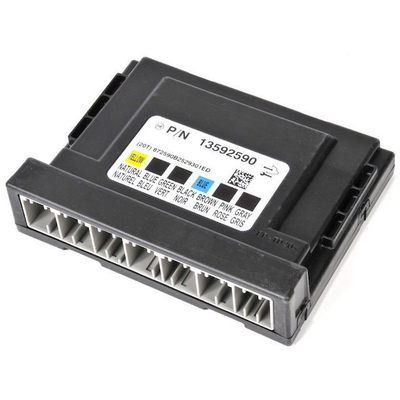
Below are the parts most often responsible for code B2002, ranked by how frequently each one is the actual culprit (per the diagnosis above). Tap any to see what we have for your vehicle.


The information in this article is provided for general reference and educational purposes only. Vehicle specifications, procedures, and part compatibility can vary by production date, trim level, and region. Always consult your vehicle's factory service manual and verify part numbers before purchasing or performing repairs. Safety-critical components such as airbags, seat belts, and braking systems should be installed by a qualified professional.
- 🧭 Diagnostic Flowchart
- 🎬 Helpful Videos
- 🛍️ Shop This Part
- What Does B2002 Mean?
- Can I Drive With B2002?
- Common Causes
- Symptoms
- Common Fixes & Costs
- Used vs. New Parts: Buying Guide
- What Happens If You Wait — Timeline
- Cost of Not Fixing It
- Diagnosis Steps
- When This Code Triggers (Freeze-Frame Conditions)
- Related Codes
- Climate & Environmental Factors
- How to Talk to a Mechanic About This Code
- Where to Take It: Dealer vs Independent vs Chain
- When to Walk Away From the Repair
- What Scan Tool You Need for This Code
- How to Clear the Code After You Fix It
- Will This Fail Emissions / State Inspection?
- Most Commonly Affected Vehicles
- Manufacturer-Specific Notes
- Real Owner Stories
- 2009 Honda Odyssey with 160K miles - An Easy Fix
- 2014 Mazda 3 with ~80K miles - A Misdiagnosis Story
- 2019 Mazda 3 with 30K miles - An Unusual Software Cause
- How to Prevent This Code From Triggering
- Frequently Asked Questions
- Can I fix a B2002 code myself?
- Why doesn't my cheap OBD-II scanner tell me what B2002 means?
- I replaced the part, but the B2002 code is still there. What now?
- My airbag light is on. Could it just be a low battery?
- Is B2002 serious?
- Will clearing the code fix the problem?
- What's the difference between a B2002 and a P2002 code?
- My car has a B2002 code but doesn't have the problem the guide mentions. What now?
- Key Takeaways
- 🎟️ Get 5% Off