

OBD-II Code B2006: Body Control Module or Component Circuit Fault
What B2006 means, why it triggers, and how to fix it
- B2006 is a manufacturer-specific code, meaning you must look up your exact make and model to identify the failing circuit, which is typically a power seat switch or HVAC blower motor.
- Test the cheapest components first; replacing a $5 blown fuse or a $50 power seat switch resolves B2006 far more often than replacing the $500+ Body Control Module.
- Expect immediate failures in comfort features like climate control or power seats, and test for a parasitic draw exceeding 50mA if your battery dies overnight.
- Never replace the Body Control Module without a bi-directional scan tool diagnosis; a new BCM costs $400 to $900 and requires dealer-level software programming to function.
What Does B2006 Mean?
B2006 is a manufacturer-specific code, meaning its definition changes based on your vehicle. It indicates the Body Control Module (BCM) detected a circuit fault in a comfort or convenience feature. For example, GM uses B2006 for a failed passenger power seat switch, while Ford uses it for an HVAC blower motor switch error. Saab ties it to a convertible top latch switch fault.
Technical definition: There is no universal SAE/ISO definition for B2006. Examples include: General Motors (GM): 'RF/Passenger seat assembly rearward switch circuit range/performance'. Ford: 'Blower Motor Switch Out of Range' or 'HIM module communication error'. Hyundai: 'Humidity Sensor Circuit Fault'. Toyota/Lexus: 'Short to GND in Seat Belt Motor LH Circuit'. Saab: '#5 Bow Ready to latch Switch Right. Function Incorrect'.
Can I Drive With B2006?
Yes, But With Caution. You can drive with B2006, but expect comfort features like climate control or power seats to fail. Address it quickly to prevent a parasitic draw from killing your battery. If the underlying Body Control Module (BCM) fault causes intermittent stalling, stop driving immediately and tow the vehicle.
Common Causes
- Faulty Switch or Component (Very Common) — The specific switch identified by the code (e.g., power seat or blower motor switch) has failed internally. This is the most direct and frequent cause of B2006.
- Blown Fuses or Bad Relays (Common) — A blown fuse or faulty relay cutting power to the affected circuit triggers this code. Always check the fuse box before replacing expensive components.
- Wiring or Connector Issues (Common) — Wiring or connectors between the BCM and the component are corroded, loose, shorted, or broken. Connectors under seats or behind the dash are highly susceptible to damage.
- Failing Blower Motor (for HVAC codes) (Common) — A failing blower motor draws excessive current, causing the blower motor resistor to overheat and fail repeatedly. If a new resistor burns out quickly, the motor is the root cause.
- Water Intrusion and Corrosion (Uncommon) — Water from a leaking windshield or clogged sunroof drain drips onto the BCM located under the dash or kick panels, causing catastrophic corrosion.
- Software or Communication Glitches (Less Common) — A software anomaly within the BCM triggers false codes. A hard battery reset clears corrupted memory and resolves these intermittent communication faults.
- Failing Body Control Module (BCM) (Rare) — The BCM has suffered an internal hardware failure, causing multiple unrelated electrical problems simultaneously. Replace the BCM only after exhausting all wiring and component tests.
Symptoms
- Inoperative Power Accessories — Power seats, windows, or door locks stop working, work in only one direction, or behave erratically.
- Malfunctioning Climate Control — The heater or A/C blower fan works on only one speed (usually high), fails completely, or behaves erratically.
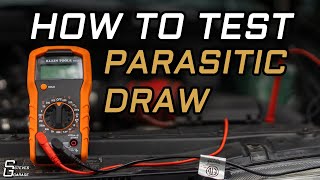
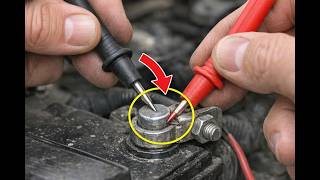
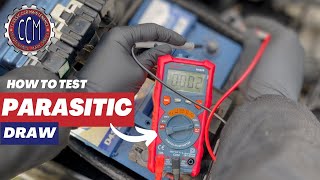
- Parasitic Battery Drain — The vehicle's battery dies overnight. 🎬 Watch: The easiest way to test for a parasitic battery draw. This occurs when the BCM fails to shut down a circuit, causing a continuous power draw.
- Warning Lights on Dashboard — The check engine light, airbag light, or other warning indicators illuminate simultaneously due to a failing BCM.
- Failure to Start or Intermittent Stalling — A severe BCM fault prevents the car from starting or causes it to stall while driving, as the BCM controls security and ignition sequences.
Common Fixes & Costs
- Replace Power Seat Switch
— Parts: $40-$150, Labor: $70-$150, ~1 hr book time
(Intermediate)
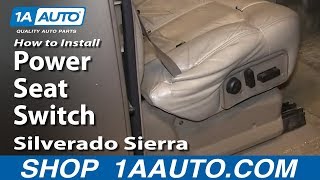
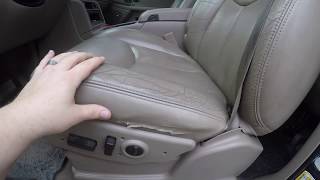
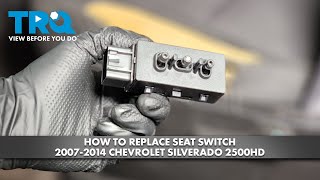
Chevrolet Silverado (2007-2013): 🎬 Watch: How to replace the power seat switch on a Silverado. OEM {'brand': 'ACDelco/GM Genuine', 'part_number': '12451497 / 23248000', 'estimated_cost': '$70-$145'} (Alt: {"brand": "Dorman", "part_number": "901-256 / 901-272", "estimated_cost": "$40-$80"}) - Replace Blower Motor Resistor
— Parts: $20-$75, Labor: $80-$120, ~0.8 hr book time
(DIY)
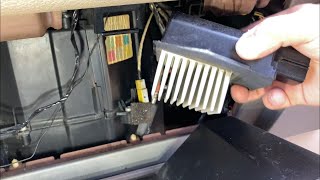
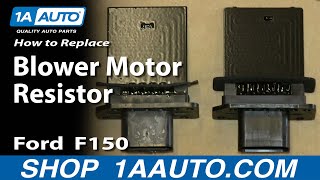
Ford F-150 (2009-2014): OEM 🎬 See this walkthrough for fixing a blower motor resistor. {'brand': 'Motorcraft', 'part_number': 'YH1829', 'estimated_cost': '$50-$150'} (Alt: {"brand": "Dorman", "part_number": "973-409", "estimated_cost": "$30-$60"}) - Replace Blower Motor
— Parts: $75-$200, Labor: $100-$180, ~1.2 hr book time
(Intermediate)
Ford F-150 (2009-2014): OEM {'brand': 'Motorcraft', 'part_number': 'MM1097', 'estimated_cost': '$100-$180'} (Alt: {"brand": "Four Seasons", "part_number": "75873", "estimated_cost": "$60-$90"}) - Repair Wiring or Connectors — Parts: $10-$50, Labor: $125-$250, ~1.5 hr book time (Intermediate)
- Replace Body Control Module (BCM)
— Parts: $250-$700, Labor: $150-$250, ~2.5 hr book time
(Professional)
Ford F-150 (2011): OEM {'brand': 'Ford', 'part_number': 'BC3Z-15604-A', 'estimated_cost': '$300-$500'} (Alt: {"brand": "Dorman (Remanufactured)", "part_number": "599-931", "estimated_cost": "$250-$400"}) - Replace/Repair Heater Integrated Module (HIM)
— Parts: $150-$400, Labor: $200-$400, ~2 hr book time
(Professional)
Ford Falcon/Territory (2004-2016): OEM {'brand': 'Ford', 'part_number': 'BR2Z19H616AA', 'estimated_cost': '$350-$1100'} (Alt: {"brand": "Various (Used/Refurbished)", "part_number": "N/A", "estimated_cost": "$95-$400"})
Used vs. New Parts: Buying Guide
When a used part is worth it: For simple, non-electronic components like a power seat switch or a blower motor, a used part from a reputable salvage yard is cost-effective. A used BCM is a major gamble and generally not recommended.
Donor-vehicle mileage cap: roughly under 60000 miles for the part to have meaningful remaining life.
Donor quality checklist:
- Ensure the donor vehicle has similar or lower mileage.
- Match part numbers exactly; a switch with different options will not work.
- Avoid used BCMs unless the seller guarantees it is 'unlocked' and a professional can program it for your VIN.
Decision logic:
- If The part is a simple switch or motor and the new OEM price is over $150 → A low-mileage used part is a reasonable choice to save money.
- If The part is a Blower Motor Resistor → Buy new aftermarket. The savings on a used part are minimal and the failure rate is high.
- If The part is the Body Control Module (BCM) → Strongly favor a new OEM or high-quality remanufactured unit that comes with programming support.
Warranty tradeoff: Used parts typically have a 30-90 day warranty. New aftermarket parts offer a 1-year to limited lifetime warranty. New OEM parts offer a 1-2 year warranty.
Worst-case if a used part fails: $400-$1500 if a used BCM fails or cannot be programmed, requiring you to buy another part plus repeat labor and programming fees.
Cost of Not Fixing It
- 0-1 month: Annoyance and loss of function (e.g., no A/C fan, non-adjustable seat). A parasitic drain causes an occasional dead battery. (Added cost: $50-$200 (for battery jump services or a new battery))
- 1-6 months: A persistent parasitic drain destroys the vehicle's battery. Repeatedly jump-starting the vehicle puts significant stress on the alternator. (Added cost: $200-$700 (new battery and possible alternator replacement))
- 6+ months: A severely malfunctioning BCM causes intermittent stalling or a no-start condition. An unaddressed short circuit poses a fire risk. (Added cost: $500-$2000+ (towing, major diagnostic work, replacement of multiple damaged modules))
Diagnosis Steps
- Check Manufacturer-Specific Definitions
Search online or use a repair manual to find the specific definition of B2006 for your vehicle's make, model, and year. This dictates which system to test (e.g., power seats for GM, HVAC for Ford).
Tools: OBD-II Scanner, Internet Access (Beginner) - Inspect Fuses and Circuit Breakers
Locate the fuse box using your owner's manual. Visually inspect fuses and test circuit breakers related to the affected system. Use a test light to verify power on both sides of the fuse.
Tools: Owner's Manual, Fuse Puller, Test Light (Beginner) - Inspect Wiring and Connectors
Visually inspect the wiring harness and connectors going to the identified component. Look for green corrosion, melted plastic, pushed-out pins, or rodent damage. Unplug and replug connectors to ensure a solid connection.
Tools: Flashlight, Trim Removal Tools (Intermediate) - [PRO TIP] Component-Specific Multimeter Test
Test the specific component identified in Step 1. For a Blower Resistor: Set a multimeter to Ohms (Ω). Test resistance between the common power input pin and each speed output pin. 'OL' indicates a failed resistor. For a Power Seat Switch: Set multimeter to continuity. Press the switch; a beep indicates a closed circuit. No beep means the switch contact is bad.
Tools: Multimeter, Vehicle-Specific Wiring Diagram (Advanced) - Test Circuit Voltage and Ground at the Component
Using a multimeter set to DC Volts, check for 12V at the component's power wire and a solid ground (<0.1V) at the ground wire. No power or a bad ground points to a wiring issue, not a bad component.
Tools: Multimeter, Vehicle-Specific Wiring Diagram (Advanced) - Perform a BCM 'Soft' Reset
Disconnect the negative, then the positive battery cable. Touch the two cable ends together for 30 seconds (away from the battery) to drain residual power from capacitors in the BCM. Wait 15 minutes, then reconnect positive, then negative.
Tools: Socket Set (Beginner) - [PRO TIP] Test for Parasitic Draw
Disconnect the negative battery terminal. Set your multimeter to 10A DC amps and connect it in series between the negative battery post and the disconnected cable. Wait 30 minutes for modules to sleep. A normal draw is under 50-85mA. If pulling the BCM fuse drops the draw to normal, the BCM or a controlled circuit is the culprit.
Tools: Multimeter (Advanced) - [PRO TIP] CAN Bus Network Health Check
If multiple 'U' codes are present, check the CAN bus network. With the battery disconnected, measure resistance between Pin 6 (CAN-H) and Pin 14 (CAN-L) at the OBD-II port. A healthy network reads 60 Ω. 120 Ω indicates a missing termination resistor or broken wire. 0 Ω indicates a short.
Tools: Multimeter, OBD-II Port Pinout Diagram (Advanced) - Test the Body Control Module (BCM) and CAN Bus
Use a professional bi-directional scan tool to command the faulty component on. If the component works with the scan tool but not the switch, the problem is the switch or wiring. If the tool cannot communicate with the BCM, it points to a faulty BCM or CAN bus network problem.
Tools: Advanced Bi-Directional Scan Tool (Professional)
When This Code Triggers (Freeze-Frame Conditions)
- Battery Voltage: 11.8V - 14.5V (The BCM logs faults when voltage is stable and the vehicle is operational, ruling out a weak battery as the primary cause.)
- Ignition Status: RUN or ACC (B-codes are set during key-on or while the engine is running, as this is when the BCM actively monitors component circuits.)
- Component Command State: On / Active (The fault is captured the moment the user attempts to activate the faulty component (e.g., pressing the power seat switch).)
- Fault Frequency Counter: >1 (The BCM waits for a fault to occur multiple times before logging a 'hard' code to avoid flagging intermittent glitches.)
Related Codes
- U0140 — Means 'Lost Communication With Body Control Module.' Appearing alongside B2006, it indicates the BCM's ability to communicate on the network is compromised, pointing towards a faulty BCM, network wiring problem, or power/ground issue at the BCM.
- B1000 — Indicates an internal failure within an electronic control unit. Seeing B1000 with B2006 significantly increases the likelihood that the BCM's internal processor or memory has failed.
- U-codes (e.g., U0073, U0100) — Indicate a network communication problem. A failing BCM disrupts the entire vehicle communication network (CAN bus). If B2006 appears with multiple U-codes, focus on the overall health of the network.
- P-codes (Reappearing) — A faulty BCM sends bad data to the Engine Control Module (ECM), causing false engine codes (like P0300 or P0174) to set. If P-codes return after fixing their root causes and BCM symptoms exist, suspect the BCM.
Climate & Environmental Factors
- High Humidity: High humidity accelerates corrosion on electrical connectors, circuit boards, and BCMs. Moisture penetrates seals, leading to increased resistance, short circuits, and intermittent faults.
- Road Salt (Snowbelt Regions): Moisture and salt tracked into the cabin on footwear create a highly corrosive environment for wiring and connectors located under carpets and seats.
- Water Leaks: Clogged sunroof drains or leaking windshield seals allow water to drip directly onto BCMs, fuse boxes, and wiring harnesses, causing direct short circuits.
How to Clear the Code After You Fix It
- Use an OBD-II scan tool to clear the code from the BCM's memory.
- Perform a 'soft reset' by disconnecting the battery for 15 minutes to clear residual glitches.
- Operate the repaired component through all its functions to confirm the fix.
Drive cycle (~10 minutes): B-codes do not require a complex drive cycle. After clearing the code, start the vehicle and test the affected function. A short 5-10 minute drive is sufficient to confirm normal operation.
Readiness monitors affected: None
Watch out for:
- Using a basic code reader that only clears ECM codes but not BCM codes.
- Not fixing the underlying issue, causing the code to reappear immediately.
- Disconnecting the battery clears the BCM fault but resets emissions readiness monitors, causing a failed smog test if not followed by an ECM drive cycle.
Will This Fail Emissions / State Inspection?
No — by itself this code doesn't fail OBD inspection (but it can keep readiness monitors from setting, which causes a separate fail).
- California: A B2006 code by itself will not cause a smog check failure, as it is a body code and does not illuminate the Check Engine Light (MIL). If the electrical issue causes a 'P' code, it will fail.
- New York: NYS inspection checks for MIL illumination. B2006 will not cause an emissions failure. However, safety-related functions controlled by the BCM (like wipers or defrosters) must be operational to pass the safety inspection.
- Texas: Texas emissions testing focuses on powertrain codes ('P' codes) and MIL status. A B2006 code will not cause an emissions test failure.
Most Commonly Affected Vehicles
- Ford F-150 (2004-2014) — Blower motor resistor failure is very common, causing the fan to work only on high speed. Repeated resistor failure points to a failing blower motor drawing too much current.
- Chevrolet Silverado / Tahoe / Suburban (2003-2013) — B2006 is often related to power seat switch failures. A seat that moves in one direction but not the other almost always points to a bad switch block, not the motor.
- Ford Territory / Falcon (2002-2016) — Extremely prone to B2006 for 'Blower Motor Switch Out of Range' due to failure of the Heater Integrated Module (HIM), causing the fan to stick on one speed or fail entirely.
- Hyundai Sonata (2006-2010) — B2006 is defined as a 'Humidity Sensor Circuit' fault. The sensor is part of the automatic climate control system.
- Jeep Grand Cherokee (2003-2010) — Water leaks into the cabin are a known cause of BCM failure, logging various BCM-related codes and causing simultaneous failure of A/C, windows, and interior lights.
- Saab 9-3 Convertible (2000-2003) — B2006 specifically points to a fault with the '#5 Bow Ready to latch Switch Right', part of the convertible top mechanism.
Manufacturer-Specific Notes
- General Motors (GM): GM defines B2006 as a 'range/performance' problem with the passenger seat's rearward adjustment switch. If a GM seat moves forward but not back, test for 12V power and ground at the switch.
- Ford: On Australian models (Falcon/Territory), B2006 is tied to the Heater Integrated Module (HIM). Swapping a used HIM from a vehicle with the exact same climate control type avoids reprogramming.
- Chrysler/Dodge/Jeep: BCM glitches are frequently resolved with a hard reset. Disconnect both battery cables and touch the metal cable ends together for 30 seconds to drain internal capacitors.
- Saab: For the 9-3 convertible, B2006 is a specific code for a faulty switch in the power soft top mechanism. Diagnosis involves checking hydraulic fluid and testing microswitches.
Frequently Asked Questions
Can a bad battery cause a B2006 code?
Yes, a weak or failing battery causes low voltage conditions that lead to communication errors between modules, triggering B2006 or U0140. Always ensure your battery and charging system are healthy before diagnosing control module issues.
Is it expensive to fix a B2006 code?
Costs range from $5 for a blown fuse to $100-$200 for a blower motor resistor. If the Body Control Module requires replacement, expect to pay $400 to $900 for parts, labor, and mandatory programming.
What is a Body Control Module (BCM)?
The BCM is the central computer controlling non-engine functions like lights, power windows, seats, door locks, and climate control. It acts as the hub for your car's comfort and convenience electronics.
Can I replace the BCM myself?
Replacing a BCM is an advanced repair requiring expensive, specialized scan tools to program the new module to your vehicle's VIN. An unprogrammed BCM will not start or function correctly. Leave this repair to professionals.
Will clearing the code fix the problem?
No, clearing the code only turns off the warning light temporarily. The code returns immediately upon the next BCM self-test if the underlying hardware fault remains.
What are common misdiagnosis pitfalls for B2006?
A common mistake is replacing the expensive BCM when the actual problem is a bad ground, corroded wire, or faulty switch. Always test the specific component and its circuit before condemning the BCM.
My scanner shows B2006 but no specific definition. What should I do?
Generic OBD-II scanners often cannot define manufacturer-specific 'B' codes. Search online for 'B2006 [Your Car's Make Model Year]' to find the exact component circuit to investigate.
Why do my power seats move one way but not the other?
This is a classic symptom of a failed power seat switch, especially on GM vehicles. The switch has separate internal contacts for each direction; when one breaks, that specific movement stops while others continue.
Key Takeaways
- B2006 is a manufacturer-specific code, meaning you must look up your exact make and model to identify the failing circuit, which is typically a power seat switch or HVAC blower motor.
- Test the cheapest components first; replacing a $5 blown fuse or a $50 power seat switch resolves B2006 far more often than replacing the $500+ Body Control Module.
- Expect immediate failures in comfort features like climate control or power seats, and test for a parasitic draw exceeding 50mA if your battery dies overnight.
- Never replace the Body Control Module without a bi-directional scan tool diagnosis; a new BCM costs $400 to $900 and requires dealer-level software programming to function.
Helpful Videos
Shop the Parts Behind B2006
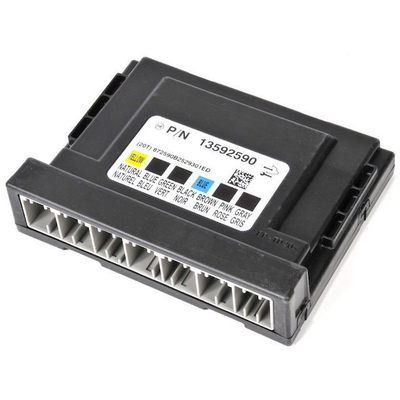
Below are the parts most often responsible for code B2006, ranked by how frequently each one is the actual culprit (per the diagnosis above). Tap any to see what we have for your vehicle.



The information in this article is provided for general reference and educational purposes only. Vehicle specifications, procedures, and part compatibility can vary by production date, trim level, and region. Always consult your vehicle's factory service manual and verify part numbers before purchasing or performing repairs. Safety-critical components such as airbags, seat belts, and braking systems should be installed by a qualified professional.
- 🎬 Helpful Videos
- 🛍️ Shop This Part
- What Does B2006 Mean?
- Can I Drive With B2006?
- Common Causes
- Symptoms
- Common Fixes & Costs
- Used vs. New Parts: Buying Guide
- Cost of Not Fixing It
- Diagnosis Steps
- When This Code Triggers (Freeze-Frame Conditions)
- Related Codes
- Climate & Environmental Factors
- How to Clear the Code After You Fix It
- Will This Fail Emissions / State Inspection?
- Most Commonly Affected Vehicles
- Manufacturer-Specific Notes
- Frequently Asked Questions
- Can a bad battery cause a B2006 code?
- Is it expensive to fix a B2006 code?
- What is a Body Control Module (BCM)?
- Can I replace the BCM myself?
- Will clearing the code fix the problem?
- What are common misdiagnosis pitfalls for B2006?
- My scanner shows B2006 but no specific definition. What should I do?
- Why do my power seats move one way but not the other?
- Key Takeaways
- 🎟️ Get 5% Off