

OBD-II Code B2049: Manufacturer-Specific Body Control Fault
What B2049 means, why it triggers, and how to fix it on your vehicle
- Look up your vehicle's specific B2049 definition first, as it means 'Short to Ground' on a Ford F-150 but 'Door Latch Error' on a Honda Odyssey.
- Inspect the wiring harness in high-movement areas like door jambs and under seats, as broken wires cause over 50% of B2049 faults.
- Test the specific component directly with a 12V jumper wire or multimeter before spending $300+ on a replacement control module.
- Perform a parasitic draw test if your battery dies overnight, as a B2049 short-to-ground fault routinely pulls over 100mA and destroys batteries within months.
What Does B2049 Mean?
B2049 is a manufacturer-specific Body Control Module (BCM) code pointing to a non-engine system failure. On a Ford, it indicates a shorted circuit or open turn signal. On a Honda or GM, it flags a failed power sliding door or power seat motor.
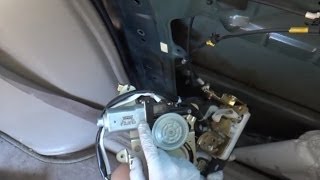
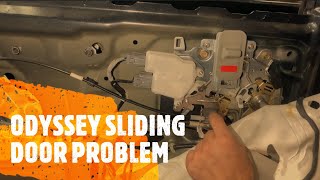
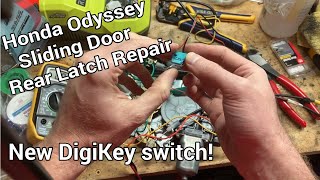
Technical definition: There is no universal SAE/ISO definition for B2049. The meaning is assigned by the vehicle manufacturer. Common definitions include: * **Ford (F-150):** Device Power #1 Circuit Short to Ground. * **Ford (Explorer) / Mazda:** RL (Rear Left) Turn Lamp Circuit Open. * **General Motors (GM):** RF/Passenger seat motor #8 (head restraint vertical) circuit open. * **Honda:** Left Power Sliding Door Lower Latch Release Switch Signal Input Error. 🎬 Watch: How to replace the Honda sliding door release actuator. * **Audi/Volkswagen:** Internal Control Module Fault (often paired with B200049, related to the digital instrument cluster). * **Chrysler/Jeep/Dodge:** Front Wiper On/Off Relay Control Circuit.
Can I Drive With B2049?
Yes, But With Caution. You can drive, but specific risks depend on the fault. A dead turn signal risks a traffic ticket or accident. A short-to-ground fault (common in Fords) causes a parasitic battery drain, leaving you stranded or risking an electrical fire. Address the issue promptly to restore functionality and prevent further electrical damage.
Common Causes
- Wiring or Connector Damage (Very Common) — Frayed, corroded, or disconnected wires in high-movement areas (door harnesses, under seats) cause most B2049 codes. Corroded ground points also create open circuits.
- Faulty Component (Switch, Latch, or Motor) (Common) — The specific part named in the code definition (power seat motor, door latch switch, turn signal bulb) has failed internally.
- Blown Fuse or Faulty Fuse Box (SJB) (Less Common) — A fuse blew due to a short circuit. In Fords, the internal circuitry of the Smart Junction Box (SJB) frequently fails, causing a permanent short-to-ground.
- Failed Control Module (Less Common) — The Body Control Module (BCM) or Instrument Cluster has an internal hardware failure. Suspect this only after ruling out wiring and component issues.
- Water Intrusion (Uncommon) — Water leaking into the cabin damages control modules and wiring. Ford windshield leaks routinely destroy the SJB, and Honda body seam leaks damage tailgate modules.
- Faulty ABS Wheel Speed Sensor (Rare) — On Honda Odysseys, a failed ABS sensor tricks the BCM into thinking the van is moving, disabling the power sliding doors and triggering a body code.
- Improper Aftermarket Modifications (Rare) — Incorrectly wired aftermarket lighting or remote starters disrupt the CAN bus network, causing voltage drops and shorts.
Symptoms
- Inoperative Body Feature — A specific feature stops working entirely (e.g., power sliding door won't open, turn signal won't flash).
- Warning Light on Dash — A specific error message appears, such as a sliding door warning or a completely blank digital instrument cluster.
- Audible Clicking or Burning Smell — Repeated clicking from a relay, or a burning plastic smell from melting wire insulation due to a severe short circuit.
- Parasitic Battery Drain (also visible on scanner) — A short circuit draws several hundred milliamps while parked, killing the battery overnight.
Diagnostic Flowchart
Tap your situation to follow the diagnostic path that matches what you're seeing on this code.
Common Fixes & Costs
- Repairing Damaged Wiring — Parts: $5-$20, Labor: $150-$300, ~1.5 hr book time (Intermediate)
- Replacing a Faulty Door Latch/Switch Assembly (Honda) — Parts: $150-$250, Labor: $150-$300, ~2.0 hr book time (Intermediate)
- Replacing a Power Seat Motor or Module (GM) — Parts: $165-$211, Labor: $108-$175, ~1.2 hr book time (Intermediate)
- Replacing a Failed Smart Junction Box (Ford) — Parts: $300-$500, Labor: $200-$400, ~2.5 hr book time (Professional)
- Replacing a Failed Instrument Cluster (Audi/VW) — Parts: $1200-$2500, Labor: $200-$400, ~2.0 hr book time (Professional)
DIY vs Professional
- Repairing Damaged Wiring — Beginner: no
Tools: Multimeter, wire strippers, wire cutters, butt connectors, heat shrink tubing, flashlight. - Replacing a Faulty Door Latch/Switch Assembly (Honda) — Beginner: no
Tools: Socket set, screwdrivers, plastic trim removal tools, pick tools. - Replacing a Failed Smart Junction Box (Ford) — Beginner: no
Tools: Socket set, screwdrivers, dealer-level scan tool. - Replacing a Failed Instrument Cluster (Audi/VW) — Beginner: no
Tools: Trim removal tools, Torx drivers, OBD-II diagnostic tool with security access.
Used vs. New Parts: Buying Guide
When a used part is worth it: Buy used for simple motors, switches, or wiring harnesses from low-mileage vehicles. Avoid used control modules (BCM, SJB, clusters) unless you have a plan for professional dealer-level programming.
Donor-vehicle mileage cap: roughly under 100000 miles for the part to have meaningful remaining life.
Donor quality checklist:
- Verify the exact part number on the component itself.
- Avoid parts from flood-damaged or rust-belt vehicles.
- Confirm if the module requires VIN programming before purchasing.
Decision logic:
- If The part is a simple switch, motor, or latch and a new OEM part exceeds $200 → Buy a used part to save money.
- If The part is a complex control module (BCM, SJB, Instrument Cluster) → Buy a new part or use a professional repair service for your original unit to avoid programming nightmares.
- If The fault is an internal module failure (like Audi B200049) → Send your original module to a specialized electronics repair service.
Warranty tradeoff: Used parts carry a 30-90 day part-only warranty. New aftermarket parts offer 1-year to lifetime warranties. New OEM parts include a 1-2 year warranty.
Worst-case if a used part fails: 400-800. Installing an incorrect or unprogrammed used module requires paying for diagnostic and labor costs twice.
What Happens If You Wait — Timeline
- 0-2 weeks: A short-to-ground fault creates a parasitic draw of 100-300mA. The battery seems weak on cold mornings. (MPG impact: 0%% · Added cost: $0)
- 2 weeks - 3 months: Constant drain discharges the battery below 50%, causing permanent sulfation. The vehicle requires daily jump-starts. (MPG impact: 0%% · Added cost: $150 - $350 (New battery required))
- 3-6 months: The short circuit generates heat, melting wire insulation and risking damage to adjacent circuits. (MPG impact: 0%% · Added cost: $500 - $900 (Wiring harness repair))
- 6+ months: Melted wiring shorts against critical power lines or destroys the control module, causing multiple system failures or a fire risk. (MPG impact: N/A (Vehicle disabled)% · Added cost: $1500 - $3000+ (Module and harness replacement))
Cost of Not Fixing It
- Immediate: Loss of function for the affected component. A dead turn signal or wiper motor creates a severe safety hazard and risks a traffic ticket. (Added cost: 0 - $250 (traffic ticket))
- 1-3 months: A short-to-ground fault permanently damages the battery via sulfation, requiring premature replacement. (Added cost: $150 - $350 (new battery))
- 3+ months: An unfused short circuit overheats wiring, melting insulation and destroying adjacent circuits or the BCM itself. (Added cost: $500 - $2000+ (BCM and harness replacement))
Diagnosis Steps
- Identify Your Vehicle's Specific Code Definition
Use a search engine or repair manual to find the exact definition for your vehicle's make, model, and year. Diagnosis is impossible without knowing which specific circuit the BCM is flagging.
Tools: Internet access or vehicle-specific service manual (Beginner) - Check for Blown Fuses
Locate the fuse related to the faulty component (e.g., 'Power Door,' 'Turn Signal'). Visually inspect and replace it if blown. If the new fuse blows immediately, you have a hard short circuit.
Tools: Owner's manual, fuse puller or needle-nose pliers (Beginner) - Perform a Visual Inspection
Inspect the wiring and connectors associated with the faulty component. Look for chafed wires, melted plastic, or corrosion in high-stress areas like door jambs or under seats.
Tools: Flashlight (Beginner) - Test the Component Directly
If wiring looks intact, test the component. For a motor, use jumper wires to apply 12V and ground directly from the battery. If the motor doesn't run, replace it. For a switch, use a multimeter in continuity mode; it should beep when actuated.
Tools: Jumper wires, digital multimeter (Intermediate) - Pro Tip: Test for 'Circuit Open' Faults
For 'Circuit Open' codes, set a multimeter to DC Volts. With the ignition on and the component activated, probe the power wire at the connector. A 0V reading means an open power wire. If you have 12V+, check the ground wire for continuity to the chassis. An OL (Over Limit) reading indicates a bad ground.
Tools: Digital multimeter, vehicle wiring diagram (Advanced) - Pro Tip: Test for 'Short to Ground' Faults
For 'Short to Ground' codes, disconnect the battery. Set your multimeter to Ohms. Disconnect the harness from the suspected component. Probe the power wire and a clean chassis ground. A reading under 5 ohms confirms a short to ground. Disconnect connectors along the circuit until the low resistance disappears to isolate the short.
Tools: Digital multimeter, vehicle wiring diagram (Advanced) - Pro Tip: Measure Parasitic Draw
If a short causes a dead battery, perform a parasitic draw test. Let the vehicle sit for 30 minutes. Connect a multimeter in series between the negative battery cable and post. A reading above 85 milliamps indicates a fault. Pull fuses one by one until the amperage drops to pinpoint the circuit.
Tools: Digital multimeter with 10A+ capability (Advanced) - Test the Switch or Control Input
Verify the switch controlling the component works. Check for voltage or continuity through the switch when pressed. A faulty switch fails to send the activation signal to the BCM.
Tools: Digital multimeter (Advanced) - Isolate the Control Module
If all wiring, fuses, and components test good, the control module (BCM, SJB) has failed internally. Double-check all power and ground connections to the module itself before replacing it, as a bad module ground mimics an internal failure.
Tools: Digital multimeter, vehicle wiring diagram, advanced scan tool (Professional)
When This Code Triggers (Freeze-Frame Conditions)
- System Voltage: 12.0V - 14.8V (The BCM logs faults when voltage is within the normal operating range; it sets different codes for low/high voltage conditions.)
- Component Status: Commanded ON (The fault logs at the exact moment the BCM attempts to activate a component (e.g., pressing the turn signal stalk or power seat switch).)
- Vehicle Speed: 0 MPH (Many body-related faults set when the vehicle is stationary, either during a startup self-test or when a feature is activated before driving.)
- Module Uptime: > 2 seconds (The code sets after the BCM completes its initialization sequence shortly after the vehicle powers on.)
Related Codes
- B200049 — On Audi/VW, this means 'Internal Electronic Failure'. Seeing B2049 and B200049 together confirms the control module (usually the instrument cluster) requires replacement or professional repair.
- C-Codes (e.g., C0037) — On a Honda Odyssey, a faulty ABS wheel speed sensor (C-code) causes the BCM to disable the power sliding doors for safety, triggering B2049 as a side effect. Fix the ABS sensor first.
- U-codes (e.g., U0140) — U-codes indicate communication loss. U0140 ('Lost Communication with BCM') alongside B2049 means the entire BCM is offline, a much more severe problem than a single circuit fault.
- B1352 — On Fords, this 'Ignition Key-In Circuit Failure' code appears alongside B2049 if the Smart Junction Box fails internally.
Climate & Environmental Factors
- Cold Weather: Low temperatures make plastic connectors brittle and stiffen motor lubricants, increasing the current required to operate power seats or doors, which trips faults.
- Humidity and Moisture: Water intrusion from rain or car washes corrodes connectors and fuse boxes. Ford SJBs are highly vulnerable to windshield leaks.
- Road Salt (Winter Climates): Corrosive salt brine splashes into the undercarriage, accelerating corrosion on wiring harnesses and ground straps, causing open circuits.
How to Talk to a Mechanic About This Code
Say this: "I have a [Make/Model] with a B2049 code. My research indicates this means [specific definition, e.g., 'a short to ground in the Smart Junction Box']. Please start by checking the specific wiring and component related to that definition."
Directs the technician to the most probable cause, saving diagnostic time and preventing them from replacing an expensive module before verifying a simple wiring failure.
Avoid saying:
- 'Just fix whatever's wrong'
- 'My car is acting weird, can you look at it?'
- 'I don't know anything about cars.'
Questions to ask before authorizing the repair:
- Can you confirm you've tested the wiring harness for continuity and shorts before condemning the module?
- Does the replacement module require programming, and is that cost included in the estimate?
- Can you show me the damaged wire or failed component?
- What is the warranty on the parts and labor?
Where to Take It: Dealer vs Independent vs Chain
- Dealer:
Best for: Vehicles under warranty., Complex module replacements requiring VIN programming and security adaptation (Ford SJB, Audi Cluster).
Downsides: Highest labor rates., Defaults to replacing entire module assemblies instead of repairing wiring. (Typical cost: +50% vs. baseline) - Independent Shop:
Best for most B2049 scenarios. Verify they can program your specific vehicle's make before authorizing module replacement.
Best for: Out-of-warranty vehicles with wiring or mechanical component faults., Diagnosing parasitic battery drains.
Downsides: May lack expensive tools to program new control modules for all brands. (Typical cost: +0% vs. baseline) - Chain Shop:
AVOID. This code requires specialized electrical troubleshooting.
Best for: Simple maintenance like oil changes or tires.
Downsides: Technicians lack specialized electrical diagnostic training., High risk of misdiagnosis and unnecessary part replacement. (Typical cost: -10% vs. baseline)
When to Walk Away From the Repair
If the estimated repair cost exceeds 50% of your car's private-party market value, consider selling or trading it in.
- Car worth $4000, fix is $2500: Walk away. A new Audi instrument cluster replacement exceeds 60% of the car's value.
- Car worth $15000, fix is $700: Fix it. A wiring repair or door latch replacement restores full function to a valuable vehicle.
- Car worth $2500, fix is $1500: Walk away. A $1,500 repair on a $2,500 car is a poor investment.
What Scan Tool You Need for This Code
Minimum: A scanner that reads manufacturer-specific Body ('B') codes. Basic Powertrain ('P') readers are insufficient.
A $20 code reader reports 'No Codes Found' even when B2049 is active in the BCM.
Budget: BlueDriver Pro Scan Tool (~$100) — Reads and clears B-codes via smartphone, views live data from body sensors, and retrieves freeze-frame data.
Mid-range: Foxwell NT510 Elite / Autel MaxiCOM MK808S (~$180-380) — Offers bidirectional controls to command components on/off, confirming if the motor or the wiring is bad.
Professional: Autel MaxiSys MS906 Pro / Launch X431 Series (~$1200+) — Provides full bidirectional control, advanced coding, and programming functions for replacing modules like the BCM or SJB.
Rent vs buy: AutoZone's loan-a-tool program offers B-code capable scanners for a refundable deposit. Buy a tool if you diagnose vehicles more than once a year.
How to Clear the Code After You Fix It
- Fix the underlying electrical fault.
- Use a compatible OBD-II scan tool to clear the 'B' code from the Body Control Module.
- Cycle the ignition and operate the repaired component to confirm the fix.
Drive cycle (~5 minutes): A drive cycle is not required. The BCM runs a self-test immediately upon startup or when the component is activated. If the code does not return immediately, the repair is successful.
Watch out for:
- The code returns instantly if the root electrical problem (short, open, faulty part) remains.
- Basic $20 OBD-II readers cannot see or clear 'B' (Body) codes.
- Disconnecting the battery clears the code temporarily but resets radio presets and seat memory.
Will This Fail Emissions / State Inspection?
No — by itself this code doesn't fail OBD inspection (but it can keep readiness monitors from setting, which causes a separate fail).
- California: B2049 does not cause a smog check failure. Inspections only fail vehicles for active Check Engine Lights and emissions-related 'P' codes.
- New York: If B2049 disables safety equipment like turn signals or wipers, you will fail the safety inspection portion, but pass the emissions test.
- Texas: Texas fails vehicles if the Check Engine Light is on. While B2049 rarely illuminates the CEL, if it does, the vehicle fails.
Most Commonly Affected Vehicles
- Honda Odyssey (2018-2022) — B2049 frequently flags a faulty left power sliding door latch switch or wiring. 2018-2020 models have a warranty extension (21-013) for MOST bus network connectors causing similar issues.
- Ford F-150 (2009-2014) — Indicates 'Device Power #1 Circuit Short to Ground,' traced to an internal failure in the Smart Junction Box (SJB) caused by windshield water leaks.
- Ford Explorer (2006-2010) — Indicates an open circuit for the Rear Left (RL) turn lamp, pointing to a bad bulb or taillight wiring issue.
- General Motors Chevrolet Traverse, GMC Acadia (2010-2018) — Indicates an open circuit for a specific minor motor, such as the passenger head restraint motor. The switch or under-seat wiring is usually at fault.
- Audi / Volkswagen A4, A5, Q5, Golf, Tiguan (2016-2021) — Paired with code B200049, indicating an internal electronic failure of the digital instrument cluster (Virtual Cockpit). Audi issued TSB 90 21 29 for this.
- Mazda Mazda3, Mazda6 (2005-2015) — Defined as 'Left Rear Turn Lamp Circuit Open,' pointing to a burnt-out bulb, socket corrosion, or a broken wire near the trunk hinge.
- Nissan Various (e.g., Rogue, Note, Navara) (2010-2020) — IMPORTANT: An airbag light on a Nissan is almost always code B1049 (failed clock spring), not B2049. Always double-check the code.
- Chrysler / Dodge / Jeep Various (e.g., Grand Cherokee, Ram 1500) (2011-2018) — Points to a fault in the 'Front Wiper On/Off Relay Control Circuit,' indicating a problem with the wiper motor, relay, or wiring.
Manufacturer-Specific Notes
- Ford: The code points to the Smart Junction Box (SJB). An internal short requires replacing the entire SJB, which must be programmed to the vehicle's VIN.
- Honda: On Odysseys, this code relates exclusively to power sliding doors. Honda issued TSB 20-049 and warranty extension 21-013 for related network connection problems.
- General Motors: GM uses this code for highly specific functions, like a single passenger seat headrest motor. Diagnosis requires a scan tool capable of reading GM-specific live data.
- Audi / Volkswagen: When paired with B200049, this code means the digital instrument cluster failed. TSB 90 21 29 advises replacing the virtual cockpit assembly on pre-2021 vehicles.
Real Owner Stories
2013 Ford F-150 with ~110k miles, battery dies overnight
The truck battery died multiple mornings. A scan tool revealed code B2049: Device Power #1 Circuit Short to Ground.
Outcome: Traced the issue to water leaking from the windshield cowl onto the SJB, causing an internal short. Replaced the SJB with a used unit for $150 and sealed the cowl leak. The code did not return.
Lesson: On Fords, a B2049 code with a parasitic drain strongly points to a failed SJB caused by water intrusion. Fix the leak, not just the module.
2019 Honda Odyssey, left power sliding door inoperative
The driver-side power sliding door unlatched but stopped moving, displaying a 'Sliding Door Problem' message. A scan showed code B2049.
Outcome: Removed the latch, cleaned it with electrical contact cleaner, and re-lubricated it with white lithium grease. The door functioned normally, saving $400 on a new assembly.
Lesson: Honda Odyssey power door issues are often mechanical binding or dirty switches. Thorough cleaning and lubrication saves hundreds of dollars.
2018 Audi A4 with 50k miles, digital dash goes blank
The Virtual Cockpit intermittently went black. The dealership pulled codes B2049 (Internal Control Module Fault) and B200049 (Internal Electronic Failure).
Outcome: The dealer quoted $2,500 for a new cluster. The owner mailed the original cluster to a third-party electronics repair service, which repaired the circuit board for $400. No reprogramming was needed.
Lesson: B2049 paired with B200049 confirms instrument cluster failure. Professional repair of your original module is vastly cheaper than dealer replacement.
2012 Mazda 3, left turn signal not working
The left rear turn signal failed, and the front signal hyperflashed. A scan showed B2049: Left Rear Turn Lamp Circuit Open.
Outcome: Traced the wiring from the taillight and found a broken wire near the trunk hinge. Repaired the wire with a butt connector and heat shrink tubing, restoring function.
Lesson: A 'Circuit Open' code means electricity isn't completing its path. If a new bulb fails, trace the wiring backward, focusing on areas that bend.
How to Prevent This Code From Triggering
- Clean and lubricate mechanical components (Every 1-2 years) — Prevents door latches (like on the Honda Odyssey) from sticking due to dirty grease, which strains the motor and triggers faults.
- Apply dielectric grease to key electrical connectors (When servicing exposed connectors) — Seals electrical contacts from moisture, preventing the corrosion that leads to 'circuit open' or 'short to ground' faults.
- Clear cowl and sunroof drains (Annually) — Prevents water from overflowing into the cabin and dripping onto sensitive electronics like the Ford Smart Junction Box.
- Inspect battery terminals and ground straps (Every oil change) — Clean, tight grounds ensure stable voltage, preventing intermittent electronic glitches.
- Avoid improper aftermarket installations (During any modification) — Using fused circuits and proper wiring techniques prevents damaging sensitive control modules.
Frequently Asked Questions
Can I fix a B2049 code myself?
Yes, if the problem is a blown fuse, bad bulb, or simple wiring break. Replacing a door latch is a DIY job for intermediate mechanics. However, replacing a control module requires professional programming.
What are the most common misdiagnosis mistakes for B2049?
The biggest mistake is replacing expensive components before performing a thorough wiring diagnosis. Wiring harnesses in doors or seats frequently break due to constant movement. A single broken wire costs much less to repair than a new motor.
My scanner shows a 'history' code but there are no symptoms. Do I need to fix it?
A history code means the fault occurred in the past but is not currently active. It often results from a temporary glitch or low battery event. Clear the code; if it does not return and there are no symptoms, no repair is needed.
My Nissan has an airbag light, is it a B2049 code?
You likely have code B1049, not B2049. On Nissans, B1049 indicates an open circuit in the driver's airbag, usually caused by a failed clock spring. Double-check the code number, as B1049 and B2049 are easily confused.
Why doesn't my cheap OBD-II scanner show B-codes?
Basic code readers only read 'P' (Powertrain) codes related to the engine and emissions. 'B' (Body), 'C' (Chassis), and 'U' (Network) codes require an advanced scan tool. You need a scanner that communicates with the Body Control Module.
Will clearing the code make it go away?
No. If the underlying electrical fault (short, open, or broken part) still exists, the code returns immediately upon the next system self-test.
How much does it cost to diagnose a B2049 code?
A professional shop typically charges a diagnostic fee of $100 to $200. This covers the technician's time to trace the specific circuit. Shops often credit this fee toward the final repair cost if you authorize the work.
Can a bad battery cause a B2049 code?
Low system voltage during cranking causes electronic modules to set erroneous communication codes. A bad battery won't directly cause a hard 'circuit open' fault, but it triggers false flags. Always test the battery and charging system first if you have multiple unrelated codes.
Key Takeaways
- Look up your vehicle's specific B2049 definition first, as it means 'Short to Ground' on a Ford F-150 but 'Door Latch Error' on a Honda Odyssey.
- Inspect the wiring harness in high-movement areas like door jambs and under seats, as broken wires cause over 50% of B2049 faults.
- Test the specific component directly with a 12V jumper wire or multimeter before spending $300+ on a replacement control module.
- Perform a parasitic draw test if your battery dies overnight, as a B2049 short-to-ground fault routinely pulls over 100mA and destroys batteries within months.
Helpful Videos

Shop the Parts Behind B2049
Below are the parts most often responsible for code B2049, ranked by how frequently each one is the actual culprit (per the diagnosis above). Tap any to see what we have for your vehicle.


The information in this article is provided for general reference and educational purposes only. Vehicle specifications, procedures, and part compatibility can vary by production date, trim level, and region. Always consult your vehicle's factory service manual and verify part numbers before purchasing or performing repairs. Safety-critical components such as airbags, seat belts, and braking systems should be installed by a qualified professional.
- 🧭 Diagnostic Flowchart
- 🎬 Helpful Videos
- 🛍️ Shop This Part
- What Does B2049 Mean?
- Can I Drive With B2049?
- Common Causes
- Symptoms
- Common Fixes & Costs
- DIY vs Professional
- Used vs. New Parts: Buying Guide
- What Happens If You Wait — Timeline
- Cost of Not Fixing It
- Diagnosis Steps
- When This Code Triggers (Freeze-Frame Conditions)
- Related Codes
- Climate & Environmental Factors
- How to Talk to a Mechanic About This Code
- Where to Take It: Dealer vs Independent vs Chain
- When to Walk Away From the Repair
- What Scan Tool You Need for This Code
- How to Clear the Code After You Fix It
- Will This Fail Emissions / State Inspection?
- Most Commonly Affected Vehicles
- Manufacturer-Specific Notes
- Real Owner Stories
- 2013 Ford F-150 with ~110k miles, battery dies overnight
- 2019 Honda Odyssey, left power sliding door inoperative
- 2018 Audi A4 with 50k miles, digital dash goes blank
- 2012 Mazda 3, left turn signal not working
- How to Prevent This Code From Triggering
- Frequently Asked Questions
- Can I fix a B2049 code myself?
- What are the most common misdiagnosis mistakes for B2049?
- My scanner shows a 'history' code but there are no symptoms. Do I need to fix it?
- My Nissan has an airbag light, is it a B2049 code?
- Why doesn't my cheap OBD-II scanner show B-codes?
- Will clearing the code make it go away?
- How much does it cost to diagnose a B2049 code?
- Can a bad battery cause a B2049 code?
- Key Takeaways
- 🎟️ Get 5% Off