

OBD-II Code P2070: Intake Manifold Tuning (IMT) Valve Stuck Open
What P2070 means, why it triggers, and how to fix it. Note: This guide addresses the common P2070 code, as B2070 is a rare, manufacturer-specific code.
- Code P2070 indicates a stuck-open Intake Manifold Tuning (IMT) valve, while B2070 is a rare, unrelated Nissan body code requiring no action.
- Inspect the plastic actuator linkage bushing first, as this $15 part breaks frequently and causes a large percentage of P2070 failures.
- Driving with a stuck-open IMT valve reduces fuel economy by 5-10% and causes sluggish acceleration below 3,000 RPM.
- Ignoring this code for over 6 months risks overheating the catalytic converter due to a lean air/fuel mixture, turning a $100 repair into a $1,500 replacement.
What Does B2070 Mean?
The engine's Intake Manifold Tuning (IMT) valve opens and closes to optimize airflow for power and fuel economy. Code P2070 means the engine computer (PCM) commanded the valve to close, but the position sensor reports it is stuck open. This floods the engine with unmetered air at lower RPMs, crippling low-end performance.
Technical definition: SAE/OBD-II code P2070 indicates the Powertrain Control Module (PCM) detected the Intake Manifold Tuning (IMT) Valve for engine bank 1 remained open when commanded closed. The PCM verifies this using a dedicated position sensor on the IMT valve actuator.
Can I Drive With B2070?
Yes, But With Caution. Yes, but performance suffers and long-distance driving risks catalytic converter damage. The engine runs with reduced power, poor acceleration, and consumes 5-10% more fuel. Driving over 500 miles with the resulting lean air/fuel mixture overheats the catalytic converter, turning a minor repair into a $1,500 replacement.
Common Causes
- Broken Actuator Linkage Bushing (Very Common) — A plastic bushing connects the actuator rod to the valve arm. Engine heat makes this plastic brittle, causing it to snap or pop off. This disconnects the actuator, leaving the valve stuck open. This is the most frequent and cheapest failure point.
- Carbon and Sludge Buildup (Very Common) — Oil vapors from the PCV system bake into hard carbon deposits inside the intake manifold. This buildup physically jams the IMT valve or runner flaps, preventing them from closing regardless of actuator pressure.
- Failed IMT Valve Actuator (Common) — The electric motor or vacuum diaphragm inside the IMT actuator burns out or tears. Without a functioning actuator, the valve remains stuck in its default open position.
- Vacuum Leak (Audi/VW specific) (Less Common) — On vacuum-controlled systems, a cracked hose or a failed control solenoid (like the N156 valve) cuts off the vacuum supply required to pull the IMT valve closed.
- Faulty Position Sensor (Less Common) — The sensor reporting the valve's position to the PCM fails. The valve moves correctly, but the sensor sends a false 'stuck open' signal, triggering the code.
- Wiring or Connector Damage (Rare) — Engine heat, vibration, or rodents damage the electrical harness going to the IMT actuator, causing an open circuit or short to ground.
- Powertrain Control Module (PCM) Fault (Very Rare) — A burnt driver circuit within the PCM fails to send the ground signal required to activate the IMT actuator.
Symptoms
- Sluggish Acceleration — The vehicle feels heavy and struggles to accelerate. This power loss is highly noticeable when passing or climbing hills below 3,000 RPM.
- Rough or Unstable Idle — At a stoplight, the engine speed fluctuates or shakes because the stuck-open valve allows too much air into the intake manifold.
- Decreased Fuel Economy — Fuel efficiency drops by 5-10% because the PCM injects extra fuel to compensate for the unmetered air entering the engine.
- Check Engine Light is On (also visible on scanner) — The Malfunction Indicator Lamp (MIL) illuminates immediately after the PCM detects the stuck valve during two consecutive drive cycles.
Diagnostic Flowchart
Tap your situation to follow the diagnostic path that matches what you're seeing on this code.
Common Fixes & Costs
- Replace Broken Actuator Linkage Bushing — Parts: $5-$30, Labor: $50-$150, ~0.5 hr book time (DIY)
- Replace IMT Valve Actuator — Parts: $75-$250, Labor: $100-$200, ~1.2 hr book time (Intermediate)
- Clean Intake Manifold and Valve Assembly — Parts: $20-$50, Labor: $300-$600, ~3.5 hr book time (Professional)
- Replace Intake Manifold Assembly — Parts: $300-$800, Labor: $250-$450, ~2.8 hr book time (Professional)
- Repair Damaged Wiring — Parts: $10-$50, Labor: $100-$300, ~1.5 hr book time (Intermediate)
Used vs. New Parts: Buying Guide
When a used part is worth it: Buy a used intake manifold assembly only if your vehicle is over 10 years old and the donor part comes from a low-mileage, collision-totaled vehicle.
Donor-vehicle mileage cap: roughly under 80000 miles for the part to have meaningful remaining life.
Donor quality checklist:
- Verify the OEM part number matches exactly.
- Inspect the plastic manifold seams for hairline cracks.
- Ensure the linkage arm snaps back firmly when pushed by hand.
- Reject any manifold with heavy black sludge visible inside the ports.
Decision logic:
- If The failure is a broken linkage bushing or vacuum solenoid → Buy new. The $20 savings is not worth the risk of a used plastic part snapping immediately.
- If The entire intake manifold assembly requires replacement → A used OEM part saves $300-$500 and is a smart choice for older vehicles.
- If An aftermarket redesigned part exists (e.g., metal linkage replacing plastic) → Buy the new aftermarket part to permanently solve the factory design flaw.
Warranty tradeoff: Used manifolds carry a 30-day parts-only warranty. New aftermarket manifolds offer 1-year to lifetime warranties.
Worst-case if a used part fails: $400 if a used manifold leaks vacuum, requiring you to pay labor twice.
What Happens If You Wait — Timeline
- 0-1 month: Check Engine Light illuminates. Driver notices slight hesitation from a stop. (MPG impact: 0-5%% · Added cost: $0)
- 1-3 months: Sluggish acceleration and rough idle become constant. Fuel economy drops noticeably. (MPG impact: 5-10%% · Added cost: $50 in wasted fuel.)
- 3-6 months: The lean air/fuel mixture puts severe thermal stress on the catalytic converter. (MPG impact: 10-15%% · Added cost: $500 (Early catalytic converter degradation).)
- 6+ months: The catalytic converter substrate melts from constant overheating, blocking the exhaust. (MPG impact: 15-25%% · Added cost: $1500+ (Full catalytic converter replacement required).)
Cost of Not Fixing It
- 0-1 month: Noticeable 5-10% decrease in fuel economy and sluggish acceleration. (Added cost: $20-$50 per month in wasted fuel.)
- 1-6 months: The persistent lean air/fuel mixture overheats the catalytic converter substrate. (Added cost: $1000-$2500 for catalytic converter replacement.)
- 6+ months: Severe carbon buildup spreads to intake valves and pistons, causing misfires. (Added cost: $600-$1500 for engine decarbonization services.)
Diagnosis Steps
- Scan Codes and Review Freeze Frame
Use an OBD-II scanner to confirm P2070. Check for related codes like P0171 (System Too Lean). Review freeze frame data to identify the exact RPM and engine load when the fault occurred.
Tools: OBD-II Scanner (Beginner) - Visual Inspection of Linkage
Locate the IMT actuator on the side of the intake manifold. Inspect the plastic linkage rod and bushings connecting the actuator to the manifold arm. If the arm is dangling or a bushing is missing, you found the problem.
Tools: Flashlight (Beginner) - Manual Valve Test
With the engine off, push the IMT valve linkage arm by hand. It must move smoothly against spring tension and snap back. If it feels gritty or refuses to move, the internal flaps are jammed with carbon.
Tools: None (Intermediate) - Command Actuator via Scan Tool
Use a bidirectional scan tool to command the IMT valve open and closed. Watch the linkage arm. If the scan tool says 'Commanded ON' but the arm does not move (and moves freely by hand), the actuator is dead.
Tools: Bidirectional Scan Tool (Advanced) - Verify Power and Ground
Disconnect the actuator harness. Turn the ignition ON. Use a multimeter to verify 12V on the power pin and continuity to ground on the ground pin. Missing voltage indicates a wiring or fuse issue.
Tools: Multimeter, Wiring Diagram (Intermediate) - Internal Manifold Inspection
If the actuator works and the linkage is intact, remove the intake manifold. Inspect the internal runner flaps for heavy carbon buildup or physical breakage requiring manifold replacement.
Tools: Mechanic's Tool Set (Professional)
When This Code Triggers (Freeze-Frame Conditions)
- Engine Coolant Temp: 180-210°F (Engine at normal operating temperature.)
- RPM: 1000-3600 RPM (During light acceleration or steady cruising.)
- Engine Load: 25-50% (Moderate engine load, rarely during heavy wide-open throttle.)
- Vehicle Speed: 25-60 mph (Standard city or highway driving speeds.)
Related Codes
- P2006 — Intake Manifold Runner Control Stuck Closed. The exact opposite of P2070. P2006 causes a severe lack of power at high RPMs, while P2070 causes rough idle and poor low-end power.
- P0171 — System Too Lean (Bank 1). The stuck-open IMT valve allows unmetered air into the engine. Fixing the mechanical P2070 issue automatically resolves the P0171 lean code.
- P0101 — MAF Sensor Performance. The incorrect airflow from the stuck valve causes the MAF sensor to report implausible readings. Do not replace the MAF sensor until P2070 is fixed.
- P2078 — IMT Valve Position Sensor Circuit High. Points strictly to an electrical short in the sensor wiring, rather than a mechanical jam.
Climate & Environmental Factors
- Cold Weather / Short Trips: Short trips prevent the engine from burning off moisture. This moisture mixes with oil vapors to form thick sludge, accelerating carbon buildup that jams the IMT valve.
- High Humidity: Humid air drawn into the engine combines with blow-by gases, speeding up the accumulation of sticky deposits on intake runner flaps.
- Altitude: Altitude has no direct impact on P2070. The failure is strictly mechanical, electrical, or carbon-related.
How to Talk to a Mechanic About This Code
Say this: "I have code P2070 for a stuck-open intake manifold tuning valve. Please start by visually inspecting the actuator linkage for broken plastic, and manually test if the internal valve moves freely before quoting an electrical actuator replacement."
This proves you know the difference between a $15 broken bushing, a $400 carbon cleaning, and a $250 actuator. It forces the mechanic to check the cheapest mechanical failures first.
Avoid saying:
- 'My car is slow, check the transmission.'
- 'The scanner said I need a new intake manifold.'
- 'Just fix whatever is making it idle rough.'
Questions to ask before authorizing the repair:
- Did you physically check the linkage arm and bushing for damage?
- Does the valve move freely by hand, or is it jammed with carbon?
- If replacing the actuator, did you confirm it has 12V power and ground?
Where to Take It: Dealer vs Independent vs Chain
- Dealer:
Best for: Vehicles under powertrain warranty., GM 3.6L engines requiring specific TSB software updates.
Downsides: Charges 50% more for labor., Will likely quote a full $1,200 intake manifold replacement rather than a $15 bushing fix. (Typical cost: +50% vs. baseline) - Independent Shop:
The best choice. Independent shops are more willing to replace a cheap bushing or clean carbon rather than forcing a full manifold replacement.
Best for: Out-of-warranty vehicles., Replacing actuators or performing carbon cleaning (walnut blasting).
Downsides: Must verify they have bidirectional scan tools to properly test the actuator. (Typical cost: +0% vs. baseline) - Chain Shop:
Avoid. Chain shops lack the diagnostic depth required for intake manifold runner issues.
Best for: Reading the code for free.
Downsides: Lacks the advanced scan tools required to command the IMT valve., High risk of misdiagnosis leading to unnecessary parts replacement. (Typical cost: -10% vs. baseline)
When to Walk Away From the Repair
If the repair requires a full intake manifold replacement and costs more than 50% of the vehicle's Kelley Blue Book value, sell the car.
- Car worth $3000, fix is $1800: Walk away. The manifold replacement exceeds half the car's value.
- Car worth $10000, fix is $250: Fix it. Replacing the actuator restores performance for a fraction of the car's value.
What Scan Tool You Need for This Code
Minimum: A bidirectional scanner that can command the IMT valve to open and close.
A $20 code reader only gives you the P2070 code. It cannot command the actuator to move, which is the only way to definitively prove the electric motor is dead without removing parts.
Budget: BlueDriver Pro (~$120) — Reads the code and displays live data from the IMT position sensor to see if it responds to RPM changes. Lacks bidirectional control.
Mid-range: Foxwell NT510 Elite (~$180) — Provides bidirectional control. You can press a button on the scanner to command the IMT valve open. If it doesn't move, you instantly know the actuator or wiring is bad.
Professional: Autel MaxiCOM MK808 (~$500) — Offers full OE-level bidirectional control, live data graphing, and circuit testing capabilities to pinpoint PCM or wiring faults.
Rent vs buy: Buy the Foxwell NT510 if you plan to DIY. The $180 tool pays for itself by preventing you from buying a $250 actuator when the real problem is a $15 broken bushing.
How to Clear the Code After You Fix It
- Use an OBD-II scan tool to clear the P2070 code.
- Perform a complete OBD-II drive cycle to run the readiness monitors.
- Check for pending codes to confirm the repair holds.
Drive cycle (~20 minutes): Start the engine cold and idle for 3 minutes. Drive in stop-and-go city traffic (25-40 mph) for 10 minutes. Drive at a steady 55 mph on the highway for 5 minutes, then coast to a stop without braking.
Readiness monitors affected: Catalyst Monitor, Evaporative (EVAP) System Monitor, Oxygen (O2) Sensor Monitor
Before emissions retest: drive at least 50 miles to fully set monitors.
Watch out for:
- Clearing the code in the inspection station parking lot resets all monitors to 'incomplete', resulting in an automatic failure.
- Failing to include a highway cruising segment prevents the IMT monitor from running its self-test.
Will This Fail Emissions / State Inspection?
Yes — this code typically fails an OBD-II emissions inspection.
- California: An active Check Engine Light is an automatic smog check failure. All readiness monitors must read 'ready'.
- New York: Vehicles fail the annual safety/emissions inspection immediately if the MIL is commanded on.
- Texas: In emissions-testing counties, P2070 guarantees an OBD-II test failure.
Most Commonly Affected Vehicles
- Chevrolet / GMC / Buick Traverse, Acadia, Enclave (3.6L V6) (2009-2017) — Highly prone to actuator failure and internal carbon buildup. The actuator is located near the firewall and is difficult to access.
- Ford Focus, Fusion, Escape (2012-2018) — The plastic linkage arms and bushings connecting the actuator to the manifold snap frequently. Dorman makes an upgraded replacement bushing.
- Audi A4, A6, Q5 (3.2L V6) (2005-2009) — P2070 is almost always caused by a vacuum leak from a cracked hose or a failed N156 vacuum solenoid, rather than a bad actuator.
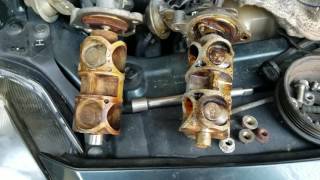
- Mazda RX-8 (2004-2011) — The Secondary Shutter Valve (SSV) sticks open due to heavy carbon buildup. Chemical cleaning rarely works; manual removal and cleaning is required.
- Chevrolet / Pontiac Uplander, G6 (3.9L V6) (2006-2009) — Known for IMT valve actuator failures. Sourcing the correct replacement part requires strict VIN verification.
Manufacturer-Specific Notes
- Audi/Volkswagen: On 3.2L engines, the IMT system is vacuum-operated. Always test the N156 vacuum solenoid and inspect plastic vacuum lines before assuming the actuator is bad.
- Nissan: Nissan triggers a specific B2070-68 code on models like the 2020 Sentra. This is a Body Control Module (BCM) code related to the Intelligent Key system. It clears itself and requires no repairs.
- General Motors (GM): GM issued TSB 16-NA-383 for 3.6L V6 engines outlining a decarbonizing procedure. Carbon buildup on intake valves directly causes the IMT flaps to bind and trigger P2070.
- Mazda (RX-8): The P2070 code refers to the Secondary Shutter Valve (SSV). The position sensor frequently fails independently of the valve, causing the code even when the valve is perfectly clean.
Real Owner Stories
2009 Audi A5 3.2L with rough idle
Check Engine Light illuminated with sluggish acceleration. Scanner showed P2070.
What they tried:
- Inspected vacuum lines and manually moved the intake flap, which felt normal.
- Replaced the N156 vacuum control solenoid valve (Pierburg 037906283C) based on forum advice.
Outcome: Replacing the $40 solenoid valve permanently resolved the code. The actuator was starved of vacuum, not broken.
Lesson: On vacuum-operated German engines, always replace the cheap control solenoid before the expensive actuator.
2013 Ford Focus 2.0L with power loss
Car struggled to pass on the highway. Code P2070 present.
What they tried:
- Looked at the side of the intake manifold and saw the actuator arm dangling freely.
Outcome: Purchased a Dorman 47099 bushing assortment for $10. Snapped the new bushing onto the linkage in 5 minutes. Code cleared and power returned.
Lesson: Always perform a visual inspection first. A $10 piece of plastic causes this code on thousands of Fords.
2004 Mazda RX-8 with 60K miles
Car felt weak in 5th gear. Code P2070 indicated a stuck Secondary Shutter Valve (SSV).
What they tried:
- Sprayed Sea Foam engine cleaner into the intake. The light cleared for two days but returned.
Outcome: The owner had to remove the intake manifold and manually scrub the SSV with a wire brush to remove baked-on carbon.
Lesson: Chemical sprays rarely fix severe carbon jams. Prepare for manual cleaning if you own a rotary or direct-injection engine.
How to Prevent This Code From Triggering
- Use a professional intake valve cleaner (Every 30,000 miles) — Dissolves light carbon buildup before it hardens and jams the IMT runner flaps.
- Inspect vacuum lines and linkage (Every oil change) — Catches brittle plastic bushings or cracked hoses before they snap and trigger the code.
- Replace PCV valve (Every 50,000 miles) — A healthy PCV system reduces the amount of oil vapor entering the intake manifold, starving carbon deposits of their fuel source.
Frequently Asked Questions
Is B2070 the same as P2070?
No. P2070 is an engine code indicating a stuck intake manifold valve. B2070 is a rare Body code (seen on some Nissans) relating to the keyless entry system and usually requires no action.
What happens if I ignore a P2070 code?
You will experience poor acceleration, waste money on gas, and fail emissions testing. Long-term, the lean air/fuel mixture overheats and destroys the catalytic converter.
Can I just clean the IMT valve myself?
Only if you have advanced mechanical skills. The valve is integrated into the intake manifold, requiring removal of fuel lines and sensors to access. Improper cleaning risks dropping carbon chunks into the engine cylinders.
How much does it cost to diagnose this code?
Shops charge a standard diagnostic fee between $100 and $165. This covers scanning the code, visually inspecting the linkage, and testing the actuator.
Could a bad battery cause this code?
No. A weak battery does not cause a P2070 code. This fault is strictly a mechanical jam or a dedicated electrical failure within the intake manifold tuning system.
What is the most common mistake when diagnosing P2070?
Replacing the expensive actuator without checking the plastic linkage first. Mechanics frequently miss a $15 broken bushing or fail to manually test if the internal valve is jammed with carbon.
The code came back as 'pending' after I fixed it. What does that mean?
The engine computer has not completed the specific drive cycle required to verify the repair. Drive the car at mixed city and highway speeds for 20 minutes to allow the system to run its self-test.
Key Takeaways
- Code P2070 indicates a stuck-open Intake Manifold Tuning (IMT) valve, while B2070 is a rare, unrelated Nissan body code requiring no action.
- Inspect the plastic actuator linkage bushing first, as this $15 part breaks frequently and causes a large percentage of P2070 failures.
- Driving with a stuck-open IMT valve reduces fuel economy by 5-10% and causes sluggish acceleration below 3,000 RPM.
- Ignoring this code for over 6 months risks overheating the catalytic converter due to a lean air/fuel mixture, turning a $100 repair into a $1,500 replacement.
Helpful Videos

Shop the Parts Behind B2070
Below are the parts most often responsible for code B2070, ranked by how frequently each one is the actual culprit (per the diagnosis above). Tap any to see what we have for your vehicle.

The information in this article is provided for general reference and educational purposes only. Vehicle specifications, procedures, and part compatibility can vary by production date, trim level, and region. Always consult your vehicle's factory service manual and verify part numbers before purchasing or performing repairs. Safety-critical components such as airbags, seat belts, and braking systems should be installed by a qualified professional.
- 🧭 Diagnostic Flowchart
- 🎬 Helpful Videos
- 🛍️ Shop This Part
- What Does B2070 Mean?
- Can I Drive With B2070?
- Common Causes
- Symptoms
- Common Fixes & Costs
- Used vs. New Parts: Buying Guide
- What Happens If You Wait — Timeline
- Cost of Not Fixing It
- Diagnosis Steps
- When This Code Triggers (Freeze-Frame Conditions)
- Related Codes
- Climate & Environmental Factors
- How to Talk to a Mechanic About This Code
- Where to Take It: Dealer vs Independent vs Chain
- When to Walk Away From the Repair
- What Scan Tool You Need for This Code
- How to Clear the Code After You Fix It
- Will This Fail Emissions / State Inspection?
- Most Commonly Affected Vehicles
- Manufacturer-Specific Notes
- Real Owner Stories
- 2009 Audi A5 3.2L with rough idle
- 2013 Ford Focus 2.0L with power loss
- 2004 Mazda RX-8 with 60K miles
- How to Prevent This Code From Triggering
- Frequently Asked Questions
- Is B2070 the same as P2070?
- What happens if I ignore a P2070 code?
- Can I just clean the IMT valve myself?
- How much does it cost to diagnose this code?
- Could a bad battery cause this code?
- What is the most common mistake when diagnosing P2070?
- The code came back as 'pending' after I fixed it. What does that mean?
- Key Takeaways
- 🎟️ Get 5% Off