

OBD-II Code B2100: Ignition or Door Lock Circuit Malfunction
The Ultimate 2026 Guide to What B2100 Means, Why It Triggers, and How to Fix It
- Code B2100 has two completely different meanings: a critical ignition failure on Chrysler/Dodge/Jeep vehicles, or a minor door lock switch failure on Fords.
- On 2005-2010 Chrysler, Dodge, and Jeep models, B2100 signals a failing ignition switch that causes dangerous engine stalling at highway speeds.
- On Ford F-150s and similar models, B2100 indicates a broken driver's door key cylinder switch, requiring a simple $45-$80 DIY replacement.
- Ignore search results for Kubota tractors or Hyundai/Kia key fobs, as 'B2100' is frequently used as a part or model number rather than an OBD-II diagnostic code.
- Never buy replacement parts for a B2100 code until you verify your specific manufacturer's definition using an advanced OBD-II scanner capable of reading BCM data.
What Does B2100 Mean?
B2100 is a Body Control Module (BCM) code with two distinct meanings. For Chrysler, Dodge, and Jeep vehicles, it signals a failing ignition switch circuit that causes the engine to stall or fail to start. For Ford vehicles, it indicates a broken driver's door key cylinder switch, which disables the physical key's ability to operate the power locks.
Technical definition: For Chrysler/Dodge/Jeep, B2100 is 'Ignition Run/Start Input Circuit Performance,' set when the hardwired ignition circuit signal contradicts the ignition status message on the CAN bus. For Ford, it is 'Driver's Door Key Cylinder Switch Failure,' set when the BCM receives an invalid voltage signal from the physical door lock cylinder.
Can I Drive With B2100?
Yes, But With Caution. Drivability depends entirely on your vehicle's manufacturer. If the code relates to a Ford door lock, driving is perfectly safe. If it relates to the ignition system (Chrysler/Dodge/Jeep), the vehicle stalls without warning or fails to start. Stalling causes an immediate loss of power steering and brake assist, dramatically increasing crash risk. Do not drive a Chrysler, Dodge, or Jeep with an active B2100 fault.
Common Causes
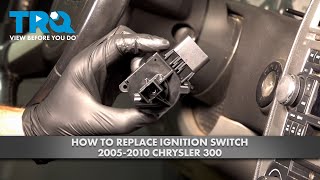
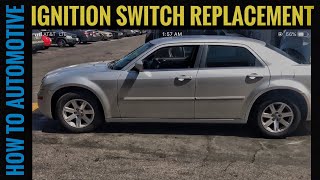
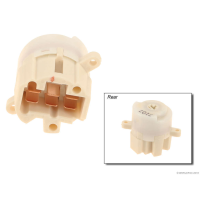
- Failed Ignition Switch (Chrysler/Dodge/Jeep) (Very Common) — Internal contacts wear out from repeated use, sending an erratic voltage signal to the vehicle's computers. This is the definitive cause for B2100 on mid-2000s Chrysler products. 🎬 Watch: How to replace the ignition switch on a Chrysler 300.
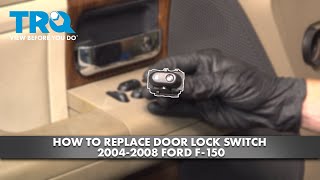
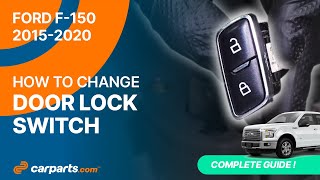
- Failed Driver's Door Key Cylinder Switch (Ford) (Very Common) — The small electronic switch attached to the mechanical door lock cylinder fails due to physical wear, corrosion, or moisture intrusion. 🎬 See this walkthrough for replacing a Ford door lock switch.
- Blown Fuse (Common) — A blown fuse for the ignition, BCM, or Front Control Module circuits cuts power entirely. On Chrysler vehicles, this often involves fuses in the rear Power Distribution Center (PDC).
- Wiring Damage (Common) — Wires break, short to ground, or corrode. The rubber door jamb boot is a frequent failure point for Ford door locks, while under-dash chafing affects Chrysler ignitions.
- Aftermarket OBD-II Devices (Common) — Plug-in insurance trackers or fleet telematics devices interfere with data bus traffic, causing modules to set false communication and body codes.
- Low Battery Voltage (Uncommon) — A weak battery drops below 10 volts during engine cranking, starving modules of power and triggering unpredictable electrical faults.
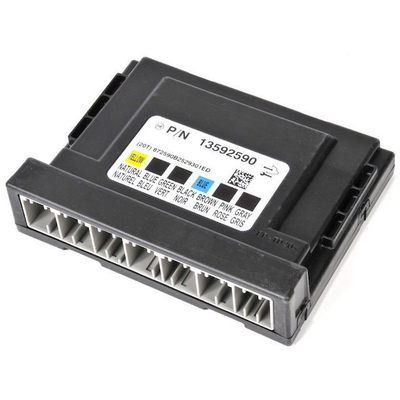
- Faulty BCM or Software Glitch (Rare) — The Body Control Module fails internally or requires a manufacturer software update. This is a last-resort diagnosis after all physical switches and wires test perfectly.
Symptoms
- Engine stalls while driving (Chrysler/Dodge/Jeep) — The engine suddenly shuts off because the ignition switch momentarily loses contact, cutting power to the fuel pump and ignition coils. This causes a dangerous loss of power steering.
- Engine will not crank or start (Chrysler/Dodge/Jeep) — Turning the key produces no response from the starter because the computer does not receive a valid 'start' signal from the ignition switch.
- Manual key does not operate power locks (Ford) — Turning the key in the driver's door fails to lock or unlock the other doors. The remote key fob and interior buttons continue to function normally.
- Key is difficult to turn or gets stuck — Physical wear inside the ignition switch assembly causes the key to bind, stick, or resist turning through the ACC, ON, and START positions.
- Intermittent dashboard electrical failures — A failing ignition switch causes all dashboard warning lights to illuminate simultaneously, gauges to drop to zero, and the radio to shut off randomly 🎬 Watch: Diagnosing intermittent stalling and no-start issues on a Jeep. while driving.
- Security or Anti-Theft Light is On — The anti-theft system detects an invalid ignition state and illuminates the security light, often accompanied by code B2139.
Diagnostic Flowchart
Tap your situation to follow the diagnostic path that matches what you're seeing on this code.
Common Fixes & Costs
- Replace Ignition Switch (Chrysler/Dodge/Jeep)
— Parts: $50-$155, Labor: $150-$225, ~1.5 hr book time
(Intermediate)
Chrysler 300 / Dodge Magnum (2005-2007): OEM 4685719AI (Alt: Dorman 924-727) - Replace Driver's Door Lock Cylinder/Switch Assembly (Ford)
— Parts: $30-$80, Labor: $100-$180, ~1.2 hr book time
(Intermediate)
Ford F-150 (2009-2014): OEM DL3Z-1521990-A (Alt: Dorman 924-733) - Replace Blown Fuse — Parts: $1-$5, Labor: $0, ~0.1 hr book time (DIY)
- Repair Damaged Wiring — Parts: $10-$30, Labor: $150-$400, ~2.5 hr book time (Professional)
- Replace/Reprogram Body Control Module (BCM) — Parts: $400-$800, Labor: $150-$250, ~1.5 hr book time (Professional)
- Professional Diagnosis — Parts: $0, Labor: $150-$200, ~1.0 hr book time (Professional)
Used vs. New Parts: Buying Guide
When a used part is worth it: Buying a used Ford door lock cylinder is an acceptable budget option. Buying a used Chrysler ignition switch is dangerous and strongly discouraged due to its 100% failure rate design flaw.
Donor-vehicle mileage cap: roughly under 60000 miles for the part to have meaningful remaining life.
Donor quality checklist:
- Verify the part number matches your VIN exactly.
- For door lock cylinders, reject parts with visible corrosion or stiff key movement.
- Never buy a used ignition switch. Internal wear is invisible.
Decision logic:
- If The part is an ignition switch for a Chrysler/Dodge/Jeep → Always buy a brand-new OEM or premium aftermarket part. The safety risk of a used part stalling your engine is too high.
- If The part is a door lock cylinder for a Ford → A used part is acceptable, but a new aftermarket replacement is cheap enough ($45) that buying used rarely makes sense.
Warranty tradeoff: Salvage yard parts offer 30-day warranties. New aftermarket ignition switches offer limited lifetime warranties, protecting you against future failures.
Worst-case if a used part fails: $300. If a used ignition switch fails, you pay for another tow, a new part, and repeat the labor.
What Happens If You Wait — Timeline
- 0-3 months (Chrysler Ignition Fault): Intermittent no-crank condition. The driver must jiggle the key to start the engine. The problem vanishes for weeks at a time. (MPG impact: 0%% · Added cost: $0)
- 3-6 months (Chrysler Ignition Fault): Starting requires multiple key turns. The engine stalls once or twice a month at low speeds. Dashboard warning lights flicker randomly. (MPG impact: 0%% · Added cost: $150 for towing. Increased wear on the starter motor from repeated cranking.)
- 6+ months (Chrysler Ignition Fault): The vehicle stalls at highway speeds, causing a total loss of power steering and brakes. The car becomes completely unreliable and unsafe to drive. (MPG impact: N/A% · Added cost: $400-$800 for a burned-out starter and battery, plus severe accident liability.)
- Anytime (Ford Door Lock Fault): The physical key permanently stops activating the power locks. The remote fob continues to work perfectly. This is an immediate, isolated failure. (MPG impact: 0%% · Added cost: $0. The only cost is the minor inconvenience of relying on the key fob.)
Cost of Not Fixing It
- Immediate (Chrysler/Dodge/Jeep): The engine stalls while driving, causing a total loss of power steering and brakes. This creates an extreme crash risk. (Added cost: $150+ for towing, plus severe accident liability.)
- Immediate (Ford/Other Makes): Loss of ability to lock or unlock the vehicle using the physical key in the driver's door. (Added cost: $0. This is strictly a convenience issue.)
- 1-6 months (Chrysler/Dodge/Jeep): Intermittent no-start conditions force repeated, prolonged cranking, which overheats and destroys the starter motor. (Added cost: $300-$600 for a replacement starter motor and battery.)
Diagnosis Steps
- Read Trouble Codes & Review Freeze Frame Data
Use an advanced OBD-II scanner capable of reading BCM codes to confirm B2100. Note the freeze-frame data. On Chrysler products, diagnose codes B2104, B2105, or B2139 first if present.
Tools: Advanced OBD-II Scanner (Beginner) - Perform a Functional Test
For a Chrysler, start the engine and wiggle the key slightly to see if it induces a stall. For a Ford, use the physical key in the driver's door to verify it fails to activate the power locks.
Tools: Vehicle Key (Beginner) - Inspect Fuses and Battery
Test the battery to ensure it holds at least 12.4 volts. Visually inspect all fuses related to the BCM and ignition circuits. On Chrysler products, check the rear Power Distribution Center (PDC) fuses.
Tools: Digital Multimeter, Fuse Puller (Beginner) - Check for Aftermarket Devices
Inspect the OBD-II port under the driver's dashboard. Unplug any insurance trackers or aftermarket tuners, clear the codes, and drive the vehicle to see if the issue returns.
Tools: Flashlight (Beginner) - [PRO TIP] Test Ignition Circuit Voltage (Chrysler/Dodge/Jeep)
Using a wiring diagram, backprobe the Fused Ignition Switch Output circuit at the ignition switch connector. With the key in the ON position, a healthy circuit shows battery voltage. A reading below 10.0 volts confirms a failed switch.
Tools: Digital Multimeter, Backprobe Kit, Wiring Diagram (Advanced) - [PRO TIP] Test Door Cylinder Switch (Ford/Other Makes)
Disconnect the driver's door key cylinder switch. Set a multimeter to Ohms (Ω) and probe the switch pins. Turn the key. The reading must cleanly toggle between near 0 Ohms (closed) and O.L. (open). If it doesn't, the switch is dead.
Tools: Digital Multimeter, Wiring Diagram (Advanced) - Visually Inspect Wiring
For Ford door lock issues, pull back the rubber boot between the driver's door and the body to check for broken wires. For Chrysler ignition issues, inspect the harness under the steering column for melted connectors.
Tools: Flashlight, Trim Removal Tools (Intermediate) - [PRO TIP] Perform a Harness Wiggle Test
Connect a multimeter to the suspect circuit. Have an assistant aggressively wiggle the door jamb boot or steering column harness. If the voltage or continuity reading jumps, you have located a broken wire.
Tools: Digital Multimeter, Assistant (Advanced) - Check for Technical Service Bulletins (TSBs)
Search NHTSA databases for TSBs or recalls related to B2100 for your specific VIN. Chrysler issued multiple recalls (e.g., 14V-373) for this exact ignition failure, which guarantees a free dealer repair.
Tools: Internet Access, Vehicle VIN (Beginner)
When This Code Triggers (Freeze-Frame Conditions)
- Module Voltage: 11.5-12.5V (Recorded during a key-on or engine start attempt. Values below 10.5V indicate a weak battery causing false codes.)
- Ignition Status (Chrysler): Mismatch Detected (Logged when the hardwired ignition switch position (e.g., 'RUN') contradicts the status reported on the CAN data bus.)
- Key Cylinder Switch Status (Ford): No Change / Invalid Voltage (Logged when the driver's door key turns, but the expected voltage signal change from the switch fails to occur.)
- Vehicle Speed: Variable (0-70 mph) (Chrysler ignition faults occur at any speed, causing a stall. Ford door lock faults exclusively occur at 0 mph while parked.)
Related Codes
- B2139 — Indicates a 'Data Mismatch' between security modules. It almost always accompanies the Chrysler B2100 ignition fault. Fixing the B2100 ignition switch resolves B2139 automatically.
- B2104 / B2105 (Chrysler) — Additional ignition circuit codes on Chrysler vehicles. Service manuals dictate diagnosing B2104 or B2105 before addressing B2100.
- B2104 (Ford) — On Fords, B2104 means 'Passenger Door Key Cylinder Switch Failure'. B2100 is the driver's side; B2104 is the passenger's side.
- U-Series Codes (e.g., U0100, U0140) — Communication codes that appear alongside B2100 if an aftermarket OBD-II device disrupts the data bus or a main wiring harness shorts out.
Climate & Environmental Factors
- Freezing Temperatures: Moisture inside a Ford door lock cylinder freezes, seizing the mechanism. Forcing the key breaks the internal electrical switch, triggering B2100.
- High Humidity & Rain: Water penetrates the driver's door lock cylinder, corroding the switch contacts and creating an open circuit.
How to Talk to a Mechanic About This Code
Say this: "For a Chrysler/Jeep: 'My car stalls and has a B2100 code. Please test the ignition switch output circuit for a voltage drop.' For a Ford: 'My power locks ignore the physical door key and I have a B2100 code. Please test the driver's door lock cylinder switch for continuity.'"
This proves you understand the manufacturer-specific definition of the code. It directs the mechanic to the exact component, preventing expensive, open-ended electrical diagnostic fees.
Avoid saying:
- 'Just fix whatever's wrong.'
- 'My check engine light is on, can you look at it?'
- 'My car is acting weird, I think it's the computer.'
Questions to ask before authorizing the repair:
- Can you show me the multimeter test results proving the switch failed?
- Is my VIN covered under any active NHTSA ignition switch recalls?
- Does your written estimate include all parts, labor, and taxes?
Where to Take It: Dealer vs Independent vs Chain
- Dealer:
Highly recommended for Chrysler/Dodge/Jeep owners to check for free recall repairs before paying out of pocket.
Best for: Chrysler/Dodge/Jeep vehicles with the stalling issue, as they handle the NHTSA safety recalls for free., Vehicles still under factory warranty., Rare cases requiring BCM software updates.
Downsides: Highest labor rates ($180-$250/hr)., Tendency to replace entire steering column modules rather than individual switches. (Typical cost: +50% vs. baseline) - Independent Shop:
Best overall fit. An independent shop offers the best balance of cost and expertise for either the Ford or Chrysler version of this code.
Best for: Out-of-warranty vehicles where cost is a major factor., The Ford door lock cylinder fault., Chrysler ignition switch replacements not covered by a recall.
Downsides: Diagnostic skill varies; ensure the shop employs ASE-certified electrical technicians. (Typical cost: +0% vs. baseline) - Chain Shop:
AVOID for diagnosis. Acceptable only for installing a part after a confirmed diagnosis from another source.
Best for: Replacing a dead battery or blown fuse.
Downsides: Technicians often lack advanced scanners to read BCM codes., High risk of misdiagnosing a Chrysler ignition fault as a Ford door lock fault due to generic scanner definitions. (Typical cost: -10% vs. baseline)
When to Walk Away From the Repair
If the estimated repair cost exceeds 50% of the car's private-party value, it is not worth fixing.
- Car worth $3000, fix is $350: Fix it. Replacing an ignition switch is well below the threshold and resolves a critical safety hazard.
- Car worth $2000, fix is $1200: Walk away. If a shop quotes $1,200 to replace a BCM and trace wiring on a $2,000 car, put that money toward a reliable replacement.
What Scan Tool You Need for This Code
Minimum: A scanner capable of reading manufacturer-specific Body Control Module (BCM) codes. Basic $20 engine code readers cannot see B2100.
Generic code readers only scan the powertrain (engine/transmission). They cannot access the BCM, so they report 'No Codes Found' even while your engine stalls from a B2100 fault.
Budget: BlueDriver Pro Scan Tool (~$100) — Connects via Bluetooth to a smartphone. Reads and clears enhanced BCM codes for all major brands and provides freeze-frame data to catch intermittent voltage drops.
Mid-range: Foxwell NT510 Elite (~$180) — A handheld scanner offering OE-level diagnostics. Includes bi-directional controls to command door locks to cycle, instantly proving whether a switch or the BCM is at fault.
Professional: Autel MaxiCOM MK808S (~$450) — A professional tablet scanner providing full system diagnostics. It graphs live voltage data from the ignition switch, making it effortless to spot the exact moment a switch fails.
Rent vs buy: Auto parts stores scan codes for free, but their tools often miss BCM codes. Buying the $100 BlueDriver is a mandatory investment to accurately diagnose B2100 at home.
How to Clear the Code After You Fix It
- Reconnect the battery if it was disconnected during the repair.
- Use an advanced OBD-II scan tool to erase the B2100 code from the Body Control Module memory.
- Perform a functional test: cycle the ignition multiple times (Chrysler) or lock/unlock the door with the key (Ford) to ensure the code does not return.
Drive cycle (~15 minutes): Start the vehicle and let it idle for 3 minutes. Perform 10-15 minutes of mixed city driving. B-codes do not require complex highway drive cycles to clear, but the BCM needs to see active inputs from the repaired switch to verify the fix.
Readiness monitors affected: B2100 does not affect emissions readiness monitors., However, disconnecting the battery during the repair resets all emissions monitors to 'Not Ready'.
Before emissions retest: drive at least 50 miles to fully set monitors.
Watch out for:
- Disconnecting the battery rarely clears codes from the BCM's non-volatile memory; a scan tool is required.
- The code returns immediately upon the next key turn if the underlying electrical fault remains unfixed.
Will This Fail Emissions / State Inspection?
No — by itself this code doesn't fail OBD inspection (but it can keep readiness monitors from setting, which causes a separate fail).
- California: B2100 is a body code and does not illuminate the Check Engine Light. It will not cause a smog check failure unless accompanied by P-series emissions codes.
- New York: NYS inspections ignore BCM codes. As long as the MIL is off and emissions monitors are ready, the vehicle passes.
- Texas: Safety inspections require the vehicle to start and steer properly. A Chrysler that stalls during the inspector's test drive will fail the safety portion.
Most Commonly Affected Vehicles
- Chrysler 300 (2005-2010) — Notorious for the ignition switch failure causing engine stalls. Subject to NHTSA recall 14V-567.
- Dodge Magnum (2005-2008) — Shares the exact ignition system and failure rates as the Chrysler 300. Subject to NHTSA recall 14V-567.
- Dodge Durango (2004-2009) — Frequently logs B2100 for ignition circuit mismatches. Diagnostics require checking Fuse #18 in the Junction Block.
- Jeep Grand Cherokee (2005-2010) — High failure rate for the ignition switch. Subject to NHTSA recall 14V-567.
- Ford F-150 (2004-2014) — The most common vehicle to log B2100 for a failed driver's door key cylinder switch.
- Chevrolet / GMC Various Models (2015-2023) — Logs false B2100 codes due to interference from aftermarket devices plugged into the OBD-II port (TSB 13-08-116-001H).
- Subaru Legacy, Impreza, Outback (2015-2024) — On push-button start models, B2100 indicates a failure of the push-button ignition switch itself.
- Kia / Hyundai Soul, Various (2014-2024) — Ignore search results for these makes. 'B2100' is part of the manufacturer part number for key fobs (e.g., 95430-B2100), not a diagnostic code.
Manufacturer-Specific Notes
- Chrysler/Dodge/Jeep: Uses B2100 exclusively for a critical ignition failure. This defect caused widespread engine stalling and triggered massive NHTSA safety recalls (14V-373 and 14V-567).
- Ford: Uses B2100 exclusively for a minor driver's door key cylinder switch failure, which only affects the physical key's ability to trigger power locks.
- General Motors (GM): GM issued TSB 13-08-116-001H warning that aftermarket OBD-II devices (like insurance trackers) trigger false B2100 codes and erratic power steering.
- Hyundai/Kia: The string 'B2100' is a component part number suffix (e.g., 95440-B2100 for a key fob). It is not an OBD-II diagnostic trouble code for these brands.
- Subaru: Defines B2100 as 'Push-button Ignition Switch Malfunction' on modern keyless access models.
- Kubota: B2100 is the model number of a 1990s compact tractor. Online searches for 'B2100 overheating' refer to the tractor, not the automotive fault code.
Real Owner Stories
2005 Chrysler 300C 5.7L with intermittent stalling
Dashboard warning lights illuminated randomly, and the engine stalled while driving. The issue worsened over three months. Code B2100 was active alongside B2139.
Outcome: Replacing the $60 ignition switch permanently resolved the stalling, no-start conditions, and dashboard light anomalies.
Lesson: On mid-2000s Chrysler products, a cluster of bizarre electrical symptoms combined with code B2100 guarantees a failing ignition switch—a known defect subject to federal safety recalls.
2012 Ford F-150 with non-functional key lock
The physical key in the driver's door stopped locking or unlocking the other doors. The remote key fob and interior buttons worked perfectly. A scan revealed code B2100.
Outcome: Replacing the driver's door lock cylinder and switch assembly (a $45 part) restored full functionality and cleared the code.
Lesson: Do not assume a 'circuit malfunction' requires expensive electrical work. For Fords, B2100 is a simple mechanical failure of a small switch attached to the door lock.
2007 Jeep Grand Cherokee with a no-crank condition
The vehicle intermittently failed to crank. The starter did not engage. Code B2100 appeared alongside U0100 (Lost Communication with ECM).
Outcome: The technician found a chafed wire shorting to ground near the transmission bell housing. Repairing the wire restored communication and cleared the B2100 code.
Lesson: If B2100 appears alongside U-series communication codes, suspect wiring harness damage rather than a failed component. Always inspect wiring before replacing parts.
How to Prevent This Code From Triggering
- Lighten Your Keychain (Daily habit) — Excessive weight hanging from the key puts constant mechanical strain on the ignition switch's internal tumblers and electrical contacts, accelerating wear and causing premature failure.
- Lubricate Door Lock Cylinders (Annually) — Applying a dry PTFE-based spray or graphite powder into the keyhole prevents moisture intrusion and corrosion, protecting the internal Ford door switch. Never use WD-40, as it attracts dirt.
- Turn the Key Gently (Every engine start) — Snapping the key violently to the 'start' position causes mechanical shock and electrical arcing on the switch contacts. A smooth, deliberate turn maximizes component lifespan.
- Keep the OBD-II Port Clear (Always) — Leaving insurance trackers or cheap Bluetooth scanners plugged into the diagnostic port disrupts CAN bus traffic, triggering false B2100 and U-series communication codes.
Frequently Asked Questions
Why does my scanner say B2100 is a door lock problem, but my car won't start?
Code definitions vary by car brand. On Chrysler, Dodge, or Jeep vehicles, B2100 indicates a critical ignition circuit fault, not a door lock issue. Generic code readers often display the incorrect Ford definition.
Is code B2100 serious?
On a Chrysler, Dodge, or Jeep, it is extremely serious because it causes the engine to stall while driving. On a Ford, it is a minor inconvenience that only disables the physical key's power lock function.
Can a bad battery cause a B2100 code?
Yes. A weak battery causes low voltage conditions during startup, confusing control modules and triggering false codes. Always verify battery health before replacing expensive electrical components.
My power locks and key fob work fine, but I still have this code. Why?
On Ford vehicles, B2100 refers exclusively to the physical switch inside the driver's door key cylinder. The remote key fob and interior power lock buttons use separate circuits. They continue functioning normally even when the cylinder switch fails.
What happens if the ignition switch fails while driving?
The engine shuts off immediately, causing a total loss of power steering and power brake assist. Steering becomes extremely heavy, and the brake pedal requires massive physical force to stop the vehicle. This creates a severe crash risk.
Will clearing the code make it go away?
Clearing the code turns the warning light off temporarily, but it returns immediately upon the next start attempt. You must repair the underlying mechanical or electrical failure.
I have a Kubota B2100 tractor, does this code apply to me?
No. B2100 is the model number for a Kubota compact tractor manufactured in the late 1990s. It does not use automotive OBD-II diagnostics, so online search results for this tractor are unrelated to the car code.
How do you test an ignition switch with a multimeter?
Disconnect the switch and test for continuity between terminals in each key position using a wiring diagram. Alternatively, backprobe the 'run/start' output wire with the key in the ON position. A healthy circuit shows battery voltage, while a failing switch drops below 10V.
Key Takeaways
- Code B2100 has two completely different meanings: a critical ignition failure on Chrysler/Dodge/Jeep vehicles, or a minor door lock switch failure on Fords.
- On 2005-2010 Chrysler, Dodge, and Jeep models, B2100 signals a failing ignition switch that causes dangerous engine stalling at highway speeds.
- On Ford F-150s and similar models, B2100 indicates a broken driver's door key cylinder switch, requiring a simple $45-$80 DIY replacement.
- Ignore search results for Kubota tractors or Hyundai/Kia key fobs, as 'B2100' is frequently used as a part or model number rather than an OBD-II diagnostic code.
- Never buy replacement parts for a B2100 code until you verify your specific manufacturer's definition using an advanced OBD-II scanner capable of reading BCM data.
Helpful Videos
Shop the Parts Behind B2100
Below are the parts most often responsible for code B2100, ranked by how frequently each one is the actual culprit (per the diagnosis above). Tap any to see what we have for your vehicle.



The information in this article is provided for general reference and educational purposes only. Vehicle specifications, procedures, and part compatibility can vary by production date, trim level, and region. Always consult your vehicle's factory service manual and verify part numbers before purchasing or performing repairs. Safety-critical components such as airbags, seat belts, and braking systems should be installed by a qualified professional.
- 🧭 Diagnostic Flowchart
- 🎬 Helpful Videos
- 🛍️ Shop This Part
- What Does B2100 Mean?
- Can I Drive With B2100?
- Common Causes
- Symptoms
- Common Fixes & Costs
- Used vs. New Parts: Buying Guide
- What Happens If You Wait — Timeline
- Cost of Not Fixing It
- Diagnosis Steps
- When This Code Triggers (Freeze-Frame Conditions)
- Related Codes
- Climate & Environmental Factors
- How to Talk to a Mechanic About This Code
- Where to Take It: Dealer vs Independent vs Chain
- When to Walk Away From the Repair
- What Scan Tool You Need for This Code
- How to Clear the Code After You Fix It
- Will This Fail Emissions / State Inspection?
- Most Commonly Affected Vehicles
- Manufacturer-Specific Notes
- Real Owner Stories
- 2005 Chrysler 300C 5.7L with intermittent stalling
- 2012 Ford F-150 with non-functional key lock
- 2007 Jeep Grand Cherokee with a no-crank condition
- How to Prevent This Code From Triggering
- Frequently Asked Questions
- Why does my scanner say B2100 is a door lock problem, but my car won't start?
- Is code B2100 serious?
- Can a bad battery cause a B2100 code?
- My power locks and key fob work fine, but I still have this code. Why?
- What happens if the ignition switch fails while driving?
- Will clearing the code make it go away?
- I have a Kubota B2100 tractor, does this code apply to me?
- How do you test an ignition switch with a multimeter?
- Key Takeaways
- 🎟️ Get 5% Off