

OBD-II Code B2122: Ignition, Communication, or Sensor Circuit Malfunction
What B2122 means, why it triggers, and how to fix it
- Verify the exact B2122 definition for your specific make and model before replacing parts, as it means 'Ignition Circuit Low' on a Dodge but 'Door Communication Short' on a Ford.
- Inspect the rubber boot in the driver's door jamb for broken wires first if you drive a 2004-2014 Ford F-150 with dead window or lock controls.
- Isolate a Dodge or Ram no-start condition by unplugging components on the Ignition Run circuit one by one until the B2122 code clears.
- Replace the accelerator pedal assembly if your Chevrolet HHR displays both B2122 and P2122 codes alongside a 'Reduced Engine Power' warning.
What Does B2122 Mean?
Code B2122 indicates a control module detected a short to ground or abnormally low voltage in a specific electrical circuit. The affected circuit depends entirely on the manufacturer. On Dodge, Chrysler, and Ram vehicles, it flags the 'Ignition Run Control Circuit', which powers essential modules. On Ford and GM vehicles, it flags the 'Driver Side Satellite Communication Circuit', disabling driver door controls. On specific models like the Chevrolet HHR, it points to the accelerator pedal position sensor circuit.
Technical definition: The SAE/ISO definition for B2122 is manufacturer-specific. For Chrysler/Dodge/Ram, it is 'Ignition Run Control 1 Circuit Low', set when the Totally Integrated Power Module (TIPM) detects a short to ground on the 'Run' circuit. For Ford and GM, it is 'Driver Side Satellite Communication Circuit Short to Ground', indicating a driver's door module wiring fault. In specific GM models, it indicates the accelerator pedal's voltage signal dropped below the 0.2-volt threshold.
Can I Drive With B2122?
Yes, But With Caution. Driving is possible, but risks vary by vehicle. An accelerator pedal fault (common in GM) triggers a dangerous 'limp mode' with reduced power in traffic. An ignition circuit fault (Dodge/Ram) prevents the vehicle from starting entirely. Door communication faults (Ford) are safe to drive but disable locks and windows. Address this code immediately to avoid stranding or sudden power loss.
Common Causes
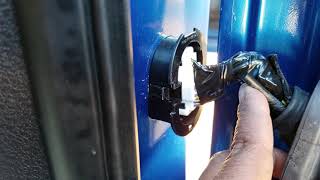
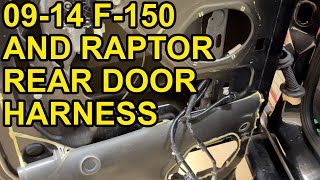
- Shorted wiring harness (Very Common) — Wires in high-movement areas, like the rubber door jamb boot or under the steering column 🎬 See how to replace a damaged door wiring harness., chafe against metal edges, wearing through insulation and creating a direct short to ground.
- Faulty component on the circuit (Common) — An internal short within a powered component triggers the code. Common culprits include the Occupant Restraint Controller (ORC) or heated seat switches on Dodge/Ram, and the door lock actuator on Fords.
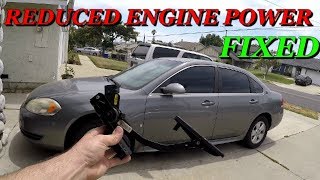
- Faulty accelerator pedal assembly (Common) — On vehicles like the Chevrolet HHR, the internal sensors of the accelerator pedal position 🎬 Watch: Troubleshooting Chevy HHR electronic throttle and pedal issues. (APP) assembly wear out, sending a low voltage signal that the ECU flags as a fault.
- Corroded or loose connector (Less Common) — Water intrusion into the main door harness or BCM/TIPM connectors causes corrosion, creating a short or high resistance.
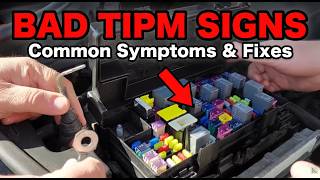
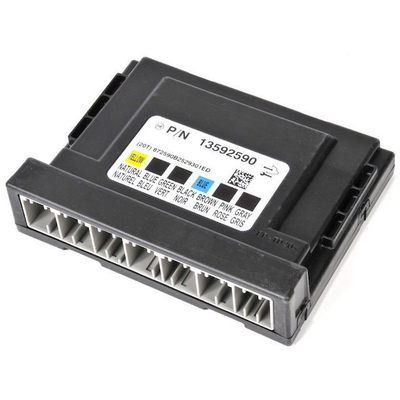
- Faulty Power Module (TIPM/BCM) (Less Common) — The main body computer fails internally. A faulty driver circuit erroneously reports a short or fails to supply voltage.
- Improperly installed aftermarket accessories (Rare) — Incorrectly wired remote starters or alarms tapped into the ignition or door wiring cause voltage drops or direct shorts.
Symptoms
- Power door locks, windows, or mirrors inoperative — Electronic controls on the driver's door fail completely when the communication circuit shorts.
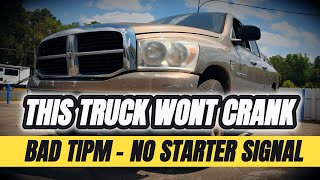
- Vehicle cranks but will not start — The engine fails to start because critical modules lack power during the 'Run' ignition state 🎬 Watch: Diagnostic steps for a Dodge Ram crank-no-start condition. (common on Dodge/Ram).
- Reduced engine power or 'Limp Mode' — The Engine Control Module (ECM) limits speed and power to prevent unintended acceleration (common on GM pedal faults).
- Malfunctioning interior features — Accessories like heated seats, adjustable pedals, or the radio stop working if they share the shorted circuit.
- Check Engine Light or body fault light illuminated — The main computer triggers a dashboard warning light to alert the driver.
Diagnostic Flowchart
Tap your situation to follow the diagnostic path that matches what you're seeing on this code.
Common Fixes & Costs
- Repairing a shorted wiring harness (e.g., in door jamb) — Parts: $10 - $50, Labor: $150 - $400, ~2.0 hr book time (Professional)
- Replacing the driver's door lock actuator or switch pack — Parts: $100 - $250, Labor: $125 - $250, ~1.5 hr book time (Intermediate)
- Replacing a faulty component (e.g., heated seat switch) — Parts: $50 - $150, Labor: $100 - $200, ~0.8 hr book time (DIY)
- Replacing the accelerator pedal assembly — Parts: $60 - $200, Labor: $100 - $150, ~0.7 hr book time (DIY)
- Replacing the TIPM / BCM — Parts: $500 - $1200, Labor: $150 - $300, ~2.0 hr book time (Professional)
Used vs. New Parts: Buying Guide
When a used part is worth it: Used parts are acceptable for simple switches on older vehicles. For complex modules like a TIPM, buy a professionally rebuilt unit with a warranty. Always buy accelerator pedals new.
Donor-vehicle mileage cap: roughly under 80000 miles for the part to have meaningful remaining life.
Donor quality checklist:
- Verify the donor vehicle wasn't scrapped for electrical fires.
- Match part numbers exactly; superseded parts require programming.
Decision logic:
- If The part is an accelerator pedal → Buy new aftermarket or OEM.
- If The part is a simple switch on a vehicle > 15 years old → Buy used.
- If The part is a complex module like a TIPM or BCM → Buy a professionally rebuilt unit with a warranty.
Warranty tradeoff: Used parts offer 30-90 days. New aftermarket offers 1-year. Rebuilt modules often offer lifetime warranties.
Worst-case if a used part fails: $200-$500 if a used part fails, requiring a second part and repeat labor.
What Happens If You Wait — Timeline
- 0-1 month: An intermittent short begins. Symptoms are rare and fleeting. The B2122 code is stored but may not be active. (MPG impact: 0%% · Added cost: $0)
- 1-3 months: The short becomes permanent. A specific function fails completely (e.g., driver's door controls are dead, or a no-start condition occurs). (MPG impact: 0-5%% · Added cost: $150-$250)
- 3-6 months: Collateral damage begins. Heat from the shorted wire melts insulation on adjacent wires, creating new electrical faults. (MPG impact: 0%% · Added cost: $500 - $1200)
- 6+ months: The control module fails. The internal driver circuit in the BCM or TIPM burns out from the prolonged short. (MPG impact: N/A% · Added cost: $1500 - $3000)
Cost of Not Fixing It
- Immediate: Sudden loss of power ('limp mode') or vehicle fails to start, stranding the driver. (Added cost: $200 (Towing and emergency diagnostic fees))
- 1-3 months: Persistent short overheats wires, melting adjacent insulation and creating complex electrical faults. (Added cost: $500 - $1500 (Cost to repair a complex harness issue))
- 6+ months: Prolonged high-current short permanently damages the control module (BCM/TIPM) and poses a fire risk. (Added cost: $1500 - $3000 (Cost of replacing a major control module))
Diagnosis Steps
- Confirm Code Definition for Your Vehicle
Use a professional scan tool or service database to confirm what B2122 means for your specific year, make, and model. The diagnostic path for an 'Ignition Run' fault is completely different from a 'Door Communication' or 'Accelerator Pedal' fault.
Tools: OBD-II Scanner, Service Manual/Database (Beginner) - Inspect Fuses and Perform a Visual Wiring Inspection
Check all related fuses in the interior and under-hood fuse boxes. A blown fuse confirms a short. Visually inspect common problem areas for wiring damage: the rubber boot between the driver's door and body, under the dash near the pedals, and around the BCM/TIPM.
Tools: Flashlight, Multimeter (Beginner) - Test the Door Harness and Components (Ford/GM Method)
For 'Door Communication' faults, remove the driver's door panel. Disconnect the main electrical connector at the door module. Clear the codes. If B2122 does not return, the fault is in one of the door components. Reconnect the main connector and disconnect individual components one at a time to isolate the faulty part.
Tools: Trim Removal Tools, Screwdriver/Socket Set (Intermediate) - Isolate the Faulty Component (Dodge/Ram Method)
For the 'Ignition Run Control' fault, isolate the short. With the ignition off, disconnect components on that circuit one by one (e.g., Occupant Restraint Controller, heated seat module). After disconnecting each one, turn the ignition on and see if the code clears. The last component disconnected before the code clears is the source of the short.
Tools: OBD-II Scanner, Basic Hand Tools (Intermediate) - Test Accelerator Pedal Sensor (APP) Live Data
If you suspect a pedal issue, use a scan tool to display live data. Monitor APP Sensor 1 and APP Sensor 2. As you press the pedal, voltage for both must increase smoothly with no dropouts. A reading stuck at zero or jumping erratically indicates a faulty pedal assembly.
Tools: Advanced OBD-II Scanner (Intermediate) - Test for a Short to Ground with a Multimeter
Disconnect the battery and the connector at the control module. Use a wiring diagram to identify the pin for the suspect circuit. Set your multimeter to Ohms (Ω) and measure resistance between that pin and a clean chassis ground. A reading below 5 Ohms confirms a dead short to ground in the wiring harness.
Tools: Digital Multimeter, Vehicle-Specific Wiring Diagram (Advanced) - Check the 5-Volt Reference Circuit
For pedal-related faults, check for 5 volts at the reference wire on the accelerator pedal connector with the key on. A healthy circuit reads between 4.9 and 5.1 volts. If the voltage is low or missing, diagnose the entire 5V reference circuit.
Tools: Digital Multimeter, Wiring Diagram (Advanced) - Use a Scope to Analyze Sensor Signal
For intermittent pedal sensor issues, connect an oscilloscope to the sensor's signal wire. As you operate the pedal, the voltage pattern must be a smooth, clean line. Sudden drops to zero or noise in the pattern indicate a failing sensor.
Tools: Oscilloscope, Back-Probe Pins (Professional)
When This Code Triggers (Freeze-Frame Conditions)
- Fault Time: < 1 second after key-on (Detected during the module's power-on self-test.)
- Module Voltage: 11.8 - 12.5V (Set with engine off, key on, reflecting battery state.)
- Vehicle Speed: 0 mph (Logged before the vehicle moves.)
- Circuit Status: Shorted to Ground (Module detects a direct path to ground on the monitored circuit.)
Related Codes
- P2122 / P2127 — Powertrain codes for 'Pedal Position Sensor Circuit Low'. If present with B2122, the fault is definitively the accelerator pedal assembly.
- B2123 — The passenger-side equivalent ('Passenger Side Satellite Communication Circuit Short to Ground'). Diagnosis is identical to B2122 but performed on the passenger door.
- U0199 — 'Lost Communication With Driver Door Control Module'. Appears alongside B2122 when a short circuit forces the door module offline.
Climate & Environmental Factors
- Cold Weather: Low temperatures make wire insulation brittle, causing it to crack or chafe during normal movement (like opening a door) and expose copper wiring.
- High Humidity / Salt Belt Regions: Moisture and road salt penetrate compromised wire insulation or connectors, causing corrosion that bridges circuits and creates a short.
How to Talk to a Mechanic About This Code
Say this: "I have a B2122 code on my [Make, Model, Year] and the symptom is [e.g., the driver's door controls are dead / the car won't start / it's in limp mode]. I need an electrical diagnostic to locate the short or faulty component. Based on my research, the likely cause is [e.g., broken wires in the door jamb / a shorted component on the ignition run circuit / a bad accelerator pedal]."
This directs the technician to the most probable cause, saving diagnostic time and preventing them from starting a broad, expensive search.
Avoid saying:
- 'My check engine light is on, can you look at it?'
- 'Just fix whatever is wrong.'
- 'The car is doing something weird, I don't know.'
Questions to ask before authorizing the repair:
- For a wiring fault: Did you find the exact location of the short? Is a spot repair possible, or does the harness need replacement?
- For a component fault: How did you confirm the part is internally shorted versus a problem with its wiring?
- For a module fault (BCM/TIPM): Can you show me how you ruled out the wiring and all other components on the circuit before condemning the module?
- Will the quoted price for replacing a module include the necessary programming?
Where to Take It: Dealer vs Independent vs Chain
- Dealer:
Best for: Vehicles under warranty., Complex module (BCM/TIPM) replacement that requires brand-specific programming.
Downsides: Highest labor rates, often 1.5-2x more than independent shops., Defaults to replacing an entire assembly when a cheaper wire repair is possible. (Typical cost: +50% vs. baseline) - Independent Shop:
Best fit for most scenarios. A good independent auto electric specialist traces wiring shorts effectively and attempts cost-saving wire repairs.
Best for: Out-of-warranty vehicles where cost is a factor., Diagnosing common, well-documented B2122 issues like Ford door wiring or Dodge ignition circuit shorts.
Downsides: Quality and expertise vary widely; vetting is crucial., May lack proprietary tools to program certain replacement modules. (Typical cost: +0% vs. baseline) - Chain Shop:
AVOID. This code requires specialized electrical diagnostic skill beyond the scope of chain repair shops.
Best for: Simple, unrelated maintenance like oil changes or tires.
Downsides: Technicians lack specialized training for complex electrical diagnostics., Business model encourages replacing easily accessible parts without diagnosing the underlying short. (Typical cost: -10% vs. baseline)
When to Walk Away From the Repair
If the estimated repair cost for the B2122 fault exceeds 40-50% of your car's private-party value, consider selling or trading it in.
- Car worth $8000, fix is $750: Fix it. The repair cost is less than 10% of the vehicle's value.
- Car worth $4500, fix is $2200: Walk away. The repair cost is nearly 50% of the car's value. The fault is complex and leads to other problems.
- Car worth $2000, fix is $1200: Walk away. At 60% of the car's value, this repair is not financially sensible.
What Scan Tool You Need for This Code
Minimum: A scanner that reads manufacturer-specific Body ('B') codes and displays live sensor data.
A cheap, generic $20 scanner will not see the B2122 code, lacks live data for diagnosing accelerator pedals, and cannot access body control modules.
Budget: BlueDriver Pro Scan Tool (~$100) — Reads and clears enhanced codes for most major brands and provides live data graphing for diagnosing accelerator pedal sensors.
Mid-range: Foxwell NT510 Elite (~$200) — Offers bi-directional control, allowing you to command components like door locks or switches to activate, helping isolate the faulty part.
Professional: Autel MaxiCOM MK808S (~$500) — Provides dealer-level diagnostics and handles the initial setup and service functions required after installing a new TIPM or BCM.
Rent vs buy: AutoZone's 'Loan-A-Tool' program offers basic readers. For a complex electrical code like B2122, buying a capable scanner like the BlueDriver is a better investment.
How to Clear the Code After You Fix It
- Fix the underlying electrical short or replace the faulty component.
- Use an OBD-II scan tool to erase the B2122 trouble code.
- Cycle the ignition off, then on, and wait 10 seconds to allow the module to re-test the circuit.
Drive cycle (~25 minutes): B-codes clear immediately upon successful repair and code erasure. If a P-code was also present, perform a standard drive cycle: cold start, 3 minutes idle, 15 minutes mixed driving up to 55 mph.
Readiness monitors affected: None for B-code alone., Catalyst and O2 monitors if a P-code was present.
Before emissions retest: drive at least 50 miles to fully set monitors.
Watch out for:
- Clearing the code without fixing the short causes instant return.
- Disconnecting the battery erases readiness monitors and adaptive memory.
Will This Fail Emissions / State Inspection?
Yes — this code typically fails an OBD-II emissions inspection.
- California: An illuminated Check Engine Light is an automatic failure. A full drive cycle is needed to reset readiness monitors after repair.
- New York: Any fault code that turns on the Malfunction Indicator Lamp (MIL) results in a test failure.
- Texas: An active OBD-II code that illuminates the check engine light causes the vehicle to fail inspection in testing counties.
Most Commonly Affected Vehicles
- Dodge Ram 1500/2500/3500 (2006-2008) — Prone to the 'Ignition Run Control 1 Circuit Low' fault. Diagnosis involves disconnecting components on the F504 and F100 circuits.
- Ford F-150 / Explorer (2004-2014) — Associated with 'Driver Side Satellite Communication Circuit' error. The cause is typically broken wires inside the rubber boot of the driver's door jamb.
- Chevrolet HHR (2006-2011) — B2122 flags a faulty accelerator pedal assembly. Also check for a chafed engine wiring harness at the EVAP purge valve bracket.
- Dodge Charger / Magnum (2006-2008) — Sets B2122 for 'Ignition Run Control Circuit Low'. The cause is often a faulty Run Relay or a short in the F923 Run Relay Control circuit wiring.
- Chrysler Town & Country / Dodge Grand Caravan (2008-2016) — B2122 points to the 'Ignition Run Control Circuit'. The TIPM is a common failure point, but shorts in power sliding door wiring also cause this.
- BMW 3 Series / 5 Series (2006-2013) — Uses code A122, which translates to 'Driver Side Satellite Communication Short to Ground', pointing to issues with the driver's door module or wiring.
Manufacturer-Specific Notes
- Dodge / Chrysler / Ram: B2122 almost exclusively means 'Ignition Run Control Circuit Low'. Diagnosis requires systematically unplugging components on the circuit to isolate the short. The TIPM is a frequent failure point.
- Ford: B2122 indicates a 'Driver Side Satellite Communication Circuit Short to Ground'. The definitive cause is broken wires inside the flexible rubber boot between the driver's door and the body.
- General Motors (GM): Definitions vary by model. On the Chevy HHR, it flags the accelerator pedal sensor. On trucks, it flags door communication circuits. Verify the exact definition for your VIN before replacing parts.
Real Owner Stories
2011 Ford F-150 with dead driver-side controls.
The driver's door lock stopped working, followed by the 'door ajar' warning light staying on. Eventually, all driver's door window and mirror controls failed.
Outcome: The owner repaired the broken wires using butt connectors and heat shrink tubing. The repair restored all door functions and cleared the B2122 and U0199 codes.
Lesson: For Ford trucks with B2122 and driver door electrical issues, inspect the wiring inside the door jamb boot first.
2007 Dodge Ram 1500 with a 'crank no-start' condition.
The truck cranked strongly but would not start. A scan revealed code B2122, 'Ignition Run Control 1 Circuit Low'.
Outcome: The B2122 code disappeared after the driver's heated seat switch was disconnected. Replacing the faulty switch resolved the no-start condition.
Lesson: On a Dodge/Ram with a B2122 no-start, systematically disconnect components on the 'Ignition Run Control' circuit to isolate the shorted part before replacing the TIPM.
2008 Chevrolet HHR entered 'Reduced Engine Power' mode.
The 'Reduced Engine Power' message appeared, the check engine light came on, and the car entered limp mode. A scan showed codes P2122 and B2122.
Outcome: Replacing the accelerator pedal assembly took less than 30 minutes. The new pedal immediately fixed the limp mode issue.
Lesson: On a GM vehicle, the combination of a B2122 body code and a P2122 powertrain code confirms the fault is the accelerator pedal assembly.
How to Prevent This Code From Triggering
- Lubricate the door jamb wiring boot (Every 2-3 years) — Applying a silicone-based spray inside the rubber boot keeps it flexible and prevents it from binding on the wires, reducing chafing.
- Apply dielectric grease to critical connectors (When servicing a related area) — Applying dielectric grease to the seals of major connectors prevents moisture and road salt intrusion, stopping corrosion.
- Secure loose aftermarket wiring (During any under-dash or engine bay work) — Ensuring all wiring is properly secured away from sharp metal edges prevents shorts that trigger a B2122.
- Maintain good battery health and grounding points (Annually) — A weak battery or corroded ground straps cause low voltage conditions, stressing control modules and leading to premature failure.
Frequently Asked Questions
Can I fix B2122 myself?
Yes, if the cause is a faulty component like an accelerator pedal or switch. However, diagnosing and repairing a short in a complex wiring harness requires advanced electrical skills and is best left to a professional.
What is the most common mistake when diagnosing B2122?
Failing to verify the code's specific meaning for the vehicle. Technicians often assume it is a door module fault on a Dodge when it is actually an ignition circuit issue.
Is B2122 the same as P2122?
No. B2122 is a Body code for accessories and electronics, while P2122 is a Powertrain code for the throttle pedal sensor. A few GM models use B2122 for a pedal fault, but they are generally separate issues.
Why did the code return immediately after replacing the fuse?
A fuse blows to protect the vehicle from excess current caused by a short circuit. Replacing the fuse without fixing the underlying short causes the new fuse to blow instantly.
How much does it cost to diagnose code B2122?
Shops typically charge a diagnostic fee covering one hour of labor, ranging from $125 to $200. Complex wiring shorts require additional labor hours to trace.
Will clearing the code fix the problem?
No. B2122 indicates a hard electrical fault. The code returns immediately as soon as the module self-tests the circuit upon turning the ignition on.
Key Takeaways
- Verify the exact B2122 definition for your specific make and model before replacing parts, as it means 'Ignition Circuit Low' on a Dodge but 'Door Communication Short' on a Ford.
- Inspect the rubber boot in the driver's door jamb for broken wires first if you drive a 2004-2014 Ford F-150 with dead window or lock controls.
- Isolate a Dodge or Ram no-start condition by unplugging components on the Ignition Run circuit one by one until the B2122 code clears.
- Replace the accelerator pedal assembly if your Chevrolet HHR displays both B2122 and P2122 codes alongside a 'Reduced Engine Power' warning.
Helpful Videos
Shop the Parts Behind B2122
Below are the parts most often responsible for code B2122, ranked by how frequently each one is the actual culprit (per the diagnosis above). Tap any to see what we have for your vehicle.




The information in this article is provided for general reference and educational purposes only. Vehicle specifications, procedures, and part compatibility can vary by production date, trim level, and region. Always consult your vehicle's factory service manual and verify part numbers before purchasing or performing repairs. Safety-critical components such as airbags, seat belts, and braking systems should be installed by a qualified professional.
- 🧭 Diagnostic Flowchart
- 🎬 Helpful Videos
- 🛍️ Shop This Part
- What Does B2122 Mean?
- Can I Drive With B2122?
- Common Causes
- Symptoms
- Common Fixes & Costs
- Used vs. New Parts: Buying Guide
- What Happens If You Wait — Timeline
- Cost of Not Fixing It
- Diagnosis Steps
- When This Code Triggers (Freeze-Frame Conditions)
- Related Codes
- Climate & Environmental Factors
- How to Talk to a Mechanic About This Code
- Where to Take It: Dealer vs Independent vs Chain
- When to Walk Away From the Repair
- What Scan Tool You Need for This Code
- How to Clear the Code After You Fix It
- Will This Fail Emissions / State Inspection?
- Most Commonly Affected Vehicles
- Manufacturer-Specific Notes
- Real Owner Stories
- 2011 Ford F-150 with dead driver-side controls.
- 2007 Dodge Ram 1500 with a 'crank no-start' condition.
- 2008 Chevrolet HHR entered 'Reduced Engine Power' mode.
- How to Prevent This Code From Triggering
- Frequently Asked Questions
- Can I fix B2122 myself?
- What is the most common mistake when diagnosing B2122?
- Is B2122 the same as P2122?
- Why did the code return immediately after replacing the fuse?
- How much does it cost to diagnose code B2122?
- Will clearing the code fix the problem?
- Key Takeaways
- 🎟️ Get 5% Off