

GMC Yukon XL Code B2180: Heated Seat Failure Causes and Fixes (2007-2014)
Code B2180 on a 2007-2014 GMC Yukon XL almost always means the passenger's side seat *back* heating element has failed or has an open circuit. The most common fix is replacing the seat heater pad in the backrest, though the seat bottom element or wiring could also be at fault. Expect to pay $70-$150 for an aftermarket part.
- B2180 points to a problem with the passenger-side heated seat, usually a broken wire in the heating pad inside the seat itself.
- The most likely symptom is the heated seat button lighting up for a moment and then turning off, or staying on with no heat produced.
- Diagnosis involves checking fuses, inspecting wiring under the seat, and testing the heating element's resistance with a multimeter.
- The most common repair is to replace the failed heating element pad, which is a moderately difficult DIY job requiring removal of the seat upholstery.
What's Unique About the 2007-2014 Gmc YUKON XL
The GMT900 platform, which includes the Yukon XL, is known for heated seat failures. The heating element grid, particularly in the driver's seat bottom, is prone to breaking from the repeated stress of entering and exiting the vehicle. While B2180 points to the passenger seat back, the failure mechanism is the same across all seating positions. Additionally, a significant design flaw exists where the main electrical connector for the seat module can overheat and melt due to undersized power and ground wires, which can also trigger this code.
Diagnostic Flowchart
Tap your situation to follow the diagnostic path that matches what you're seeing on this vehicle.
Symptoms You May Notice
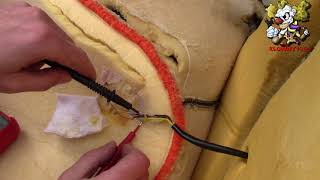
- Heated seat indicator light turns on for a few seconds, then turns off. This is a classic sign of an open circuit 🎬 Watch: Why your heated seat lights turn off immediately. in one of the heating elements.
- Heated seat indicator light stays on, but the seat produces no heat.
- Only the seat back heats up, but not the seat bottom (or vice-versa).
- Both driver and passenger heated seats stop working simultaneously if you activate the faulty side, as the module can shut down both as a precaution.
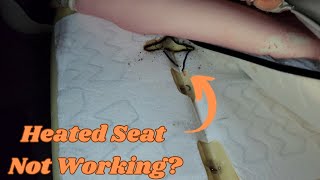
- Visible burn mark or melted spot on the heating element pad, sometimes burning through the seat foam, discovered upon disassembly.
- Replacing the heated seat switch on the dashboard. The switch is rarely the cause of the failure; the problem is almost always in the seat itself, the wiring, or the main module connector.
- Replacing the wrong heating element. It's important to diagnose whether the fault is in the seat bottom or the seat back element before ordering parts. B2180 specifically points to the backrest element, which is the primary element in the circuit.
Most Likely Causes
- Broken Heating Element in Seat Cushion or Backrest 🔴 High Probability The thin wires in the heating element grid are susceptible to breaking from years of flexing and pressure, especially from kneeling on the seat or the stress of entering and exiting. The outer bolster of the seat cushion is a very common failure point.
How to confirm: Disconnect the heating element connector under the seat and test the element's resistance with a multimeter. An open circuit 🎬 See how to diagnose and test a bad heating element. (infinite resistance or 'OL') confirms a broken element. A normal element should have low resistance (typically under 15 ohms). Often, a visible burn mark can be found on the pad once the seat upholstery is removed.
Typical fix: Replace the faulty heating element pad (either bottom cushion or backrest). This requires removing the seat from the vehicle and taking off the upholstery. Some owners successfully repair the broken wire with a solder joint and a jumper wire.
Est. part cost: $70-$150 - Damaged Wiring or Connector Under Seat 🟡 Medium Probability Items stored under the seat or movement of the power seat can snag, chafe, or unplug the wiring for the heating elements. The wires can also get pinched and severed as the seat foam deteriorates over time.
How to confirm: Visually inspect the wiring harnesses under the affected seat for any signs of damage, pinching, or loose connections. Test for power and ground at the connector leading to the heating element.
Typical fix: Repair the damaged wires or secure the loose connector. If the connector itself is damaged, it may need to be replaced.
Est. part cost: $5-$30
Rare But Worth Checking
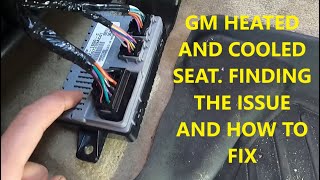
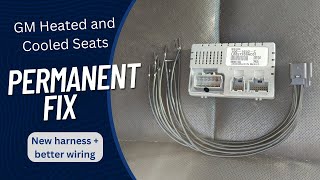
- Burnt Connector at Heated Seat Module: → Shop Heated Seat Module On many GM trucks of this era, the main power and ground pins on the heated seat module's connector can overheat and melt due to being under-gauged for the current draw. This creates a poor connection, high resistance, and eventually an open circuit. The permanent fix involves replacing the connector pigtail 🎬 Watch this permanent fix for burnt seat module connectors. (WPT-928) and splicing in a second power and ground wire to share the electrical load across unused pins in the connector, a solution Ford used from the factory with the same module.
- Faulty Memory Seat Module (MSM): While possible, it is rare for the module itself to fail. All wiring and heating elements should be thoroughly tested before condemning the module. A temporary fix to try is resetting the module by disconnecting the main seat electrical connector for five minutes. Water intrusion from a leaky sunroof can also damage the module.
- Faulty Door Switch Module: In some cases, the physical buttons in the door panel can fail or develop dirty contacts, preventing the signal from being sent to the seat module. One owner reported that their heated seat would work via remote start but not the door button, and they were able to get it working again after numerous button presses, indicating a faulty switch. Cleaning the switch contacts with electronic cleaner can sometimes resolve this.
Diagnosis Steps
- Verify the symptom: Turn on the heated seat and note if the indicator light turns off immediately (classic sign of open circuit) or stays on with no heat.
- Check for related fuses. Fuses for the seat modules are located in the fuse panel at the driver's side of the dashboard.
- Attempt to reset the module. Move the seat forward, locate the main electrical connector under the seat, disconnect it for 5 minutes, then reconnect and test the seat heater again.
- Visually inspect all wiring and connectors under the seat for obvious damage, pinching, or corrosion.
- If you have a capable scan tool, read the specific symptom byte (e.g., 04 for Open Circuit, 0D for Resistance Above Threshold) to narrow down the fault.
- Disconnect the connector for the suspected heating element (cushion or backrest) and measure its resistance. A reading of 'OL' or infinite resistance indicates a broken element. A normal element should have low resistance (typically under 15 ohms). The seat back element is the 'master' and the bottom element plugs into it, so test the back element first.
- If the elements test good, check for power and ground at the element connector when the seat heater is activated. Absence of power or ground points to a wiring or module issue.
- Inspect the main connector at the Memory Seat Module (MSM), located under the passenger seat, for any signs of burnt or melted pins, particularly the main power and ground wires.
Parts You'll Likely Need
- Seat Heater Element Pad (Back)
(OEM #85534419 (replaces 84369788, 86780912))— This is the most common point of failure. The grid of wires inside the pad breaks, creating an open circuit that triggers the code. The backrest element is often the primary failure point.
Trusted brands: ACDelco, Dorman
OEM price range: $120-$200
Aftermarket price range: $70-$150 - Seat Heater Element Pad (Cushion/Bottom)
(OEM #20792748 (replaces 15232559))— The second most common failure point, often due to wear from entry/exit. If the back element tests good, this is the next part to check.
Trusted brands: ACDelco, Dorman
OEM price range: $90-$140
Aftermarket price range: $60-$100 - Heated Seat Module Connector Pigtail
(OEM #WPT-928)— In cases where the connector at the seat control module has melted, this pigtail is needed to replace the damaged connector.
Trusted brands: Motorcraft, Dorman
OEM price range: $25-$40
Aftermarket price range: $15-$30
Related Codes That Often Appear With This One
- B1935 — This code is for the Left Seat Back Heater Circuit. It's the equivalent code for the driver's side, and it's common for both codes to appear if you are diagnosing issues with both seats.
- B2425 — This is a code for the Left Seat Heater. The TSB PIT5215A lists B2180 and B2425 together as potential codes when the heated seat is inoperative.
- B2430 — This is a code for the Right Seat Heater. The TSB PIT5215A lists B2180 and B2430 together as potential codes when the heated seat is inoperative.
Technical Service Bulletins (TSBs) & Recalls
- PIT5215A: Addresses issues with accessory heated seat kits where the indicators may remain on, but the seat does not heat, and may log codes B2180, B1935, B2425, or B2430.
Platform-Specific Known Issues
- A known issue is the failure of the heating element grid in the driver's side seat cushion due to wear and tear from entering and exiting the vehicle.
- TSB #PIT5215A was issued for accessory heated seat kits where the seat fails to heat, potentially setting code B2180. The bulletin advises inspecting the wiring harness and element connectors.
- A significant number of owners report the main connector to the Heated Seat Module (under the passenger seat) melting due to undersized power/ground wires, requiring a new pigtail and wiring modification for a permanent fix.
Mechanic-Grade Diagnostic Values
- Heated Seat Element Resistance — expected: 2.5 - 11.5 Ohms (at room temperature, approx. 68°F/20°C). Failure: A reading of infinite resistance (Open Loop or 'OL') indicates a broken element. A reading significantly outside the expected range suggests a failing element. Resistance can change with temperature.
- Heated Seat Back Element Resistance (Specific) — expected: 3.5 - 11.5 Ohms. Failure: Greater than 11.5 Ohms indicates high resistance or an open circuit. Less than 3.5 Ohms indicates a short.
- Heated Seat Cushion Element Resistance (Specific) — expected: 2.5 - 8.5 Ohms. Failure: Greater than 8.5 Ohms indicates high resistance or an open circuit. Less than 2.5 Ohms indicates a short.
Hidden / Shadow Codes Worth Checking
- B2180 04: Right Seat Back Heater Circuit Open. This is the most common symptom byte and directly points to a broken wire in the heating element grid. (see via GM Tech2 or GDS2 professional scan tool.)
- B2180 0D: Right Seat Back Heater Circuit Resistance Above Threshold. This indicates the resistance in the circuit is too high, which could be a failing element or a corroded/damaged connector. (see via GM Tech2 or GDS2 professional scan tool.)
- B2180 0E: Right Seat Back Heater Circuit Resistance Below Threshold. This indicates a short in the circuit. (see via GM Tech2 or GDS2 professional scan tool.)
Scan Tool Commands That Help
- GM Tech2 / GDS2: Heated Seat Output Control / Actuator Test — This function allows a technician to command the heated seat module to activate the heating elements independently of the door switch. It's used to verify if the module, wiring, and elements are capable of functioning, which helps isolate the fault to the switch itself or the circuit.
- GM Tech2 / GDS2: Live Data - Heated Seat Status — While activating the heated seat, a technician can monitor the live data stream to see the element status (e.g., 'Active', 'Inactive'), requested temperature, and actual temperature from the thermistor. This helps confirm if the module is receiving the command from the switch and what state it believes the elements are in.
Wiring & Ground Locations
- G301 — Located on the floor behind the right rear passenger seat track.. This is a primary ground point for multiple components on the passenger side of the vehicle, including the seat adjuster and potentially related modules. A poor ground here can cause various electrical issues.
- Passenger Seat Main Connector (X316) — Underneath the passenger seat, connecting the main body harness to the seat harness.. This is the main junction for all power, ground, and data lines going to the passenger seat. Inspecting this connector for damage or loose pins is a key diagnostic step. The infamous melted connector issue for the heated seat module is separate but often nearby.
- Heated Seat Module Connector — Under the passenger seat, plugged into the silver Memory Seat Module (MSM) or a separate Heated Seat Module (HSM).. This specific 12-pin connector is the most common failure point due to melting. The large gauge power (Red/White) and ground (Black) wires are on corner pins and are known to overheat, causing a loss of connection and triggering B2180.
Real Owner Repair Stories
- YouTube user 'Street Riders Customs' (2010 Cadillac Escalade (uses the same GMT900 platform, module, and connector as the Yukon XL)) — Heated and cooled seats were not working.
❌ Tried (didn't work) A temporary fix to clean the contacts on the burnt connector worked for a while but eventually failed again.
✅ What actually fixed it The 12-pin connector at the heated/cooled seat module under the passenger seat had melted at the power and ground pins. The permanent fix was to replace the connector pigtail (Motorcraft WPT-928) and splice in additional power and ground wires to utilize the empty power/ground slots in the connector, effectively doubling up the connections to spread the electrical load and prevent future melting.
Model Year Variations Within This Range
- 2007-2013 vs 2014: The diagnostic software used by GM dealers differs. For models from 2007-2013, the Tech2 scan tool (or its software version, Tech2Win) is primarily used. For 2014 models (and newer), the GDS2 (Global Diagnostic System 2) is the appropriate software. While both can diagnose B2180, the interface and specific test procedures may vary slightly.
Helpful Videos

The information in this article is provided for general reference and educational purposes only. Vehicle specifications, procedures, and part compatibility can vary by production date, trim level, and region. Always consult your vehicle's factory service manual and verify part numbers before purchasing or performing repairs. Safety-critical components such as airbags, seat belts, and braking systems should be installed by a qualified professional.
- Gmc YUKON XL:
- 🧭 Diagnostic Flowchart
- 🎬 Helpful Videos
- What's Unique About the 2007-2014 Gmc YUKON XL
- Symptoms You May Notice
- Most Likely Causes
- Rare But Worth Checking
- Diagnosis Steps
- Parts You'll Likely Need
- Related Codes That Often Appear With This One
- Technical Service Bulletins (TSBs) & Recalls
- Platform-Specific Known Issues
- Mechanic-Grade Diagnostic Values
- Hidden / Shadow Codes Worth Checking
- Scan Tool Commands That Help
- Wiring & Ground Locations
- Real Owner Repair Stories
- Model Year Variations Within This Range
- 🎟️ Get 5% Off