

OBD-II Code B2185: Body Control Module Circuit High
What B2185 means, why it triggers, and how to fix it
- B2185 is a manufacturer-specific body code indicating a 'Circuit High' fault, meaning a circuit's voltage exceeds its normal operating range.
- On Dodge, Jeep, and Chrysler vehicles, B2185 almost exclusively points to an 'Ignition Unlock/Run/Start Control Circuit High' fault, causing a definitive no-start condition.
- Before replacing a $500+ Body Control Module (BCM) or TIPM, use a multimeter to test the isolated signal wire for a short-to-voltage.
- Do not confuse the B2185 body code with the P2185 powertrain code; P2185 relates to the engine coolant temperature sensor and requires a completely different diagnostic path.
What Does B2185 Mean?
The B2185 code signifies your car's Body Control Module (BCM) detected a critical voltage problem. The BCM registered a voltage persistently higher than the normal operating range in a managed circuit. This 'short to voltage' occurs when a signal wire makes unintended contact with a power source.
Technical definition: B2185 is a manufacturer-specific Body (B) code indicating a 'Circuit High' fault. On Dodge, Jeep, and Chrysler vehicles, it means 'Ignition Unlock/Run/Start Control Circuit High' monitored by the Totally Integrated Power Module (TIPM). On GMC models, it indicates a 'Right Front Seat Side Support Switch Circuit Fault'. You must retrieve the exact definition for your VIN using an advanced scan tool.
Can I Drive With B2185?
Yes, But With Caution. You can drive the vehicle, but risk a sudden no-start condition if the code affects the ignition circuit. A persistent short circuit also risks damaging other control modules, escalating a $200 wiring repair into a $1,500 module replacement.
Common Causes
- Shorted Wiring Harness (Very Common) — A wire in the affected circuit rubbed through its insulation and is touching a 12V power source. This frequently occurs in high-movement areas like the door jamb wiring loom or the steering column.
- Damaged or Corroded Connector (Common) — The plug connecting the wiring to the component or the BCM suffers from water intrusion or corrosion. This creates an unintended electrical path that forces a high voltage reading.
- Faulty Circuit Component (Common) — The part controlled by the circuit—such as an ignition switch, door lock actuator, or seat switch—failed internally and is sending incorrect voltage back to the BCM.
- Improperly Installed Aftermarket Accessories (Common) — Aftermarket stereos, remote starters, or alarms tapped into the wrong power source back-feed voltage into a BCM circuit, causing a short to voltage.
- Internal Control Module Fault (Less Common) — The Body Control Module (BCM) or Totally Integrated Power Module (TIPM) failed internally. A short on the circuit board causes it to misread voltage, usually accompanied by other unrelated electrical issues.
- Faulty Alternator Voltage Regulator (Rare) — A failing alternator overcharges the vehicle's entire electrical system (above 15V). This system-wide high voltage triggers 'circuit high' codes across multiple modules.
Symptoms
- Vehicle will not start or crank — If the code relates to the ignition circuit (standard on Dodge/Jeep), turning the key does nothing, or the engine cranks but refuses to start.
- Erratic electrical component behavior — Features controlled by the BCM malfunction. Wipers turn on independently, the horn honks randomly, or power door locks cycle while driving.
- Power seats or locks inoperative — Specific components tied to the fault circuit, such as the power seat adjustment or door lock actuators, stop working entirely.
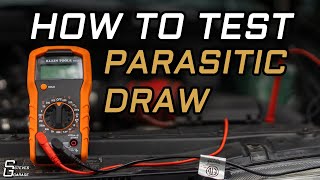
- Rapidly draining battery — A short to voltage keeps a component powered on even when the vehicle is off, creating a parasitic drain that kills the battery overnight. 🎬 Watch: How to perform a parasitic draw test on your battery.
Diagnostic Flowchart
Tap your situation to follow the diagnostic path that matches what you're seeing on this code.
Common Fixes & Costs
- Repairing a shorted wiring harness — Parts: $5-$30, Labor: $200-$500, ~2.5 hr book time (Intermediate)
- Replacing the ignition switch — Parts: $50-$250, Labor: $100-$300, ~1.5 hr book time (Intermediate)
- Replacing a faulty seat switch or door lock actuator — Parts: $70-$300, Labor: $150-$250, ~2 hr book time (DIY)
- Replacing the Totally Integrated Power Module (TIPM) — Parts: $400-$800, Labor: $150-$300, ~1.5 hr book time (Professional)
- Replacing the Body Control Module (BCM) — Parts: $300-$700, Labor: $150-$400, ~2.5 hr book time (Professional)
DIY vs Professional
- Repairing a shorted wiring harness 🟢 Beginner
Tools: Multimeter, wiring diagrams, wire strippers, soldering iron, heat shrink tubing. - Replacing the ignition switch 🟢 Beginner
Tools: Socket set, trim removal tools, screwdrivers. - Replacing a faulty seat switch or door lock actuator 🟢 Beginner
Tools: Socket set, trim removal tools, screwdrivers. - Replacing the BCM/TIPM 🟢 Beginner
Tools: Socket set, advanced bidirectional scan tool for programming.
Used vs. New Parts: Buying Guide
When a used part is worth it: A used BCM or TIPM makes sense on a vehicle over 10 years old if the cost of a new module exceeds 20% of the car's value.
Donor-vehicle mileage cap: roughly under 80000 miles for the part to have meaningful remaining life.
Donor quality checklist:
- Verify the part number matches your original module exactly.
- Source the part from a vehicle with identical trim options to minimize programming conflicts.
- Inspect the used module for water damage or corroded pins.
Decision logic:
- If The vehicle is less than 8 years old. → Buy a new OEM or high-quality remanufactured module for reliability and warranty.
- If The part is a known high-failure item (like a Chrysler TIPM). → Buy a remanufactured unit from a reputable rebuilder. They often correct the original OEM design flaws.
- If Budget is the absolute primary concern. → A used part is viable, but factor in non-refundable programming fees if it fails.
Warranty tradeoff: Used parts offer a 30-90 day part-only warranty. Remanufactured units offer 1-year to lifetime warranties. New OEM parts carry a 1-2 year warranty.
Worst-case if a used part fails: $400-$800 if a used module is defective, covering the part cost plus non-refundable labor and programming fees.
What Happens If You Wait — Timeline
- 0-1 month: Intermittent symptoms appear. A door lock fails occasionally, the car hesitates to start, or a minor parasitic draw begins. (MPG impact: 0%% · Added cost: $0)
- 1-3 months: Symptoms become frequent. The no-start condition happens weekly. A significant parasitic draw drains the battery in 1-2 days, deeply cycling and stressing the battery. (MPG impact: 0%% · Added cost: $150-$250 for a prematurely worn-out battery.)
- 3-6 months: The affected component (e.g., ignition switch, door lock actuator) burns out completely from constant high voltage, failing permanently. (MPG impact: 0%% · Added cost: $250-$600 for component replacement plus a new battery.)
- 6+ months: The persistent short back-feeds into the control module (BCM/TIPM), overheating and destroying its internal circuit board. Widespread electrical failures occur. (MPG impact: 0%% · Added cost: $800-$2000+ for module replacement and programming.)
Cost of Not Fixing It
- 0-1 month: Intermittent electrical issues and a parasitic battery drain lead to a no-start condition. (Added cost: $150-$250 for a new battery.)
- 1-6 months: Constant high voltage burns out the component on the affected circuit, causing complete failure. (Added cost: $250-$600 for component replacement.)
- 6+ months: The short back-feeds into the control module (BCM/TIPM), destroying its internal circuit board. (Added cost: $800-$2000+ for module replacement and programming.)
Diagnosis Steps
- Identify the Specific Circuit
Use a high-quality OBD-II scanner capable of reading body ('B') codes. Retrieve the exact manufacturer-specific definition for B2185 to identify the faulty circuit (e.g., Ignition Switch, Seat Switch).
Tools: Advanced OBD-II Scanner (Beginner) - Check All Related Fuses
Locate the interior and engine bay fuse boxes. Use a multimeter to test continuity on all fuses related to the BCM, TIPM, and the affected component.
Tools: Fuse Puller, Multimeter (Beginner) - Perform a Visual Inspection
Meticulously inspect the wiring harness leading to the affected component. Look for chafing, melting, or corrosion, especially where the harness bends or passes through the firewall. Unplug and check connectors for pushed-out or green pins.
Tools: Flashlight, Inspection Mirror (Beginner) - Isolate the Circuit and Test for Short to Voltage
Disconnect the component and the BCM connector containing the fault wire. Connect a multimeter's black lead to ground and probe the signal wire terminal with the red lead (key ON). A reading above 0V confirms the wire is shorted to a power source in the harness.
Tools: Multimeter, Vehicle-Specific Wiring Diagram (Advanced) - Test Component Functionality
Test the isolated component. For a switch, verify continuity opens and closes correctly. For a motor, apply direct power and ground using a power probe to see if it operates independently of the vehicle's wiring.
Tools: Multimeter, Power Probe, Wiring Diagram (Intermediate) - Advanced Test: Chrysler/Dodge Ignition Circuit
For Chrysler/Dodge ignition faults, disconnect the TIPM C1 connector. Turn the ignition ON and measure voltage on the 'Fused Ignition Switch Output' circuit at the harness. A reading above 10.0V confirms a wiring short; a low reading points to a faulty TIPM.
Tools: Multimeter, Vehicle-Specific Wiring Diagram (Advanced) - Perform a Voltage Drop Test on the Ground Circuit
Connect the red multimeter lead to the battery negative and the black lead to the component's ground pin. With the circuit active, a reading above 0.1V indicates high resistance in the ground circuit causing voltage feedback.
Tools: Multimeter, Wiring Diagram (Advanced) - Check for TSBs and Software Updates
Search online databases for Technical Service Bulletins (TSBs) related to your VIN and the B2185 code. Software glitches occasionally cause false codes requiring a dealership module reprogram.
Tools: Online TSB Database (Beginner) - Isolate the Control Module
If the wiring tests perfectly (no short to voltage, good ground) and the component functions, the fault is internal to the BCM or TIPM. Confirm all power and ground feeds to the module are stable before condemning it.
Tools: Advanced Scan Tool, Multimeter, Wiring Diagram (Professional)
When This Code Triggers (Freeze-Frame Conditions)
- System Voltage: 10.0V+ (The BCM/TIPM detected voltage on the signal circuit higher than the calibrated threshold (often >10V) for more than 2 seconds.)
- Ignition Status: RUN or START (The fault logs when the ignition key turns to the 'Run' or 'Start' position, activating the affected circuit.)
- Component Status: Inactive/Off (High voltage is detected on a circuit when the component is not commanded ON, proving a short to power.)
- Fault Type: Short to Battery (Freeze frame data explicitly logs the fault as a 'short to battery' or 'circuit high'.)
Related Codes
- B1000 — Indicates 'ECU Malfunction'. If wiring tests perfectly and B1000 is present, the control module (BCM/TIPM) requires replacement.
- U0140 — Indicates 'Lost Communication With Body Control Module'. The short circuit causing B2185 may be severe enough to disrupt network communications or kill BCM power.
- P0513 — Indicates 'Invalid Skim Key'. On Chrysler vehicles, a B2185 ignition fault prevents the BCM from reading the key's anti-theft chip, triggering this secondary code.
Climate & Environmental Factors
- High Humidity / Water Intrusion: Moisture seeps into connectors and fuse boxes, causing corrosion. This creates unintended electrical paths, leading directly to shorts to voltage.
- Cold Climates / Road Salt: Salt-laden slush accelerates the corrosion of wiring, ground straps, and module connectors, significantly increasing electrical faults.
- Vibration and Heat: Wiring harnesses routed near hot engine components or in high-vibration areas become brittle. The insulation cracks, causing wires to chafe and short out.
How to Talk to a Mechanic About This Code
Say this: "I have a B2185 code, which points to a 'Circuit High' fault. I'm experiencing [symptom]. I need a diagnostic appointment to specifically test for a short-to-voltage in that circuit. Please test the wiring harness and the component before quoting a module replacement."
This signals you are an informed customer. It directs the technician to perform a proper electrical diagnosis rather than jumping to the most expensive conclusion (replacing the BCM/TIPM).
Avoid saying:
- 'My car is acting weird, can you fix it?'
- 'My check engine light is on, just do whatever it takes.'
- 'A guy online said I need a new BCM.'
Questions to ask before authorizing the repair:
- Can you confirm the specific definition of the B2185 code for my VIN?
- What were the results of the short-to-voltage test on the affected circuit's wiring?
- Did you find any signs of water intrusion or chafing on the harness?
- If you recommend a module replacement, how did you rule out a wiring failure?
- Will the new module require programming, and is that included in the quote?
Where to Take It: Dealer vs Independent vs Chain
- Dealer:
A strong choice for Dodge/Jeep/Chrysler vehicles where TIPM issues are well-known to dealers. They have the specific tools for a faster diagnosis, but it will be costly.
Best for: Vehicles under warranty, Complex Chrysler TIPM failures, When a module replacement requires brand-specific programming tools
Downsides: Highest labor rates and part costs., May default to expensive module replacement without exhaustive wiring diagnostics. (Typical cost: +50% vs. baseline) - Independent Shop:
The best value option IF you vet them carefully. Ask if they are comfortable with complex electrical diagnostics, tracing shorts, and module programming.
Best for: Out-of-warranty vehicles where cost is a factor., Shops that specialize in electrical diagnostics.
Downsides: Quality varies wildly. A general mechanic lacks the specific tools for this code., May not have OEM tools to program a new module. (Typical cost: +0% vs. baseline) - Chain Shop:
AVOID. They are not equipped or trained to handle complex body code diagnostics effectively.
Best for: Simple, high-volume jobs like tires, brakes, and oil changes.
Downsides: Technician skill is highly variable., Business model is not suited for time-consuming electrical diagnostics. (Typical cost: -10% vs. baseline)
When to Walk Away From the Repair
If the total estimated repair cost for the B2185 fault exceeds 50% of your car's current private-party value, seriously consider not fixing it.
- Car worth $5000, fix is $600: Fix it. This is likely a wiring repair and is a small fraction of the car's value.
- Car worth $4000, fix is $1800: Borderline. The repair is 45% of the vehicle's value. Get a second opinion before authorizing.
- Car worth $3000, fix is $2200: Walk away. The repair cost is nearly 75% of the car's value. It is not economical to proceed.
What Scan Tool You Need for This Code
Minimum: A scanner that reads manufacturer-specific Body Control Module ('B' codes).
A standard $20 OBD-II reader only reads 'P' (Powertrain) codes. It will not see the B2185 code at all, making it useless for this diagnosis.
Professional: Autel MaxiSys MS906 Pro or Launch X431 Series (~$600-1500) — Provides full bidirectional control, module coding, and programming. Can perform VIN programming if the BCM or TIPM needs replacement.
Rent vs buy: Auto parts stores offer free loaner tools that may read BCM codes. If you plan to do DIY electrical work, buying a midrange tool saves hundreds in diagnostic fees.
How to Clear the Code After You Fix It
- Reconnect all components and battery terminals.
- Use an advanced OBD-II scan tool to clear the fault from the Body Control Module's memory.
- Perform a functional test of the repaired circuit (e.g., cycle the ignition, operate the locks) to confirm the fix.
Drive cycle (~15 minutes): Start the vehicle and operate all BCM-related functions multiple times. Drive for 15 minutes at mixed speeds to ensure the code does not return.
Readiness monitors affected: No emissions readiness monitors are directly associated with a B-code fault., Clearing any code resets all emissions readiness monitors to 'Not Ready'.
Before emissions retest: drive at least 50 miles to fully set monitors.
Watch out for:
- Using a basic 'P-code' reader will not clear a BCM code.
- The code returns immediately if the underlying short circuit remains.
- Disconnecting the battery rarely clears codes from the BCM's permanent memory.
Will This Fail Emissions / State Inspection?
Yes — this code typically fails an OBD-II emissions inspection.
- California: An illuminated Check Engine Light (MIL) is an automatic failure. If B2185 triggers the MIL, the vehicle fails the OBD-II check.
- New York: An active fault code that illuminates the MIL results in an automatic inspection failure.
- Texas: In emissions-testing counties, an illuminated MIL is an automatic fail.
Most Commonly Affected Vehicles
- Dodge Durango (2004-2010) — Appears as 'Ignition Unlock/Run/Start Control Circuit High'. Diagnosis points to the Front Control Module (FCM), TIPM, or wiring. Causes a no-start condition.
- Dodge Ram 1500/2500 (2009-2012) — Typically an ignition circuit fault caused by internal failures in the TIPM. Symptoms include no-start or erratic starter engagement.
- Jeep Grand Cherokee (2005-2010) — Sets B2185 for an 'Ignition Unlock Run/Start Control Circuit High' fault, frequently causing a no-crank/no-start condition.
- Chrysler Town & Country (2008-2010) — The code points to the ignition circuit and strongly indicates a wiring short or a failing TIPM.
- GMC Yukon / Sierra (2007-2014) — B2185 refers to a 'Right Front Seat Side Support Switch Circuit' fault. Diagnosis focuses on the switch and under-seat wiring.
- Ford F-150 / Mustang (2004-2014) — Ford rarely uses B2185. Similar body circuit high faults trace to a failed Smart Junction Box (SJB) caused by passenger-side water leaks.
- Honda Various (1996-2024) — B2185 is not a valid Honda code. Scanners misread or users confuse this with P2185 (Engine Coolant Temperature Sensor 2 Circuit High).
- BMW Various (1996-2024) — B2185 is not a valid BMW code. Searches invariably point to the powertrain code P2185.
Manufacturer-Specific Notes
- Dodge / Jeep / Chrysler: B2185 almost exclusively points to the 'Ignition Unlock/Run/Start Control Circuit High'. The problem is frequently the Totally Integrated Power Module (TIPM), which contains the relays and logic.
- General Motors (GMC / Chevrolet): This code points to an issue with a power seat switch circuit, requiring a completely different diagnostic path from Chrysler ignition circuits.
- Honda / BMW / Toyota: These manufacturers do not use the B2185 code. Any mention of it is a confusion with the P2185 powertrain code (Engine Coolant Temperature Sensor).
Real Owner Stories
2012 Dodge Ram 2500 with intermittent no-crank, no-start
The truck randomly failed to crank. All dash lights illuminated, but turning the key did nothing. The issue worsened over several weeks.
What they tried:
- Charged and load-tested the battery.
- Replaced the starter and ignition switch.
- Visually inspected the TIPM connectors for corrosion.
Outcome: The owner found frayed, corroded wires at the starter connector. Repairing the wiring harness section resolved the no-start issue.
Lesson: Never assume a major component like the starter or TIPM failed without inspecting the wiring harness first. Connection points exposed to the elements are prime suspects.
2015 Jeep Grand Cherokee with random no-start
The vehicle intermittently failed to start, with all electronics working but no crank. It occasionally required a jump start.
What they tried:
- Replaced the battery.
- Dealership inspected the starter and alternator but found no faults.
Outcome: The issue traced back to a failing fuel pump relay internal to the TIPM. The intermittent relay failure caused the unpredictable no-start condition.
Lesson: For intermittent no-start issues on Chrysler/Jeep/Dodge vehicles, a failing TIPM is a highly common culprit, even if the battery and starter test perfectly.
2009 Dodge Durango with B2185 and a definitive no-start
The vehicle refused to crank. An advanced scanner pulled code B2185 - Ignition Unlock/Run/Start Control Circuit High.
What they tried:
- Disconnected the Integrated Power Module (TIPM) and Powertrain Control Module (PCM).
- Tested voltage on the 'F1 Fused Ignition Switch Output' circuit at the harness connector.
Outcome: The test revealed over 10.0 volts on the isolated circuit, confirming a short to voltage in the wiring harness. The owner traced the harness, found a chafed wire touching a power source, and repaired it.
Lesson: Isolating the circuit and testing with a multimeter definitively proves whether the fault is in the wiring, a component, or the module itself, saving hundreds on unnecessary parts.
How to Prevent This Code From Triggering
- Apply dielectric grease to critical connectors (Every 2-3 years or during related repairs) — Dielectric grease on BCM, TIPM, and component connectors creates a moisture-proof barrier, preventing corrosion that causes unintended electrical shorts.
- Inspect and secure wiring harnesses (Annually) — Securing loose harnesses with zip ties or protective loom prevents wires from rubbing against sharp metal edges and wearing away their insulation.
- Address water leaks immediately (As needed) — Water leaking from a bad windshield seal or sunroof drain drips directly onto the BCM or Smart Junction Box, causing catastrophic short circuits.
Frequently Asked Questions
Is B2185 the same as P2185?
No. B2185 is a Body code related to features like ignition or locks. P2185 is a Powertrain code for the Engine Coolant Temperature Sensor.
What is the most common misdiagnosis for a B2185 code?
Replacing the BCM or TIPM without testing the wiring harness first. A shorted wire or poorly installed aftermarket accessory is a much more frequent and cheaper cause.
Can replacing my car battery cause a B2185 code?
Yes, a voltage spike during connection can set a false glitch code. Clear the code with a scanner and drive for 15 minutes to see if it returns.
I replaced the ignition switch but the B2185 code is still there. What now?
The fault is in the wiring or the control module. Perform a 'short to voltage' test on the signal wire to check for contact with a power source.
What is a TIPM and how is it related to B2185?
The Totally Integrated Power Module (TIPM) is a combination fuse box and control module used in Chrysler/Dodge/Jeep vehicles. A failing TIPM frequently causes the B2185 ignition circuit code.
Can I fix a B2185 code myself?
You can fix simple issues like visibly damaged wires or faulty switches. Tracing complex shorts or replacing a BCM/TIPM requires advanced diagnostic skills and programming tools.
Why won't my cheap code scanner read B2185?
Basic $20 readers only communicate with the Powertrain Control Module (PCM) for 'P' codes. You need an advanced, bi-directional scanner to read 'B' (Body) codes from the BCM.
Key Takeaways
- B2185 is a manufacturer-specific body code indicating a 'Circuit High' fault, meaning a circuit's voltage exceeds its normal operating range.
- On Dodge, Jeep, and Chrysler vehicles, B2185 almost exclusively points to an 'Ignition Unlock/Run/Start Control Circuit High' fault, causing a definitive no-start condition.
- Before replacing a $500+ Body Control Module (BCM) or TIPM, use a multimeter to test the isolated signal wire for a short-to-voltage.
- Do not confuse the B2185 body code with the P2185 powertrain code; P2185 relates to the engine coolant temperature sensor and requires a completely different diagnostic path.
Helpful Videos
Shop the Parts Behind B2185
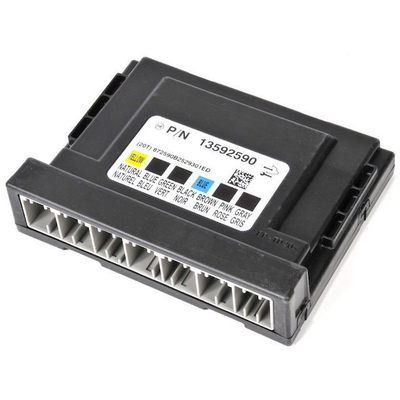
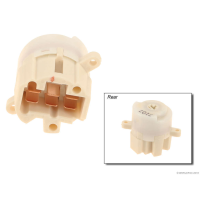
Below are the parts most often responsible for code B2185, ranked by how frequently each one is the actual culprit (per the diagnosis above). Tap any to see what we have for your vehicle.


The information in this article is provided for general reference and educational purposes only. Vehicle specifications, procedures, and part compatibility can vary by production date, trim level, and region. Always consult your vehicle's factory service manual and verify part numbers before purchasing or performing repairs. Safety-critical components such as airbags, seat belts, and braking systems should be installed by a qualified professional.
- 🧭 Diagnostic Flowchart
- 🎬 Helpful Videos
- 🛍️ Shop This Part
- What Does B2185 Mean?
- Can I Drive With B2185?
- Common Causes
- Symptoms
- Common Fixes & Costs
- DIY vs Professional
- Used vs. New Parts: Buying Guide
- What Happens If You Wait — Timeline
- Cost of Not Fixing It
- Diagnosis Steps
- When This Code Triggers (Freeze-Frame Conditions)
- Related Codes
- Climate & Environmental Factors
- How to Talk to a Mechanic About This Code
- Where to Take It: Dealer vs Independent vs Chain
- When to Walk Away From the Repair
- What Scan Tool You Need for This Code
- How to Clear the Code After You Fix It
- Will This Fail Emissions / State Inspection?
- Most Commonly Affected Vehicles
- Manufacturer-Specific Notes
- Real Owner Stories
- 2012 Dodge Ram 2500 with intermittent no-crank, no-start
- 2015 Jeep Grand Cherokee with random no-start
- 2009 Dodge Durango with B2185 and a definitive no-start
- How to Prevent This Code From Triggering
- Frequently Asked Questions
- Is B2185 the same as P2185?
- What is the most common misdiagnosis for a B2185 code?
- Can replacing my car battery cause a B2185 code?
- I replaced the ignition switch but the B2185 code is still there. What now?
- What is a TIPM and how is it related to B2185?
- Can I fix a B2185 code myself?
- Why won't my cheap code scanner read B2185?
- Key Takeaways
- 🎟️ Get 5% Off