

B2190 on 2009-2015 Nissan Murano: NATS Anti-Theft System Fault Causes and Fixes
Code B2190 on a 2009-2015 Nissan Murano indicates a problem with the Nissan Anti-Theft System (NATS), specifically the antenna amplifier in the key slot. The most common fix is ensuring you are using a properly registered Intelligent Key. If the key is not the issue, the problem could be the key slot antenna itself, which is a relatively inexpensive part to replace, especially if sourced used.
- B2190 points to a problem with your Murano's anti-theft system, specifically the key reader in the dashboard slot.
- Before panicking, try your spare Intelligent Key and replace the battery (CR2032) in the key fob.
- Do not insert foreign objects into the key slot, as this can trigger the code.
- If simple fixes don't work, the problem is likely the key slot antenna (Part No. 285F5-1AA0A) itself or its wiring.
- Consider and remove potential sources of radio frequency interference, like aftermarket chargers or phones near the key, before proceeding with repairs.
- Due to the need for special tools (CONSULT-III plus) for diagnosis and programming, professional service is highly recommended for this issue.
What's Unique About the 2009-2015 Nissan MURANO
For the 2009-2015 Nissan Murano, this code is directly tied to the Intelligent Key system and its interaction with the key slot. Unlike generic codes, B2190 is very specific to Nissan's anti-theft design. The system is designed to be sensitive to ensure vehicle security. As outlined in Nissan's Technical Service Bulletin NTB13-015A, the code can even be triggered by inserting something other than a registered Intelligent Key into the slot. This highlights the system's specific nature and the importance of using correct, registered keys.
Diagnostic Flowchart
Tap your situation to follow the diagnostic path that matches what you're seeing on this vehicle.
Generation note: The 2009-2015 year range covers the second generation (Z51) of the Nissan Murano. This generation consistently uses the Intelligent Key system with a key slot, so the information regarding code B2190 is applicable across this entire model run. The issue is also common on many other Nissan and Infiniti vehicles from this era using the same key slot system.
Symptoms You May Notice
- Intelligent Key warning light illuminated on the dashboard.
- Vehicle fails to start (no-crank, no-start condition).
- "No Key Detected" or "Incorrect Key ID" message on the instrument cluster.
- Engine starts and then immediately stalls.
- Push-to-start ignition does not respond, but the car may start when the key fob is inserted directly into the key slot.
- Replacing the vehicle's main battery without first checking the key fob battery.
- Replacing the BCM when the actual issue is a much cheaper wiring or key slot fault.
- Assuming the key fob is bad when the key slot antenna is the component that has failed.
Most Likely Causes
- Using a non-registered or incorrect key 🔴 High Probability The NATS system is designed to reject any key that is not specifically programmed to the vehicle for security reasons. The B2190 code can be stored simply by inserting a foreign object or the wrong key into the slot.
How to confirm: Try starting the vehicle with a known-good, registered Intelligent Key. If the vehicle starts and the code can be cleared (or moves to 'PAST'), the original key is the issue. The code will not clear until a valid key is used in the slot.
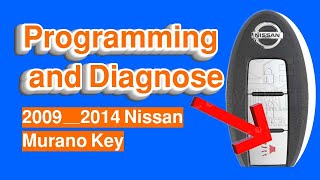
Typical fix: Use the correct, registered Intelligent Key. If a key is lost or damaged, a new key will need to be purchased and programmed by a dealership or a qualified automotive locksmith. 🎬 Watch this guide on Murano key programming and diagnostics.
Est. part cost: $220-$450 for a new key and programming at a dealer or locksmith. - Weak or dead battery in the Intelligent Key fob 🟡 Medium Probability → Shop Keyless Entry Transmitter
How to confirm: Replace the battery in the key fob (typically a CR2032). Alternatively, insert the key fob directly into the key slot, which is designed to allow the car to start even with a dead fob battery as it uses induction power. If it starts this way, the fob battery is the culprit.
Typical fix: Replace the CR2032 battery in the key fob.
Est. part cost: $5-$10 - Faulty NATS Antenna Amplifier (Key Slot) 🟡 Medium Probability → Shop Antenna As cited in TSB NTB13015A/B, a fault within the key slot itself is a primary reason for this code. This component, also called the 'Control Assembly-Card Slot', can fail internally, preventing it from reading the key's transponder.
How to confirm: A technician will use a diagnostic tool like CONSULT-III plus to check the communication signal from the antenna. They will follow the DTC confirmation procedure outlined in the TSB, which involves testing with a known-good key. If the code remains 'CURRENT' with a good key, the slot or wiring is suspect. A direct measurement of the antenna coil should yield a resistance of approximately 12.1 Ohms.
Typical fix: Replacement of the key slot/NATS antenna amplifier unit. This is often a plug-and-play part that does not require reprogramming.
Est. part cost: $50-$150 for a used part, $200-$776 for a new OEM part. - Wiring issue between the Key Slot and the BCM ⚪ Low Probability
How to confirm: A visual inspection of the wiring harness for damage, and continuity tests on the wires between the key slot connector and the BCM connector, as detailed in the factory service manual.
Typical fix: Repairing the damaged section of the wiring harness.
Est. part cost: $50-$300 depending on labor
Rare But Worth Checking
- Faulty Body Control Module (BCM): → Shop Body Control Module While rare, a failure within the BCM can cause a variety of electrical issues, including this code. This is typically a last resort after all other possibilities have been exhausted due to the high cost of replacement and required programming.
- Radio Frequency (RF) Interference: According to Nissan TSBs, other wireless devices can interfere with the key's signal. This includes aftermarket alarm systems, USB chargers, smartphones, or even RFID-blocking wallets placed near the key. This should be ruled out before replacing parts.
- Corroded Battery Fusible Link Box: → Shop Vehicle Battery In one documented case on an 11' Murano, a corroded fusible link on the positive battery terminal caused a no-crank condition with multiple communication codes. The BCM was unable to sense the transmission park signal because the TCM was unpowered, leading to a NATS-related no-start symptom. The root cause was not the NATS system itself, but its power supply.
Diagnosis Steps
- Verify the code with a professional scan tool capable of reading Nissan-specific B-codes.
- Question the driver about the type of key being used and if any foreign objects were inserted into the key slot.
- Replace the battery (CR2032) in the Intelligent Key fob as a simple first step.
- Attempt to start the vehicle by inserting the Intelligent Key into the key slot. If it starts, the issue is likely the fob battery or a weak signal.
- Follow the official DTC Confirmation Procedure from Nissan TSB NTB13-015B.
- a. Insert a known-good, registered Intelligent Key into the key slot and check for the DTC using a CONSULT-III plus tool. If the DTC is not detected, proceed to the next step. If it is, go to the full diagnosis in the service manual.
- b. With the good key still in the vehicle, press the push-button ignition switch and check for the DTC again. If it is not detected, the inspection is complete. If it is, further diagnosis is needed.
- Check for sources of Radio Frequency (RF) interference. Remove aftermarket chargers, phone mounts, and other electronic devices from the vehicle and re-test.
- If the code persists, inspect the wiring and connectors between the key slot (NATS Antenna Amplifier, connector M76/M21) and the Body Control Module (BCM, connector M19) for any visible damage, corrosion, or loose connections.
- Test the NATS antenna amplifier circuit according to the factory service manual. Check for battery voltage at terminal 1 and continuity to ground at terminal 3 of the antenna connector.
- If the antenna and wiring are confirmed to be good, the issue may lie within the BCM, which requires further specialized diagnostics.
Parts You'll Likely Need
- Intelligent Key Fob
(OEM #285E3-1AA5B)— A lost, damaged, or improperly programmed key is a frequent cause of this code.
Trusted brands: Nissan OE
OEM price range: $220-$450 (including programming).
Aftermarket price range: $75-$160 (plus programming). - NATS Antenna Amplifier / Key Slot
(OEM #285F5-1AA0A)— This is the component directly identified by the B2190 code. A fault here will prevent communication with the key. Also known as 'Control Assembly-Card Slot'.
Trusted brands: Nissan OE
OEM price range: $200-$776.
Aftermarket price range: $50-$150 (typically used/refurbished from sources like eBay). - Key Fob Battery
(OEM #CR2032)— A weak or dead battery is a simple and common cause for key detection issues.
Trusted brands: Energizer, Duracell, Panasonic
OEM price range: $5-$10
Aftermarket price range: $2-$8
Related Codes That Often Appear With This One
- P1614 (CHAIN OF IMMU-KEY): This code indicates the BCM cannot receive the key ID signal, which is consistent with a B2190 fault in the antenna or wiring.
- P1615 (DIFFERENCE OF KEY): This code means the BCM receives a signal but does not recognize the key ID. This points more towards an incorrect or unregistered key rather than a hardware fault.
- U1000 (CAN Communication Circuit): If seen with B2190, this can point to a broader electrical issue, such as a failing BCM or a power supply problem affecting multiple modules.
Technical Service Bulletins (TSBs) & Recalls
- NTB13-015B - INTELLIGENT KEY WARNING LAMP ON, WITH DTC B2190: This is the primary TSB for this issue, superseding NTB13-015A. It applies to all Nissan vehicles with a key slot and outlines the four main causes (foreign object, key issue, wiring issue, key slot issue) and provides the official diagnostic confirmation procedure.
- NTB13-107G - VEHICLE KEY NOT DETECTED / AUTHENTICATED, ENGINE WILL NOT START: While not specific to B2190, this TSB is highly relevant. It details how Radio Frequency (RF) interference from devices like cell phones, chargers, and even RFID-blocking materials can cause key detection symptoms.
Platform-Specific Known Issues
- Per TSB NTB13015A, this code can be stored simply by inserting an object other than the correct Intelligent Key into the key slot.
- The code will not erase or change to a 'PAST' status until a valid, registered key is inserted into the slot and recognized by the BCM.
Mechanic-Grade Diagnostic Values
- NATS Antenna Amplifier Coil Resistance — expected: ~12.1 Ohms. Failure: An open circuit (infinite resistance) or a reading significantly different from the expected value indicates a faulty antenna coil.
- Voltage at NATS Antenna Amp Connector (M21/M76), Pin 1 to Ground — expected: Battery Voltage. Failure: No voltage indicates a break in the power supply wire from the BCM or a blown fuse.
- Continuity at NATS Antenna Amp Connector (M21/M76), Pin 3 to Ground — expected: Continuity should exist.. Failure: No continuity indicates an open in the ground circuit.
- Signal at NATS Antenna Amp Connector (M21/M76), Pin 2 and Pin 4 — expected: A fluctuating voltage signal (requires an oscilloscope for proper diagnosis).. Failure: A flat line (no signal) when the key is inserted points to a failure in the BCM or the antenna amplifier.
Hidden / Shadow Codes Worth Checking
- P1614: Also known as 'CHAIN OF IMMU-KEY'. This NATS-related code indicates the BCM cannot receive the key ID signal from the NATS antenna amplifier. It is a direct companion to B2190 and confirms a communication breakdown between the key slot and the BCM. (see via A professional scan tool capable of reading Nissan-specific engine and body codes.)
- P1615: Also known as 'DIFFERENCE OF KEY'. This code means the BCM is successfully receiving a signal from the antenna amplifier, but the key's ID is not registered in the system. Seeing this code instead of P1614 suggests the B2190 is likely intermittent or was set by a foreign object, and the antenna itself is likely functional. (see via A professional scan tool capable of reading Nissan-specific engine and body codes.)
Scan Tool Commands That Help
- Nissan CONSULT-II / CONSULT-III plus: C/U INITIALIZATION — This function is required after replacing the BCM or ECM to sync the components of the NATS system.
- Nissan CONSULT-III plus: WRITE CONFIGURATION — When replacing a BCM, the vehicle's specific configuration must be written to the new module. Failure to do this can cause various features to work incorrectly.
- Nissan CONSULT-III plus: PIN READ — This function reads the BCM-specific 5-digit security code required to perform key registration and other NATS-related procedures.
Wiring & Ground Locations
- M76 / M21 — The electrical connector on the NATS Antenna Amplifier (the key slot itself).. This is the primary connector to test for power (Pin 1), ground (Pin 3), and signal (Pins 2 & 4) when diagnosing a B2190 code directly at the component.
- M19 — One of the main harness connectors for the Body Control Module (BCM), typically located in the driver's side footwell area.. The wires from the key slot connector (M76/M21) terminate here. This is the other end to check for continuity if a wiring break is suspected.
Real Owner Repair Stories
- ALLDATA Tech-Assist Case Study (2011 Nissan Murano, 165,300 miles) — No-crank, no-start condition. Ignition could not be turned off. MIL was on. No communication with PCM, TCM, and ABS modules.
❌ Tried (didn't work) Initial scan showed multiple communication and signal loss DTCs (U101, U0415, B2193, B2557, B2601, B2603, B260A, B260F, C1729).
✅ What actually fixed it Replacement of the corroded battery fusible link box located on the positive battery post. This restored power to the TIPM and all control modules, resolving the communication errors and the no-start condition.
Helpful Videos

We Have This Part in Stock



The information in this article is provided for general reference and educational purposes only. Vehicle specifications, procedures, and part compatibility can vary by production date, trim level, and region. Always consult your vehicle's factory service manual and verify part numbers before purchasing or performing repairs. Safety-critical components such as airbags, seat belts, and braking systems should be installed by a qualified professional.
- Nissan MURANO:
- 🧭 Diagnostic Flowchart
- 🎬 Helpful Videos
- 🛍️ Shop This Part
- What's Unique About the 2009-2015 Nissan MURANO
- Symptoms You May Notice
- Most Likely Causes
- Rare But Worth Checking
- Diagnosis Steps
- Parts You'll Likely Need
- Related Codes That Often Appear With This One
- Technical Service Bulletins (TSBs) & Recalls
- Platform-Specific Known Issues
- Mechanic-Grade Diagnostic Values
- Hidden / Shadow Codes Worth Checking
- Scan Tool Commands That Help
- Wiring & Ground Locations
- Real Owner Repair Stories
- 🎟️ Get 5% Off