

OBD-II Code B2193: A Manufacturer-Specific Communication Fault
What B2193 means, why its definition varies so widely, and how to diagnose it like a pro
- B2193 is a manufacturer-specific code that triggers a critical no-start condition on Nissan and Infiniti vehicles due to a BCM-to-ECM immobilizer communication failure.
- Always diagnose network 'U' codes like U1000 or U0100 before B2193, as fixing the root 60-ohm CAN bus network fault usually clears the B2193 symptom.
- On Infiniti G37s, check the passenger floorboard for dampness; clogged sunroof drains leak water directly onto the BCM, causing 80% of these failures.
- Do not install a used BCM in a modern Nissan or Infiniti; the VIN is permanently written to the module, requiring a new $600-$1,500 OEM replacement and dealer programming.
What Does B2193 Mean?
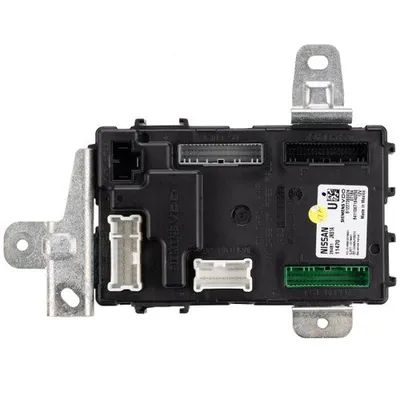
B2193 is a body-related diagnostic trouble code with highly manufacturer-dependent definitions. On Nissan and Infiniti, it signifies a critical communication breakdown between the Body Control Module (BCM) and Engine Control Module (ECM), blocking the immobilizer system from starting the engine. On Chevrolet, Jeep, or Dodge, it points to entirely different systems: a reversed engine harness wire, a faulty fuel gauge sensor, or a dead TPMS sensor.
Technical definition: Nissan/Infiniti defines B2193 as 'CHAIN OF ECM-IMMU' or 'Inactive communication between ECM and BCM'. Secondary Nissan definitions include 'A/C Refrigerant Low Side Fluid Pressure Sensor Circuit Above Maximum Threshold' or radiator fan control circuit faults. Chevrolet (2015 City Express) triggers it for a reversed wire in the engine EGI harness. Jeep defines it as 'Fuel Level Sensor 2-Circuit Short To Battery Or Open-Non SRT' or 'Intelligent Battery Sensor Internal'. Dodge uses it for 'Left Rear Low Tire Pressure Sensor'.
Can I Drive With B2193?
No — Do Not Drive. For Nissan and Infiniti, B2193 indicates a critical communication failure that prevents the engine from starting or shuts it down while driving. Do not drive the vehicle. For Jeep or Dodge, it affects the fuel gauge or TPMS; driving is possible but risks stalling from an empty tank.
Common Causes

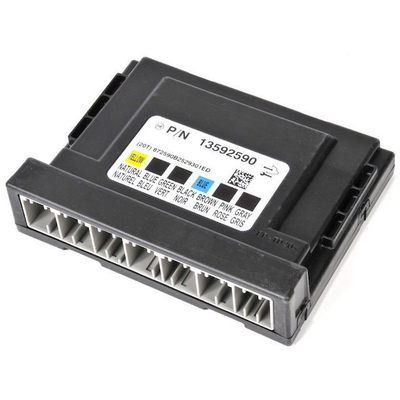
- Water-Damaged Body Control Module (BCM) (Very Common) — On Nissan and Infiniti models (especially the G37), clogged sunroof drains leak water directly onto the BCM in the passenger footwell. This corrodes the connectors and shorts the internal circuit board, halting communication with the ECM.
- CAN Bus Wiring or Connector Shorts (Common) — The Controller Area Network (CAN) allows modules to communicate. A shorted, open, or corroded wire in this network—specifically between the BCM and ECM—triggers the code.
- Corroded Battery Fusible Link (Common) — On vehicles like the Nissan Murano, corrosion on the main fusible link box connected to the positive battery terminal causes a severe voltage drop. This leads to a network-wide communication failure and triggers B2193 alongside multiple U-codes.
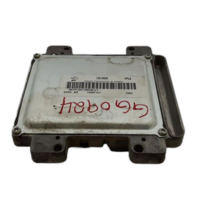
- Faulty Engine Control Module (ECM) (Less Common) — The ECM itself can fail and break the communication chain. Technicians usually suspect the ECM only after ruling out the BCM, fusible links, and CAN bus wiring.
- Faulty Fuel Level Sensor or Intelligent Battery Sensor (Jeep) (Less Common) — On specific Jeep models, B2193 is triggered by a hardware failure in the fuel sending unit inside the gas tank or the intelligent battery sensor (IBS) on the negative terminal.
- Faulty Radiator Fan Control Module (Nissan) (Less Common) — In Nissan models like the Murano, 370Z, and GT-R, B2193 points to a failure in the radiator fan control circuit, which prevents the cooling fans from activating and causes engine overheating.
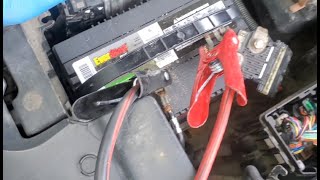
- Low or Unstable Battery Voltage (Rare) — A weak battery causes unpredictable electronic issues. When voltage drops below 10.5V during cranking, modules fail to power up correctly, logging false communication codes across the network.
- Improperly Installed Aftermarket Accessories (Rare) — Aftermarket alarms, remote starters, or audio equipment improperly tapped into the vehicle's CAN bus wiring disrupt communication and generate network codes.
Symptoms

- Engine cranks but will not start — The most common symptom in Nissan/Infiniti vehicles. The BCM cannot verify the security handshake with the ECM, cutting fuel or spark.
- Security or Immobilizer Light remains illuminated — The red security light on the dashboard stays solid or flashes rapidly, indicating the anti-theft system (NATS) is actively blocking ignition.
- Engine will not crank at all — The failure prevents the starter relay from engaging when the ignition button is pressed.
- Multiple erratic electrical issues — A failing BCM on a Nissan/Infiniti causes erratic behavior from power windows, door locks, interior lights, or wipers alongside the no-start condition.
- Inaccurate or erratic fuel gauge (Jeep) — The fuel gauge reads empty, full, or fluctuates wildly, accompanied by a check engine light.
- Engine overheating at idle (Nissan) — The cooling fans fail to activate, causing the engine temperature gauge to spike quickly in traffic.
- TPMS warning light illuminated (Dodge) — Indicates a dead battery or hardware failure in the left rear tire pressure sensor.
Diagnostic Flowchart
Tap your situation to follow the diagnostic path that matches what you're seeing on this code.
Common Fixes & Costs
- Replace Body Control Module (BCM) — Parts: $300-$1200, Labor: $150-$300 (plus $150 programming), ~2 hr book time (Professional)
- Repair CAN Bus Wiring — Parts: $10-$50, Labor: $250-$800, ~4 hr book time (Professional)
- Replace Battery Fusible Link Box — Parts: $30-$80, Labor: $50-$100, ~0.5 hr book time (DIY)
- Replace Fuel Level Sending Unit (Jeep) — Parts: $350-$500, Labor: $300-$450, ~3 hr book time (Intermediate)
- Repair Chevy City Express EGI Harness — Parts: $10-$20, Labor: $150-$300, ~2 hr book time (Intermediate)
- Replace Engine Control Module (ECM) — Parts: $400-$1200, Labor: $150-$250 (plus programming), ~1.5 hr book time (Professional)
Used vs. New Parts: Buying Guide
When a used part is worth it: A used BCM is never recommended for modern Nissan/Infiniti vehicles. The VIN is permanently written to the module and cannot be reprogrammed. A used BCM only works if you pay a specialist to 'clone' the data from your original module.
Donor-vehicle mileage cap: roughly under 100000 miles for the part to have meaningful remaining life.
Donor quality checklist:
- Part number must match EXACTLY, including any suffix letters.
- Avoid modules from flood-damaged vehicles.
- Verify the donor vehicle had the exact same options (e.g., Intelligent Key) as yours.
Decision logic:
- If Vehicle is a Nissan/Infiniti from 2007 or newer → Buy a new OEM module from the dealer. It is the only way to guarantee it can be programmed to your car's VIN.
- If Your original BCM is not completely dead → Use a professional repair service like Circuit Board Medics to fix the original module, avoiding programming issues.
- If Budget is the absolute top priority → A used BCM requires expensive cloning services and carries a high risk of failure.
Warranty tradeoff: Used parts: 30-90 day warranty. Aftermarket repair: 1-year warranty. OEM new: 1-year/12,000-mile warranty if installed by a dealer.
Worst-case if a used part fails: $500-$800 if a used part fails or can't be programmed, covering the wasted part and labor before buying a new OEM part.
What Happens If You Wait — Timeline
- Immediate: For Nissan/Infiniti immobilizer fault: The engine will not start, or it stalls while driving. The security light is on. The vehicle is disabled. (MPG impact: N/A% · Added cost: $100-$300 for a tow truck.)
- 0-2 weeks: For Nissan fan controller fault: The cooling fans fail to activate in traffic. The engine temperature gauge climbs into the red zone during idle. (MPG impact: 0-5%% · Added cost: $0 if the driver shuts off the engine immediately.)
- 2 weeks - 2 months: For Nissan fan controller fault: Repeated overheating degrades the engine oil and causes coolant to boil over, damaging seals. (MPG impact: 5-10%% · Added cost: $200-$900 for replacing a thermostat, water pump, or radiator.)
- 2+ months: For Nissan fan controller fault: Catastrophic engine damage occurs. Severe overheating warps the aluminum cylinder head or blows the head gasket. (MPG impact: N/A (vehicle is disabled)% · Added cost: $1,500-$5,000+ for head gasket replacement or a rebuilt engine.)
Cost of Not Fixing It
- Immediate: For Nissan/Infiniti, the vehicle will not start or stalls while driving, leaving you stranded. (Added cost: $100-$300 for a tow.)
- Days to Weeks: For the Nissan fan controller variant, continued driving leads to engine overheating, warping cylinder heads or blowing the head gasket. (Added cost: $1,500-$5,000+ for major engine repairs.)
- Ongoing: For the Jeep fuel sensor variant, the primary risk is running out of fuel unexpectedly, causing a dangerous stall in traffic and damaging the fuel pump. (Added cost: $600-$900 for a fuel pump replacement.)
Diagnosis Steps

- Verify Battery Health
Ensure the vehicle's battery is fully charged (12.6V at rest) and the terminals are clean and tight. Low voltage is a primary cause of false network communication faults.
Tools: Multimeter (Beginner) - Perform a Full System Scan
Use a high-quality OBD-II scanner to read Body (B), Network (U), and Powertrain (P) codes from all modules. Always diagnose U-codes (like U1000 or U0100) first, as they indicate the root network failure causing the B2193.
Tools: Advanced OBD-II Scanner (Beginner) - Inspect BCM for Water Damage
On Infiniti and Nissan models, pull back the passenger-side carpet and visually inspect the BCM. Look for moisture, corrosion on the pins, or water lines on the module casing caused by clogged sunroof drains.
Tools: Flashlight, Trim removal tools (Intermediate) - Inspect Fuses and Fusible Links
Check all fuses related to the BCM, ECM, and immobilizer system. On Nissans, inspect the main fusible link box on the positive battery terminal for hidden corrosion or blown internal links.
Tools: Fuse puller, Multimeter (Beginner) - Pro Tip: Test CAN Bus Resistance
With the battery disconnected, measure the resistance between Pin 6 (CAN-H) and Pin 14 (CAN-L) at the Data Link Connector (DLC). A healthy network reads 60 ohms (± 2 ohms). A reading of 120 ohms indicates an open circuit; near 0 ohms indicates a short.
Tools: Multimeter (Advanced) - Pro Tip: Check CAN Bus Voltage and Ground Shorts
With the battery connected and ignition ON, check voltage. CAN-H (Pin 6) should be approx. 2.6V to 3.5V and CAN-L (Pin 14) should be approx. 2.4V to 1.5V. Next, with ignition OFF and battery disconnected, measure resistance between CAN-H/CAN-L and ground. Any continuity indicates a short to ground.
Tools: Multimeter (Advanced) - Analyze Network Topology
Use an advanced scan tool to display a network topology map. This visually identifies which modules are offline and pinpoints where the communication break is located on the bus.
Tools: Topology-capable Scan Tool (Professional) - Isolate Modules
Disconnect modules one by one from the CAN bus to see if the 60-ohm resistance reading returns or if communication is restored to the rest of the network. This isolates the internally shorted module.
Tools: Wiring diagrams, Scan tool (Professional) - Advanced: Check CAN Signal with Oscilloscope
Connect an oscilloscope to CAN-H and CAN-L. Look for a clean, mirrored square wave pattern. Signal dropouts, noise, or distorted waves indicate interference, shorts, or opens in the wiring.
Tools: Oscilloscope (Professional)
When This Code Triggers (Freeze-Frame Conditions)
- Vehicle State: Key-On or Cranking (The BCM attempts to communicate with the ECM as soon as the ignition is turned ON. The fault is logged almost immediately if no valid handshake occurs.)
- Battery Voltage: 10.5V - 14.5V (Code triggers if voltage is too low during the initial module power-up sequence, preventing a stable network connection.)
- Immobilizer Status: Active / Not Verified (The NATS (Nissan Anti-Theft System) status shows as active because the BCM failed to receive the correct ID verification from the ECM.)
- Associated Codes: U1000, P1612 (Confirms a network communication failure (U1000) and a corresponding immobilizer error from the ECM's perspective (P1612).)
Related Codes
- U1000 — A general CAN communication failure code. If B2193 appears with U1000, diagnose U1000 first. U1000 indicates the network is down; B2193 is the specific result (the BCM can't talk to the ECM). Fixing U1000 resolves B2193.
- P1612 — The 'partner code' to B2193 on Nissan/Infiniti. B2193 is set by the BCM when it can't communicate with the ECM. P1612 is set by the ECM when it can't get the immobilizer signal from the BCM. Seeing both confirms the 'CHAIN OF ECM-IMMU' fault.
- U0100 — Means 'Lost Communication With ECM/PCM'. Functionally similar to U1000, it proves the primary fault lies within the communication network itself. Often seen with B2193 in the Chevy City Express TSB.
- U1010 — Indicates a communication error. Service information advises diagnosing this code before B2193 if both are present.
- B260F — Defined as 'Engine State Signal Lost'. Indicates the BCM is not receiving a valid signal about whether the engine is running, a direct consequence of the communication line to the ECM being down.
Climate & Environmental Factors
- High Humidity / Water Intrusion: Clogged sunroof drains leak water directly onto the BCM on Infiniti G37s and Nissan Muranos. High humidity accelerates corrosion on wiring connectors and circuit boards, causing fatal shorts.
- Cold Weather: At 0°F (-18°C), a battery loses up to 50% of its power. This severe voltage drop prevents modules from powering up correctly during cranking, triggering a flood of false communication codes like B2193.
- Road Salt (Rust Belt Regions): Corrosive road salt aggressively attacks wiring, ground straps, and fusible links in the engine bay. This causes high resistance or open circuits in the CAN bus network.
How to Talk to a Mechanic About This Code
Say this: "My car has a no-start condition and a scan showed code B2193, possibly with U1000. I'd like to schedule a diagnostic for a CAN bus communication failure. Please start by checking for power and ground at the BCM, testing CAN bus resistance, and inspecting for water intrusion before recommending a module replacement."
This signals you understand B2193 is a complex electrical problem, not a simple part failure. It directs the technician to perform fundamental diagnostic steps first, preventing a quick and incorrect recommendation to replace a costly computer module.
Avoid saying:
- 'Just fix whatever's wrong'
- 'My car won't start, can you look at it?'
- 'Whatever you recommend'
Questions to ask before authorizing the repair:
- What was the CAN bus resistance reading between pins 6 and 14 at the diagnostic port?
- Did you find any evidence of water damage, corrosion, or wiring issues at the BCM?
- If you're recommending a BCM replacement, is the cost of programming the new module included in the quote?
- What is the warranty on the replacement module and the labor?
Where to Take It: Dealer vs Independent vs Chain
- Dealer:
Recommended. The dealer has proprietary tools and guaranteed access to the correct new modules and programming procedures, which are critical for this repair.
Best for: Vehicles under warranty, Complex electrical faults like B2193 that require module programming, Accessing manufacturer-specific TSBs
Downsides: Highest labor rates, Defaults to module replacement rather than wiring repair (Typical cost: +50% vs. baseline) - Independent Shop:
Viable, but requires careful vetting. Ensure they have an oscilloscope and the capability to program a new BCM/ECM for your specific vehicle.
Best for: Out-of-warranty vehicles where cost is a major factor
Downsides: Quality and experience with complex network diagnostics vary widely. (Typical cost: +0% vs. baseline) - Chain Shop:
AVOID. This complex electrical fault is far outside the scope of what chain shops handle.
Best for: Simple, high-volume jobs like oil changes, tires, and batteries.
Downsides: Technicians are not equipped or trained for in-depth electrical network diagnosis. (Typical cost: -10% vs. baseline)
When to Walk Away From the Repair
If the estimated repair cost exceeds 50% of your car's private-party value, seriously consider selling or trading it in instead of repairing it.
- Car worth $3000, fix is $1800: Walk away. The repair cost is over 50% of the car's value, and other issues are likely to follow.
- Car worth $12000, fix is $1800: Fix it. The repair cost is well below the 50% threshold and restores a significant function to a valuable vehicle.
- Car worth $5000, fix is $2000: Borderline. The cost is 40% of the car's value. Get a second opinion and consider the car's overall condition before authorizing the repair.
What Scan Tool You Need for This Code
Minimum: A scanner that reads manufacturer-specific codes from ALL vehicle modules (Engine, BCM, ABS, etc.). A basic engine-only code reader will not see the B2193 code.
A $20 reader from a parts store only reads generic powertrain codes (P-codes). It completely misses the B2193 code stored in the BCM, leading to incorrect diagnoses.
Budget: BlueDriver Pro (~$100) — Reads and clears codes from all modules, including the BCM. Provides live data and freeze frame information essential for initial diagnosis.
Mid-range: Foxwell NT510 Elite / XTool A30M (~$150) — Adds bi-directional controls to command components to function, helping test the BCM's output capabilities.
Professional: Autel MaxiCOM MK808S / MK906BT (~$450-1200) — Provides full bidirectional control, OE-level diagnostics, and network topology maps. Required for programming and initializing a new BCM or ECM.
Rent vs buy: A free rental from a parts store is insufficient as it may not read B-codes. Proper diagnosis requires at least a mid-range tool. Buy a tool only if you plan to perform the full electrical diagnosis yourself; otherwise, pay a professional diagnostic fee.
How to Clear the Code After You Fix It
- Fix the underlying hardware fault (e.g., replace BCM, repair wiring).
- Reconnect the battery.
- Use a professional-grade OBD-II scan tool to clear the B2193 and any related U-codes from all modules.
- Perform the BCM/ECM initialization or key re-learning procedure if a module was replaced.
Drive cycle (~15 minutes): After clearing the code, cycle the ignition OFF, then ON, and attempt to start the engine. If it starts and runs for several minutes without the security light returning, the immediate communication issue is resolved. A short test drive confirms stability.
Readiness monitors affected: Clearing codes resets all emissions readiness monitors., If the battery was disconnected, monitors for Catalyst, Evaporative System, and O2 Sensors will be reset.
Before emissions retest: drive at least 50 miles to fully set monitors.
Watch out for:
- Simply clearing the code with a scanner will not fix the problem; it returns instantly if the hardware fault exists.
- Forgetting to perform the security initialization procedure after replacing a BCM results in a continued no-start condition.
- Using a basic code reader that only clears powertrain (P) codes leaves the B2193 active in the BCM.
Will This Fail Emissions / State Inspection?
Yes — this code typically fails an OBD-II emissions inspection.
- California: An active B2193 or U1000 causes an automatic smog check failure. The test equipment cannot communicate with the vehicle's OBD-II system if the CAN bus is down.
- New York: Any active diagnostic trouble code pointing to a communication failure, including network codes like U1000 that accompany B2193, results in a failed inspection.
- Texas: A communication code like U1000 or a no-start condition from B2193 prevents the test from being completed, resulting in a failure.
Most Commonly Affected Vehicles
- Infiniti G35 / G37 (2007-2013) — Extremely common to see B2193 for a no-start condition. Highly susceptible to BCM failure from water intrusion via clogged sunroof drains.
- Nissan Xterra (2011-2015) — Prone to the BCM-ECM communication failure, almost always accompanied by U1000.
- Nissan Murano (2009-2014) — Shows B2193 for BCM-ECM communication issues (often from a bad fusible link) or a faulty radiator fan controller causing overheating.
- Infiniti QX56 (2011-2013) — Known to have BCM-ECM communication faults requiring module diagnosis and replacement.
- Nissan Navara / Frontier (2015-2024) — Appears with U1000, pointing to a CAN bus system or security system error. Diagnosis must start with the U1000 code.
- Chevrolet City Express (2015-2016) — A known factory wiring defect covered by TSB 15169B. A reversed wire in the engine harness causes a crank/no-start with codes B2193, U1000, and U0100.
- Nissan Sentra (2007-2012) — Experiences a no-start or security light issue related to BCM/ECM communication failure, often alongside U-codes.
- Infiniti M45 (2006-2010) — Logs B2193 for immobilizer system communication failures between the BCM and ECM, causing intermittent stalling.
- Nissan NV2500 (2012-2015) — Reports 'cranks, no start' conditions with B2193 and U1000, pointing to a communication breakdown where the scan tool cannot connect to the PCM.
Manufacturer-Specific Notes

- Nissan / Infiniti: The most common meaning of B2193 is a communication failure between the BCM and ECM related to the immobilizer system, causing a no-start. A secondary cause on the Murano, 370Z, and GT-R is a fault in the radiator fan control circuit.
- Jeep: B2193 typically means 'Fuel Level Sensor 2-Circuit Short To Battery Or Open', causing an erratic fuel gauge. It also relates to an 'Intelligent Battery Sensor Internal' fault on newer models.
- Dodge: B2193 is defined as 'Left Rear Low Tire Pressure Sensor', indicating a dead battery or hardware failure in that specific TPMS sensor.
- Chevrolet: On the 2015 City Express, a crank-no-start condition is caused by a factory wiring error in the EGI harness. GM issued Customer Satisfaction Program 15169B to address this specific issue.
Real Owner Stories
2009 Infiniti G37S with no-crank, no-start after engine swap.
After installing a new engine, the owner experienced a single click but no crank. A scan tool showed code B2193. The passenger-side floorboard was wet.
Outcome: The wet floorboard pointed to the classic G37 sunroof drain leak, which destroyed both the original and replacement BCMs. Furthermore, the used BCM required dealer programming to match the VIN, making it useless out of the box.
Lesson: A wet passenger floorboard is the smoking gun for a BCM-related B2193 on an Infiniti. Fix the water leak before replacing the BCM, and never buy a used BCM expecting plug-and-play functionality.
2016 Nissan Murano won't start, then won't turn off after aftermarket radio install.
An aftermarket radio installation resulted in smoke. After unplugging it, the car started but wouldn't turn off, and the AC controller died. A mechanic diagnosed a bad BCM.
Outcome: The owner discovered the aftermarket radio had two identical, unlabeled harness connectors plugged into the wrong ports. Swapping them to their correct positions restored CAN bus communication and fixed all issues.
Lesson: If B2193 appears immediately after installing an aftermarket electronic device, the installation is the cause. Double-check all wiring before assuming a major module has failed.
2015 Chevrolet City Express with crank-but-no-start condition.
The vehicle cranked but failed to start. A scan revealed codes U0100, U1000, and B2193.
Outcome: GM issued Customer Satisfaction Program 15169B to fix a reversed wire in the engine EGI electrical harness from the factory. The dealer revised the harness, resolving all three codes.
Lesson: Always check for Technical Service Bulletins (TSBs) when encountering B2193. A known factory defect saves hours of diagnostic time and money on unnecessary parts.
How to Prevent This Code From Triggering
- Clean sunroof drains regularly (Infiniti G37/Nissan Murano) (Once a year, or immediately if water is heard sloshing) — Prevents water from overflowing the drain channels and leaking directly onto the BCM, which is the #1 cause of B2193 on these models.
- Apply dielectric grease to critical connectors (When servicing related components) — Seals electrical connectors from moisture, preventing the pin corrosion that leads to high resistance and open circuits on the CAN bus.
- Perform annual rust-proofing service in salt-belt regions (Once per year (spring is optimal)) — Protects wiring harnesses, ground straps, and fusible links from road salt corrosion, preventing intermittent electrical faults.
- Maintain battery health, especially in cold weather (Ongoing) — A weak battery causes voltage drops during startup that prevent modules from initializing correctly, leading to false communication codes.
Frequently Asked Questions
Can I drive my car with a B2193 code?
For Nissan/Infiniti, no; the engine will stall or fail to start. For Jeep/Dodge, driving is possible but risks running out of gas due to a faulty fuel gauge. Fix it promptly to avoid being stranded.
Why is the B2193 code so different for each car brand?
SAE standardizes 'P' (Powertrain) codes, but 'B' (Body) codes are manufacturer-specific. This allows automakers to assign the same code to unique proprietary systems. Always diagnose based on your specific make and model.
I have a B2193 and a U1000 code. Which one do I fix first?
Always diagnose the U1000 code first. U1000 indicates a network-wide failure, while B2193 is just a symptom showing a specific module cannot communicate. Fixing the root network problem clears both codes.
Why did code B2193 appear right after I changed my car battery?
Low voltage during a battery swap causes modules to drop off the network and log false communication faults. Clear all codes with a scanner after installing the new battery. If B2193 returns immediately, a hardware issue exists.
Can I install a used BCM from a junkyard to fix my Nissan?
Do not use a junkyard BCM for modern Nissans or Infinitis. The vehicle's VIN is permanently written to the module at the factory and cannot be overwritten. You must purchase a new OEM module and have it dealer-programmed.
My Infiniti G37 has a B2193 and the passenger floor is damp. Are these related?
Yes, a damp passenger floorboard is the leading cause of B2193 on the Infiniti G37. Clogged sunroof drains leak water directly onto the BCM, destroying the circuit board. You must clear the drains before installing a new BCM.
Do I have to go to the dealer to fix a B2193 code?
Replacing a BCM or ECM requires dealer-level software to program the module to your specific VIN and immobilizer system. Without this programming, the engine will not start. Independent shops with advanced J2534 pass-through tools can also perform this.
Why can't I find information about B2193 for my Ford/Toyota/Honda?
Ford, Toyota, and Honda do not use code B2193 for common faults. This code is highly specific to Nissan/Infiniti, Stellantis (Jeep/Dodge), and specific GM models. Scan your vehicle with an advanced tool to find the correct manufacturer-specific code.
I replaced the BCM and the code is still there. What now?
This means the new BCM was programmed incorrectly or the BCM was never the root cause. Re-test the CAN bus wiring for 60 ohms of resistance to find opens or shorts. Check the main fusible link for corrosion causing a network-wide voltage drop.
Key Takeaways
- B2193 is a manufacturer-specific code that triggers a critical no-start condition on Nissan and Infiniti vehicles due to a BCM-to-ECM immobilizer communication failure.
- Always diagnose network 'U' codes like U1000 or U0100 before B2193, as fixing the root 60-ohm CAN bus network fault usually clears the B2193 symptom.
- On Infiniti G37s, check the passenger floorboard for dampness; clogged sunroof drains leak water directly onto the BCM, causing 80% of these failures.
- Do not install a used BCM in a modern Nissan or Infiniti; the VIN is permanently written to the module, requiring a new $600-$1,500 OEM replacement and dealer programming.
Helpful Videos

Shop the Parts Behind B2193
Below are the parts most often responsible for code B2193, ranked by how frequently each one is the actual culprit (per the diagnosis above). Tap any to see what we have for your vehicle.



The information in this article is provided for general reference and educational purposes only. Vehicle specifications, procedures, and part compatibility can vary by production date, trim level, and region. Always consult your vehicle's factory service manual and verify part numbers before purchasing or performing repairs. Safety-critical components such as airbags, seat belts, and braking systems should be installed by a qualified professional.
- 🧭 Diagnostic Flowchart
- 🎬 Helpful Videos
- 🛍️ Shop This Part
- What Does B2193 Mean?
- Can I Drive With B2193?
- Common Causes
- Symptoms
- Common Fixes & Costs
- Used vs. New Parts: Buying Guide
- What Happens If You Wait — Timeline
- Cost of Not Fixing It
- Diagnosis Steps
- When This Code Triggers (Freeze-Frame Conditions)
- Related Codes
- Climate & Environmental Factors
- How to Talk to a Mechanic About This Code
- Where to Take It: Dealer vs Independent vs Chain
- When to Walk Away From the Repair
- What Scan Tool You Need for This Code
- How to Clear the Code After You Fix It
- Will This Fail Emissions / State Inspection?
- Most Commonly Affected Vehicles
- Manufacturer-Specific Notes
- Real Owner Stories
- 2009 Infiniti G37S with no-crank, no-start after engine swap.
- 2016 Nissan Murano won't start, then won't turn off after aftermarket radio install.
- 2015 Chevrolet City Express with crank-but-no-start condition.
- How to Prevent This Code From Triggering
- Frequently Asked Questions
- Can I drive my car with a B2193 code?
- Why is the B2193 code so different for each car brand?
- I have a B2193 and a U1000 code. Which one do I fix first?
- Why did code B2193 appear right after I changed my car battery?
- Can I install a used BCM from a junkyard to fix my Nissan?
- My Infiniti G37 has a B2193 and the passenger floor is damp. Are these related?
- Do I have to go to the dealer to fix a B2193 code?
- Why can't I find information about B2193 for my Ford/Toyota/Honda?
- I replaced the BCM and the code is still there. What now?
- Key Takeaways
- 🎟️ Get 5% Off