

OBD-II Code B2196: GPS Antenna Circuit Fault
What B2196 means, why it triggers, and how to fix it
- B2196 indicates a GPS antenna circuit fault on Ford and Chrysler vehicles, but means an immobilizer error on Nissan models.
- Water intrusion past the roof 'shark fin' antenna gasket causes over 80% of B2196 codes by corroding the internal circuit board.
- A B2196 code disables emergency telematics like OnStar, meaning automatic crash response will not dispatch services to your location.
- Diagnose the head unit by plugging a $15 universal Fakra GPS antenna directly into the back of the radio before buying expensive replacement parts.
- Do not confuse the B2196 body code with the P2196 powertrain code; P2196 indicates a stuck O2 sensor and triggers the Check Engine Light.
What Does B2196 Mean?
Code B2196 means the Body Control Module (BCM) or infotainment head unit detects an electrical fault in the GPS antenna circuit. This prevents the system from receiving a satellite signal, disabling navigation and telematics. The code specifically indicates an open circuit (broken wire), a short circuit (wire touching ground), or a failed internal antenna amplifier.
Technical definition: B2196 is a manufacturer-specific code most commonly defined by Ford and Chrysler as 'GPS Antenna Circuit Open or Short.' Because it lacks a universal SAE standard, its meaning changes by brand. On Nissan vehicles, B2196 indicates an immobilizer communication error, while some GM databases list it as a passenger seat support fault.
Can I Drive With B2196?
Yes. This code does not affect engine performance or drivability. However, it disables navigation, satellite radio, and emergency telematics (like OnStar or 911 Assist). The loss of automatic crash response is a significant safety degradation you must fix promptly.
Common Causes
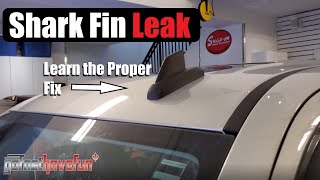
- Failed 'Shark Fin' Roof Antenna (Very Common) — The roof antenna assembly is the primary failure point. The base gasket degrades over time, allowing water to seep in and corrode the internal circuit board. This is a well-documented defect on many GM, Ford, and Ram vehicles. 🎬 See this walkthrough for replacing a Ford antenna base.
- Loose or Corroded Antenna Cable Connector (Common) — The coaxial cable connecting the GPS antenna to the radio (often a blue Fakra connector) vibrates loose or corrodes. Moisture and vibration at the radio or antenna base disrupt the signal.
- Damaged GPS Antenna Coaxial Cable (Less Common) — The cable running from the roof antenna to the radio gets pinched, chafed, or broken. This happens during unrelated headliner repairs, from severe rodent damage, or due to long-term vibration near pillar trim.
- Infotainment System Software Glitch (Less Common) — Complex infotainment systems like Uconnect experience software bugs that freeze the GPS or block signal acquisition. A soft reset or a dealer software update resolves these issues without parts replacement. 🎬 Watch: How to resolve common Uconnect software glitches.
- Aftermarket Head Unit/Wiring Adapter Issues (Less Common) — Aftermarket stereo wiring adapters often fail to provide the 3.3V-5V DC power required by the factory active GPS antenna's amplifier. Poor adapter connections also mimic an antenna fault.
- Faulty Radio or Navigation Head Unit (Rare) — The internal GPS receiver or the bias-tee circuit (which powers the antenna) within the radio fails. Only suspect this after thoroughly testing the antenna and wiring.
- Faulty Body Control Module (BCM) (Very Rare) — An internal failure of the BCM or telematics module triggers this code. This is extremely uncommon.
Symptoms
- Navigation System Inaccurate or Not Working — The map displays 'No GPS,' shows a crossed-out GPS icon, places the vehicle in the wrong state, or fails to calculate routes.
- Satellite Radio (SiriusXM) Malfunction — The satellite radio loses signal or cuts out frequently, as it shares the same roof antenna assembly.
- Telematics System Warning Light (e.g., OnStar) — The OnStar warning light turns red or a 'Service Telematics' message appears. These systems rely on the GPS antenna for automatic crash response.
- Incorrect Time on Infotainment Display — The vehicle's clock, which syncs with the GPS satellite signal, displays the wrong time or resets to a default.
- Water Stains on Headliner — Visible water marks or dampness on the interior roof lining near the rear or center confirm the antenna seal failed and water is leaking into the cabin. 🎬 Watch: How to fix a leaking GM shark fin antenna.
Diagnostic Flowchart
Tap your situation to follow the diagnostic path that matches what you're seeing on this code.
Common Fixes & Costs
- Replace Roof 'Shark Fin' Antenna Assembly — Parts: $100-$250, Labor: $200-$600, ~2.2 hr book time (Intermediate)
- Reseat or Clean Antenna Cable Connector — Parts: $0-$5, Labor: $80-$150, ~0.8 hr book time (DIY)
- Apply Sealant to Antenna Base — Parts: $10-$20, Labor: $50-$100, ~0.5 hr book time (DIY)
- Replace GPS Antenna Coaxial Cable — Parts: $40-$100, Labor: $250-$500, ~2.5 hr book time (Professional)
- Replace Radio/Navigation Head Unit — Parts: $500-$2000+, Labor: $150-$300, ~1.5 hr book time (Professional)
Used vs. New Parts: Buying Guide
When a used part is worth it: A used OEM antenna from a late-model, low-mileage vehicle is cost-effective. Do not buy used for vehicles known for high failure rates (like 2015-2018 GM trucks) unless confirmed as the updated design.
Donor-vehicle mileage cap: roughly under 50000 miles for the part to have meaningful remaining life.
Donor quality checklist:
- Inspect the rubber gasket at the base for cracking, brittleness, or compression damage.
- Verify the part number exactly matches your vehicle's required options (GPS, Sat Radio, Telematics).
- Avoid parts from regions with high sun exposure or rainfall.
Decision logic:
- If The cost of a new OEM part is less than $150 → Buy new. The small savings on a used part are not worth the risk of a worn-out seal.
- If The vehicle is older and budget is the primary concern → A used part is acceptable, but apply a new bead of automotive sealant around the base during installation.
- If The failure is due to a known design flaw with a TSB → Only buy the new, updated OEM part number specified in the service bulletin.
Warranty tradeoff: Used parts from salvage yards typically offer a 30-90 day warranty. Aftermarket new parts offer 1-year to limited lifetime warranties. New OEM parts carry a 1-2 year warranty.
Worst-case if a used part fails: $300-$700. If a used antenna fails, you pay for the part again plus the labor to drop the headliner a second time.
What Happens If You Wait — Timeline
- 0-1 month: Intermittent GPS/satellite radio signal loss during rain or car washes. The system recovers when dry. (MPG impact: 0%% · Added cost: $0)
- 1-6 months: GPS/satellite radio/telematics permanently fail. The antenna's internal circuit board is corroded. (MPG impact: 0%% · Added cost: $100-$800)
- 6-12 months: Water leaks past the antenna and saturates the headliner board, causing visible stains and a musty smell. (MPG impact: 0%% · Added cost: $350 - $900)
- 12+ months: Water migrates down the pillars, shorting out critical electronics like the BCM or airbag modules. (MPG impact: 0%% · Added cost: $1,500 - $3,000+)
Cost of Not Fixing It
- Immediate: Loss of GPS navigation, satellite radio, and vehicle clock synchronization. (Added cost: 0)
- 0-6 Months: Critical loss of safety features. Emergency telematics services like OnStar cannot determine your location in a crash, preventing Automatic Crash Response. (Added cost: Incalculable)
- 6+ Months: Continued water intrusion damages the headliner and shorts out electronic modules in the A-pillar, leading to expensive electrical repairs. (Added cost: $500 - $2500+)
Diagnosis Steps
- Perform a Visual Inspection
Inspect the exterior 'shark fin' antenna for cracks or a loose base. Check the interior headliner around the antenna for water stains, which confirm a failed gasket.
Tools: Flashlight (Beginner) - Check for Related Trouble Codes
Use an OBD-II scanner to read Body (B) codes. On GM vehicles, codes B2470 (OnStar) and B125C (SDARS/XM) appearing alongside GPS faults confirm the roof antenna is the single point of failure.
Tools: OBD-II Scanner (with BCM/Body module access) (Beginner) - Analyze Scan Tool Live Data
Navigate to the BCM or Radio live data using an advanced scan tool. A healthy system shows 5+ satellites acquired. A reading of 0 satellites or an 'Open/Short' status confirms an antenna circuit fault.
Tools: Advanced Bi-Directional Scan Tool (Advanced) - Check for Manufacturer TSBs and Software Updates
Search online for Technical Service Bulletins (TSBs) related to your vehicle's year and GPS issues. For example, 2013 Ram 1500s fix this fault with a simple software update.
Tools: Internet access, Phone (Beginner) - Inspect the Radio Head Unit Connection
Remove the dash trim to access the back of the infotainment radio. Locate the GPS antenna cable (typically a blue Fakra connector) and ensure it is securely clicked into place and free of corrosion.
Tools: Trim removal tools, Socket/screwdriver set (Intermediate) - Test with a Universal GPS Antenna
Plug an inexpensive universal GPS antenna with a Fakra connector directly into the back of the radio. Place it on the dashboard. If the navigation acquires a signal, the original roof antenna or cable is faulty.
Tools: Universal GPS antenna with Fakra connector (Intermediate) - Inspect the Antenna Base and Connectors
Lower the rear section of the headliner to access the roof antenna's underside. Unbolt the antenna and disconnect the wiring. Green or white crusty residue on the connectors indicates water damage.
Tools: Trim removal tools, Socket set (often 10mm) (Advanced) - [PRO TIP] Test for Antenna Amplifier Voltage
Disconnect the antenna cable from the radio. Set a multimeter to DC Volts. Touch the red probe to the radio port's center pin and the black probe to the outer casing. A reading of 3.3V to 5V confirms the radio is sending power; no voltage means the head unit is faulty.
Tools: Multimeter (Advanced) - [PRO TIP] Test Coaxial Cable for Continuity and Shorts
With the antenna and radio disconnected, use a multimeter set to ohms (Ω). Test continuity on the center pin end-to-end (<2 ohms), the outer shield end-to-end (<2 ohms), and check for a short between the center pin and shield (should read OL).
Tools: Multimeter (Advanced)
When This Code Triggers (Freeze-Frame Conditions)
- System Voltage: 11-14.5V (The fault is monitored whenever the ignition is in the 'Run' or 'Accessory' position.)
- Ignition Status: Run/Accessory (The BCM or radio actively checks the antenna circuit's integrity when the infotainment system powers on.)
- Component Status: Active/Enabled (The code sets when the controlling module commands the GPS system active and detects an open or short circuit.)
- Time Since Ignition On: > 5 seconds (The module waits a few seconds after power-up to run diagnostic checks to avoid false codes.)
Related Codes
- B2462 — The primary GM-specific code for a GPS Antenna Circuit Fault. Diagnostically identical to B2196.
- B1562 — The Ram/Chrysler-specific code for 'GPS Antenna Circuit Open'. Functionally identical to B2196.
- B2204 — A generic SAE code for 'GPS Antenna Connection Open or Short.' A less specific pointer to the same problem.
- B2470 / B125C — GM codes for OnStar (B2470) and satellite radio (B125C). Seeing these alongside a GPS fault confirms the entire roof antenna assembly failed.
Climate & Environmental Factors
- High Humidity & Rain: High humidity and frequent rain degrade the antenna's rubber base gasket, causing water intrusion. Moisture corrodes the internal circuit board, triggering code B2196.
- Temperature Fluctuations (Hot/Cold Cycles): Extreme hot and cold cycles cause the plastic antenna housing and metal roof to expand at different rates. This thermal cycling cracks the gasket seal.
- Coastal/Salty Air: High salt content in coastal air accelerates corrosion once moisture breaches the antenna housing, causing complete circuit failure much faster.
How to Talk to a Mechanic About This Code
Say this: "I have a B2196 code and my GPS and satellite radio are not working. I suspect the roof antenna failed. I need an estimate to diagnose and confirm the failure is the antenna, not the head unit."
This signals you are an informed consumer, directs the technician to the most likely cause, and prevents them from starting with a costly, unnecessary head unit replacement diagnosis.
Avoid saying:
- 'My GPS is broken.' (Too vague, invites a wide-ranging and expensive diagnosis.)
- 'Just fix it.' (Gives the shop a blank check to replace multiple parts.)
- 'I think I need a new radio.' (Incorrectly suggests the most expensive fix first.)
Questions to ask before authorizing the repair:
- Did you test the antenna and cable separately from the head unit?
- Can you confirm you checked for the 3.3-5V bias voltage from the radio before condemning the antenna?
- If the antenna is replaced, does the price include applying new sealant around the base to prevent future leaks?
- What is the warranty on the replacement part and the labor to install it?
Where to Take It: Dealer vs Independent vs Chain
- Dealer:
Recommended if the vehicle is under warranty or if a known TSB points to a software fix.
Best for: Vehicles still under factory or extended warranty., Very new models where independent shops lack updated TSBs or parts., Repairs where a software update or module programming is a possible fix.
Downsides: Highest labor rates, typically 1.5-2x an independent shop., Inflexible on using only OEM parts, which are more expensive. (Typical cost: +50% vs. baseline) - Independent Shop:
Best fit for most cases. This is a common repair involving trim and electrical diagnosis that any reputable shop handles efficiently.
Best for: Out-of-warranty vehicles where cost is a factor., Common, well-documented problems like the B2196 antenna failure., Building a long-term relationship with a trusted mechanic.
Downsides: Quality and expertise vary widely; vetting the shop's reputation is crucial., May have less experience with very new or complex models. (Typical cost: +0% vs. baseline) - Chain Shop:
AVOID. This repair requires diagnostic skill and care with interior trim, which is not a strength of most chain shops.
Best for: Simple, routine services like oil changes, tires, and brake pads.
Downsides: Technicians lack the specific diagnostic experience for electrical and trim work., High pressure to upsell services leads to misdiagnosis. (Typical cost: -10% vs. baseline)
When to Walk Away From the Repair
If the estimated repair cost exceeds 40-50% of the car's current private-party value, reconsider the repair.
- Car worth $15000, fix is $700: Fix it. This repair is well below the threshold and restores significant functionality and safety features.
- Car worth $4000, fix is $700: Borderline, but likely worth fixing. The cost is less than 20% of the car's value, and not fixing it leads to more expensive water damage later.
- Car worth $2500, fix is $1800: Walk away. The repair cost is over 70% of the car's value. It's not economically viable.
What Scan Tool You Need for This Code
Minimum: A scanner that reads manufacturer-specific Body Control Module (BCM) codes, often designated as 'B' codes.
A standard $20 engine code reader will NOT see BCM codes like B2196. It will show 'No Codes Found,' leading you to believe there's no issue.
Budget: BlueDriver Pro (~$100) — Connects to your smartphone and reads BCM codes for specific manufacturers. It displays live data to verify satellite acquisition.
Mid-range: Foxwell NT510 Elite (~$180) — Handheld scanner offering full-system access and dealer-level diagnostics for one car brand.
Professional: Autel MaxiCOM MK808 (~$500) — Professional tablet scanner providing full system diagnostics for all makes and models. Reads all codes and views live data streams.
Rent vs buy: You cannot rent a scanner with BCM capability from a parts store for free; their loaner tools are basic engine code readers. Buying a budget-friendly tool like the BlueDriver is the most economical choice.
How to Clear the Code After You Fix It
- Use an OBD-II scan tool to clear codes from the Body Control Module (BCM).
- Cycle the ignition off and then on.
- Activate the navigation system and verify it acquires a satellite lock.
Drive cycle (~5 minutes): A specific drive cycle is not required for a 'B' code like B2196. After clearing the code, the module re-runs the self-test upon the next ignition cycle. Verifying that the GPS, satellite radio, and telematics systems function correctly confirms the fix.
Readiness monitors affected: None
Watch out for:
- Disconnecting the battery does not clear a body code stored in the BCM's memory.
- The code returns immediately upon the next ignition cycle if the underlying electrical fault remains.
Will This Fail Emissions / State Inspection?
No — by itself this code doesn't fail OBD inspection (but it can keep readiness monitors from setting, which causes a separate fail).
- California: This code will NOT cause a smog check failure. Emissions tests focus on Powertrain ('P') codes and readiness monitors, not Body ('B') codes.
- New York: This code will not cause a failure. The NYS inspection checks for Check Engine Light illumination and safety items. B2196 does not affect emissions.
- Texas: This code will not cause a failure. The Texas OBD-II inspection program fails vehicles for emissions-related 'P' codes that command the MIL on.
Most Commonly Affected Vehicles
- GMC Sierra, Yukon, Suburban (2015-2018) — Part of the GM K2XX platform, known for premature GPS antenna failure due to water intrusion. GM issued TSB 17-NA-214 for this defect.
- Chevrolet Silverado, Tahoe, Suburban (2015-2018) — Shares the K2XX platform and faulty antenna design with GMC, leading to identical widespread failures.
- Ford F-150, Explorer, Edge (2011-2020) — Frequently experience GPS antenna circuit faults and water leaks from the antenna gasket, which stains the headliner.
- Ram 1500 (2013-2020) — Prone to GPS antenna circuit open codes. For 2013 models, a software update (TSB #9002925) resolves the issue.
- Jeep Grand Cherokee, Wrangler (2014-2021) — Uses the same Uconnect systems as Ram, experiencing identical GPS signal loss from the antenna or coaxial cable.
- Volkswagen Golf, Jetta, Tiguan (2015-2020) — Models with factory navigation set body codes for a GPS antenna open/short circuit traced to the antenna base.
- BMW 3-Series, 5-Series, X3, X5 (2012-2018) — GPS signal failures trace back to the roof 'shark fin' antenna or its connection to the head unit.
- Lincoln MKX, Navigator (2013-2018) — GPS failures trace back to the roof antenna or its wiring. Water leaks from the antenna base are a known issue on the Navigator.
Manufacturer-Specific Notes
- Ford / Lincoln: B2196 almost always refers to a fault within the GPS antenna circuit.
- Nissan: Nissan uses B2196 to indicate a 'Dongle Error,' a security mismatch between the BCM and immobilizer. This requires advanced programming tools to resolve.
- General Motors (GM): While GM uses B2462 for GPS faults, some databases show B2196 as a 'Right Front Passenger Seat Side Support' fault. Only consider this if there are no GPS symptoms.
- Generic: Some generic code lists define B2196 as 'Passenger Window Up / Down Power Circuit Short to Ground.' This depends entirely on the vehicle and scanner.
Real Owner Stories
2016 Chevy Silverado - The Classic Water Leak Fix
Owner noticed GPS was not working, the OnStar light was red, and satellite radio had no signal. Later, they saw water stains on the headliner near the rear of the cab.
What they tried:
- Initially ignored the GPS issue, but the water stains prompted action.
- A scan revealed GM code B2462 and B125C, pointing to a multi-antenna failure.
Outcome: Replaced the entire 'shark fin' antenna assembly with an updated OEM part. Applied a bead of clear automotive seam sealer around the new gasket. Total cost was ~$150 for the part and 2 hours of DIY labor. All systems returned to normal.
Lesson: If GPS, OnStar, and satellite radio fail simultaneously on a GM truck, the cause is the roof antenna. Look for water stains on the headliner to confirm.
2022 Silverado EV - A Misdiagnosis Story
The GPS showed the wrong location, and the owner's phone app could not connect to the truck. The OnStar button worked, but location services did not.
What they tried:
- A soft reset of the infotainment system provided a temporary fix but the problem returned.
- The dealership replaced the GPS antenna and the entire shark fin assembly, but the problem persisted.
Outcome: The root cause was a faulty Telematics Communication Interface Module (TCIM). After the module was replaced, all functions were restored.
Lesson: While the antenna is the most common cause, it is not the only one. If replacing the antenna fails, or if a temporary software reset works, the issue is likely a control module.
2018 Subaru Forester - Physical Damage
Owner backed into the garage while the door was not fully open, physically knocking the shark fin antenna off the roof.
What they tried:
- Covered the hole in the roof with duct tape to prevent rain from entering.
- Received quotes ranging from $45 for a glued-on fin to $1,000 for a full headliner drop.
Outcome: The owner had the vehicle repaired at a local body shop for $675. The repair involved dropping the headliner to properly install and seal a new antenna assembly.
Lesson: Physical damage requires removing the headliner to access the mounting nut and connectors. Simply gluing the fin back on leads to severe water leaks.
How to Prevent This Code From Triggering
- Apply Automotive Sealant to Antenna Base (Once, when vehicle is new or antenna is replaced.) — Apply a thin bead of clear automotive RTV silicone around the perimeter of the antenna base to provide a durable, waterproof barrier. This prevents water from reaching the gasket.
- Regularly Inspect Antenna Gasket (Every 6 months (during waxing/detailing).) — Visually check the rubber gasket at the base of the antenna for cracking or shrinking. Catching degradation early allows for preventative sealing before a leak starts.
- Clear Debris from Roof (During every car wash.) — Leaves and dirt accumulate around the base of the antenna, trapping moisture against the gasket. Keeping the area clean allows water to run off freely.
- Check Sunroof Drains (If Equipped) (Annually.) — Clogged sunroof drains cause water to back up and leak into the headliner, mimicking an antenna leak. Pouring water into the sunroof channel ensures it drains properly.
Frequently Asked Questions
My scanner shows P2196, not B2196. Is it the same issue?
No, they are completely different. B2196 is a Body Control Module code related to a circuit fault, like the GPS antenna. P2196 is a Powertrain Control Module code for 'O2 Sensor Signal Stuck Rich', which is an engine-related fault.
What are the most common misdiagnosis mistakes for B2196?
The most common mistake is replacing the expensive radio head unit before testing the antenna. A cheap universal GPS antenna tests the head unit for a few dollars. Failing to inspect the cable connectors for corrosion is another frequent error.
Can a bad GPS antenna drain my car battery?
It is highly unlikely. A faulty GPS antenna draws under 10mA and does not cause a parasitic battery drain. However, water intrusion from a leaking antenna can short out other modules and cause a drain.
Can I just replace the GPS antenna myself?
Yes, this is a common DIY repair for intermediate skill levels. It involves removing interior trim and partially lowering the headliner to access the antenna mounting nut. The main challenge is avoiding creases or damage to the headliner board.
Why did my satellite radio and navigation stop working at the same time?
Most modern vehicles use a single 'shark fin' antenna assembly that contains receivers for GPS, satellite radio, and telematics. When water damages the internal circuit board, all these functions fail simultaneously.
Will a cheap GPS antenna from online work?
A cheap universal antenna is perfect for testing if your radio's GPS receiver works. For a permanent repair, use a high-quality OEM replacement part to ensure proper sealing and functionality. Cheap aftermarket antennas often cause persistent 'Navigation Fault' errors.
The shop wants $700 to replace an antenna. Is that a fair price?
Yes, $500 to $800 is the typical range for a dealership or reputable independent shop. The OEM part costs $100 to $250, and labor takes 1.5 to 3 hours to carefully lower the headliner. This price reflects the care required to avoid damaging interior trim.
My navigation is broken but I don't have a warning light. Could it still be this code?
Yes. Body codes like B2196 do not trigger the Check Engine Light. They are stored in the Body Control Module and require an advanced OBD-II scanner to read.
Key Takeaways
- B2196 indicates a GPS antenna circuit fault on Ford and Chrysler vehicles, but means an immobilizer error on Nissan models.
- Water intrusion past the roof 'shark fin' antenna gasket causes over 80% of B2196 codes by corroding the internal circuit board.
- A B2196 code disables emergency telematics like OnStar, meaning automatic crash response will not dispatch services to your location.
- Diagnose the head unit by plugging a $15 universal Fakra GPS antenna directly into the back of the radio before buying expensive replacement parts.
- Do not confuse the B2196 body code with the P2196 powertrain code; P2196 indicates a stuck O2 sensor and triggers the Check Engine Light.
Helpful Videos
Shop the Parts Behind B2196
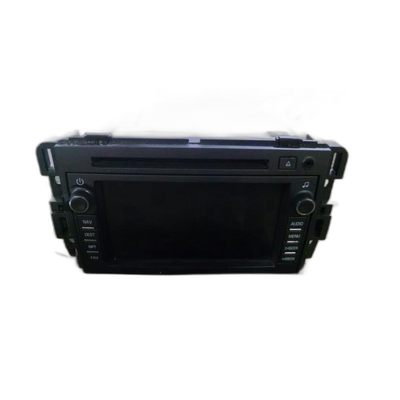
Below are the parts most often responsible for code B2196, ranked by how frequently each one is the actual culprit (per the diagnosis above). Tap any to see what we have for your vehicle.



The information in this article is provided for general reference and educational purposes only. Vehicle specifications, procedures, and part compatibility can vary by production date, trim level, and region. Always consult your vehicle's factory service manual and verify part numbers before purchasing or performing repairs. Safety-critical components such as airbags, seat belts, and braking systems should be installed by a qualified professional.
- 🧭 Diagnostic Flowchart
- 🎬 Helpful Videos
- 🛍️ Shop This Part
- What Does B2196 Mean?
- Can I Drive With B2196?
- Common Causes
- Symptoms
- Common Fixes & Costs
- Used vs. New Parts: Buying Guide
- What Happens If You Wait — Timeline
- Cost of Not Fixing It
- Diagnosis Steps
- When This Code Triggers (Freeze-Frame Conditions)
- Related Codes
- Climate & Environmental Factors
- How to Talk to a Mechanic About This Code
- Where to Take It: Dealer vs Independent vs Chain
- When to Walk Away From the Repair
- What Scan Tool You Need for This Code
- How to Clear the Code After You Fix It
- Will This Fail Emissions / State Inspection?
- Most Commonly Affected Vehicles
- Manufacturer-Specific Notes
- Real Owner Stories
- 2016 Chevy Silverado - The Classic Water Leak Fix
- 2022 Silverado EV - A Misdiagnosis Story
- 2018 Subaru Forester - Physical Damage
- How to Prevent This Code From Triggering
- Frequently Asked Questions
- My scanner shows P2196, not B2196. Is it the same issue?
- What are the most common misdiagnosis mistakes for B2196?
- Can a bad GPS antenna drain my car battery?
- Can I just replace the GPS antenna myself?
- Why did my satellite radio and navigation stop working at the same time?
- Will a cheap GPS antenna from online work?
- The shop wants $700 to replace an antenna. Is that a fair price?
- My navigation is broken but I don't have a warning light. Could it still be this code?
- Key Takeaways
- 🎟️ Get 5% Off