

OBD-II Code B2204: ECU Configuration Mismatch
What B2204 means, why it triggers, and how to fix it
- Code B2204 indicates a software configuration mismatch between modules, requiring a digital sync rather than a mechanical repair.
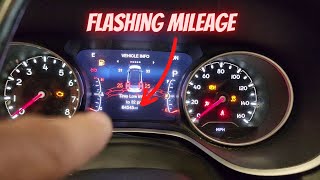
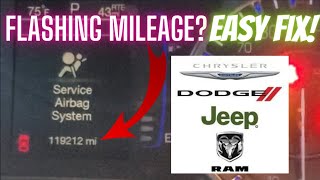
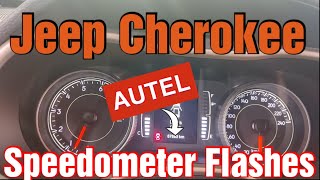
- A flashing odometer on Stellantis vehicles (Jeep, Ram, Dodge, Chrysler) is the primary visual indicator of a B2204 network mismatch.
- Fixing this code requires a 30-minute 'PROXI Alignment' software procedure, costing $150-$250 at a shop or ~$150 for a DIY OBDLink MX+ and AlfaOBD setup.
- Never replace a $500+ Body Control Module (BCM) unless it repeatedly fails a PROXI alignment and CAN bus resistance tests confirm internal hardware failure.
- Driving with B2204 carries severe risks, including a disabled airbag system (if the ORC module is flagged) or a sudden no-start condition requiring a $150+ tow.
What Does B2204 Mean?

Code B2204 means one of your car's computers (modules) has the wrong settings. Think of it like a new player on a team who doesn't have the right playbook. This module's configuration for the vehicle identification number (VIN), model year, or optional features doesn't match the master list stored in the main computer, causing a communication breakdown.
Technical definition: The SAE/ISO definition for B2204 is "ECU Configuration Mismatch". This indicates a module—such as the Body Control Module (BCM), Wireless Control Module (WCM), or Radio Frequency Hub (RF-Hub)—detects a discrepancy between its stored configuration and the vehicle configuration broadcast on the CAN bus network. The code often includes a suffix, like B2204-55, meaning 'Not Configured'.
Can I Drive With B2204?
Yes, But With Caution. Yes, but it carries significant risk. If the Occupant Restraint Controller (ORC) triggers the code, the airbags are disabled and will not deploy in a crash. If the Wireless Control Module (WCM) is at fault, you risk a sudden no-start condition requiring a tow. Ignoring a flashing odometer allows a simple software fix to escalate into expensive module replacement.
Common Causes

- Weak or Recently Replaced Battery (Very Common) — A voltage drop during a dying battery, jump-start, or battery replacement corrupts configuration data. A drop below 4.5 volts for 200 milliseconds triggers this fault.
- Module Replacement Without Programming (Very Common) — Installing a new or used electronic module without programming it to the car's specific VIN and options causes an immediate conflict.
- Aftermarket Accessories (Common) — Installing aftermarket radios or remote start systems interferes with the CAN bus network and causes configuration conflicts if the BCM isn't updated to reflect the change.
- Failed Module Software Update or Flash (Less Common) — A dealership software update fails midway due to a poor connection, leaving the module in an unconfigured state.
- Internal Module Data Corruption (Less Common) — A module's memory chip fails due to a voltage spike, causing it to 'forget' its configuration.
- Water Intrusion and Corrosion (Rare) — Moisture seeps into a module or CAN bus connector, causing short circuits that disrupt network communication.
- Faulty Wireless Control Module (WCM/WIN) (Rare) — The ignition node fails internally, losing its programming and causing a no-start condition.
- Damaged Wiring or Poor Grounds (Rare) — A chafed CAN bus wire shorts to ground, disrupting communication.
Symptoms

- Flashing Odometer — The mileage display blinks continuously on Stellantis vehicles, indicating a network configuration mismatch.
- Vehicle Will Not Start or Crank — The security/ignition module (WCM/WIN) fails to recognize the key. Often accompanied by a flashing red security dot.
- Airbag Warning Light On — The Occupant Restraint Controller (ORC) is misconfigured, disabling the airbag system.
- Electronic Features Not Working — Features controlled by the misconfigured module (radio, power locks, park assist) stop functioning.
Diagnostic Flowchart

Tap your situation to follow the diagnostic path that matches what you're seeing on this code.
Common Fixes & Costs
- PROXI Alignment Procedure — Parts: $0, Labor: $150-$250, ~1.0 hr book time (Professional)
- Update Module Software — Parts: $0, Labor: $150-$200, ~1.0 hr book time (Professional)
- Replace and Program Wireless Control Module (WCM/WIN)
— Parts: $150-$450, Labor: $150-$250, ~1.5 hr book time
(Professional)
Dodge Grand Caravan (2012-2020): OEM Mopar 68105739AC, 68210151AB (Alt: N/A)
Jeep Wrangler (JK, 2013): OEM Mopar 68209837AA (Alt: N/A) - Replace and Program Body Control Module (BCM)
— Parts: $300-$800, Labor: $150-$250, ~2.0 hr book time
(Professional)
Ram 1500 (2014): OEM Mopar 68236153AC (Alt: Dorman Remanufactured)
Jeep Cherokee (KL, 2015): OEM Mopar 68234027AB (Alt: Cardone Remanufactured) - Wiring Harness or Connector Repair — Parts: $20-$100, Labor: $200-$500, ~2.5 hr book time (Professional)
Used vs. New Parts: Buying Guide
When a used part is worth it: Only for experienced DIYers with advanced programming tools on older vehicles. The cost savings rarely outweigh the risk of incompatibility.
Donor-vehicle mileage cap: roughly under 100000 miles for the part to have meaningful remaining life.
Donor quality checklist:
- Exact part number match. Do not rely on visual similarity.
- Reputable seller with a warranty and return policy.
- Avoid flood-damaged or heavily corroded modules.
- Used modules contain the donor VIN and require special tools to overwrite.
Decision logic:
- If The part is a security component like a WCM/WIN or immobilizer → buy new OEM or a professionally refurbished 'virgin' part. The risk of a used part rejecting programming is too high.
- If Vehicle is less than 10 years old and the part is under $500 new → buy new. The hassle and potential for failure with a used module are not worth the minimal savings.
- If You do not have access to an advanced scan tool capable of VIN writing (like AlfaOBD or Autel) → do not buy used. You cannot make the part work and will immediately set a B2204 or B2205 code.
Warranty tradeoff: Used salvage parts typically have a 30-day parts-only warranty. New OEM parts installed by a dealer carry a 12-month/12,000-mile warranty on parts and labor.
Worst-case if a used part fails: $500-$1000 if a used module is faulty or cannot be programmed, including repeat diagnostic and labor fees.
What Happens If You Wait — Timeline
- 0-1 month: Code is set, and the primary symptom appears (e.g., flashing odometer, airbag light). Some non-essential electronic features stop working. The issue is purely a software glitch at this point. (MPG impact: 0%% · Added cost: $0)
- 1-3 months: The risk of a secondary failure increases. If the WCM/WIN module is the cause, you face a high probability of a no-start condition, leaving you stranded. This incurs costs for towing and emergency diagnostics. (MPG impact: 0%% · Added cost: $200-$500)
- 3-6 months: Continued driving with a misconfigured network puts stress on other modules. A simple software glitch causes permanent data corruption in a module's memory, requiring hardware replacement. (MPG impact: 0%% · Added cost: $800-$1500)
- 6+ months: The initial software problem becomes an expensive hardware replacement. The original $200 PROXI alignment fix escalates to a $1,000+ BCM or WCM replacement. (MPG impact: 0%% · Added cost: $1000-$2000+)
Cost of Not Fixing It
- Immediate: Loss of specific electronic features. A major safety hazard exists if the airbag warning light is on, as the system is disabled. (Added cost: $0)
- 1-3 months: High risk of a no-start condition if the ignition module (WCM/WIN) is the cause, leaving you stranded. (Added cost: $150-$300)
- 3+ months: Permanent damage to a module's memory. Turns a $200 software fix into a $1,000+ module replacement. (Added cost: $800-$2000)
Diagnosis Steps
- Verify Symptoms and Repair History
Confirm the primary symptom (flashing odometer, no-start). Check if the battery was recently replaced or a new module/radio was installed. This history is the primary diagnostic clue.
Tools: None (Beginner) - Check Battery Health and Connections
Test the battery for stable voltage (above 12.4V). A weak battery is the most common root cause. A voltage drop below 4.5V during cranking corrupts module memory.
Tools: Multimeter, Battery Tester (Beginner) - Scan All Vehicle Modules
Scan the entire vehicle to identify the specific module logging the B2204 code. Look for suffixes like B2204-55 ('Not Configured').
Tools: Advanced Bi-Directional Scan Tool (Intermediate) - Perform a PROXI Alignment
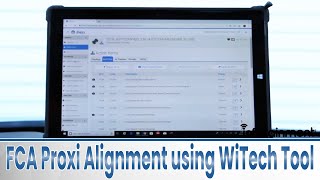
Run the 'PROXI Alignment' procedure to force all modules to synchronize their configuration data with the Body Control Module. This is the primary fix.
Tools: wiTECH, AlfaOBD, or Advanced Scan Tool (Advanced) - Analyze PROXI Alignment Live Data
If the PROXI alignment fails, check the tool's status list. Any module showing 'Proxi OK? - no' or 'Not Configured' is the source of the failure and requires further diagnosis.
Tools: Advanced Scan Tool (Advanced) - Check CAN Bus Network Resistance
Disconnect the battery. Measure resistance between OBD-II Pin 6 (CAN High) and Pin 14 (CAN Low). A healthy network reads ~60 Ohms. 120 Ohms indicates a missing termination resistor or broken wire.
Tools: Multimeter (Advanced) - Check CAN Bus Network Voltage
With ignition ON, measure Pin 6 to ground (~2.6V pulsing to 3.5V) and Pin 14 to ground (~2.4V pulsing to 1.5V). Deviations point to a wiring short or faulty module.
Tools: Multimeter (Advanced) - Isolate the Faulty Module
Disconnect modules one by one from the CAN bus and re-run the resistance test until the 60 Ohm reading returns, identifying the module disrupting the network.
Tools: Scan Tool, Wiring Diagram (Professional)
When This Code Triggers (Freeze-Frame Conditions)
- Vehicle State: Key On / Ignition On (Sets during the vehicle's power-up and initialization sequence.)
- System Voltage: Below 12.0V (during event) (Triggered by a voltage drop below 4.5V for 200 milliseconds during engine cranking.)
- Module Status: Not Configured / Mismatch (Module reports a different configuration than expected by the main body computer.)
- Recent Events: N/A (Continuous check while ignition is on; commonly triggered by recent battery replacement or jump-start.)
Related Codes
- B2205 — Means 'Original VIN Missing/Mismatch'. B2205 is exclusively caused by installing a used module from another vehicle, while B2204 is caused by voltage drops or data glitches.
- U0002 — Means 'High Speed CAN Communication Bus Performance'. The B2204 configuration error pollutes the data network, causing general communication issues. Fixing B2204 clears U0002.
- U1504 — Means 'Implausible Message Data Length Received from Steering Angle Sensor'. It is a symptom of the B2204 configuration error confusing other modules. Fix B2204 first.
- P0513 — Means 'Invalid Skim Key'. If the Wireless Control Module (WCM) has a B2204 fault, it cannot validate the key, triggering P0513. Fix B2204 first.
Climate & Environmental Factors
- Cold Weather: Cold temperatures significantly reduce a battery's cranking power. This causes system voltage to drop below the critical threshold (e.g., 4.5 volts) during startup, corrupting configuration memory in sensitive modules.
- High Humidity / Water Leaks: Moisture from a leaking windshield or sunroof seeps into connectors for the BCM or CAN bus junction blocks. This leads to pin corrosion, increasing resistance and disrupting network communication.
How to Talk to a Mechanic About This Code
Say this: "I have a B2204 code and a flashing odometer, which started after a recent battery change. I believe the vehicle needs a PROXI alignment. Can you provide a quote for that specific software procedure?"
This signals you have done your research and understand the common fix. It directs the shop to the most likely solution and prevents them from immediately quoting an unnecessary module replacement.
Avoid saying:
- 'My odometer is flashing, can you fix it?'
- 'My check engine light is on, can you look at it?'
- 'Just replace the computer.'
Questions to ask before authorizing the repair:
- Before we replace any modules, did you attempt a PROXI alignment, and did it fail?
- If the alignment failed, which specific module did the scan tool identify as not configured?
- Are there any Technical Service Bulletins (TSBs) for my vehicle related to this code that require a software update first?
- If you recommend a module replacement, what tests did you perform to condemn the original part?
Where to Take It: Dealer vs Independent vs Chain
- Dealer:
A safe but expensive option. They are guaranteed to have the proprietary wiTECH scan tool and access to all TSBs.
Best for: Vehicles under warranty, Complex cases where a PROXI alignment fails and TSB-specific knowledge is needed
Downsides: Highest labor rates, typically 1.5-2x more than independent shops., Less willing to install used or customer-supplied parts. (Typical cost: +75% vs. baseline) - Independent Shop:
Best choice for value, but requires vetting. Ask if they are experienced with Stellantis/FCA 'PROXI alignment' procedures specifically.
Best for: Out-of-warranty vehicles where cost is a major factor., Straightforward PROXI alignment fixes.
Downsides: Shop must be properly equipped. You must verify they have advanced bi-directional scan tools (Autel/Snap-on) or are proficient with tools like AlfaOBD., Quality and experience with complex electronics vary widely. (Typical cost: +0% vs. baseline) - Chain Shop:
AVOID. This is a software and diagnostics issue, not a simple mechanical repair. They are not equipped to handle this code.
Best for: Simple jobs like oil changes, tires, and brakes.
Downsides: Technicians lack the required bi-directional scan tools or specific expertise for network configuration issues., High potential for misdiagnosis, leading to recommendations for unnecessary parts. (Typical cost: -10% vs. baseline)
When to Walk Away From the Repair
If the estimated repair cost exceeds 50% of the car's private-party value, seriously consider selling or trading it in.
- Car worth $8000, fix is $250: Fix it. A simple PROXI alignment is a minor cost relative to the car's value.
- Car worth $4000, fix is $1800: Walk away. The shop is quoting a module replacement that costs 45% of the vehicle's value. Get a second opinion to confirm a PROXI alignment won't work, but do not proceed with this repair.
- Car worth $1500, fix is $900: Walk away. The repair cost is 60% of the car's value. It is not economically viable.
What Scan Tool You Need for This Code
Minimum: A bi-directional scan tool capable of performing a 'PROXI Alignment' (sometimes called 'Proxy Configuration' or 'Vehicle Configuration') on FCA/Stellantis vehicles.
A basic $20-$50 code reader only reads and clears generic engine codes. It cannot communicate with the Body Control Module to perform the special software synchronization procedure required to fix B2204.
Budget: AlfaOBD or JScan Software + Compatible Adapter (~$99) — Provides dealer-level access for DIY users. The software (~$50) runs on a laptop or Android phone and, when paired with a compatible OBD adapter (~$50+), performs the full PROXI Alignment procedure.
Mid-range: OBDLink MX+ or Thinkdiag (~$140) — High-quality Bluetooth OBD adapters highly recommended for use with AlfaOBD or JScan due to their speed and stable connection. For 2018+ vehicles, a security gateway bypass module is also required.
Professional: Autel MaxiCOM MK808 (~$500) — A professional-grade, all-in-one tablet scanner. It performs bi-directional functions like PROXI alignments on FCA vehicles without needing a separate laptop or phone.
Rent vs buy: Buy. The free 'loaner tool' programs at auto parts stores only offer basic code readers, which cannot fix this issue. Buying the budget setup is more economical than a single diagnostic hour at a shop.
How to Clear the Code After You Fix It
- Perform a 'PROXI Alignment' procedure using a compatible bi-directional scan tool.
- Use the scan tool to clear all Diagnostic Trouble Codes (DTCs) from all modules. Communication codes set during the alignment must be cleared.
- Cycle the ignition off, open and close the driver's door, and wait at least 60 seconds for the vehicle's data bus to go to sleep.
- Start the vehicle and verify the original symptoms (e.g., flashing odometer, warning lights) are gone.
Drive cycle (~30 minutes): No specific drive cycle clears B2204; a PROXI alignment is the only fix. However, clearing all DTCs afterward resets emissions monitors. To reset these for an emissions test, perform a cold start, warm up at idle, and drive a mix of city and highway speeds.
Readiness monitors affected: Catalyst Monitor, Evaporative System Monitor, O2 Sensor Monitor, EGR System Monitor
Before emissions retest: drive at least 50 miles to fully set monitors.
Watch out for:
- Attempting to clear the code with a basic scanner or battery disconnect fails because the mismatch is stored in non-volatile memory.
- Forgetting to clear codes from ALL modules after the PROXI alignment leaves unrelated warning lights on.
- Using a low-quality OBD adapter that drops connection during the PROXI alignment, causing the procedure to fail.
Will This Fail Emissions / State Inspection?
Yes — this code typically fails an OBD-II emissions inspection.
- California: Automatic failure. An illuminated Check Engine Light is an automatic fail. An illuminated airbag warning light fails the safety systems check.
- New York: Automatic failure. The NYVIP3 inspection checks the OBD-II system. An illuminated Check Engine Light or airbag light results in failure.
- Texas: Automatic failure in applicable counties. The 17 most populated counties require an emissions test, and an illuminated Check Engine Light is an automatic failure.
Most Commonly Affected Vehicles
- Jeep Cherokee (KL) (2014-2020) — Extremely common. TSB 08-033-14 addresses a B2204-55 code on 2014 models where the radio software must be updated via USB before a PROXI alignment will work.
- Ram 1500/2500/3500 (2013-2018) — Frequently occurs after replacing the Body Control Module (BCM) or another module without proper programming, leading to loss of electronic functions.
- Dodge Grand Caravan (2012-2020) — Often presents as a no-crank/no-start condition with a flashing security light, pointing to a configuration mismatch or failure in the Wireless Ignition Node (WIN).
- Jeep Wrangler (JK) (2013-2013) — A known issue where a voltage drop causes the WCM to lose its programming, resulting in a no-start. TSB 08-060-12 was issued to reprogram the WCM to prevent this.
- Jeep Grand Wagoneer / Wagoneer (2022-2022) — TSB 08-183-21 Rev. A was issued for a blinking odometer and B2204 caused by a configuration issue with the audio Amplifier (AMP) module.
- Ford F-150 (2009-2014) — B2204 often points to an internal fault or programming issue with the Radio Frequency Hub (RF-Hub), causing key fob and starting problems.
- Dodge Dart (2013-2013) — For models built before July 24, 2012, a TSB notes that B2204 stores without symptoms due to rapid ignition cycles. The bulletin advises a BCM software update.
- Dodge Charger (2024-2025) — Associated with a serious airbag system fault in the Occupant Restraint Controller (ORC), disabling the system. Addressed by TSB S2508000036.
Manufacturer-Specific Notes
- Jeep/Chrysler/Dodge/Ram: Highly susceptible to this code. The fix is almost always a 'PROXI Alignment' to re-sync all modules. A flashing odometer is the tell-tale sign.
- Ford: B2204 often relates to an issue within the Radio Frequency Hub (RF-Hub), which controls keyless entry and starting functions.
- Subaru: B2204 has a completely different meaning, relating to an 'Abnormal steering lock power supply circuit'. This is a hardware fault, not a software configuration issue.
- Mitsubishi: In older models, B2204 relates to a communication problem with the 4-disc CD changer.
Real Owner Stories
2015 Chrysler 200 with 85,000 miles
After the battery died in an ice storm and was replaced, the car was stuck in neutral and would not move. The odometer was flashing.
What they tried:
- Took it to a dealer who quoted $400 for a PROXI alignment.
- Owner researched the issue and found they could perform the procedure themself.
Outcome: The owner purchased a Thinkdiag scanner for $89 and successfully performed the PROXI alignment in 30 minutes. The car became fully functional again, saving over $300 compared to the dealer quote.
Lesson: For a B2204 code triggered by a simple battery event, a DIY PROXI alignment using affordable tools like AlfaOBD or Thinkdiag is a highly effective and budget-friendly solution.
2014 Jeep Cherokee with ~70,000 miles
The odometer started flashing and code B2204-55 appeared after the owner tried to add a sales code to the vehicle's configuration.
What they tried:
- A PROXI alignment was attempted but failed to clear the code.
Outcome: The issue was traced to a specific Technical Service Bulletin (TSB 08-033-14) which stated that the radio software needed to be updated via a USB stick before a PROXI alignment would be successful. After the radio update, the PROXI alignment worked and cleared the code.
Lesson: If a PROXI alignment fails, check for TSBs related to your vehicle and the B2204 code. Sometimes a specific module requires a software update as a prerequisite for the alignment to succeed.
2017 Jeep Compass with aftermarket radio
Immediately after installing an aftermarket radio, the odometer began flashing and codes B2204 and U115C (Lost Communication with Entertainment Module) appeared.
What they tried:
- Attempted a PROXI alignment with a Thinkdiag2 scanner, but it was unsuccessful.
Outcome: The PROXI alignment failed because the vehicle's master configuration list was still expecting to see the factory radio. The solution is to use a tool like AlfaOBD to change the vehicle configuration setting to 'no radio', and then run the PROXI alignment again.
Lesson: When installing an aftermarket radio on a CAN bus vehicle, you must update the vehicle's configuration list to reflect the change before a PROXI alignment will work.
2012 Dodge Grand Caravan with intermittent no-start
The vehicle would randomly fail to start, accompanied by a flashing security light and code B2204. Sometimes it would start after waiting 15-30 minutes.
What they tried:
- Owner suspected an anti-theft system issue.
- A shop was unable to diagnose the problem.
Outcome: The root cause was identified as a faulty Wireless Ignition Module (WIN). On these vans, the WIN module is known to fail, losing its configuration and causing a B2204 code and no-start condition. Replacing and programming a new WIN module resolved the issue.
Lesson: If B2204 is accompanied by a no-start condition and a flashing security light, the Wireless Control/Ignition Module (WCM/WIN) is a primary suspect.
How to Prevent This Code From Triggering
- Maintain Battery Health (Annually) — The most common cause of data corruption leading to B2204 is a voltage drop during engine cranking. Regularly test your battery and replace batteries older than 3-5 years proactively.
- Use a Battery Tender/Maintainer (For vehicles stored more than two weeks) — Prevents the battery from discharging to a critically low level, which causes module memory loss upon the next startup.
- Follow Proper Jump-Starting Procedures (As needed) — Improper jump-starting causes significant voltage spikes that permanently damage sensitive electronics. Always connect positive to positive, and the negative on the good car to a chassis ground on the dead car.
- Ensure Professional Installation of Electronics (When adding accessories) — Aftermarket radios or remote starters not correctly integrated into the CAN bus network are a common source of configuration conflicts.
- Check for Water Leaks (Seasonally) — Inspect cabin seals and sunroof drains. Water intrusion corrodes modules or CAN bus junction connectors, leading to short circuits and data corruption.
Frequently Asked Questions
Can I fix code B2204 myself by disconnecting the battery?
No. A battery reset will not fix a configuration mismatch. The incorrect data is stored in non-volatile memory and must be rewritten using a PROXI alignment.
My odometer is flashing. Is that related to code B2204?
Yes, a flashing odometer is the primary symptom of a B2204 code on Stellantis vehicles. It indicates one or more electronic modules are not properly configured to the rest of the vehicle.
What is a PROXI Alignment?
A PROXI Alignment is a software procedure that synchronizes all installed modules with the master configuration list in the Body Control Module. It acts as a digital roll call to ensure all computers are using the same settings.
Can a cheap OBD-II scanner fix this code?
No. Basic code readers only access the engine computer. Fixing B2204 requires an advanced, bi-directional scan tool capable of accessing all modules and performing programming functions.
What tools do I need to perform a PROXI Alignment myself?
You need a high-quality OBD2 adapter like the OBDLink MX+ ($140) and diagnostic software like AlfaOBD ($50). Vehicles 2018 and newer also require a Security Gateway (SGW) bypass cable.
A shop wants to replace my Body Control Module for $900. Is that the right fix?
Be cautious, as replacing the BCM is rarely the correct first step. Insist the shop performs a PROXI Alignment first, which usually fixes the issue for $150-$250. Only replace the BCM if network testing proves it has an internal hardware failure.
Can a bad ground cause code B2204?
Yes. A poor ground connection to a critical module causes unstable voltage and data corruption, triggering B2204. It also frequently causes general network communication codes like U0002.
Key Takeaways
- Code B2204 indicates a software configuration mismatch between modules, requiring a digital sync rather than a mechanical repair.
- A flashing odometer on Stellantis vehicles (Jeep, Ram, Dodge, Chrysler) is the primary visual indicator of a B2204 network mismatch.
- Fixing this code requires a 30-minute 'PROXI Alignment' software procedure, costing $150-$250 at a shop or ~$150 for a DIY OBDLink MX+ and AlfaOBD setup.
- Never replace a $500+ Body Control Module (BCM) unless it repeatedly fails a PROXI alignment and CAN bus resistance tests confirm internal hardware failure.
- Driving with B2204 carries severe risks, including a disabled airbag system (if the ORC module is flagged) or a sudden no-start condition requiring a $150+ tow.
Helpful Videos
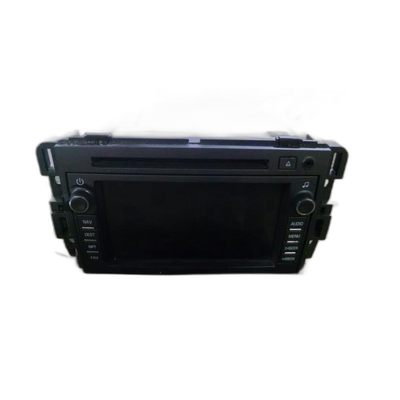
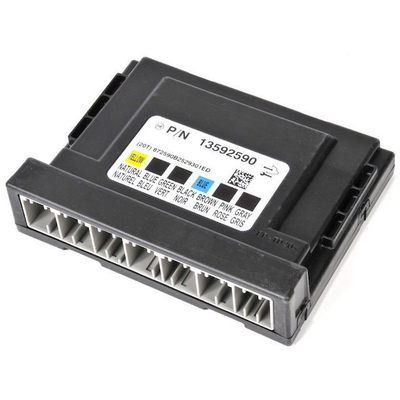
Shop the Parts Behind B2204
Below are the parts most often responsible for code B2204, ranked by how frequently each one is the actual culprit (per the diagnosis above). Tap any to see what we have for your vehicle.



The information in this article is provided for general reference and educational purposes only. Vehicle specifications, procedures, and part compatibility can vary by production date, trim level, and region. Always consult your vehicle's factory service manual and verify part numbers before purchasing or performing repairs. Safety-critical components such as airbags, seat belts, and braking systems should be installed by a qualified professional.
- 🧭 Diagnostic Flowchart
- 🎬 Helpful Videos
- 🛍️ Shop This Part
- What Does B2204 Mean?
- Can I Drive With B2204?
- Common Causes
- Symptoms
- Common Fixes & Costs
- Used vs. New Parts: Buying Guide
- What Happens If You Wait — Timeline
- Cost of Not Fixing It
- Diagnosis Steps
- When This Code Triggers (Freeze-Frame Conditions)
- Related Codes
- Climate & Environmental Factors
- How to Talk to a Mechanic About This Code
- Where to Take It: Dealer vs Independent vs Chain
- When to Walk Away From the Repair
- What Scan Tool You Need for This Code
- How to Clear the Code After You Fix It
- Will This Fail Emissions / State Inspection?
- Most Commonly Affected Vehicles
- Manufacturer-Specific Notes
- Real Owner Stories
- 2015 Chrysler 200 with 85,000 miles
- 2014 Jeep Cherokee with ~70,000 miles
- 2017 Jeep Compass with aftermarket radio
- 2012 Dodge Grand Caravan with intermittent no-start
- How to Prevent This Code From Triggering
- Frequently Asked Questions
- Can I fix code B2204 myself by disconnecting the battery?
- My odometer is flashing. Is that related to code B2204?
- What is a PROXI Alignment?
- Can a cheap OBD-II scanner fix this code?
- What tools do I need to perform a PROXI Alignment myself?
- A shop wants to replace my Body Control Module for $900. Is that the right fix?
- Can a bad ground cause code B2204?
- Key Takeaways
- 🎟️ Get 5% Off