

OBD-II Code B2208: Occupant Restraint Controller Internal Failure
The Ultimate Guide to What B2208 Means, Why It Triggers, and How to Fix It
- Code B2208 indicates a fatal internal failure of the Occupant Restraint Controller (ORC), completely disabling all airbags and seatbelt pretensioners.
- Driving with this code is critically unsafe; zero safety restraint systems will deploy in the event of a collision.
- Replacing the ORC module resolves this code in 95% of cases, typically costing $400 to $800 including mandatory dealer VIN programming.
- Check your VIN for NHTSA recalls T56 or S61 immediately, as millions of Chrysler, Dodge, and Jeep vehicles qualify for a free module replacement.
What Does B2208 Mean?
Code B2208 means your car's main safety computer, the Occupant Restraint Controller (ORC), detected a critical internal hardware or software failure. The module constantly runs self-checks. When it finds a non-recoverable fault, it shuts down the entire airbag system as a failsafe.
Technical definition: Occupant Restraint Controller (ORC) Internal 2. This indicates the module's internal diagnostics identified a permanent, out-of-range circuit, memory integrity failure, or software fault. Once latched, this DTC cannot be cleared and requires module replacement.
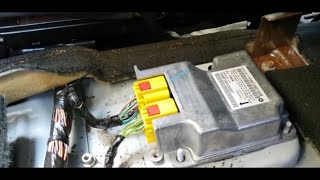
🎬 See this step-by-step Chrysler 200 airbag control module replacement.Can I Drive With B2208?
No — Do Not Drive. No. While the vehicle mechanically operates, it is critically unsafe. Code B2208 signifies the entire Supplemental Restraint System (SRS) — including all airbags, seatbelt pretensioners, and active headrests — is disabled. In a crash, zero safety devices will deploy, dramatically increasing the risk of fatal injury.
Common Causes
- Internal ORC Module Failure (Very Common) — The internal electronics (microprocessors or capacitors), memory, or software of the module failed their self-test. In official diagnostic procedures, a lone B2208 directly mandates replacing the module. 🎬 Watch: Understanding internal ORC failures and why they trigger codes.
- Software Corruption / Recall Required (Common) — On millions of Chrysler, Dodge, and Jeep vehicles, this code triggers due to a known manufacturing defect. FCA issued major recalls (like T56 and S61) to replace modules exhibiting this exact fault.
- Electrical Over-Stress (Common) — An electrical surge from improper jump-starting or a failing alternator damages sensitive resistors within the ORC module. This was the confirmed root cause in a NHTSA investigation into 2012 Jeep Liberty vehicles.
- Water Intrusion (Less Common) — The ORC module sits under the center console or front seats. Spilled liquids or cabin water leaks seep into the module, corroding the circuit board and short-circuiting the electronics.
- Low System Voltage (Less Common) — A dying battery causes electronic modules to behave erratically. While B2208 is usually a hard hardware fault, severe voltage drops sometimes trigger it alongside low-voltage codes (like B210D).
- Damaged Wiring or Poor Connection (Rare) — A loose, corroded, or chafed connector at the ORC module interrupts power or ground, tricking the module into logging an internal fault. This requires visual inspection of the harness under the seats. 🎬 Watch: Basic electrical checks for B2208 on a Dodge Avenger.
Symptoms
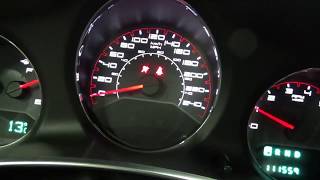
- Airbag Warning Light On — The dashboard light depicting a person with an airbag illuminates solidly and will not turn off.
- Passenger Airbag Status Light Inoperative — The indicator showing whether the passenger airbag is 'ON' or 'OFF' remains blank or stuck, as the controlling system is offline.
- Check Engine Light On — On some vehicle platforms, a critical SRS fault triggers the primary Check Engine Light to ensure the driver addresses the safety failure.
- Code Cannot Be Erased (scan-tool only — no driver-felt sign) — B2208 is a 'hard' or 'latched' fault. It cannot be cleared with an OBD-II scanner until the underlying internal fault is fixed. The code returns instantly after a clear attempt.
- SRS System Data Anomaly (scan-tool only — no driver-felt sign) — An advanced scanner reveals illogical data from the ORC module, such as reporting 'Engine Status: Running' when the engine is off. This confirms an internal logic failure.
Diagnostic Flowchart
Tap your situation to follow the diagnostic path that matches what you're seeing on this code.
Common Fixes & Costs
- Perform ORC Module Replacement (Recall) — Parts: $0, Labor: $0, ~1.5 hr book time (Professional)
- Replace the ORC Module (Dealer/Shop) — Parts: $250-$500, Labor: $150-$300, ~1.5 hr book time (Professional)
- Purchase a Pre-Programmed ('Plug-and-Play') Module — Parts: $150-$350, Labor: $0-$150, ~1.2 hr book time (Intermediate)
- Replace Weak Battery or Alternator — Parts: $150-$300, Labor: $0-$150, ~1.0 hr book time (Beginner)
Used vs. New Parts: Buying Guide
When a used part is worth it: It is never recommended to use a junkyard airbag module due to extreme safety risks. Used modules contain hidden crash data or internal faults. The only viable alternative to a new OEM part is a professionally refurbished and reprogrammed module from a reputable supplier that guarantees it is clear of crash data and programmed to your specific VIN.
Donor-vehicle mileage cap: roughly under 20000 miles for the part to have meaningful remaining life.
Donor quality checklist:
- Must be a certified, refurbished part from a specialized company.
- Seller guarantees the module is free of crash data and internal faults.
- Seller programs the module to your exact VIN before shipping.
- Part number is an exact match for your original module.
Decision logic:
- If The vehicle is covered by a safety recall for code B2208 → Always use the free OEM new part from the dealer.
- If Safety is the absolute top priority → Buy a new OEM module from a dealer and have them install and program it.
- If Budget is a major constraint → Purchase a professionally refurbished, VIN-programmed module from a specialized SRS repair company. Avoid junkyards.
Warranty tradeoff: Junkyard parts: No warranty, extreme risk. Refurbished parts: Limited warranty or money-back guarantee. New OEM parts: Full manufacturer warranty when installed by a dealer.
Worst-case if a used part fails: $500-$1500 if an improperly programmed module fails, requiring repeat labor and a new module.
What Happens If You Wait — Timeline
- 0 Seconds: The ORC module fails its internal self-test. B2208 is stored, the airbag light illuminates, and the entire SRS system is disabled. (MPG impact: 0%% · Added cost: $0)
- Immediate and Ongoing: The vehicle is critically unsafe. In a collision, NO airbags or seatbelt pretensioners will deploy. Risk of fatal injury skyrockets. (MPG impact: 0%% · Added cost: Incalculable personal safety risk.)
- First State Inspection: The vehicle fails annual safety inspections in strict states, making it illegal to operate on public roads until repaired. (MPG impact: 0%% · Added cost: $50 - $200 in inspection fees and fines.)
- In Case of an Accident: Safety systems fail to activate, turning a survivable accident into a fatal one. Insurance claims may be denied due to operating an unsafe vehicle. (MPG impact: 0%% · Added cost: Catastrophic financial and personal loss.)
Cost of Not Fixing It
- Immediate: Complete failure of the Supplemental Restraint System (SRS). No airbags or seatbelt pretensioners will deploy in a crash. (Added cost: N/A - Critical safety risk.)
- Ongoing: Failure of state safety inspection in many jurisdictions, making the vehicle illegal to operate on public roads. (Added cost: Varies by state (fines, inability to renew registration).)
- In case of accident: Dramatically increased risk of fatal injury. Potential for higher liability and denied insurance claims. (Added cost: Incalculable.)
Diagnosis Steps
- Check for Safety Recalls and TSBs
Use your VIN to check the NHTSA website. Chrysler, Dodge, and Jeep vehicles have massive recalls (e.g., T56, S61) for this exact code, entitling you to a free dealer module replacement. Also search for Technical Service Bulletins (TSBs) for your specific year and model.
Tools: Vehicle Identification Number (VIN), internet access (Beginner) - Scan for Codes and Attempt to Clear
Use an SRS-capable scanner to confirm B2208. Note any U-codes (communication) or B-codes (voltage). Attempt to clear the codes with the key on, engine off. If B2208 returns immediately, it confirms a hard internal fault.
Tools: SRS-capable OBD-II Scanner (Beginner) - Check for Phantom Live Data
Access the live data stream for the SRS/ORC module. Look for illogical data points, such as the module reporting 'Engine Status: Running' when the engine is off. This definitively proves an internal short circuit.
Tools: Advanced SRS-capable OBD-II Scanner (Intermediate) - Verify Power and Ground at the Module
Disconnect the battery and wait 15 minutes. Unplug the ORC module's main connector. Use a multimeter to confirm consistent battery voltage (12.0V-12.6V) at the power pins and less than 0.1 ohms of resistance on the ground pins.
Tools: Multimeter, vehicle-specific wiring diagram, basic hand tools (Advanced) - Inspect Module Connector and Wiring
Thoroughly inspect the unplugged connector for corrosion (green/white powder), moisture, backed-out pins, or physical damage. Check the harness for chafing where it runs under seats or carpeting.
Tools: Flashlight, inspection mirror (Intermediate) - Verify CAN Bus Network Integrity
With the battery disconnected, measure resistance between CAN High (Pin 6) and CAN Low (Pin 14) at the OBD-II port; it should read 60 ohms. Reconnect the battery, turn the ignition on, and measure DC voltage: CAN High should be ~2.6V and CAN Low ~2.4V. These values confirm the network is physically intact.
Tools: Multimeter, DLC pinout diagram (Advanced) - Replace the ORC Module
If external wiring, power, ground, and network checks pass and no recalls apply, the module is dead. Replace the ORC module. New modules require VIN programming by a dealer or properly equipped shop to function.
Tools: Basic hand tools, dealer-level scan tool for programming (Professional)
When This Code Triggers (Freeze-Frame Conditions)
- System Voltage: 12.0-14.5V (The fault sets during the Key-On Self-Test, reflecting the battery's state of charge at startup.)
- Ignition Status: RUN (The ORC performs a self-check every time the ignition turns to the 'Run' position.)
- Fault Type: Latched / Hard Fault (Indicates a permanent internal failure that cannot be cleared without physical repair.)
Related Codes
- B2207, B2209, B220A, B220B — Variations of the 'Occupant Restraint Controller Internal' fault. They point to different self-check failures, but the end result is identical: replace the module.
- U0019 — A 'CAN B Bus' communication code. If only the ORC logs this alongside B2208, it confirms the internal fault is preventing the module from communicating.
- B210D — Indicates 'Battery Voltage Low'. Diagnose the charging system first. If fixing the voltage clears B210D but B2208 remains, the ORC module is dead.
- U3000 — The generic 'Control Module Internal Failure' code used by Ford and GM. It is the direct equivalent of B2208 and follows the exact same diagnostic path.
Climate & Environmental Factors
- Humidity / Water Intrusion: Direct water leaks into the cabin frequently cause ORC module failure. Moisture corrodes the circuit board, leading to short circuits and the B2208 code.
- Extreme Cold: Cold temperatures cause marginal solder joints inside aging modules to contract and break contact, sometimes triggering permanent internal failure codes during winter months.
How to Talk to a Mechanic About This Code
Say this: "Hello, my airbag light is on and my scanner shows code B2208, indicating an internal failure of the Occupant Restraint Controller. I checked for recalls and have none open. I'd like to schedule a diagnostic to confirm the module failed and get a quote for replacement and VIN programming."
This proves you are informed. It specifies the exact code, acknowledges the likely repair, and mentions the mandatory programming step. This directs the shop's process and prevents upselling.
Avoid saying:
- 'My airbag light is on, can you fix it?' (Too vague, invites open-ended diagnostic fees).
- 'I think I need a new airbag.' (B2208 points to the control module, not the airbags).
- 'Just do whatever it takes to turn the light off.' (Gives the shop a blank check).
Questions to ask before authorizing the repair:
- Have you confirmed power and ground to the ORC module are good?
- Is the new module a new OEM part or a remanufactured unit?
- Does the quoted price include the necessary VIN programming?
- What is the warranty on both the part and the labor?
Where to Take It: Dealer vs Independent vs Chain
- Dealer:
Highly Recommended. The dealer checks for missed recalls and guarantees access to the proprietary software needed to program the new module to your VIN.
Best for: Vehicles under warranty., Cases where an active recall applies (free repair)., Ensuring access to correct VIN programming tools.
Downsides: Highest labor rate and part costs., Unwilling to install customer-supplied parts. (Typical cost: +40% vs. baseline) - Independent Shop:
Acceptable with Caution. Only use an independent shop if they prove they have the specific software (e.g., Autel MaxiSys, wiTECH) to perform ORC module initialization.
Best for: Out-of-warranty vehicles with a trusted mechanic., Installation of a pre-programmed module sourced by the owner.
Downsides: Many lack the expensive, manufacturer-specific tools to program a new airbag module. (Typical cost: +0% vs. baseline) - Chain Shop:
AVOID. Chain shops cannot perform the required VIN programming. Attempting the repair there wastes time and money.
Best for: Simple maintenance like oil changes.
Downsides: Technicians lack training and tools for SRS module replacement and programming. (Typical cost: -10% vs. baseline)
When to Walk Away From the Repair
If the total estimated repair cost ($400-$800) exceeds 50% of your car's current private-party market value, consider selling the vehicle as-is instead of repairing it.
- Car worth $4500, fix is $800: Fix it. The repair is 17% of the vehicle's value. Fixing it restores a critical safety feature and resale value.
- Car worth $2000, fix is $800: Borderline. The repair is 40% of the car's value. Consider if the car has other upcoming major maintenance needs before proceeding.
- Car worth $1200, fix is $800: Walk away. The repair cost is 66% of the car's value. The money is better put towards a replacement vehicle.
What Scan Tool You Need for This Code
Minimum: An OBD-II scanner with SRS (Airbag) system access. A basic $20 engine code reader is useless for this code.
Standard code readers cannot communicate with the SRS/ORC module. You need a tool specifically advertised with SRS capabilities to see the B2208 code.
Budget: Ancel FX2000 (~$90) — Reads and clears SRS codes, allowing you to confirm the B2208 fault is a hard, non-erasable code. Views live SRS data.
Mid-range: BlueDriver Pro Scan Tool (~$120) — Connects via Bluetooth for comprehensive SRS code reading and clearing. Offers repair reports based on the specific code.
Professional: Autel MaxiCOM MK808 (~$350) — Entry-level professional tool. Reads/clears codes and possesses the bidirectional capability to perform the 'Module Initialization' required after installing a new ORC module.
Rent vs buy: For a one-time diagnosis, auto parts stores offer free SRS-capable scanner rentals. However, because this repair often requires post-installation programming, buying a pro-level tool pays for itself if you skip the dealer.
How to Clear the Code After You Fix It
- Ensure the battery was disconnected during module replacement.
- Reconnect the battery (positive terminal first, then negative).
- Turn the ignition to the 'ON' position (do not start the engine).
- The new module performs a self-test; the airbag light should illuminate and turn off within 7 seconds.
- If the light stays on, the new module requires initialization or VIN programming with a dealer-level scan tool.
Drive cycle: No drive cycle is required. The SRS system determines readiness during the self-test at startup. The fault clears (or confirms) upon the first key cycle after repair.
Watch out for:
- Attempting to clear the code with a scanner before replacing the faulty module fails; the code is latched.
- Installing a used module from another vehicle fails because it is locked to a different VIN.
- Forgetting to disconnect the battery before working on the SRS system causes accidental deployment or electrical damage.
Will This Fail Emissions / State Inspection?
No — by itself this code doesn't fail OBD inspection (but it can keep readiness monitors from setting, which causes a separate fail).
- California: An airbag light does NOT cause a failure of the emissions-only smog check, but it remains a critical safety failure.
- New York: An illuminated airbag warning light is noted as an advisory during the safety inspection but is NOT a cause for failure.
- Texas: An airbag warning light is NOT a required item on the Texas vehicle safety inspection and will not cause a failure.
- Virginia: An illuminated airbag warning light WILL cause a vehicle to fail the state safety inspection.
Most Commonly Affected Vehicles
- Dodge Avenger (2011-2014) — Extremely common issue. Covered by NHTSA recalls T56 (17V-640) and S61 (16V-668) for free dealer replacement.
- Chrysler 200 (2011-2014) — Shares the Avenger platform and faulty ORC module. Also covered by NHTSA recalls T56 and S61.
- Ram 1500/2500/3500 (2009-2012) — The ORC module is highly prone to internal failure. Replacement is the standard repair. Some new OEM modules come pre-initialized.
- Jeep Liberty (KK) (2012-2012) — Subject of a NHTSA investigation and recall (T56) specifically for B2208 caused by electrical over-stress damaging internal resistors.
- Chevrolet Malibu, Equinox, Silverado (2016-2022) — GM uses the Sensing and Diagnostic Module (SDM). Internal failures set equivalent U-series codes (e.g., U3000) requiring mandatory replacement.
- Nissan Rogue, Altima, Sentra (2014-2020) — Airbag lights are often caused by Occupant Classification System (OCS) sensor code B00A0-00, not an internal module failure. Addressed by TSB NTB19-071D.
- Volkswagen Jetta, Passat, Golf (2011-2017) — VW models represent internal module failure with code 65535 ('Internal Control Module Memory Error'). Diagnosis is identical to B2208.
Manufacturer-Specific Notes
- Chrysler/Dodge/Jeep/Ram: This code is exceptionally common and almost always means the ORC module failed. Always check for recalls T56 and S61 first to secure a free replacement.
- Ford/Lincoln: Ford uses code U3000:00 (Internal Control Module Failure) for this fault in the Restraints Control Module (RCM). The diagnostic logic remains identical.
- Nissan/Infiniti: Before condemning the airbag module, check for TSB NTB19-071D. Code B00A0-00 relates to the OCS sensor and requires a software reset, not a module replacement.
Real Owner Stories
2012 Dodge Avenger at 124K miles - The Classic Recall Fix
Owner experienced a permanent airbag light. Scanning revealed an un-erasable B2208 code.
Outcome: Took the vehicle to a Dodge dealer. The B2208 code was covered by NHTSA recall 17V-640 (T56), resulting in a free module replacement.
Lesson: For any Chrysler, Dodge, or Jeep, always check for open recalls first. It saves hundreds of dollars in diagnostic and replacement costs.
2012 Ram 1500 at ~100K miles - DIY Replacement
Airbag light appeared with internal failure codes B2208/B2209. Owner debated if it was a wiring issue or a dead module.
Outcome: Purchased a new OEM ORC module for $250. Disconnected the battery, removed the center jump seat, and swapped the module. The new unit came pre-initialized, requiring no dealer programming. The light turned off immediately.
Lesson: On specific platforms like the Ram 1500, a DIY replacement is possible if the OEM replacement part comes pre-initialized.
2015 Chrysler 200 - The Intermittent Wiring Culprit
Owner had an intermittent 'Service Airbag System' light that turned on and off during drives, unlike a hard B2208 fault.
Outcome: The issue was a poor connection at the yellow plugs under the seat, not a B2208 internal fault. Securing the pins fixed the issue.
Lesson: Distinguish between a hard-set B2208 code and an intermittent light. Intermittent lights usually point to loose connectors under seats, not dead modules.
2012 Chrysler 200 with B2208 - The Water Damage Scenario
Vehicle suffered a minor interior flood, developing an airbag light and multiple electrical issues.
Outcome: The ORC module, located low under the center console, was destroyed by water intrusion. Required replacing the module and repairing the corroded harness.
Lesson: If B2208 appears after a spill or cabin leak, the cause is almost certainly moisture-induced corrosion. Inspect the module for water damage.
How to Prevent This Code From Triggering
- Ensure Proper Jump-Starting Procedures (Whenever jump-starting) — Improper jump-starting causes voltage spikes that destroy sensitive electronics like the ORC module. Always connect positive-to-positive first, and use a modern jump-starter with built-in surge protection.
- Prevent Cabin Water Leaks (Annually) — The ORC module sits under the center console, making it vulnerable to spills or leaks. Keep sunroof drains clear and inspect door seals to prevent water from reaching electronics.
- Use an Automotive Surge Protector (During any electrical work) — A dedicated surge protector clipped to the battery terminals defends against voltage spikes from welding or high-current diagnostic tools, preserving module life.
Frequently Asked Questions
Can I reset the airbag light for code B2208 myself?
No. B2208 indicates a permanent, latched internal hardware or software fault. Standard scan tools cannot clear it. The code returns immediately until the module is physically replaced or reprogrammed by a dealer.
What is the difference between B2208 and a crash data code?
B2208 is an internal self-test failure caused by an electronic or software defect. Crash data codes are set when the module functions correctly during an accident and deploys the airbags. A module with crash data can be reset, but a B2208 internal fault requires physical replacement.
Is it safe to drive with code B2208?
No, it is critically unsafe. The airbag system is completely shut down, meaning no airbags or seatbelt pretensioners will function in a collision. Have the vehicle repaired immediately.
Do I have to go to the dealer to fix B2208?
It is highly recommended because the repair is often covered by a free safety recall. Additionally, a new airbag module requires dealer-level software for VIN programming. Most independent shops lack the proprietary tools to perform this initialization.
Can I use a used airbag module from a junkyard?
This is strongly discouraged for safety and legal reasons. Used modules often contain hidden crash data, internal faults, or are permanently locked to the donor vehicle's VIN. Always use a new OEM part or a professionally remanufactured, VIN-programmed unit.
Will replacing the battery fix code B2208?
It is extremely unlikely. While a failing battery causes false codes, B2208 is a specific internal failure. If you have low voltage codes (like B210D), address the battery first, but expect the B2208 to remain.
Can a bad clock spring cause a B2208 code?
No. A faulty clock spring sets codes specifically related to the driver's airbag circuit, such as high resistance. It does not cause an internal module failure code like B2208.
Key Takeaways
- Code B2208 indicates a fatal internal failure of the Occupant Restraint Controller (ORC), completely disabling all airbags and seatbelt pretensioners.
- Driving with this code is critically unsafe; zero safety restraint systems will deploy in the event of a collision.
- Replacing the ORC module resolves this code in 95% of cases, typically costing $400 to $800 including mandatory dealer VIN programming.
- Check your VIN for NHTSA recalls T56 or S61 immediately, as millions of Chrysler, Dodge, and Jeep vehicles qualify for a free module replacement.
Helpful Videos
Shop the Parts Behind B2208
Below are the parts most often responsible for code B2208, ranked by how frequently each one is the actual culprit (per the diagnosis above). Tap any to see what we have for your vehicle.



The information in this article is provided for general reference and educational purposes only. Vehicle specifications, procedures, and part compatibility can vary by production date, trim level, and region. Always consult your vehicle's factory service manual and verify part numbers before purchasing or performing repairs. Safety-critical components such as airbags, seat belts, and braking systems should be installed by a qualified professional.
- 🧭 Diagnostic Flowchart
- 🎬 Helpful Videos
- 🛍️ Shop This Part
- What Does B2208 Mean?
- Can I Drive With B2208?
- Common Causes
- Symptoms
- Common Fixes & Costs
- Used vs. New Parts: Buying Guide
- What Happens If You Wait — Timeline
- Cost of Not Fixing It
- Diagnosis Steps
- When This Code Triggers (Freeze-Frame Conditions)
- Related Codes
- Climate & Environmental Factors
- How to Talk to a Mechanic About This Code
- Where to Take It: Dealer vs Independent vs Chain
- When to Walk Away From the Repair
- What Scan Tool You Need for This Code
- How to Clear the Code After You Fix It
- Will This Fail Emissions / State Inspection?
- Most Commonly Affected Vehicles
- Manufacturer-Specific Notes
- Real Owner Stories
- 2012 Dodge Avenger at 124K miles - The Classic Recall Fix
- 2012 Ram 1500 at ~100K miles - DIY Replacement
- 2015 Chrysler 200 - The Intermittent Wiring Culprit
- 2012 Chrysler 200 with B2208 - The Water Damage Scenario
- How to Prevent This Code From Triggering
- Frequently Asked Questions
- Can I reset the airbag light for code B2208 myself?
- What is the difference between B2208 and a crash data code?
- Is it safe to drive with code B2208?
- Do I have to go to the dealer to fix B2208?
- Can I use a used airbag module from a junkyard?
- Will replacing the battery fix code B2208?
- Can a bad clock spring cause a B2208 code?
- Key Takeaways
- 🎟️ Get 5% Off