

OBD-II Code B2220: Power Trunk/Liftgate Motor Circuit Malfunction
What B2220 means, why it triggers, and how to fix it
- Code B2220 indicates a power liftgate motor circuit fault, but you must verify the definition for your specific vehicle, as it means 'seat switch' on GM and 'blower motor' on Kia.
- The number one cause of this code is a broken wire inside the flexible rubber boot connecting the liftgate to the vehicle body.
- Weak gas support struts force the electric motor to draw excessive current, triggering code B2220 and causing the gate to reverse direction.
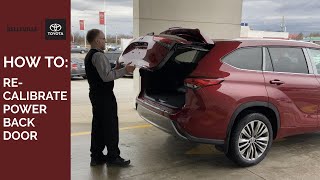
- Always perform a manual system initialization (closing the gate and holding the button until it beeps) before replacing parts, especially if the battery recently died.
What Does B2220 Mean?
Code B2220 indicates the body control module or liftgate module detected an electrical fault in the power trunk or liftgate motor circuit. The computer reads a voltage that is too high (short to power), too low (short to ground), or absent (open circuit), preventing automatic operation.
Technical definition: The official SAE/ISO definition for code B2220 is "Back Door Motor Circuit Malfunction". This indicates the control module detected a fault in the electrical circuit of the motor responsible for operating the power liftgate or trunk.
Can I Drive With B2220?
Yes, But With Caution. You can drive safely, but must operate the trunk manually. Weak gas struts cause the heavy liftgate to fall unexpectedly, posing an injury risk. An unlatched gate risks cargo loss and allows exhaust fumes into the cabin.
Common Causes
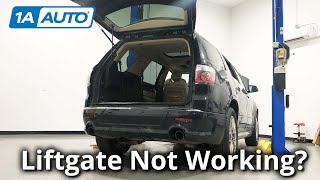
- Damaged Wiring or Connectors (Very Common) — Wires passing through the flexible rubber boot between the body and liftgate fatigue and break from constant movement. This is the #1 cause of B2220. 🎬 Watch: How to find and repair broken liftgate hinge wiring.
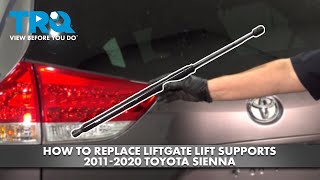
- Failing/Weak Gas Support Struts (Common) — Gas struts weaken over time, forcing the electric motor to work harder. 🎬 See how to replace failing liftgate support struts yourself. The control module interprets this excessive current draw as a motor circuit fault and reverses the gate.
- Faulty Power Liftgate/Trunk Motor Actuator (Common) — The electric motor burns out, strips internal gears, or develops an internal short circuit.
- Poor Ground Connection (Common) — Corrosion or a loose connection at the hinge or dedicated ground strap interrupts the circuit.
- Blown Fuse (Less Common) — A short circuit blows the power liftgate fuse (often the J2 30A fuse on Chrysler minivans), cutting power.
- Faulty Control Switch or Latch Assembly (Less Common) — Dirt and moisture contaminate switch contacts, preventing the signal from reaching the control module.
- Obstruction or Physical Damage (Rare) — Forcing the liftgate closed manually damages drive gears, leading to an over-current situation.
- Faulty Body Control Module (BCM) or Liftgate ECU (Rare) — The control module fails internally. Consider this only after ruling out wiring and the motor.
Symptoms
- Power Trunk/Liftgate is Inoperative — The power liftgate or trunk will not open or close when pressing the button on the key fob, dashboard, or liftgate.
- Liftgate Opens/Closes Partially, Then Reverses — The gate starts to move, stops, and reverses direction. This safety feature triggers due to a failing strut, obstruction, or high current draw.
- Grinding or Clicking Noise During Operation — Loud grinding or clicking sounds from the rear indicate stripped or broken gears inside the motorized strut assembly.
- Trunk/Liftgate Will Not Latch or Lock — The motor circuit failure prevents the latching mechanism from engaging properly, leaving the trunk partially open.
- Audible Clicking Noise from a Relay — A clicking sound from a relay when pressing the button indicates the switch works, but power is not reaching the motor.
- Tailgate Only Fails in Cold Weather — On some vehicles, a tailgate failing to open via the external handle in cold weather points to a faulty outer handle switch, not the motor.
- Warning Light on Dashboard (also visible on scanner) — A specific warning message like "Power Liftgate Malfunction" appears on the instrument cluster.
Diagnostic Flowchart
Tap your situation to follow the diagnostic path that matches what you're seeing on this code.
Common Fixes & Costs
- Repairing Damaged Wires
— Parts: $10-$50, Labor: $150-$400, ~2.5 hr book time
(Intermediate)
: OEM
: OEM - Replacing Weak Gas Support Struts
— Parts: $80-$250, Labor: $50-$150, ~0.5 hr book time
(DIY)
: OEM - Replacing a Blown Fuse — Parts: $1-$5, Labor: $0-$50, ~0.1 hr book time (DIY)
- Replacing the Power Liftgate Motor/Actuator
— Parts: $400-$1800, Labor: $200-$400, ~2.0 hr book time
(Intermediate)
: OEM
: OEM
: OEM
: OEM - Replacing the Liftgate Control Module/ECU
— Parts: $300-$800, Labor: $100-$200, ~1.0 hr book time
(Professional)
: OEM
Used vs. New Parts: Buying Guide
When a used part is worth it: For a common vehicle over 5 years old, a used OEM motor from a low-mileage donor is a cost-effective choice. It provides better reliability than a cheap aftermarket part.
Donor-vehicle mileage cap: roughly under 70000 miles for the part to have meaningful remaining life.
Donor quality checklist:
- Verify the donor vehicle wasn't scrapped due to an electrical or flood-related issue.
- Inspect the part for rust around electrical connectors and mounting points.
- Match the OEM part number exactly.
- Ask about the seller's return policy and warranty period.
Decision logic:
- If The vehicle is still under warranty or is a newer, low-mileage model → buy new OEM to ensure longevity and compatibility.
- If The cost of a new OEM part is prohibitive and the vehicle is older → a used OEM part is a better gamble than a new, unproven aftermarket brand.
- If The failure is a known design flaw with the OEM part → consider a reputable aftermarket brand that re-engineered the part, but verify reviews.
Warranty tradeoff: Used parts offer a 30-90 day warranty. New aftermarket parts range from 1-year to lifetime, but quality varies. New OEM parts carry a 1-year warranty and are the most reliable, but most expensive.
Worst-case if a used part fails: $300-$600 if a used or cheap aftermarket part fails prematurely, requiring a second labor charge.
What Happens If You Wait — Timeline
- 0-1 month: Code B2220 is set. The power liftgate becomes inoperative, requiring manual operation. (Added cost: $0)
- 1-6 months: Continued manual slamming puts extra stress on the latch and hinge mechanisms. The latch may fail to secure the gate properly. (Added cost: $200-$700 (Potential cost to repair a damaged latch or hinge assembly).)
- 6-12 months: An ignored wiring issue worsens into a hard short circuit, repeatedly blowing the fuse. Water intrusion corrosion spreads to the control module's circuit board. (Added cost: $500-$800 (Cost to replace a liftgate control module).)
- 12+ months: A persistent short circuit overheats and damages the driver circuits within the Body Control Module (BCM). (Added cost: $800-$2000+ (Cost to replace a BCM or perform major harness repair).)
Cost of Not Fixing It
- Immediate: Inconvenience. The power function is inoperative, requiring heavy manual lifting. (Added cost: $0)
- 1-6 months: Forcing manual operation strains the latch and hinge mechanisms. An unlatched gate creates a safety hazard. (Added cost: $200-$700 (Potential latch or hinge repair))
- 6+ months: Ignoring a wiring short damages the control module. Water intrusion causes widespread corrosion and complex electrical failures. (Added cost: $500-$1500+ (Control module replacement, complex wiring diagnostics))
Diagnosis Steps
- Verify the Code Definition
CRITICAL FIRST STEP: Use a professional scan tool to confirm B2220 means liftgate motor for your specific Year/Make/Model. On GM, it refers to a seat switch; on Kia, a blower motor.
Tools: Professional OBD-II Scan Tool (Beginner) - Check the Valet Lockout Switch
Ensure the valet switch (often in the glovebox) has not been accidentally activated, disabling the trunk release.
Tools: None (Beginner) - Inspect the Wiring Harness
Peel back the rubber boot between the vehicle body and liftgate. Look for broken, pinched, or frayed wires.
Tools: Flashlight, Trim removal tools (Intermediate) - Inspect the Fuse
Locate the power liftgate fuse in the fuse box and visually inspect it for a blown filament.
Tools: Fuse puller or needle-nose pliers (Beginner) - Perform a System Initialization
If the battery was recently disconnected, manually close the liftgate and hold the close button until it beeps to re-initialize the system.
Tools: None (Beginner) - Test the Liftgate Motor Power
Check for power and ground at the liftgate motor connector when pressing the button. A reading of 12.4V-12.8V means the motor is faulty; no power means an upstream issue.
Tools: Multimeter (Intermediate) - Check for a Good Ground
Test continuity between the trunk lid and a known good chassis ground. Resistance over 1 ohm indicates a bad ground connection.
Tools: Multimeter (Intermediate) - [PRO TIP] Test Motor and Harness Resistance
Disconnect the motor and ECU connectors. Check continuity between the ECU and motor (<1 Ω) and check for a short to ground (>10 kΩ). An open circuit points to a broken wire.
Tools: Multimeter, Vehicle-specific wiring diagram (Professional) - [PRO TIP] Perform a Current Draw Test
Use a DC clamp-on ammeter on the motor's power wire. A high, spiking current draw suggests the motor is overworked by weak support struts.
Tools: DC Clamp-on Ammeter (Professional) - [ADVANCED] Voltage Drop Test
Connect the positive multimeter lead to the battery positive and negative lead to the motor power terminal. Activate the motor. A reading over 0.5V indicates excessive resistance.
Tools: Multimeter with long leads (Advanced) - [ADVANCED] Analyze Scan Tool Live Data
Monitor 'Liftgate Position Sensor' and 'Liftgate Motor Voltage' PIDs. Voltage dropping to zero indicates an open wire.
Tools: Professional Bi-Directional Scan Tool (Advanced)
When This Code Triggers (Freeze-Frame Conditions)
- Battery Voltage: 11.5V - 14.5V (Voltage is captured at the exact moment the Body Control Module (BCM) detects the fault during an attempted operation.)
- Liftgate Command Status: Open or Close (Logged when the BCM sends a command to the motor but does not see the expected electrical response.)
- Liftgate Switch Status: Pressed (Captures the state of the interior, exterior, or key fob switch, indicating the trigger for the attempted operation.)
- Vehicle Speed: 0 mph (The liftgate operates when the vehicle is stationary and in Park, so speed is almost always zero.)
Related Codes
- B1325 — B1325 points to a problem with the main power supply to the control module. B2220 points to a problem in the output circuit from the module to the liftgate motor.
- U0100 — If B2220 and U0100 appear together, the wiring harness carrying both power and data lines (CAN bus) is likely damaged in the hinge area.
- B2221 — On GM vehicles, this specifies a range/performance issue with a seat switch. In a liftgate context, B2221 indicates the motor runs too slowly, while B2220 indicates an open or short circuit.
- B2291 — Translates to 'Power Liftgate Control Module Position Sensor Circuit Malfunction'. If present with B2220, the issue is likely within the liftgate motor assembly housing both the motor and sensor.
Climate & Environmental Factors
- Cold Weather: Cold temperatures cause gas struts to lose pressure, increasing the load on the motor and triggering a B2220 code. It also makes aging wire insulation brittle and prone to cracking.
- High Humidity / Salt Belt Regions: Moisture and road salt accelerate corrosion on electrical connectors, ground points, and wiring, leading to high resistance and shorts.
How to Talk to a Mechanic About This Code
Say this: "I have a B2220 code for the power liftgate motor circuit. Please start by inspecting the wiring harness in the rubber boot at the hinge area for breaks, as I understand this is the most common cause. Please do not quote a motor replacement until the wiring, struts, and ground connections have been tested."
This signals you are an informed consumer. It directs the technician to start with the most likely and least expensive fixes (wiring, struts) before jumping to the most expensive one (motor replacement).
Avoid saying:
- 'My power trunk is broken, fix it.'
- 'The button doesn't work, I probably need a new motor.'
- 'Just do whatever it takes to get it working again.'
Questions to ask before authorizing the repair:
- Did you find a broken or frayed wire in the hinge-area harness?
- Did you test for 12V power and a good ground at the motor connector?
- Did you perform a current-draw test on the motor to check for weak support struts?
- If recommending a motor replacement, can you show me the failed test results for the old motor?
- What is the warranty on the parts and labor for this repair?
Where to Take It: Dealer vs Independent vs Chain
- Dealer:
A safe but expensive option. Best if the issue is covered by warranty or requires proprietary software.
Best for: Vehicles still under warranty., Very new models (less than 3 years old)., Complex electrical issues involving multiple control modules.
Downsides: Highest labor rates and parts costs., May replace an entire assembly rather than perform a targeted repair. (Typical cost: +50% vs. baseline) - Independent Shop:
Best fit for most owners. A reputable independent shop can diagnose and repair common causes (broken wires, bad motor) much more affordably than a dealer.
Best for: Out-of-warranty vehicles where cost is a major factor., Diagnosing common problems like the B2220 wiring failure., Shops that specialize in automotive electrical systems.
Downsides: Quality and expertise vary widely. Vet the shop through reviews., May lack manufacturer-specific diagnostic software for very new models. (Typical cost: +0% vs. baseline) - Chain Shop:
AVOID for this code. B2220 requires true diagnostic skill to differentiate between a wiring fault, a motor fault, and a module fault.
Best for: Simple, routine maintenance like oil changes, tires, and brake pads.
Downsides: Technician skill is highly variable., Lack in-depth diagnostic equipment for complex electrical issues., Business model pressures technicians to replace parts rather than perform detailed diagnostics. (Typical cost: -10% vs. baseline)
When to Walk Away From the Repair
If the estimated repair cost exceeds 40-50% of your car's private-party value, pause and consider your options. Since a broken power liftgate is an inconvenience rather than a critical safety issue, the threshold for this repair is often lower.
- Car worth $4000, fix is $1500: Walk away. A $1500 repair for a non-essential feature on a $4000 car is not a good use of money. Operate the liftgate manually.
- Car worth $15000, fix is $500: Fix it. A $500 wiring repair is well below the threshold and restores a key feature, preserving value.
- Car worth $8000, fix is $1800: Borderline. This is a significant percentage of the car's value for a convenience feature. Get a second opinion to ensure no cheaper repair is possible.
What Scan Tool You Need for This Code
Minimum: A scanner that can read and clear 'B' (Body) trouble codes. A basic engine-only code reader will not see code B2220.
A cheap 'P-code' reader shows 'No Codes' for this issue. Free scans at auto parts stores often only check engine codes.
Budget: Foxwell NT301 / Ancel AD410 (~$50) — VERIFY the specific model explicitly lists 'ABS/SRS/Body' code reading. Many in this price range DO NOT.
Mid-range: BlueDriver Pro / Autel MX808 / XTOOL D7 (~$120-400) — Reads Body (B) codes and shows live data. Higher-end models offer bidirectional control to command the liftgate motor directly.
Professional: Autel MaxiCOM MK808S / MK906BT / Launch X431 Series (~$450-1200) — Provides full bidirectional control, accesses manufacturer-specific PIDs, and performs system initializations or programming.
Rent vs buy: Free loaner tools at auto parts stores are basic engine code readers and will NOT diagnose B2220. If this is a one-time fix, pay a diagnostic fee at a shop. If you plan to do more repairs, invest in a mid-range scanner.
How to Clear the Code After You Fix It
- Fix the underlying mechanical or electrical fault.
- Reconnect the battery if it was disconnected.
- Use a professional OBD-II scan tool to clear the B-prefix trouble code.
- Perform the vehicle-specific power liftgate initialization procedure.
Drive cycle (~5 minutes): A traditional drive cycle is not required. The key is the initialization procedure. Manually close the liftgate, then press and hold the close button until the system beeps, confirming it re-learned the open and closed positions. Cycle the power liftgate 2-3 times to confirm the fix.
Readiness monitors affected: None
Watch out for:
- Forgetting to perform the liftgate initialization procedure after the repair; new parts will not work without it.
- Using a basic code reader that only reads 'P' (powertrain) codes and cannot see or clear 'B' (body) codes.
- Clearing the code without fixing the root cause, causing the code to return immediately.
Will This Fail Emissions / State Inspection?
No — by itself this code doesn't fail OBD inspection (but it can keep readiness monitors from setting, which causes a separate fail).
- California: This code will NOT cause a smog check failure. California focuses on powertrain codes and emissions readiness monitors.
- New York: A B2220 code will not fail the NYS emissions inspection, which only checks emissions-related faults.
- Texas: This code will not cause a failure. Texas checks for emissions-related DTCs that illuminate the Check Engine Light; B2220 does not.
Most Commonly Affected Vehicles
- Toyota RAV4 (2016-2023) — Frequently reported on RAV4 models, pointing to a malfunction in the power back door unit or wiring. Class-action lawsuits exist regarding hinge and actuator failures for 2014-2021 models.
- Toyota Sienna (2011-2020) — The power liftgate system is a known source for this code, often due to wiring breaks in the hatch hinge area or motor failure.
- Lexus RX350/RX450h (2010-2022) — Shares the same system design as Toyota and is prone to the same motor circuit failures.
- Honda Odyssey (2011-2021) — TSB 16-063 notes failure to open with the outside handle in cold weather is likely a faulty switch. A class action investigation exists for 2018-2021 models concerning water leaking into the tailgate control unit.
- Chrysler/Dodge Town & Country / Grand Caravan (2008-2016) — The wiring harness for the power liftgate is a well-documented weak point. The power liftgate module fuse is often labeled J2 (30A).
- Ford C-Max / Escape (2013-2018) — On some Ford models, B2220 refers to a fault in a window lift motor circuit, not the power liftgate.
- Kia Soul (2015-2019) — CRITICAL: On the Kia Soul, part number 97200-B2220 corresponds to the HVAC Blower Assembly. Code B2220 indicates a blower motor circuit fault.
- Land Rover Discovery Sport (2015-2024) — Known for power liftgate strut failures, causing the tailgate to reverse direction and straining the motor.
Manufacturer-Specific Notes
- Toyota/Lexus: Calls the control module a 'Multiplex Network Door ECU'. Initialization is required after disconnecting the battery or ECU.
- General Motors (GM): Uses B2220 for a completely different system: 'LR seat assembly rearward switch circuit malfunction'.
- Kia: On the Soul, B2220 is associated with the HVAC blower motor assembly, not the power liftgate.
- Honda: For 2011-2017 Odyssey models, if the exterior handle fails in the cold, suspect the handle switch per TSB 16-063. 2018-2021 models suffer from water leaking into the tailgate control unit.
- Various: After replacing a component or disconnecting the battery, the power liftgate system requires an initialization procedure to restore normal function.
Real Owner Stories
2012 Chrysler Town & Country at 70,000 miles
The power sliding door suddenly stopped working. Pressing the button made the locks click, but the door wouldn't move.
What they tried:
- Checked fuses, which were all okay.
- Lubricated the door track, which made no difference.
Outcome: The owner found a clean break in one of the larger gauge wires inside the flexible harness. Splicing the wire back together immediately restored function. Total cost was under $5.
Lesson: On Chrysler/Dodge minivans, if a power door or liftgate fails but relays click, the #1 suspect is a broken wire in the flexible harness. Inspect this thoroughly before replacing motors.
2018 Honda Odyssey EX-L with liftgate failure after rain
After a heavy rainstorm, water dripped from the 3rd-row seatbelt housing. Days later, the power liftgate completely stopped working.
What they tried:
- Manually opened the liftgate.
- Searched online forums for a connection between the water leak and the failure.
Outcome: The owner found the Power Tailgate Control Unit behind the driver's side rear panel was corroded from water damage due to a cracked roof seam sealer. Replacing the unit and sealing the roof restored function.
Lesson: On 2018+ Honda Odysseys, water leaks in the rear cargo area followed by liftgate failure strongly point to a damaged control unit. Fix the leak before replacing the module.
2020 Toyota RAV4 with multiple dash warnings after battery change
Immediately after replacing the 12V battery, the power liftgate would not operate, and multiple warning messages appeared on the dash.
What they tried:
- Took the car to an auto parts store to clear codes, but they were unable to.
- Disconnected the new battery for 20 minutes and reconnected it, with no change.
Outcome: The owner learned the system requires an initialization procedure after a loss of power. Letting the car sit and then driving it allowed the errors to clear and the liftgate began working again.
Lesson: After replacing a battery, if electronic systems don't work, don't assume a part failed. Check the owner's manual for a required initialization procedure first.
How to Prevent This Code From Triggering
- Lubricate Hinges and Strut Ball Joints (Every 12 months) — Reduces mechanical friction and strain on the liftgate motor. Use white lithium grease on hinges and ball-and-socket joints.
- Inspect and Clean the Wiring Harness Boot (Every 24 months or during car washes) — The rubber boot protects the most common failure point. Peel it back to check for chafing or early signs of insulation cracking.
- Replace Weak Gas Support Struts Proactively (When liftgate feels heavy or sags) — Gas struts lose pressure over 5-7 years. Replacing them prevents the electric motor from overworking and burning out.
- Avoid Forcing the Power Liftgate Manually (Daily habit) — Forcing the gate open against the motor's resistance strips the plastic gears inside the motorized actuator.
- Keep Bumper and Latch Sensors Clean (Seasonally or as needed) — Dirt or ice on pinch sensors or hands-free kick sensors causes the system to operate erratically.
Frequently Asked Questions
What are common misdiagnosis mistakes for code B2220?
The most common mistake is assuming B2220 always refers to the power liftgate. Verify the code definition for your specific vehicle, as it means different things on GM or Kia models. The second mistake is replacing the expensive motor when the true cause is a broken wire.
Can a weak liftgate strut cause an electrical code like B2220?
Yes. If gas struts lose pressure, the electric motor works harder and draws excess current. The control module interprets this overload as a motor circuit fault, setting code B2220.
Can I just replace the fuse to fix code B2220?
Replacing a blown fuse temporarily restores function, but fuses blow due to short circuits. If the new fuse blows immediately, you have an underlying electrical problem in the wiring or motor.
Is it safe to open and close my liftgate manually with this code?
Yes, but exercise caution. If the gas support struts are weak, the heavy liftgate can fall unexpectedly. Ensure the gate latches fully to prevent exhaust fumes from entering the cabin.
Why did my trunk stop working after my battery died?
Power liftgate systems lose their position memory when they lose power. The system requires a manual re-initialization procedure. Check your owner's manual, as this usually involves manually closing the trunk and holding a button until it beeps.
Can I fix the wire instead of replacing the whole motor assembly?
Yes. If you find a broken wire in the hinge area, a proper splice-and-seal repair solves the issue for a fraction of the cost.
What is a cinching motor and is it related to code B2220?
A cinching motor pulls the liftgate tightly shut during the final latching step. Code B2220 refers to the main lift motor circuit, not the cinching motor.
Key Takeaways
- Code B2220 indicates a power liftgate motor circuit fault, but you must verify the definition for your specific vehicle, as it means 'seat switch' on GM and 'blower motor' on Kia.
- The number one cause of this code is a broken wire inside the flexible rubber boot connecting the liftgate to the vehicle body.
- Weak gas support struts force the electric motor to draw excessive current, triggering code B2220 and causing the gate to reverse direction.
- Always perform a manual system initialization (closing the gate and holding the button until it beeps) before replacing parts, especially if the battery recently died.
Helpful Videos

Shop the Parts Behind B2220
Below are the parts most often responsible for code B2220, ranked by how frequently each one is the actual culprit (per the diagnosis above). Tap any to see what we have for your vehicle.


The information in this article is provided for general reference and educational purposes only. Vehicle specifications, procedures, and part compatibility can vary by production date, trim level, and region. Always consult your vehicle's factory service manual and verify part numbers before purchasing or performing repairs. Safety-critical components such as airbags, seat belts, and braking systems should be installed by a qualified professional.
- 🧭 Diagnostic Flowchart
- 🎬 Helpful Videos
- 🛍️ Shop This Part
- What Does B2220 Mean?
- Can I Drive With B2220?
- Common Causes
- Symptoms
- Common Fixes & Costs
- Used vs. New Parts: Buying Guide
- What Happens If You Wait — Timeline
- Cost of Not Fixing It
- Diagnosis Steps
- When This Code Triggers (Freeze-Frame Conditions)
- Related Codes
- Climate & Environmental Factors
- How to Talk to a Mechanic About This Code
- Where to Take It: Dealer vs Independent vs Chain
- When to Walk Away From the Repair
- What Scan Tool You Need for This Code
- How to Clear the Code After You Fix It
- Will This Fail Emissions / State Inspection?
- Most Commonly Affected Vehicles
- Manufacturer-Specific Notes
- Real Owner Stories
- 2012 Chrysler Town & Country at 70,000 miles
- 2018 Honda Odyssey EX-L with liftgate failure after rain
- 2020 Toyota RAV4 with multiple dash warnings after battery change
- How to Prevent This Code From Triggering
- Frequently Asked Questions
- What are common misdiagnosis mistakes for code B2220?
- Can a weak liftgate strut cause an electrical code like B2220?
- Can I just replace the fuse to fix code B2220?
- Is it safe to open and close my liftgate manually with this code?
- Why did my trunk stop working after my battery died?
- Can I fix the wire instead of replacing the whole motor assembly?
- What is a cinching motor and is it related to code B2220?
- Key Takeaways
- 🎟️ Get 5% Off