

OBD-II Code B2224: Varies by Manufacturer
What B2224 means, why it triggers, and how to fix it on your vehicle
- Code B2224 lacks a universal definition; you must look up the specific meaning for your vehicle's make and model before diagnosing.
- On Chrysler, Dodge, and Jeep vehicles, B2224 indicates a failed Wireless Ignition Node (WIN), causing a no-start condition that requires a $400-$800 professional module replacement and programming.
- On Toyota Siennas (2005-2010), this code flags a failed left power sliding door pulse sensor, which disables automatic operation and forces manual door use.
- Always replace the $5 CR2032 key fob battery and verify the main vehicle battery outputs at least 12.4V before replacing expensive electronic control modules.
What Does B2224 Mean?
B2224 is a body control code that signals a problem with a specific electronic component, but its meaning changes completely depending on your car's manufacturer. For many Toyota vehicles, it points to a fault in a power sliding door sensor. For Chrysler, Dodge, and Jeep vehicles, it indicates an internal failure in the anti-theft and ignition module (WIN/SKREEM), which prevents the car from starting.
Technical definition: The formal definition for B2224 is not universal. Depending on the vehicle manufacturer, it means: * **Toyota/Lexus:** Power Slide Door Pulse Sensor Malfunction on Rear Left Door. * **Chrysler/Dodge/Jeep:** SKREEM (Sentry Key Remote Entry Module) or Wireless Ignition Node (WIN) Internal Failure. The module's internal memory is corrupted or it failed a self-test. * **Ford/GM:** Left Rear Door Lock/Unlock Switch Stuck in Lock. * **Dodge (Test Mode Only):** Vehicle Speed Signal Error. This specific definition only appears when a technician actively runs a special diagnostic test mode and is not a general fault code.
Can I Drive With B2224?
Yes, But With Caution. Driving safety with a B2224 code depends on the manufacturer. On Chrysler, Dodge, or Jeep vehicles with a no-start issue, the vehicle will fail to start at any time, leaving you stranded. There is no safe driving distance. For Toyota or Honda minivans, the vehicle is safe to drive because the sliding door reverts to manual operation. You must manually latch the door before driving to prevent it from opening unexpectedly.
Common Causes
- Faulty or Dead Key Fob Battery (Very Common) — On keyless ignition systems (Chrysler/Jeep), a weak or dead battery in the key fob prevents it from communicating with the WIN/SKREEM module, mimicking an internal module failure and triggering a B2224 code.
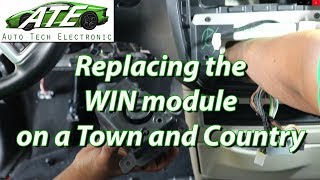
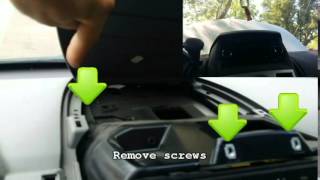
- Internal Failure of the Wireless Ignition Node (WIN/SKREEM) (Very Common) — This is the most frequent hardware cause on Chrysler, Dodge, and Jeep vehicles. The module that reads your key and allows the engine to start fails internally and must be replaced. 🎬 See this walkthrough on replacing the WIN module.
- Faulty Power Sliding Door Pulse Sensor/Motor Assembly (Very Common) — On vehicles like the Toyota Sienna, the sensor that tracks the door's position and speed fails. This sensor is integrated into the main door motor assembly. 🎬 Watch this guide to fixing power sliding door issues.
- Damaged Wiring or Connectors (Common) — Wires leading to the affected component break, corrode, or short out. This is especially common in door harnesses that flex constantly, such as those for power sliding doors or door lock switches.
- Low Vehicle Battery Voltage or Poor Grounds (Common) — Insufficient system voltage during startup causes various electronic modules, including the WIN/SKREEM or BCM, to glitch and set false codes like B210D or B210A alongside B2224. A poor ground connection for the module has the same effect.
- Failed Steering Column Lock Module (ELV) (Less Common) — On push-to-start Chrysler/Jeep vehicles, the electronic steering lock module fails, preventing the WIN from authorizing startup and logging a B2224 code.
- Stuck or Failed Door Lock Switch (Less Common) — On some Ford and GM vehicles, the physical switch for the door lock gets stuck in one position or fails electronically, sending a constant signal to the Body Control Module (BCM).
- Steering Column Lock Engaged (False Code) (Rare) — On some Jeep/Chrysler models, turning the steering wheel without the key engages the lock, activates the immobilizer, and sets a B2224 code. Unlocking the steering wheel by turning it while turning the key clears the issue.
- Faulty Body Control Module (BCM) (Rare) — The main computer for the vehicle's body electronics fails. All other possibilities, like sensors and wiring, must be ruled out before suspecting the BCM.
Symptoms
- Engine Will Not Start or Crank — On Chrysler/Dodge/Jeep vehicles, the engine intermittently or completely fails to start when you turn the key or press the start button.
- Engine Starts and Immediately Stalls — A classic symptom of an anti-theft issue on Chrysler/Jeep products. The engine fires up for about two seconds and then shuts off as the SKREEM module fails to validate the key.
- Power Sliding Door Inoperative — On minivans (like Toyota Sienna), the power function for the left rear sliding door stops working. The door only opens and closes manually as a safety precaution.
- Security or Anti-Theft Light is On — A blinking or solid red light on the dashboard appears, indicating a problem with the vehicle's immobilizer system (common with the WIN/SKREEM failure).
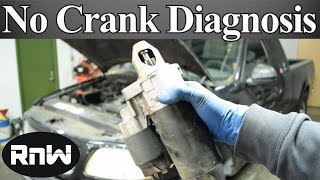
- Clicking Noise from Dash on Startup Attempt — When attempting to start a Chrysler/Jeep with a failed WIN module, you hear a series of clicks from the dashboard area, but the engine does not crank. 🎬 See how to diagnose a no-crank or clicking start issue.
- Power Door Lock Malfunction — On certain Ford/GM models, the lock for the left rear door does not respond to commands from the switch, key fob, or master control.
- 'No Bus' Message on Instrument Cluster — In severe cases of module failure on Chrysler products, the B2224 code is accompanied by a 'No Bus' message, indicating a total communication breakdown on the vehicle's data network.
- WIN Watchdog Resets (Internal Fault) (scan-tool only — no driver-felt sign) — A scan tool shows that the Wireless Ignition Node (WIN) performed a 'watchdog reset'. This is an internal self-correction attempt by the module when it detects a critical error, directly indicating internal failure.
Diagnostic Flowchart
Tap your situation to follow the diagnostic path that matches what you're seeing on this code.
Common Fixes & Costs
- Replace Wireless Ignition Node (WIN/SKREEM) — Parts: $200-$450, Labor: $150-$250, ~1.5 hr book time (Professional)
- Replace Power Sliding Door Motor Assembly — Parts: $500-$850, Labor: $300-$550, ~3.5 hr book time (Intermediate)
- Repair Damaged Wiring Harness — Parts: $10-$50, Labor: $200-$500, ~2.5 hr book time (Professional)
- Replace Steering Column Lock Module (ELV) — Parts: $150-$300, Labor: $100-$200, ~1.2 hr book time (Professional)
- Replace Door Lock Switch — Parts: $30-$100, Labor: $75-$150, ~0.8 hr book time (DIY)
Used vs. New Parts: Buying Guide
When a used part is worth it: For a Toyota sliding door motor assembly, a used part from a low-mileage, accident-damaged vehicle is a cost-effective option. For a Chrysler WIN module, a used part never makes sense because it is a security component locked to the donor vehicle's VIN and cannot be reprogrammed.
Donor-vehicle mileage cap: roughly under 75000 miles for the part to have meaningful remaining life.
Donor quality checklist:
- For door motors, ensure the part number is an exact match and check for signs of corrosion or damage to the cables.
- For WIN modules, avoid used parts entirely. The only exception is obtaining the paired module, keys, and PCM from the same donor vehicle, which is a complex swap for advanced users only.
Decision logic:
- If The part is a Chrysler/Jeep WIN/SKREEM module → Buy a new OEM or reputable aftermarket part and have it professionally programmed. A mail-in repair service for your original module is also a viable option that avoids reprogramming.
- If The part is a Toyota sliding door motor assembly and budget is the primary concern → A used assembly from a trusted salvage source is acceptable. Verify the return policy.
- If The part is a Toyota sliding door motor and reliability is the primary concern → Buy a new OEM assembly. While expensive, it offers the longest service life.
Warranty tradeoff: Used parts typically have a 30-90 day warranty. New aftermarket parts offer 1 year to lifetime warranties. New OEM parts carry a 1-year warranty.
Worst-case if a used part fails: $700-$1500. For a WIN module, using a faulty used part leads to repeated diagnostic fees and labor. For a door motor, a failed used part requires repeating the entire time-consuming installation.
What Happens If You Wait — Timeline
- 0-1 month (Chrysler/Jeep WIN Failure): Intermittent no-crank, no-start. Requires multiple key turns to start. The issue happens once a week. (MPG impact: 0%% · Added cost: $0)
- 1-3 months (Chrysler/Jeep WIN Failure): The frequency of no-start events increases to several times a week. The vehicle becomes unreliable, and the risk of being stranded is high. The key gets stuck in the ignition. (MPG impact: 0%% · Added cost: $100-$300 for a tow when it finally fails completely.)
- Immediate to 6+ months (Toyota Sliding Door): The power sliding door function fails and reverts to manual-only mode. This is a safety feature and does not worsen on its own. (MPG impact: 0%% · Added cost: $0, as manual operation is the intended backup.)
- 6+ months (Ignoring Toyota Door & Forcing It): If the underlying cause is a broken cable or binding mechanism, continuing to force the door open and closed manually damages the door's rollers, tracks, or handle assembly. (MPG impact: 0%% · Added cost: $200-$500 in additional parts for damaged tracks or rollers on top of the original repair.)
Cost of Not Fixing It
- Immediate: For Chrysler/Jeep/Dodge, the vehicle fails to start at any time, leaving the driver stranded. This is a critical failure risk. (Added cost: $100-$300 for a tow.)
- 0-6 months: For Toyota/Honda, continued manual operation of a faulty power sliding door is the intended temporary state. Forcing a door with a jammed or broken cable damages the track, rollers, or handle. (Added cost: $200-$500 if door track or rollers are damaged.)
- 6+ months: Ignoring a failing WIN module on recalled Chrysler/Dodge/Jeep vehicles causes the engine to stall while driving, resulting in a loss of power steering, brakes, and airbags. (Added cost: Potentially catastrophic, including total vehicle loss and injury.)
Diagnosis Steps
- Identify Your Vehicle's B2224 Definition
Determine what B2224 means for your specific make and model. A code on a Toyota Sienna (sliding door) is completely different from a code on a Jeep Grand Cherokee (ignition). Check your vehicle's service manual or search online for your specific model and the code.
Tools: Internet access (Beginner) - Perform Basic Checks (Chrysler/Jeep)
If you have a no-start condition, replace the battery in your key fob. If the steering wheel is locked, turn it slightly while turning the key, as a tight steering lock triggers security codes. Ensure the main vehicle battery is fully charged (above 12.4V) and the terminals are clean.
Tools: Key fob battery, battery charger, voltmeter (Beginner) - Check Fuses
Consult your owner's manual to find the fuse box diagrams. Check all fuses related to the Body Control Module (BCM), power doors, anti-theft system (SKREEM/WIN), and power locks. A blown fuse is often the root cause.
Tools: Fuse puller or needle-nose pliers (Beginner) - Perform a Visual Inspection (Door-Related Issues)
If your code relates to a door component, open the door and inspect the flexible wiring harness that runs between the door and the vehicle body. Look for cracked insulation, broken wires, or corrosion in the connectors.
Tools: Flashlight (Beginner) - Perform Ignition Cycle Test (Chrysler/Jeep - Pro Tip)
If you suspect a WIN/SKREEM issue, use a scan tool to clear the B2224 code. Perform 3 to 5 ignition cycles, leaving the key in the 'ON' position for at least 90 seconds per cycle. Re-read the codes. If B2224 returns consistently, it indicates a hard internal failure of the module.
Tools: OBD-II Scan Tool (Intermediate) - Scan Tool Data Analysis (Chrysler/Jeep)
Use an advanced scan tool to read Body Control Module data. Verify that the PCM and WIN module VINs match. Monitor the 'WIN Ignition Status' PID. A healthy module reports 'RUN' when the key is on. If it shows 'INVALID' or stays in 'ACCESSORY', the module is faulty.
Tools: Advanced OBD-II Scan Tool (Advanced) - Test Wiring Harness with Multimeter
Disconnect the harness from the component and the control module. Use a multimeter to check for continuity (typically below 1.0 Ω) and for shorts to power or ground (shows infinite resistance or 'OL'). For a WIN module, check for stable battery voltage (12V+) and a clean ground (less than 0.2V drop) at the module connector.
Tools: Multimeter, vehicle wiring diagram (Advanced) - Check Pulse Sensor Waveform with Oscilloscope (Toyota - Pro Tip)
Connect an oscilloscope to the pulse sensor's signal wire. Manually open and close the door. You should see a clean square wave pattern switching between approximately 0V and 5V. A flat line, erratic signal, or a voltage that doesn't switch cleanly indicates a failed sensor.
Tools: Oscilloscope, vehicle wiring diagram (Advanced)
When This Code Triggers (Freeze-Frame Conditions)
- Ignition Status: Key ON (The B2224 code on Chrysler/Jeep vehicles is set when the ignition is turned to the 'ON' or 'RUN' position and the WIN/SKREEM module fails its internal self-test.)
- Battery Voltage: 11.8V - 12.5V (The fault occurs during the initial power-up sequence of the modules, before the engine is started and the alternator raises system voltage.)
- Vehicle Speed: 0 mph (For both the Chrysler no-start and Toyota sliding door issues, the code is set when the vehicle is stationary.)
- Door Operation Command: Active (On a Toyota, the code is set at the moment the driver or BCM commands the power sliding door to open or close and the pulse sensor signal is not detected or is irrational.)
Related Codes
- B2229 — Appears with B2224 on Chrysler/Jeep vehicles. Both indicate an internal WIN/SKREEM fault. B2224 is a general 'internal failure' flag, while B2229 points to a failure in the module's internal communication or memory. Replace the WIN/SKREEM module.
- B2205 — Indicates a 'VIN Mismatch' between the WIN/SKREEM and the Powertrain Control Module (PCM). B2205 is a programming error, not a hardware failure. It appears after a module is replaced incorrectly or if a used module is installed without proper programming.
- B2204 — Means 'ECU Configuration Mismatch'. This is a programming or software incompatibility code, indicating the WIN/SKREEM is not configured correctly for the vehicle's options.
- U0140 — A generic 'Lost Communication with Body Control Module (BCM)' code. U0140 tells you there is a communication breakdown, while B2224 points to the specific component causing it. The B2224 fault is the root cause of the communication loss.
- U0236 — On Jeeps with an Electronic Steering Column Lock (ELV), this code for 'Lost Communication With Column Lock Module' appears with B2224. It confirms a fault in the anti-theft chain involving the WIN and ELV, requiring both to be replaced.
Climate & Environmental Factors
- Cold Weather: WIN module and sliding door failures are more frequent in cold weather. Cold temperatures exacerbate existing cracks in solder joints on the internal circuit board, leading to intermittent contact. For sliding doors, cold makes lubricants and plastics stiffer, increasing the strain on the motor and cables.
- Humidity/Moisture: High humidity or water ingress corrodes connectors in the door harness or damages the electronics within the motor and latch assemblies, leading to sensor or motor failure. Extreme humidity poses a long-term risk to any electronic module.
How to Talk to a Mechanic About This Code
Where to Take It: Dealer vs Independent vs Chain
- Dealer:
Best for: Chrysler/Jeep WIN module replacement, as they are guaranteed to have the correct programming tools (wiTECH software)., Vehicles still under any form of warranty.
Downsides: Highest labor rates and part markups., Less willing to explore simpler fixes first (e.g., lubricating a hinge before replacing a door motor). (Typical cost: +50% vs. baseline) - Independent Shop:
Best fit for Toyota door issues. For Chrysler/Jeep WIN replacement, it is a viable option ONLY if you confirm they have advanced diagnostic tools (like Autel MaxiSys) and experience with Chrysler security module programming. An automotive locksmith is also a good option for the WIN module.
Best for: Toyota Sienna sliding door repair, as it is often a mechanical or wiring issue a good tech handles easily., Out-of-warranty vehicles where cost is a major factor.
Downsides: Quality and equipment vary greatly. You must verify they have experience with your specific problem., Does not always have the expensive, brand-specific tools to program a Chrysler WIN module. (Typical cost: +0% vs. baseline) - Chain Shop:
AVOID. This code requires either specialized mechanical/electrical diagnosis (Toyota) or security programming (Chrysler). Both are outside the typical expertise of a chain shop.
Best for: Simple tasks like battery replacement or tire changes.
Downsides: Technicians lack the specialized training for complex electrical or security-related diagnostics., High pressure to upsell and misdiagnose the issue, leading to unnecessary repairs. (Typical cost: -10% vs. baseline)
When to Walk Away From the Repair
If the estimated repair cost exceeds 40-50% of the car's private-party value, you should pause and seriously consider selling or trading in the vehicle as-is.
- Car worth $3850, fix is $800: Fix it. The repair cost for a WIN module on a 2011 Chrysler Town & Country is roughly 21% of its value, well below the threshold.
- Car worth $3000, fix is $1350: Borderline. A sliding door motor replacement on a 2010 Toyota Sienna is 45% of its value. Get a second opinion or explore cheaper DIY/used part options before proceeding.
- Car worth $2500, fix is $1500: Walk away. The repair cost is 60% of the vehicle's value. It is not financially sensible to perform this repair.
What Scan Tool You Need for This Code
Minimum: A scanner that reads manufacturer-specific Body Control Module (BCM) codes. A basic $20 engine-only code reader will NOT see the B2224 code.
B2224 is a 'B' code, stored in the Body Control Module, not the Engine Control Unit (ECU). Cheap scanners only talk to the ECU. You need a tool that accesses other modules like the BCM, SRS, and ABS to even see this code exists.
Budget: Autel MaxiAP AP200 / BlueDriver Pro (~$60) — Both are Bluetooth dongles that pair with your smartphone. They read and clear B-codes from the BCM, which is the minimum required to confirm the fault and verify a fix. This is enough for the Toyota sliding door issue.
Mid-range: Foxwell NT510 Elite (~$180) — This handheld tool offers deeper, brand-specific diagnostics. For a Chrysler, it reads live data from the WIN module to see its status, which helps confirm it is the problem. It also has bi-directional controls to test components.
Professional: Autel MaxiCOM MK808 / MK906BT (~$500-1200) — These are professional-level tablets. For a Chrysler/Jeep, they are required for the final, critical step: programming the new WIN module to the vehicle. The MK808 performs IMMO key functions, which is essential for this job. A DIYer cannot complete the WIN module replacement without a tool at this level.
How to Clear the Code After You Fix It
- Use an OBD-II scan tool to clear the B2224 code.
- For Chrysler/Jeep WIN replacement: The new module must be professionally programmed. Clearing codes is the final step after programming.
- For Toyota sliding door repair: After clearing the code, manually close the door completely to allow the system to re-initialize its position.
Drive cycle (~10 minutes): A traditional emissions drive cycle is not required for a B-code. For Chrysler/Jeep, perform 3-5 key cycles, leaving the ignition ON for 90 seconds each time to verify the fix. For Toyota, operate the repaired power sliding door through one full open-and-close cycle using the automatic buttons.
Watch out for:
- Clearing the code without fixing the underlying hardware failure results in the code returning immediately.
- Forgetting to manually cycle the Toyota sliding door after repair prevents the system from re-learning its limits.
- On Chrysler/Jeep, disconnecting the battery does not clear this fault code from memory permanently.
Will This Fail Emissions / State Inspection?
No — by itself this code doesn't fail OBD inspection (but it can keep readiness monitors from setting, which causes a separate fail).
- California: Body-related codes (B-codes) like B2224 do not cause a failure in a California smog check, which focuses on powertrain (P-codes) and emissions system readiness.
- New York: The NYS inspection checks for safety items and OBD-II emissions data. A B-code does not cause an emissions failure, but if the symptom (like a non-latching door) is deemed a safety hazard, it fails the safety portion. An illuminated anti-theft light itself is not a reason for rejection.
- Texas: Texas vehicle inspections focus on OBD-II emissions data for P-codes. A B2224 code does not cause an automatic failure of the emissions test.
Most Commonly Affected Vehicles
- Chrysler Town and Country (2011-2012) — Prone to intermittent no-start conditions caused by an internal failure of the Wireless Ignition Node (WIN).
- Jeep Grand Cherokee (2010-2013) — Experiences internal failures of the SKREEM/WIN module, leading to a B2224 code and no-start situations. On models with push-button start, the ELV (Steering Column Lock) also requires replacement.
- Toyota Sienna (2005-2010) — Logs this code due to failure of the left power sliding door's pulse sensor, which is part of the motor assembly.
- Dodge Grand Caravan (2011-2012) — Shares the same platform as the Chrysler Town and Country and suffers from the same WIN module failures.
- Dodge Ram 1500 (2012) — Service manuals specifically list B2224 as an internal SKREEM/WIN failure, indicating a known issue beyond the minivan and SUV platforms.
- Volkswagen Routan (2009-2014) — The VW Routan is a rebadged Chrysler Town & Country and is susceptible to the exact same B2224 WIN module failure.
- Honda Odyssey (2005-2017) — While it does not use code B2224, it is famous for identical power sliding door failures. It logs its own codes (e.g., B2037, B2038) caused by a broken wire in the harness, a bad latch switch, or a dislodged pinch sensor.
- Nissan Quest (2011-2017) — Known for power sliding door issues that present symptoms similar to the Toyota Sienna, related to the door control module or drive mechanism.
Manufacturer-Specific Notes
- Chrysler/Dodge/Jeep: B2224 almost always means an internal, non-repairable fault in the Wireless Ignition Node (WIN) or SKREEM. The only solution is replacement and reprogramming. Some owners use aftermarket WIN emulators as a bypass, but this is an advanced, non-standard repair.
- Toyota: This code is specific to the left rear power sliding door's pulse sensor. The system disables the power function as a safety measure, forcing manual operation. To restore normal operation after repair, clear the fault and close the door fully by hand to reset the system.
- Ford/GM: The definition points to a simple stuck door lock switch. Diagnosis focuses on a single component's input to the BCM.
- Volkswagen: The VW Routan (2009-2014) is mechanically a Chrysler Town & Country. It experiences the identical B2224 code related to WIN module failure and exhibits the same no-start symptoms.
Real Owner Stories
2011 Chrysler Town & Country with 110K miles - Intermittent No-Start
Owner experienced intermittent no-crank, no-start issues. All dash lights turned on, but the engine wouldn't turn over. Sometimes it started after multiple key turns.
What they tried:
- Replaced the vehicle battery, starter, and starter relay, but the problem persisted.
- Considered a faulty fuel pump or immobilizer issue.
Outcome: The issue was diagnosed as an internal failure of the Wireless Ignition Node (WIN) module. Replacing the WIN module and programming it to the vehicle resolved the no-start condition.
Lesson: On Chrysler products with intermittent no-start and a B2224 code, don't replace the starter or battery first. Suspect the WIN module, but first rule out a dead key fob battery and check for a locked steering column.
2015 Toyota Sienna with 85K miles - Sliding Door Failure
The left power sliding door opened automatically but only closed part-way, beeped, and then reopened. The issue became more frequent in cold weather. Code B2224 was stored.
What they tried:
- Cleaned all three door tracks to remove dirt and grit.
- Lubricated the rollers and the center hinge assembly with PB Blaster and other lubricants.
Outcome: Lubricating the rusty and sticking center hinge immediately solved the problem. The door was binding, causing the motor to sense an obstruction and reverse as a safety measure. The B2224 code was cleared and did not return.
Lesson: For Toyota sliding door issues with a B2224 code, the problem isn't always the expensive motor or sensor. Often, it's a simple mechanical issue. Before ordering parts, thoroughly clean and lubricate all tracks, rollers, and especially the center hinge.
2018 Jeep Grand Cherokee with 60K miles - Misdiagnosed No-Start
Car intermittently failed to start. It was towed to a shop that could not find a problem. Weeks later, it happened again and was towed to a different shop.
What they tried:
- The first shop found no issue.
- The second shop replaced both the main and auxiliary batteries, which did not fix it.
- The second shop then suspected and replaced the starter, which also did not fix the problem.
Outcome: The owner later discovered the issue was a loose battery ground connection. Another user with identical symptoms found a loose wire on the starter motor.
Lesson: A no-start condition is caused by many things other than the most obvious component. Always check the basics first: key fob battery, vehicle battery voltage, clean and tight battery terminals/grounds, and fuel pump relay before authorizing expensive repairs like a starter or WIN module.
How to Prevent This Code From Triggering
- Regularly clean sliding door tracks and rollers. (Every 6 months) — Grit and debris in the tracks increase friction, putting extra strain on the door motor and cables, leading to premature failure of the motor or pulse sensor.
- Lubricate sliding door hinges and rollers. (Every 6-12 months) — The hinges, especially the center hinge on Siennas, rust and bind, causing the door to stick. A sticking door makes the motor work harder, tripping the safety override and eventually burning out the motor.
- Avoid forcing power sliding doors manually. (Daily habit) — Manually pushing or pulling a powered door while the system is engaged stresses the cables and motor gears, leading to frayed cables or a stripped motor drive. If manual operation is needed, turn off the power door system using the dashboard switch first.
- Replace key fob battery proactively. (Every 2-3 years) — A weak key fob battery causes intermittent communication with the WIN/SKREEM module on Chrysler/Jeep vehicles, leading to frustrating no-start conditions that are misdiagnosed as an expensive module failure.
- Use a battery tender on infrequently driven vehicles. (As needed) — Low main battery voltage is a common cause of random electronic glitches. Keeping the battery fully charged prevents modules like the WIN or BCM from malfunctioning and setting false codes during startup.
Frequently Asked Questions
How do I know which B2224 problem my car has?
The symptoms are the biggest clue. If your car won't start or starts and immediately stalls, it is the Chrysler/Jeep ignition issue. If your minivan's power door won't operate automatically, it is the Toyota-style sensor problem.
What are common misdiagnoses for the B2224 code on a Chrysler/Jeep?
A common mistake is replacing the WIN/SKREEM module when the actual problem is a dead key fob battery or low vehicle voltage. Another is overlooking a locked steering column, which sets a false positive code. Always wiggle the steering wheel while turning the key before assuming module failure.
Can I use a secondhand WIN module to fix my Jeep/Chrysler?
No, you cannot. The WIN/SKREEM module is a theft-deterrent component programmed specifically to your vehicle's VIN. You must use a new module programmed to your car by a dealer or a locksmith.
Can I fix the B2224 code myself?
It depends on the cause. Replacing a simple door lock switch on a Ford is a DIY-friendly job. Replacing a WIN module on a Jeep requires advanced skills and expensive programming tools.
Why does my Toyota's sliding door go into manual mode with code B2224?
This is a built-in safety feature. If the pulse sensor signal is lost, the module cannot detect if a person or object is in the way. It disables the automatic motor and forces manual operation to prevent injury.
Will clearing the code fix the problem?
No. Clearing the code only erases it temporarily. The code returns immediately or after a few ignition cycles because B2224 stems from a persistent hardware or electrical failure.
What is a WIN emulator for a Chrysler/Jeep?
A WIN emulator is an aftermarket electronic device designed to bypass the factory immobilizer system. It sends a constant 'all clear' signal to the engine computer. This advanced solution avoids the high cost of replacing a WIN module, but it is not a standard repair.
My Jeep won't start and has a B2224, but the battery is fine. What's the first thing to check?
Before suspecting the expensive WIN module, check if the steering wheel is locked. Turn the wheel slightly to one side to relieve pressure on the lock while turning the key. This simple mechanical issue triggers the anti-theft system and a B2224 code.
Key Takeaways
- Code B2224 lacks a universal definition; you must look up the specific meaning for your vehicle's make and model before diagnosing.
- On Chrysler, Dodge, and Jeep vehicles, B2224 indicates a failed Wireless Ignition Node (WIN), causing a no-start condition that requires a $400-$800 professional module replacement and programming.
- On Toyota Siennas (2005-2010), this code flags a failed left power sliding door pulse sensor, which disables automatic operation and forces manual door use.
- Always replace the $5 CR2032 key fob battery and verify the main vehicle battery outputs at least 12.4V before replacing expensive electronic control modules.
Helpful Videos
Shop the Parts Behind B2224
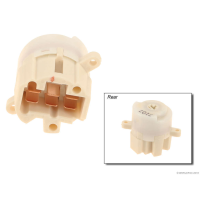
Below are the parts most often responsible for code B2224, ranked by how frequently each one is the actual culprit (per the diagnosis above). Tap any to see what we have for your vehicle.



The information in this article is provided for general reference and educational purposes only. Vehicle specifications, procedures, and part compatibility can vary by production date, trim level, and region. Always consult your vehicle's factory service manual and verify part numbers before purchasing or performing repairs. Safety-critical components such as airbags, seat belts, and braking systems should be installed by a qualified professional.
- 🧭 Diagnostic Flowchart
- 🎬 Helpful Videos
- 🛍️ Shop This Part
- What Does B2224 Mean?
- Can I Drive With B2224?
- Common Causes
- Symptoms
- Common Fixes & Costs
- Used vs. New Parts: Buying Guide
- What Happens If You Wait — Timeline
- Cost of Not Fixing It
- Diagnosis Steps
- When This Code Triggers (Freeze-Frame Conditions)
- Related Codes
- Climate & Environmental Factors
- How to Talk to a Mechanic About This Code
- Where to Take It: Dealer vs Independent vs Chain
- When to Walk Away From the Repair
- What Scan Tool You Need for This Code
- How to Clear the Code After You Fix It
- Will This Fail Emissions / State Inspection?
- Most Commonly Affected Vehicles
- Manufacturer-Specific Notes
- Real Owner Stories
- 2011 Chrysler Town & Country with 110K miles - Intermittent No-Start
- 2015 Toyota Sienna with 85K miles - Sliding Door Failure
- 2018 Jeep Grand Cherokee with 60K miles - Misdiagnosed No-Start
- How to Prevent This Code From Triggering
- Frequently Asked Questions
- How do I know which B2224 problem my car has?
- What are common misdiagnoses for the B2224 code on a Chrysler/Jeep?
- Can I use a secondhand WIN module to fix my Jeep/Chrysler?
- Can I fix the B2224 code myself?
- Why does my Toyota's sliding door go into manual mode with code B2224?
- Will clearing the code fix the problem?
- What is a WIN emulator for a Chrysler/Jeep?
- My Jeep won't start and has a B2224, but the battery is fine. What's the first thing to check?
- Key Takeaways
- 🎟️ Get 5% Off