

OBD-II Code B2227: Manufacturer-Specific Body Control Fault
What B2227 means, why it triggers, and how to fix it
- Code B2227 is a manufacturer-specific body code, meaning its definition changes entirely depending on your vehicle brand.
- On 2004-2014 Ford and Mazda vehicles, B2227 indicates a disabled airbag system caused by a corroded front crash sensor behind the grille.
- On 2014+ Toyota and Lexus SUVs, this code points to a failed right-side power liftgate strut, which costs $250-$550 to replace.
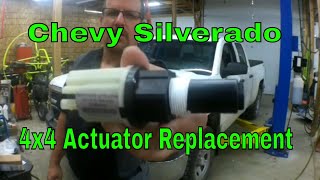
- On 2014-2018 GM trucks, B2227 disables the 4WD system due to a faulty front axle actuator or corroded wiring harness.
- Always check the power liftgate master switch in the glovebox on Toyota/Lexus models before spending money on diagnostics or parts.
What Does B2227 Mean?
B2227 is a body control module (BCM) code whose meaning changes completely depending on your vehicle's manufacturer. On Ford and Mazda vehicles, it signals a fault in the front airbag crash sensor circuit. On Toyota and Lexus vehicles, it points to a failed right-side power liftgate motor sensor. On GM trucks, it indicates a broken 4-wheel-drive (4WD) front axle sensor. On Chevrolet SUVs like the Tahoe, it flags a faulty passenger seat belt pretensioner. On Dodge/Jeep models, it points to a broken park/neutral safety switch.
Technical definition: The formal definition for code B2227 varies by manufacturer: * **Ford/Mazda:** Front Crash Sensor Driver Communications Fault / Front Impact Sensor Circuit Fault. * **Toyota/Lexus:** PBD (Power Back Door) Unit Pulse Sensor RH Circuit. * **General Motors (GM Trucks):** Gear Position Sensor (4WD front axle actuator). * **General Motors (Chevrolet Tahoe/Suburban):** Passenger Seat Belt Pretensioner Circuit Fault. * **Dodge/Jeep:** A or T Park Neutral Switch Stuck in Park Position or In Gear.
Can I Drive With B2227?
Yes, But With Caution. Driving is possible, but functionality and safety are severely compromised depending on the make. On Ford, Mazda, and Chevrolet SUVs, the airbag system is disabled, dramatically increasing the risk of fatal injury in a crash. On GM trucks, 4WD is inoperative, posing a risk in poor weather. On Toyota and Lexus models, the power liftgate is disabled, which is an inconvenience but perfectly safe to drive.
Common Causes
- Glove Box Switch Deactivated (Toyota/Lexus) (Very Common) — Toyota and Lexus vehicles feature a master switch in the glove compartment to disable the power liftgate. If accidentally pressed, the liftgate becomes inoperative and beeps, mimicking a failed component. Always check this switch before buying parts.
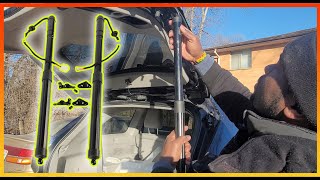
- Faulty Right-Side Power Liftgate Strut (Toyota/Lexus) (Very Common) — On Toyota models like the Highlander and RAV4, the position sensor inside the right-side (passenger side) motorized liftgate strut fails. The sensor is integrated into the motor assembly and cannot be replaced separately, requiring a full strut replacement.
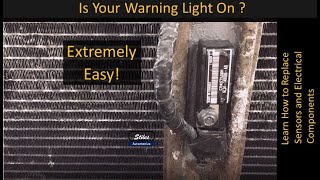
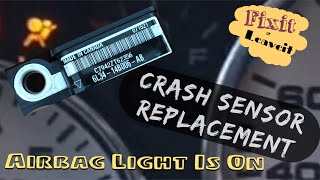
- Corroded Front Crash Sensor (Ford/Mazda) (Very Common) — The front impact sensor sits behind the grille, exposed to moisture, road salt, and dirt. This exposure corrodes the sensor's internal pins or the connector, severing communication with the Restraints Control Module (RCM). 🎬 See how to locate and replace a corroded front crash sensor.
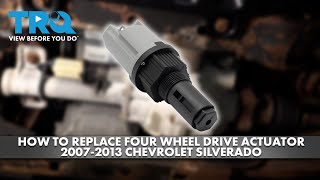
- Faulty Front Axle Actuator (GM 4WD) (Common) — The actuator motor on the front differential contains a position sensor that fails from water intrusion or wear. This prevents the Transfer Case Control Module (TCCM) from confirming the front axle has engaged.
- Faulty Park/Neutral Safety Switch (Dodge/Jeep) (Common) — The transmission range sensor (neutral safety switch) sticks or provides an invalid signal to the PCM. This results in a no-start condition or an incorrect gear indication on the dashboard.
- Damaged Wiring or Connectors (All Makes) (Common) — Wiring breaks or corrodes due to chafing, pinching, or element exposure. This is highly prevalent on GM 4WD front axle harnesses, Chevy Tahoe under-seat pretensioner wiring, and Toyota RAV4 liftgate hinges.
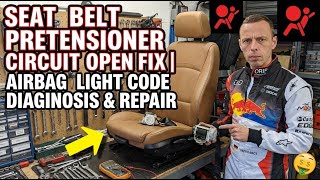
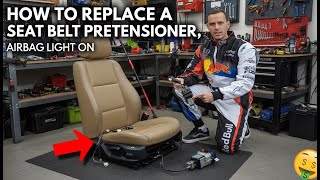
- Faulty Seat Belt Pretensioner (Chevy Tahoe/Suburban) (Less Common) — If the under-seat wiring is intact, the seat belt pretensioner itself has failed. This pyrotechnic component is critical for safety and must be replaced to restore airbag functionality.
- Faulty Power Back Door ECU (Toyota/Lexus) (Rare) — On Lexus RX or Toyota Highlanders in cold weather, the Multiplex Network Door ECU malfunctions. TSBs suggest warming the ECU with a heat gun for 2-3 minutes to confirm it is the root cause before replacing the struts.
Symptoms
- Airbag Warning Light is On — On Ford, Mazda, and Chevrolet SUVs, a continuously lit or flashing airbag light indicates the entire airbag system is disabled and will not deploy in a crash.
- Power Liftgate Malfunction with Beeping — On Toyota and Lexus models, the power liftgate stops part-way, accompanied by two short beeps, or becomes completely inoperative.
- 'Service 4WD' Message — On GM trucks, a 'Service 4WD' message appears on the instrument cluster, and the 4WD system refuses to engage.
- Engine Will Not Start — On Dodge and Jeep vehicles, the engine refuses to crank because the computer cannot confirm the transmission is safely in 'Park' or 'Neutral'.
Diagnostic Flowchart
Tap your situation to follow the diagnostic path that matches what you're seeing on this code.
Common Fixes & Costs
- Replace Right-Side Power Liftgate Strut (Toyota/Lexus) — Parts: $150-$400, Labor: $100-$150, ~1.0 hr book time (DIY)
- Replace Front Crash Sensor (Ford/Mazda) — Parts: $80-$150, Labor: $100-$150, ~0.8 hr book time (Intermediate)
- Replace Front Axle Actuator (GM) — Parts: $100-$180, Labor: $150-$250, ~1.5 hr book time (Intermediate)
- Replace Park/Neutral Safety Switch (Dodge) — Parts: $35-$80, Labor: $80-$150, ~1.0 hr book time (Intermediate)
- Replace Passenger Seat Belt Pretensioner Assembly (Chevrolet) — Parts: $150-$450, Labor: $150-$300, ~1.5 hr book time (Professional)
- Repair Damaged Wiring or Connector — Parts: $10-$50, Labor: $150-$400, ~2.0 hr book time (Professional)
Used vs. New Parts: Buying Guide
When a used part is worth it: For mechanical parts like Toyota liftgate struts or GM 4WD actuators, a used part from a low-mileage donor is cost-effective. For safety-critical airbag components like crash sensors or pretensioners, buying new is mandatory due to liability and unknown history.
Donor-vehicle mileage cap: roughly under 60000 miles for the part to have meaningful remaining life.
Donor quality checklist:
- Verify the exact OEM part number matches; superseded parts have important updates.
- Avoid donors from flood-damaged or rust-belt vehicles.
- Inspect connectors on used parts for corrosion, bent pins, or harness damage.
Decision logic:
- If Part is a safety component (airbag sensor, pretensioner) → Always buy new OEM or a reputable aftermarket equivalent. The risk of a faulty used part is too high.
- If Part is for convenience (liftgate strut) and vehicle is older (>100k miles) → A used part from a warrantied salvage yard is a reasonable choice to save money.
- If New aftermarket part is available from a reputable brand (e.g., Aisin, ACDelco) for a similar price to used → Favor the new aftermarket part for its warranty and guaranteed condition.
Warranty tradeoff: Used parts typically offer a 30-90 day warranty. Aftermarket new parts offer a 1-year to limited lifetime warranty. New OEM parts carry a 1-2 year warranty.
Worst-case if a used part fails: $200-$600 (If a used part fails, you pay for the part again plus the labor to re-install it.)
What Happens If You Wait — Timeline
- Stage ?:
- Stage ?:
- Stage ?:
Cost of Not Fixing It
- Immediate (Airbag System Fault): The entire airbag system is disabled. In a collision, airbags will not deploy, drastically increasing the risk of serious or fatal injury. (Added cost: N/A (Safety Risk))
- Immediate (GM 4WD or Dodge No-Start Fault): Loss of 4WD capability poses a risk in hazardous road conditions. For Dodge, the vehicle fails to start, leaving the driver stranded. (Added cost: $100-$300 (Towing))
- Ongoing (All Systems): For airbag faults, ignoring the issue leads to failed state safety inspections. For a Dodge that starts in any gear, there is a severe risk of unintended vehicle movement. (Added cost: $50-$100 (Inspection failure fees))
Diagnosis Steps
- Identify Your Vehicle's System
Determine what system this code refers to on your specific vehicle by searching 'B2227 [Your Make Model Year]'. Misdiagnosing a GM 4WD fault as an airbag issue is a common and costly mistake.
Tools: Internet access (Beginner) - Perform Simple Checks
For Toyota/Lexus, verify the 'PBD' master switch in the glove compartment is 'ON'. For Chevrolet airbag codes, check for crushed wires under the front passenger seat. For Dodge no-start issues, try starting the vehicle in Neutral.
Tools: Flashlight (Beginner) - Check for Technical Service Bulletins (TSBs)
Search for manufacturer TSBs. Known TSBs for this code include Toyota (T-SB-0023-16, T-SB-0275-17), Lexus (L-SB-0040-16), and GM (PIP5220B), which provide exact repair instructions.
Tools: Internet access (Intermediate) - Visual Inspection of the Component and Wiring
Locate the relevant component (Ford crash sensor behind grille, Toyota right-side liftgate strut, GM front axle actuator). Disconnect the electrical connector and inspect the pins for green/white corrosion or broken wires.
Tools: Flashlight, basic hand tools (Beginner) - Test the Circuit with a Multimeter
Check for proper voltage, ground, and resistance at the component's connector. For a Toyota liftgate, verify >7V at the power supply pins and continuity to ground (<1 Ω) at the ground pin.
Tools: Multimeter, vehicle-specific wiring diagram (Advanced) - Advanced Component Testing
For Toyota liftgates, use an oscilloscope to check the pulse signals at the ECU connector. For Ford/Chevy airbag sensors, disconnect the battery for 15 minutes, then measure internal resistance (typically 2-4 ohms). A reading of 'OL' indicates a failed sensor.
Tools: High-impedance multimeter, oscilloscope (Advanced) - Use a Scan Tool for Active Tests
Use a bi-directional scan tool to command the power back door to open/close, or command the GM front axle to engage/disengage while monitoring the sensor's reported position.
Tools: Bi-directional scan tool (Professional)
When This Code Triggers (Freeze-Frame Conditions)
- System Voltage: 11.5-14.5V (Normal operating voltage. The code sets during a key-on self-test or when the specific function (liftgate, 4WD) is activated.)
- Vehicle Speed: 0 mph (For airbag, liftgate, and no-start faults, the code sets when the vehicle is stationary during the initial system check at startup.)
- Commanded State: On/Active (For functional systems like a Toyota liftgate or GM 4WD, the fault logs when the module commands the component to activate and does not receive the expected feedback signal.)
Related Codes
- B2226 — On Toyota/Lexus, B2226 points to the left-side power liftgate sensor, while B2227 points to the right side. TSBs recommend replacing both struts together. On Ford, B2226 is an internal sensor failure, while B2227 is a communication fault.
- C0398 — On GM trucks, C0398 is a generic 'TCCM rotational position sensor' fault. TSB PIP5220B instructs technicians to diagnose the more specific B2227 code to fix the front axle actuator.
- P2227 — A standardized powertrain code for 'Barometric Pressure (BARO) Sensor Circuit Range/Performance.' It causes poor engine performance and should NOT be confused with the manufacturer-specific body code B2227.
Climate & Environmental Factors
- Road Salt and Humidity (Rust Belt / Coastal Regions): Accelerates corrosion of exposed components. This is the primary driver of failure for the Ford/Mazda front crash sensor and the GM 4WD front axle actuator. Electrical pins corrode and break, severing communication.
- Cold Weather: Causes intermittent failures in electronic modules. On 2016 Lexus RX and 2014-2015 Toyota Highlander models, the Power Back Door ECU malfunctions in freezing temperatures, mimicking a failed liftgate motor.
How to Talk to a Mechanic About This Code
Say this: "I have a B2227 code on my [Make, Model, Year] and the [symptom, e.g., 'airbag light is on,' 'power liftgate isn't working']. I've researched this and believe the issue is with the [specific system, e.g., 'front crash sensor,' 'right-side liftgate strut']. I'd like to schedule a diagnostic to confirm this specific part or its circuit is the cause."
This immediately tells the shop you're an informed customer. It directs them to the correct system, saving diagnostic time and preventing them from misinterpreting the code.
Avoid saying:
- 'My check engine light is on.' (This is a body code, not a check engine light issue, and is too vague).
- 'The internet says it's B2227, just replace the part.' (Always allow for professional diagnosis to confirm).
- 'Just fix whatever is wrong.'
Questions to ask before authorizing the repair:
- For Ford/Mazda: Did you visually inspect the sensor and connector for physical corrosion or broken pins?
- For Toyota: Did you confirm the power liftgate master switch in the glovebox is on before diagnosing the strut?
- For GM 4WD: Have you checked the wiring harness to the front axle actuator for corrosion before condemning the actuator itself?
- For any airbag system repair: Are your technicians certified to perform SRS (Supplemental Restraint System) repairs?
- What is the warranty on both the part and your labor for this repair?
Where to Take It: Dealer vs Independent vs Chain
- Dealer:
Best for: Airbag system repairs (Ford, Mazda, Chevy SUV) due to liability, specialized tools, and training., Vehicles still under any potentially applicable warranty (CPO, extended)., Complex electrical issues that are not a common, well-documented failure.
Downsides: Highest labor rates and OEM part costs., Less willing to perform a simple wiring repair and push for full component replacement. (Typical cost: +50% vs. baseline) - Independent Shop:
Best fit for Toyota liftgate and GM 4WD issues. For airbag-related faults, a dealership or a highly reputable independent shop specializing in SRS is strongly recommended.
Best for: Well-known mechanical fixes like the Toyota power liftgate strut or the GM 4WD actuator., Out-of-warranty vehicles where cost is a major factor., Wiring repairs, which they are often more willing to perform than a dealer.
Downsides: Shop quality and experience vary greatly; vet them first., May not have the specific tools or desire to work on safety-critical airbag systems. (Typical cost: +0% vs. baseline) - Chain Shop:
AVOID. The complexity and variable nature of code B2227 are a poor match for the business model of most chain repair shops.
Best for: Not recommended for this code.
Downsides: Technicians lack experience with manufacturer-specific B-codes., High risk of misdiagnosis (e.g., telling a GM truck owner they have an airbag problem)., Generally not equipped or certified for airbag system repairs. (Typical cost: -10% vs. baseline)
When to Walk Away From the Repair
If the estimated repair cost exceeds 40-50% of the car's private-party value, seriously consider selling the car as-is or trading it in rather than repairing it.
- Car worth $4500, fix is $750: Fix it. This is a reasonable cost, especially if it's a safety issue like an airbag fault.
- Car worth $11500, fix is $400: Fix it. The repair for a Toyota liftgate is well below the threshold and improves vehicle functionality.
- Car worth $3000, fix is $1200: Walk away. The repair cost for a Chevy seatbelt pretensioner is approaching 40% of the vehicle's value.
What Scan Tool You Need for This Code
Minimum: A scanner that reads and clears manufacturer-specific 'B' (Body) codes, sometimes listed as SRS/Airbag capabilities.
A basic $20 engine code reader will NOT see or clear a B2227 code. It only reads 'P' (Powertrain) codes, leaving you completely unaware of the actual fault.
Budget: BlueDriver Pro (~$100) — Connects to a smartphone app and reads/clears enhanced codes (ABS, Airbag, BCM) for specific makes like Ford, GM, and Toyota. It confirms the code and clears it after a repair.
Mid-range: Foxwell NT510 Elite (~$180) — A handheld tool offering OE-level diagnostics for a single chosen car brand. It performs bi-directional tests, useful for commanding the Toyota liftgate or GM 4WD actuator directly.
Professional: Autel MaxiCOM MK808S (~$450) — A professional-level tablet scanner with wide vehicle coverage, full bi-directional control for all systems, and advanced service functions. Provides the most comprehensive data for accurate diagnosis.
Rent vs buy: For a one-time fix, auto parts stores rent out scanners, but you MUST verify their specific model reads 'B' (Body) or SRS codes. If you do your own maintenance, buying a tool like the BlueDriver is a worthwhile investment.
How to Clear the Code After You Fix It
- Reconnect battery (if disconnected for safety, e.g., airbag work).
- Use an OBD-II scan tool capable of reading 'B' (Body) codes to clear the fault memory.
- For airbag systems, turn the ignition on (without starting) and verify the airbag light turns off after its initial self-check.
- For Toyota liftgates, perform the initialization procedure by manually closing the door once.
Drive cycle (~10 minutes): A specific drive cycle is not required for B-codes. The system re-checks itself upon the next key cycle or when the function is used. A short 10-minute drive confirms the fix.
Watch out for:
- Using a basic scanner that only reads 'P' (Powertrain) codes will not clear a 'B' (Body) code.
- Disconnecting the battery does not reliably clear airbag codes; they are stored in non-volatile memory and require a scanner.
- Forgetting to initialize the Toyota power liftgate system after replacing a strut results in continued malfunction.
Will This Fail Emissions / State Inspection?
No — by itself this code doesn't fail OBD inspection (but it can keep readiness monitors from setting, which causes a separate fail).
- California: A 'B' code doesn't fail the emissions portion, but an illuminated airbag warning light causes a failure of the overall vehicle safety inspection.
- New York: An illuminated airbag (SRS) warning light is cause for an automatic failure of the annual safety inspection.
- Texas: During the annual safety inspection, the airbag warning lamp is checked. If it is on, the vehicle fails the inspection.
Most Commonly Affected Vehicles
- Toyota Highlander (2014-2019) — Extremely common failure of the right-side power back door motor's internal sensor. TSB T-SB-0023-16 recommends replacing struts with updated part numbers.
- Toyota RAV4 (2013-2018) — Prone to power back door actuator issues and wiring damage in the hinge area. TSB T-SB-0275-17 addresses wiring faults.
- Chevrolet Silverado 1500 (2014-2018) — Code indicates a fault with the front axle position sensor for the 4WD system, caused by wiring corrosion or a bad actuator. TSB PIP5220B provides diagnostic guidance.
- Chevrolet Tahoe (2014-2020) — B2227 points to a fault in the front passenger seat belt pretensioner circuit, caused by damaged wiring under the seat.
- Ford F-150 (2004-2014) — The single front crash sensor is highly susceptible to corrosion due to its exposed location behind the grille. The sensor and connector pigtail require replacement.
- Mazda 5 (2007-2010) — The front impact sensor corrodes, causing the pins to break off inside the connector and triggering an airbag fault.
- Lexus RX350 (2016-2022) — Code B2227 indicates a problem with the power back door being inoperative, caused by a faulty Multiplex Network Door ECU (TSB L-SB-0040-16).
- Dodge Durango (1998-2009) — Commonly indicates a faulty Park/Neutral Position Switch, causing a no-start condition.
Manufacturer-Specific Notes
- Toyota: This code is almost always caused by a failed sensor inside the right-side power liftgate motor. Toyota issued TSB T-SB-0023-16 for the Highlander and T-SB-0275-17 for the RAV4 to address these common failures.
- General Motors: On GM trucks, B2227 is specifically for the 4WD system's front axle position sensor circuit. However, on GM SUVs like the Tahoe, the exact same code refers to an airbag system component (passenger pretensioner).
- Ford: The code points to a communication fault with the front crash sensor. This is a physical failure of the sensor or its connector due to corrosion from its exposed location, not a complex software issue.
Real Owner Stories
2008 Mazda 5 with ~110K miles
Airbag light stayed on. A scan revealed code B2227 for a front crash sensor communication fault.
What they tried:
- Attempted to clear the code with a basic scanner, but it returned immediately.
- Researched forums and found this is a very common issue on Mazda 5s.
Outcome: The owner inspected the front crash sensor behind the grille and found the connector severely corroded from road salt. The sensor pins had broken off inside the connector. The fix required replacing both the crash sensor and the connector pigtail.
Lesson: On vehicles from rust-belt regions, an airbag light with code B2227 is a physical corrosion issue at the exposed front sensor. Inspect the connector for green/white powder or broken pins first.
2015 Chevy Suburban at 125K miles
The 'Service 4WD' message appeared, and the 4WD system would not engage. The owner pulled code B2227.
What they tried:
- A general mechanic misread the code definition and suspected an airbag fault, wasting time.
- The owner found TSB PIP5220B online, correctly identifying B2227 as a 4WD front axle position sensor fault.
Outcome: The owner replaced the front axle actuator on the front differential for $150. After replacement, the code cleared and 4WD function was restored.
Lesson: Do not trust generic code definitions for B2227. On GM trucks, it is a 4WD system fault, not an airbag issue. Verifying the correct definition for your exact model is critical.
2014 Toyota Highlander with 85K miles
The power liftgate beeped and stopped halfway through opening. Code B2227 was stored.
What they tried:
- Checked the power back door (PBD) master switch in the glove box to ensure it was 'ON'.
- Lubricated the liftgate hinges, which did not help.
Outcome: The owner identified the right-hand motorized strut as the culprit. They purchased an OEM-equivalent Aisin strut for $200 and replaced it themselves in an hour. After manually closing the door once to initialize, the liftgate worked perfectly.
Lesson: For Toyota/Lexus liftgate issues with B2227, the right-side strut is the most likely cause. Check the glove box switch first, but then suspect the strut. It's a DIY-friendly repair.
How to Prevent This Code From Triggering
- Apply Dielectric Grease to Exposed Connectors (Once, or whenever connector is serviced) — For Ford/Mazda crash sensors and GM 4WD actuators, applying dielectric grease to the connector's weather seal blocks moisture and road salt from entering and causing corrosion.
- Protect Exposed Wiring Harnesses (Once) — For under-vehicle harnesses on GM trucks, cover the wires with split-loom tubing and secure with zip ties. This prevents chafing and impact damage from road debris.
- Avoid Storing Items Under Seats (Daily habit) — On Chevy SUVs, the airbag/pretensioner wiring runs under the passenger seat. Items sliding around snag or crush the wires, causing an open circuit and disabling the airbag system.
- Exercise the 4WD System Monthly (Once per month) — On GM trucks, engaging the 4WD system for a short distance moves the actuator and lubricates its internal seals, preventing it from seizing due to inactivity.
- Clean and Inspect Power Liftgate Components (Every 6 months) — On Toyotas, wipe down the liftgate struts to remove dirt. Avoid manually forcing the door open or closed, as this puts excessive strain on the internal motor sensor.
Frequently Asked Questions
Is code B2227 serious?
It depends entirely on your vehicle. On Ford, Mazda, and Chevy SUVs, it disables the airbags, making it a critical safety hazard. On Toyota or Lexus, it only disables the power liftgate, which is safe to drive.
What are the most common misdiagnosis mistakes for B2227?
The biggest mistake is applying a generic OBD-II definition to a manufacturer-specific code, like diagnosing an airbag fault on a GM truck that actually has a 4WD problem. On Toyotas, owners frequently replace liftgate motors without checking the glovebox master switch first.
Why do I see different definitions for B2227 online?
B2227 is a manufacturer-specific 'Body' code, not a standardized powertrain code. Ford, Toyota, and GM assign it to completely different systems. Always search for the code alongside your specific make and model.
Can I drive my car with a B2227 code?
If your airbag warning light is on, driving is a significant safety risk and you should repair it immediately. If it only affects a power liftgate, the vehicle is safe to drive indefinitely. If it disables your 4WD, avoid off-road or severe weather conditions.
My Ford doesn't have a front crash sensor, so why do I have code B2227?
On older models like the 2002 Ford Fiesta, the impact-sensing function is integrated directly into the Restraints Control Module (RCM). Code B2227 indicates an internal fault within the RCM itself. You must replace the entire module to restore airbag functionality.
Can a bad battery cause a B2227 code?
A low battery rarely causes a persistent B2227 code. This code almost always indicates a hard physical failure, like a corroded sensor or broken wire. However, a dead battery can sometimes trigger a temporary airbag glitch that clears after a reset.
How do I clear a B2227 code?
You must use an advanced OBD-II scanner capable of reading Body (B) or Chassis (C) codes. Basic $20 engine code readers cannot see or clear this code. If you do not fix the underlying hardware issue, the code will return immediately.
After replacing my Toyota liftgate strut, do I need to do anything else?
Yes, you must initialize the system. Manually close the liftgate completely one time to reset the module's position memory. If it still fails, press and hold the close button until it beeps four times, then release and press again.
Key Takeaways
- Code B2227 is a manufacturer-specific body code, meaning its definition changes entirely depending on your vehicle brand.
- On 2004-2014 Ford and Mazda vehicles, B2227 indicates a disabled airbag system caused by a corroded front crash sensor behind the grille.
- On 2014+ Toyota and Lexus SUVs, this code points to a failed right-side power liftgate strut, which costs $250-$550 to replace.
- On 2014-2018 GM trucks, B2227 disables the 4WD system due to a faulty front axle actuator or corroded wiring harness.
- Always check the power liftgate master switch in the glovebox on Toyota/Lexus models before spending money on diagnostics or parts.
Helpful Videos

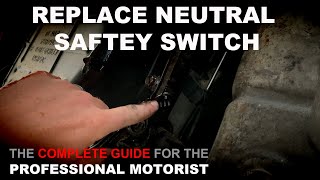
Shop the Parts Behind B2227
Below are the parts most often responsible for code B2227, ranked by how frequently each one is the actual culprit (per the diagnosis above). Tap any to see what we have for your vehicle.



The information in this article is provided for general reference and educational purposes only. Vehicle specifications, procedures, and part compatibility can vary by production date, trim level, and region. Always consult your vehicle's factory service manual and verify part numbers before purchasing or performing repairs. Safety-critical components such as airbags, seat belts, and braking systems should be installed by a qualified professional.
- 🧭 Diagnostic Flowchart
- 🎬 Helpful Videos
- 🛍️ Shop This Part
- What Does B2227 Mean?
- Can I Drive With B2227?
- Common Causes
- Symptoms
- Common Fixes & Costs
- Used vs. New Parts: Buying Guide
- What Happens If You Wait — Timeline
- Cost of Not Fixing It
- Diagnosis Steps
- When This Code Triggers (Freeze-Frame Conditions)
- Related Codes
- Climate & Environmental Factors
- How to Talk to a Mechanic About This Code
- Where to Take It: Dealer vs Independent vs Chain
- When to Walk Away From the Repair
- What Scan Tool You Need for This Code
- How to Clear the Code After You Fix It
- Will This Fail Emissions / State Inspection?
- Most Commonly Affected Vehicles
- Manufacturer-Specific Notes
- Real Owner Stories
- 2008 Mazda 5 with ~110K miles
- 2015 Chevy Suburban at 125K miles
- 2014 Toyota Highlander with 85K miles
- How to Prevent This Code From Triggering
- Frequently Asked Questions
- Is code B2227 serious?
- What are the most common misdiagnosis mistakes for B2227?
- Why do I see different definitions for B2227 online?
- Can I drive my car with a B2227 code?
- My Ford doesn't have a front crash sensor, so why do I have code B2227?
- Can a bad battery cause a B2227 code?
- How do I clear a B2227 code?
- After replacing my Toyota liftgate strut, do I need to do anything else?
- Key Takeaways
- 🎟️ Get 5% Off