

OBD-II Code B2228: Manufacturer-Specific Body Fault
A comprehensive guide to diagnosing and fixing code B2228, a fault indicating a power liftgate failure or a disabled driver's airbag, depending on your vehicle's make.
- Code B2228 means a driver's airbag circuit short on Ford and Mazda vehicles, or a power liftgate motor fault on Toyota and Nissan models.
- An illuminated airbag light with code B2228 means the entire Supplemental Restraint System (SRS) is disabled and will not deploy in a crash.
- Do not confuse body code B2228 with powertrain code P2228; B2228 triggers an airbag or system light, while P2228 triggers the Check Engine Light.
- On 2013-2017 Toyota RAV4s, B2228 is almost always caused by a broken power liftgate actuator mount that damages the wiring harness, requiring replacement under TSB T-SB-0275-17.
- Ford and Mazda owners must disconnect the battery for at least 30 minutes before diagnosing B2228 to prevent accidental and potentially fatal airbag deployment.
What Does B2228 Mean?
B2228 is a body control module (BCM) code signaling a fault in a specific electrical circuit. Unlike universal powertrain codes, its meaning changes by manufacturer. It almost always indicates a fault in the power liftgate system (Toyota and Nissan) or a short circuit in the driver's airbag system (Ford and Mazda).
Technical definition: The SAE/ISO definition of B2228 is assigned by individual manufacturers. For Toyota, it is 'PBD Unit Motor LH Circuit', indicating a fault with the left-hand power back door motor. For Ford and Mazda, it is 'Air Bag Driver Circuit Short to Ground - Loop #2', indicating a short in the driver's airbag circuit.
Can I Drive With B2228?
Yes, But With Caution. Driving is possible, but strongly discouraged if the airbag light is on. An illuminated airbag light means the entire Supplemental Restraint System (SRS) is disabled and will not deploy in a crash. If the code is for a power liftgate, driving is safe, but the heavy hatch must be operated manually and poses an injury risk if the support struts fail.
Common Causes
- Faulty Power Liftgate Motor / Actuator (Very Common) — The most frequent cause for Toyota and Nissan vehicles. The electric motor that opens the rear hatch fails internally or the drive mechanism jams. On 2013-2017 RAV4s, the actuator mount separates and directly severs the actuator's wiring.
- Faulty Airbag Clockspring (Common) — For Ford and Mazda vehicles, the clockspring—a rotary connector in the steering column—fails. Internal ribbon wires break over time from steering wheel rotation, causing a short or open circuit in the airbag loop.
- Low Battery Voltage or Electronic Glitch (Common) — A weak or recently replaced battery causes the power liftgate control module to enter a fault state, especially on Nissan vehicles. Battery performance drops up to 50% in freezing temperatures, making this a frequent cold-weather trigger.
- Damaged Wiring or Loose Connectors (Common) — Wires fray, pinch, or corrode in moving areas like the steering column or hatch hinges. Road vibrations also loosen the main connector to the power liftgate control module, creating a short to ground or an open circuit.
- Weakening Liftgate Motors Causing Uneven Operation (Common) — On systems with dual liftgate motors, one motor weakens before the other. This causes the liftgate to open unevenly, stressing the assembly and triggering a circuit fault code for the weaker motor.
- Defective Driver-Side Airbag Module (Less Common) — The airbag module itself develops an internal short circuit. This is a critical safety failure requiring immediate professional replacement.
- Faulty Control Module (RCM or PBD ECU) (Rare) — The computer controlling the system—either the Restraints Control Module (RCM) for airbags or the Power Back Door (PBD) ECU for the liftgate—fails internally.
Symptoms
- Airbag Warning Light is On — The primary symptom for the airbag circuit fault. The light confirms the supplemental restraint system is disabled and will not deploy in an accident.
- Power Liftgate/Trunk Does Not Work — The liftgate fails to open or close with the button, or it starts to move, makes a grinding noise, and reverses. In cold weather, it opens only an inch before stopping.
- Steering Wheel Controls Malfunction — When the airbag clockspring fails, steering wheel buttons for the horn, audio, or cruise control stop working simultaneously with the airbag light illuminating.
- Continuous Beeping or Chime — A fault in the power liftgate system causes a persistent beeping sound from the rear of the vehicle while driving or attempting to use the hatch.
- Unusual Noises from Rear of Vehicle — The liftgate actuator motor emits a humming, grinding, or popping sound as it attempts to operate but fails.
Diagnostic Flowchart
Tap your situation to follow the diagnostic path that matches what you're seeing on this code.
Common Fixes & Costs
- Replace Power Liftgate Motor/Actuator — Parts: $150-$650, Labor: $150-$300, ~1.5 hr book time (Intermediate)
- Replace Airbag Clockspring — Parts: $150-$350, Labor: $150-$300, ~1.5 hr book time (Professional)
- Repair Damaged Wiring or Connectors — Parts: $10-$50, Labor: $150-$400, ~2.0 hr book time (Intermediate)
- Replace Driver-Side Airbag Module — Parts: $700-$1200, Labor: $100-$200, ~1.0 hr book time (Professional)
- Replace Restraints Control Module (RCM) — Parts: $500-$1000, Labor: $150-$300, ~2.5 hr book time (Professional)
Used vs. New Parts: Buying Guide
When a used part is worth it: For mechanical parts like a power liftgate motor, a used OEM part from a low-mileage vehicle is a cost-effective alternative. Never buy used pyrotechnic SRS components.
Donor-vehicle mileage cap: roughly under 60000 miles for the part to have meaningful remaining life.
Donor quality checklist:
- Verify the part number matches exactly.
- For liftgate motors, ensure the donor vehicle was not in a rear-end collision.
- Avoid clocksprings from vehicles with deployed airbags.
Decision logic:
- If The part is an airbag module, inflator, or sensor. → ALWAYS buy new OEM. It is unsafe and illegal to install used pyrotechnic SRS components.
- If The part is a power liftgate motor and budget is a primary concern. → A used OEM part from a reputable salvage yard with a warranty is a reasonable choice.
- If The part is an airbag clockspring. → New OEM is the safest choice. A quality new aftermarket part is preferable to a used part with unknown history.
Warranty tradeoff: Used parts typically have a 30-90 day warranty. Aftermarket new parts offer 1-year to limited lifetime warranties. New OEM parts carry a 12-month warranty.
Worst-case if a used part fails: $200-$500 if a used part fails, requiring repeat labor costs.
What Happens If You Wait — Timeline
- Immediate (Airbag Fault): The airbag warning light illuminates. The entire SRS is disabled and will NOT function in a crash. (MPG impact: 0%% · Added cost: $0 (Immediate safety risk))
- Immediate to 1 year (Airbag Fault): The vehicle fails its annual state safety inspection, preventing registration renewal. (MPG impact: 0%% · Added cost: $50-$200)
- Immediate (Liftgate Fault): The power liftgate stops working. The owner must operate the heavy hatch manually, posing an injury risk. (MPG impact: 0%% · Added cost: $0)
- 1-6 months (Liftgate Fault): The strain of one motor operating alone causes the second motor to fail, or a binding liftgate damages the latching mechanism. (MPG impact: 0%% · Added cost: $600-$2000+)
Cost of Not Fixing It
- Immediate (Airbag Fault): The entire Supplemental Restraint System (SRS) is disabled. Airbags will NOT deploy in a crash, drastically increasing the risk of serious injury or death. (Added cost: N/A (Safety Risk))
- Immediate (Liftgate Fault): Inconvenience of a non-functional power liftgate. Risk of personal injury if the hatch falls unexpectedly due to weak support struts. (Added cost: Negligible)
- Long-Term: Vehicle automatically fails state safety inspections in jurisdictions like NY and TX if the airbag light is on, preventing registration renewal. (Added cost: $50 - $200 (Failed inspection fees))
Diagnosis Steps
- Identify Your Vehicle's Definition for B2228
Search your vehicle's make, model, and 'B2228' to determine the affected system. An airbag light means an SRS fault (Ford/Mazda), while a non-functional power hatch points to the liftgate system (Toyota/Nissan).
Tools: Internet access (Beginner) - Check Battery and Perform System Reset
Test the battery to ensure it reads above 12.4 volts with the engine off. For liftgate issues, disconnect the negative battery terminal for 15 minutes to clear electronic glitches, then perform the manufacturer's liftgate initialization procedure.
Tools: Multimeter, 10mm wrench (Beginner) - Visual Inspection
For airbags: Inspect wiring under the driver's dashboard near the steering column. For liftgates: Inspect struts and visible wiring near the hinges for pinching. Check the main connector at the liftgate control module in the rear cargo area.
Tools: Flashlight (Beginner) - Clear the Code and Observe
Use an OBD-II scanner to clear the B2228 code. For airbag issues, turn the steering wheel lock-to-lock. For liftgate issues, operate the power hatch. If the code returns immediately, a hard hardware fault exists.
Tools: OBD-II Scanner (with BCM/SRS capability) (Beginner) - Test the Power Liftgate Motor Circuit (Toyota)
Disconnect the power liftgate motor connector. Measure resistance between each motor terminal and a clean chassis ground. A reading below 10 kΩ indicates a short in the motor or its wiring.
Tools: Multimeter, basic hand tools, service manual (Advanced) - Analyze Live Data for Airbag Circuit
View live data for the driver's airbag circuit resistance using an SRS scan tool. A healthy circuit shows 2.0 to 3.5 ohms. A reading under 2.0 ohms confirms a short to ground, distinguishing it from an open circuit.
Tools: Advanced Scan Tool with SRS Live Data (Advanced) - Test the Airbag Circuit Wiring (Ford)
WARNING: Depower the SRS for 30 minutes. Disconnect the RCM and clockspring connectors. Check for continuity on the two driver's airbag wires between the RCM and clockspring. Measure resistance from each wire to ground; any continuity confirms a short.
Tools: Multimeter with probing kit, service manual (Advanced) - Isolate the Airbag Circuit (Ford - Professional Only)
After depowering the system, disconnect the harness from the driver's airbag module. Connect a 2.2-3.3 ohm airbag test resistor across the harness terminals. Reconnect battery and clear codes. If B2228 disappears, the fault is in the airbag module or clockspring.
Tools: Airbag Circuit Test Resistor Set, OBD-II Scanner (Professional) - Diagnose the Control Module
If components and wiring test good, the fault lies within the RCM or PBD ECU. Use a professional scan tool to check module communication and internal status before replacing the unit.
Tools: Advanced Scan Tool, Service Manual (Advanced)
When This Code Triggers (Freeze-Frame Conditions)
- System Voltage: 11.5-14.5V (Low voltage triggers spurious faults in both SRS and BCM modules.)
- Component Status: Short to Ground (The control module detected an electrical anomaly in the specific circuit.)
- System State: Active/Enabled (Fault occurred while the control module was actively monitoring or commanding the system.)
Related Codes
- B2227 — On Toyota vehicles, B2228 indicates a fault in the left-hand (LH) power back door motor circuit, while B2227 indicates a fault in the right-hand (RH) circuit. Seeing both suggests a binding liftgate or faulty control module.
- B2226 — On Toyota vehicles, B2226 indicates a fault in the Power Back Door 'Close' circuit. It appears with B2228 because a failed motor cannot complete the 'close' command.
- B2232 — On Ford vehicles, B2232 indicates an 'Open' circuit for the driver's airbag, while B2228 indicates a 'Short to Ground'. Both point to the clockspring, airbag, or wiring.
Climate & Environmental Factors
- Cold Weather: In freezing temperatures, power liftgate struts fail to operate or open slowly due to thickened hydraulic fluid and a significant drop in 12V battery power output.
- High Humidity / Water Intrusion: Moisture from heavy rain or leaks penetrates wiring connectors and control modules, causing corrosion and electrical shorts that trigger airbag warning lights.
- Road Salt (Regional): Winter road salt accelerates corrosion on underbody and externally mounted components, directly leading to failures like the recalled 2014-2016 Nissan Rogue liftgate stays.
How to Talk to a Mechanic About This Code
Say this: "I have a B2228 code. If airbag light is on: 'My airbag light is on, code B2228. I believe this is a driver-side airbag circuit short. Can you test the circuit to isolate the fault?' If liftgate is broken: 'My power liftgate isn't working, code B2228. I believe this is the left-side motor circuit. Can you test the motor and check for TSBs?'"
Directs the technician to the correct system (airbag vs. liftgate) and suggests specific diagnostic steps, preventing open-ended diagnosis and upselling.
Avoid saying:
- 'Just fix whatever's wrong'
- 'My check engine light is on' (This code does not trigger the check engine light)
- 'My B2228 code means the barometric sensor is bad' (This is incorrect, that is code P2228)
Questions to ask before authorizing the repair:
- Did you test the circuit to confirm the point of failure?
- Did you inspect the wiring harness for damage before condemning the part?
- For a Toyota RAV4: Did you inspect the actuator mount for failure per TSB T-SB-0275-17?
- What is the warranty on this specific repair?
Where to Take It: Dealer vs Independent vs Chain
- Dealer:
Strongly recommended for the airbag variant and liftgate issues covered by a TSB or requiring a reprogram.
Best for: Airbag system repairs due to safety-critical nature and specialized tools., Repairs covered by a TSB or recall, like the Toyota RAV4 liftgate mount., Issues requiring a control module software update.
Downsides: Significantly higher labor rates and part costs., Defaults to replacing entire assemblies rather than targeted repairs. (Typical cost: +50% vs. baseline) - Independent Shop:
Excellent choice for power liftgate faults. For airbag faults, only use a top-tier independent shop with explicit SRS certification.
Best for: Out-of-warranty power liftgate repairs, such as replacing a failed motor., Vehicles where cost is a primary concern and the fault is mechanical.
Downsides: Many shops hesitate to work on SRS systems due to liability., May lack proprietary software for module reprogramming. (Typical cost: +0% vs. baseline) - Chain Shop:
AVOID. These shops are not equipped to handle safety-critical airbag faults or specific liftgate diagnostic procedures.
Best for: Simple, routine maintenance like oil changes and brake pads.
Downsides: Lack specialized tools and training for SRS or complex body electrical diagnostics. (Typical cost: -10% vs. baseline)
When to Walk Away From the Repair
If the estimated repair cost exceeds 40-50% of the car's current private-party market value, consider trading it in or selling it as-is with full disclosure.
- Car worth $8000, fix is $950: Fix it. A power liftgate motor replacement on an $8,000 vehicle is well below the threshold.
- Car worth $5000, fix is $2200: Borderline. A full airbag system repair costing $2,200 is at the 44% threshold. Get a second opinion.
- Car worth $3000, fix is $1800: Walk away. The repair cost is 60% of the vehicle's value. It is not economical to perform this repair.
What Scan Tool You Need for This Code
Minimum: A scanner that reads and clears Body Control Module (BCM) and Supplemental Restraint System (SRS) codes. Basic engine-only readers will NOT work.
A standard $20 code reader only accesses powertrain ('P') codes and shows 'No Codes Found' even when the airbag light is on. The airbag light must be reset with an SRS-capable scanner.
Budget: Autel AutoLink AL619 (~$80) — Reads and clears engine, ABS, and SRS codes. It successfully retrieves B2228 and allows you to clear it after repair.
Mid-range: BlueDriver Pro (~$120) — Connects via Bluetooth and provides access to SRS/BCM codes and live data graphing to confirm a faulty clockspring.
Professional: Autel MaxiCOM MK808 / XTOOL D7 (~$450-600) — Offers full-system diagnostics, live data, and bidirectional controls essential for diagnosing complex electrical issues.
Rent vs buy: Most auto parts store 'loaner' tools are basic engine code readers and CANNOT read B-prefix or SRS codes. You must buy at least a budget-level SRS-capable scanner.
How to Clear the Code After You Fix It
- Reconnect battery if disconnected for repair.
- Use an SRS/BCM-capable OBD-II scan tool to clear the B2228 code.
- For airbag faults, the light will NOT turn off without being cleared by a proper scan tool.
- For liftgate faults, perform the manufacturer's re-initialization procedure.
Drive cycle (~5 minutes): A traditional drive cycle is not required. Cycle the ignition off and on. For airbag faults, the SRS light performs its self-check and stays off. For liftgate faults, operate the liftgate through one full open/close cycle.
Readiness monitors affected: Not applicable. Readiness monitors are for emissions-related 'P' codes.
Watch out for:
- Using a basic code reader that cannot access SRS or BCM modules.
- Forgetting to perform the liftgate re-initialization procedure after replacing a motor.
- Assuming the airbag light goes off on its own after replacing a part.
Will This Fail Emissions / State Inspection?
No — by itself this code doesn't fail OBD inspection (but it can keep readiness monitors from setting, which causes a separate fail).
- General: Code B2228 will NOT cause a failure of an emissions test, which only checks for powertrain codes. It will cause a failure of a separate safety inspection.
- California: California's Smog Check program does not inspect the SRS system. A B2228 code will not fail a smog test, but remains a critical safety issue.
- New York: An illuminated airbag warning light is an automatic cause for failure during the annual safety inspection.
- Texas: The annual safety inspection requires the airbag warning lamp to illuminate and turn off. If it stays on, the vehicle fails.
Most Commonly Affected Vehicles
- Toyota RAV4 (2013-2018) — Highly prone to the 'Power Back Door' fault. TSB T-SB-0275-17 addresses power back door actuators separating from their mounts and severing the wiring harness, directly causing code B2228.
- Ford Transit Connect (2010-2014) — Frequently logs B2228 for 'Air Bag Driver Circuit Short to Ground', pointing to a failed airbag module, clockspring, or RCM.
- Nissan Murano, Rogue (2014-2019) — TSB NTB15-073d for the Murano addresses liftgate DTCs requiring a control unit reprogram. Rogues face recall PC458 for corroding liftgate stays.
- Ford F-150 (2009-2014) — Airbag system faults frequently link to failing clocksprings. Ford issued Customer Satisfaction Program 15N01 for clocksprings causing non-deployment.
- Mazda Mazda 3, Mazda 6 (2004-2013) — Defines B2228 as 'Driver-side Air Bag Module Circuit Short To Body Ground', mirroring the Ford definition due to shared platform architecture.
- Lincoln MKX, Navigator (2007-2015) — Shares Ford's SRS diagnostics. B2228 refers exclusively to the 'Air Bag Driver Circuit Short to Ground' issue.
- General Motors Various (2005-2020) — IMPORTANT: If you get a '2228' code on a GM product, it is overwhelmingly likely to be P2228 (Barometric Pressure Sensor), which illuminates the Check Engine Light. Do not confuse the two.
Manufacturer-Specific Notes
- General: Generic scanners incorrectly list B2228 as a 'Barometric Pressure Sensor' fault. That is code P2228. 'B' codes are for Body systems, while 'P' codes are for Powertrain.
- Toyota: TSB T-SB-0275-17 addresses a design flaw on 2013-2017 RAV4s where the power liftgate actuator's ball mount separates, causing the actuator to hang by its wiring and trigger B2228.
- Ford: Diagnostic procedures explicitly warn against probing airbag module connectors directly, as it causes accidental deployment. Depowering the system for 30 minutes is mandatory before testing.
- Nissan: TSB NTB15-073d notes that Automatic Back Door issues require reprogramming the control unit with updated software. A low battery is the most common trigger for this fault state.
Real Owner Stories
2019 Toyota RAV4 with failing power liftgate
The power liftgate opened a few inches and stopped. The dealer quoted $3,395 to replace the motors, sensors, and ECU.
Outcome: The aftermarket actuators fixed the problem initially, but failed after 8 months.
Lesson: DIY replacement saves thousands, but cheap aftermarket liftgate actuators have a high failure rate.
Nissan Rogue with beeping and inoperable power liftgate
After manually closing the liftgate, using any button caused it to open fully, beep, and immediately close on its own.
Outcome: The re-initialization procedure resolved the problem without needing any parts.
Lesson: Always attempt the specific re-initialization procedure before assuming a hardware failure on a Nissan liftgate.
2017 Toyota RAV4 with intermittent liftgate
The power liftgate worked intermittently. The dealer insisted on a major repair.
Outcome: Dirt blocking the pinch sensors or kick sensor caused false obstruction readings.
Lesson: Thoroughly clean the pinch sensors and kick sensor before diagnosing a mechanical failure.
How to Prevent This Code From Triggering
- Maintain Battery Health (Every 6 months) — SRS and power liftgate modules are sensitive to low voltage. A weak battery causes glitches and false codes.
- Lubricate and Clean Liftgate Hinges/Struts (Annually) — Dirt increases friction, forcing motors to work harder and leading to premature failure.
- Protect Electrical System from Moisture (As needed) — Water intrusion causes electrical shorts. Ensure door seals are intact and address leaks promptly.
- Be Mindful of Steering Wheel Adjustments (Daily habit) — Aggressive telescoping and tilting of the steering column puts stress on the clockspring's coiled ribbon cable.
Frequently Asked Questions
Can I drive my car with a B2228 code?
If the airbag light is on, it is a critical safety risk. The entire airbag system is disabled and will not deploy in an accident. If the code is for the power liftgate, the vehicle is safe to drive, but you must operate the heavy hatch manually.
What is the most common mistake when diagnosing B2228?
The single most common mistake is confusing body code B2228 with powertrain code P2228. If your Check Engine Light is on, the code is P2228, which relates to the Barometric Pressure Sensor. B2228 illuminates a system-specific light like the airbag indicator.
My liftgate stopped working after the battery died. Is it related?
Yes, a low voltage event causes the liftgate control module to enter a fault mode. Before replacing parts, perform a system reset by disconnecting the negative battery terminal for 15 minutes. You must then perform the manufacturer's liftgate initialization procedure.
Can I just recalibrate the power liftgate to fix B2228?
A recalibration procedure resolves software glitches, especially after a battery disconnect. However, code B2228 specifically indicates a hard electrical circuit fault, so recalibration will not fix a failed motor.
Can a blown fuse cause code B2228?
A blown fuse disables the affected system but typically results in a 'loss of communication' code, not a specific circuit short code like B2228. Checking the relevant fuses is still a mandatory first step.
Can I reset the airbag light at home?
No, the Restraints Control Module (RCM) stores 'hard codes' that must be cleared with a specific SRS-capable OBD-II scan tool. This safety measure ensures the system is professionally verified after a fault. Disconnecting the battery will not clear an airbag light.
Why are airbag system repairs so expensive?
Airbag components are single-use, precision safety devices containing sensitive electronics and pyrotechnic charges. The high cost reflects the advanced technology and significant liability associated with these life-saving parts.
Key Takeaways
- Code B2228 means a driver's airbag circuit short on Ford and Mazda vehicles, or a power liftgate motor fault on Toyota and Nissan models.
- An illuminated airbag light with code B2228 means the entire Supplemental Restraint System (SRS) is disabled and will not deploy in a crash.
- Do not confuse body code B2228 with powertrain code P2228; B2228 triggers an airbag or system light, while P2228 triggers the Check Engine Light.
- On 2013-2017 Toyota RAV4s, B2228 is almost always caused by a broken power liftgate actuator mount that damages the wiring harness, requiring replacement under TSB T-SB-0275-17.
- Ford and Mazda owners must disconnect the battery for at least 30 minutes before diagnosing B2228 to prevent accidental and potentially fatal airbag deployment.
Helpful Videos
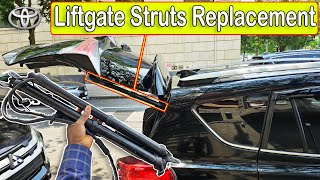
Shop the Parts Behind B2228
Below are the parts most often responsible for code B2228, ranked by how frequently each one is the actual culprit (per the diagnosis above). Tap any to see what we have for your vehicle.



The information in this article is provided for general reference and educational purposes only. Vehicle specifications, procedures, and part compatibility can vary by production date, trim level, and region. Always consult your vehicle's factory service manual and verify part numbers before purchasing or performing repairs. Safety-critical components such as airbags, seat belts, and braking systems should be installed by a qualified professional.
- 🧭 Diagnostic Flowchart
- 🎬 Helpful Videos
- 🛍️ Shop This Part
- What Does B2228 Mean?
- Can I Drive With B2228?
- Common Causes
- Symptoms
- Common Fixes & Costs
- Used vs. New Parts: Buying Guide
- What Happens If You Wait — Timeline
- Cost of Not Fixing It
- Diagnosis Steps
- When This Code Triggers (Freeze-Frame Conditions)
- Related Codes
- Climate & Environmental Factors
- How to Talk to a Mechanic About This Code
- Where to Take It: Dealer vs Independent vs Chain
- When to Walk Away From the Repair
- What Scan Tool You Need for This Code
- How to Clear the Code After You Fix It
- Will This Fail Emissions / State Inspection?
- Most Commonly Affected Vehicles
- Manufacturer-Specific Notes
- Real Owner Stories
- 2019 Toyota RAV4 with failing power liftgate
- Nissan Rogue with beeping and inoperable power liftgate
- 2017 Toyota RAV4 with intermittent liftgate
- How to Prevent This Code From Triggering
- Frequently Asked Questions
- Can I drive my car with a B2228 code?
- What is the most common mistake when diagnosing B2228?
- My liftgate stopped working after the battery died. Is it related?
- Can I just recalibrate the power liftgate to fix B2228?
- Can a blown fuse cause code B2228?
- Can I reset the airbag light at home?
- Why are airbag system repairs so expensive?
- Key Takeaways
- 🎟️ Get 5% Off