

OBD-II Code B2232: Driver Airbag Circuit Resistance High
The Ultimate 2026 Guide: What B2232 means, why it triggers, and how to fix it for good
- Code B2232 disables the driver's airbag entirely, increasing frontal crash fatality risk by 29%.
- A broken clock spring causes over 80% of B2232 codes, often accompanied by a dead horn or broken steering wheel buttons.
- For 2005-2007 Ford Focus models, applying $10 dielectric grease to the airbag connector pins resolves the code per TSB 07-21-10.
- Always disconnect the battery for 20 minutes before inspecting or cleaning the yellow SRS connectors to prevent accidental deployment.
- Standard $20 engine code readers cannot see or clear B2232; you need an SRS-capable OBD-II scanner starting around $100.
What Does B2232 Mean?
The Supplemental Restraint System (SRS) module detected high electrical resistance in the driver's side airbag circuit. This usually indicates an open circuit or a bad connection. As a safety precaution, the system turns on the airbag warning light and deactivates the driver's airbag.
Technical definition: The SAE/OBD-II definition is "Driver-Side Air Bag Module (Inflator No. 2) Circuit Resistance High". The SRS control unit measured resistance in the driver's airbag deployment loop above the manufacturer's threshold (typically 2.0 to 3.5 ohms). Resistance above this range sets the code, indicating an open circuit.
Can I Drive With B2232?
No — Do Not Drive. No. While the vehicle mechanically operates, it is critically unsafe. This code disables the driver's airbag and typically the entire Supplemental Restraint System (SRS). In a frontal crash, airbags reduce driver fatalities by 29%; driving with this fault removes this essential protection. An active airbag warning light is also an automatic failure for safety inspections in most jurisdictions.
Common Causes
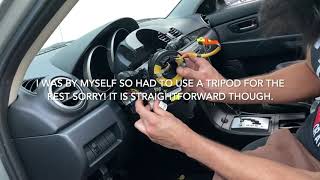
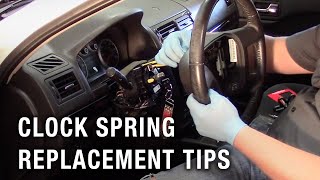
- Faulty Airbag Clock Spring (Very Common) — The clock spring is a rotary electrical connector in the steering column. Its internal ribbon cable becomes brittle and breaks from constant turning, causing an open circuit. This is the most frequent cause of B2232. 🎬 Watch: Pro tips for a successful clock spring replacement.
- Poor Electrical Connection (Common) — Connectors become loose or corroded. The yellow connectors at the airbag module, the clock spring base, or under the driver's seat are common failure points.
- Damaged Wiring Harness (Less Common) — Wires leading to the clock spring or airbag module get pinched or frayed, often during previous repairs like stereo installations or steering column adjustments.
- Incorrect Aftermarket Modifications (Less Common) — Installing aftermarket steering wheels requires bypassing the airbag system. Failing to use a proper resistor triggers this code.
- Faulty Driver's Airbag Module (Rare) — The internal wiring or inflator squib within the airbag module fails, creating high resistance. This requires complete module replacement.
- Faulty SRS Control Module (Rare) — The airbag control module fails internally and misreads circuit resistance. This requires professional diagnosis and expensive replacement.
- Water Intrusion (Rare) — Spilled drinks or clogged sunroof drains leak onto the SRS control module (often under the center console), causing corrosion and circuit faults.
- Low Battery Voltage (Rare) — A dying battery causes low system voltage during startup. The highly sensitive SRS module performs its self-check improperly, setting spurious fault codes.
Symptoms
- Solid or Flashing Airbag Warning Light — The SRS light remains illuminated after startup. On older models like Mazdas, it flashes a specific sequence (e.g., code 19).
- Dead Horn and Steering Wheel Controls — The horn and steering wheel buttons route through the clock spring. A broken internal ribbon cable disables these simultaneously.
- Scraping Noise When Turning — A broken clock spring makes a scraping or clicking noise as the internal ribbon binds inside the steering column.
- Intermittent Airbag Light — The warning light appears only at specific steering wheel angles, indicating a partial break in the clock spring's ribbon cable.
Diagnostic Flowchart
Tap your situation to follow the diagnostic path that matches what you're seeing on this code.
Common Fixes & Costs
- Clock Spring Replacement
— Parts: $40-$300, Labor: $100-$250, ~1.5 hr book time
(Intermediate)
Ford Focus (2005-2007): OEM 7S4Z-14A664-A (Alt: Dorman 525-229)
Mazda 3 (2010-2013): OEM BBM3-66-CS0A (Alt: Standard Motor Products CSP291)
Hyundai Elantra (2011-2016): OEM 93490-3X040 (Alt: Standard Ignition CSP138) - Cleaning and Securing Airbag Connectors — Parts: $5-$15, Labor: $0-$100, ~0.5 hr book time (DIY)
- Wiring Harness Repair — Parts: $10-$30, Labor: $100-$300, ~2 hr book time (Professional)
- Airbag Control Module Replacement — Parts: $200-$700, Labor: $150-$300, ~1.5 hr book time (Professional)
- Driver's Airbag Module Replacement — Parts: $300-$800+, Labor: $50-$100, ~0.5 hr book time (Professional)
DIY vs Professional
- Cleaning and Securing Airbag Connectors 🟢 Beginner
Tools: Socket set, trim removal tools, electrical contact cleaner, dielectric grease. - Clock Spring Replacement 🟢 Beginner
Tools: Socket set, torque wrench, steering wheel puller, trim removal tools, new clock spring. - Wiring Harness Repair 🟢 Beginner
Tools: Professional wiring repair tools, multimeter, vehicle-specific wiring diagrams. - Airbag Control Module / Driver's Airbag Replacement 🟢 Beginner
Tools: Advanced diagnostic scanner, socket set, trim tools.
Used vs. New Parts: Buying Guide
When a used part is worth it: Buying a used clock spring is not recommended as it is a wear-and-tear item. It only makes sense for a very old, low-value vehicle where a new part is cost-prohibitive.
Donor-vehicle mileage cap: roughly under 40000 miles for the part to have meaningful remaining life.
Donor quality checklist:
- Avoid parts from high-mileage vehicles or regions with extreme temperatures.
- Ensure the part number is an exact match based on steering wheel controls.
- Never buy a used clock spring from a vehicle with deployed airbags.
Decision logic:
- If The part is for a daily-driven vehicle you rely on for safety. → Buy a new OEM or high-quality aftermarket part.
- If Vehicle is over 15 years old and budget is the absolute primary concern. → A used part from a verified low-mileage donor is a possibility, but carries significant risk.
- If A new part is available for under $150. → Always buy new. Labor costs negate any initial savings from a used part.
Warranty tradeoff: Used parts typically have a 30-day warranty. New aftermarket parts offer 1-year to lifetime warranties. New OEM parts carry a 12-month manufacturer warranty.
Worst-case if a used part fails: $200-$400 if a used part fails after installation, requiring repeat labor.
What Happens If You Wait — Timeline
- 0 Seconds: The SRS module detects high resistance. The airbag warning light illuminates, and the entire SRS system is disabled. (MPG impact: 0%% · Added cost: $0 (Immediate loss of safety system))
- First Drive: The driver operates the vehicle with no functional airbags, dramatically increasing the risk of serious injury in a collision. (MPG impact: 0%% · Added cost: N/A (Massive increase in personal safety risk))
- At Next State Inspection: The vehicle automatically fails its safety inspection due to the illuminated airbag warning light. (MPG impact: 0%% · Added cost: $50 - $200+ in inspection fees and fines.)
- After an Accident: Insurance providers may argue the vehicle was knowingly operated in an unsafe condition, potentially reducing payouts. (MPG impact: 0%% · Added cost: $1,000 - $10,000+ in denied claims.)
Cost of Not Fixing It
- Immediate: Complete failure of the SRS system. No airbags will deploy in a collision, dramatically increasing the risk of serious injury or death. (Added cost: N/A (Safety Risk))
- At Next Inspection: Guaranteed failure of the vehicle's safety inspection. This results in fines and the inability to legally register the vehicle. (Added cost: $50 - $200+ in fines and re-inspection fees.)
- After an Accident: Potential denial of insurance claims. Insurers may argue the vehicle was not maintained in a roadworthy condition. (Added cost: Potentially thousands in denied claims or increased liability.)
Diagnosis Steps
- Confirm Code and Symptoms
Use an SRS-capable OBD-II scanner to confirm B2232. Test the horn and steering wheel buttons; if they fail, a faulty clock spring is the primary suspect.
Tools: SRS-capable OBD-II Scanner (Beginner) - Visual Inspection
Inspect the yellow wiring and connectors under the steering column and driver's seat for damage, pinching, or disconnection.
Tools: Flashlight (Beginner) - Disconnect Battery and Inspect Connectors
SAFETY FIRST: Disconnect the negative battery terminal and wait 20 minutes for the backup capacitor to discharge. Remove the steering wheel airbag and inspect the yellow connectors for corrosion or loose seating.
Tools: Socket set, trim removal tools, screwdriver (Intermediate) - Clean and Secure Connectors
Clean dirty connectors with electrical contact cleaner. Re-seat them firmly until they click. For 2005-2007 Ford Focus models, apply dielectric grease to the connector pins per TSB 07-21-10.
Tools: Electrical contact cleaner, dielectric grease (Intermediate) - [PRO TIP] Live Data 'Wiggle Test'
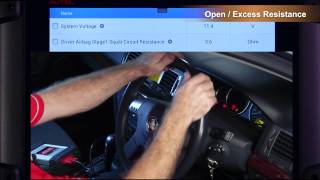
View the 'Driver Airbag Resistance' PID on your scanner. Slowly turn the steering wheel lock-to-lock. If resistance jumps from the normal 1.5-3.5 ohms to 'OL' (Open Loop), you have an intermittent open in the clock spring.
Tools: SRS-capable OBD-II Scanner with Live Data (Advanced) - [PRO TIP] Test Clock Spring Using Shorting Bars
With battery disconnected and airbag removed, unplug the clock spring's output connector. Measure resistance at the input connector under the dash. A reading of 'OL' proves the internal ribbon is broken.
Tools: Multimeter, vehicle-specific wiring diagram (Advanced) - [PRO TIP] Isolate Fault with Test Resistor
Plug a 2.5-ohm airbag test resistor into the vehicle-side connector. Reconnect the battery and clear codes. If B2232 stays away, the airbag module is faulty. If it returns, the wiring or clock spring is bad.
Tools: Airbag Test Resistor Set, SRS-capable OBD-II Scanner (Advanced) - Replace Clock Spring
Replace the faulty clock spring. Keep the front wheels perfectly straight. Do not remove the new part's locking tab until installed; failing to center it destroys the new clock spring on the first turn.
Tools: Socket set, torque wrench, new clock spring (Intermediate) - Final Scan and Reset
Reconnect the battery and use the SRS scanner to clear B2232. Cycle the ignition and re-scan to ensure the code does not return.
Tools: SRS-capable OBD-II Scanner (Beginner)
When This Code Triggers (Freeze-Frame Conditions)
- System Voltage: 11.5V - 14.5V (During KOEO (Key On, Engine Off) self-test)
- Ignition Cycles Since Code Set: 0 (Code set on the current ignition cycle)
- Fault Status: Present / Active (Indicates a hard fault currently detected by the SRS module)
- Driver Airbag Resistance: > 4.0 Ohms or 'Open' (The measured resistance exceeded the upper threshold)
Related Codes
- B1932 — Ford-specific code for 'Driver Airbag Circuit Open'. Functionally identical to B2232 and points to the exact same clock spring or connector problems.
- B2233 — Indicates 'Passenger Airbag Circuit Resistance High'. The direct equivalent of B2232 but for the passenger side. Diagnosis focuses on passenger connectors.
- B2234 / B2235 — Indicates 'Driver Airbag Circuit Resistance Low' or 'Shorted to Ground'. Points to a short circuit (pinched wires touching metal) rather than an open circuit.
- B1868 — Indicates a problem with the warning light circuit itself (e.g., the bulb in the instrument cluster), not the airbag deployment loop.
Climate & Environmental Factors
- High Humidity / Water Intrusion: Moisture from humidity, spills, or clogged sunroof drains causes corrosion on airbag connector pins or within the SRS control module, increasing electrical resistance.
- Extreme Cold: In very cold weather, plastic components become brittle. The clock spring's internal ribbon cable fractures more easily when the steering wheel is turned.
How to Talk to a Mechanic About This Code
Say this: "I have an airbag light on and my scanner shows code B2232 for high resistance in the driver's airbag circuit. My horn and steering wheel controls have also stopped working. I'd like to book a diagnostic appointment to confirm if the clock spring has failed."
This signals you have done your research and focuses the technician's diagnostic path, saving time and preventing upsells.
Avoid saying:
- My airbag light is on, can you fix it?
- Just do whatever it takes to turn the light off.
- I think I need a new airbag.
Questions to ask before authorizing the repair:
- What was the resistance reading on the driver's airbag circuit when you tested it?
- Did you confirm the clock spring is the point of failure by testing continuity or observing live data?
- Is the replacement part an OEM part or an aftermarket one, and what is the warranty?
- Will you contact me for approval if any other issues are found during the repair?
Where to Take It: Dealer vs Independent vs Chain
- Dealer:
Recommended only if your vehicle might be covered by a warranty extension or recall. Otherwise, an independent shop is more cost-effective.
Best for: Vehicles under warranty or with a potential recall/warranty extension (especially Hyundai, Toyota)., Complex cases where the clock spring is not the obvious cause., Drivers who prioritize OEM parts and a manufacturer-backed warranty.
Downsides: Significantly higher labor rates and parts costs., May be less willing to diagnose component-level issues. (Typical cost: +50% vs. baseline) - Independent Shop:
Best fit for most situations. An experienced independent mechanic can diagnose and replace a clock spring efficiently.
Best for: Out-of-warranty vehicles where the diagnosis is straightforward., Cost-conscious owners seeking a reliable repair with a good warranty., Getting a second opinion on a high dealership quote.
Downsides: Shop quality and expertise with SRS systems can vary., May not have the latest manufacturer-specific diagnostic software for very new models. (Typical cost: +0% vs. baseline) - Chain Shop:
AVOID for this repair. Airbag system repair is a safety-critical task requiring specialized knowledge.
Best for: Simple, unrelated maintenance like oil changes or tires.
Downsides: Technician skill with sensitive SRS systems is not guaranteed., High pressure to upsell can lead to unnecessary recommendations., May lack specific SRS diagnostic tools. (Typical cost: -10% vs. baseline)
When to Walk Away From the Repair
If the total estimated repair cost for the B2232 fault exceeds 50% of your car's current private-party market value, consider selling the vehicle as-is.
- Car worth $3000, fix is $450: Fix it. The repair cost is a small fraction of the car's value and restores a critical safety feature.
- Car worth $4000, fix is $2200: Walk away. The repair cost is over half the car's value. It is not an economically sound repair.
- Car worth $8000, fix is $700: Fix it. This is a reasonable cost to maintain the safety and roadworthiness of a vehicle.
What Scan Tool You Need for This Code
Minimum: An OBD-II scanner with the ability to read and clear Supplemental Restraint System (SRS) codes. Basic engine code readers will NOT work.
A standard $20 scanner only reads check engine light codes. The B2232 code is stored in the separate SRS module, requiring an SRS-capable scanner to retrieve codes and view live data.
Budget: BlueDriver Bluetooth Pro (~$99) — Reads and clears SRS codes on most major makes and displays live data for the airbag resistance circuit to confirm an intermittent clock spring.
Mid-range: Autel AL619 / ML629 (~$120) — A dedicated handheld unit that reads and clears Engine, ABS, and SRS codes. It graphs live data and provides code definitions on screen.
Professional: Foxwell NT630 Plus (~$450) — Offers comprehensive SRS diagnostics and advanced functions like Steering Angle Sensor (SAS) calibration, necessary after a clock spring replacement on some vehicles.
Rent vs buy: Most auto parts stores do NOT rent out SRS-capable scanners due to liability. Buying a budget pick like the BlueDriver is your most cost-effective option.
How to Clear the Code After You Fix It
- Ensure the physical fault has been repaired.
- Reconnect the negative battery terminal.
- Use an SRS-capable OBD-II scan tool to access the SRS module.
- Select the function to 'Clear DTCs' or 'Reset Codes'.
- Turn the ignition off, wait 10 seconds, then turn it back on.
Drive cycle (~1 minutes): An SRS code does not require a drive cycle. The system performs a self-test every time the ignition turns on. If the repair was successful, the airbag light illuminates for 6-7 seconds and turns off.
Readiness monitors affected: None
Watch out for:
- Using a standard engine code reader that cannot communicate with the SRS module.
- Failing to fix the underlying physical problem before clearing the code; it will return immediately.
- Not waiting for the system capacitor to discharge after disconnecting the battery.
Will This Fail Emissions / State Inspection?
Yes — this code typically fails an OBD-II emissions inspection.
- California: An airbag light will NOT fail the biennial smog check. However, it fails the safety inspection required for salvaged or revived-title vehicles.
- New York: An illuminated airbag light is officially an advisory, but individual inspectors may hesitate to pass a vehicle with a known safety defect.
- Texas: The annual safety inspection checks the airbag warning light. If it remains illuminated after the bulb check, the vehicle fails.
- Pennsylvania: The annual safety inspection explicitly requires the SRS light to function correctly. An illuminated light is an automatic failure.
Most Commonly Affected Vehicles
- Ford Focus (2005-2007) — Extremely common issue. TSB 07-21-10 addresses poor plating on connector pins. Always apply dielectric grease to the airbag connectors before replacing parts.
- Mazda 3 (2004-2013) — Highly prone to clock spring failure. Applies to both first (BK) and second (BL) generations. Shop replacement averages $400.
- Hyundai Elantra (2011-2016) — Hyundai issued an extended warranty for the clock spring to 15 years/unlimited miles (Campaign TXXA). Always check with a dealer before paying for repairs.
- Chevrolet Cobalt, HHR (2005-2010) — B2232 sometimes refers to a fault in the seat belt pre-tensioner connector in the B-pillar, not just the clock spring.
- Toyota Corolla (2009-2013) — Subject to a major recall for spiral cable (clock spring) failure. Check the vehicle's VIN for open safety campaigns.
- Ford C-Max (2003-2010) — Shares its platform with the Focus, making it susceptible to the exact same clock spring and connector issues.
- Mazda 5 (2006-2015) — Shares its platform with the Mazda 3 and frequently experiences clock spring failure leading to flashing airbag light code 19.
- Nissan X-Trail, Navara, Pathfinder (2000-2015) — Known for clock spring failures that illuminate the airbag light and disable steering wheel controls.
- Honda Civic, Accord, CR-V (2000-2012) — While clock springs fail, faults in the seat belt buckle switch or passenger seat weight sensor (OPDS) are equally common causes for SRS codes.
Manufacturer-Specific Notes
- Ford: On 2005-2007 Focus models, TSB 07-21-10 addresses poor metal plating on connector pins. Disconnect the airbag and apply dielectric grease to the pins before replacing parts.
- Mazda: Code B2232 almost always means the clock spring failed. When replacing, center the new part by turning it fully clockwise until it stops, then counter-clockwise 2.75 turns.
- Nissan: Features a manual diagnostic mode and reset procedure performed via a specific ignition key sequence, allowing you to clear temporary faults without a scanner.
- GM (Chevrolet): On the Cobalt and HHR, an airbag light is often caused by a poor connection at the seat belt pre-tensioner located at the bottom of the B-pillar.
- Hyundai: Issued warranty extensions (TXXA, TXXJ) covering clock spring replacement for 15 years/unlimited miles on many 2011-2016 models. Always check your VIN with a dealer.
- Toyota: Issued multiple safety recalls for the 'spiral cable' (clock spring) on 2009-2013 and 2023-2024 models. Check your VIN for open recalls before paying for repairs.
Real Owner Stories
2006 Ford Focus with intermittent airbag light
Owner reported the airbag light came on randomly. Code B2232 was present.
What they tried:
- Initially suspected a failing clock spring due to the intermittent nature.
Outcome: The owner followed TSB 07-21-10, disconnected the battery, and applied dielectric grease to the electrical connector pins. This resolved the poor connection permanently for under $10.
Lesson: For 2005-2007 Ford Focus models, always try the TSB-recommended dielectric grease fix before replacing the clock spring.
2007 Mazda 3 with airbag light, no horn, no steering controls
The airbag light was constantly on, and the horn and radio controls stopped working simultaneously.
What they tried:
- Cleaned the airbag connectors, which did not solve the issue.
- Confirmed an open circuit through the clock spring using a multimeter.
Outcome: The owner replaced the clock spring for $50 in parts. The airbag light went out, and the horn and steering wheel controls functioned correctly.
Lesson: When the airbag light appears alongside a dead horn and steering wheel buttons, it's a classic sign of a broken clock spring.
2012 Hyundai Elantra with airbag light on at 190,000 km
The airbag warning light came on. The owner was prepared to pay $400+ for a repair.
What they tried:
- Contacted a Hyundai dealership to ask about recalls or warranty extensions.
Outcome: The dealership confirmed the clock spring warranty was extended to 15 years/unlimited miles under campaign TXXA. The dealer replaced it for free.
Lesson: Always check your VIN with a dealership for open recalls or warranty extensions before paying for a clock spring replacement.
How to Prevent This Code From Triggering
- Apply Dielectric Grease to Connectors During Service (Any time an SRS connector is disconnected) — Dielectric grease creates a seal that blocks moisture, preventing the pin corrosion that causes high resistance.
- Keep Cabin Dry and Clean (Ongoing) — The SRS control module is vulnerable to spilled drinks or water leaks. Keeping the cabin dry prevents catastrophic corrosion.
- Avoid Hitting Steering Lock (Daily habit) — Repeatedly turning the steering wheel to its absolute maximum limit puts the most stress on the clock spring's internal ribbon cable.
- Ensure Proper Centering During Alignments (During any wheel alignment) — If the steering wheel is removed and reinstalled off-center, the clock spring binds and breaks prematurely.
Frequently Asked Questions
Is it safe to drive with code B2232?
No. The driver's airbag is disabled. In an accident, your primary passive safety system will not function, dramatically increasing injury risk.
Will my other airbags still work if the driver's side is disabled?
No. The SRS module disables the entire airbag system as a fail-safe precaution when it detects a critical fault like B2232.
Can I fix code B2232 myself?
Cleaning a connector is DIY-friendly if you disconnect the battery first. Replacing the clock spring is an intermediate repair best left to professionals if you are uncomfortable with safety systems.
Why did my horn and cruise control stop working at the same time?
The clock spring provides the electrical connection for the airbag, horn, and steering wheel buttons. When its internal ribbon breaks, all these components lose connection.
Will the airbag deploy unexpectedly if the light is on?
No. SRS systems fail in a safe mode, deactivating the system to prevent accidental deployment. The light indicates the system is off.
I cleared the code but it came back immediately. What does that mean?
This indicates a hard fault. The SRS module performs a self-test at startup and instantly detects the high resistance again. You must repair the physical circuit first.
Can a bad car battery cause an airbag light?
Yes. A weak battery causes a voltage drop during startup, confusing the SRS module's self-test. Investigate the battery if the light appeared during starting issues.
Is an airbag light an automatic MOT or state inspection failure?
Yes. In almost all jurisdictions with safety inspections, an illuminated airbag light is an automatic failure.
Key Takeaways
- Code B2232 disables the driver's airbag entirely, increasing frontal crash fatality risk by 29%.
- A broken clock spring causes over 80% of B2232 codes, often accompanied by a dead horn or broken steering wheel buttons.
- For 2005-2007 Ford Focus models, applying $10 dielectric grease to the airbag connector pins resolves the code per TSB 07-21-10.
- Always disconnect the battery for 20 minutes before inspecting or cleaning the yellow SRS connectors to prevent accidental deployment.
- Standard $20 engine code readers cannot see or clear B2232; you need an SRS-capable OBD-II scanner starting around $100.
Helpful Videos


Shop the Parts Behind B2232
Below are the parts most often responsible for code B2232, ranked by how frequently each one is the actual culprit (per the diagnosis above). Tap any to see what we have for your vehicle.



The information in this article is provided for general reference and educational purposes only. Vehicle specifications, procedures, and part compatibility can vary by production date, trim level, and region. Always consult your vehicle's factory service manual and verify part numbers before purchasing or performing repairs. Safety-critical components such as airbags, seat belts, and braking systems should be installed by a qualified professional.
- 🧭 Diagnostic Flowchart
- 🎬 Helpful Videos
- 🛍️ Shop This Part
- What Does B2232 Mean?
- Can I Drive With B2232?
- Common Causes
- Symptoms
- Common Fixes & Costs
- DIY vs Professional
- Used vs. New Parts: Buying Guide
- What Happens If You Wait — Timeline
- Cost of Not Fixing It
- Diagnosis Steps
- When This Code Triggers (Freeze-Frame Conditions)
- Related Codes
- Climate & Environmental Factors
- How to Talk to a Mechanic About This Code
- Where to Take It: Dealer vs Independent vs Chain
- When to Walk Away From the Repair
- What Scan Tool You Need for This Code
- How to Clear the Code After You Fix It
- Will This Fail Emissions / State Inspection?
- Most Commonly Affected Vehicles
- Manufacturer-Specific Notes
- Real Owner Stories
- 2006 Ford Focus with intermittent airbag light
- 2007 Mazda 3 with airbag light, no horn, no steering controls
- 2012 Hyundai Elantra with airbag light on at 190,000 km
- How to Prevent This Code From Triggering
- Frequently Asked Questions
- Is it safe to drive with code B2232?
- Will my other airbags still work if the driver's side is disabled?
- Can I fix code B2232 myself?
- Why did my horn and cruise control stop working at the same time?
- Will the airbag deploy unexpectedly if the light is on?
- I cleared the code but it came back immediately. What does that mean?
- Can a bad car battery cause an airbag light?
- Is an airbag light an automatic MOT or state inspection failure?
- Key Takeaways
- 🎟️ Get 5% Off