

OBD-II Code B2242: A Comprehensive Guide for Professionals and DIYers
What B2242 means, why it triggers, and how to fix it on Ford, Subaru, GM, and more
- Search your specific vehicle make and model alongside code B2242, as this manufacturer-specific body code means 'cargo door circuit open' on Fords but 'UART communication error' on Subarus.
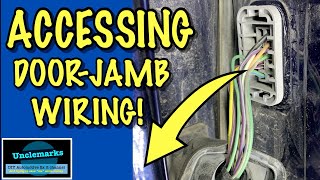
- Inspect the rubber wiring boot between the rear cargo door and the body on 2010-2019 Ford Transits, as broken wires here cause over 90% of B2242 codes for those vehicles.
- Check for Technical Service Bulletins (TSBs) before replacing parts; 2018-2019 Subaru Outbacks have a known software glitch where B2242 is a false positive requiring zero repairs.
- Use a professional-grade scanner capable of reading 'B' (Body) codes, because standard $20 OBD-II readers only scan 'P' (Powertrain) codes and will falsely report zero errors.
What Does B2242 Mean?
B2242 is a manufacturer-specific body trouble code (DTC). It indicates the Body Control Module (BCM) detects an open circuit or communication fault. On Ford vehicles, it flags an open circuit in the rear cargo door unlock switch. On Subarus, it signals a UART communication error. On GM vehicles, it triggers a 'Shift to Park' or 4WD system fault.
Technical definition: The SAE/ISO definition for B2242 varies by manufacturer. Common definitions include 'Rear Cargo Door Unlock Circuit Open' (Ford, BMW), 'UART Communication Failure' (Subaru), 'Memory Exit Switch Failed' (Hummer), and Transfer Case Control Module faults (Chevrolet/GMC).
Can I Drive With B2242?
Yes, But With Caution. Mechanically, the vehicle is safe to drive because this code relates to body electronics and does not affect the engine, transmission, or brakes. However, a broken cargo door lock creates a theft risk, and a GM 'Shift to Park' fault drains the battery overnight, leaving you stranded. Diagnose and repair promptly to restore security and reliability.
Common Causes
- Damaged or Broken Wiring in a Harness (Very Common) — Wires in high-movement areas like a rear door or tailgate fatigue and break from repeated flexing. This is the primary cause on Ford Transit Connects, leading to an open circuit in the door lock system. 🎬 See this Ford Transit door wiring and pinout guide
- Faulty Switch (Common) — The component switch itself, such as the rear cargo door unlock button or the park switch inside a GM gear shifter assembly, fails internally. This prevents it from sending the correct signal to the BCM.
- Water Intrusion in Connectors (Common) — On 2019-2023 GM trucks, water enters the transfer case actuator connector. This causes corrosion and signal faults, triggering a B2242 code and a 'Service 4WD' light per GM TSB 22-NA-187.
- Software Glitch or False Code (Common) — On 2018-2019 Subaru Legacy and Outback models with manual climate controls, a software glitch triggers this code erroneously. It has no impact on vehicle function and requires no repair per TSB 15-225-18R. 🎬 Watch: This Subaru reset trick might clear your codes
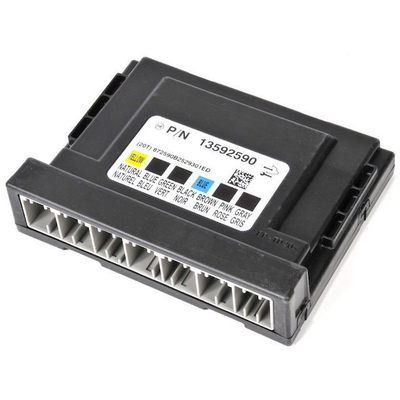
- Failed Body Control Module (BCM) (Rare) — The internal circuitry of the BCM fails. This is the least likely cause and requires professional programming to replace. Always rule out wiring and TSBs first.
Symptoms
- Rear Cargo Door Lock/Unlock Inoperative — The power unlock button for the trunk or rear hatch stops working, forcing you to use the mechanical key. This is the primary symptom on Ford and BMW vehicles.
- 'Shift to Park' Message — On GM vehicles like the GMC Acadia, a fault in the shifter's park switch displays a 'Shift to Park' message, even when the vehicle is in park.
- Battery Drains Overnight — A direct consequence of the GM 'Shift to Park' issue. Because the vehicle does not recognize it is in park, it fails to shut down completely, draining the battery. 🎬 Watch: How to fix the GM Shift to Park issue
- 'Service 4WD' Message — On GM trucks and SUVs, a fault in the transfer case control module or its wiring displays a 'Service 4WD' message on the dash.
- No Noticeable Symptoms (scan-tool only — no driver-felt sign) — With the Subaru communication error, there are no symptoms at all. The driver remains unaware of a problem until scanning the codes.
Diagnostic Flowchart
Tap your situation to follow the diagnostic path that matches what you're seeing on this code.
Common Fixes & Costs
- Repairing Broken Wire(s) in Harness — Parts: $10-$30, Labor: $150-$300, ~1.5 hr book time (Intermediate)
- Replacing a Faulty Switch (Cargo, Shifter, etc.) — Parts: $30-$150, Labor: $150-$300, ~1.2 hr book time (DIY)
- Cleaning or Replacing Corroded Connector (GM 4WD) — Parts: $50-$150, Labor: $200-$350, ~2 hr book time (Intermediate)
- Ignoring the Code (If TSB Confirms False Positive) — Parts: $0, Labor: $0-$150, ~0.5 hr book time (DIY)
- Replacing the Body Control Module (BCM) — Parts: $400-$900, Labor: $150-$300, ~1.5 hr book time (Professional)
Used vs. New Parts: Buying Guide
When a used part is worth it: Buy a used GM shifter assembly from a low-mileage donor to save money. Always verify the exact part number.
Donor-vehicle mileage cap: roughly under 70000 miles for the part to have meaningful remaining life.
Donor quality checklist:
- Never buy used wiring harnesses; they suffer the same metal fatigue as your broken one.
- Avoid used BCMs unless you have professional reprogramming tools.
- Verify the donor wasn't scrapped for electrical issues.
Decision logic:
- If The part is a wiring harness that flexes (e.g., door harness) → Always buy new. The failure is due to metal fatigue, and a used part has the same wear.
- If The part is a complex electronic module like a BCM → Buy new or remanufactured to ensure proper function and avoid programming headaches.
- If The part is a shifter assembly and the vehicle is >100K miles → A used part from a low-mileage donor is a reasonable, budget-conscious choice.
Warranty tradeoff: Used parts offer 30-90 days. New aftermarket offers 1-year. New OEM offers 1-2 years.
Worst-case if a used part fails: $300-$800 (repeat labor and replacement part costs for a failed used BCM or shifter).
What Happens If You Wait — Timeline
- 0-1 month: For Ford, the rear lock becomes intermittent. For GM 'Shift to Park', the message appears once a week. For GM 'Service 4WD', the light comes on but turns off on its own. (MPG impact: 0%% · Added cost: $0)
- 1-3 months: Ford's lock fails completely. GM's 'Shift to Park' message appears daily, causing the first dead battery event. For 'Service 4WD', the light stays on continuously, and 4WD is unavailable. (MPG impact: 0%% · Added cost: $150 - $250 (for a service call/tow for dead battery, or a new battery))
- 3-6 months: Ignoring a Ford wiring short blows a fuse, disabling other components. Repeated battery drains on a GM vehicle cause premature failure of the alternator. Ignoring the GM 4WD connector corrosion damages the pins inside the Transfer Case Control Module. (MPG impact: 0%% · Added cost: $350 - $1000 (for a replacement TCCM or diagnosing new electrical gremlins))
- 6+ months: A completely failed door harness on a Ford causes more systems to fail. A severely corroded 4WD harness shorts and damages the BCM. (MPG impact: 0%% · Added cost: $1000 - $2500+ (Worst-case scenario involving BCM replacement))
Cost of Not Fixing It
- Immediate: Inconvenience and theft risk from an inoperable cargo door (Ford), or loss of 4WD capability (GM). (Added cost: $0)
- 0-3 months: Stranded due to a dead battery from the GM 'Shift to Park' issue. Deep cycling destroys the battery. (Added cost: $150 - $400 (tow and premature battery replacement))
- 3+ months: Ignoring a wiring short causes adjacent wires to break, disabling other systems. Ignoring a 4WD sensor fault damages the transfer case. (Added cost: $400 - $2000+)
Diagnosis Steps
- Identify Your Vehicle's Specific Definition
Search online for 'B2242' along with your vehicle's make, model, and year. This is critical to know if you are chasing a wiring issue, a communication problem, or a shifter fault.
Tools: Smartphone or Computer (Beginner) - Check for Technical Service Bulletins (TSBs)
Search online for TSBs related to your vehicle and code B2242. Check for Subaru TSB 15-225-18R, GM TSB 22-NA-187, and GM TSB 23-NA-119, as these provide exact, time-saving diagnostic paths.
Tools: Smartphone or Computer (Beginner) - Visually Inspect Known Weak Points
For Ford Transit/Connect, peel back the rubber conduit between the rear door and the body to inspect for broken wires. For GM 'Service 4WD' issues, inspect the transfer case actuator harness connector for green or white corrosion.
Tools: Flashlight, trim removal tools (Intermediate) - Test the Associated Component
Attempt to operate the component associated with the code's definition. Try the cargo unlock button, memory seat functions, or shifting the 4WD system. Note if it works intermittently or not at all.
Tools: None (Beginner) - Check Related Fuses
Consult your owner's manual to locate the fuse box. Visually inspect all fuses related to the body control module, door locks, infotainment, or 4WD system to see if any have blown.
Tools: Owner's manual, fuse puller (Beginner) - Test Circuit Voltage and Resistance
Using a multimeter and a wiring diagram, test for voltage and continuity at the component's connector. For a Ford 'Rear Cargo Door Unlock Circuit Open', check for 12V power at the switch connector. An 'open' circuit (B2242) shows infinite resistance (OL) where there should be continuity.
Tools: Multimeter, vehicle-specific wiring diagram (Advanced) - Scan Tool Live Data Analysis
For a GM 'Shift to Park' issue, monitor the 'Transmission Park Switch' PID in the BCM using a professional scanner. It should read 'Active' or 'Park' when the shifter is in Park. If it reads 'Inactive' or flickers, it confirms a fault in the shifter switch or circuit.
Tools: Professional scan tool with live data (Advanced)
When This Code Triggers (Freeze-Frame Conditions)
- Battery Voltage: 11.5-12.5V (Key On, Engine Off (KOEO) during module self-test or component polling.)
- Ignition Status: RUN or START (The fault registers during vehicle startup or when a specific command is issued.)
- Component Commanded State: On/Active (For circuit faults, the code sets when the driver presses the associated switch and the BCM detects no change in voltage.)
- Bus Status: No Communication / Error (For communication faults, the code sets when one module fails to receive an expected signal from another on a specific network within a set time frame.)
Related Codes
- B2241 — On Ford vehicles, B2242 indicates an 'open circuit' (a broken wire), while B2241 indicates a 'short to ground' (a wire touching the chassis). Both point to damage in the same wiring harness.
- U-Series Codes (e.g., U0155, U0164) — If B2242 is a communication error (Subaru), accompanying U-codes indicate a broader, more severe communication failure on the vehicle's main data network (CAN bus).
- C-Series Codes (e.g., C0398, C0326) — On GM trucks with the 'Service 4WD' issue, B2242 stores in the BCM, while specific Chassis codes like C0398 store in the Transfer Case Control Module, pointing directly to the root cause.
- B1242 — This is a Toyota-specific code for 'Wireless Door Lock Tuner Circuit Malfunction'. It presents with the same symptoms as a Ford B2242 but points to a failure in the keyless entry receiver.
Climate & Environmental Factors
- Cold Climates: Low temperatures make plastic wire insulation brittle. Repeated flexing of the rear door harness in cold weather accelerates wire fatigue, causing them to snap and trigger B2242.
- High Humidity / Heavy Rain: Moisture leads to water intrusion in the GM transfer case actuator connector, causing corrosion and the 'Service 4WD' message associated with B2242.
- Road Salt (Rust Belt Regions): Road salt acts as a powerful electrolyte that dramatically accelerates corrosion. It compromises weather seals on connectors and seeps into wiring harnesses, causing open circuits.
How to Talk to a Mechanic About This Code
Say this: "I have a B2242 code on my vehicle. Based on my research, this often points to a [broken wire in the rear door harness / faulty shifter switch covered by a TSB / known false code]. I'd like to schedule a diagnostic to confirm this specific cause."
This signals you are an informed consumer. It directs the technician to the most common, well-documented fixes first, preventing them from immediately suggesting an expensive, unnecessary repair like replacing the entire Body Control Module.
Avoid saying:
- 'Just fix whatever's wrong'
- 'My warning light is on, can you look at it?'
- 'Whatever you recommend'
Questions to ask before authorizing the repair:
- For a Ford: Did you visually inspect the wires inside the rubber boot between the rear door and the body for breaks?
- For a GM 'Shift to Park' issue: Have you checked TSB 23-NA-119? Can this be repaired with the cheaper microswitch and harness kit instead of the full shifter assembly?
- For a GM 'Service 4WD' issue: Did you inspect the transfer case connector for corrosion as described in TSB 22-NA-187?
- For a Subaru: Can you confirm TSB 15-225-18R applies and this is a false code to be cleared?
- If BCM replacement is recommended: Can you show me the test results proving the wiring, switches, and connectors are all functioning correctly?
Where to Take It: Dealer vs Independent vs Chain
- Dealer:
Best for: Vehicles under warranty or covered by a manufacturer's Special Coverage Program., Complex diagnostics requiring BCM replacement and programming.
Downsides: Significantly higher labor rates., May propose a full component replacement when a cheaper TSB-guided repair kit exists. (Typical cost: +50% vs. baseline) - Independent Shop:
Best fit. The common causes of B2242 are well-known. A reputable independent shop offers the best balance of expertise and value for these specific repairs.
Best for: Out-of-warranty vehicles with common, well-documented B2242 causes like the Ford Transit wiring or GM shifter switch., Cost-conscious owners who have already identified the likely cause.
Downsides: Quality varies, so vet the shop's reviews and ASE certifications., May lack expensive, manufacturer-specific programming tools if a BCM replacement is genuinely needed. (Typical cost: +0% vs. baseline) - Chain Shop:
AVOID for diagnosis. This code's vehicle-specific nature requires targeted knowledge typically absent in a chain shop environment.
Best for: Simple, unrelated maintenance like oil changes or tire rotations.
Downsides: Technicians often lack the specialized diagnostic experience for nuanced body codes., High potential for misdiagnosis and upselling unnecessary services. (Typical cost: -10% vs. baseline)
When to Walk Away From the Repair
If the estimated repair cost exceeds 40-50% of the car's private-party value, seriously consider selling the car as-is or trading it in.
- Car worth $8000, fix is $300: Fix it. A typical wiring or switch repair cost is a small fraction of the vehicle's value.
- Car worth $3500, fix is $1500: Walk away. A worst-case BCM replacement costs nearly half the car's value. The repair is not economical.
- Car worth $15000, fix is $1200: Borderline. If the quote is for a BCM replacement, get a second opinion focused on wiring and TSBs before proceeding.
What Scan Tool You Need for This Code
Minimum: A scanner that reads manufacturer-specific Body (B) codes. Basic P-code readers for the Check Engine Light are not sufficient.
A standard $20 code reader only checks for Powertrain ('P') codes and will not see the B2242 code at all. It incorrectly leads you to believe there are no stored faults.
Budget: BlueDriver Pro or Autel AutoLink AL619 (~$99) — Reads and clears engine, ABS, and SRS codes, with many models supporting BCM communication for reading B-codes. Provides access to freeze-frame and live data.
Mid-range: Innova 5610 or XTOOL A30M (~$250) — Offers full-system diagnostics, including BCM, and provides live data streams to see switch status in real time. Some models offer bidirectional controls to activate components like door locks.
Professional: Autel MaxiCOM MK808S or Launch X431 series (~$500-900) — Provides full bidirectional control, OEM-level diagnostics for all modules, and advanced functions. If a BCM replacement is the true final fix, these tools perform the necessary programming.
How to Clear the Code After You Fix It
- Ensure the repair is complete and the faulty component is reconnected.
- Reconnect the battery if it was disconnected for the repair.
- Use a professional-grade OBD-II scan tool capable of reading B-codes to clear the fault from the Body Control Module (BCM).
- Operate the repaired component 5 to 10 times to confirm it functions correctly and the code stays clear.
Drive cycle (~15 minutes): Drive cycles primarily set emissions readiness monitors (P-codes). For B-codes, a 15-minute test drive confirms body systems function normally. For the Subaru false code, simply clearing it suffices.
Readiness monitors affected: None directly, Disconnecting the battery during repair resets all emissions monitors to 'Not Ready'.
Watch out for:
- Using a basic P-code scanner that cannot communicate with the BCM.
- Disconnecting the battery instead of using a scanner, which erases radio presets but often fails to clear BCM memory.
- Ignoring the root cause, causing the code to return instantly.
Will This Fail Emissions / State Inspection?
No — by itself this code doesn't fail OBD inspection (but it can keep readiness monitors from setting, which causes a separate fail).
- General: As a 'B' (Body) code, B2242 does not illuminate the Check Engine Light. It will not cause an automatic failure of an OBD-II emissions test.
- California: The B-code itself passes. However, if you disconnected the battery for repairs, all readiness monitors reset. You must complete a full drive cycle before re-testing.
- Texas: A B-code alone passes. However, the associated GM 'Shift to Park' issue causes repeated dead batteries, preventing readiness monitors from setting and causing a test failure.
Most Commonly Affected Vehicles
- Ford Transit / Transit Connect (2010-2019) — Extremely prone to B2242 for 'Rear cargo door unlock circuit open' due to the wiring harness in the rear door breaking from repeated use.
- Subaru Legacy / Outback (2018-2019) — Stores B2242 as a 'UART Communication' error. TSB 15-225-18R states that on models with manual A/C, this code is a false positive and requires no repair.
- Chevrolet / GMC Silverado 1500, Sierra 1500, Tahoe, Suburban, Yukon (2019-2023) — Displays a 'Service 4WD' light and sets B2242 due to water intrusion in the transfer case actuator harness connector, detailed in TSB 22-NA-187.
- GMC Acadia (2017-2019) — A primary vehicle affected by the 'Shift to Park' issue. A faulty park switch in the shifter assembly prevents the car from detecting it's in park, leading to battery drain.
- Chevrolet Malibu, Traverse, Blazer (2019-2023) — Susceptible to the 'Shift to Park' issue due to a faulty park switch in the shifter assembly, documented in TSB 23-NA-119.
- BMW X5, 3-Series (2000-2015) — B2242 indicates 'Door of Rear Load Opens Open Trip', which is functionally identical to the Ford definition related to the rear cargo hatch wiring.
- Jaguar X-Type, S-Type (2002-2008) — B2242 is defined as a 'Climate Control Head Communication Fault', indicating a data link issue between the main climate control panel and the BCM.
- Toyota Corolla, Tundra (2005-2020) — IMPORTANT: Toyota does not use B2242 for door lock issues. The equivalent fault is typically B1242, 'Wireless Door Lock Tuner Circuit Malfunction'.
Manufacturer-Specific Notes
- Ford: The most common cause on Transit Connects is a broken wire inside the flexible rubber conduit between the vehicle body and the door. The wires are often all the same color, making repair without a diagram challenging.
- Subaru: For 2018-2019 Legacy/Outback models with manual A/C, TSB #15-225-18R states that B2242 is a 'ghost code' that requires no repair and should simply be cleared.
- General Motors: For the 'Shift to Park' issue, GM established Special Coverage Program N202309280, which extends warranty coverage for this specific issue on certain vehicles. Check with a dealer for VIN-specific eligibility.
- Toyota: Toyota does not use the B2242 code for its common door lock issues. A technician seeing a B2242 on a Toyota should be highly skeptical of their scan tool.
Real Owner Stories
2015 Ford Transit Connect at 110K miles
The rear cargo door lock stopped working with the remote fob. Codes B2242 and B2241 were present.
What they tried:
- Initially suspected a faulty lock actuator.
- Peeled back the rubber conduit between the driver's side rear door and the body.
- Discovered several wires that were completely broken and others with cracked insulation.
Outcome: Spliced the broken wires using butt connectors and heat-shrink tubing. The rear lock functionality was restored, and the codes cleared permanently.
Lesson: On a Ford Transit with rear door lock issues, always inspect the wiring harness in the door jamb first. This is a very common failure point and a much cheaper fix than replacing the lock actuator.
2018 GMC Acadia at 75K miles
Car displayed a 'Shift to Park' message even when the gear selector was in Park, leading to a dead battery overnight.
What they tried:
- Jiggling the shifter sometimes made the message go away temporarily.
- An independent shop quoted a full shifter assembly replacement for over $500.
- Researched the issue and found GM TSB 19-NA-206 (updated to 23-NA-119).
Outcome: Took the vehicle to a shop aware of the TSB. The technician replaced the internal microswitch and installed the specified jumper harness for around $250, resolving the problem permanently.
Lesson: If you have a GM vehicle with a 'Shift to Park' issue, do not immediately agree to a full shifter replacement. Ask about TSB 23-NA-119, which provides a targeted and much more affordable repair.
2018 Subaru Outback with 50K miles
During a routine service, the technician noted a stored B2242 'UART Communication' code. There were absolutely no symptoms.
What they tried:
- The owner was concerned about a potential expensive electronics issue.
- A quick search revealed TSB 15-225-18R for this exact code on models with manual A/C controls.
Outcome: The owner confirmed their vehicle had manual A/C. Per the TSB, the code is a false positive. The technician cleared the code, and it did not return.
Lesson: Always check for TSBs, especially when there are no symptoms. For 2018-2019 Subaru Legacy/Outback models with manual A/C, B2242 is a known 'ghost code' that requires no repair.
How to Prevent This Code From Triggering
- Periodically lubricate door harness conduits (Every 2-3 years) — Applying a silicone-based spray lubricant inside the rubber conduit between the door and body reduces friction and chafing on the wires as they flex.
- Apply dielectric grease to critical connectors (When servicing a related part) — For connectors in high-moisture areas, applying dielectric grease prevents water intrusion and corrosion, a primary cause of the GM 'Service 4WD' fault.
- Be gentle with electronic shifters (Daily habit) — For the GM 'Shift to Park' issue, the failure is a fragile microswitch. Avoiding aggressive or forceful shifting prolongs the life of the switch contacts.
Frequently Asked Questions
What's the difference between a B2242 and P2242 code?
B-codes relate to Body systems like locks and electronics. P-codes relate to Powertrain systems like the engine and emissions. Using the wrong prefix during research guarantees an incorrect diagnosis.
What are the most common misdiagnosis mistakes for B2242?
Replacing the expensive Body Control Module (BCM) before checking for broken wires in door hinges. Technicians also frequently ignore Technical Service Bulletins (TSBs) that provide exact fixes for known issues.
Why does the code definition vary so much between car brands?
OBD-II standardizes emissions codes, but manufacturer-specific codes (starting with a 1 or 2) are proprietary. Automakers assign B2242 to entirely different systems depending on the brand. Always search the code alongside your specific vehicle make.
My scanner can't find any B-codes, only P-codes. Why?
Basic $20 code readers only scan the engine computer for generic P-codes. Reading Body (B), Chassis (C), or Network (U) codes requires an advanced scanner that communicates with the Body Control Module.
Can I fix B2242 myself?
Yes, if the issue is a broken wire in a door harness and you know how to solder. If the fix requires programming a new BCM or diagnosing a complex network fault, tow it to a professional.
Will clearing the code make it go away?
Clearing the code turns off the warning, but the code returns instantly if the physical electrical fault remains. The only exception is a known false code (like on some Subarus), where clearing it permanently resolves the issue.
The shop wants to replace the Body Control Module. Is that necessary?
Rarely. BCM replacement is an expensive, last-resort repair. Demand proof that the shop thoroughly tested all related wiring, connectors, and switches before authorizing a new module.
Key Takeaways
- Search your specific vehicle make and model alongside code B2242, as this manufacturer-specific body code means 'cargo door circuit open' on Fords but 'UART communication error' on Subarus.
- Inspect the rubber wiring boot between the rear cargo door and the body on 2010-2019 Ford Transits, as broken wires here cause over 90% of B2242 codes for those vehicles.
- Check for Technical Service Bulletins (TSBs) before replacing parts; 2018-2019 Subaru Outbacks have a known software glitch where B2242 is a false positive requiring zero repairs.
- Use a professional-grade scanner capable of reading 'B' (Body) codes, because standard $20 OBD-II readers only scan 'P' (Powertrain) codes and will falsely report zero errors.
Helpful Videos

Shop the Parts Behind B2242
Below are the parts most often responsible for code B2242, ranked by how frequently each one is the actual culprit (per the diagnosis above). Tap any to see what we have for your vehicle.

The information in this article is provided for general reference and educational purposes only. Vehicle specifications, procedures, and part compatibility can vary by production date, trim level, and region. Always consult your vehicle's factory service manual and verify part numbers before purchasing or performing repairs. Safety-critical components such as airbags, seat belts, and braking systems should be installed by a qualified professional.
- 🧭 Diagnostic Flowchart
- 🎬 Helpful Videos
- 🛍️ Shop This Part
- What Does B2242 Mean?
- Can I Drive With B2242?
- Common Causes
- Symptoms
- Common Fixes & Costs
- Used vs. New Parts: Buying Guide
- What Happens If You Wait — Timeline
- Cost of Not Fixing It
- Diagnosis Steps
- When This Code Triggers (Freeze-Frame Conditions)
- Related Codes
- Climate & Environmental Factors
- How to Talk to a Mechanic About This Code
- Where to Take It: Dealer vs Independent vs Chain
- When to Walk Away From the Repair
- What Scan Tool You Need for This Code
- How to Clear the Code After You Fix It
- Will This Fail Emissions / State Inspection?
- Most Commonly Affected Vehicles
- Manufacturer-Specific Notes
- Real Owner Stories
- 2015 Ford Transit Connect at 110K miles
- 2018 GMC Acadia at 75K miles
- 2018 Subaru Outback with 50K miles
- How to Prevent This Code From Triggering
- Frequently Asked Questions
- What's the difference between a B2242 and P2242 code?
- What are the most common misdiagnosis mistakes for B2242?
- Why does the code definition vary so much between car brands?
- My scanner can't find any B-codes, only P-codes. Why?
- Can I fix B2242 myself?
- Will clearing the code make it go away?
- The shop wants to replace the Body Control Module. Is that necessary?
- Key Takeaways
- 🎟️ Get 5% Off