

OBD-II Code B2250: Power Liftgate/Trunk Latch Failure
The Ultimate Guide to B2250: What It Means, Why It Happens, and How to Fix It for Good
- On Toyota and Lexus vehicles, code B2250 indicates an internal electrical failure within the power liftgate's electronic latch assembly.
- Always inspect the flexible rubber wiring boot between the liftgate and the body for broken wires before spending $400 on a new latch.
- Verify the code definition for your specific make; on 2015-2020 General Motors vehicles, B2250 points to a power headrest fault, not the liftgate.
- Replace liftgate support struts older than 5 years, as weak struts force the motor to draw excessive current and trigger performance codes.
- Check for Technical Service Bulletins (TSBs) like Toyota's T-SB-0232-17, which mandates replacing the faulty latch with an updated OEM part.
What Does B2250 Mean?
Code B2250 signifies the Body Control Module (BCM) or Power Back Door (PBD) ECU detected a performance malfunction in the power liftgate's electronic latching system. The control unit relies on internal latch switches (sector, pawl, and courtesy) to track the liftgate's exact position. When these switch signals are illogical, contradictory, or absent during a cycle, the system flags a fault. To prevent motor damage or user injury, the control module disables power operation and stores code B2250.
Technical definition: The SAE/ISO definition for B2250 varies significantly by manufacturer. For Toyota, Lexus, and Scion, it means "Back Door Closer Operation Malfunction," indicating a fault in the position switches within the closer/latch assembly. For General Motors, B2250 means "LR Head Restraint Forward Switch Circuit Malfunction." For Ford, it translates to "All Doors Unlock Relay Circuit Failure." Always verify the code's meaning for your specific make.
Can I Drive With B2250?
Yes, But With Caution. Yes, the vehicle's core driving systems remain unaffected. However, the liftgate fails to latch securely, creating a risk of cargo exposure and a persistent 'door ajar' warning that drains the battery. If it fails to open, it prevents access to the spare tire. The immediate financial risk is limited to the eventual repair cost, ranging from $200 for a wiring repair to $850 for a full latch replacement.
Common Causes
- Defective Power Liftgate Latch Assembly (Very Common) — The latch contains internal motors, gears, and micro-switches that report its status. These switches wear out or develop internal faults, sending incorrect signals to the control module.
- Damaged Wiring or Connectors (Common) — The wiring harness passing through the flexible rubber boot between the body and liftgate bends repeatedly. This causes wires to fatigue, break, or short circuit.
- Weak Liftgate Support Struts (Common) — Gas-charged struts lose pressure over time, especially in cold weather. Weak struts force the liftgate motor to draw excessive current, triggering a performance or timeout fault.
- Low Vehicle Battery Voltage (Less Common) — Power liftgate modules are highly sensitive to system voltage. A weak 12V battery causes erratic behavior and incomplete cycles because the motor cannot draw the required power.
- Blown Fuse or Faulty Relay (Less Common) — A blown 'PBD' or 'BCM' fuse cuts power to the system. This is usually a symptom of a shorted wire or seized latch motor, not the root cause.
- Poor Liftgate Alignment or Obstruction (Rare) — Misalignment from a collision causes the latch to bind. A malfunctioning pinch sensor falsely detects an obstruction and commands the gate to reverse, logging a B2250 code.
- Failed Power Back Door ECU (Rare) — The electronic control unit managing the liftgate system fails internally. Consider this only after definitively ruling out the latch, wiring, and fuses.
Symptoms
- Power liftgate/trunk is completely inoperative — The liftgate fails to respond when any button (key fob, dashboard, or gate-mounted) is pressed.
- Long warning beep when attempting to operate — The vehicle emits a single, continuous beep for several seconds to signal a fault in the power liftgate system.
- Manual release lever is extremely difficult to operate — The internal manual release lever becomes stiff, requiring excessive force to open the trunk. This strongly indicates an internal latch failure.
- Liftgate starts to move, then stops or reverses — The gate begins its open or close cycle, only to stop part-way or reverse direction without being commanded.
- Liftgate does not latch or cinch closed — The power system pulls the door to the closed position, but the final cinching mechanism fails to engage, leaving the trunk partially ajar.
Diagnostic Flowchart
Tap your situation to follow the diagnostic path that matches what you're seeing on this code.
Common Fixes & Costs
- Replace Power Liftgate Latch Assembly — Parts: $250-$550, Labor: $150-$300, ~1.2 hr book time (Intermediate)
- Repair Damaged Wiring — Parts: $10-$30, Labor: $200-$400, ~2.5 hr book time (Advanced)
- Replace Weak Liftgate Support Struts — Parts: $50-$150, Labor: $50-$100, ~0.8 hr book time (DIY)
- Replace Blown Fuse — Parts: $1-$5, Labor: $0-$50, ~0.2 hr book time (DIY)
- Replace Power Back Door ECU — Parts: $400-$800, Labor: $100-$150, ~1 hr book time (Professional)
Used vs. New Parts: Buying Guide
When a used part is worth it: For older vehicles (>150,000 miles) where budget is the primary concern. Since the latch is a known failure item, a used part is a gamble.
Donor-vehicle mileage cap: roughly under 80000 miles for the part to have meaningful remaining life.
Donor quality checklist:
- Verify the part number EXACTLY, as they are highly specific to year and model.
- Prefer parts from vehicles in southern or western climates to avoid Salt Belt corrosion.
- Ensure the donor vehicle was scrapped for collision damage, not electrical failure.
Decision logic:
- If A Technical Service Bulletin (TSB) exists with an updated part number → Buy the new, updated OEM part. Used parts have the original design flaw.
- If Vehicle is < 100K miles and still has significant value → Buy a new OEM or high-quality aftermarket part for reliability and warranty.
- If Vehicle is > 150K miles and budget is the top priority → A low-mileage used part is an acceptable risk, but expect a shorter lifespan.
Warranty tradeoff: Used parts offer a 30-90 day warranty. Aftermarket new parts offer a 1-year to limited lifetime warranty. New OEM parts carry a 1-year warranty.
Worst-case if a used part fails: $200-$400 if a used part fails prematurely, covering repeat labor and a replacement part.
What Happens If You Wait — Timeline
- 0-1 month: Intermittent failure triggered by cold weather. The liftgate fails to open or close, accompanied by a long beep. It works again after the vehicle warms up. (MPG impact: 0%% · Added cost: $0)
- 1-3 months: Failure becomes frequent. The liftgate is inoperative most of the time. The 'door ajar' light stays on if the latch doesn't fully cinch. (MPG impact: 0%% · Added cost: $0-$200 (Battery replacement if drained repeatedly).)
- 3-6 months: The liftgate system is completely inoperative. A broken wire shorts against the chassis or other wires. (MPG impact: 0%% · Added cost: $5-$50 (Cost of blown fuses and diagnostic time).)
- 6+ months: An unaddressed short circuit or seized latch motor overloads the control circuit, damaging the Power Back Door (PBD) ECU. (MPG impact: 0%% · Added cost: $500-$950 (Cost to replace the damaged ECU).)
Cost of Not Fixing It
- 0-1 month: Major inconvenience due to inability to access the trunk. If the liftgate fails to fully latch, the 'door ajar' light stays on, draining the battery. (Added cost: $50-$200 for a new battery if repeatedly drained.)
- 1-6 months: If the problem is a broken wire in the harness boot, continued flexing causes it to short against other wires or the chassis, blowing fuses. (Added cost: $5-$50 for replacement fuses and diagnostic time.)
- 6+ months: A persistent short circuit or failing latch motor overloads and damages the Power Back Door (PBD) ECU. (Added cost: $500-$950 for a replacement ECU module and labor.)
Diagnosis Steps
- Check for Technical Service Bulletins (TSBs)
Search online for TSBs for your vehicle's make, model, and year related to code B2250. Manufacturers provide expedited diagnostic and repair procedures for known faults, often mandating an updated part.
Tools: Internet access (Beginner) - Visually Inspect the Wiring Harness
Open the liftgate and carefully peel back the rubber boot between the body and the hatch. Meticulously inspect each wire for signs of cracking, chafing, or complete breakage.
Tools: Flashlight, small pry tool (Beginner) - Test Liftgate Support Struts
With the liftgate open, give it a gentle push downwards. If it drifts down easily or won't stay fully open on its own, replace the support struts. Weak struts put excessive strain on the motor.
Tools: Helper or sturdy prop (Intermediate) - Scan, Clear Codes, and Attempt Re-Initialization
Connect an OBD-II scanner, read all BCM codes, and clear them. Attempt a system initialization (e.g., manually closing the gate and holding the button). If B2250 returns immediately, a hard fault is present.
Tools: OBD-II scanner (Beginner) - Inspect and Test Fuses
Locate the fuse panel and identify fuses labeled 'PBD', 'Liftgate', or 'BCM'. Use a multimeter to check for continuity across the fuse's terminals.
Tools: Owner's manual, fuse puller, multimeter (Beginner) - Test Latch Connector for Power and Ground
Remove the liftgate's interior trim and disconnect the latch electrical connector. Using a wiring diagram and multimeter, verify battery voltage and a solid ground are present at the harness pins.
Tools: Trim removal tools, multimeter, wiring diagram (Advanced) - Use a Scan Tool for Live Data Analysis
Connect a professional scan tool and view live data for 'Closer Position SW'. Manually operate the latch mechanism with a screwdriver. If the switch state does not change, the internal switch has failed.
Tools: Professional bi-directional scan tool (Advanced) - Test the Latch Assembly's Internal Switches
Remove the latch assembly. Use a multimeter set to Ohms to test the internal position switches while manually operating the latch. A functional switch shows O.L. when open and <1.0 Ω when closed.
Tools: Multimeter, repair manual, trim removal tools (Advanced) - Test Motor Voltage Under Load
Back-probe the power and ground wires for the main liftgate motor. Measure voltage during an open/close cycle. A large voltage drop indicates a failing motor drawing excessive current or high circuit resistance.
Tools: Multimeter with back-probes (Advanced)
When This Code Triggers (Freeze-Frame Conditions)
- System Voltage: > 11.5V (The Power Back Door ECU monitors system voltage and disables operation if the battery is too weak to complete a cycle.)
- Vehicle Speed: 0 mph (The liftgate cannot be operated while the vehicle is in motion.)
- Gear Selector Position: Park (The transmission must be in Park for the power liftgate to operate.)
- Door Lock Status: Unlocked (The vehicle's doors must be unlocked before the power liftgate responds to a command.)
Related Codes
- B2251 — Appears with B2250 on Toyota/Lexus vehicles. B2251 ('Back Door Closer Switch Malfunction') confirms a fault within one of the latch's internal position switches. If both codes are present, replace the latch assembly.
- B2226 — Indicates 'Front Ultrasonic Sensor Malfunction'. Appears alongside B2250 if the vehicle has parking assist, indicating cascading errors triggered by the primary liftgate fault.
- C1241 — Indicates 'Low Battery Positive Voltage'. A weak battery or failing charging system causes the liftgate module to malfunction, triggering B2250.
- U0140 — Indicates 'Lost Communication With Body Control Module'. Suggests a wider network problem in the BCM or CAN bus wiring, requiring advanced network diagnostics.
Climate & Environmental Factors
- Cold Weather: Cold temperatures trigger B2250 on Toyota and Lexus vehicles. Cold stiffens aging electronic components and internal lubricants, preventing delicate micro-switches from making proper contact and reporting their status to the ECU.
- Road Salt / Corrosion: Salt-laden moisture accelerates wire insulation degradation inside the rubber boot, leading to corrosion and short circuits once the insulation cracks from flexing.
How to Talk to a Mechanic About This Code
Say this: "My vehicle has a B2250 code and the power liftgate is inoperative. I know this points to a failed latch assembly or a broken wire in the harness. Please check for related TSBs and test both the latch and wiring before recommending a part replacement."
This signals you are an informed customer. It directs the shop to the two most likely causes, acknowledges TSBs, and requests proper testing instead of blindly replacing the most common part.
Avoid saying:
- 'My trunk won't open, can you fix it?' (Too vague, invites expensive diagnostics).
- 'Just replace the liftgate latch.' (You order an unnecessary repair if wiring is the actual problem).
- 'Do whatever you think is best.' (Gives the shop a blank check).
Questions to ask before authorizing the repair:
- Did you find a Technical Service Bulletin for this issue on my vehicle?
- How did you rule out a wiring issue? Did you test for continuity and voltage at the latch connector?
- If the wiring is broken, can you show me the damaged wire? Will you perform a solder and heat-shrink repair?
- What is the warranty on the recommended part and labor?
Where to Take It: Dealer vs Independent vs Chain
- Dealer:
Recommended if the vehicle is under warranty or has a known TSB. They are the most reliable option for a first-time fix.
Best for: Vehicles under factory or extended warranty., When a known Technical Service Bulletin (TSB) exists., Complex electrical issues where the problem persists after initial repairs.
Downsides: Significantly higher labor rates and parts costs., Defaults to replacing the entire assembly rather than attempting a wiring repair. (Typical cost: +50% vs. baseline) - Independent Shop:
Best fit for out-of-warranty vehicles. A good independent shop performs this repair effectively for a lower cost than the dealer.
Best for: Out-of-warranty vehicles where cost is a major factor., Shops with a good reputation for electrical and diagnostic work.
Downsides: Shop quality and diagnostic skill vary greatly., Lacks immediate access to updated OEM parts. (Typical cost: +0% vs. baseline) - Chain Shop:
AVOID for this code. B2250 requires specific diagnostic steps beyond simple code reading. The risk of misdiagnosis is high.
Best for: Simple, routine maintenance like oil changes or tire rotations.
Downsides: Technicians lack specific diagnostic training for body electrical codes., High pressure to sell parts leads to misdiagnosis., Unlikely to perform a detailed wiring repair. (Typical cost: -10% vs. baseline)
When to Walk Away From the Repair
If the estimated repair cost for the liftgate exceeds 40-50% of the car's Kelley Blue Book (KBB) private-party value, seriously consider selling the car as-is.
- Car worth $10000, fix is $900: Fix it. The repair cost is less than 10% of the vehicle's value and restores a major convenience feature.
- Car worth $4000, fix is $900: Borderline. This is nearly 25% of the car's value. Get a second opinion on a cheaper wiring repair before committing.
- Car worth $2500, fix is $900: Walk away. The repair is over a third of the car's value. Sell the car 'as-is' to a DIYer or a wholesaler.
What Scan Tool You Need for This Code
Minimum: A scanner that reads manufacturer-specific Body Control Module (BCM) codes (B-codes) and displays live data.
A cheap $20 code reader only reads generic powertrain (P-codes) and won't see the B2250 code. You must access the body module to see what the position switches inside the latch are doing in real-time.
Budget: BlueDriver Pro / Autel AP200 / OBDLink MX+ (~$80-140) — These Bluetooth dongles access BCM codes and live data for most major brands. This is the minimum required to see the 'Closer Position SW' status.
Mid-range: Foxwell NT510 Elite / XTOOL D7W (~$180-400) — These handheld scanners offer full-system access and bi-directional controls. This allows you to command the liftgate motor to activate, providing a robust diagnostic test.
Professional: Autel MaxiCOM MK808S / MK906BT (~$500-1200) — Provides full dealer-level bidirectional control, data graphing, and access to all vehicle modules to pinpoint the exact point of failure without guesswork.
Rent vs buy: Free scanners at auto parts stores are unlikely to read B-codes. Buying a budget-level Bluetooth scanner is your most cost-effective option for a proper diagnosis.
How to Clear the Code After You Fix It
- Use an OBD-II scan tool to clear the B2250 code from the Body Control Module.
- Perform the power liftgate initialization procedure as specified by the manufacturer.
Drive cycle (~5 minutes): Turn the PBD (Power Back Door) system OFF in the vehicle's settings menu, manually open and fully close the liftgate once, then turn the PBD system back ON. Alternatively, press and hold the close button on the liftgate for 5-10 seconds until it beeps multiple times.
Readiness monitors affected: None. B2250 is a Body code and does not affect emissions readiness monitors.
Watch out for:
- Failure to perform the initialization procedure after replacing a part causes erratic operation or the code returning.
- If the battery was disconnected, power windows, sunroof, and radio presets require resetting.
Will This Fail Emissions / State Inspection?
No — by itself this code doesn't fail OBD inspection (but it can keep readiness monitors from setting, which causes a separate fail).
- California: Will NOT fail. The Smog Check tests emissions-related P-codes. B2250 is a body code.
- New York: Will NOT fail. The NYVIP3 program focuses on MIL command status and emissions readiness monitors.
- Texas: Will NOT fail. Non-commercial vehicles are exempt from the annual safety inspection where a non-latching liftgate was previously a concern.
Most Commonly Affected Vehicles
- Toyota Sienna (2011-2017) — Covered by Toyota TSB T-SB-0232-17. The original latch assembly (69350-08040) fails frequently. An updated part resolves the condition.
- Toyota Highlander / Highlander HV (2014-2017) — Covered by TSB T-SB-0232-17 for a faulty back door latch that becomes difficult to open manually and sets code B2250.
- Lexus RX 350 / RX 450h (2016-2017) — Lexus TSB L-SB-0137-17 addresses this code. The bulletin notes the issue is prevalent in cold weather and requires replacing the latch assembly with an updated part (69350-48111).
- Toyota RAV4 (2019-2023) — Sets a B2250 code for a malfunction in the power back door's position information from the internal 'initial switch'.
- Toyota Venza (2009-2015) — Commonly reported when the rear gate fails to operate. The primary cause is a failed latch assembly.
- Chevrolet / GMC Tahoe, Suburban, Yukon, Silverado (2015-2020) — CRITICAL: On GM vehicles, B2250 indicates a 'LR head restraint forward switch circuit malfunction', pointing to an issue with power-folding seats/headrests, not the liftgate.
- Ford Explorer, Edge (2011-2019) — CRITICAL: On Ford models, B2250 means 'All Doors Unlock Relay Circuit Failure'. This points to a fault in the central locking system or BCM, not the liftgate.
- Kia Soul (2014-2019) — The string 'B2250' is part of OEM part numbers (e.g., negative battery cable 91860-B2250). Searching by 'B2250' leads to incorrect parts. The DTC B2250 is not a common liftgate issue here.
Manufacturer-Specific Notes
- Toyota / Lexus: This code almost always points to a failure of the power liftgate latch assembly. Official service bulletins (T-SB-0232-17 and L-SB-0137-17) mandate replacing the latch with an improved part.
- General Motors (GMC / Chevrolet): B2250 signifies a 'LR head restraint forward switch circuit malfunction'. Diagnosing the liftgate for this code on a GM vehicle is a waste of time.
- Ford: B2250 indicates an 'All Doors Unlock Relay Circuit Failure'. The fault lies in the Body Control Module (BCM) or central locking circuits, not the liftgate.
- Kia: The string 'B2250' appears in part numbers for unrelated components (like battery cables). Always diagnose based on symptoms and the code definition, not a part number search.
Real Owner Stories
2015 Toyota Sienna with 110K miles
Power liftgate stopped working and emitted a long beep. The door was stuck closed and the manual release inside was very hard to operate.
What they tried:
- Checked fuses, which were good.
- Attempted to reset the system by disconnecting the battery, but the problem persisted.
Outcome: Owner found TSB T-SB-0232-17 describing the exact symptoms. They purchased a new OEM latch assembly (69350-08040) for $400 and replaced it themselves in 1.5 hours. The new latch fixed the problem.
Lesson: For Toyota/Lexus, always check for a TSB first. This issue is so common that a TSB confirms the latch is the problem, saving diagnostic time.
2016 Lexus RX 350 at 85K miles
Power back door became inoperative only during freezing weather. It worked fine in warmer temperatures.
What they tried:
- Left the vehicle overnight at the dealership during a cold snap.
- Technician replicated the fault and found codes B2250 and B2251.
Outcome: The dealership followed Lexus TSB L-SB-0137-17, replacing the back door lock assembly with the updated part (69350-48111) under the extended warranty.
Lesson: If the problem is intermittent and weather-related, document the conditions precisely. A TSB convinces a service department to perform a specific repair.
2014 Honda CR-V with 90K miles
Woke up to a dead battery and the trunk partially open repeatedly in cold weather.
What they tried:
- Replaced the battery.
- Replaced the alternator.
- The battery drain continued daily.
Outcome: Owner determined a faulty trunk latch was not signaling 'closed' to the BCM, causing a parasitic battery drain. Replacing the latch assembly resolved the issue.
Lesson: Unexplained battery drain is caused by a faulty latch. A bad internal switch prevents the vehicle's computer from entering 'sleep' mode, killing the battery overnight.
How to Prevent This Code From Triggering
- Periodically clean and lubricate liftgate hinges and moving parts (Every 6-12 months) — Reduces mechanical friction and strain on the motor and struts. Use silicone spray or white lithium grease.
- Regularly inspect and clean the wiring harness boot (Annually) — Wiping down the rubber boot preserves flexibility and prevents premature cracking of the wire insulation.
- Avoid manually forcing the power liftgate (Daily habit) — Manually pushing the gate under power strains the motor, strips gears, and causes the control module to lose track of position.
- Test and maintain the 12V battery (Annually (especially before winter)) — Ensuring the battery is healthy prevents low-voltage conditions that cause the liftgate ECU to malfunction.
- Keep pinch sensors and latch area clean (As needed / during car washes) — Dirt or ice on pinch sensors causes the system to falsely detect an obstruction, leading to errors.
Frequently Asked Questions
Can I just lubricate the latch to fix the B2250 code?
No. The code is triggered by an internal electrical failure of the sensors inside the sealed latch unit, not mechanical stiffness.
How do I reset my power liftgate after a repair or battery disconnect?
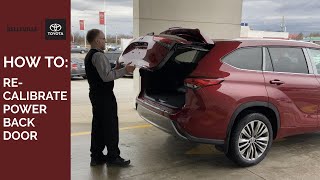
Turn the power liftgate function off in the vehicle settings menu, manually open and close the heavy door once, and turn the function back on. Alternatively, hold the liftgate close button until a series of beeps confirms the reset. Check your owner's manual for specifics.
Will my trunk fly open while driving if I have a B2250 code?
It is highly unlikely, as the system fails-safe in the latched position. However, it may not fully cinch, leaving the trunk slightly ajar and triggering a dashboard warning light.
Why did my power liftgate stop working in the cold?
Cold weather stiffens aging electronic components and lubricants inside the latch. Lexus TSB L-SB-0137-17 specifically notes that the B2250 fault often only appears in freezing temperatures.
Is it hard to replace the power liftgate latch myself?
It is manageable for a DIYer with moderate experience. The process involves removing the large interior trim panel, disconnecting electrical connectors, unbolting the old latch, and installing the new one. Handling the trim panel without breaking clips is the hardest part.
Do I need to program the new latch?
No programming is required. However, you must perform the system's initialization procedure after replacement so the control module learns the new latch's position.
My liftgate opens but won't close and just beeps. Is the latch bad?
Not necessarily. A weak vehicle battery has enough power to release the latch but not enough to power the motor for the closing cycle. Always test the battery and check for obstructions before replacing parts.
Should I replace the liftgate struts even if they seem okay?
Yes, if your struts are over 5 years old. Weak struts force the liftgate motor to work harder, leading to premature motor failure or triggering performance codes like B2250. They are an inexpensive preventative repair.
Key Takeaways
- On Toyota and Lexus vehicles, code B2250 indicates an internal electrical failure within the power liftgate's electronic latch assembly.
- Always inspect the flexible rubber wiring boot between the liftgate and the body for broken wires before spending $400 on a new latch.
- Verify the code definition for your specific make; on 2015-2020 General Motors vehicles, B2250 points to a power headrest fault, not the liftgate.
- Replace liftgate support struts older than 5 years, as weak struts force the motor to draw excessive current and trigger performance codes.
- Check for Technical Service Bulletins (TSBs) like Toyota's T-SB-0232-17, which mandates replacing the faulty latch with an updated OEM part.
Helpful Videos
Shop the Parts Behind B2250
Below are the parts most often responsible for code B2250, ranked by how frequently each one is the actual culprit (per the diagnosis above). Tap any to see what we have for your vehicle.



The information in this article is provided for general reference and educational purposes only. Vehicle specifications, procedures, and part compatibility can vary by production date, trim level, and region. Always consult your vehicle's factory service manual and verify part numbers before purchasing or performing repairs. Safety-critical components such as airbags, seat belts, and braking systems should be installed by a qualified professional.
- 🧭 Diagnostic Flowchart
- 🎬 Helpful Videos
- 🛍️ Shop This Part
- What Does B2250 Mean?
- Can I Drive With B2250?
- Common Causes
- Symptoms
- Common Fixes & Costs
- Used vs. New Parts: Buying Guide
- What Happens If You Wait — Timeline
- Cost of Not Fixing It
- Diagnosis Steps
- When This Code Triggers (Freeze-Frame Conditions)
- Related Codes
- Climate & Environmental Factors
- How to Talk to a Mechanic About This Code
- Where to Take It: Dealer vs Independent vs Chain
- When to Walk Away From the Repair
- What Scan Tool You Need for This Code
- How to Clear the Code After You Fix It
- Will This Fail Emissions / State Inspection?
- Most Commonly Affected Vehicles
- Manufacturer-Specific Notes
- Real Owner Stories
- 2015 Toyota Sienna with 110K miles
- 2016 Lexus RX 350 at 85K miles
- 2014 Honda CR-V with 90K miles
- How to Prevent This Code From Triggering
- Frequently Asked Questions
- Can I just lubricate the latch to fix the B2250 code?
- How do I reset my power liftgate after a repair or battery disconnect?
- Will my trunk fly open while driving if I have a B2250 code?
- Why did my power liftgate stop working in the cold?
- Is it hard to replace the power liftgate latch myself?
- Do I need to program the new latch?
- My liftgate opens but won't close and just beeps. Is the latch bad?
- Should I replace the liftgate struts even if they seem okay?
- Key Takeaways
- 🎟️ Get 5% Off