

OBD-II Code B2255: Manufacturer-Specific Body Control Fault
What B2255 means, why it triggers, and how to fix it
- Code B2255 is a manufacturer-specific body code that means a failed Data Communications Module (DCM) on Subarus, a faulty sliding door latch on Toyotas, or a broken Lighting Control Module (LCM) on Fords.
- On 2016-2019 Subarus, the defunct 3G network traps the DCM in a search loop, causing a 120mA+ parasitic drain that kills the 12V battery within days.
- Never authorize a $2,000+ infotainment head unit replacement for a Subaru B2255 code without confirming the shop first diagnosed the telematics system per TSB 18-225-22R.
- Diagnosing B2255 requires an advanced OBD-II scanner capable of reading Body ('B') codes; a standard $20 powertrain code reader will falsely report zero codes.
What Does B2255 Mean?
B2255 is a manufacturer-specific code with distinct definitions based on the car brand. On modern Subarus, it signals a communication failure between the infotainment screen and the telematics module (DCM). On Toyota vans, it indicates a failed power sliding door latch. On Dodge vehicles, it points to a disabled airbag rollover sensor, and on older Fords, it flags a broken Lighting Control Module (LCM).
Technical definition: There is no universal SAE/ISO definition for B2255. Subaru defines it as 'Communication problem between the DCM and the Head Unit'. Toyota defines it as 'Slide Door Closer Switch LH Malfunction'. Dodge uses 'Occupant Restraint Controller Roll Over Feature Disable', and Ford uses 'Headlamp Switch Input Circuit Short to Ground'.
Can I Drive With B2255?
Yes, But With Caution. The vehicle remains mechanically safe to drive, but the fault disables critical safety systems. On Subarus, Automatic Collision Notification fails, meaning emergency services will not dispatch after a crash. On Toyota vans, a faulty sliding door latch can open while driving, prompting a major safety recall. On Dodge vehicles, the airbag rollover detection system is disabled. Limit driving to essential trips to a repair facility.
Common Causes
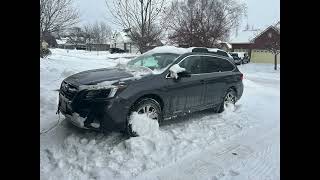
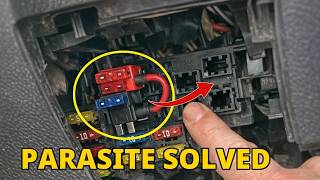
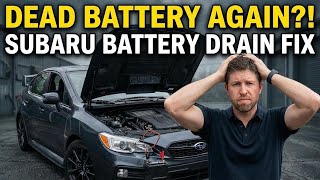
- Failed Data Communications Module (DCM) / 3G Sunset (Subaru) (Very Common) — On 2016-2019 Subarus, the 3G cellular network shutdown traps the DCM in an endless search loop. The module overheats, stops communicating with the head unit, and creates a severe 120mA+ parasitic battery drain. This is the root cause of almost all Subaru B2255 codes. 🎬 Watch: How the 3G sunset causes this battery drain.
- Faulty Power Sliding Door Latch Assembly (Toyota) (Common) — On Toyota Siennas, internal switch failure or corrosion causes the door's latch assembly to send physically impossible signals (e.g., reporting the door is both half-latched and fully-latched simultaneously) to the control module.
- Poor or Failing 12V Battery (Common) — A weak battery causes low voltage conditions during startup, leading to unpredictable behavior in electronic modules. This triggers a cascade of false communication fault codes, including B2255.
- Faulty Lighting Control Module (LCM) (Ford/Lincoln/Mercury) (Common) — On Panther-platform vehicles (Crown Victoria, Grand Marquis), internal relays inside the LCM develop cracked solder joints from heat cycling, leading to erratic headlight behavior and setting this code.
- Software Glitch (Less Common) — A software bug disrupts communication between modules. A dealer-performed firmware update for the infotainment head unit or telematics module frequently resolves this, especially on newer vehicles.
- Damaged Wiring or Loose Connector (Less Common) — A corroded pin or damaged wire in the harness between the involved components (e.g., the DCM and head unit, or the door latch and body ECU) interrupts the data signal.
- Faulty Infotainment Head Unit (Subaru) (Rare) — An internal hardware failure of the infotainment screen is possible but highly unlikely. Subaru explicitly warns technicians that replacing the head unit for a B2255 code is a frequent misdiagnosis.
Symptoms
- Dead 12V Battery (Subaru) — A faulty DCM fails to enter sleep mode, causing a 120mA to 400mA parasitic drain that completely depletes a healthy 12V battery overnight or within a few days.
- Red 'SOS' Light and Audio Loss (Subaru) — A red light near the overhead SOS button illuminates. Simultaneously, the front speakers and Bluetooth microphone stop working because their audio signals route through the failed DCM.
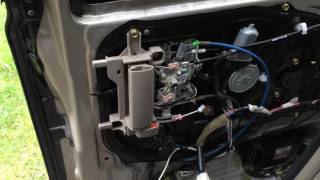
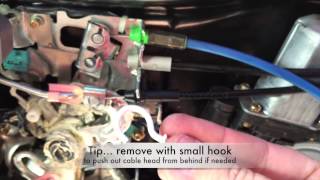
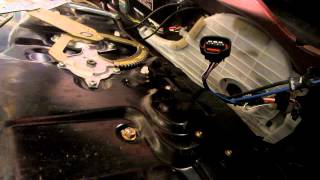
- Power Sliding Door Malfunction (Toyota) — The power sliding door refuses to close, beeps continuously without moving, or loses power function entirely. The door occasionally unlatches unexpectedly. 🎬 See how to replace the sliding door latch assembly.
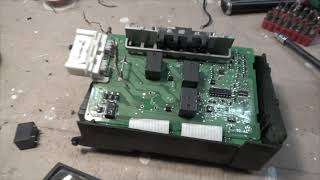
- Exterior Lighting Failure (Ford) — Headlights fail to turn on or shut off randomly while driving at night, indicating a failing Lighting Control Module. 🎬 Watch: Step-by-step guide to rebuilding your Ford LCM.
- Airbag Warning Light On (Dodge) — The dashboard airbag warning light illuminates, indicating the rollover protection system is disabled in the Occupant Restraint Controller.
- Conflicting Switch Data (scan-tool only — no driver-felt sign) — A professional scan tool displays illogical live data, such as a Toyota door reporting 'Half Latch Switch ON' and 'Full Latch Switch OFF' simultaneously.
Diagnostic Flowchart
Tap your situation to follow the diagnostic path that matches what you're seeing on this code.
Common Fixes & Costs
- Replace or Bypass Data Communications Module (DCM) (Subaru) — Parts: $100-$1000, Labor: $150-$300, ~2.0 hr book time (Professional)
- Replace Power Sliding Door Lock/Latch Assembly (Toyota) — Parts: $250-$400, Labor: $200-$350, ~2.5 hr book time (Intermediate)
- Repair or Replace Lighting Control Module (LCM) (Ford) — Parts: $50-$200, Labor: $100-$200, ~0.8 hr book time (Intermediate)
- Perform Dealership Software Update — Parts: $0, Labor: $150-$250, ~1.0 hr book time (Professional)
- Re-enable Rollover Feature via Scan Tool (Dodge) — Parts: $0, Labor: $100-$150, ~0.5 hr book time (Professional)
Used vs. New Parts: Buying Guide
When a used part is worth it: Buy used for mechanical parts like a Toyota door latch assembly from a low-mileage, rust-free donor. For the Ford LCM, buy a professionally remanufactured unit rather than a used one.
Donor-vehicle mileage cap: roughly under 60000 miles for the part to have meaningful remaining life.
Donor quality checklist:
- Verify the exact part number matches; superseded numbers cause compatibility issues.
- Avoid electronic modules from flood-damaged or 'rust-belt' vehicles.
- Check the donor VIN to ensure the part is not locked to another vehicle.
Decision logic:
- If The part is a programmable electronic module like a Subaru DCM → Buy new OEM or use the official OEM bypass. A used DCM carries the exact same 3G defect or is VIN-locked.
- If The part has a known wear item, like the Ford LCM's internal solder joints → Buy a professionally remanufactured unit. A used part is likely close to the same failure point.
- If The part is purely mechanical (e.g., Toyota latch) and budget is tight → Buy used, but inspect the internal switches and springs for corrosion before installation.
Warranty tradeoff: Used parts carry 30-90 day warranties. Remanufactured modules offer 1-year to lifetime warranties. OEM new parts carry a 1-year/12k-mile warranty.
Worst-case if a used part fails: $500-$1000 if a used electronic module fails, requiring repeat labor for diagnosis, programming, and replacement.
What Happens If You Wait — Timeline
- Immediate (Subaru DCM Drain): Car fails to start. Red SOS light illuminates, and front speakers/microphone stop working. Starlink Automatic Collision Notification is disabled. (MPG impact: 0%% · Added cost: $60-$150 for a jump-start service or portable jump starter.)
- 1-3 weeks (Subaru DCM Drain): Repeatedly jump-starting the car permanently damages the AGM battery by deep-cycling it. The battery no longer holds a full charge. (MPG impact: 0%% · Added cost: $250-$400 for a new AGM battery, which will also be destroyed if the drain is not fixed.)
- Immediate (Toyota Door Latch Failure): The power sliding door fails to latch securely. The door slides open while the vehicle is in motion, creating an extreme safety hazard. (MPG impact: 0%% · Added cost: Thousands in accident-related damages, injuries, or legal liability.)
- Immediate (Ford LCM Failure): Headlights fail intermittently or completely at night without warning, making the vehicle illegal and unsafe to drive. (MPG impact: 0%% · Added cost: $150+ for a traffic citation, plus the cost of a tow.)
Cost of Not Fixing It
- Immediate: Stranded with a dead battery (Subaru). Sliding door fails to latch (Toyota). Headlights fail at night (Ford). Airbag rollover protection disabled (Dodge). (Added cost: $150-$300 for a tow or jump-start service, plus extreme safety risks.)
- 1-6 months: Repeatedly jump-starting and deep-cycling the 12V battery permanently destroys its ability to hold a charge. Unstable voltage damages other sensitive electronic modules. (Added cost: $250-$400 for a replacement AGM battery.)
- 6+ months: Operating a vehicle with unlatching doors or failing headlights creates severe liability. On Subarus, the front audio and microphone remain permanently disabled. (Added cost: Thousands of dollars in accident-related damages, injuries, or legal costs.)
Diagnosis Steps
- Perform a Full System Health Check
Test the 12V battery and charging system. A healthy battery reads 12.6 volts with the engine off and 13.5-14.5 volts while running. Low voltage causes false communication codes across all modules.
Tools: Digital Multimeter (Beginner) - Perform a Full System Scan
Use a professional-grade scan tool to read manufacturer-specific body codes. Check all modules. For Subaru, check the Telematics system. For Toyota, check the Power Slide Door module.
Tools: Advanced OBD-II Scanner (Intermediate) - [Pro Tip] Perform Parasitic Draw Test (Subaru)
Connect a multimeter in series with the negative battery terminal. Let the vehicle sit for 60 minutes. A normal draw is under 70mA. A reading of 120-140mA confirms the DCM is stuck in a 3G search loop. Pull the 'DCM' fuse; if the draw drops to normal, the DCM is faulty.
Tools: Digital Multimeter with 10A capability (Advanced) - Address Primary Telematics Codes First (Subaru)
If codes like B2A0C or B2A16 are present, diagnose and repair them completely before addressing B2255. Subaru TSB 18-225-22R mandates this, as clearing the primary fault resolves the B2255 communication symptom.
Tools: Advanced OBD-II Scanner (Intermediate) - [Pro Tip] Test Latch Switch Resistance (Toyota)
Use a multimeter to test the latch switches directly at the lock assembly connector. The full latch switch should show continuity (<1 Ω) when open and high resistance (>10 kΩ) when latched. Incorrect readings confirm a faulty latch assembly.
Tools: Digital Multimeter, Wiring Diagram (Advanced) - [Pro Tip] Test LCM Voltage Output (Ford)
Test for voltage at the LCM's headlight output terminal. If headlights malfunction but the LCM outputs a steady 12V, the LCM is fine and the wiring is faulty. If you command headlights on and get 0V, the LCM's internal relay has failed.
Tools: Digital Multimeter, Wiring Diagram (Advanced) - Inspect Wiring and Connectors
Visually inspect the wiring harness between the involved components. Look for damaged wires, corroded pins, or loose connectors, especially in harnesses passing through door jambs.
Tools: Flashlight, Trim Removal Tools (Intermediate) - Check for Technical Service Bulletins (TSBs)
Search for TSBs related to B2255 for your specific vehicle. Subaru TSB 18-225-22R provides mandatory diagnostic steps. Toyota has TSBs for sliding door latch corrosion.
Tools: Internet Access (Beginner)
When This Code Triggers (Freeze-Frame Conditions)
- Fault Type: Communication Error or Invalid Data (This is a Body Control Module (BCM) code. Freeze frame data logs network communication status rather than engine parameters like RPM or coolant temperature.)
- Vehicle State (Subaru): Key OFF (The fault logs when the system powers back on after detecting a communication failure or parasitic draw while the vehicle was supposed to be asleep.)
- Vehicle State (Toyota): Key ON, during door operation (The fault triggers the moment the Body ECU receives conflicting data from the sliding door's latch switches.)
- Control Module Voltage: 11.5V - 14.5V (Low module voltage triggers the code, but the fault primarily flags the corrupted content of the data signal.)
Related Codes
- B2A0C — On Subaru, this is a Telematics DTC for 'DCM Communication Circuit Malfunction'. TSB 18-225-22R mandates fixing B2A0C before addressing B2255, as it is the root cause.
- B2A16 — On Subaru, this indicates the DCM and immobilizer lost their secure connection. It presents identical symptoms to B2255 (red SOS light, no audio) and requires software re-registration.
- U-Series Codes (e.g., U0140, U0184) — U-codes indicate a total loss of communication on the CAN bus network. If present alongside B2255, suspect a wider wiring issue or failing gateway module rather than an isolated component fault.
- B2250 — On Toyota, this indicates a Power Back Door latch malfunction. If both codes are present, it points to a systemic issue with the body control ECU or main wiring harness.
Climate & Environmental Factors
- Cold Weather / Ice: On Toyota Siennas, ice impedes the power sliding door motor. This overloads the motor circuit, blows a fuse, and leaves the door unlatched, triggering B2255.
- Extreme Temperature Cycles (Hot & Cold): On Ford Panther-platform vehicles, repeated heating and cooling cycles fatigue and crack the solder joints on the LCM's internal relays, causing headlight failure.
- High Humidity / Road Salt: In the 'Salt Belt', heavy road salt corrodes the power sliding door latch switches and wiring on Toyota Siennas, leading to erratic signals.
- Cold Ambient Temperatures: Cold weather significantly reduces a 12V battery's available power. A parasitic drain from a faulty Subaru DCM completely kills the battery overnight in winter conditions.
How to Talk to a Mechanic About This Code
Say this: "For a Subaru: 'I have a B2255 code and a parasitic battery drain. Please follow TSB 18-225-22R and check for other telematics codes before diagnosing the head unit.' For a Toyota Sienna: 'I have a B2255 code and the power sliding door is malfunctioning. Please diagnose the driver's side latch assembly.' For a Ford Crown Victoria: 'I have a B2255 and intermittent headlights. I suspect the LCM is failing and want to install a remanufactured part.'"
This language proves you researched the common causes for your specific vehicle. It directs the technician to the correct TSB, preventing expensive, unnecessary diagnostics like replacing a Subaru head unit.
Avoid saying:
- 'Just fix whatever's wrong'
- 'My infotainment screen is acting weird, can you look at it?'
- 'The internet said it's the DCM, just replace it'
Questions to ask before authorizing the repair:
- (Subaru) Did you find any other telematics codes like B2A0C? Have you confirmed the parasitic draw is from the DCM fuse?
- (Subaru) Is my vehicle covered by the DCM warranty extension? What is the cost difference between a new DCM and the official bypass module?
- (Toyota) Did the scan tool show conflicting data from the latch switches? Is my vehicle part of the G04 sliding door recall?
- (Ford) Did you test for voltage output at the LCM? What is the warranty on the remanufactured LCM?
Where to Take It: Dealer vs Independent vs Chain
- Dealer:
Best for: Vehicles under warranty (especially the Subaru DCM issue)., Repairs requiring manufacturer-specific software updates or programming., Checking for and performing safety recalls (Toyota Sienna door latch).
Downsides: Highest labor rates, typically $150-$250 per hour., More likely to replace an entire assembly rather than a smaller component., Service advisors frequently upsell unrelated services. (Typical cost: +50% vs. baseline) - Independent Shop:
Excellent choice for Toyota and Ford variants. For Subaru, a dealer is necessary for warranty claims and software updates, but a trusted independent shop is perfect for diagnosing the parasitic draw.
Best for: Out-of-warranty mechanical repairs with well-known fixes (Toyota latch, Ford LCM)., Owners seeking a better price and a more personal relationship with their mechanic., Diagnosing common issues like parasitic drains.
Downsides: May lack the proprietary scan tools required for Subaru DCM software updates., Technician quality and experience vary widely. (Typical cost: +0% vs. baseline) - Chain Shop:
AVOID. A chain shop is highly likely to misdiagnose the problem, fail to read the code entirely, or recommend an incorrect and expensive repair.
Best for: Simple, unrelated maintenance like oil changes or tires.
Downsides: Technicians lack specialized training for complex, manufacturer-specific 'B' codes., Business model encourages upselling unnecessary services., Unable to perform required software flashes or access manufacturer-specific modules. (Typical cost: -10% vs. baseline)
When to Walk Away From the Repair
If the estimated repair cost exceeds 40-50% of the car's private-party value, and the issue is not a critical safety failure, seriously consider selling or trading in the vehicle.
- Car worth $15000, fix is $1200: Fix it. The repair cost for a Subaru DCM replacement is well below the threshold for a 2017+ Outback.
- Car worth $3500, fix is $700: Borderline, but fix it. The cost to repair a Toyota Sienna's sliding door is significant relative to the car's value, but the car is unsafe to use without the fix.
- Car worth $2500, fix is $1500: Walk away. If a major module failure occurs on an older, lower-value vehicle, the repair cost is too high to justify.
What Scan Tool You Need for This Code
Minimum: A scanner that reads manufacturer-specific Body ('B'), Chassis ('C'), and Network ('U') codes. Basic code readers that only handle Powertrain ('P') codes are useless for B2255.
A $20 code reader only checks for check engine light codes and reports 'No Codes Found' for a B2255 fault. You need a tool that communicates with the Body Control Module and Telematics Module.
Budget: BlueDriver Pro Scan Tool (~$100) — Connects to a smartphone app and reads enhanced codes (ABS, Airbag, Body) for most major brands, including Subaru and Toyota. It confirms the presence of B2255 and checks for related codes.
Mid-range: Foxwell NT510 Elite (~$180) — Loads manufacturer-specific software (Toyota or Subaru). Offers deep diagnostic access and bidirectional controls, allowing you to view specific switch data for a Toyota door latch or re-enable the rollover feature on a Dodge.
Professional: Autel MaxiCOM MK808 (~$500) — A tablet-style scanner with extensive bidirectional controls and full-system access. Performs nearly all OEM-level diagnostic functions, making it invaluable for complex issues.
How to Clear the Code After You Fix It
- Fix the underlying mechanical or electrical fault (e.g., replace the DCM, install a new door latch).
- Connect an advanced OBD-II scan tool, navigate to the specific module (Body Control, Telematics, or Power Door), and select 'Clear DTCs'.
- For Toyota sliding doors, perform the re-initialization procedure: manually close the door completely, then use the power buttons to cycle it fully open and fully closed.
- Cycle the ignition OFF, then ON, and re-scan the module to confirm the code does not return.
Drive cycle (~15 minutes): A drive cycle is not required. Cycle the ignition and operate the affected system (e.g., test the infotainment system or open/close the power door) to verify the repair.
Readiness monitors affected: None. Body codes do not affect powertrain emissions readiness monitors.
Watch out for:
- Disconnecting the battery temporarily reboots the system but does not fix the underlying hardware fault; the code returns immediately.
- Using a basic $20 code reader fails because it only scans for powertrain (P-codes) and cannot see or clear B-codes.
- Failing to fix primary telematics codes (like B2A0C on a Subaru) guarantees B2255 will reappear instantly.
Will This Fail Emissions / State Inspection?
No — by itself this code doesn't fail OBD inspection (but it can keep readiness monitors from setting, which causes a separate fail).
- California: B2255 is a Body code and does not illuminate the Check Engine Light. The vehicle passes the OBD-II Smog Check as long as powertrain monitors are set.
- New York: NYS safety inspections check the airbag warning light. If B2255 triggers the airbag light on a Dodge, the vehicle fails the safety inspection, though it passes emissions.
- Texas: A B-code does not cause an emissions failure. However, a lit airbag light or non-functional headlights (Ford LCM issue) fails the mandatory safety inspection.
Most Commonly Affected Vehicles
- Subaru Impreza, Forester, Ascent, Crosstrek, Outback, Legacy, WRX (2016-2024) — Extremely common issue caused by a communication failure between the infotainment head unit and the DCM. The 3G network sunset is the primary cause for 2016-2019 models.
- Toyota Sienna (2004-2020) — Indicates a 'Slide Door Closer Switch LH Malfunction'. A major safety recall (NHTSA #16V-858) was issued for 2011-2016 models because doors opened while driving.
- Ford / Lincoln / Mercury Crown Victoria, Grand Marquis, Town Car (1998-2011) — Points to a failing Lighting Control Module (LCM) causing headlight failure. Covered by recall 15S39 for 2003-2005 models.
- Dodge / Chrysler Durango, Charger, Ram 1500 (2009-2012) — Indicates 'Occupant Restraint Controller Roll Over Feature Disable'. The feature was turned off with a scan tool and needs to be re-enabled.
- Dodge Journey (2009-2020) — Relates to the 'Generator Control Module' and is caused by a faulty inverter/converter assembly.
- Chevrolet / GMC Silverado, Sierra, Malibu (2007-2016) — Points to a fault in the 'left rear headrest backward movement switch' circuit. Often a benign 'ghost code' if optional courtesy lights are not installed.
- BMW Various Models (2005-2015) — Issues with active headrests trigger similar B-codes after collisions, requiring replacement of a pyrotechnic charge and a system reset.
Manufacturer-Specific Notes
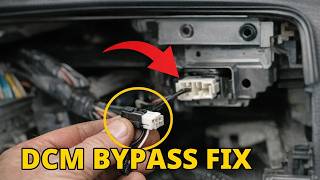
- Subaru: Subaru issued warranty extensions for the DCM. TSB 15-317-24 covers 2016-18 models affected by the 3G sunset. TSB 15-318-24R introduced a $100 'DCM Bypass' module (Part No. 86229AL400) as an official repair for vehicles without active Starlink service.
- Toyota: A major safety recall (NHTSA #16V-858 / Toyota #G04) covers 2011-2016 Siennas because a stalled door motor blows a fuse and allows the door to open while driving. The fix replaces the junction block and wire harnesses.
- Dodge / Chrysler / Ram: On a 2011 Durango or 2009 Charger, this code simply means the rollover protection feature for the airbag system was disabled via a scan tool. A technician must re-enable it using dealership software.
- Ford: Ford issued a recall (NHTSA #15V-861 / Ford #15S39) for 2003-2005 Panther-platform vehicles to install an LCM bypass module kit. Owners frequently report this bypass kit fails, making a remanufactured LCM the superior fix.
Real Owner Stories
2019 Subaru Outback with a recurring dead battery
The car's battery died repeatedly, even after installing a premium replacement battery.
What they tried:
- Replaced the original battery.
- Visited two different dealerships who found no loose connections or obvious faults.
Outcome: The owner contacted Subaru of America and referenced the DCM warranty extensions. Subaru covered the $1,100 cost of a new DCM under a goodwill warranty, permanently fixing the parasitic drain.
Lesson: If your 2016-2019 Subaru battery keeps dying, the DCM is the culprit. Call Subaru of America (1-800-782-2783) and reference the DCM warranty extensions before paying out of pocket.
2005 Ford Crown Victoria with intermittent headlights
The headlights randomly turned off while driving. Tapping the Lighting Control Module (LCM) under the dash temporarily restored function.
What they tried:
- Took the car to a Ford dealership to have the official LCM recall (15S39) performed.
Outcome: After the dealer installed the recall's 'bypass kit,' the headlights stopped working entirely. The owner ultimately replaced the LCM with a professionally rebuilt unit to permanently fix the issue.
Lesson: The Ford LCM recall bypass kit is notoriously unreliable. Replace the LCM with a professionally rebuilt unit or have a skilled technician repair the internal solder joints.
2018 Subaru Outback with parasitic drain and a $10 DIY fix
A parasitic draw test confirmed a 150mA drain when the car was off, causing a dead battery.
What they tried:
- Identified the faulty DCM but wanted to avoid the $1,000 replacement cost and long wait times.
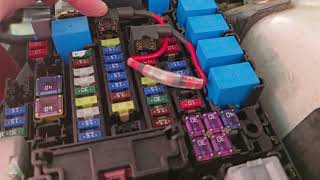
Outcome: The owner created a bypass harness using two 'add-a-fuse' connectors for $10. This re-routed power to the DCM fuse from a circuit active only when the car is ON. The drain dropped to normal, and the front speakers remained functional.
Lesson: For out-of-warranty Subarus, a DIY 'add-a-fuse' bypass is a highly effective, low-cost alternative to module replacement if you possess basic wiring skills.
2011 Dodge Durango with Airbag Light On
The airbag warning light illuminated, and a scan revealed code B2255.
What they tried:
- Feared a costly airbag sensor replacement.
Outcome: A technician used a professional scan tool to navigate to the Occupant Restraint Controller (ORC) menu and re-selected 'Enable' for the rollover feature. The code cleared instantly.
Lesson: On Dodge vehicles, B2255 is often an informational code indicating a safety feature was manually turned off. The fix is a 5-minute software toggle, not a parts replacement.
How to Prevent This Code From Triggering
- Maintain 12V Battery Health (Ongoing) — A fully-charged battery resists damage from parasitic drains and prevents modules from malfunctioning due to low voltage. Use a battery tender if the car sits for weeks.
- Clean and Lubricate Toyota Sliding Door Tracks (Every 1-2 years) — Cleaning debris from door tracks and lubricating hinges with white lithium grease reduces strain on the door motor and latch assembly, preventing premature failure.
- Install a Headlight Relay Harness (Ford Panther Platform) (Once, as a proactive upgrade) — A separate relay harness pulls power directly from the battery for the headlights, drastically reducing the electrical load on the LCM and preventing internal relay failure.
- Periodically Test Battery Voltage (Every 6 months) — Checking battery voltage after the car sits for several hours provides an early warning of a developing parasitic drain. A healthy battery reads between 12.4 and 12.8 volts.
Frequently Asked Questions
Can I drive my car with a B2255 code?
Yes, but with extreme caution. While mechanically sound, the code signifies the failure of a key safety feature like Subaru's Automatic Collision Notification or a Toyota sliding door latch. Drive only to a repair facility.
My Subaru's battery keeps dying. Could B2255 be related?
Yes, this is the most common symptom for 2016-2019 Subarus. The defunct 3G network traps the Data Communications Module (DCM) in a connection loop, preventing sleep mode. This creates a 120mA+ parasitic drain that kills a healthy battery in days.
My mechanic wants to replace my Subaru's radio for over $2,000. Is this correct?
Do not authorize this repair without proof. Subaru TSB 18-225-22R explicitly warns that replacing the head unit for a B2255 code is a frequent misdiagnosis. The actual fault is almost always the telematics module (DCM), wiring, or a software glitch.
What is the 'DCM Bypass' for a Subaru and is it safe?
The DCM Bypass (part # 86229AL400) is an official, $100 Subaru repair for vehicles without active Starlink subscriptions. It replaces the faulty DCM to eliminate the parasitic battery drain while keeping front speakers and Bluetooth microphones functional. It is a safe, manufacturer-approved alternative to a $1,000 DCM replacement.
Why did my Subaru's front speakers and SOS light turn on?
The audio signals for the front speakers and Bluetooth microphone route directly through the DCM. When the DCM fails or locks up, it cuts off those audio signals. This simultaneously triggers the red SOS warning light on the overhead console.
Can a weak battery cause code B2255 and other weird electrical problems?
Yes, a failing battery provides unstable voltage during startup. Modern vehicles contain dozens of sensitive electronic modules that malfunction and set false communication codes when they lack clean power. Always test the battery and charging system before diagnosing complex electronic faults.
Will clearing the code fix the problem?
No, clearing the code only temporarily turns off the warning light. If the underlying hardware fault or software bug remains, the code returns immediately after the system runs its self-check. Use code clearing only as a diagnostic step to verify if a repair was successful.
Key Takeaways
- Code B2255 is a manufacturer-specific body code that means a failed Data Communications Module (DCM) on Subarus, a faulty sliding door latch on Toyotas, or a broken Lighting Control Module (LCM) on Fords.
- On 2016-2019 Subarus, the defunct 3G network traps the DCM in a search loop, causing a 120mA+ parasitic drain that kills the 12V battery within days.
- Never authorize a $2,000+ infotainment head unit replacement for a Subaru B2255 code without confirming the shop first diagnosed the telematics system per TSB 18-225-22R.
- Diagnosing B2255 requires an advanced OBD-II scanner capable of reading Body ('B') codes; a standard $20 powertrain code reader will falsely report zero codes.
Helpful Videos

Shop the Parts Behind B2255
Below are the parts most often responsible for code B2255, ranked by how frequently each one is the actual culprit (per the diagnosis above). Tap any to see what we have for your vehicle.
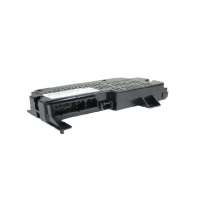
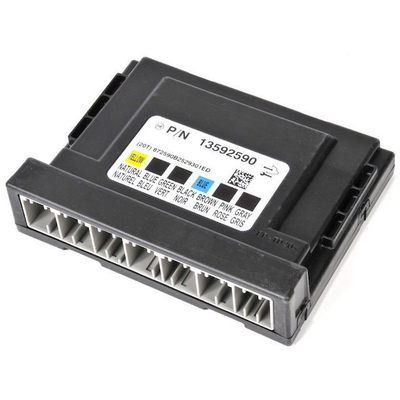

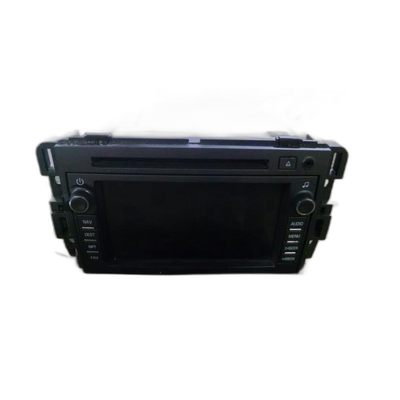



The information in this article is provided for general reference and educational purposes only. Vehicle specifications, procedures, and part compatibility can vary by production date, trim level, and region. Always consult your vehicle's factory service manual and verify part numbers before purchasing or performing repairs. Safety-critical components such as airbags, seat belts, and braking systems should be installed by a qualified professional.
- 🧭 Diagnostic Flowchart
- 🎬 Helpful Videos
- 🛍️ Shop This Part
- What Does B2255 Mean?
- Can I Drive With B2255?
- Common Causes
- Symptoms
- Common Fixes & Costs
- Used vs. New Parts: Buying Guide
- What Happens If You Wait — Timeline
- Cost of Not Fixing It
- Diagnosis Steps
- When This Code Triggers (Freeze-Frame Conditions)
- Related Codes
- Climate & Environmental Factors
- How to Talk to a Mechanic About This Code
- Where to Take It: Dealer vs Independent vs Chain
- When to Walk Away From the Repair
- What Scan Tool You Need for This Code
- How to Clear the Code After You Fix It
- Will This Fail Emissions / State Inspection?
- Most Commonly Affected Vehicles
- Manufacturer-Specific Notes
- Real Owner Stories
- 2019 Subaru Outback with a recurring dead battery
- 2005 Ford Crown Victoria with intermittent headlights
- 2018 Subaru Outback with parasitic drain and a $10 DIY fix
- 2011 Dodge Durango with Airbag Light On
- How to Prevent This Code From Triggering
- Frequently Asked Questions
- Can I drive my car with a B2255 code?
- My Subaru's battery keeps dying. Could B2255 be related?
- My mechanic wants to replace my Subaru's radio for over $2,000. Is this correct?
- What is the 'DCM Bypass' for a Subaru and is it safe?
- Why did my Subaru's front speakers and SOS light turn on?
- Can a weak battery cause code B2255 and other weird electrical problems?
- Will clearing the code fix the problem?
- Key Takeaways
- 🎟️ Get 5% Off