

OBD-II Code B2275: Starter Signal Malfunction
What B2275 means, why it triggers, and how to fix it
- Code B2275 indicates a failure in the push-button start electrical circuit, completely preventing the engine from starting or entering the 12V 'READY' mode.
- This code is almost exclusive to Toyota and Lexus vehicles, with the 2004-2015 Prius being the most commonly affected model.
- Always test the 12V auxiliary battery first; voltage dropping below 10.5V during startup frequently triggers this code before any ECU actually fails.
- Professional diagnosis requires back-probing the STSW circuit to verify the voltage jumps above 8.5V when the start button is pressed.
- Expect repair costs between $500 and $1,100 if an ECU requires replacement, as new modules mandate dealer-level programming to sync with your keys.
What Does B2275 Mean?
B2275 indicates the vehicle's main computer detected a failure in the push-button start electrical circuit. When you press the start button, a signal travels through multiple control modules to authorize ignition. This code means the signal was lost or corrupted, completely preventing the engine from starting.
Technical definition: The official definition for this code, primarily used by Toyota and Lexus, is "STSW Monitor Malfunction". It indicates that a control module—such as the Certification ECU, Power Management Control ECU, or Main Body ECU—detected an open or short circuit in the engine start request signal when the driver pushed the start button.
Can I Drive With B2275?
No — Do Not Drive. This code indicates a failure in the starting system. The engine will not start, or if it is a hybrid, it will not enter 'READY' mode, making the vehicle completely undrivable.
Common Causes
- Low System Voltage (Weak 12V Battery) (Very Common) — If the vehicle's system voltage drops below 10.5V when a start is requested, it causes communication errors between modules and triggers a B2275 code. This happens intermittently during high electrical load even if the battery is not completely dead.
- Damaged Wiring or Poor Connections (Very Common) — Wires connecting the start button, Certification ECU, and other modules fray, corrode, or disconnect due to vibrations, age, or rodents.
- Faulty Certification ECU (Smart Key ECU) (Common) — This computer is the brain of the smart key system. An internal failure prevents it from sending or receiving the correct start authorization signal.
- Faulty Power Management Control ECU (Common) — In hybrid models, this module manages power distribution for starting. An internal circuit failure triggers the B2275 code.
- Interference from Aftermarket Accessories (Common) — Poorly installed aftermarket remote starters or alarms spliced into the ignition wiring interfere with start signal communication between modules.
- Faulty Brake Light Switch (Less Common) — The starting sequence requires a signal from the brake light switch confirming the pedal is depressed. A faulty switch prevents start authorization.
- Blown AM2 Fuse (Less Common) — A blown fuse related to the starting or smart key system severs power to the circuit. This is usually a symptom of a larger short circuit.
- Faulty Main Body ECU (Less Common) — The Main Body ECU controls central body functions, including the starting sequence. An internal fault here stops the start signal.
Symptoms
- Engine will not start — Pressing the push-start button with your foot on the brake does nothing, or you only hear a single click.
- Vehicle will not enter 'READY' mode (Hybrids) — On hybrid vehicles, the dashboard fails to display the 'READY' light, and the hybrid system remains disengaged.
- Push-start button is unresponsive or flashes — The light on the push-start button fails to illuminate or flashes amber instead of turning green when the brake is pressed.
- 'Key Not Detected' message appears — The dashboard displays a message indicating it cannot detect the key, even with the fob inside the cabin.
- Security indicator light flashing — The dashboard security light flashes, indicating an immobilizer or smart key system fault preventing start authorization.
Diagnostic Flowchart
Tap your situation to follow the diagnostic path that matches what you're seeing on this code.
Common Fixes & Costs
- Wiring Harness Repair — Parts: $10-$50, Labor: $250-$1000, ~2.5 hr book time (Professional)
- Replace Certification (Smart Key) ECU — Parts: $300-$700, Labor: $200-$400, ~2.5 hr book time (Professional)
- Replace Power Management Control ECU — Parts: $400-$800, Labor: $150-$300, ~1.5 hr book time (Professional)
- Replace Brake Light Switch — Parts: $20-$60, Labor: $75-$150, ~0.8 hr book time (DIY)
- Replace Blown Fuse — Parts: $1-$10, Labor: $120-$180, ~0.2 hr book time (DIY)
DIY vs Professional
- Wiring Harness Repair 🟢 Beginner
Tools: Multimeter, oscilloscope, vehicle-specific wiring diagrams, wire strippers, soldering iron, heat shrink. - Replace Blown Fuse 🟢 Beginner
Tools: Fuse puller or needle-nose pliers. - Replace Certification (Smart Key) ECU 🟢 Beginner
Tools: Socket set, trim removal tools, Toyota Techstream software, and a compatible VCI cable. - Replace Power Management Control ECU 🟢 Beginner
Tools: Socket set, trim removal tools. - Replace Brake Light Switch 🟢 Beginner
Tools: Basic hand tools (pliers, small socket set).
Used vs. New Parts: Buying Guide
When a used part is worth it: Buying a used ECU is a high-risk option that only makes sense for an older vehicle where a new module exceeds the car's worth.
Donor-vehicle mileage cap: roughly under 100000 miles for the part to have meaningful remaining life.
Donor quality checklist:
- Match the part number exactly; superseded numbers require dealer intervention.
- Purchase from a reputable seller offering a functional warranty of at least 30 days.
- Verify the donor vehicle was not scrapped due to flood, fire, or a major electrical failure.
- Visually inspect the module for corrosion on the pins or a burnt smell.
Decision logic:
- If The part requires programming and security key registration (like a Certification ECU) → Strongly favor a new part. Used parts lock to the donor vehicle's VIN, making reprogramming extremely difficult.
- If Vehicle is less than 10 years old or has significant value → Buy a new or professionally remanufactured ECU to ensure reliability and access to the latest software updates.
- If Budget is the absolute primary concern on a high-mileage vehicle → A used part is a gamble, but consider it if the risks and potential for repeat labor costs are acceptable.
Warranty tradeoff: Used parts from salvage yards typically offer a 30-90 day warranty covering only the part. New OEM parts installed by a dealer carry a 12-month/12,000-mile warranty on parts and labor.
Worst-case if a used part fails: $500-$1500 if the used ECU is dead on arrival or fails after the warranty period, forcing you to pay diagnostic and programming labor twice.
What Happens If You Wait — Timeline
- Immediate: The vehicle will not start or enter 'READY' mode. The car is immobile. The push-start button flashes amber. (MPG impact: N/A% · Added cost: $75-$250 (Immediate cost for a tow to a repair facility).)
- 0-3 days: Repeatedly trying to start the car deeply discharges the 12V auxiliary battery, shortening its lifespan. (MPG impact: N/A% · Added cost: $150-$300 (Potential cost for a new 12V battery if damaged from repeated deep cycling).)
- 1-2 months: The vehicle has been sitting. The 12V battery is now completely dead and unrecoverable. Tires begin to develop temporary flat spots. (MPG impact: N/A% · Added cost: $300-$500 (Includes a new battery and potential tire balancing fees).)
- 3+ months: Long-term storage issues set in. Tire flat spots become permanent. Brake rotors develop significant surface rust. Rodents nest in the engine bay, causing further wiring damage. (MPG impact: N/A% · Added cost: $500-$2000+ (Costs escalate quickly, including new tires, brake service, and additional diagnostic time for new rodent damage).)
Cost of Not Fixing It
- Immediate: The vehicle is completely undrivable and will not start. You will be stranded. (Added cost: $75-$250 for a tow to a repair shop.)
- 0-1 week: Repeatedly trying to start the vehicle drains the 12V auxiliary battery, requiring a replacement. (Added cost: $150-$300 for a new 12V battery.)
- 1+ month: Extended sitting causes flat spots on tires, a permanently dead 12V battery, and moisture buildup in the cabin. (Added cost: $200-$800 depending on the extent of issues from long-term storage.)
Diagnosis Steps
- Check the 12-Volt Battery
A weak 12-volt battery causes communication errors and no-start conditions. Ensure the battery reads at least 12.4 volts. Voltage dropping below 10.5V during a start attempt triggers this code.
Tools: Multimeter (Beginner) - Check the Key Fob Battery
A dead key fob battery prevents the car from recognizing the start signal. Replace the CR2032 battery or hold the fob directly against the push-start button while pressing it to bypass a weak battery.
Tools: New key fob battery (usually a CR2032) (Beginner) - Inspect Relevant Fuses
Check fuse box diagrams for fuses related to the starting system, ignition, and smart key modules. Inspect the 'AM2', steering lock, and ignition (IG2) fuses.
Tools: Fuse puller or needle-nose pliers (Beginner) - Visually Inspect Wiring Harnesses
Look for chewed wires, corrosion, or loose connectors around the Main Body ECU, Certification ECU (behind the glove box), and steering column.
Tools: Flashlight (Intermediate) - Advanced: Test STSW Circuit Voltage
Using a multimeter, back-probe the STSW terminal at the Hybrid Vehicle Control ECU. With the brake depressed, press the start button. Voltage must jump above 8.5V momentarily, then drop below 1V. No voltage change indicates an upstream fault.
Tools: Multimeter, vehicle-specific wiring diagram, back-probe pins (Advanced) - Advanced: Perform Circuit Resistance Tests
Disconnect the Certification ECU and Hybrid Control ECU. Check continuity on the STSW wire between them; resistance must be below 1 Ω. Test resistance from the wire to a chassis ground; it must exceed 10 kΩ.
Tools: Multimeter, vehicle-specific wiring diagram (Advanced) - Advanced: Check Live Data with a Scan Tool
Using a professional scan tool, access live data for the 'Entry & Start' system. Monitor the 'Starter Request Signal' PID to verify the ECU recognizes the start button press and brake pedal input.
Tools: Advanced OBD-II Scan Tool (e.g., Toyota Techstream) (Professional) - Professional: Check LIN Bus Communication with an Oscilloscope
Connect an oscilloscope to the LIN wire. A healthy LIN bus shows a clean square wave switching between 0V and 12V. A flat line or noisy pattern indicates a shorted module or wiring on the network.
Tools: Oscilloscope, vehicle-specific wiring diagram (Professional)
When This Code Triggers (Freeze-Frame Conditions)
- Vehicle Speed: 0 mph (0 km/h) (Vehicle is stationary during start attempt.)
- Engine Speed (RPM): 0 (Engine fails to crank or start.)
- Auxiliary Battery Voltage: 10.0V - 12.5V (Voltage measured at the moment the start button is pressed; a significant drop indicates a weak battery causing the module error.)
- Stop Light Switch: ON (Confirms the brake pedal was depressed, a required input for the starting sequence.)
Related Codes
- B2285 — This code for 'Steering Lock Position Signal Circuit Malfunction' often appears with B2275. The system checks the steering lock status during startup; a fault here interrupts the process. If the steering lock data shows a fault, B2285 is the primary issue.
- B2799 — Indicates a communication failure between the key's transponder and the immobilizer ECU. If the security light flashes, it points to B2799. B2275 occurs when the key is recognized, but the start command fails.
- B2281 — Indicates a discrepancy in the gear position signal. The starting system must confirm the car is in Park or Neutral. If the gear indicator is incorrect, the fault is B2281, not B2275.
- B2785/B2789 — Point to a failure on the LIN communication network. If present with B2275, a shorted module or wire is disrupting all communication, rather than just the starter signal.
Climate & Environmental Factors
- High Humidity / High Precipitation: Prolonged exposure to moisture causes corrosion on wiring connectors and ground points. This increases electrical resistance, disrupting sensitive low-voltage signals between ECUs.
- Cold Climates / Road Salt: In regions using winter road salt, corrosive spray accelerates the degradation of wiring harnesses and connectors, causing open or short circuits.
How to Talk to a Mechanic About This Code
Say this: "My car won't start and I have a B2275 code. I need an electrical diagnostic to trace the starter signal (STSW) circuit. I've already checked the 12V and key fob batteries. I'd like you to focus on diagnosing the communication between the smart key ECU and the power management ECU before recommending any part replacement."
This signals you understand this is a complex electrical fault, not a simple dead battery or starter. It directs the technician toward a logical diagnostic path and away from just swapping expensive parts.
Avoid saying:
- 'My car won't start, can you fix it?' (too vague, invites a high bill)
- 'I think I need a new starter.' (Don't diagnose for them; this code is rarely the starter)
- 'Just replace whatever is broken.' (This gives the shop a blank check)
Questions to ask before authorizing the repair:
- What was the specific point of failure in the circuit? Was it an open, a short to ground, or a faulty module?
- Can you show me the failed part or the damaged section of wiring?
- If an ECU needs to be replaced, is the new part OEM and will it require programming? What is your warranty on the part and the labor?
- What is your diagnostic fee if I choose not to proceed with the repair?
Where to Take It: Dealer vs Independent vs Chain
- Dealer:
Recommended. The B2275 code often requires dealer-level tools and expertise, especially if an ECU needs replacement and programming. This is one of the few times the dealer premium is justified to ensure a correct one-time fix.
Best for: Vehicles under warranty., Complex electrical issues requiring proprietary software (Toyota Techstream) for diagnosis and ECU programming., When you want guaranteed OEM parts and a nationwide repair warranty.
Downsides: Highest labor rates, typically 1.5-2x more than independent shops., May be quicker to replace an entire ECU or harness rather than perform a more detailed wire repair. (Typical cost: +50% vs. baseline) - Independent Shop:
Acceptable, with caution. Vet the shop carefully. Ask specifically if they have experience with Toyota smart key no-start issues and if they own manufacturer-specific diagnostic tools like Techstream. A general mechanic will struggle with this code.
Best for: Out-of-warranty vehicles where the shop has a known specialty in Toyota/Lexus or complex electrical diagnostics., Potentially lower labor rates and more willingness to perform component-level repairs.
Downsides: Quality and expertise vary widely. Many shops lack the expensive subscription for Toyota's Techstream software or an oscilloscope., May not be able to program a new Certification ECU, forcing you to go to the dealer anyway. (Typical cost: +0% vs. baseline) - Chain Shop:
AVOID. This is not a job for a chain shop. They lack the specialized tools and training, which leads to misdiagnosis, wasted money, and an eventual tow to a qualified shop.
Best for: Simple, routine maintenance like oil changes, tires, and batteries.
Downsides: Technicians are generally not equipped or trained for in-depth electrical diagnostics., High pressure to sell common parts like batteries and starters, which are unlikely to be the root cause of B2275., Almost certainly will not have the tools to diagnose or program the necessary modules. (Typical cost: -10% vs. baseline)
When to Walk Away From the Repair
If the estimated repair cost exceeds 40-50% of the car's private-party value, you should seriously consider selling the car as-is or trading it in.
- Car worth $4500, fix is $2200: Walk away. The repair cost is nearly 50% of the car's value. It is not a sound financial decision to proceed.
- Car worth $8000, fix is $1100: Fix it. The repair cost is well below the threshold and restores a significant amount of value to the vehicle.
- Car worth $3000, fix is $900: Borderline. This is a 30% cost-to-value ratio. Consider the car's overall condition. If it needs other work (tires, brakes), it is likely better to walk away. If it is otherwise in great shape, the repair is worthwhile.
What Scan Tool You Need for This Code
Minimum: A scanner that reads manufacturer-specific Body Control Module ('B' codes) for Toyota/Lexus. A basic engine-only (P-code) reader is useless for B2275.
A standard $20 code reader shows 'No Codes' because it only accesses the Powertrain Control Module. B2275 is a Body code stored in a different computer. You need a tool that communicates with the 'Entry & Start' or 'Main Body' ECU to see the code.
Budget: BlueDriver Pro (~$100) — Confirms the B2275 code exists by reading enhanced codes for Toyota. Allows viewing of some live data PIDs, but offers no bidirectional control for testing.
Mid-range: LAUNCH Creader Elite for Toyota/Lexus or XTOOL D7W (~$150-400) — Full-system scanner that reads codes from all modules. Provides access to Toyota-specific live data streams like 'Starter Request Signal'. Crucially, offers bidirectional control to perform active tests on components.
Professional: Autel MaxiCOM MK808 / Launch X431 Series (~$500-1200) — Provides dealer-level diagnostics, including full bidirectional control and special functions. Some models perform ECU programming and key registration required when replacing a Certification ECU.
Rent vs buy: For this specific code, renting is not a viable option as parts stores do not rent out the advanced, manufacturer-specific scanners needed. If you are a serious DIYer, buying a midrange bidirectional scanner is a worthwhile investment.
How to Clear the Code After You Fix It
- Use a compatible OBD-II scan tool to clear the diagnostic trouble code.
- Do not disconnect the 12V battery, as this resets all readiness monitors.
- Perform a complete drive cycle to allow the vehicle's readiness monitors to run their self-tests.
Drive cycle (~30 minutes): After repair, perform a Toyota-specific drive cycle. This involves a cold start (after sitting for 8+ hours), idling for 5-10 minutes, 15 minutes of mixed city driving, followed by 5-10 minutes of steady highway driving between 50-65 mph.
Readiness monitors affected: Catalyst Monitor, EVAP System Monitor, Oxygen (O2) Sensor Monitor, Oxygen Sensor Heater Monitor
Before emissions retest: drive at least 100 miles to fully set monitors.
Watch out for:
- Simply clearing the code will not fix the problem; the B2275 code returns immediately upon the next start attempt if the electrical fault remains.
- Disconnecting the battery to clear the code resets all emissions readiness monitors to 'Not Ready', causing an automatic failure at an emissions testing station.
Will This Fail Emissions / State Inspection?
Yes — this code typically fails an OBD-II emissions inspection.
- California: A vehicle that does not start is an automatic test failure. After repair, most readiness monitors must be set to 'Ready' to pass the OBD-II check.
- New York: The NYS inspection includes an OBD-II scan. A no-start condition prevents the test from being performed, resulting in a failure.
- Texas: In counties requiring emissions testing, a vehicle must be able to run to be inspected. A no-start is an automatic failure.
Most Commonly Affected Vehicles
- Toyota Prius (2004-2015) — Very common on the 2nd (2004-2009) and 3rd (2010-2015) generation Prius. The 2nd gen often sees failures in the Power Source Control ECU, while the 3rd gen is more prone to Certification ECU and wiring issues.
- Lexus CT200h (2011-2017) — Shares its hybrid powertrain and smart key architecture with the Prius. These models are known for inverter and brake actuator issues, which sometimes relate to the electrical faults triggering B2275.
- Lexus RX Series (e.g., RX350, RX450h) (2010-2015) — The smart key and certification ECU in these models are common sources of the B2275 code. Failures frequently trace back to the Power Management Control ECU.
- Toyota Camry (especially Hybrid) (2007-2017) — Models with the push-button start feature experience this fault within the Main Body ECU or related wiring. The hybrid versions share similar start-up logic with the Prius.
- Lexus ES Series (e.g., ES350) (2007-2012) — Failures in the smart key system's communication between the ECU and starter signal circuit are frequently reported. In some no-crank situations, the issue is a faulty ID Code Box communicating on the same network.
- Toyota Sienna (2011-2020) — Sharing platforms and electronic modules with the Camry and Highlander, the Sienna with push-button start is prone to this starting circuit malfunction.
- Toyota Highlander (especially Hybrid) (2008-2019) — Equipped with similar smart key and power management systems as the Camry and Lexus RX, the Highlander exhibits the B2275 code due to failures in the same set of ECUs.
- Toyota Aqua (2012-2017) — As a hybrid with a push-start system similar to the Prius, it shares the same potential failure points in the power management and smart key ECUs.
Manufacturer-Specific Notes
- Toyota / Lexus: This trouble code is almost exclusively used by Toyota and Lexus. There is no known standard SAE definition, and it does not appear in documentation for other major manufacturers. The definition and diagnostic process are highly specific to Toyota's push-button start and smart key systems.
- Toyota / Lexus (Warranty): There are no active recalls for code B2275. However, for hybrid models, the Lexus Hybrid Warranty covers the 'Hybrid Control Module' for 8 years/100,000 miles or 10 years/150,000 miles on 2020 and newer models. If the Power Management ECU is the cause, the repair is often covered.
- Subaru: Subaru does not use B2275, but a similar no-start condition with a flashing security light is caused by a faulty Body Integrated Unit (BIU). The BIU serves a similar function to the Main Body ECU in a Toyota.
- Nissan / Infiniti: On Nissan and Infiniti vehicles with push-button start, a similar no-start condition is often related to a faulty Brake Pedal Position Switch or a failed Steering Lock Control Unit, setting codes like P1815 or B2606.
- Ford: Ford vehicles do not use the B2275 code. A similar issue sets a 'U' code (Network Communication) or a 'B' code related to the Body Control Module (BCM) or Passive Anti-Theft System (PATS), such as B10F9.
Real Owner Stories
2010 Toyota Prius with 155K miles - No Start
Car suddenly refused to go into 'READY' mode. Pressing the start button did nothing, no clicks, just the amber light on the button would flash. All other electronics worked.
Outcome: Mechanic diagnosed a faulty Certification ECU. The ECU was not sending the start signal. Replacement of the Certification ECU and programming of the keys resolved the issue. Total cost was $900.
Lesson: Even if the 12V battery seems like the obvious culprit, a flashing amber light on the start button is a strong indicator of a smart key system fault, not just a dead battery.
2008 Lexus RX400h with 180K miles - Intermittent No Start
For several weeks, the vehicle occasionally failed to start on the first try. The owner had to try 2-3 times before it went into 'READY' mode. Eventually, it failed completely.
Outcome: An independent shop traced the issue to a corroded wire in the harness leading to the Power Management Control ECU. The corrosion created high resistance, causing intermittent signal loss. The shop repaired the wire. Diagnostic and labor cost was $450.
Lesson: Intermittent electrical issues are often caused by wiring problems like corrosion or loose connections. A thorough wiring inspection is critical before replacing expensive computer modules.
2012 Toyota Camry Hybrid with 110K miles - Misdiagnosis Story
Vehicle would not start and displayed code B2275 along with B2799 (Immobilizer Malfunction). The security light was flashing.
Outcome: The specialist diagnosed that an aftermarket remote starter had been poorly installed years prior. A wire came loose from a splice connector and was shorting, disrupting the immobilizer and start signal circuit. The specialist removed the remote start system and repaired the factory wiring. Total cost was $300.
Lesson: If multiple communication or security codes are present with B2275, always investigate aftermarket accessories first. A poorly installed alarm is a very common source of complex electrical problems.
How to Prevent This Code From Triggering
- Apply dielectric grease to main ECU and harness connectors (Every 5 years or during any major service) — Dielectric grease is a non-conductive grease that seals electrical connectors from moisture, preventing the corrosion that causes high resistance and signal loss.
- Periodically inspect wiring harnesses for rodent activity (Seasonally, especially if parking outdoors) — Rodents are attracted to soy-based wire insulation and chew through critical start-signal wires. Using peppermint oil or rodent-repellent tape deters them.
- Replace key fob battery proactively (Every 1-2 years) — Proactive replacement prevents the fob from being a variable during diagnosis and ensures the smart key system functions reliably.
- Activate the key fob's 'battery saver' or 'sleep' mode (When parking for extended periods or overnight in high-risk areas) — On many Toyota/Lexus models, holding the 'Lock' button while double-pressing 'Unlock' puts the key to sleep. This prevents relay attacks and reduces battery drain.
- Ensure the 12V battery is healthy and terminals are clean (Annually) — A healthy, fully charged battery with clean terminals provides the stable voltage required for all modules to communicate correctly during the start sequence.
Frequently Asked Questions
Can I still drive my car with a B2275 code?
No. The B2275 code signifies a fault that completely prevents the engine from starting or the hybrid system from becoming 'READY'.
What is the most common misdiagnosis for B2275?
The most common misdiagnosis is replacing the 12V battery or starter motor without proper testing. B2275 specifically points to a signal failure between computer modules. A technician must perform electrical circuit tests to trace the start signal before replacing expensive components.
Does B2275 mean I need a new starter motor?
Not usually. This code points to a problem in the electrical command circuit before the signal reaches the starter relay. The issue lies with the computers and wiring authorizing the start, not the starter motor itself.
Could my aftermarket remote starter be causing the B2275 code?
Yes. Improperly installed aftermarket remote start and alarm systems interfere with the complex communication between the vehicle's factory ECUs, triggering this code.
Why is the repair so expensive if it might just be a wire?
The cost comes from the labor-intensive diagnosis required to trace complex wiring diagrams and test multiple computer modules. While a replacement wire is cheap, finding a single broken strand or corroded pin in a large harness takes hours of professional labor.
Can a weak 12V car battery cause this code?
Yes. Low voltage from a weak 12V battery causes communication errors between the car's computers, leading to a B2275 code. Always test the 12V battery first.
If I replace the ECU myself, will it work?
No. A replacement Certification ECU or Main Body ECU must be professionally programmed to your specific vehicle and its existing keys. The car will not start until this procedure is completed with a compatible scan tool.
What does STSW stand for?
STSW stands for 'Starter Switch'. The B2275 'STSW Monitor Malfunction' code means the computer sees a problem with the signal from this logical switch requesting the engine to start.
Key Takeaways
- Code B2275 indicates a failure in the push-button start electrical circuit, completely preventing the engine from starting or entering the 12V 'READY' mode.
- This code is almost exclusive to Toyota and Lexus vehicles, with the 2004-2015 Prius being the most commonly affected model.
- Always test the 12V auxiliary battery first; voltage dropping below 10.5V during startup frequently triggers this code before any ECU actually fails.
- Professional diagnosis requires back-probing the STSW circuit to verify the voltage jumps above 8.5V when the start button is pressed.
- Expect repair costs between $500 and $1,100 if an ECU requires replacement, as new modules mandate dealer-level programming to sync with your keys.
Shop the Parts Behind B2275
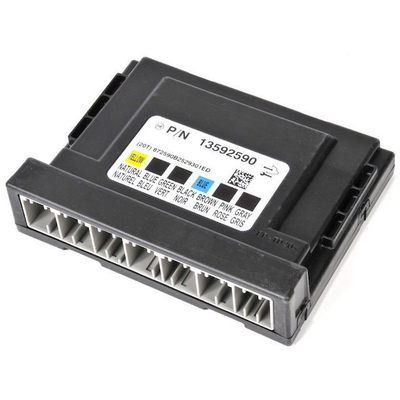
Below are the parts most often responsible for code B2275, ranked by how frequently each one is the actual culprit (per the diagnosis above). Tap any to see what we have for your vehicle.



The information in this article is provided for general reference and educational purposes only. Vehicle specifications, procedures, and part compatibility can vary by production date, trim level, and region. Always consult your vehicle's factory service manual and verify part numbers before purchasing or performing repairs. Safety-critical components such as airbags, seat belts, and braking systems should be installed by a qualified professional.
- 🧭 Diagnostic Flowchart
- 🛍️ Shop This Part
- What Does B2275 Mean?
- Can I Drive With B2275?
- Common Causes
- Symptoms
- Common Fixes & Costs
- DIY vs Professional
- Used vs. New Parts: Buying Guide
- What Happens If You Wait — Timeline
- Cost of Not Fixing It
- Diagnosis Steps
- When This Code Triggers (Freeze-Frame Conditions)
- Related Codes
- Climate & Environmental Factors
- How to Talk to a Mechanic About This Code
- Where to Take It: Dealer vs Independent vs Chain
- When to Walk Away From the Repair
- What Scan Tool You Need for This Code
- How to Clear the Code After You Fix It
- Will This Fail Emissions / State Inspection?
- Most Commonly Affected Vehicles
- Manufacturer-Specific Notes
- Real Owner Stories
- 2010 Toyota Prius with 155K miles - No Start
- 2008 Lexus RX400h with 180K miles - Intermittent No Start
- 2012 Toyota Camry Hybrid with 110K miles - Misdiagnosis Story
- How to Prevent This Code From Triggering
- Frequently Asked Questions
- Can I still drive my car with a B2275 code?
- What is the most common misdiagnosis for B2275?
- Does B2275 mean I need a new starter motor?
- Could my aftermarket remote starter be causing the B2275 code?
- Why is the repair so expensive if it might just be a wire?
- Can a weak 12V car battery cause this code?
- If I replace the ECU myself, will it work?
- What does STSW stand for?
- Key Takeaways
- 🎟️ Get 5% Off