

OBD-II Code B2278: Steering Shaft Torque Sensor Fault
What B2278 means, why it triggers, and how to fix it
- On 2008-2012 Ford Escapes and Mazda Tributes, code B2278 almost always indicates a failed steering torque sensor requiring a $400-$1,050 replacement.
- Never authorize a $1,500+ steering column replacement for a solitary B2278 code unless codes B1342 or B2277 are also present.
- Test your battery first, as voltage drops below 12.4V frequently trigger false B2278 codes in the Electric Power Assisted Steering (EPAS) system.
- Always perform a mandatory 'Steering Torque Sensor Trim' calibration with a bidirectional scan tool after installing a new sensor to prevent immediate failure.
- Stop driving immediately if B2278 triggers, as the power steering fails suddenly at any speed and significantly increases accident risk.
What Does B2278 Mean?
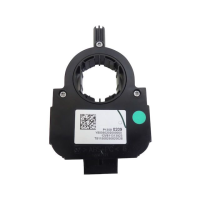
OBD-II code B2278 indicates the Power Steering Control Module (PSCM) detects a serious fault within the steering system. On 2008-2012 Ford, Mazda, and Mercury vehicles, this points directly to a failed steering shaft torque sensor 🎬 Watch: Diagnosing a failed torque sensor and loss of assist., which measures steering wheel force to determine electric assist. On Toyota models, this exact code indicates a malfunctioning push-button ignition switch.
Technical definition: The SAE/OBD-II definition for B2278 varies by manufacturer. Ford defines it as 'Steering Shaft Torque Sensor Fault' (or B2278-2F for 'Erratic Signal'). Toyota defines it as 'Main Switch (Power Switch) Malfunction', indicating mismatched ignition switch contact signals. General Motors logs the equivalent torque sensor failure under codes C0545 or C0561.
Can I Drive With B2278?
No — Do Not Drive. Do not drive the vehicle. Power steering fails suddenly and without warning at any speed, making the vehicle extremely difficult to steer and significantly increasing the risk of an accident.
Common Causes
- Failed Steering Shaft Torque Sensor (Very Common) — The sensor wears out internally due to a poor signal-to-noise ratio, sending an erratic signal to the control module. If B2278 is the only code present on a Ford or Mazda, this is the definitive cause. Cheap aftermarket sensors also fail prematurely and trigger this code.
- Weak Battery or Poor Ground Connection (Common) — The Electric Power Assisted Steering (EPAS) system draws massive electrical current. A weak battery providing below 12.4V causes the PSCM to malfunction and log a false B2278 code. Always test the battery and ground circuit before replacing steering parts.
- Lost Sensor Calibration (Common) — The sensor loses its zero-point calibration after suspension work, wheel alignments, or battery replacements. A software recalibration using a bidirectional scan tool often resolves the issue without parts replacement.
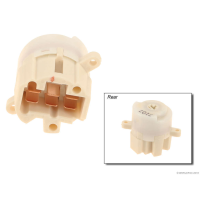
- Failed Ignition Switch (Toyota/Lexus) (Less Common) — On Toyota and Lexus models, B2278 indicates the main push-to-start ignition switch has an internal malfunction, preventing the car from starting or changing power modes.
- Wiring and Connector Issues (Rare) — Corroded connectors or damaged wiring between the torque sensor and the control module interrupt the signal. This is a known issue on the Mazda RX-8 due to connector placement in the engine bay.
Symptoms
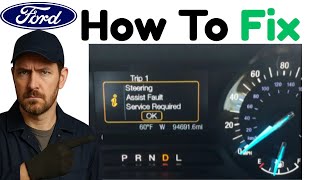
- Warning Message on Dash — A 'POWER STEERING ASSIST FAULT' or similar message illuminates on the instrument cluster. 🎬 Watch: How to fix the Steering Assist Fault warning on Fords.
- Complete Loss of Power Steering — The steering wheel becomes consistently heavy and difficult to turn, especially at low speeds or when parking. 🎬 See how a B2278 code makes the steering wheel hard to turn.
- Intermittent Power Steering — Power steering works normally, then suddenly cuts out. Restarting the car temporarily restores function.
- Steering Wheel Jerks or Turns on Its Own — The steering wheel shudders, jerks violently, or pulls to one side without driver input immediately after startup, indicating a severely erratic sensor signal.
- Uneven Steering Effort — Steering feels smooth in one direction but stiff in the other, usually caused by an uncalibrated sensor.
Diagnostic Flowchart
Tap your situation to follow the diagnostic path that matches what you're seeing on this code.
Common Fixes & Costs
- Replace Steering Shaft Torque Sensor (Ford/Mazda) — Parts: $100-$450, Labor: $300-$600, ~2.3 hr book time (Professional)
- Recalibrate Steering Angle Sensor — Parts: $0, Labor: $100-$200, ~0.5 hr book time (Professional)
- Replace Ignition Switch (Toyota) — Parts: $150-$400, Labor: $100-$250, ~1 hr book time (Intermediate)
- Clean and Reseat Connectors — Parts: $0-$10, Labor: $0-$100, ~0.2 hr book time (DIY)
- Replace Steering Column Assembly — Parts: $800-$1500, Labor: $400-$700, ~3.5 hr book time (Professional)
Used vs. New Parts: Buying Guide
When a used part is worth it: Never buy a used Steering Shaft Torque Sensor. The part has a known high failure rate, and a used sensor may have been misaligned during removal, rendering it useless. Always use a new, high-quality OEM or reputable aftermarket sensor.
Donor quality checklist:
- Avoid parts advertised as 'used' or 'pulls'.
- Verify OEM parts by looking for a serial number and 'Mexico' country of origin marking.
- Avoid cheap, unbranded aftermarket sensors, as they are known to be faulty out of the box.
Decision logic:
- If The required part is the steering torque sensor (Code B2278 only) → Buy a new OEM (Motorcraft) or a high-quality new aftermarket sensor (e.g., Dorman). Do not buy used.
- If The required part is the entire steering column assembly (Codes B1342 or B2277 present) → A used, low-mileage steering column from a reputable salvage yard is a cost-effective option. A new OEM column is the safest but most expensive choice.
Warranty tradeoff: Used parts: Minimal to no warranty. Aftermarket new: Typically 1-year to limited lifetime warranty. OEM new: 2-year unlimited mileage warranty is common when purchased from a dealer.
Worst-case if a used part fails: $500-$1000 if a used or cheap aftermarket sensor fails after installation, requiring repeat labor and another part.
What Happens If You Wait — Timeline
- First Occurrence: The 'Power Steering Assist Fault' light appears. Power steering is lost but restores after restarting the vehicle. (MPG impact: 0%% · Added cost: $0)
- Days to Weeks: The failure becomes more frequent. Restarting the car is less likely to fix the issue temporarily. The steering feels notchy or jerks before failing. (MPG impact: 0%% · Added cost: $0)
- Weeks to Months: Power steering assist is permanently disabled. The warning light is always on, and steering requires significant physical effort. (MPG impact: 0%% · Added cost: $0)
- Anytime: The intermittent fault occurs suddenly while driving at moderate or high speed, leading to an unexpected loss of control and an accident. (MPG impact: 0%% · Added cost: Cost of an at-fault accident, ranging from minor body repair to total vehicle loss.)
Cost of Not Fixing It
- Immediate: Sudden and complete loss of power steering, making the vehicle extremely difficult to steer. (Added cost: 0)
- Days to Weeks: The intermittent failure becomes permanent. The 'POWER STEERING ASSIST FAULT' message stays on constantly. (Added cost: 0)
- Months: Extreme safety risk. Loss of steering control leads to an accident. (Added cost: Cost of an at-fault accident)
Diagnosis Steps
- Scan for Codes
Use an advanced OBD-II scanner to read Body ('B') codes from the Power Steering Control Module (PSCM). Confirm B2278 is the only code present, checking specifically for B1342 or B2277.
Tools: Advanced OBD-II Scanner (e.g., FORScan) (Beginner) - Test the Battery and Charging System
Test the battery to ensure it holds at least 12.4V with the engine off, and the alternator outputs 13.7V-14.7V while running. A weak battery causes false EPAS codes.
Tools: Multimeter, Battery Tester (Beginner) - Check Technical Service Bulletins (TSBs)
Verify Ford TSB #14-0016 or Mazda Bulletin #06-001/14. These state that if B2278 is the only code, replace the torque sensor, not the entire steering column.
Tools: Internet access (Beginner) - Attempt Sensor Recalibration
Use a bidirectional scan tool to perform a 'Steering Torque Sensor Trim' or SAS calibration. This rules out a software glitch, especially if the fault appeared after an alignment.
Tools: Bidirectional Scan Tool (Intermediate) - Inspect Electrical Connectors
Disconnect the battery. Unplug the PSCM and torque sensor connectors. Inspect for corrosion or pushed-out pins, clean with electrical contact cleaner, and reseat firmly.
Tools: Basic hand tools, Electrical contact cleaner (Intermediate) - [PRO TIP] Analyze Live Sensor Data (Ford/Mazda)
Monitor the 'TRQ_SENS' live data PID. A healthy sensor changes smoothly as you turn the wheel. A faulty sensor sticks, jumps erratically, or flatlines. Compare this to 'TRQ_S_CORR' to check calibration.
Tools: Bidirectional Scan Tool (e.g., FORScan) (Advanced) - [PRO TIP] Analyze Live Sensor Data (Toyota)
Access the 'Power Source Control' data list. Monitor 'Starter Switch1' and 'Starter Switch2'. If either value sticks 'ON' or 'OFF' regardless of button position, replace the ignition switch.
Tools: Toyota Techstream (GTS) or equivalent (Advanced) - [PRO TIP] Check PSCM Power and Ground
Verify >12V at the PSCM ignition voltage supply pin with the key on. Check ground circuit resistance to a known good chassis ground; it must be less than 5 ohms.
Tools: Multimeter, Wiring Diagram (Advanced) - [PRO TIP] Analyze Sensor Data with a Scope
Use an oscilloscope to monitor the torque sensor's output signals. A faulty sensor shows a noisy, erratic, or flat-lined waveform, confirming internal failure.
Tools: Oscilloscope, Wiring Diagram (Professional)
When This Code Triggers (Freeze-Frame Conditions)
- Vehicle Speed: 0 mph (At startup or very low speed (parking))
- Engine State: Running (The fault is most often detected immediately after the engine is started.)
- Battery Voltage: 11.5V - 14.5V (The code triggers if voltage is unstable, but often sets even with normal voltage.)
- Ambient Temperature: Any (Failure occurs at any temperature, though cold weather exacerbates weak battery issues.)
Related Codes
- B1342 — Indicates a fatal error in the Power Steering Control Module. If present alongside B2278, the entire steering column assembly must be replaced.
- B2277 — Indicates a fault with the steering assist motor. If present, the entire steering column assembly must be replaced.
- C0545 — The General Motors equivalent code for 'Steering Torque Sensor Circuit', pointing to the same sensor failure within the EPAS system.
- U0415 — Means 'Invalid Data Received From Anti-Lock Brake System'. A faulty wheel speed sensor sends bad data over the CAN bus, causing the power steering module to shut down assist as a precaution.
Climate & Environmental Factors
- Cold Weather: Power steering failure occurs more frequently in cold weather because low temperatures reduce a weak battery's performance, starving the EPAS system of required voltage.
- High Heat: Prolonged exposure to high engine bay temperatures accelerates the degradation of EPAS electronics, including the control module and torque sensor.
How to Talk to a Mechanic About This Code
Say this: "Hi, I have a [Year/Make/Model] with a power steering fault and a B2278 code. I've researched the TSB on this and understand it likely needs a new torque sensor, not a full steering column. I'd like to book a diagnostic to confirm this and get a quote for replacing the sensor and performing the post-repair calibration."
This signals you are an informed customer. It frames the repair around the correct fix (the sensor) and mentions the mandatory calibration, preventing them from defaulting to an unnecessary $1,500 steering column replacement.
Avoid saying:
- 'My power steering is out, can you fix it?' (Too vague, invites a high quote)
- 'The dealer said I need a new steering column.' (Anchors the conversation to the most expensive repair)
- 'Just do whatever it takes to fix it.'
Questions to ask before authorizing the repair:
- Can you confirm there are no other codes, specifically B1342 or B2277, which would require a column replacement?
- Does your quote include the mandatory 'Steering Torque Sensor Trim' calibration after the part is installed?
- What is the warranty on the part and your labor for this specific repair?
- Are you using an OEM Motorcraft sensor or an aftermarket brand?
Where to Take It: Dealer vs Independent vs Chain
- Dealer:
Recommended only if the recall is active or as a last resort. Be prepared to specifically question any recommendation to replace the entire column.
Best for: Vehicles where the recall (Ford 14S05 / Mazda 7614E) is still open and applicable., Owners who prioritize a guaranteed fix with an OEM warranty and are less sensitive to cost.
Downsides: Highest labor rates., May still incorrectly quote a full steering column replacement despite their own TSBs; requires a knowledgeable customer to push back. (Typical cost: +50% vs. baseline) - Independent Shop:
Best fit. An experienced independent shop will be familiar with this common failure, have the necessary tools for calibration, and charge significantly less than a dealer.
Best for: Most out-of-warranty repairs for this code., Cost-conscious owners who want a reliable repair.
Downsides: Must confirm the shop has a bidirectional scan tool capable of performing the post-repair calibration. Not all shops do. (Typical cost: +0% vs. baseline) - Chain Shop:
AVOID. This repair is too specific and requires a level of expertise and equipment not typically found at chain shops. The risk of a failed repair is very high.
Best for: Battery testing as a first diagnostic step.
Downsides: Technician skill and equipment vary dramatically., Unlikely to have the specific knowledge of the TSB or the advanced scan tools needed for calibration. (Typical cost: -10% vs. baseline)
When to Walk Away From the Repair
If the estimated repair cost exceeds 50% of the car's private-party value, seriously consider selling the vehicle as-is or trading it in rather than repairing it.
- Car worth $3500, fix is $800: Fix it. The repair cost is about 23% of the car's value, making it a reasonable investment to restore a critical safety function.
- Car worth $2000, fix is $1200: Walk away. The repair cost is 60% of the vehicle's value. It is not economical to proceed.
What Scan Tool You Need for This Code
Minimum: A bidirectional scan tool that reads Body ('B') codes from the Power Steering Control Module (PSCM) and performs the 'Steering Torque Sensor Trim' or SAS calibration function.
A basic $20-$50 code reader cannot read B-codes from the PSCM, so it won't see the B2278 fault. It also lacks the bidirectional control needed to perform the mandatory post-repair calibration.
Budget: OBDLink EX + FORScan Software (~$60) — The best budget option for Ford/Mazda. The OBDLink EX adapter works with FORScan software (free for Windows) to give dealership-level capabilities, including reading B2278, viewing live sensor data, and performing the required 'Steering Torque Sensor Trim' calibration.
Mid-range: Foxwell NT510 Elite / NT650 (~$180) — These handheld scanners offer multi-system diagnostics and include service functions like Steering Angle Sensor (SAS) calibration for a wide range of manufacturers.
Professional: Autel MaxiCOM MK808 / MK808S (~$500) — A professional-grade tablet scanner providing full-system diagnostics, live data graphing, and a dedicated menu for service functions, including SAS calibration for nearly all makes and models.
Rent vs buy: Rent is not a viable option. Free rental scanners at auto parts stores are basic code readers lacking the calibration function. You must buy a capable tool or pay a shop $100-$200 for the calibration service.
How to Clear the Code After You Fix It
- Reconnect battery
- Use a bi-directional scan tool to clear the B2278 code from the PSCM
- Perform the 'Steering Torque Sensor Trim' or calibration procedure with the scan tool
- Perform a short test drive, turning the wheel lock-to-lock
Drive cycle (~15 minutes): Start the engine and drive for 5 minutes, including several turns. Turn the vehicle off and restart to confirm the warning message does not return. The fault usually appears immediately on startup if the fix was unsuccessful.
Readiness monitors affected: Not applicable; this is a body control module fault, which does not directly affect emissions readiness monitors.
Watch out for:
- Clearing the code without fixing the sensor results in the code returning almost immediately.
- Skipping the mandatory post-repair sensor calibration causes the new part to fail instantly.
- Using a basic OBD-II reader that cannot access the Power Steering Control Module (PSCM) to clear the code.
Will This Fail Emissions / State Inspection?
No — by itself this code doesn't fail OBD inspection (but it can keep readiness monitors from setting, which causes a separate fail).
- California: This is a body control module code (B-code) and does not affect the emissions test (smog check). However, an illuminated warning light causes a visual inspection failure at the discretion of the technician.
- New York: The NYS inspection includes checking the steering system. A complete loss of power steering fails the safety inspection portion.
- Texas: The Texas vehicle inspection includes a check of the steering system. If the power steering is inoperative, the vehicle fails the safety inspection.
Most Commonly Affected Vehicles
- Ford Escape (2008-2012) — The most common vehicle for this failure. Covered under Ford recall 14S05 and TSB 14-0016. OEM sensor part is CL8Z-3F818-A.
- Mercury Mariner (2008-2011) — A mechanical twin to the Ford Escape, suffering the exact same torque sensor failure and covered under the same Ford recall.
- Mazda Tribute (2008-2011) — Covered under Mazda service bulletin 06-001/14 and recall 7614E. The service kit part number is ZZCT-32-693.
- Ford Fusion (2010-2012) — Uses a similar EPAS design to the Escape and suffers from identical torque sensor failures.
- Chevrolet Malibu (2004-2012) — Known for electric power steering failures logged under code C0545, which points to the exact same root cause: a faulty torque sensor.
- Saturn Vue (2008-2010) — Shares the GM EPAS system with the Malibu and exhibits the same power steering failures, often logged under code C0561.
- Mazda RX-8 (2004-2011) — Logs B2278 due to corroded connectors on the power steering control module, which is mounted in a moisture-prone area of the engine bay.
- Toyota Camry, Prius (2007-2015) — On these models, B2278 indicates a malfunction with the push-button ignition switch, not the steering system.
Manufacturer-Specific Notes
- Ford / Mazda: Shops frequently misdiagnose this code and quote $1,500+ for a full steering column. Ford TSB #14-0016 explicitly states that for a solitary B2278 code, only the torque sensor requires replacement.
- Ford: Under recall 14S05, dealers only performed a software update if no active code was present at the time of inspection. This left failing hardware in the vehicle, forcing owners to pay out-of-pocket when the sensor inevitably failed later.
- Mazda: Recall 7614E mirrored Ford's procedure: update the software, but only replace the torque sensor if DTC B2278 was actively present during the inspection.
- General Motors (Chevrolet / Saturn): GM vehicles experience the exact same torque sensor failure but log it under different codes, typically C0545 or C0561.
- Toyota / Lexus: The definition of B2278 is completely different. It points to a problem with the push-button ignition switch assembly and has nothing to do with steering.
Real Owner Stories
2008 Ford Escape XLT with 120k miles - Dealer Misdiagnosis
Power steering failed and code B2278 was present. The owner had previously had the recall software update performed by a dealer.
Outcome: The owner called a different Ford dealer who confirmed they replace just the sensor 'all the time' for this code. The second dealer replaced only the torque sensor (part CL8Z-3F818-A) for about $650, completely fixing the issue.
Lesson: If a dealer quotes a full steering column replacement for only code B2278, get a second opinion and reference Ford TSB #14-0016, which specifies replacing only the sensor.
2008 Ford Escape Hybrid - Aftermarket Part & Calibration Issue
Intermittent 'Power Steering Assist Fault' and code B2278. After a few weeks, the power steering failed completely.
Outcome: The owner used FORScan software to perform the 'Steering Angle Trim' (calibration) procedure. After the calibration, the code did not return.
Lesson: Post-replacement calibration is not optional. Failure to perform the 'Steering Torque Sensor Trim' with a tool like FORScan causes the repair to fail, even if the part is installed correctly.
2008 Ford Escape V6 with 170k miles - Successful but Difficult DIY
Steering wheel shook violently, then complete loss of power steering.
Outcome: The fifth attempt was successful, restoring power steering and saving approximately $800 in labor. The owner confirmed a misaligned installation does not permanently ruin the new sensor if carefully reset.
Lesson: DIY replacement is possible but extremely difficult due to the precise alignment required. Using locking pliers on the steering shaft makes alignment easier than bumping the tires.
2008 Ford Escape - A Simple Fix Without Parts
Complete loss of electric power steering and code B2278 present.
Outcome: The recalibration procedure successfully restored power steering function without replacing any parts.
Lesson: If the fault appears after suspension work, an alignment, or a battery replacement, always attempt a 'Steering Torque Sensor Trim' recalibration first.
How to Prevent This Code From Triggering
- Maintain a Healthy Battery (Test annually after 3 years) — The EPAS is a high-draw electrical system. A weak battery provides unstable voltage, causing the control module to glitch, log false codes, or shut down assist.
- Avoid Turning the Steering Wheel with the Engine Off (Daily habit) — Forcing the wheel without assist puts mechanical stress on steering components and confuses the torque sensor's calibration.
- Keep Electrical Connectors Clean and Dry (During other under-hood service) — On models like the Mazda RX-8, moisture and salt corrode the EPAS module and sensor connectors, causing signal interruptions.
Frequently Asked Questions
My mechanic says I need a whole new steering column for $2,000. Is that right?
For a Ford Escape, Mazda Tribute, or Mercury Mariner with only code B2278, this is incorrect. Show your mechanic Ford TSB #14-0016, which states only the torque sensor needs replacement. The full column is only required if codes B1342 or B2277 are also present.
I replaced the torque sensor, but the problem is still there. What now?
The new sensor was likely misaligned during installation, which damages it instantly. Alternatively, you skipped the mandatory 'Steering Torque Sensor Trim' calibration using a bidirectional scan tool. Finally, cheap aftermarket sensors are frequently faulty out of the box.
Can I replace the steering torque sensor myself to save money?
This is an advanced DIY repair that saves hundreds in labor, but carries high risk. The installation requires precise 5-degree alignment, and failure to align it causes violent steering wheel jerking. You also must own a bidirectional scan tool like FORScan to calibrate the sensor afterward.
Is it true that a failed installation permanently ruins the new sensor?
Usually, yes. However, some mechanics successfully 'reset' a misaligned sensor by removing it and carefully rotating the internal discs while shining a light through the alignment hole. This is a delicate process and success is never guaranteed.
Could a weak car battery cause the B2278 code?
Yes. The EPAS system requires stable voltage above 12.4V to function correctly. A weak battery causes the Power Steering Control Module to glitch and set a false B2278 code, so always test your battery first.
Why did my power steering fail right after getting new tires or suspension work?
Turning the front wheels by hand while the vehicle is off confuses the torque sensor. This causes the sensor to lose its zero-point calibration and trigger a fault code. A simple software recalibration procedure usually fixes this without replacing parts.
I cleared the code and the power steering came back. Am I good to go?
No. Clearing the code temporarily restores power steering, but the underlying hardware failure remains. The steering will fail again unexpectedly, creating a severe safety hazard.
Key Takeaways
- On 2008-2012 Ford Escapes and Mazda Tributes, code B2278 almost always indicates a failed steering torque sensor requiring a $400-$1,050 replacement.
- Never authorize a $1,500+ steering column replacement for a solitary B2278 code unless codes B1342 or B2277 are also present.
- Test your battery first, as voltage drops below 12.4V frequently trigger false B2278 codes in the Electric Power Assisted Steering (EPAS) system.
- Always perform a mandatory 'Steering Torque Sensor Trim' calibration with a bidirectional scan tool after installing a new sensor to prevent immediate failure.
- Stop driving immediately if B2278 triggers, as the power steering fails suddenly at any speed and significantly increases accident risk.
Helpful Videos
Shop the Parts Behind B2278
Below are the parts most often responsible for code B2278, ranked by how frequently each one is the actual culprit (per the diagnosis above). Tap any to see what we have for your vehicle.



The information in this article is provided for general reference and educational purposes only. Vehicle specifications, procedures, and part compatibility can vary by production date, trim level, and region. Always consult your vehicle's factory service manual and verify part numbers before purchasing or performing repairs. Safety-critical components such as airbags, seat belts, and braking systems should be installed by a qualified professional.
- 🧭 Diagnostic Flowchart
- 🎬 Helpful Videos
- 🛍️ Shop This Part
- What Does B2278 Mean?
- Can I Drive With B2278?
- Common Causes
- Symptoms
- Common Fixes & Costs
- Used vs. New Parts: Buying Guide
- What Happens If You Wait — Timeline
- Cost of Not Fixing It
- Diagnosis Steps
- When This Code Triggers (Freeze-Frame Conditions)
- Related Codes
- Climate & Environmental Factors
- How to Talk to a Mechanic About This Code
- Where to Take It: Dealer vs Independent vs Chain
- When to Walk Away From the Repair
- What Scan Tool You Need for This Code
- How to Clear the Code After You Fix It
- Will This Fail Emissions / State Inspection?
- Most Commonly Affected Vehicles
- Manufacturer-Specific Notes
- Real Owner Stories
- 2008 Ford Escape XLT with 120k miles - Dealer Misdiagnosis
- 2008 Ford Escape Hybrid - Aftermarket Part & Calibration Issue
- 2008 Ford Escape V6 with 170k miles - Successful but Difficult DIY
- 2008 Ford Escape - A Simple Fix Without Parts
- How to Prevent This Code From Triggering
- Frequently Asked Questions
- My mechanic says I need a whole new steering column for $2,000. Is that right?
- I replaced the torque sensor, but the problem is still there. What now?
- Can I replace the steering torque sensor myself to save money?
- Is it true that a failed installation permanently ruins the new sensor?
- Could a weak car battery cause the B2278 code?
- Why did my power steering fail right after getting new tires or suspension work?
- I cleared the code and the power steering came back. Am I good to go?
- Key Takeaways
- 🎟️ Get 5% Off