

B2278 on 2008-2010 Mazda Tribute: Steering Torque Sensor Fault Causes and Fixes
Code B2278 on a 2008-2010 Mazda Tribute almost always means the steering shaft torque sensor has failed, causing a loss of power steering. This was the subject of Mazda Safety Recall 7614E. The first step is to check with a Mazda dealer to see if the recall was performed on your vehicle, as the repair may be free.
- The first and most important step for code B2278 is to check if your vehicle is covered under Mazda Safety Recall 7614E. Contact a Mazda dealer with your VIN.
- This code indicates a failure of the steering torque sensor, which will cause a loss of power steering assist, making the vehicle hard to steer.
- This issue is identical on the 2008-2012 Ford Escape and 2008-2011 Mercury Mariner.
- Driving without power steering is possible but can be dangerous, especially at low speeds or in an emergency.
- This is not a simple DIY repair. It involves disassembling the steering column and requires extreme precision and special electronic calibration tools to complete safely and correctly.
What's Unique About the 2008-2010 Mazda TRIBUTE

The 2008-2011 Mazda Tribute is a direct mechanical and electronic clone of the Ford Escape and Mercury Mariner, and they all share the same Electric Power Steering (EPAS) system and its common faults. This specific issue was so widespread across all three platforms that it led to a major safety recall (Mazda recall 7614E / NHTSA campaign 14V-282). Unlike many other cars where the entire steering column might be replaced, Mazda and Ford issued a specific torque sensor service kit (Part No. ZZCT-32-693 for Mazda, CL8Z-3F818-A for Ford) and a software update to address this problem. The recall procedure dictates that if code B2278 is found, the sensor is replaced; if other codes like B1342 are also present, the entire column is replaced.
Diagnostic Flowchart

Tap your situation to follow the diagnostic path that matches what you're seeing on this vehicle.
Symptoms You May Notice
- Complete loss of power steering
- Steering feels very heavy and difficult to turn
- Intermittent loss of power steering that may return after restarting the car
- Power steering warning light illuminated on the dashboard
- Violent shaking or jerking of the steering wheel just before or during failure.
- Failure may be temperature-dependent, occurring more frequently in cold weather.
- Replacing the entire steering rack
- Replacing the battery or alternator (thinking it's a voltage issue)
- Replacing the entire steering column when only the sensor is needed (if B2278 is the only code).
Most Likely Causes

- Failed Steering Shaft Torque Sensor 🔴 High Probability This is a well-documented, widespread failure on this platform, leading to a safety recall (Mazda 7614E / NHTSA 14V-282). The sensor's internal components degrade, leading to a poor signal-to-noise ratio that the PSCM can no longer interpret reliably.
How to confirm: Scan the Power Steering Control Module (PSCM) for code B2278. The primary confirmation is checking the vehicle's VIN with a Mazda dealer or on the NHTSA website to see if Safety Recall 7614E is open or was completed. If the recall is open, the dealer will perform the repair. If the recall was done but only involved a software update, the sensor may have failed subsequently.
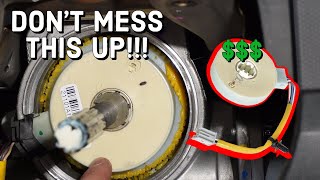
Typical fix: If the recall applies and DTC B2278 is present, a Mazda dealer will replace the steering torque sensor and reprogram the PSCM and Instrument Cluster, free of charge. If the vehicle is not covered or the recall was already performed, the torque sensor must be replaced. This is a complex DIY job that requires removing the steering column and 🎬 Watch this step-by-step walkthrough of the torque sensor replacement. careful alignment of the new sensor.
Est. part cost: $0 (if recall applies), $100-$200 (for an aftermarket sensor kit)
Rare But Worth Checking
- Power Steering Control Module (PSCM) Failure: While less common than the sensor, the PSCM can fail. The recall procedure involves reprogramming it, and if other codes like B1342 (PSCM Internal Fault) are present along with B2278, the entire steering column (which includes the PSCM) must be replaced under the recall. In some cases, a simple recalibration or 'trim' procedure with a bidirectional scan tool can temporarily resolve the issue, pointing to a logic fault in the PSCM.
- Wiring Harness/Connector Issue: Damage or corrosion at the connector for the torque sensor or PSCM can cause an intermittent signal and trigger this code. This is worth checking before replacing expensive components, especially if the recall has already been performed. Owners performing the repair themselves note the plastic connector mounts can be brittle and hard to remove without damage.
- Incorrect Sensor Calibration: Sometimes, after suspension work or an alignment where the wheels were turned with the vehicle off, the PSCM can get 'confused' and set a B2278 code. In these specific instances, simply clearing the code with an advanced scanner or performing the 'Steering Torque Sensor Trim' procedure can resolve the problem without parts replacement.
Diagnosis Steps
- Check the vehicle's VIN for Safety Recall 7614E status with a Mazda dealer or on the NHTSA website. This is the most important first step.
- If the recall is open, take the vehicle to a Mazda dealer for the free repair. Note that if no codes are present at the time of service, the dealer may only perform a software update, and the problem could recur.
- If the recall has been completed, use an advanced bidirectional scan tool to confirm B2278 is active or stored in the Power Steering Control Module (PSCM).
- If recent suspension or alignment work was performed, attempt to clear the code and perform the 'Steering Torque Sensor Trim' function with the scan tool first.
- Inspect the wiring and connectors at the base of the steering column leading to the PSCM and torque sensor for any visible damage, corrosion, or loose connections.
- If wiring is intact and the code persists after a trim attempt, the torque sensor has failed. Order a replacement kit.
- Follow a detailed, vehicle-specific procedure to remove the steering column and replace the steering torque sensor. This is a complex task. It is critical to use the supplied alignment tool and follow instructions perfectly to avoid damaging the new sensor.
- After installation, perform the 'Steering Torque Sensor Trim' or calibration procedure using a compatible scan tool to teach the PSCM the new sensor's position. Failure to do this will result in the system not working correctly.
Parts You'll Likely Need

- Steering Shaft Torque Sensor Kit
(OEM #ZZCT-32-693)— This is the component that fails, causing code B2278. The recall and TSBs specifically call for its replacement if the code is present. The Ford equivalent part number is CL8Z-3F818-A.
Trusted brands: Motorcraft (OEM for Ford), Dorman
OEM price range: $150-$350
Aftermarket price range: $100-$180
Related Codes That Often Appear With This One
- B1342 — This is an internal fault code for the Power Steering Control Module (PSCM). If seen with B2278, Mazda's recall procedure dictates replacing the entire steering column assembly, not just the torque sensor.
- B2277 — This is another PSCM-related fault. Similar to B1342, its presence alongside B2278 points towards a more severe internal failure requiring steering column replacement under the recall.
Technical Service Bulletins (TSBs) & Recalls

- 06-001-14-2887B: Notes that the prior TSB is superseded by Safety Recall 7614E.
- 06-001-14-2887A: Initially described the B2278 code and the availability of a torque sensor service kit before the recall was issued.
- NHTSA SB-10056129-8840: This is the full service bulletin for recall 7614E, detailing the exact procedure for dealers, including which DTCs warrant which part replacements.
Platform-Specific Known Issues
- Safety Recall 7614E (NHTSA 14V-282): This is the most critical issue for this code. It addresses the torque sensor failure. The remedy involves a software update for the PSCM and instrument cluster, and if code B2278 (or B1342/B2277) are found, the dealer replaces the necessary components for free.
- Post-Recall Failures: Many owners report that if they took their vehicle in for the recall when no codes were present, the dealer only performed the software update. The power steering then failed later, outside of the free recall repair, requiring the owner to pay for the sensor replacement.
- DIY Repair Difficulty: Forum users who have performed this repair themselves emphasize its difficulty. The alignment of the new sensor is extremely sensitive; if misaligned during installation, the new sensor can be instantly ruined. One user reported taking five attempts to get the alignment correct. Special tools like T45 Torx sockets and heavy-duty snap ring pliers are required.
Mechanic-Grade Diagnostic Values
- PSCM Live Data - Torque Sensor PID (TRQ_SENS) — expected: Values should change smoothly from 0 to -32 Nm when turning left, and 0 to 31.75 Nm when turning right.. Failure: If the values do not change, are erratic, or jump, the sensor is faulty.
- PSCM Power Supply Voltage — expected: 10-16 volts.. Failure: Voltage below 10V can cause erratic operation or set codes. Check BJB 80A MIDI fuse and circuit SBB01 (RD).
- PSCM Ground Circuit Resistance — expected: Less than 5 ohms.. Failure: Resistance greater than 5 ohms indicates a poor ground. Check resistance between PSCM connector C2231B-2, circuit GD116 (BK/VT), and a clean chassis ground.
Scan Tool Commands That Help
- Ford IDS / FORScan / Autel: Torque Sensor Trim Reset — This is a mandatory calibration step after replacing the torque sensor. It learns the new sensor's zero position. Failure to perform this will result in the power steering not working correctly or pulling to one side.
- Ford IDS / FORScan / Autel: ESP Sensor Calibration / IVD Initialization — This calibrates the steering angle sensor, which is related to the torque sensor. It should be performed after the Torque Sensor Trim and is sometimes necessary to resolve the fault, especially if suspension or alignment work was recently done.
- Ford IDS: PSCM Module Programming/Installation — This is used when replacing the entire steering column/PSCM assembly. It configures the new module to the vehicle's VIN and specifications.
Wiring & Ground Locations
- G206 (Hybrid) / G106 (Non-Hybrid) — For Hybrid models, G206 is located behind the left side of the dash. For non-hybrid models, G106 is at the left kick panel.. This is the primary ground point for the Power Steering Control Module (PSCM). A loose or corroded ground at this location can cause insufficient power, leading to code B2278 and loss of assist.
- PSCM Connectors C2231A / C2231B — Located on the Power Steering Control Module, which is integrated into the steering column.. These are the main electrical connectors for the PSCM. The ground circuit GD116 (BK/VT wire) is at pin 2 of C2231B. The main battery power SBB01 (RD wire) is at pin 1 of C2231B. The ignition power CBP35 (YE/GY wire) is at pin 1 of C2231A.
- Torque Sensor Connector — Connects directly to the torque sensor at the base of the upper steering column shaft, inside the vehicle cabin.. This is the direct connection for the failed component. A poor connection here can mimic a failed sensor. The diagnostic procedure involves checking for continuity and shorts on the three wires between this connector and the PSCM.
Real Owner Repair Stories
- Reddit user on r/fordescape (2008 Ford Escape) — Power steering failure, code B2278.
❌ Tried (didn't work) Four unsuccessful attempts to install and align the new torque sensor.
✅ What actually fixed it On the fifth attempt, the user discovered a trick: After installing the new sensor, they would slightly bump the front tires left or right while looking through the sensor's alignment hole with a flashlight. They would adjust the tires until the light shone brightly and perfectly centered through the hole, indicating the internal discs were aligned. They also note that disconnecting the battery overnight may have helped the system relearn after the successful physical installation. - YouTube channel Golden Auto Repair (2008-2011 Ford Escape/Mazda Tribute) — Steering wheel became very hard to turn after suspension work was performed with the vehicle lifted in the air.
❌ Tried (didn't work) The owner considered replacing the steering rack or taking it to a dealer.
✅ What actually fixed it The mechanic determined that turning the wheels by hand while the car was lifted had confused the torque sensor's calibration. Using an Autel scanner, he simply accessed the PSCM and cleared the B2278 code. This restored power steering function immediately without replacing any parts.
OEM Part Supersession History
Unknown, pre-recall part→CL8Z-3F818-A (Ford) / ZZCT-32-693 (Mazda)— The original sensor design was prone to failure, leading to Recall 14S05. This part number was released as the official service part for the recall and subsequent repairs.
Heads up: There are no known supersessions or incompatibility issues with CL8Z-3F818-A; it is the correct and current part for the 2008-2012 model years.
Helpful Videos

The information in this article is provided for general reference and educational purposes only. Vehicle specifications, procedures, and part compatibility can vary by production date, trim level, and region. Always consult your vehicle's factory service manual and verify part numbers before purchasing or performing repairs. Safety-critical components such as airbags, seat belts, and braking systems should be installed by a qualified professional.
- Mazda TRIBUTE:
- 🧭 Diagnostic Flowchart
- 🎬 Helpful Videos
- What's Unique About the 2008-2010 Mazda TRIBUTE
- Symptoms You May Notice
- Most Likely Causes
- Rare But Worth Checking
- Diagnosis Steps
- Parts You'll Likely Need
- Related Codes That Often Appear With This One
- Technical Service Bulletins (TSBs) & Recalls
- Platform-Specific Known Issues
- Mechanic-Grade Diagnostic Values
- Scan Tool Commands That Help
- Wiring & Ground Locations
- Real Owner Repair Stories
- OEM Part Supersession History
- 🎟️ Get 5% Off