

B2278 on 2008-2011 Mazda Tribute Hybrid: Power Steering Failure Causes and Fixes
Code B2278 on a 2008-2011 Mazda Tribute Hybrid means the steering shaft torque sensor is failing. This is a very common issue that led to a safety recall (Mazda 7614E / NHTSA 14V-282). The official fix, performed by a dealer, is a software update. However, if code B2278 is present, the recall mandates the replacement of the torque sensor or steering column, free of charge.
- B2278 means your power steering is about to fail or has already failed due to a faulty torque sensor.
- This is a known defect covered by Mazda Safety Recall 7614E. Your first step should always be to contact a Mazda dealer to see if your vehicle is eligible for a free repair.
- Driving the vehicle is unsafe, as the steering can become extremely heavy without warning.
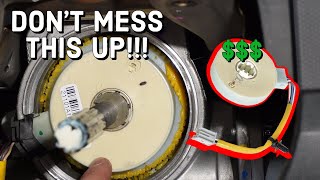
- If you attempt a DIY repair, precise alignment of the new sensor is critical. Failure to do so can destroy the new part and cause the steering wheel to jerk violently upon startup.
What's Unique About the 2008-2011 Mazda TRIBUTE HYBRID
The 2008-2011 Mazda Tribute is a mechanical twin to the Ford Escape and Mercury Mariner, and they all share the same electronic power steering system and its widespread, well-documented flaws. The failure of the steering torque sensor was so common across these platforms that it prompted a major safety recall by both Ford (14S05) and Mazda (7614E). The issue stems from a poor signal-to-noise ratio from the sensor, which the control module interprets as a fault, causing it to shut down power assist as a safety precaution.
Diagnostic Flowchart
Tap your situation to follow the diagnostic path that matches what you're seeing on this vehicle.
Symptoms You May Notice
- Complete loss of power steering assist
- Steering becomes very heavy and difficult to turn, especially at low speeds
- Power steering warning light illuminates on the dashboard
- Steering wheel may shake or jerk violently before or during the failure
- Intermittent failure, sometimes temporarily resolved by restarting the vehicle
- Problem is more likely to occur in cold weather, according to some owner reports
- Replacing the entire steering column when only the torque sensor is needed. A TSB issued before the recall specifically introduced a torque sensor service kit (Part No. ZZCT-32-693) to avoid replacing the whole column.
- Dealership claiming the issue is unrelated to the recall. If the recall was performed as a software-update-only because no codes were present at the time, a subsequent failure with code B2278 is the exact condition the recall was meant to address. Owners may need to escalate the issue with Mazda corporate.
Most Likely Causes
- Failed Steering Shaft Torque Sensor 🔴 High Probability This is a known manufacturing or design defect that prompted Mazda Safety Recall 7614E (NHTSA Campaign 14V-282) and Ford Recall 14S05. The sensor provides an unreliable signal to the control module, which interprets the 'noise' as a fault.
How to confirm: Confirm code B2278 is present using an OBD-II scanner that can read chassis ('B' or 'C') codes. A dealership must check the vehicle's VIN to see if the recall work has been performed. The recall procedure itself involves checking for this specific DTC to determine the repair path.
Typical fix: The official fix under recall 7614E involves a dealer reprogramming the Power Steering Control Module (PSCM) and Instrument Cluster (IC) module. Crucially, if DTC B2278 is present when the vehicle is brought in, the recall procedure directs the dealer to replace the torque sensor or the entire steering column assembly, free of charge. If the recall has already been performed (software update only) and the issue reoccurs, the owner may have to pay for the sensor replacement.
Est. part cost: $0 if covered by recall. $150-$350 for an OEM sensor kit if not covered.
Rare But Worth Checking
- Wiring Harness Issue: An open or short circuit in the wiring between the torque sensor and the Power Steering Control Module (PSCM) can mimic a sensor failure. This should be checked before replacing expensive components if the recall does not apply.
- Power Steering Control Module (PSCM) Failure: While much less common than sensor failure, the PSCM itself can malfunction. This is typically diagnosed only after a new torque sensor fails to resolve the issue. Some owners have reported needing to replace the PSCM even after the recall work.
- Weak Battery or Poor Connection: Some owners in forums have noted that Electronic Power Steering (EPS) systems can be sensitive to low voltage. Before extensive repairs, it's worth ensuring the battery is healthy and the terminals are clean and tight, though this is less likely to be the root cause for a persistent B2278 code.
Diagnosis Steps
- Check the vehicle's VIN with a Mazda dealer or on the NHTSA website to determine if Safety Recall 7614E is open for your vehicle. If it is, schedule an appointment with a dealer for the free repair.
- If the recall is not applicable or has been completed, use an OBD-II scanner capable of reading 'B' (Body) or 'C' (Chassis) codes to confirm B2278 is the active or stored code in the PSCM.
- Using a bidirectional scan tool like FORScan, monitor the live data PID for the steering torque sensor (TRQ_SENS). The value should change smoothly as you turn the steering wheel. No change or erratic, jumping values indicate a failed sensor.
- If sensor data is suspect, inspect the wiring and connectors between the torque sensor (located on the steering column) and the PSCM for any damage, corrosion, or loose connections.
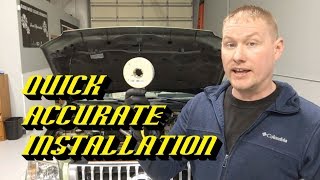
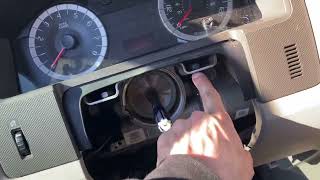
- If wiring is intact and the sensor is confirmed faulty, replace the steering shaft torque sensor. 🎬 Watch this step-by-step Mazda Tribute torque sensor replacement walkthrough. This is a complex job. (See DIY Warning).
- After replacing the sensor, a 'Steering Torque Sensor Trim' or calibration procedure must be performed with a bidirectional scan tool. This procedure learns the new sensor's straight-ahead position. Failure to do this can result in the repair not working.
- If a new, properly installed and calibrated OEM sensor does not fix the issue, the Power Steering Control Module (PSCM) may be at fault, though this is rare.
Parts You'll Likely Need
- Steering Shaft Torque Sensor Kit
(OEM #CL8Z-3F818-A (Ford), ZZCT-32-693 (Mazda))— This is the component that fails, causing code B2278. The Ford part number is more commonly referenced and available. It is highly recommended to use an OEM part, as aftermarket versions have been reported to fail or be operationally different.
Trusted brands: Ford/Motorcraft (OEM)
OEM price range: $150-$350
Aftermarket price range: $65-$150 - Steering Column Assembly
(OEM #ZZ2A-32-100B)— This is only needed if other codes like B1342 or B2277 are present along with B2278, as per the recall procedure. It may also be required if the column is damaged during a failed sensor replacement attempt.
Trusted brands: Mazda OE, Ford OE
OEM price range: $800-$1200
Aftermarket price range: $500-$800
Related Codes That Often Appear With This One
- B1342 — This is an internal fault code for the Power Steering Control Module. If seen with B2278, the recall procedure often dictates replacing the entire steering column assembly.
- B2277 — This is another internal PSCM fault code. Similar to B1342, its presence alongside B2278 typically points toward a more severe failure requiring steering column replacement under the recall.
Technical Service Bulletins (TSBs) & Recalls
- Mazda 06-001-14-2887B: Issued July 2014, this bulletin officially states that the previous TSB is superseded by Safety Recall 7614E.
- Mazda 06-001-14-2887A: Issued March 2014, this bulletin first acknowledged DTC B2278 and announced the availability of a torque sensor service kit to repair the issue without replacing the entire column.
- Mazda SB-10056129-8840 (Recall 7614E Service Procedure): This document details the full recall repair procedure for technicians. It specifies when to only reprogram the modules versus when to replace the torque sensor (if only B2278 is present) or the entire steering column (if B2278 is present with B1342 or B2277).
- Ford TSB 14-0077: While related to F-150s, this is often confused in searches. The relevant document for the Escape/Tribute is the recall 14S05 service procedure, which mirrors Mazda's recall document.
Platform-Specific Known Issues
- Safety Recall 7614E / NHTSA 14V-282: This is the most critical issue. Mazda acknowledged the defect where the torque sensor fails, causing a loss of power steering. The fix is performed by dealers free of charge and involves software updates and, if DTC B2278 is present, component replacement.
- Temperature Sensitivity: Some owners report that the power steering failure is more frequent in cold weather. One owner on the Car Talk Community forum described the power steering working perfectly in warm months but failing consistently below 40°F.
- Post-Recall Failures: Multiple owners have reported that the initial recall fix, which was often just a software reprogram, did not solve the problem long-term. The power steering failed again later, requiring the physical replacement of the torque sensor at the owner's expense.
Mechanic-Grade Diagnostic Values
- Live Data PID: TRQ_SENS (Torque Sensor Reading) — expected: Value should change smoothly and proportionally as the steering wheel is turned.. Failure: Value is stuck, jumps erratically, or does not change with steering input.
- Live Data PID: TRQ_S_CORR (Torque Sensor Correction) — expected: This value represents the learned center or 'zero' point. After calibration, it should be very close to the TRQ_SENS value when the wheel is centered and untouched.. Failure: A large discrepancy between TRQ_SENS (at rest) and TRQ_S_CORR can indicate a calibration issue or a failing sensor.
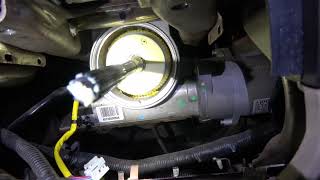
- Torque Sensor Installation Alignment Window — expected: There is a very small (approx. 5-degree) window of accuracy for aligning the new sensor. A small hole in a window on the sensor housing must be perfectly centered before pulling the locking pin on the new sensor.. Failure: If misaligned, upon key-on, the steering wheel may violently spin to one side, destroying the new sensor.
Scan Tool Commands That Help
- Ford IDS / FORScan: Steering Torque Sensor Trim — This function must be performed after replacing the torque sensor to calibrate the new sensor's straight-ahead position. Failure to perform this calibration is a common reason for the repair failing.
- Ford IDS / FORScan: PSCM Self-Test — Used to verify if DTCs B2278, B1342, or B2277 are present, which dictates the correct repair path under the recall (reprogram, replace sensor, or replace column).
Wiring & Ground Locations
- PSCM (Power Steering Control Module) — On the steering column assembly itself, near the power steering motor.. The torque sensor connects directly to this module. Checking the connector and harness at this location is a key diagnostic step.
- G10 (Hybrid) / G6 (Except Hybrid) — G10 (Hybrid) is located at the rear of the engine compartment. G6 (non-hybrid) is at the left rear of the engine compartment.. These are the main ground points for the PSCM. A poor ground connection here could potentially cause erratic behavior or fault codes, although it's a less common cause than sensor failure.
- Smart Junction Box (SJB) Fuse 35 (10A) — The SJB is located behind/below the center of the dash.. This fuse provides the key-on power to the PSCM. A problem with this circuit could cause the PSCM to lose power and set faults.
- Battery Junction Box (BJB) 80A MIDI Fuse — The BJB is on the left side of the engine compartment.. This large fuse supplies the high-current power for the electric power steering motor. While a failure here might not directly cause B2278, it would result in a total loss of assist.
Real Owner Repair Stories
- Reddit user corfr (2008 Ford Escape Hybrid) — Initial DTC B2278 and loss of power steering. After replacing the sensor, the code would return after 15 minutes of driving, and assist would be gone on the next startup.
❌ Tried (didn't work) Replaced the torque sensor with an aftermarket part from Amazon. The first attempt failed due to misalignment (wheel spun to the left). The second replacement seemed to work but the code and issue returned intermittently.
✅ What actually fixed it Performing the 'Steering Angle Trim' (calibration) using FORScan software. After the calibration, the error did not reappear. The user noted the Ford dealership had diagnosed it as a faulty steering column and quoted $3,000 CAD for a replacement. - Reddit user Bravada97 (2008 Ford Escape XLT with 120k miles) — Power steering failure with code B2278.
❌ Tried (didn't work) Took the car to a dealership where the recall had already been performed via software update by the previous owner. The dealer refused to replace the sensor under recall and quoted nearly $2,000 to replace the entire steering column.
✅ What actually fixed it The owner took the vehicle to a different, independent-minded dealership. This second dealer acknowledged that B2278 only requires a torque sensor replacement and performed the repair for approximately $650, successfully fixing the issue.
When the Usual Fixes Don't Work
- While the official recall procedure from Mazda and Ford is the primary fix, there are numerous owner accounts of post-recall failures. Specifically, if the dealer only performed the software update (because no codes were present at the time of the recall service), the underlying sensor issue was not resolved. When the sensor inevitably failed later, setting code B2278, owners were often told the recall was 'completed' and that the subsequent repair was at their own expense. In these cases, successful resolution often required either finding an independent shop or another dealer willing to perform the sensor-only replacement at a reasonable cost, or escalating the issue with the manufacturer's corporate customer service.
OEM Part Supersession History
N/A→CL8Z-3F818-A (Ford) / ZZCT-32-693 (Mazda)— This service kit was created as a lower-cost repair option in response to the widespread failures, allowing replacement of just the sensor instead of the entire steering column assembly.
Heads up: Extreme caution is advised with aftermarket versions of this part. Many are visually identical but lack the reliability of the OEM Ford/Motorcraft part. Some vendors note that genuine OEM sensors have a visible serial number barcode, which many Chinese copies lack.
Helpful Videos
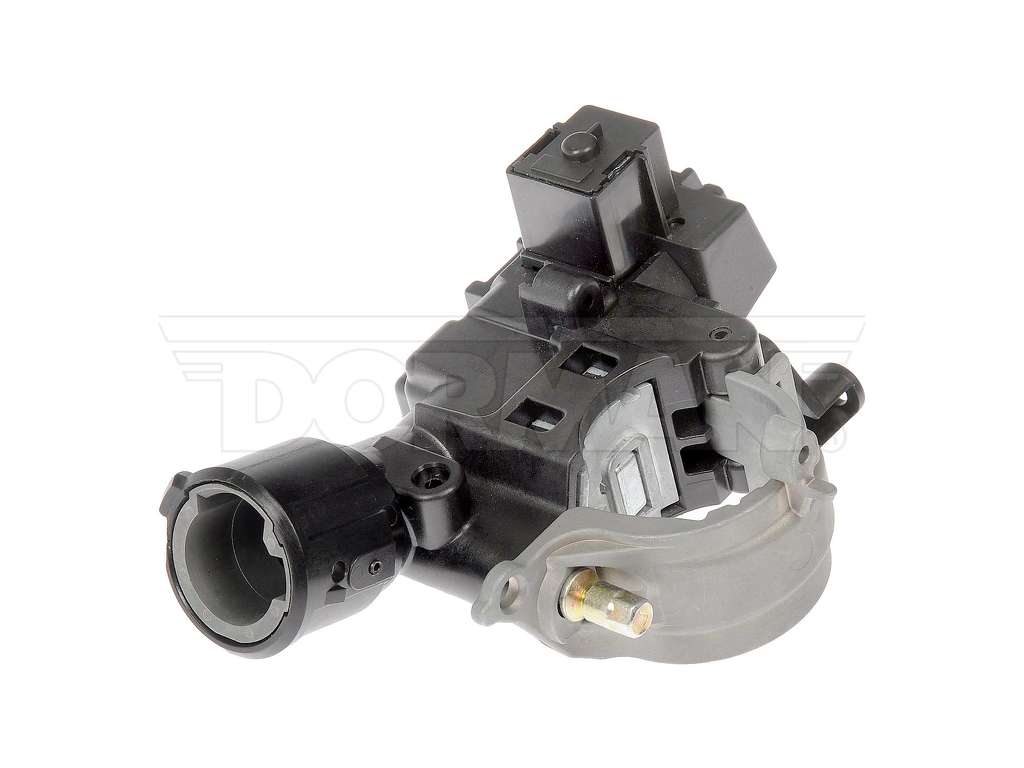
We Have This Part in Stock

The information in this article is provided for general reference and educational purposes only. Vehicle specifications, procedures, and part compatibility can vary by production date, trim level, and region. Always consult your vehicle's factory service manual and verify part numbers before purchasing or performing repairs. Safety-critical components such as airbags, seat belts, and braking systems should be installed by a qualified professional.
- Mazda TRIBUTE HYBRID:
- 🧭 Diagnostic Flowchart
- 🎬 Helpful Videos
- 🛍️ Shop This Part
- What's Unique About the 2008-2011 Mazda TRIBUTE HYBRID
- Symptoms You May Notice
- Most Likely Causes
- Rare But Worth Checking
- Diagnosis Steps
- Parts You'll Likely Need
- Related Codes That Often Appear With This One
- Technical Service Bulletins (TSBs) & Recalls
- Platform-Specific Known Issues
- Mechanic-Grade Diagnostic Values
- Scan Tool Commands That Help
- Wiring & Ground Locations
- Real Owner Repair Stories
- When the Usual Fixes Don't Work
- OEM Part Supersession History
- 🎟️ Get 5% Off