

B2286 on 2021 Ram 1500: Understanding the 'Calibration Not Learned' Code
This code means a control module has lost its calibration data. On the 2021 Ram 1500, it most often points to a software issue in the Active Damping Suspension system, triggering a 'Service Active Dampening System' message. It can also be set by the PCM along with engine misfire codes. The fix almost always requires a dealer visit for a software update or re-calibration with a wiTECH scan tool.
- Code B2286 on a 2021 Ram 1500 means a module has lost its calibration, it is not a specific part failure.
- Look for other signs: A 'Service Active Dampening System' message points to the suspension module, while a rough running engine with misfire codes points to the engine computer (PCM).
- Do not replace expensive parts like shocks or engine components without first addressing the calibration issue.
- A trip to the dealer is almost always necessary to fix this code, as it requires proprietary software (wiTECH) to re-program the affected module.
- Be cautious after disconnecting or replacing the battery, as this is a known trigger for the B2286 code.
What's Unique About the 2021-2021 Ram 1500

On the 2021 Ram 1500, particularly the TRX model, this code is notable because it's linked to two of the truck's advanced systems: the optional Active Damping air suspension and the complex Powertrain Control Module. Unlike a straightforward sensor failure, B2286 points to a software or configuration problem within a specific computer. Forum discussions among Ram TRX owners show this code frequently appears with the 'Service Active Dampening System' message, often after a battery disconnect, replacement, or significant voltage drop, highlighting the sensitivity of these modules to stable power. TSBs for both the ADCM and PCM confirm that a software re-flash is the prescribed fix.
Diagnostic Flowchart

Tap your situation to follow the diagnostic path that matches what you're seeing on this vehicle.
Symptoms You May Notice

- "Service Active Dampening System" message displayed on the instrument panel cluster.
- Check Engine Light (Malfunction Indicator Lamp) is on.
- Rough engine idle, especially after a cold start.
- Long crank time during engine start.
- Engine stalls when shifting into gear after a cold start.
- Noticeably poor, bouncy, or stiff ride quality.
- Engine speed drops or runs rough when shifting from Park to Drive/Reverse.
- Replacing suspension shocks or air springs when the issue is a software calibration.
- Replacing spark plugs and ignition coils for misfires without addressing the underlying PCM calibration issue when B2286 is present.
- Repeatedly attempting DIY resets (like battery disconnects or console button holds) when a dealer-level wiTECH tool is required for the specific calibration routines outlined in TSBs.
Most Likely Causes

- Active Damping Control Module (ADCM) Software Requires Update or Re-calibration 🔴 High Probability As documented in TSB S2108000071, a software issue can cause the ADCM to lose its calibration, especially after events like a battery disconnect or significant voltage drop. This is a very common complaint on TRX forums after battery replacement.
How to confirm: A dealer or shop with a wiTECH scan tool can check the software version of the ADCM and see if a re-calibration procedure is required. The presence of the 'Service Active Dampening System' message is a strong indicator. The B2286 code will be stored in the ADCM.
Typical fix: Reprogramming the ADCM with the latest software and performing the 'Height Sensor Calibration' routine with the vehicle on level ground.
Est. part cost: $0 - Powertrain Control Module (PCM) Software Requires Update or Re-calibration 🟡 Medium Probability TSB 18-086-23 (which supersedes 18-145-22) explicitly lists B2286 alongside a host of engine misfire codes (P0300-P0308) for the 6.2L Supercharged engine in the TRX. This indicates a known software anomaly in the PCM.
How to confirm: Scan for codes and see if B2286 is present in the PCM along with multiple P030x cylinder misfire codes. Symptoms like rough idle and stalling also point to the PCM.
Typical fix: Reprogramming the PCM with the latest software version using a wiTECH scan tool. The procedure in TSB 18-086-23 also requires performing a 'TRX Suspension Rebound Reset / Ride Height Sensor Learn' routine afterward.
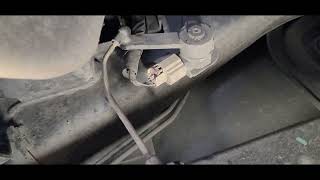
Est. part cost: $0 - Disconnected or Damaged Suspension Ride Height Sensor ⚪ Low Probability → Shop Suspension Ride Height Sensor Owners on forums report that the ride height sensors, particularly the rear ones, are somewhat exposed. A loose connector from the factory or damage from road debris can interrupt the signal, leading to a calibration fault. This can also happen if aftermarket suspension links are installed to lift the truck, tricking the sensor.
How to confirm: Visually inspect the ride height sensors and their connecting rods, located on the control arms. Check for bent rods or loose/damaged connectors. One TRX owner reported the message appeared at just 17 miles, and the dealer found a disconnected sensor. 🎬 Watch: A quick visual check for the active dampening error.
Typical fix: Straightening or replacing the bent rod, and reconnecting or repairing the sensor connector. A suspension re-calibration will be needed afterward using a capable scan tool.
Est. part cost: $50-$150
Rare But Worth Checking
- Faulty Control Module: While rare, the Active Damping Control Module (ADCM) or the Powertrain Control Module (PCM) itself could fail. One forum member reported their ADCM module required replacement after software fixes failed. This should only be considered after all software updates and re-calibration procedures have been unsuccessful.
- Low Battery Voltage / Failing Battery: A weak or failing battery can cause a cascade of low-voltage error codes across multiple modules, including the ADCM and ABS. While the B2286 code points to lost calibration, the root cause can be an unstable power supply. It is crucial to test the battery and charging system health before attempting expensive module reprogramming.
Diagnosis Steps
- Check and verify battery health and charging system voltage. A weak battery is a common cause of multiple electronic faults.
- Read all Diagnostic Trouble Codes (DTCs) from all available modules using a capable OBD-II scanner.
- Note which module stored the B2286 code (e.g., ADCM or PCM).
- If the 'Service Active Dampening System' message is present, the issue is almost certainly with the suspension control module, as per TSB S2108000071.
- Inspect the ride height sensors and their linkages for any physical damage, bent rods, or loose connections, which is a known real-world failure point.
- If engine performance issues and P030x codes are present, the problem is related to the PCM, as per TSB 18-086-23.
- Check for relevant Technical Service Bulletins (TSBs), specifically S2108000071 for suspension issues and 18-086-23 for PCM issues.
- The vehicle will likely need to be taken to a dealership or a qualified shop with a wiTECH scan tool to perform the necessary software updates and module re-calibration procedures. Ensure the shop follows the specific TSB procedure (e.g., vehicle on ground for ADCM calibration, vehicle lifted for PCM rebound reset).
Parts You'll Likely Need
- Software Update / Re-calibration — This is not a physical part, but a labor procedure. In most cases, the root cause is a software glitch that requires a dealer to re-flash and re-calibrate the affected module (ADCM or PCM) using a wiTECH tool.
OEM price range: $150-$300
Aftermarket price range: N/A - Suspension Ride Height Sensor
(OEM #68277076AC (Right Rear), 68277079AC (Left Rear))— If the sensor itself is damaged, it will need to be replaced before a calibration can be successfully performed. The part number supersedes 68277076AB and 68277079AB respectively.
Trusted brands: Mopar
OEM price range: $60-$90
Aftermarket price range: $40-$70 - Suspension Ride Height Sensor Link — If the 'Service Active Dampening System' message is on, the sensor link rod can get bent by road debris, throwing off the sensor reading and requiring a calibration.
Trusted brands: Mopar
OEM price range: $40-$80
Aftermarket price range: $25-$50
Related Codes That Often Appear With This One
- P0300 — Indicates multiple cylinder misfires, which TSB 18-086-23 links directly with B2286 as part of a PCM software issue on 6.2L Supercharged engines.
- P0301-P0308 — These codes pinpoint misfires in specific cylinders. They often appear with B2286 when the PCM has lost its engine-related calibration data.
- U0401 — This code for 'Implausible Data Received from ECM/PCM' is frequently seen by owners alongside the 'Service Active Dampening System' message. It appears the ADCM sets this code when it receives bad data from the PCM, which may be caused by the B2286 calibration issue.
Technical Service Bulletins (TSBs) & Recalls
- S2108000071 Rev. A: Cluster Displays Service Active Dampening System Message, DTC B2286 Calibration Not Learned ? Lost Calibration
- 18-086-23 (supersedes 18-145-22): Flash: Powertrain Control Module (PCM) Updates for MIL illumination with misfire codes and B2286.
Platform-Specific Known Issues
- The Active Damping System on Ram 1500 TRX models is particularly sensitive to battery voltage changes. Disconnecting the battery or having it die is a very common trigger for the B2286 code and the 'Service Active Dampening System' message.
- On TRX models, TSB 18-086-23 outlines a specific two-part fix: first, flash the PCM, then perform a 'TRX Suspension Rebound Reset / Ride Height Sensor Learn' routine. The rebound reset requires the truck to be lifted with all wheels off the ground.
- TSB S2108000071 for the ADCM calibration explicitly states the vehicle MUST be on the ground for the 'Height Sensor Calibration' routine to work correctly.
Mechanic-Grade Diagnostic Values
- Ride Height Sensor Voltage (Live Data) — expected: Approximately +/- 2.5 volts. Failure: A reading near zero, such as 0.25 volts, indicates a faulty sensor or circuit.
- AlfaOBD 'Write Suspension Height Values' (Calibration) — expected: Factory values are approximately Front: 100mm (+/- 12mm), Rear: 68mm (+/- 12mm).. Failure: Values outside the 50mm to 135mm range may cause the system to fail calibration.
- Battery Voltage During Module Flashing — expected: Stable voltage between 13.2 and 13.5 volts.. Failure: Dropping below 13.2V or climbing above 13.5V can cause the flash procedure to fail or corrupt the module.
Scan Tool Commands That Help
- wiTECH: Height Sensor Calibration — Standard procedure for B2286 in the ADCM, often after a battery replacement. Per TSB S2108000071, the vehicle must be on level ground.
- wiTECH: TRX Suspension Rebound Reset / Ride Height Sensor Learn — Required as the second step after flashing the PCM software on a TRX model, per TSB 18-086-23. This procedure requires the vehicle to be lifted with wheels off the ground.
- AlfaOBD: Write Suspension Height Values — An advanced DIY option to perform suspension recalibration. This must be followed by the 'height sensor check' routine to save the new values.
- JScan: Height Sensor Calibration — Mentioned as another aftermarket tool capable of performing the necessary suspension recalibration.
Wiring & Ground Locations
- Active Damping Control Module (ADCM) — Reported by some owners to be located behind the rear seats.. A loose connection at the module itself could cause a loss of communication or calibration data. This is a potential point of failure if software fixes do not work.
- Ride Height Sensor Connector — In the wheel well area, connecting to each of the four ride height sensors. The connector has a red locking tab.. A connector not fully seated from the factory has been identified as a direct cause of the 'Service Active Damping System' message.
- Frame Rail Ground Point — The upfitter guide shows a main ground point on the frame rail.. A poor ground connection for the suspension module or sensors can introduce electrical noise and intermittent faults, potentially leading to a lost calibration error.
Real Owner Repair Stories
- RAM TRX Forum user 'flametrx' (2021 Ram TRX, ~25 miles) — 'Service Active Damping System' message appeared on the first drive home from the dealership.
❌ Tried (didn't work) Owner did not attempt repairs before taking it to the dealer.
✅ What actually fixed it The dealer found a wire/plug in the right front wheel well area that was not fully seated from the factory. After securing the connection and performing a recalibration, the problem was solved. - YouTube channel 'Gears and Gadgets' (2022 Ram TRX) — 'SERVICE ACTIVE DAMPENING SYSTEM' error appeared after running over a small tree branch in the road.
❌ Tried (didn't work) Taking it to the dealership, who diagnosed the bent rod but would not cover it under warranty and quoted $241 for the repair.
✅ What actually fixed it The owner removed the bent rear ride height sensor rod, straightened it using channel lock pliers, and reinstalled it. This brought the sensor back into its correct operating range and cleared the code after a short drive. - RAM TRX Forum user (Ram TRX (year not specified)) — Recurring 'Service Active Dampening' message, especially after remote start.
❌ Tried (didn't work) Dealer performed a full recalibration twice, but the error message kept returning.
✅ What actually fixed it The issue was ultimately a faulty Active Dampening Control Module (ADCM) itself, which had to be replaced.
OEM Part Supersession History
05035632AB, 05035632AC, 05035632AD, 05036035AA→05036035AB— Part revision and update by manufacturer for the Active Dampening Control Module (ADCM).68277076AB→68277076AC— Part revision for the right rear ride height sensor.
Helpful Videos

The information in this article is provided for general reference and educational purposes only. Vehicle specifications, procedures, and part compatibility can vary by production date, trim level, and region. Always consult your vehicle's factory service manual and verify part numbers before purchasing or performing repairs. Safety-critical components such as airbags, seat belts, and braking systems should be installed by a qualified professional.
- Ram 1500:
- 🧭 Diagnostic Flowchart
- 🎬 Helpful Videos
- What's Unique About the 2021-2021 Ram 1500
- Symptoms You May Notice
- Most Likely Causes
- Rare But Worth Checking
- Diagnosis Steps
- Parts You'll Likely Need
- Related Codes That Often Appear With This One
- Technical Service Bulletins (TSBs) & Recalls
- Platform-Specific Known Issues
- Mechanic-Grade Diagnostic Values
- Scan Tool Commands That Help
- Wiring & Ground Locations
- Real Owner Repair Stories
- OEM Part Supersession History
- 🎟️ Get 5% Off