

Ultimate Guide to OBD-II Code B2290: Occupant Classification System Fault
The Most Comprehensive B2290 Resource: What it means, why it triggers, and exactly how to fix it.
- Code B2290 disables the passenger airbag, preventing deployment in a crash due to a fault in the occupant weight sensing system.
- The most common repair is replacing the passenger seat cushion sensor assembly, which costs between $1,050 and $2,250 at a dealership.
- Always start diagnosis by clearing objects jammed under the passenger seat and inspecting the yellow SRS wiring harness for physical damage.
- A repair requires a 'Zero Point Calibration' using a bidirectional scan tool; skipping this mandatory step leaves the airbag light permanently on.
- On General Motors vehicles built between 1999 and 2014, B2290 indicates a power seat motor failure, completely unrelated to the airbag system.
What Does B2290 Mean?
B2290 indicates that the vehicle's primary computer, the Powertrain Control Module (PCM) or Restraints Control Module (RCM), has detected a fault within the Occupant Classification System (OCS). This critical safety system uses sensors—typically a pressure-sensitive bladder in the seat cushion or strain-gauge sensors in the seat rails—to determine the weight and position of the person or object in the front passenger seat. Based on this data, it decides whether to enable or disable the passenger-side airbag. The goal is to prevent airbag deployment when a small child or a child seat is present, as the force of the airbag is harmful.
Technical definition: The official SAE/ISO definition for B2290 is "Occupant Classification System Fault." This generic code indicates that the Restraints Control Module (RCM) has received a fault signal from the dedicated Occupant Classification System Module (OCSM). On many Ford, Mazda, and Jaguar vehicles, DTC B2290 in the RCM is informational only; the OCSM must be scanned directly to retrieve more specific, actionable fault codes (like B00A0). The fault stems from the sensor itself, the wiring, the OCSM, or a loss of calibration.
Can I Drive With B2290?
Yes, But With Caution. You can physically drive the vehicle, but it is unsafe for a front passenger. The B2290 code signifies that the passenger airbag system is disabled as a fail-safe. In a crash, the passenger airbag will not deploy, drastically increasing the risk of serious injury or death. Driving with this light on also causes a failed state safety inspection in jurisdictions that mandate functional SRS systems.
Common Causes
- Faulty OCS Sensor (Bladder or Rail Type) (Very Common) — This is the most frequent culprit. The sensor, either a gel-filled bladder in the seat cushion or a strain-gauge sensor integrated into the seat track, fails and sends implausible data. 🎬 Watch: How to test a seat occupancy sensor yourself These sensors are delicate and sustain damage from spills, sharp objects, or repeated stress. On most vehicles, the sensor is not sold separately and requires replacing the complete seat cushion or rail assembly.
- Damaged Wiring, Loose Connectors, or Poor Grounds (Common) — The wiring harness under the passenger seat is highly vulnerable. Items pushed under the seat, aggressive vacuuming, or repeated seat movement chafes, pinches, or severs wires. Connectors to the OCSM also become loose or corroded, interrupting the signal. A corroded ground connection introduces electrical noise, triggering the B2290 code.
- Loss of System Calibration ('Zero Point') (Less Common) — The OCS system requires a precise 'zero point' calibration to know the weight of an empty seat. This calibration is lost after a battery replacement, seat removal, or a software glitch. Re-calibration requires a manufacturer-specific bidirectional scan tool. 🎬 See how to perform a seat zero point calibration
- Failed Occupant Classification System Module (OCSM) (Less Common) — The OCSM, the small computer under the passenger seat that processes sensor data, fails internally. Disconnecting the OCSM and seeing the B2290 code clear (while a communication code like U1900 appears) isolates the module as the faulty component.
- Physical Interference with Seat or Sensors (Rare) — External factors interfere with the sensors. This includes overly tight aftermarket seat covers, objects wedged between the seat cushion and console, or a floor mat bunched up against the seat frame applying false pressure.
- Liquid Spills into the Seat Cushion (Rare) — A significant liquid spill that soaks into the passenger seat cushion damages the internal bladder-style sensor or its electronics, leading to a direct short circuit and the B2290 code.
- Internal RCM (Restraints Control Module) Fault (Very Rare) — The main airbag control module (RCM) develops an internal fault that incorrectly flags a problem with the OCS system. This is diagnosed only after proving all other OCS components function correctly.
Symptoms
- Airbag Warning Light is On — The primary and most certain symptom. The airbag or SRS light on the instrument cluster remains illuminated while the engine is running.
- Passenger Airbag 'Off' Light is On (Even with an Adult in the Seat) — The status indicator light remains lit even when a full-sized adult is properly seated. This confirms the system has failed to classify the occupant and disabled the airbag.
- Flashing Airbag Light (Lamp Fault Code) — On older Ford models, the airbag light flashes a two-digit code before staying solid. A code '16' is commonly associated with a B2290 fault on F-150s.
- Audible Chime — Some vehicles sound a secondary warning chime along with the illuminated airbag light to alert the driver of the SRS system fault.
- Inability to Clear the Code with a Basic Scanner (scan-tool only — no driver-felt sign) — Using a standard OBD-II code reader, the B2290 fault reappears instantly after being cleared. The SRS system performs a self-test at every startup, immediately detecting the hard fault.
Diagnostic Flowchart
Tap your situation to follow the diagnostic path that matches what you're seeing on this code.
Common Fixes & Costs
- Replacing the OCS Sensor/Seat Cushion Assembly
— Parts: $800-$1,800, Labor: $250-$450, ~2.5 hr book time
(Professional)
Ford F-150 (2004-2008): OEM 7L1Z-96632A13-A (Varies by trim) (Alt: N/A)
Ford Fusion (2006-2009): OEM 8E5Z-96632A13-A (Kit with module) (Alt: N/A) - Repairing Damaged Under-Seat Wiring or Connectors — Parts: $10-$30, Labor: $125-$250, ~1.5 hr book time (Intermediate)
- OCS System Recalibration — Parts: $0, Labor: $150-$300, ~1 hr book time (Professional)
- Replacing the Entire Passenger Seat Assembly (Used) — Parts: $200-$600, Labor: $150-$300, ~2 hr book time (Intermediate)
- Replacing the Occupant Classification System Module (OCSM)
— Parts: $250-$700, Labor: $100-$200, ~1 hr book time
(Professional)
Ford Fusion (2006-2009): OEM 6E5Z-14B062-AA (Alt: N/A)
Used vs. New Parts: Buying Guide
When a used part is worth it: Buying a complete used passenger seat assembly from a salvage yard is a cost-effective alternative to a new $1,500+ seat cushion/sensor from the dealer. This is highly practical for older vehicles where the cost of a new part exceeds the car's value.
Donor-vehicle mileage cap: roughly under 100000 miles for the part to have meaningful remaining life.
Donor quality checklist:
- Verify the donor vehicle was not in an accident; crash data locks SRS components.
- Match the part number and seat features (power, heat, material) exactly.
- Avoid parts with any signs of water damage or rust on the rails.
- Prefer donors from dry climates to minimize connector corrosion.
Decision logic:
- If The fault is confirmed to be only the OCSM and it is available separately → Purchase a new or professionally remanufactured module, as it's less labor-intensive than a full seat swap.
- If Vehicle is over 10 years old and budget is the primary concern → Source a complete used seat assembly, but budget $150-$300 for professional recalibration.
- If The required part is the sensor integrated into the seat cushion → Favor a new OEM part for reliability, as used sensors carry a high risk of being faulty.
Warranty tradeoff: Used parts from salvage yards typically have a 30-90 day warranty, which may not reveal an intermittent fault. New OEM parts carry a 12-month or longer warranty when installed by a dealer.
Worst-case if a used part fails: $300-$600 if a used part is faulty, covering initial installation labor, diagnostic time to re-confirm the fault, and labor to swap it again.
What Happens If You Wait — Timeline
- Immediate: Code B2290 is set in the Restraints Control Module. The airbag warning light illuminates. The 'Passenger Airbag Off' indicator illuminates, confirming the passenger airbag is disabled. (MPG impact: 0%% · Added cost: $0)
- 0-12 months: The safety risk is constant; the passenger airbag will not deploy in a collision. The vehicle fails its annual safety inspection in states requiring functional SRS systems. (MPG impact: 0%% · Added cost: $50-$200 in potential fines and re-inspection fees.)
- Long-term (12+ months): The primary consequence remains the disabled airbag. There is no evidence that an OCS fault causes cascading damage to other components. (MPG impact: 0%% · Added cost: $0)
- At time of accident: In an accident requiring airbag deployment, the passenger airbag fails to deploy. This is the difference between minor and severe or fatal injuries. (MPG impact: 0%% · Added cost: Potentially hundreds of thousands in medical bills and liability costs.)
Cost of Not Fixing It
- Immediate: The passenger airbag is disabled and will not deploy in a crash, drastically increasing the risk of serious injury or death for a passenger. (Added cost: N/A)
- 0-12 months: Vehicle fails mandatory state safety inspections in many jurisdictions, preventing legal registration renewal. (Added cost: $50-$200 in potential fines, towing, and re-inspection fees.)
- Long-term: The primary cost remains the immense safety risk and liability in the event of an accident with an unprotected passenger. (Added cost: Incalculable safety and liability cost.)
Diagnosis Steps
- Perform a Thorough Visual and Physical Inspection
Remove ALL items from, under, and around the passenger seat. Check for bunched-up floor mats or wedged water bottles applying pressure to the seat frame. Visually inspect all visible wiring under the seat for pinching, chafing, or obvious damage. Firmly reseat all accessible electrical connectors.
Tools: Flashlight (Beginner) - Retrieve All SRS Codes with an Advanced Scanner
Use a scan tool capable of accessing the Restraints Control Module (RCM) and the Occupant Classification System Module (OCSM). Confirm B2290 is present. Crucially, check the OCSM for more specific codes (like B00A0). On Fords, B2290 in the RCM is just a pointer to the real fault stored in the OCSM.
Tools: SRS-capable OBD-II Scanner (e.g., FORScan, Autel) (Beginner) - Check Battery Health and System Voltage
A weak battery causes random electronic faults. Ensure battery voltage is above 12.4V with the engine off and between 13.7V and 14.7V with the engine running. A low voltage condition during cold cranking triggers OCS faults on some vehicles. Voltage below 12.0V during diagnostics causes recalibration procedures to fail.
Tools: Multimeter (Intermediate) - [PRO TIP] Monitor OCS PID Data
Using a bidirectional scan tool, access the live data PIDs from the OCSM. Observe the 'OCS_WT' (Occupant Weight) reading. With an empty seat, it must read 0 lbs. Place known weights (e.g., 50 lbs) on the seat and verify accuracy. A reading that is erratic, stuck at a fixed value, or unresponsive to weight confirms a faulty sensor.
Tools: Bidirectional Scan Tool (Advanced) - Attempt OCS System Reset/Recalibration
If live data seems plausible and no obvious damage is found, perform the 'OCS System Reset' or 'Zero Point Calibration' found in the special functions menu of a professional scan tool. This commands the OCSM to re-learn the empty weight of the seat. If this procedure fails, it confirms a hard hardware fault.
Tools: Manufacturer-Specific Scan Tool (e.g., Ford IDS, FORScan) (Professional) - [PRO TIP] OCSM Disconnect Test
Disconnect the main electrical connector to the OCSM under the seat. Clear the codes and rescan. If the B2290 code disappears and is replaced by a communication code (like U1900 or U0151), the OCSM itself is internally faulted and causing the B2290 code when connected.
Tools: Basic Hand Tools, SRS-capable Scanner (Advanced) - Measure Sensor/Circuit Resistance (for Rail-Type Sensors)
For vehicles with rail-based strain gauge sensors, measure resistance values at the OCSM connector. Compare readings against the vehicle-specific wiring diagram. A reading of over 10,000 ohms between specified pins indicates an internal OCSM fault.
Tools: Multimeter, Vehicle-Specific Service Manual/Wiring Diagram (Professional) - Check Sensor Voltage Signal (for Bladder-Type Sensors)
For bladder-type sensors using a 3-wire design, back-probe the signal wire at the OCSM connector. With the seat empty, expect a specific baseline voltage (e.g., ~0.5V). As weight is applied, this voltage must increase steadily. A voltage stuck at 0V or 5V indicates a failed sensor or wiring issue.
Tools: Multimeter with back-probe pins, Service Manual (Professional)
When This Code Triggers (Freeze-Frame Conditions)
- System Voltage: 11.5-12.5V (Key-On, Engine-Off during initial self-test)
- Occupant Sensor Status: Fault/Implausible (Continuous monitor detects an out-of-range reading)
- Vehicle Speed: 0 mph (Fault detected during the startup self-check before driving.)
- Time Since Start: < 10 seconds (The SRS module performs a self-test immediately at startup, logging the code instantly.)
Related Codes
- B00A0 — A more specific OCS fault code used by Ford, Nissan, and others. The RCM stores the generic B2290, but interrogating the OCSM directly reveals B00A0, which translates to 'Occupant Detection Sensor Unit Fault'.
- U1900 / U0151 — CAN Bus communication error codes. If B2290 is active, and disconnecting the OCSM makes B2290 disappear and U1900 appear, it strongly points to a failed OCSM.
- B1231 — Indicates 'Crash Event Detected' and is stored in the RCM alongside OCS faults after an impact. Requires the module to be professionally reset or replaced.
- B2292 — Points to a fault in the seat belt pretensioner circuit. Appears alongside B2290, indicating a broader issue within the passenger-side restraint system wiring harness.
Climate & Environmental Factors
- Cold Weather: Cold temperatures cause low battery voltage during engine cranking. Some OCS modules have a low voltage detection time that is too short, causing them to unnecessarily flag a fault during a cold start.
- High Humidity / Liquid Spills: High humidity or direct liquid spills lead to corrosion on under-seat connectors or damage the electronics within the OCS module or sensor, causing a direct short circuit.
- Altitude: No direct evidence links high altitude to the B2290 code. The system calibrates its zero point relative to its environment, so altitude changes do not trigger faults.
How to Talk to a Mechanic About This Code
Say this: "I have an airbag light on and my scanner shows code B2290. I need a diagnostic for the Occupant Classification System. Can you scan the OCS module directly for specific codes like B00A0 and check the live weight sensor data before recommending any parts? Also, please confirm you have the tools to perform an OCS zero-point calibration after the repair."
This signals you understand that B2290 is a generic code and the real fault is in the OCSM. It directs the mechanic to perform specific diagnostic steps (reading live data, checking sub-codes) rather than just quoting the most expensive part. Mentioning calibration ensures they don't skip the mandatory final step.
Avoid saying:
- 'My airbag light is on, can you fix it?' (Too vague, invites a high quote without proper diagnosis).
- 'I think I need a new passenger seat sensor.' (Don't diagnose for them; you might pay for a part you don't need).
- 'Just replace whatever is needed to turn the light off.' (This is a blank check for unnecessary part replacement).
Questions to ask before authorizing the repair:
- Did you find a specific code in the OCSM, or just B2290 in the main airbag module?
- What did the live data from the weight sensor show when you tested it?
- If you're recommending a part replacement, is an OCS recalibration included in the labor quote?
- What is your warranty on both the parts and labor for this specific airbag repair?
Where to Take It: Dealer vs Independent vs Chain
- Dealer:
A safe but very expensive option. Best used if you suspect a software issue or want a dealership warranty on the repair.
Best for: Vehicles under any potentially applicable warranty (check for TSBs)., Complex cases where a software re-flash is the known fix (e.g., Nissan models)., When you want a guaranteed fix with an OEM parts and labor warranty.
Downsides: Highest labor rates and parts costs, often 1.5-2x an independent shop., Defaults to replacing the entire expensive seat assembly rather than diagnosing a simpler wiring issue. (Typical cost: +75% vs. baseline) - Independent Shop:
Best fit, provided you vet the shop. A good independent mechanic with the right tools diagnoses and repairs B2290 effectively for significantly less than a dealer. Ask them specifically if they perform an 'OCS recalibration'.
Best for: Most out-of-warranty B2290 repairs., Diagnosing wiring faults or sourcing/installing used parts like a seat assembly., Owners who are cost-sensitive but want the repair done correctly.
Downsides: Quality and equipment vary. You MUST verify they have an advanced, bidirectional scan tool capable of SRS/OCS diagnostics and calibration. (Typical cost: +0% vs. baseline) - Chain Shop:
AVOID. This is not a job for a typical chain shop. The requirement for advanced SRS diagnostics and mandatory post-repair calibration is beyond their scope.
Best for: Simple jobs like oil changes, tires, and brakes.
Downsides: Technicians lack specialized training for SRS systems., Standard scan tools cannot access OCSM-specific codes or perform the mandatory recalibration., High risk of misdiagnosis and being sold unnecessary parts. (Typical cost: -10% vs. baseline)
When to Walk Away From the Repair
If the estimated repair cost for the B2290 fault exceeds 40-50% of your car's private-party value, seriously consider not fixing it and instead selling the car 'as-is' or trading it in.
- Car worth $3500, fix is $1800: Walk away. The repair cost is over 50% of the car's value. The money is better put toward a replacement vehicle.
- Car worth $12000, fix is $2000: Fix it. The repair cost is well under the 40% threshold and ensures the vehicle is safe.
- Car worth $2000, fix is $1500: Walk away. A $1,500 repair on a $2,000 car is not a sound financial decision.
What Scan Tool You Need for This Code
Minimum: A scan tool that reads and clears SRS/airbag codes and performs special functions like 'OCS System Reset' or 'Zero Point Calibration'.
A basic $50 code reader CANNOT fix this issue. It cannot read specific codes from the OCS module (like B00A0) and cannot perform the mandatory recalibration required after a repair. The airbag light will remain on.
Budget: BlueDriver Pro Scan Tool (~$100) — Reads and clears SRS codes on many makes/models, helping with initial diagnosis. However, it lacks the bidirectional capability to perform the OCS recalibration, making it insufficient for completing the repair.
Mid-range: XTOOL D7 or Autel MaxiCOM MK808S (~$300-400) — True bidirectional scan tools. They read vehicle-specific SRS and OCSM codes, view live sensor data, and perform the essential 'OCS Zero Point Calibration' required to turn the light off after a repair.
Professional: FORScan (with adapter) or Autel MS906 Pro (~$50 (FORScan license + adapter) to 1200+) — FORScan is extremely powerful for Ford/Mazda vehicles and performs OCS resets and module programming. Pro-level Autel tools offer full OEM-level diagnostics, including module coding and initialization.
Rent vs buy: You cannot rent the advanced scanner needed for the final calibration step from a parts store. If you are a serious DIYer, buying a midrange tool like an Autel MK808S is a good investment. Otherwise, this repair is best left to a professional shop.
How to Clear the Code After You Fix It
- Reconnect the 12V battery if it was disconnected for the repair.
- Use an SRS-capable OBD-II scan tool to clear the B2290 fault code from the RCM and OCSM.
- Perform the mandatory OCS Zero Point Calibration/System Reset procedure with the scan tool.
- Turn the ignition off, wait 10 seconds, then turn it back on to verify the airbag light proves out (turns on for ~6 seconds, then turns off).
Drive cycle (~15 minutes): The SRS system does not require a complex drive cycle. After the repair and code clear, a simple key-on, key-off cycle confirms the fix. A short 5-10 minute test drive ensures the light does not return.
Readiness monitors affected: Not applicable. SRS/airbag system status does not affect emissions readiness monitors.
Watch out for:
- Using a standard OBD-II scanner that cannot access the SRS module to clear the code.
- Forgetting to perform the mandatory OCS recalibration after replacing a sensor, module, or seat.
- Assuming disconnecting the battery will clear a hard SRS fault code from non-volatile memory.
Will This Fail Emissions / State Inspection?
No — by itself this code doesn't fail OBD inspection (but it can keep readiness monitors from setting, which causes a separate fail).
- California: An airbag light will NOT cause a failure of the emissions-only smog check. The test does not evaluate SRS components.
- New York: An illuminated SRS airbag warning light is immediate grounds for failure of the annual safety inspection.
- Texas: An airbag light is NOT an inspected item and will not cause a failure of the Texas state safety inspection.
Most Commonly Affected Vehicles
- Ford F-150 (2004-2008) — Extremely common failure of the gel-filled bladder sensor in the passenger seat cushion. The official repair replaces the entire lower seat cushion assembly. Dealer quotes often exceed $2,000.
- Ford Fusion (2006-2012) — Known for both OCS sensor and module failures. Dealer quotes for sensor replacement frequently range from $1,500 to $1,850.
- Ford Explorer (2006-2010) — Uses OCS rails with integrated weight sensors. Diagnosis requires a Ford-specific scan tool to read fault PIDs from the OCSM to distinguish between communication faults and internal sensor faults.
- General Motors (Chevrolet, GMC, Cadillac) Various (1999-2014) — CRITICAL DISTINCTION: On many GM vehicles, B2290 is defined as a fault in the power seat adjustment motor circuit. It has NOTHING to do with the airbag system. Misdiagnosing this is a costly mistake.
- Jaguar X-Type, S-Type, XK8 (2001-2008) — Code B2290 indicates an OCS fault, often traced to faulty under-seat connectors or a failed sensor pad in the cushion. Checking the yellow connector under the seat is the primary diagnostic step.
- Mazda 3, 6, CX-7, CX-9, RX-8 (2004-2013) — Seat weight sensors are a known failure point. TSB 08-001/20 addresses DTC B00A0:09 (related to B2290) caused by low battery voltage during cranking in cold weather.
- Nissan Altima, Sentra, Rogue, Murano (2013-2024) — Multiple TSBs (e.g., NTB19-071D) address OCS issues logging B2290 or B00A0. The issue is frequently a software glitch requiring an OCS control unit re-flash rather than a hardware failure.
- Subaru Outback, Forester, Impreza (2005-2018) — Subaru calls their system the Occupant Detection System (ODS). A fault illuminates the airbag light and may be accompanied by seat belt tension sensor codes.
Manufacturer-Specific Notes
- Ford: Ford mandates that OCS components (sensor, cushion, and module) are a calibrated, matched set. They must be replaced as a single service kit assembly and calibrated using Ford IDS or FORScan software.
- General Motors (Chevy, GMC): For many GM vehicles, B2290 is NOT an airbag code. It refers to a fault in the power seat motor. Always verify the code definition for the specific year, make, and model.
- Mazda: TSB 08-001/20 addresses DTC B00A0:09 (which flags a B2290 in the RCM) caused by a voltage spike during cold-weather cranking. The fix is a modified seat cushion/OCS sensor assembly.
- Nissan: TSB NTB19-071D addresses models where DTC B00A0 is stored and the OCS zero point reset fails. The fix is a software re-flash of the OCS control unit using the CONSULT diagnostic system, not parts replacement.
- Honda / Acura: Honda requires a 'SWS (Seat Weight Sensor) Initialization' procedure after replacing the SRS unit, OCS unit, or passenger seat. It must be performed with a Honda HDS diagnostic tool.
Real Owner Stories
2005 Ford F-150 XLT at 79K miles
Airbag light came on and flashed code '16'. A scan confirmed B2290. The 'PASS AIRBAG OFF' light was always on.
What they tried:
- Took it to a Ford dealer for diagnosis.
Outcome: The dealer diagnosed a failed Occupant Classification Sensor (the gel-filled bladder in the seat) and quoted $2,218 for the replacement of the entire seat cushion assembly. The owner opted to investigate sourcing a used seat from a salvage yard.
Lesson: On older Fords, this is a very common and expensive failure. Before accepting a high dealer quote, explore sourcing a complete used seat assembly from a non-wrecked donor vehicle, but be aware that recalibration is still necessary.
2011 Mazda 3i at 130K miles
Airbag light was blinking and a BlueDriver scanner pulled code B2290. The passenger airbag off light was always on.
What they tried:
- Checked all under-seat connectors, but the code would not stay cleared.
- Received a dealer quote for $850 to replace the occupant sensor and perform recalibration.
- Purchased a used sensor from a junkyard.
Outcome: The owner successfully installed the used sensor and used an XTool D8 scanner to perform the seat recalibration themselves, resolving the issue.
Lesson: For the advanced DIYer, sourcing a used part and using a capable bidirectional scanner to perform the mandatory recalibration saves hundreds of dollars compared to the dealership.
2007 Ford Fusion with B2290
Airbag light was on continuously. A scan tool showed B2290, which returned instantly after clearing.
What they tried:
- Disconnected the OCSM under the seat. The B2290 code erased, but a communication code (U1900) appeared instead.
- Took it to a body shop, where they attempted to recalibrate the system twice. The recalibration completed successfully but did not clear the B2290 code.
Outcome: The combination of the disconnect test (B2290 replaced by U1900) and the failed recalibration strongly pointed to a faulty OCSM. The module required replacement.
Lesson: If recalibration fails, it's a definitive sign of a hardware fault. The OCSM disconnect test is a powerful diagnostic step to isolate the module itself as the point of failure.
2013-2018 Nissan Rogue
Airbag light on after a cold start or battery replacement. Scan shows B00A0 (which flags B2290) and the OCS zero-point reset fails to complete with standard scan tools.
What they tried:
- Independent shops tried replacing the OCS sensor and OCS control unit, but the code returned because the system could not be calibrated.
Outcome: The issue is a known software glitch documented in Nissan TSB NTB19-071D. The official fix is a software re-flash of the OCS control unit by a Nissan dealer using their CONSULT diagnostic system.
Lesson: On many modern Nissans, B2290/B00A0 is a software issue, not a hardware failure. Do not replace expensive parts before checking for applicable TSBs. A dealer re-flash is often the correct and only fix.
How to Prevent This Code From Triggering
- Keep the area under the passenger seat completely clear (Always) — Objects like water bottles or tools roll under the seat, get wedged in the mechanism, and pinch or sever the delicate OCS wiring harness during seat adjustment.
- Use caution with liquids in the front passenger area (Daily habit) — Spilling a drink that soaks into the seat cushion directly damages the internal pressure bladder or sensor mat, causing an electrical short and immediate failure.
- Install a protective wire loom or shield on under-seat wiring (Once) — For vehicles with exposed wiring, adding a plastic wire loom prevents physical damage from kicking feet or chewing pets.
- Avoid tight, non-approved aftermarket seat covers (During accessory purchase) — Overly tight seat covers apply constant, uneven pressure to the seat cushion, confusing the sensor and preventing an accurate zero-point calibration.
- Maintain a healthy battery and charging system (Annually) — A weak battery causes voltage to drop significantly during engine cranking. SRS/OCS modules are sensitive to this low voltage and will set a fault code.
Frequently Asked Questions
Is it safe to drive with code B2290?
You can operate the vehicle, but it is not safe for a passenger. The fault disables the passenger-side airbag, meaning it will not deploy in an accident, significantly increasing the risk of severe injury.
Can I fix the B2290 code myself?
A DIY fix is possible if the cause is simple, like a loose connector or an object jammed under the seat. Replacing a used seat assembly is also a common DIY approach. However, definitive repairs and mandatory system recalibration require professional-grade tools.
Why is the B2290 repair so expensive?
The cost is high because the OCS sensor is integrated into the seat cushion or seat rail and is not sold as a standalone part. This requires purchasing a large, expensive assembly. Dealer quotes for the full repair frequently range from $1,050 to over $2,250.
What are the biggest misdiagnosis mistakes for B2290?
The number one mistake is assuming B2290 is an OCS fault on a GM vehicle, where it usually refers to a power seat motor. The second is replacing parts without performing the required 'Zero Point Calibration,' which prevents the code from clearing. The third is replacing the main airbag module when the fault is in the OCS sensor.
Will clearing the code with a cheap scanner fix the problem?
No. The SRS system performs a self-check every time the car is started; if the physical fault exists, the code returns immediately.
Can I install a bypass module or resistor to trick the system?
Aftermarket OCS bypass emulators trick the system into keeping the airbag permanently enabled. This defeats the primary safety feature of deactivating the airbag for children and carries severe legal and liability risks. Never use a bypass module; repair the system correctly.
My mechanic tried to recalibrate the system and it failed. What does that mean?
If a 'Zero Point Calibration' fails to complete using the correct professional scan tool, it is a definitive sign of a hard hardware failure in the OCS sensor or module.
Does the airbag recall for my car cover the B2290 code?
Most large-scale airbag recalls, like Takata, pertain to the inflator module, not the occupant classification system. Repairing the OCS is typically a separate customer-pay repair. Check with your dealer for specific OCS-related Technical Service Bulletins (TSBs) for your VIN.
Key Takeaways
- Code B2290 disables the passenger airbag, preventing deployment in a crash due to a fault in the occupant weight sensing system.
- The most common repair is replacing the passenger seat cushion sensor assembly, which costs between $1,050 and $2,250 at a dealership.
- Always start diagnosis by clearing objects jammed under the passenger seat and inspecting the yellow SRS wiring harness for physical damage.
- A repair requires a 'Zero Point Calibration' using a bidirectional scan tool; skipping this mandatory step leaves the airbag light permanently on.
- On General Motors vehicles built between 1999 and 2014, B2290 indicates a power seat motor failure, completely unrelated to the airbag system.
Helpful Videos

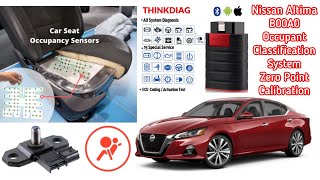
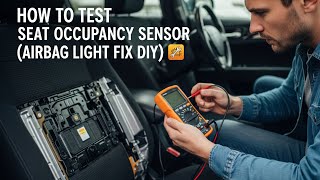

The information in this article is provided for general reference and educational purposes only. Vehicle specifications, procedures, and part compatibility can vary by production date, trim level, and region. Always consult your vehicle's factory service manual and verify part numbers before purchasing or performing repairs. Safety-critical components such as airbags, seat belts, and braking systems should be installed by a qualified professional.
- 🧭 Diagnostic Flowchart
- 🎬 Helpful Videos
- What Does B2290 Mean?
- Can I Drive With B2290?
- Common Causes
- Symptoms
- Common Fixes & Costs
- Used vs. New Parts: Buying Guide
- What Happens If You Wait — Timeline
- Cost of Not Fixing It
- Diagnosis Steps
- When This Code Triggers (Freeze-Frame Conditions)
- Related Codes
- Climate & Environmental Factors
- How to Talk to a Mechanic About This Code
- Where to Take It: Dealer vs Independent vs Chain
- When to Walk Away From the Repair
- What Scan Tool You Need for This Code
- How to Clear the Code After You Fix It
- Will This Fail Emissions / State Inspection?
- Most Commonly Affected Vehicles
- Manufacturer-Specific Notes
- Real Owner Stories
- 2005 Ford F-150 XLT at 79K miles
- 2011 Mazda 3i at 130K miles
- 2007 Ford Fusion with B2290
- 2013-2018 Nissan Rogue
- How to Prevent This Code From Triggering
- Frequently Asked Questions
- Is it safe to drive with code B2290?
- Can I fix the B2290 code myself?
- Why is the B2290 repair so expensive?
- What are the biggest misdiagnosis mistakes for B2290?
- Will clearing the code with a cheap scanner fix the problem?
- Can I install a bypass module or resistor to trick the system?
- My mechanic tried to recalibrate the system and it failed. What does that mean?
- Does the airbag recall for my car cover the B2290 code?
- Key Takeaways
- 🎟️ Get 5% Off