

Ultimate B2294 Guide: Curtain Airbag Fault (Causes & Fixes)
The Most Comprehensive Guide to Diagnosing and Fixing OBD-II Code B2294.
- Code B2294 disables the entire SRS system, meaning zero airbags will deploy in a collision.
- Over 80% of B2294 faults stem from loose or corroded wiring connectors under seats or behind pillars, not a failed $800 airbag module.
- Never probe airbag connectors directly with a multimeter; use a 2.0-3.0 ohm resistor simulator tool to safely isolate the fault.
- A standard $20 OBD-II reader cannot see B-series codes; you need an SRS-capable scanner like the Autel AL619 to diagnose and clear B2294.
What Does B2294 Mean?
B2294 indicates the Restraints Control Module (RCM) detected an electrical fault in the curtain airbag circuit. Curtain airbags deploy from the roofline to protect occupants' heads during side impacts or rollovers. To prevent unintended deployment, the RCM intentionally disables the entire airbag system and illuminates the dashboard airbag warning light.
Technical definition: The RCM continuously monitors the resistance and voltage of all airbag squib (igniter) circuits. It triggers B2294 when the curtain airbag circuit is open, shorted to voltage, shorted to ground, or has resistance outside the normal range (typically 1.2 to 4.3 ohms, depending on the manufacturer). A reading outside these hard limits triggers the code immediately.
Can I Drive With B2294?
No — Do Not Drive. Driving with code B2294 is a severe safety risk. The Restraints Control Module (RCM) has detected a critical fault and disabled the entire Supplemental Restraint System (SRS) as a failsafe. In a collision, zero airbags will deploy, and seatbelt pretensioners will not function. The vehicle operates mechanically, but its primary crash safety features are dead.
Common Causes
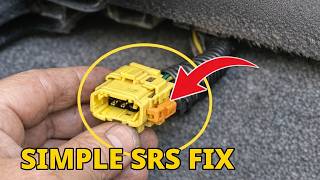
- Damaged Wiring or Poor Connection (Very Common) — Curtain airbag wiring runs up the pillars and along the headliner. Connectors under the front seats or behind pillar trim are notorious failure points. Seat movement, vibration, or interior detailing easily dislodges or damages these 🎬 See how to fix a loose under-seat SRS connector distinctive yellow connectors.
- Water Intrusion (Common) — Leaks from a clogged sunroof drain, windshield seal, or roof rack allow water to seep into the headliner. This moisture drips directly onto the curtain airbag module or its electrical connector, causing corrosion that creates a short or open circuit.
- Faulty Curtain Airbag Module (Common) — The curtain airbag unit contains a small explosive charge and an igniter (squib) with a specific internal resistance. Over time, the squib fails, causing its resistance to fall out of the specified range and triggering the fault.
- Previous Improper Repair or Body Work (Common) — If the vehicle underwent collision repair, interior modifications, or dashcam hardwiring, a connector was likely left unseated, a wire was pinched behind a trim panel, or an incorrect part number was installed.
- Low Battery Voltage (Less Common) — On sensitive European vehicles like Jaguar and Land Rover, low system voltage during cranking causes modules to set spurious fault codes. If the airbag light appeared after a jump-start, a weak battery is the primary suspect.
- Faulty Clockspring (Spiral Cable) (Less Common) — While primarily associated with the driver's front airbag, a failing clockspring causes electrical noise and instability throughout the SRS system, occasionally tricking the RCM into setting a B2294 code.
- Rodent Damage (Rare) — Rodents chew through the soy-based insulation used in modern car wiring. They frequently target the SRS harness where it runs under the carpet or behind the dashboard, causing an open or short circuit.
- Faulty Restraints Control Module (RCM) (Rare) — An internal RCM failure causes it to misread a perfectly good circuit and set a false code. This diagnosis is only valid after exhaustively ruling out wiring, connectors, and the airbag module itself.
Symptoms
- Airbag Warning Light is On — The primary symptom. The light, showing a person with an airbag or the letters 'SRS', remains illuminated permanently.
- Flashing Airbag Light (Lamp Fault Code) — On Ford, Lincoln, and Jaguar vehicles, the airbag light flashes a specific pattern before staying on. A 2-3 pattern (two flashes, pause, three flashes) directly indicates a curtain airbag circuit fault.
- Airbag Fault Message — The instrument cluster screen displays a text warning such as 'Service Airbag System' or 'Restraint System Fault'.
- Failed Safety Inspection — An illuminated airbag warning light is an automatic failure for vehicle safety inspections in all jurisdictions that require them.
- Airbags Will Not Deploy (scan-tool only — no driver-felt sign) — The presence of code B2294 confirms the RCM has disabled the entire airbag system. This is a statement of system status, not just a warning.
Diagnostic Flowchart
Tap your situation to follow the diagnostic path that matches what you're seeing on this code.
Common Fixes & Costs
- Repairing Damaged Wiring or Connector — Parts: $10-$75, Labor: $150-$600, ~1.5 hr book time (Intermediate)
- Hardwiring a Faulty Connector — Parts: $5-$20, Labor: $150-$300, ~1.5 hr book time (Professional)
- Replacing the Curtain Airbag Module
— Parts: $400-$1,200, Labor: $150-$300, ~2.5 hr book time
(Professional)
Ford Expedition (2012): OEM FL1Z-78042D95-A (Left) (Alt: N/A (OEM recommended)) - Replacing the Clockspring
— Parts: $70-$600, Labor: $125-$250, ~1.5 hr book time
(Professional)
Ford Explorer (2008): OEM 6L2T-14A664-BF (Alt: Dorman 525-246) - Replacing the Restraints Control Module (RCM)
— Parts: $500-$1,100, Labor: $150-$300, ~2 hr book time
(Professional)
Ford Expedition (2012): OEM BL1Z-14B321-C (Alt: N/A (OEM required))
Used vs. New Parts: Buying Guide
When a used part is worth it: Buying used pyrotechnic devices like airbags is NEVER recommended. The risk of acquiring a damaged or improperly stored part is too high.
Donor quality checklist:
- Always buy new OEM airbags from a reputable dealer.
- Used RCMs carry risks: they must match your VIN exactly, require professional reprogramming, and may contain locked crash data.
Decision logic:
- If The faulty part is the curtain airbag module. → Buy a new OEM replacement. The safety risk is not worth the savings.
- If The faulty part is the RCM and budget is tight. → Send your original module to a specialist service for repair and reset rather than buying a junkyard unit.
- If The faulty part is wiring or a connector. → Use new OEM-grade wire and connectors. Do not splice in used junkyard pigtails.
Warranty tradeoff: Used airbags have no safety guarantee. New OEM parts installed by a dealer carry a parts and labor warranty.
Worst-case if a used part fails: Infinity. A non-deploying airbag in a crash is a matter of life and death.
What Happens If You Wait — Timeline
- 0-1 month: A sunroof drain clogs. Water dampens the headliner. The B2294 code appears intermittently on cold or damp days. (MPG impact: 0%% · Added cost: $0 (If fixed now: $50-$150 to clear drain))
- 1-6 months: Water repeatedly soaks the connector. Surface corrosion increases circuit resistance. The B2294 code permanently sets. (MPG impact: 0%% · Added cost: $150-$400 (Cost to clean/repair connector and fix leak))
- 6-12 months: Severe corrosion destroys the connector pins and wicks into the wiring harness. The connector must be cut out and a new pigtail spliced in. (MPG impact: 0%% · Added cost: $400-$1,000 (Complex wiring repair, headliner cleaning, leak fix))
- 12+ months: Corrosion migrates to damage the Restraints Control Module (RCM). The vehicle develops multiple electrical gremlins. (MPG impact: 0%% · Added cost: $1,500-$3,000+ (Requires replacing major control modules and extensive harness labor))
Cost of Not Fixing It
- Immediate: Complete failure of the SRS. No airbags will deploy in an accident, dramatically increasing the risk of serious injury or death. (Added cost: N/A)
- Next Inspection: Guaranteed failure of state-mandated vehicle safety inspections, preventing legal registration renewal. (Added cost: $20-$50 (Re-inspection fees))
- Ongoing: If caused by water intrusion, corrosion spreads to other modules and harnesses, leading to catastrophic electrical failures. (Added cost: $500-$2000+)
Diagnosis Steps
- Scan for Full DTC with Sub-codes
Use an SRS-capable OBD-II scanner. Note the full code and manufacturer-specific sub-codes (e.g., B2294-29 for 'Open Circuit'). This pinpoints whether the fault is an open circuit, short to ground, short to voltage, or low resistance.
Tools: OBD-II Scanner (with SRS capability) (Beginner) - Perform Visual Inspection
Disconnect the battery for 30 minutes. Inspect the headliner, A-pillars, and C-pillars for water intrusion. Check the yellow SRS connectors under the seats and behind pillar trim for looseness, corrosion, or damage.
Tools: Flashlight, Trim removal tools (Beginner) - Check Technical Service Bulletins (TSBs)
Search for TSBs related to your specific year, make, and model. Manufacturers frequently issue bulletins for known wiring harness pinches or faulty under-seat connectors that trigger B2294.
Tools: Smartphone or Computer (Beginner) - PRO TIP: The 'Wiggle Test'
With the system live, have an assistant watch the airbag light while you gently wiggle the main SRS wiring harnesses under the seats and up the pillars. If wiggling a specific area causes the light to flicker, you have located the wiring fault.
Tools: Assistant (optional) (Intermediate) - PRO TIP: Isolate the Fault with a Resistor Tool
Disconnect the battery and unplug the curtain airbag connector. Plug in a 2.0-3.0 ohm airbag simulator resistor tool. Reconnect the battery and clear codes. If B2294 disappears, the airbag module is faulty. If it remains, the fault is in the wiring or RCM.
Tools: Airbag simulator resistor tool (Advanced) - Advanced: Measure Circuit Resistance at the RCM
DANGER: Never probe an airbag module directly. Disconnect the battery and the RCM main connector. Using a wiring diagram, measure resistance between the two pins for the suspect curtain airbag circuit. Compare to manufacturer specs (typically 1.2-4.3 ohms). Infinite resistance means an open circuit; near-zero means a short.
Tools: Digital Multimeter, vehicle-specific wiring diagram, pin-out chart (Advanced) - Advanced: Check for Shorts to Ground/Voltage
With the RCM and airbag disconnected, place one multimeter probe on a circuit wire at the RCM connector and the other on a chassis ground. A low resistance reading indicates a short to ground. To check for a short to voltage, set the multimeter to DC volts and test each wire with the battery reconnected and key on.
Tools: Digital Multimeter, vehicle-specific wiring diagram (Advanced) - Advanced: Bypass Shorting Bars
When testing resistance on a disconnected harness plug, be aware of 'shorting bars'—metal tabs that automatically short pins together when unplugged as a safety feature. These must be carefully bypassed with a thin insulator to get an accurate circuit reading.
Tools: Connector pin-out diagram, non-conductive pick (Professional) - Advanced: Terminal Drag Test
If a connector looks clean but is suspect, the female terminals may have lost tension. Use a terminal test kit with exact-sized pins to 'feel' the drag. If the test pin feels loose, replace the connector or terminal.
Tools: Terminal test kit (Professional)
When This Code Triggers (Freeze-Frame Conditions)
- System Voltage: 11.5-14.5V (During Key-On-Engine-Off (KOEO) self-test or continuous monitoring.)
- Ignition Status: ON (The RCM performs a self-check of all SRS circuits at every ignition cycle.)
- Component Resistance: <1.0 Ohm or >5.0 Ohms (Code sets instantly when resistance falls outside the acceptable range (e.g., 1.3-4.3 Ohms).)
Related Codes
- B2295 — Sister code to B2294. B2295 refers to the side torso airbag (in the seat), while B2294 refers to the curtain airbag (in the roof). Diagnostic steps are identical.
- B1193 — Indicates 'Crash Event Storage Full and Locked'. Set after an accident where an airbag deployed. You cannot clear B2294 until the RCM is replaced or hard-reset.
- U3000 — Generic code for 'Control Module Failure'. If seen alongside B2294, it strongly points to the RCM itself requiring replacement.
- B00S4 — The SAE standardized version of B2294 on newer vehicles. It breaks down into specific sub-codes like B00S4:1A (Low Resistance) or B00S4:1D (Short to Ground).
Climate & Environmental Factors
- High Humidity: Promotes rapid corrosion on electrical connectors. This increases circuit resistance, causing the RCM to trigger code B2294. Prevalent in coastal areas.
- Extreme Cold: Causes metal contacts to contract, creating temporary micro-gaps in the circuit. The fault often appears on cold starts and disappears once the cabin warms up.
How to Talk to a Mechanic About This Code
Say this: "I have an airbag warning light and my scanner shows code B2294 for the curtain airbag circuit. I'd like to schedule a diagnostic focusing on testing the wiring and connectors first, before assuming the airbag module needs replacement."
This proves you understand the most common cause is a wiring issue. It directs the technician to perform a proper diagnosis rather than jumping to an expensive parts replacement.
Avoid saying:
- 'My airbag light is on, can you just fix it?'
- 'I think I need a new airbag.'
- 'Just do whatever you think is necessary.'
Questions to ask before authorizing the repair:
- What was the specific fault: an open circuit, a short to ground, or high resistance?
- Did you perform a 'wiggle test' on the harness or inspect the connectors under the seat?
- Did you isolate the fault by using an SRS resistor tool before condemning the airbag module?
- Can you show me the damaged wiring or corroded connector?
- What is the warranty on this specific repair?
Where to Take It: Dealer vs Independent vs Chain
- Dealer:
Best for: Vehicles under warranty., Complex electrical issues requiring manufacturer-specific programming (like RCM replacement)., Guaranteed OEM parts for critical safety systems.
Downsides: Highest labor rates, typically 1.5-2x an independent shop., May default to replacing large components rather than diagnosing tricky wiring faults. (Typical cost: +50% vs. baseline) - Independent Shop:
Best fit for most cases. A reputable independent shop with ASE-certified electrical technicians diagnoses B2294 effectively at significant savings.
Best for: Out-of-warranty vehicles where cost is a factor., Diagnosing common wiring and connector faults.
Downsides: Must ensure the shop has specific experience with SRS systems and advanced diagnostic tools., May lack proprietary programming software. (Typical cost: +0% vs. baseline) - Chain Shop:
AVOID. Airbag system repair is a safety-critical task outside the scope of chain repair shops.
Best for: Simple, high-volume jobs like oil changes and brakes.
Downsides: Technicians lack specialized training for complex SRS diagnostics., High risk of misdiagnosis and unnecessary repairs., Lack advanced scanners to handle pyrotechnic components safely. (Typical cost: -10% vs. baseline)
When to Walk Away From the Repair
If the estimated repair cost exceeds 50% of the car's private-party value, seriously consider selling the car as-is.
- Car worth $4000, fix is $1500: Borderline. The repair is 38% of the car's value. Get a second opinion to confirm the diagnosis.
- Car worth $12000, fix is $800: Fix it. The repair cost is low relative to the vehicle's value and critical for safety.
- Car worth $2500, fix is $1800: Walk away. The repair cost is 72% of the car's value. It is not economically sensible to proceed.
What Scan Tool You Need for This Code
Minimum: A scanner that reads and clears Supplemental Restraint System (SRS) codes. Basic engine code readers will not see this fault.
A standard $20 code reader only accesses the Powertrain Control Module. B2294 is stored in the Restraints Control Module (RCM), requiring advanced communication protocols.
Budget: Autel AutoLink AL619 (~$80) — Reads and clears codes from the Engine, ABS, and SRS modules. Confirms B2294 and clears it after repair.
Mid-range: BlueDriver Pro (~$120) — Bluetooth scanner providing full-system scans, including SRS. Reads manufacturer-specific codes and provides repair reports.
Professional: Autel MaxiCOM MK808 (~$450) — Professional tablet offering full bidirectional control, extensive live data streams, and special reset functions for dealer-level SRS diagnostics.
Rent vs buy: Auto parts store rental scanners typically do NOT read SRS codes. Buying a budget-tier SRS scanner ($80) pays for itself by avoiding a single $150 shop diagnostic fee.
How to Clear the Code After You Fix It
- Ensure all repairs are complete and connectors are securely fastened.
- Reconnect the vehicle's battery.
- Use a professional OBD-II scan tool with SRS capabilities to access the RCM.
- Select 'Clear DTCs' or 'Erase Fault Codes'.
- Cycle the ignition off, then on. Verify the airbag warning light illuminates briefly and turns off permanently.
Drive cycle (~5 minutes): SRS codes do not require a drive cycle. The RCM performs a full self-test at key-on. After clearing the code, turning the ignition off and on verifies the repair.
Readiness monitors affected: None
Watch out for:
- Using a basic engine code reader that cannot communicate with the SRS module.
- Forgetting to clear the code after repair; the light stays on until manually erased.
- Attempting to clear the code without fixing the electrical problem; it returns instantly.
- Trying to clear B2294 when B1193 ('Crash Data Stored') is present.
Will This Fail Emissions / State Inspection?
Yes — this code typically fails an OBD-II emissions inspection.
- California: Fails the overall safety inspection required for registration and title transfer, though it does not affect the emissions 'smog test'.
- New York: The airbag warning lamp is checked. While officially an advisement, individual inspector discretion often leads to rejection.
- Texas: The airbag warning light must illuminate at key-on and then go out. If it stays on, the vehicle fails the state safety inspection.
Most Commonly Affected Vehicles
- Ford Explorer (2006-2010) — Extremely common on the 4th generation Explorer due to wiring faults in the 'Safety Canopy' circuits.
- Ford Edge (2007-2014) — Frequently experiences this code due to electrical faults detected by the RCM. The expected resistance range is a tight 1.23 to 3.31 ohms.
- Ford Expedition (2007-2014) — The RCM is highly sensitive to resistance changes in the safety canopy circuit, frequently triggering this code.
- Jaguar XJ (X350) (2004-2009) — Connectors are a major weak point. Cleaning and re-seating connectors under the seats and center console often resolves intermittent codes.
- Jaguar XK/XKR (X100) (2000-2006) — Often caused by a poorly designed side airbag connector located inside the seat bolster, which easily becomes loose.
- Chevrolet Silverado (2014-2019) — Triggered by pinched dash harnesses causing communication loss with the SRS module, or improper seat swap modifications.
- Volkswagen Jetta, Golf, Passat (2005-2010) — Prone to failing yellow connectors under the front seats. The official VW fix is removing the connector and splicing the wires permanently.
- Toyota Corolla, Sienna, RAV4 (2008-Present) — Commonly logged after interior work, such as removing seats for cleaning, which strains the wiring harness connectors.
Manufacturer-Specific Notes
- Ford: Ford uses a flashing airbag light to signal a 'Lamp Fault Code' (LFC). A 2-3 flash pattern points directly to a curtain airbag fault before you even connect a scanner.
- Jaguar: Highly sensitive to battery voltage. A weak battery causes random, spurious SRS faults. Always test the battery before tearing into the wiring.
- Volkswagen/Audi: VW has a documented issue with under-seat connectors. TSB 69-08-02 outlines the official fix: remove the yellow connector entirely and use a dedicated harness repair kit to splice the wires.
- General Motors: Seat design interference causes wiring chafing. TSBs note that interference between the seat back pad and the side airbag wiring harness triggers faults.
Real Owner Stories
2017 Ford Explorer Limited - Easy Fix
Airbag light stayed on after having passengers in the rear seats.
Outcome: A rear seatbelt connector (integrated with the airbag system) had a 'popped' red release button. Pushing the button to reset it permanently resolved the code. Cost: $0.
Lesson: Check the simplest physical interfaces first. On vehicles with integrated seatbelt airbags, verify the belt connectors are fully seated and reset.
2008 Ford Edge - Misdiagnosis Story
Airbag light on with code B2294 after a previous accident.
Outcome: Discovered the dealer supplied the wrong part number. The RCM rejected the incorrect (though brand new) airbag configuration, keeping the code active.
Lesson: Airbag components are strictly VIN-specific. An incorrect part number guarantees a persistent fault code.
Jaguar XJ (X350) - Unusual Root Cause
Intermittent airbag light for over five years. The light permanently illuminated after a vehicle inspection.
Outcome: Traced the fault to a connector inside the seat's side bolster. A large technician squeezing into the seat during inspection disturbed the connection. Cleaning and reseating the internal connector fixed it.
Lesson: Physical interactions matter. A loose internal connector is easily disturbed by simply sitting in the seat.
2017 Ford Explorer - Simple Connector Debris
Airbag light appeared randomly. Basic OBD-II reader showed no codes.
Outcome: Found debris inside the electrical connector under the rear seat. Cleaning the debris and reconnecting the harness resolved the light.
Lesson: Generic code readers cannot see SRS codes. A single piece of dirt in a connector causes a permanent open circuit fault.
How to Prevent This Code From Triggering
- Periodically clean sunroof drains. (Once per year, or twice if parked under trees.) — Clogged drains cause water to pool and drip directly onto curtain airbag modules and connectors, causing severe corrosion and shorts.
- Apply dielectric grease to at-risk connectors. (Once, during any related service.) — Applying non-conductive dielectric grease to SRS connector seals prevents moisture and oxygen from reaching the metal pins, inhibiting corrosion.
- Exercise caution during interior cleaning. (Every time the car is detailed.) — Aggressively moving seats or jamming vacuum nozzles underneath them stresses or unplugs the yellow SRS connectors.
- Address windshield or body seal leaks promptly. (Immediately upon discovery.) — Fixing a $100 seal prevents thousands of dollars in electrical damage to the headliner wiring and airbag modules.
Frequently Asked Questions
Can I just clear the B2294 code to turn the airbag light off?
No. The RCM performs a complete system self-check every time the ignition turns on. If the physical electrical fault remains, the code resets instantly.
Is it safe to drive with code B2294?
No. The code confirms the entire airbag system is disabled to prevent accidental deployment. In a collision, zero airbags will deploy.
Will a B2294 code fail a state safety inspection?
Yes. An illuminated airbag warning light is an automatic failure in any jurisdiction that performs safety inspections.
My airbag light came on right after I had my car detailed. What happened?
During intensive interior cleaning, vacuum cleaners or aggressive seat movement easily bump or unplug the wiring connectors under the front seats. This creates an open circuit, triggering the fault.
What is the most common misdiagnosis for B2294?
Immediately replacing the expensive curtain airbag module without proper diagnosis. The fault is almost always in the wiring or a connector. A professional uses a resistor simulator tool to isolate the fault first.
Can I use a used airbag or RCM from a junkyard?
It is extremely dangerous and highly discouraged. A used airbag has an unknown history and may fail to deploy. A used RCM requires VIN programming and may contain locked crash data.
How much does it cost to fix code B2294?
Costs vary dramatically. A simple loose connector costs $100-$200 in diagnostic labor. Replacing a faulty airbag module or RCM ranges from $600 to over $1,500.
Key Takeaways
- Code B2294 disables the entire SRS system, meaning zero airbags will deploy in a collision.
- Over 80% of B2294 faults stem from loose or corroded wiring connectors under seats or behind pillars, not a failed $800 airbag module.
- Never probe airbag connectors directly with a multimeter; use a 2.0-3.0 ohm resistor simulator tool to safely isolate the fault.
- A standard $20 OBD-II reader cannot see B-series codes; you need an SRS-capable scanner like the Autel AL619 to diagnose and clear B2294.
Helpful Videos

Shop the Parts Behind B2294
Below are the parts most often responsible for code B2294, ranked by how frequently each one is the actual culprit (per the diagnosis above). Tap any to see what we have for your vehicle.



The information in this article is provided for general reference and educational purposes only. Vehicle specifications, procedures, and part compatibility can vary by production date, trim level, and region. Always consult your vehicle's factory service manual and verify part numbers before purchasing or performing repairs. Safety-critical components such as airbags, seat belts, and braking systems should be installed by a qualified professional.
- 🧭 Diagnostic Flowchart
- 🎬 Helpful Videos
- 🛍️ Shop This Part
- What Does B2294 Mean?
- Can I Drive With B2294?
- Common Causes
- Symptoms
- Common Fixes & Costs
- Used vs. New Parts: Buying Guide
- What Happens If You Wait — Timeline
- Cost of Not Fixing It
- Diagnosis Steps
- When This Code Triggers (Freeze-Frame Conditions)
- Related Codes
- Climate & Environmental Factors
- How to Talk to a Mechanic About This Code
- Where to Take It: Dealer vs Independent vs Chain
- When to Walk Away From the Repair
- What Scan Tool You Need for This Code
- How to Clear the Code After You Fix It
- Will This Fail Emissions / State Inspection?
- Most Commonly Affected Vehicles
- Manufacturer-Specific Notes
- Real Owner Stories
- 2017 Ford Explorer Limited - Easy Fix
- 2008 Ford Edge - Misdiagnosis Story
- Jaguar XJ (X350) - Unusual Root Cause
- 2017 Ford Explorer - Simple Connector Debris
- How to Prevent This Code From Triggering
- Frequently Asked Questions
- Can I just clear the B2294 code to turn the airbag light off?
- Is it safe to drive with code B2294?
- Will a B2294 code fail a state safety inspection?
- My airbag light came on right after I had my car detailed. What happened?
- What is the most common misdiagnosis for B2294?
- Can I use a used airbag or RCM from a junkyard?
- How much does it cost to fix code B2294?
- Key Takeaways
- 🎟️ Get 5% Off