

OBD-II Code B2320: Driver's Side Mirror Horizontal Position Sensor Circuit Failure
The Ultimate 2026 Guide: What B2320 means, why it triggers, and how to fix it for good.
- Code B2320 indicates a failure in the driver's side mirror horizontal position sensor circuit, immediately disabling memory recall and reverse-tilt functions.
- Replacing the entire driver's side mirror assembly is the fix in 80% of cases, costing between $225 and $1,300, because the internal sensor cannot be purchased separately.
- Verify your vehicle's specific code definition; on GM vehicles, B2320 flags a head restraint switch, while on Subarus, it indicates a low-voltage radar fault.
- While mechanically safe to drive, a stuck driver's side mirror creates a severe blind spot responsible for over 840,000 lane-change accidents annually, requiring immediate repair.
What Does B2320 Mean?
The B2320 code signifies the Driver Door Module (DDM) or Body Control Module (BCM) detects a fault in the driver's side mirror's horizontal position sensor circuit. This sensor, a potentiometer, tells the module the mirror's exact side-to-side position. When this signal is lost or erratic, the code stores, immediately disabling convenience features like memory seat/mirror recall and reverse-tilt functions.
Technical definition: Mirror Driver Horizontal Feedback Potentiometer Circuit Failure.
Can I Drive With B2320?
Yes, But With Caution. Yes, the vehicle is mechanically safe to drive, but your driver's side mirror fails to adjust correctly or stay in its set position. This creates a significant blind spot, contributing to thousands of lane-change accidents annually. Repair it immediately to restore full visibility.
Common Causes
- Failed Mirror Assembly (Very Common) — The position sensor is integrated into the mirror motor assembly and is not sold separately. Internal wear, stripped plastic gears, or water intrusion shorting the circuit board causes the sensor to fail, requiring a complete mirror replacement.
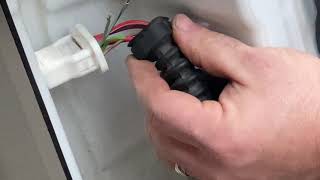
- Damaged Door Jamb Wiring (Common) — Wires passing from the door into the mirror housing endure constant stress. Repeated opening and closing of the door breaks or frays these thin wires inside the rubber boot 🎬 Watch how to find and repair damaged wires in the door jamb., severing the sensor's connection to the control module.
- Corroded Power Splice (Ford-Specific) (Common) — On 2009-2014 Ford trucks and SUVs, a critical power wire splice in the passenger-side kick panel harness corrodes heavily. This failure cuts power to the Driver Seat Module and mirrors, triggering B2320 alongside seat-related codes.
- Intermittent Low Battery Voltage (Less Common) — A weak battery or failing alternator causes system voltage drops during startup. This forces the door module to temporarily receive an invalid signal from the mirror sensor, triggering a 'ghost' code.
- Faulty Control Module (Less Common) — The Driver Door Module (DDM) processes the mirror's signal. Internal module failures cause it to misread the sensor's position or fail to command the mirror motors, though this is less common than wiring or mirror failures.
- Software or Calibration Issue (Rare) — A software glitch within the control module causes it to lose its calibration, often after a battery replacement. This requires a recalibration procedure with a bidirectional scan tool.
Symptoms
- Driver's mirror won't adjust horizontally — The mirror is unresponsive when moving it left or right using the control switch, though vertical movement often still works.
- Memory and auto-tilt functions fail — The mirror fails to automatically move to your preset position or tilt down in reverse, as the system lost its position reference.
- Mirror moves erratically or grinds — The mirror jerks, makes a loud clicking/grinding noise, or drifts to an extreme position on its own due to stripped internal gears or a shorted sensor.
- Dashboard mirror-control warning light is on — Some vehicles illuminate a specific warning light on the instrument cluster, shaped like a stylized mirror, indicating a power mirror system fault.
Common Fixes & Costs
- Replace Driver's Side Mirror Assembly
— Parts: $150 - $1100, Labor: $75 - $200, ~1.2 hr book time
(DIY)
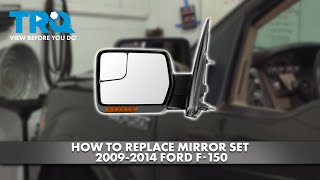
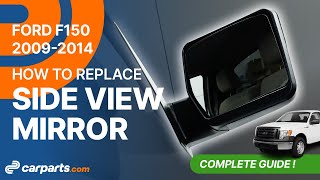
Ford F-150 (2009-2014): OEM DL3Z-17683-AB 🎬 Watch this step-by-step guide to replacing your Ford F-150 mirror. (Alt: Dorman 5210531)
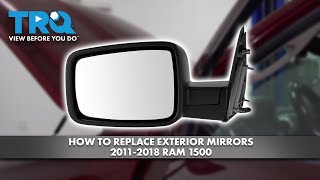
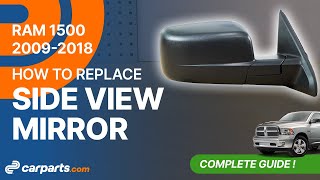
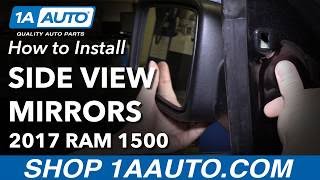
Ram 1500 (2010-2018): OEM 68285871AA 🎬 See how to swap out the side mirror on a Ram 1500. (Alt: OPR R107453) - Repair Damaged Wiring or Connector — Parts: $10 - $60, Labor: $100 - $300, ~2.0 hr book time (Intermediate)
- Repair Corroded Wiring Splice (Ford Specific) — Parts: $5 - $20, Labor: $125 - $250, ~1.8 hr book time (Intermediate)
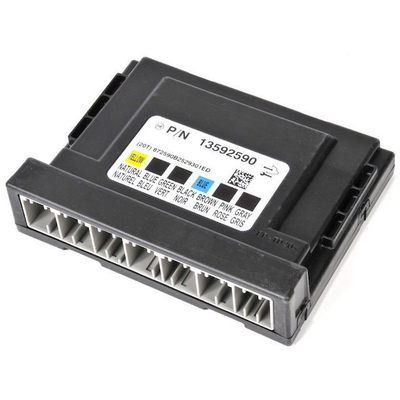
- Replace Driver Door Module (DDM)
— Parts: $150 - $500, Labor: $100 - $200, ~1.0 hr book time
(Professional)
Ram 1500 (2010-2018): OEM 68424179AC (Alt: None)
Used vs. New Parts: Buying Guide
When a used part is worth it: For older vehicles, a used OEM mirror from a salvage yard is ideal. Ensure the donor vehicle's features (memory, heat, BLIS) match exactly.
Donor-vehicle mileage cap: roughly under 100000 miles for the part to have meaningful remaining life.
Donor quality checklist:
- Verify the donor vehicle's features match yours exactly.
- Inspect for physical damage, cracks, and excessive weathering.
- Ensure the electrical connector is intact with no broken pins or corrosion.
Decision logic:
- If Vehicle has complex features (360 camera, auto-dim) and is under 100K miles → Favor new OEM to ensure perfect calibration.
- If Vehicle is a base model with a simple, non-heated, manual-fold mirror → A new aftermarket part from Dorman or TYC offers the best value.
Warranty tradeoff: Used parts typically have a 30-90 day warranty. Aftermarket new parts offer a 1-year to limited lifetime warranty. New OEM parts carry a 1-2 year warranty.
Worst-case if a used part fails: $100 - $300 if a used or cheap aftermarket part is dead on arrival, requiring repeat labor costs.
What Happens If You Wait — Timeline
- Immediate: Code sets. Memory recall and reverse-tilt fail. A significant driver-side blind spot is created. (MPG impact: 0%% · Added cost: $0)
- 1-6 Months: If caused by a chafing wire in the door jamb, insulation wears through completely, exposing the wire to elements and causing intermittent shorts. (MPG impact: 0%% · Added cost: $0)
- 6-12 Months: Corrosion spreads within the main door harness connector, causing intermittent failure of power windows, locks, or speakers. (MPG impact: 0%% · Added cost: $200 - $500)
Cost of Not Fixing It
- Immediate: Increased risk of lane-change accidents due to a significant blind spot. (Added cost: $0 - $250)
- 1-6 months: Loss of convenience features like memory recall and reverse tilt-down. (Added cost: 0)
- 6+ months: Corrosion spreads to other door circuits, causing window or lock failures. (Added cost: $200 - $800)
Diagnosis Steps
- Scan for All DTCs
Confirm B2320 is active and check for related codes like B2321 (open) or B2324 (vertical sensor). Multiple codes point to a shared wiring or module issue rather than a single bad sensor.
Tools: Professional OBD-II Scanner (Beginner) - Test Basic Mirror Function
Operate the mirror switch in all four directions. If it moves vertically but not horizontally, the fault is isolated to the horizontal motor circuit. If it doesn't move at all, suspect a main power/ground wire or corroded splice.
Tools: None (Beginner) - Visually Inspect Harness
Examine the wiring harness in the door jamb boot for pinched, chafed, or broken wires. Inspect the mirror housing for impact damage.
Tools: Flashlight (Beginner) - [PRO TIP] Monitor Live Data
Access the DDM live data stream for 'Mirror Horizontal Position'. Watch this value while manually commanding the mirror left and right. A value stuck at 0V, 5V, or jumping erratically confirms a feedback circuit fault.
Tools: Professional OBD-II Scanner (Intermediate) - Access the Mirror Connector
Remove the interior door panel to access the main electrical connector for the side view mirror.
Tools: Screwdriver set, Trim removal tool (Intermediate) - Test Power and Ground
With the connector unplugged and ignition on, verify battery voltage on the power feed wire and less than 1 ohm of resistance on the ground wire. Lack of either points upstream to the door harness.
Tools: Multimeter, Vehicle-specific wiring diagram (Advanced) - [PRO TIP] Test Potentiometer Signal
Back-probe the 5V reference, signal, and ground wires. The signal wire voltage must sweep smoothly between 0.5V and 4.5V while moving the mirror. Erratic readings or 0 ohms indicate a failed internal sensor.
Tools: Multimeter with back-probes, Vehicle-specific wiring diagram (Advanced) - Check Ford Power Splice
For 2009-2014 Ford F-150/Expedition models lacking power at the mirror switch, locate the Orange/Light Green wire splice behind the passenger side kick panel. Green or white corrosion here is the definitive cause.
Tools: Trim removal tool, Flashlight (Advanced)
When This Code Triggers (Freeze-Frame Conditions)
- Module Voltage: 11.5V - 14.8V (During key-on, engine running, or while operating mirror switch.)
- Mirror Switch Status: Active (Left/Right command) (Fault detects when the driver commands a mirror adjustment and the feedback is irrational.)
- Memory Recall Command: Active (Fault triggers at vehicle startup when the memory system attempts to move the mirror to its preset position.)
Related Codes
- B2321 — Horizontal position sensor circuit OPEN. Points directly to a broken wire or completely failed sensor.
- B2322 — Circuit SHORTED TO BATTERY. Indicates a rubbed-through wire touching power, or an internal mirror short.
- B2323 — Circuit SHORTED TO GROUND. Indicates the signal wire is touching a ground source.
- B2324 — VERTICAL position sensor failure. Getting B2320 and B2324 simultaneously proves a shared wiring/power issue, not dual sensor failure.
Climate & Environmental Factors
- High Humidity / Heavy Rain: Moisture penetrates the mirror housing, shorting the internal potentiometer. It also accelerates corrosion on external connectors and splices.
- Cold Weather / Freezing Temperatures: Cold makes plastic internal mirror gears and wire insulation brittle, leading to mechanical breakage and wire fraying.
- Road Salt (Winter Climates): Salt spray infiltrates door jambs, severely accelerating corrosion on wiring connectors and ground points.
How to Talk to a Mechanic About This Code
Say this: "I have a B2320 code and my driver's side mirror fails to adjust. Please test the circuit for power, ground, and signal before recommending a full mirror replacement."
Signals you understand common causes and forces the shop to perform proper electrical diagnostics rather than immediately firing the parts cannon.
Avoid saying:
- 'My power mirror is broken, fix it.'
- 'My car has an electrical problem.'
- 'Just replace the mirror.'
Questions to ask before authorizing the repair:
- Did you test for power, ground, and signal at the mirror connector?
- If the mirror assembly needs replacement, can you show me why the old one failed?
- If it's a wiring issue, can you show me the location of the break or corrosion?
Where to Take It: Dealer vs Independent vs Chain
- Dealer:
Recommended if module programming or a software update is needed, or if the vehicle is under warranty.
Best for: Vehicles under warranty., Newer vehicles where software updates or module programming are required.
Downsides: Highest labor rates., Prefers replacing entire assemblies over detailed wiring repairs. (Typical cost: +50% vs. baseline) - Independent Shop:
Best fit for most scenarios. Vet the shop for strong electrical diagnostic skills to trace broken wires.
Best for: Out-of-warranty vehicles where the cause is a common failure., Shops specializing in automotive electrical repairs.
Downsides: Quality and diagnostic capabilities vary widely., May lack tools to program a new door module. (Typical cost: +0% vs. baseline) - Chain Shop:
AVOID. Generally not equipped for in-depth electrical diagnosis or module programming.
Best for: Simple part replacement like a battery or fuse.
Downsides: Technician skill varies dramatically., Not equipped for in-depth electrical diagnosis. (Typical cost: -10% vs. baseline)
When to Walk Away From the Repair
If the estimated repair cost exceeds 40% of the car's private-party value, consider alternatives.
- Car worth $5000, fix is $2200: Walk away. The repair cost is too high relative to the car's value.
- Car worth $15000, fix is $900: Fix it. The repair cost is a small fraction of the vehicle's value and restores an important safety feature.
What Scan Tool You Need for This Code
Minimum: A scanner that reads manufacturer-specific Body ('B') codes. Basic engine code readers will not see B2320.
A $20 generic OBD-II reader only communicates with the engine control unit. B2320 is stored in the Body Control Module or Driver Door Module.
Budget: BlueDriver Pro or Autel AP200 (~$60) — Reads body codes and views live data like mirror position voltage to confirm if the sensor signal is dead.
Mid-range: Autel MK808 / Foxwell NT510 Elite (~$350) — Adds bidirectional controls to command mirror motors directly, isolating faults in the switch, motor, or wiring.
Professional: Autel MaxiCOM MK906BT (~$800) — Offers full module programming required if replacing the Driver Door Module.
Rent vs buy: Auto parts stores rent basic readers that will NOT read this 'B' code. Buy a budget-friendly Bluetooth scanner like the BlueDriver.
How to Clear the Code After You Fix It
- Use a professional OBD-II scan tool to clear the code from the Body Control Module or Driver Door Module.
- Cycle the ignition off and on.
- Test all mirror functions: up, down, left, right, memory recall, and auto-fold/tilt.
- Perform a mirror re-learn procedure if specified by the manufacturer.
Drive cycle (~5 minutes): Not required. Fault status updates immediately after clearing and operating the mirror. If the code does not return after several adjustments, the repair is successful.
Watch out for:
- Disconnecting the battery will not reliably clear a 'B' code and causes other modules to lose calibration.
- The code returns instantly if the underlying electrical fault has not been fixed.
- Forgetting to perform a re-learn procedure after battery replacement causes the code to appear even with a functional mirror.
Will This Fail Emissions / State Inspection?
No — by itself this code doesn't fail OBD inspection (but it can keep readiness monitors from setting, which causes a separate fail).
- General Note: This is a Body code, so it passes OBD-II emissions. However, a non-adjustable driver's side mirror fails annual safety inspections in states like Virginia, New York, and Texas.
Most Commonly Affected Vehicles
- Ford F-150 (2009-2014) — Extremely common on Lariat, King Ranch, and Platinum trims. Often accompanied by clicking noises from worn internal gears or caused by the corroded passenger kick panel splice.
- Dodge / Ram Ram 1500 / 2500 / 3500 (2010-2018) — Frequent on Laramie and Longhorn trims with memory functions, especially trucks with complex power-folding tow mirrors.
- Jeep Grand Cherokee (2011-2018) — Occurs often on Limited, Overland, and Summit models sharing memory seat/mirror modules with other Chrysler products.
- General Motors Escalade, Sierra, Yukon, Silverado (2007-2014) — On GM SUVs and trucks, B2320 is officially defined as 'RR head restraint rearward switch circuit malfunction', not a mirror fault.
- Subaru Forester, Crosstrek, WRX (2017-2019) — Indicates 'Rear RADAR Low Voltage' related to the Blind-Spot Detection system, often caused by a weak battery (TSB 10-88-17R).
Manufacturer-Specific Notes
- General Motors (Chevy, GMC, Cadillac): Defined as 'RR head restraint rearward switch circuit malfunction', completely unrelated to the mirror.
- Subaru: Indicates 'Rear RADAR Low Voltage' in the Subaru Rear Vehicle Detection (SRVD) system.
- Lincoln: Sometimes defined as 'Starter Control 2 - Circuit Short To Battery Or Open', causing a no-start condition.
Real Owner Stories
2013 Ford F-150 Platinum at 110K miles
Driver's side mirror moved erratically to random positions upon starting the truck. Dealership module resets failed to fix the intermittent issue.
What they tried:
- Reprogrammed memory seat/mirror settings.
- Dealer reset the modules.
- Inspected wires in the door jamb boot.
Outcome: The owner found a broken wire inside the rubber door jamb boot. Soldering and heat-shrinking the wire fixed the erratic movement permanently, saving hundreds over a new mirror.
Lesson: Always inspect the door jamb harness for broken wires before replacing the mirror assembly. Constant flexing breaks wires, mimicking a failed sensor.
2016 Ram 1500 Laramie at 85K miles
Driver's mirror stopped responding to memory commands and reverse-tilt failed. Scan tool showed B2320.
What they tried:
- Replaced the door-to-mirror wiring harness.
- Replaced the mirror motor/actuator.
- Replaced the Driver Door Module (DDM).
Outcome: The owner replaced the harness, motor, and DDM based on a faulty service manual diagram. Comparing pin voltages to the working passenger mirror finally proved the original mirror's internal sensor was dead. Replacing the entire assembly fixed it.
Lesson: Verify wiring diagrams by testing the known-good passenger side before firing the parts cannon. Incorrect manuals lead to expensive misdiagnoses.
How to Prevent This Code From Triggering
- Clean and lubricate the door jamb wiring boot (Every 2 years) — Applying silicone lubricant keeps the rubber boot flexible, preventing it from stressing and breaking the delicate mirror wires inside.
- Apply dielectric grease to harness connectors (When door panel is off for any repair) — Seals harness connectors from moisture, preventing corrosion and high resistance.
- Avoid high-pressure washing of mirror seams (Every car wash) — Direct high-pressure spray forces water past seals, shorting the internal potentiometer.
Frequently Asked Questions
Can I just replace the small sensor inside the mirror?
No, the position sensor is integrated into the mirror's motor assembly and is not sold as a separate component. The entire side view mirror assembly must be replaced.
My scanner says B2320 is for a head restraint or washer motor. Is it wrong?
No, your scanner is likely correct for your specific vehicle. The B2320 code has different meanings for manufacturers like General Motors and Chrysler. Always use a scanner that provides manufacturer-specific definitions.
My mirror clicks but doesn't move correctly. Is this a B2320 fault?
Yes, a clicking or grinding noise indicates stripped internal gears. The motor tries to move, but the gears slip, causing the control module to log B2320 because it doesn't see the expected position change.
Why did the code appear after my battery died or was replaced?
Low voltage events cause control modules to store 'ghost' codes or lose calibration. First, clear the code and perform a re-learning procedure by moving the mirror to its full limits in all four directions. If that fails, a professional recalibration is required.
Is it hard to replace the side mirror myself?
For most vehicles, this is a beginner-to-intermediate DIY task. It involves removing the inner door panel, unplugging one electrical connector, and undoing three nuts. The main challenge is removing the door panel without breaking plastic clips.
Will a cheap aftermarket mirror from the internet fix the B2320 code?
Be careful: cheap aftermarket mirrors often lack the internal position sensor required for memory functions. Installing one guarantees the B2320 code persists. Always verify the new part explicitly supports all original features like memory, heat, and BLIS.
What is the difference between B2320 and B2324?
B2320 is for the HORIZONTAL (left/right) position sensor, while B2324 is for the VERTICAL (up/down) position sensor. Getting both codes at once points to a shared wiring or power issue.
Key Takeaways
- Code B2320 indicates a failure in the driver's side mirror horizontal position sensor circuit, immediately disabling memory recall and reverse-tilt functions.
- Replacing the entire driver's side mirror assembly is the fix in 80% of cases, costing between $225 and $1,300, because the internal sensor cannot be purchased separately.
- Verify your vehicle's specific code definition; on GM vehicles, B2320 flags a head restraint switch, while on Subarus, it indicates a low-voltage radar fault.
- While mechanically safe to drive, a stuck driver's side mirror creates a severe blind spot responsible for over 840,000 lane-change accidents annually, requiring immediate repair.
Helpful Videos
Shop the Parts Behind B2320
Below are the parts most often responsible for code B2320, ranked by how frequently each one is the actual culprit (per the diagnosis above). Tap any to see what we have for your vehicle.


The information in this article is provided for general reference and educational purposes only. Vehicle specifications, procedures, and part compatibility can vary by production date, trim level, and region. Always consult your vehicle's factory service manual and verify part numbers before purchasing or performing repairs. Safety-critical components such as airbags, seat belts, and braking systems should be installed by a qualified professional.
- 🎬 Helpful Videos
- 🛍️ Shop This Part
- What Does B2320 Mean?
- Can I Drive With B2320?
- Common Causes
- Symptoms
- Common Fixes & Costs
- Used vs. New Parts: Buying Guide
- What Happens If You Wait — Timeline
- Cost of Not Fixing It
- Diagnosis Steps
- When This Code Triggers (Freeze-Frame Conditions)
- Related Codes
- Climate & Environmental Factors
- How to Talk to a Mechanic About This Code
- Where to Take It: Dealer vs Independent vs Chain
- When to Walk Away From the Repair
- What Scan Tool You Need for This Code
- How to Clear the Code After You Fix It
- Will This Fail Emissions / State Inspection?
- Most Commonly Affected Vehicles
- Manufacturer-Specific Notes
- Real Owner Stories
- 2013 Ford F-150 Platinum at 110K miles
- 2016 Ram 1500 Laramie at 85K miles
- How to Prevent This Code From Triggering
- Frequently Asked Questions
- Can I just replace the small sensor inside the mirror?
- My scanner says B2320 is for a head restraint or washer motor. Is it wrong?
- My mirror clicks but doesn't move correctly. Is this a B2320 fault?
- Why did the code appear after my battery died or was replaced?
- Is it hard to replace the side mirror myself?
- Will a cheap aftermarket mirror from the internet fix the B2320 code?
- What is the difference between B2320 and B2324?
- Key Takeaways
- 🎟️ Get 5% Off