

OBD-II Code B2325: A Comprehensive Diagnostic Guide
Why B2325 Means Different Things on a Ford vs. a Toyota, and How to Fix It
- Code B2325 means completely different things depending on the brand: a faulty door latch switch on Fords, or a LIN bus network failure on Toyotas.
- On 2011-2014 Ford and Lincoln models, fix a persistent 'Door Ajar' light by flushing the driver's door latch with electrical contact cleaner before spending $250 on a replacement.
- For Toyota and Lexus vehicles, B2325 indicates a network failure requiring you to disconnect modules like the master window switch one by one to isolate the short.
- Prevent a dead battery by connecting a trickle charger immediately if your interior lights stay on, as a 0.5-amp parasitic draw kills a healthy battery in under 3 days.
What Does B2325 Mean?
Code B2325 indicates the Body Control Module (BCM) detected a fault in a body electrical circuit. The definition varies dramatically by manufacturer. On Fords, it usually means a failed door ajar switch. On Toyotas, it signals a complex LIN data network communication breakdown between door and window modules.
Technical definition: The SAE/ISO definition for B2325 is manufacturer-specific. Toyota and Lexus define it as 'LIN Communication Bus Malfunction,' indicating a data network error between door modules. Ford, Lincoln, Mazda, and Nissan define it as 'Mirror Driver Vertical Feedback Potentiometer Circuit Open,' pointing to a power mirror fault, though Ford diagnostic software often links it directly to door ajar switch failures. Hyundai defines it as 'Swivel module fault left' in the adaptive headlight system.
Can I Drive With B2325?
Yes, But With Caution. Yes, the vehicle is mechanically safe to drive. However, the fault keeps interior lights and computer modules awake, causing a parasitic draw of 0.5 to 1.0 amps. This drains a healthy battery in 2 to 3 days, so fix it immediately to avoid being stranded.
Common Causes
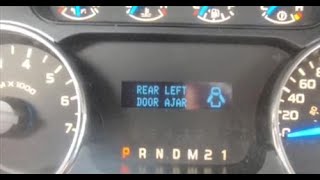
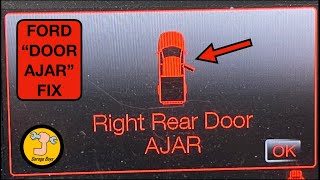
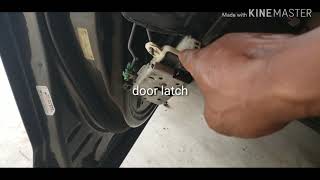
- Sticking or Faulty Door Latch Switch (Ford/Lincoln) (Very Common) — The switch detecting if the door is open is built into the latch mechanism. Dirt, hardened 🎬 Watch: 3 common ways to fix a Ford door ajar message. grease, or electrical failure causes it to stick, sending a constant 'open' signal to the BCM.
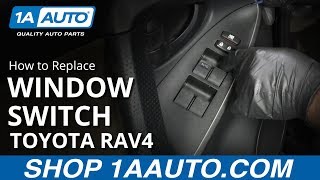
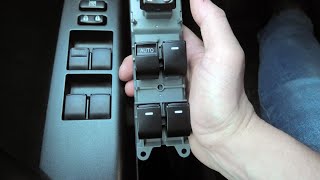
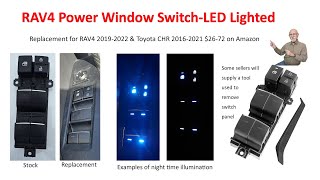
- Faulty Master Window Switch or Motor (Toyota LIN Bus) (Common) — On vehicles where B2325 indicates a LIN bus error, the master window switch and individual window motors act as network modules. An internal failure in one component disrupts all communication on the bus.
- Broken Wires in Door Jamb (Common) — Wires running from the door to the body sit inside a flexible rubber boot. Thousands of opening and closing cycles cause these wires to fatigue and break, creating an open circuit.
- Faulty Power Mirror Assembly (Ford/Nissan) (Less Common) — When this code points to a mirror fault, the internal potentiometer tracking the mirror's vertical position has failed, creating an open circuit.
- Sliding Roof Module Malfunction (Toyota LIN Bus) (Less Common) — The sliding roof (moonroof) control module shares the LIN communication bus with the door modules. A fault here crashes the network and triggers the code.
- Corroded Electrical Connectors (Less Common) — Water leaking into the door or mirror housing corrodes electrical connectors, interrupting the signal between the switch, sensor, or motor and the BCM.
- Aftermarket Accessory Interference (Less Common) — Poorly installed remote starters, alarms, or LED bulbs introduce electrical noise into data networks, disrupting LIN bus communication.
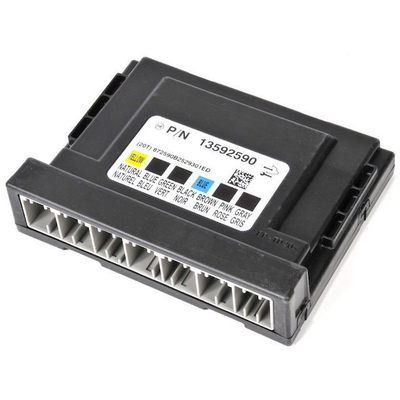
- Failing Body Control Module (BCM) (Rare) — The internal circuits of the BCM managing the LIN bus or reading switch signals can fail. Consider this only after ruling out all wiring and peripheral components.
Symptoms
- "Door Ajar" Warning Light Stays On — A persistent warning light remains illuminated on the dashboard even when all doors are securely shut.
- Interior Lights Stay On and Drain Battery — Because the vehicle registers an open door, interior courtesy lights remain on and modules stay awake, draining the battery overnight.
- Power Windows or Mirrors Inoperative — On vehicles with a LIN bus fault, power windows, locks, and mirrors stop functioning because their controlling modules are offline.
- Alarm Won't Set or Triggers Randomly — The security system refuses to arm because it detects an open door, or it triggers unexpectedly if a failing switch briefly connects and disconnects.
Diagnostic Flowchart
Tap your situation to follow the diagnostic path that matches what you're seeing on this code.
Common Fixes & Costs
- Cleaning and Lubricating Door Latch — Parts: $10-$20, Labor: $0, ~0.3 hr book time (DIY)
- Replacing Master Window Switch (LIN Bus Fault) — Parts: $150-$400, Labor: $50-$100, ~0.4 hr book time (DIY)
- Replacing Door Latch Assembly — Parts: $75-$150, Labor: $150-$225, ~1.5 hr book time (Intermediate)
- Repairing Broken Wires in Door Jamb — Parts: $5-$15, Labor: $150-$300, ~1.5 hr book time (Intermediate)
- Replacing Body Control Module (BCM) — Parts: $200-$700, Labor: $150-$350, ~2.0 hr book time (Professional)
Used vs. New Parts: Buying Guide
When a used part is worth it: Only for older vehicles (15+ years) where a new OEM part exceeds 10% of the car's value. Otherwise, buy new.
Donor-vehicle mileage cap: roughly under 60000 miles for the part to have meaningful remaining life.
Donor quality checklist:
- Verify donor mileage; lower is critical for wear items like latches.
- Avoid parts from rust-belt states to prevent internal corrosion.
- Match the part number exactly to ensure compatibility with features like keyless entry.
Decision logic:
- If The vehicle is less than 10 years old and an aftermarket part is under $150 → Buy new. The internal switch is a wear item, and a warranty provides peace of mind.
- If The part has a known high failure rate (e.g., 2011-2014 Ford Edge) → Never buy used. A salvage part likely has the exact same defect.
Warranty tradeoff: Salvage yards offer 30-day part-only warranties. New aftermarket parts offer 1-year to lifetime warranties. New OEM parts carry 1-2 year warranties.
Worst-case if a used part fails: $300 if a used part fails, requiring you to pay for a second part and labor.
What Happens If You Wait — Timeline
- Day 1: The 'Door Ajar' light and interior dome lights stay on after parking. There is no drivability issue, only a visual annoyance. (MPG impact: 0%% · Added cost: $0)
- 1-3 Days: The 0.5-1.0A parasitic draw drains the battery. The vehicle fails to start and requires a jump. An older battery dies overnight. (MPG impact: 0%% · Added cost: $0-$75 (roadside assistance or lost time))
- 1-4 Weeks: Repeated deep-discharging causes permanent sulfation to the battery's lead plates, destroying its capacity. The vehicle requires constant jump starts. (MPG impact: 0%% · Added cost: $150-$350 (cost of a new battery))
- 1-6 Months: The alternator operates at maximum output constantly to recharge the severely damaged battery, leading to premature alternator failure. (MPG impact: 0%% · Added cost: $650-$1250 (new battery plus alternator replacement))
Cost of Not Fixing It
- Immediate (1-7 days): Stranded with a dead battery. The parasitic draw from lights and modules staying awake drains a healthy battery in days. (Added cost: $150-$350 for a new battery, plus towing fees.)
- 1-6 months: Reduced battery life and alternator strain. Repeatedly deep-cycling a lead-acid battery permanently destroys it, and overworks the alternator. (Added cost: $500-$900 for a premature alternator replacement.)
- Ongoing: Safety and security risks. An inoperative alarm system leaves the vehicle vulnerable, and dead power windows are a safety hazard in emergencies. (Added cost: Variable cost of theft or safety incidents.)
Diagnosis Steps
- Verify the Code's Meaning
Use a scan tool or service manual to confirm the specific definition of B2325 for your vehicle's make and year. A Ford 'door ajar' fault requires a completely different diagnostic path than a Toyota 'LIN bus' fault.
Tools: OBD-II Scan Tool, Service Manual (Beginner) - Identify the Problem Door (Ford-type faults)
Sit in the running car and push firmly outward on each interior door panel. If the dashboard light flickers or turns off, you have identified the door with the faulty latch.
Tools: None (Beginner) - Clean and Lubricate the Latch
Generously spray the suspect door latch mechanism with electrical contact cleaner to flush out debris. Follow with white lithium grease. Open and close the door firmly 20 times to free the stuck switch.
Tools: Electrical Contact Cleaner, White Lithium Grease (Beginner) - Inspect the Door Jamb Wiring
Pull back the flexible rubber boot between the door and the car body. Inspect the wires for cracking, fraying, or complete breaks. Gently tug each wire to find breaks hidden inside the insulation.
Tools: Flashlight (Intermediate) - Check Live Data PIDs
Use an advanced scan tool to view the live status of each door switch (e.g., 'DDM_DR_STAT' on Ford). The value must change from 'Ajar' to 'Closed' when the door shuts. This definitively pinpoints the faulty circuit.
Tools: Advanced OBD-II Scan Tool (e.g., FORScan) (Advanced) - Isolate the Faulty LIN Module (Toyota-type faults)
Disconnect one module on the LIN bus at a time (e.g., passenger window motor), clear the codes, and see if B2325 returns. The module that keeps the code from returning when unplugged is the source of the network crash.
Tools: Trim Removal Tools, OBD-II Scan Tool (Advanced) - Test Door Switch Circuit Resistance
Unplug the door latch electrical connector. Measure resistance across the two ajar switch pins. It should show an open circuit (OL) when the latch is open, and under 5 ohms when closed. Wiggling the latch should not fluctuate the reading.
Tools: Multimeter, Trim Removal Tools, Service Manual (Advanced) - Test LIN Bus Voltage
Back-probe the single LIN wire at a module connector. A healthy bus shows a toggling voltage averaging 7-9V (max ~12V, min ~1V). A flat 0V indicates a short to ground; a steady 12V indicates a short to power or a dead master module.
Tools: Multimeter with back-probe pins (Advanced) - Test LIN Bus Resistance
With the battery disconnected, measure resistance between the LIN terminal at two different modules. It should be under 1 ohm. Measure from the LIN wire to chassis ground; it should be over 10 k-ohms. A low reading to ground confirms a short circuit.
Tools: Multimeter, Service Manual (Advanced) - Analyze LIN Bus Waveform
Connect an oscilloscope to the LIN wire. A healthy waveform drops cleanly from ~12V to ~1V. If a slave module is unresponsive, you will see the master's request but a flat line where the slave's data packet belongs.
Tools: Automotive Oscilloscope (Professional) - Diagnose the Body Control Module (BCM)
If all wiring, components, and network modules test perfectly, the BCM itself has failed. This requires a professional scan tool to check internal faults and program a replacement unit.
Tools: Professional Diagnostic Scan Tool (Professional)
When This Code Triggers (Freeze-Frame Conditions)
- Ignition Status: On/Run (The fault is detected when the ignition is on and the BCM is actively polling circuits.)
- Event Trigger: Door Open/Close or Key On (Door ajar faults set when the door state changes. LIN bus faults set shortly after 'Key On' if modules fail to respond.)
- Time to Set: Consecutive Failures (For LIN bus systems, the BCM must detect a total communication loss for a set period (e.g., 8 seconds) before logging the code.)
Related Codes
- B10F9 — A Ford-specific code for 'Driver Door Ajar Switch Circuit.' If present with B2325, the driver's door latch is definitively the culprit.
- U0199 — A generic code for 'Lost Communication With Door Control Module.' Often appears alongside B2325 during a total LIN bus network crash.
- B2321, B2322, B2323, B2324 — Toyota codes pointing to LIN faults with specific modules (e.g., Driver Door Motor). If one appears with B2325, it identifies the exact failing module.
- B2326 / B2327 — On Ford/Nissan vehicles, these indicate the mirror potentiometer circuit is shorted to battery (B2326) or ground (B2327).
Climate & Environmental Factors
- Cold Weather: Freezing temperatures cause grease inside door latches to harden, making the internal switch stick and send a false 'open' signal.
- High Humidity / Heavy Rain: Water penetrating door seals and jamb boots corrodes electrical connectors and accelerates the degradation of brittle wires.
- Road Salt (Rust Belt): Corrosive salt attacks the door latch mechanism, causing binding, and destroys exposed wiring in the door jamb.
How to Talk to a Mechanic About This Code
Say this: "For a Ford: 'I have a door ajar light draining my battery and suspect a faulty latch switch. I need a diagnosis to confirm which door is at fault and an estimate to replace the latch.' For a Toyota: 'I have a B2325 code and dead power windows. I need a LIN bus network diagnosis to isolate the faulty module, starting with the master switch.'"
This specific language directs the technician to the exact system, prevents broad diagnostic fees, and proves you understand the manufacturer-specific nature of the code.
Avoid saying:
- 'My car is acting weird, can you just look at it?'
- 'The light is on, just fix whatever's wrong.'
- 'A guy on the internet said it's the door latch.'
Questions to ask before authorizing the repair:
- For a Ford: Did you confirm with a scan tool's live data which door switch was faulty?
- For a Toyota: Which specific module did you disconnect to prove it was the source of the network failure?
- Is the quoted price for an OEM or an aftermarket part?
- What is the warranty on both the parts and the labor?
Where to Take It: Dealer vs Independent vs Chain
- Dealer:
Best for: Vehicles covered by Ford's 19N09 customer satisfaction program., Complex Toyota LIN bus diagnostics requiring Techstream software., Rare faults like the Hyundai AFLS issue.
Downsides: Highest labor rates and part costs., Inclined to replace entire assemblies rather than perform wiring repairs. (Typical cost: +50% vs. baseline) - Independent Shop:
An independent shop is best for the Ford fault. For the Toyota LIN bus fault, use a dealer unless the independent shop explicitly confirms they have advanced network diagnostic tools.
Best for: Common issues like the Ford door latch failure on out-of-warranty vehicles., General electrical diagnosis and door jamb wiring repairs.
Downsides: Diagnostic capabilities for complex network issues vary widely. (Typical cost: +0% vs. baseline) - Chain Shop:
AVOID. The manufacturer-specific complexity of B2325 guarantees a high risk of an expensive, incorrect repair at a chain shop.
Best for: Routine maintenance like oil changes and tires.
Downsides: Technicians lack specialized training for complex electrical diagnostics., High risk of misdiagnosis and upselling. (Typical cost: -10% vs. baseline)
When to Walk Away From the Repair
If the estimated repair cost exceeds 50% of the car's current private-party value, seriously consider alternatives to repair.
- Car worth $5000, fix is $550: Fix it. The repair is 11% of the vehicle's value and resolves a major reliability issue.
- Car worth $8000, fix is $1200: Fix it, but get a second opinion. At 15% of the car's value, confirming the diagnosis is wise.
- Car worth $3000, fix is $1800: Walk away. The repair cost is 60% of the car's value. Put the money toward a replacement vehicle.
What Scan Tool You Need for This Code
Minimum: A scanner that reads manufacturer-specific Body ('B') codes and displays live data PIDs. Basic code readers only show Powertrain ('P') codes and are useless for B2325.
A cheap scanner won't see 'B' codes or provide live data. For Ford, you must see the live status of each door switch. For Toyota, you must see the communication status of LIN bus modules.
Budget: BlueDriver Pro or FORScan (with compatible adapter) (~$100) — BlueDriver reads Body codes and shows live data. FORScan definitively shows the live status of each Ford door ajar switch, pinpointing the exact faulty latch.
Mid-range: Foxwell NT510 Elite / Autel MaxiCOM MK808 (~$150-500) — These provide manufacturer-specific software to read B-codes and display live data streams for all modules, essential for diagnosing LIN bus issues.
Professional: Toyota Techstream or Automotive Oscilloscope (PicoScope) (~$50-1500) — Techstream provides dealer-level diagnostic control for Toyota LIN bus issues. An oscilloscope visually analyzes the LIN bus data waveform to see exactly why communication is failing.
Rent vs buy: Buy. Auto parts store loaner tools rarely read manufacturer-specific Body codes. Buying a capable scanner is required to diagnose this code accurately.
How to Clear the Code After You Fix It
- Reconnect all disconnected components and the battery.
- Use an OBD-II scan tool to erase the code from the Body Control Module.
- Cycle the ignition off, then back on.
- Operate the repaired component (open/close doors, test windows) to verify the fix.
Drive cycle (~5 minutes): Body codes do not require a complex drive cycle. After clearing the code, the BCM re-evaluates the circuit on the next key cycle. If the fault is gone, the code stays off.
Readiness monitors affected: None
Watch out for:
- Disconnecting the battery rarely clears codes from the BCM's non-volatile memory; a scan tool is required.
- If the code returns instantly on a Toyota, you replaced the wrong module or have a hard wiring short.
- Replacing a BCM or master window switch often requires a factory initialization procedure before it functions.
Will This Fail Emissions / State Inspection?
No — by itself this code doesn't fail OBD inspection (but it can keep readiness monitors from setting, which causes a separate fail).
- California: This code will NOT cause a smog check failure. California tests focus on powertrain ('P') codes that affect emissions.
- New York: This code will NOT cause an emissions failure. NYS scans for faults that command the Check Engine Light, which body codes do not.
- Texas: This code will NOT cause an OBD inspection failure. Body electrical faults are excluded from emissions criteria.
Most Commonly Affected Vehicles
- Ford Explorer (2013-2014) — Notorious for driver-side door latch failures. Covered by Ford Customer Satisfaction Program 19N09.
- Ford Edge (2011-2014) — Subject to the same extended warranty program (19N09) for high rates of door ajar switch failures.
- Lincoln MKX (2011-2014) — Suffers from the identical faulty door latch switch issue as the Ford Edge.
- Toyota RAV4 (2019-2024) — B2325 points to a LIN Bus failure. The fault is often the master window switch or a window motor.
- Hyundai Genesis (2012-2013) — B2325 indicates 'Swivel module fault left,' a problem with the Adaptive Front-Lighting System (AFLS), not the doors.
- Toyota Tundra (2009-2010) — Signifies a LIN communication bus malfunction involving door modules and the sliding roof ECU.
- Toyota Sequoia (2010-2012) — Points to a LIN communication bus failure between the main body ECU and door modules.
Manufacturer-Specific Notes
- Ford / Lincoln: The door ajar switch is integrated into the latch assembly. The failure rate is so high that Ford issued Customer Satisfaction Program 19N09 to extend warranties on 2011-2014 models.
- Toyota / Lexus: Code B2325 means 'LIN Communication Bus Malfunction.' It is a network breakdown, not a switch failure. Culprits include the master window switch or sliding roof module.
- General Motors (GM): On certain Chevrolet models, B2325 refers to a 'Rear Seat Heater Switch Circuit Malfunction,' completely unrelated to doors or windows.
- Hyundai: B2325 is defined as 'Swivel module fault left,' indicating a failure in the headlamp leveling actuator of the Adaptive Front-Lighting System.
Real Owner Stories
2012 Ford Edge at 120K miles with 'Door Ajar' light
The 'Door Ajar' warning light and dome lights stayed on after closing the driver's door, killing the battery overnight. The problem worsened in cold weather.
What they tried:
- Sprayed WD-40 into the latch, providing a temporary fix for two days.
- Received a $350 quote to replace the entire door latch assembly.
- Flushed the latch mechanism heavily with residue-free electrical contact cleaner, working the door open and closed 20 times.
Outcome: The electrical contact cleaner successfully dissolved the gummy residue binding the internal switch. The light turned off permanently. Total cost was $10 for the cleaner.
Lesson: Always start with the cheapest fix. A sticking switch is notorious on Fords, and flushing it with electrical contact cleaner—not just WD-40—often solves the problem without parts replacement.
2019 Toyota RAV4 with B2325 and dead windows
Code B2325 appeared alongside a total loss of power window and mirror functions. The owner assumed a bad door latch based on generic internet searches.
What they tried:
- Priced out a replacement door latch assembly.
- Took the vehicle to a specialist who correctly identified B2325 on a Toyota as a 'LIN Communication Bus Malfunction'.
- The technician disconnected modules one by one. The fault code cleared when the driver's side master window switch was unplugged.
Outcome: The master window switch failed internally, crashing the entire LIN network. Replacing the switch (OEM Part No. 84040-0R080) restored all functions. Repair cost was $450.
Lesson: B2325 is manufacturer-specific. On modern Toyotas, it is a network code, not a switch code. Never replace parts based on generic symptoms; isolate the faulty module on the LIN bus first.
2013 Hyundai Genesis with flashing 'AFLS' light
An 'AFLS OFF' warning light flashed on the dash, and the adaptive headlights stopped swiveling. A scan tool pulled code B2325, defined as 'Swivel module fault left'.
What they tried:
- Checked the AFLS fuse, which was intact.
- Disconnected the battery to reset the system, but the code returned instantly.
- A diagnostic shop confirmed the left headlight's internal swivel actuator motor failed.
Outcome: The entire left headlamp assembly required replacement because the swivel motor is non-serviceable. The repair cost over $1,000 for an OEM headlamp and calibration.
Lesson: Verify the code definition for your exact make and model. For this Hyundai, B2325 was entirely unrelated to doors or windows.
How to Prevent This Code From Triggering
- Lubricate Door Latches Annually (Once per year, ideally before winter) — Dirt and hardened grease cause the internal ajar switch to stick. Flushing with contact cleaner and lubricating with white lithium grease prevents binding in freezing temperatures.
- Inspect Door Jamb Wiring Boots (Every 2-3 years or when changing speakers) — The rubber boot protects wires from flexing. Checking for cracked or brittle wires allows you to repair them before they break completely and cause an open circuit.
- Use a Battery Maintainer for Extended Parking (When parking the vehicle for more than 1 week) — If you cannot fix a door ajar fault immediately, a battery maintainer prevents the parasitic draw from permanently damaging the battery through deep discharge cycles.
Frequently Asked Questions
Can a bad door ajar switch drain my car battery?
Yes. The switch failure makes the car think a door is open, keeping interior lights and computer modules awake. This constant power draw drains a healthy battery in just a few days.
How can I tell which door is causing the 'Door Ajar' light?
Sit inside the running car and push firmly outward on each closed door panel. If the dashboard light flickers or turns off, you found the faulty door latch. Alternatively, use an advanced scan tool to view live data for each door switch.
I sprayed WD-40 in the latch and it didn't fix it. What next?
WD-40 displaces water but washes away necessary grease. Flush the latch thoroughly with electrical contact cleaner, then apply white lithium grease. If it still fails, inspect the door jamb wiring for breaks or replace the latch assembly.
Is the door ajar switch a separate part?
On most modern vehicles, including affected Fords, the switch is permanently integrated into the door latch assembly. You must replace the entire latch mechanism to fix a broken switch.
Can I just disable the switch to turn the light off?
No. Bypassing the switch disables the vehicle's security alarm and disrupts interior lighting logic. The correct fix is repairing the broken wire or replacing the faulty latch.
Why does B2325 mean something different on my car?
B2325 is a manufacturer-specific code, meaning automakers define it differently. It indicates a LIN Bus network failure on Toyotas, a mirror circuit open on Fords, and a headlight swivel fault on Hyundais. Always look up the exact definition for your specific year and make.
I replaced the door latch on my Toyota, but B2325 remains. Why?
On modern Toyotas, B2325 indicates a communication failure on the LIN data network, not a bad door latch. The fault lies in a module sharing that network, such as the master window switch or a window motor. You must disconnect modules one by one to isolate the failure.
What is a LIN bus?
A LIN (Local Interconnect Network) bus is a single-wire data network connecting smart components like window motors to the main body computer. Code B2325 triggers on Toyotas when the main computer loses communication with all modules on this specific network.
How much does it cost to fix code B2325?
Costs range from $15 for a DIY latch cleaning to $350 for a shop to replace a Ford door latch. Diagnosing and replacing a Toyota master window switch costs $200 to $500. Complex wiring or BCM repairs exceed $600.
Key Takeaways
- Code B2325 means completely different things depending on the brand: a faulty door latch switch on Fords, or a LIN bus network failure on Toyotas.
- On 2011-2014 Ford and Lincoln models, fix a persistent 'Door Ajar' light by flushing the driver's door latch with electrical contact cleaner before spending $250 on a replacement.
- For Toyota and Lexus vehicles, B2325 indicates a network failure requiring you to disconnect modules like the master window switch one by one to isolate the short.
- Prevent a dead battery by connecting a trickle charger immediately if your interior lights stay on, as a 0.5-amp parasitic draw kills a healthy battery in under 3 days.
Helpful Videos


Shop the Parts Behind B2325
Below are the parts most often responsible for code B2325, ranked by how frequently each one is the actual culprit (per the diagnosis above). Tap any to see what we have for your vehicle.



The information in this article is provided for general reference and educational purposes only. Vehicle specifications, procedures, and part compatibility can vary by production date, trim level, and region. Always consult your vehicle's factory service manual and verify part numbers before purchasing or performing repairs. Safety-critical components such as airbags, seat belts, and braking systems should be installed by a qualified professional.
- 🧭 Diagnostic Flowchart
- 🎬 Helpful Videos
- 🛍️ Shop This Part
- What Does B2325 Mean?
- Can I Drive With B2325?
- Common Causes
- Symptoms
- Common Fixes & Costs
- Used vs. New Parts: Buying Guide
- What Happens If You Wait — Timeline
- Cost of Not Fixing It
- Diagnosis Steps
- When This Code Triggers (Freeze-Frame Conditions)
- Related Codes
- Climate & Environmental Factors
- How to Talk to a Mechanic About This Code
- Where to Take It: Dealer vs Independent vs Chain
- When to Walk Away From the Repair
- What Scan Tool You Need for This Code
- How to Clear the Code After You Fix It
- Will This Fail Emissions / State Inspection?
- Most Commonly Affected Vehicles
- Manufacturer-Specific Notes
- Real Owner Stories
- 2012 Ford Edge at 120K miles with 'Door Ajar' light
- 2019 Toyota RAV4 with B2325 and dead windows
- 2013 Hyundai Genesis with flashing 'AFLS' light
- How to Prevent This Code From Triggering
- Frequently Asked Questions
- Can a bad door ajar switch drain my car battery?
- How can I tell which door is causing the 'Door Ajar' light?
- I sprayed WD-40 in the latch and it didn't fix it. What next?
- Is the door ajar switch a separate part?
- Can I just disable the switch to turn the light off?
- Why does B2325 mean something different on my car?
- I replaced the door latch on my Toyota, but B2325 remains. Why?
- What is a LIN bus?
- How much does it cost to fix code B2325?
- Key Takeaways
- 🎟️ Get 5% Off