

OBD-II Code B2328: A Comprehensive Guide to Driver's Side Mirror Circuit Malfunction & Its Many Other Meanings
What B2328 means, why it triggers, and the complete guide to diagnosing and fixing it on any vehicle.
- Verify your specific vehicle's definition of B2328 before replacing parts; manufacturers repurpose this code for completely different systems.
- On 1997-2004 C5 Corvettes, B2328 indicates a critical steering column lock failure that triggers a fuel shut-off above 2 MPH.
- Subaru, Hyundai, and Kia vehicles log B2328 for a failed blind spot radar sensor, requiring a $650 to $1,200 professional replacement and ADAS calibration.
- If B2328 indicates a mirror fault, inspect the driver's door jamb wiring boot first; broken wires cause over 80% of these failures on Ford and GM trucks.
What Does B2328 Mean?
B2328 is a body diagnostic trouble code (DTC) that generically indicates the Body Control Module (BCM) detected an electrical fault in the driver's side power mirror circuit. This affects mirror adjustment, heating, turn signals, or auto-dimming. However, its meaning is highly manufacturer-dependent and frequently points to entirely different systems.
Technical definition: The official SAE J2012 definition for B2328 is "Driver Side Mirror Circuit Failure". This definition is misleading; manufacturers frequently repurpose this code. GM uses it for a "Column Lock Control Module" issue, Chrysler for a "Liftgate Release Switch" fault, Subaru for "Rear Radar Internal Failure", and some Chevrolets for a "Rear Seat Heater Switch Circuit" error.
Can I Drive With B2328?
Yes, But With Caution. If the code relates to a power mirror, it is safe to drive; manually position the mirror for visibility. However, on C5 Corvettes, this code signifies a CRITICAL steering column lock failure that shuts off fuel above 2 MPH, immobilizing the car. For Subaru, Hyundai, and Kia, it disables the Blind Spot Detection system, increasing the risk of a side-collision.
Common Causes
- Broken Wires in Door Jamb (Very Common) — The wiring harness inside the flexible rubber boot between the driver's door and the body bends constantly. Over time, wires fatigue and break, causing an open or short circuit. This is the primary cause for mirror-related faults on Ford and GM vehicles.
- Failed Steering Column Lock (GM C5 Corvette) (Very Common) — On 1997-2004 Corvettes, the Electronic Column Lock (ECL) mechanism fails frequently. This triggers B2328, locks the steering wheel, and immobilizes the car.
- Failed Blind Spot Radar Sensor (Common) — On modern Subaru, Hyundai, and Kia vehicles, this code indicates an internal failure or misalignment of the blind spot detection radar unit in the rear bumper. Minor impacts, water intrusion, or electronic failure cause this.
- Failed Side Mirror Assembly (Common) — Internal mirror components, such as the adjustment motor, heating element, or auto-dimming electronics, fail and create a circuit fault.
- Corroded or Damaged Electrical Connector (Common) — Connectors at the mirror, door module, or BCM corrode from water intrusion or suffer damage during previous repairs, severing the electrical connection.
- Faulty Mirror Control Switch (Less Common) — The master switch on the driver's door panel wears out internally, preventing it from sending the correct signal to the mirror or control module.
- Faulty Driver Door Module (DDM) (Less Common) — The DDM, the computer inside the driver's door, fails internally and disrupts communication with the mirror and other door components.
- Blown Fuse (Rare) — A blown fuse for the affected circuit cuts power and triggers this code. It is the easiest potential cause to check, though rarely the root issue.
- Low Battery Voltage (Rare) — A weak battery causes erratic Body Control Module behavior, triggering false codes including B2328. This is a known contributor to the column lock issue on C5 Corvettes.
Symptoms
- Driver's side mirror functions fail — The mirror glass does not respond to the control switch, and features like the heated glass, integrated turn signal, or puddle lamp are inoperative.
- 'Service Column Lock' or 'Pull Key, Wait 10 Sec' message (C5 Corvette) — The Driver Information Center displays a warning, the steering wheel locks, and the engine shuts off when speed exceeds 2 MPH.
- 'Check BSD System' or 'SRVD OFF' warning light (Subaru, Hyundai, Kia) — The blind spot detection and rear cross-traffic alert systems are disabled, illuminating a warning light on the dash or in the side mirror.
Diagnostic Flowchart
Tap your situation to follow the diagnostic path that matches what you're seeing on this code.
Common Fixes & Costs
- Repairing broken wires in door jamb — Parts: $10-$50, Labor: $150-$300, ~1.5 hr book time (Intermediate)
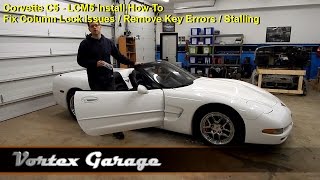
- Installing a Column Lock Bypass Module (C5 Corvette) — Parts: $55-$65, Labor: $150 (or DIY), ~1.0 hr book time (DIY)
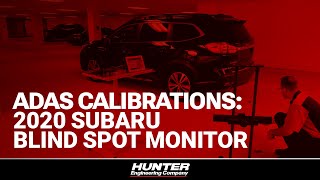
- Replacing and Calibrating a Blind Spot Radar Sensor — Parts: $350-$600, Labor: $300-$600 (includes calibration), ~2.5 hr book time (Professional)
- Replacing the side mirror assembly — Parts: $40-$1000+, Labor: $150-$300, ~0.8 hr book time (DIY)
- Replacing Liftgate Release Switch — Parts: $15-$50, Labor: $75-$150, ~0.8 hr book time (DIY)
- Replacing the Driver Door Module (DDM) — Parts: $65-$450, Labor: $165-$300, ~1.2 hr book time (Professional)
Used vs. New Parts: Buying Guide
When a used part is worth it: Used parts make sense for cosmetic items like a basic side mirror assembly or a liftgate switch, where function is easily verified. For the C5 Corvette, the fix is an aftermarket-only bypass module, so OEM parts are not applicable.
Donor-vehicle mileage cap: roughly under 100000 miles for the part to have meaningful remaining life.
Donor quality checklist:
- For mirrors, verify all functions (heat, signal, power-fold) match your original part number exactly.
- Avoid parts from vehicles with flood or heavy collision damage, especially electronic modules.
- Buy from reputable recyclers who offer a warranty or return policy.
Decision logic:
- If The part is a Blind Spot Radar Sensor (Subaru, Hyundai, Kia) → Buy new OEM. Used sensors harbor hidden collision damage and require expensive calibration that fails if the part is defective.
- If The part is a simple, non-electronic component like a liftgate switch or a basic mirror → A used part from a low-mileage donor is a cost-effective and reliable choice.
- If The part is a Driver Door Module (DDM) or other control unit → Buy new or remanufactured. Used modules carry compatibility and programming risks.
Warranty tradeoff: Used salvage parts typically have a 30-90 day warranty. New aftermarket parts carry a 1-year to limited lifetime warranty. New OEM parts usually have a 12-month warranty.
Worst-case if a used part fails: $300-$700 if a used electronic part like a blind spot sensor is defective, requiring you to pay for installation and calibration twice.
What Happens If You Wait — Timeline
- Immediate: C5 Corvette: 'Service Column Lock' message appears. The car stalls if speed exceeds 2 MPH, effectively immobilizing the vehicle. (MPG impact: N/A% · Added cost: $125-$250 (for immediate towing) + $60 (for LMC5 bypass module).)
- 0-2 weeks: Mirror/Wiring Fault: The mirror or door electronics work intermittently. Wiggling the door causes it to work or fail. (MPG impact: 0%% · Added cost: $0)
- 2 weeks - 4 months: Mirror/Wiring Fault: More wires break from fatigue. Functions fail completely. Short circuits between broken wires blow fuses for other door components. (MPG impact: 0%% · Added cost: $50-$150 (for diagnostic time and replacement of unrelated fuses).)
- Ongoing from Day 1: Subaru/Hyundai/Kia BSD Fault: The Blind Spot Detection system is permanently disabled, elevating the risk of a lane-change collision. (MPG impact: 0%% · Added cost: $500 - $5,000+ (Potential insurance deductible from an accident).)
Cost of Not Fixing It
- Immediate: C5 Corvette: Vehicle is immobilized or shuts off in traffic, creating a severe safety hazard requiring a tow. (Added cost: $125-$250 for towing.)
- Ongoing: Subaru/Hyundai/Kia: Blind Spot Detection and Rear Cross-Traffic Alert are disabled, increasing the risk of a collision. (Added cost: Potential insurance deductible and rate increase from an accident.)
- Ongoing: Ford/GM (Mirror Fault): Inability to adjust the driver's side mirror reduces visibility. Intermittent shorts in the door harness blow fuses for other door components. (Added cost: Negligible, unless it contributes to an accident or shorts other modules.)
- Ongoing: Dodge/Chrysler (Liftgate Fault): The power liftgate fails to operate. If the latch fails to secure the gate, it opens while driving. (Added cost: Negligible, unless cargo is lost or damaged.)
Diagnosis Steps
- Verify Code Meaning for Your Vehicle
Use a professional-grade scan tool or repair database to confirm what B2328 means for your specific Year, Make, and Model. Do not assume it is a mirror fault. This step prevents expensive misdiagnosis.
Tools: Professional Scan Tool or Alldata/Mitchell subscription (Beginner) - Visually Inspect the Door Jamb Wiring
For mirror-related faults, open the driver's door and peel back the rubber boot in the door jamb. Inspect the wires for breaks, chafing, or damaged insulation. Gently tug each wire to check for internal separation.
Tools: Flashlight (Beginner) - Check the Fuse
Consult your owner's manual to find the fuse for the power mirrors, column lock, or blind spot system. Visually inspect the fuse and replace it if the internal wire is broken.
Tools: Fuse puller or needle-nose pliers (Beginner) - Test the Mirror Control Switch
If the passenger mirror works, the switch is likely good. If neither works, remove the switch and use a multimeter on the continuity setting to verify it properly opens and closes the circuits for each mirror direction.
Tools: Trim removal tools, multimeter (Intermediate) - Test for Power at the Mirror Connector
Remove the interior door panel to access the mirror's electrical connector. Identify the power and ground pins using a wiring diagram. Check for 12V on the power pin when operating the mirror switch.
Tools: Trim removal tools, multimeter, wiring diagram (Intermediate) - Check for 'Cancel Codes' (Subaru)
For Subaru vehicles, B2328 stores as a 'Cancel Code' invisible to standard scanners. Use a capable scan tool to check this specific memory area within the 'Blind Spot Detection' module.
Tools: Professional scan tool (Subaru SSM, high-end Autel/Launch) (Advanced) - Advanced: C5 Corvette Column Lock Circuit Test
At the column lock module connector, check the four wires with the key ON. The purple wire requires 12V+ from the BCM. The orange wire is a 5V reference. The black wire is ground. The green wire is the signal return. Incorrect voltage points to a circuit fault between the BCM and lock module.
Tools: Multimeter, wiring diagram, back-probe pins (Advanced) - Pro Tip: CAN Bus Resistance Check
If communication errors are suspected, disconnect the battery and measure resistance between OBD-II Pin 6 (CAN-H) and Pin 14 (CAN-L). A healthy network reads 60 Ohms. A reading of 120 Ohms indicates an offline terminating resistor; 0 Ohms indicates a short.
Tools: High-quality multimeter (Advanced) - Pro Tip: CAN Bus Voltage Check
With the battery connected and ignition ON, back-probe the OBD-II port. Pin 6 (CAN-H) should read 2.5V-3.5V and Pin 14 (CAN-L) should read 1.5V-2.5V. Incorrect voltage indicates a short to power or ground.
Tools: High-quality multimeter, back-probe pins (Advanced) - Advanced: Mirror Motor Resistance Test
Disconnect the mirror connector. Measure resistance between the pins for the vertical and horizontal motor control circuits. Typical motors read 5 to 20 Ohms. Infinity (OL) indicates an open circuit; near zero indicates a short.
Tools: Multimeter, wiring diagram (Advanced)
When This Code Triggers (Freeze-Frame Conditions)
- System Voltage: 11.5V - 14.5V (Code sets during a key-on self-test or when the affected function is requested.)
- Ignition Status: ON / RUN (The Body Control Module must be active to detect circuit faults.)
- Vehicle Speed: 0 MPH or > 2 MPH (For C5 Corvettes, the fault is detected at startup and triggers fuel cut-off when speed exceeds 2 MPH.)
- Module Command: Active (The fault logs when the BCM sends a command to a component and does not receive the expected electrical response.)
Related Codes
- B2338 — Indicates a 'Passenger Side Mirror Circuit Failure'. If present with B2328, the fault lies in a shared component like the master control switch, a fuse, or the BCM.
- U0199 — 'Lost Communication With Driver Door Control Module'. If present with B2328, it points to a faulty DDM or a severed power/ground wire in the door jamb. Diagnose U0199 first.
- B1867 — On Ford vehicles, this means 'Driver Door Ajar Circuit Failure'. Appearing with B2328 confirms multiple wires are broken in the driver's side door jamb harness.
- B2327 — On Subaru vehicles, this is the passenger-side equivalent of B2328, indicating a fault with the right-hand blind spot radar sensor.
Climate & Environmental Factors
- Cold Weather: Wire insulation becomes brittle in extreme cold, increasing the likelihood of cracking in high-flex areas like the door jamb harness. This spikes B2328 mirror faults in winter months.
- High Humidity / Road Salt: Moisture and salt spray accelerate corrosion on electrical connectors. For vehicles in the salt belt, this destroys rear-mounted blind spot radar sensors, triggering B2328 on Subaru, Hyundai, and Kia models.
How to Talk to a Mechanic About This Code
Say this: "I have a B2328 code on my [Year, Make, Model]. I need a diagnostic, but it's critical to first confirm what this code means for my specific vehicle before starting any repairs. Can you please start by verifying the code's definition and then diagnosing that specific system?"
This signals you understand the code's complexity. It directs the shop to perform the verification step and prevents them from wasting time diagnosing the wrong part.
Avoid saying:
- 'My check engine light is on, can you look at it?' (This is a body code, likely no check engine light, and is too vague).
- 'My mirror isn't working, please fix it.' (The code may have nothing to do with the mirror).
- 'Just fix whatever is wrong.' (This gives the shop a blank check to replace parts without proper diagnosis).
Questions to ask before authorizing the repair:
- For a Subaru/Hyundai/Kia: Does your repair estimate include the cost of the mandatory ADAS calibration after the sensor is replaced?
- For a Ford/GM with a mirror fault: Did you find broken wires in the door jamb, or are you recommending a more expensive part replacement? Can I see the broken wires?
- For a C5 Corvette: Are you recommending the aftermarket LMC5 bypass module, or are you quoting a more expensive OEM-style repair?
- Can you provide me with a written estimate that breaks down the cost of parts and labor?
- What is the warranty on the parts and the labor for this specific repair?
Where to Take It: Dealer vs Independent vs Chain
- Dealer:
REQUIRED for Blind Spot Radar repairs due to mandatory calibration equipment. For other variants, an independent shop is a better value.
Best for: Subaru, Hyundai, and Kia vehicles where B2328 indicates a Blind Spot Radar fault., Vehicles still under warranty., Complex electrical issues where manufacturer-specific scan tools are required.
Downsides: Highest labor rates., Unwilling to install aftermarket solutions like the C5 Corvette column lock bypass., Defaults to expensive module replacement instead of targeted wiring repair. (Typical cost: +50% vs. baseline) - Independent Shop:
BEST FIT for common versions of this code, such as Ford/GM wiring issues and the C5 Corvette column lock bypass.
Best for: Ford/GM vehicles with wiring faults in the door jamb., C5 Corvettes needing a column lock bypass installation., Out-of-warranty vehicles where cost is a primary concern.
Downsides: Quality varies widely; choose an ASE-certified shop specializing in electrical work., Lacks the expensive ADAS calibration equipment required for Subaru/Hyundai/Kia repairs. (Typical cost: +0% vs. baseline) - Chain Shop:
AVOID for initial diagnosis. The complexity and variability of code B2328 make misdiagnosis highly likely.
Best for: Simple parts replacement like a fuse or a basic mirror assembly if the diagnosis is already certain.
Downsides: Technician skill varies dramatically., High pressure to upsell unnecessary services., Lacks the expertise to diagnose the root cause of a complex 'B' code. (Typical cost: -10% vs. baseline)
When to Walk Away From the Repair
If the estimated repair cost exceeds 50% of the car's private-party value, it is time to seriously consider selling or trading it in.
- Car worth $6000, fix is $3500: Walk away. The repair cost is over 50% of the car's value. Put that money toward a more reliable vehicle.
- Car worth $15000, fix is $1200: Fix it. This repair for a Subaru blind spot sensor is well below the 50% threshold and restores a critical safety feature.
- Car worth $3000, fix is $1800: Walk away. A repair costing 60% of the car's value is not a sound investment on an older vehicle.
What Scan Tool You Need for This Code
Minimum: A scanner that reads and clears 'B' (Body), 'C' (Chassis), and 'U' (Network) codes. A basic engine-only reader is insufficient.
A $20 reader only shows powertrain codes. You must access the Body Control Module. For Subaru, the code stores in a special 'Cancel Code' memory area requiring advanced access.
Budget: BlueDriver Pro (~$99) — Reads and clears enhanced codes for most major brands. It confirms the presence of B2328 and provides freeze-frame data.
Mid-range: Foxwell NT510 Elite (~$180) — Offers brand-specific software with deeper access to modules like the BCM and SRVD. It performs bidirectional controls to pinpoint failures.
Professional: Autel MaxiCOM MK808 / MK808BT (~$450-600) — Provides OE-level diagnostics for all systems. It commands components directly and performs the ADAS calibration procedures required for blind spot sensor replacement.
Rent vs buy: Auto parts store loaner tools are basic code readers that cannot access 'B' codes. You must buy a capable scanner or pay for a professional diagnosis.
How to Clear the Code After You Fix It
- Use a professional OBD-II scan tool capable of reading 'B' (Body) codes to clear the fault from the BCM.
- For blind spot radar systems, complete a mandatory ADAS calibration procedure before the code will clear.
- Disconnecting the battery for 15 minutes clears the code temporarily, but it returns immediately if the hardware fault remains.
Drive cycle (~15 minutes): A specific drive cycle is not required. The BCM runs a self-test on the affected circuit at key-on. After clearing the code, cycle the ignition off and on. Operate the repaired function to confirm the fix.
Readiness monitors affected: None. Body codes do not affect emissions readiness monitors.
Watch out for:
- Using a basic code reader that only clears 'P' (Powertrain) codes will not erase a 'B' code.
- Forgetting that a replacement blind spot sensor requires mandatory calibration before the code clears.
- Clearing the code without fixing the root cause results in the code returning instantly.
Will This Fail Emissions / State Inspection?
No — by itself this code doesn't fail OBD inspection (but it can keep readiness monitors from setting, which causes a separate fail).
- California: A 'B' code like B2328 does not cause a smog check failure. The inspection focuses strictly on powertrain codes and the Check Engine Light.
- New York: The NYS safety inspection checks mirror operation, but does not scan for B2328. A non-functional mirror fails the safety portion of the inspection.
- Texas: B2328 does not cause an emissions test failure. However, a broken mirror remains grounds for a traffic citation.
Most Commonly Affected Vehicles
- Chevrolet Corvette (C5) (1997-2004) — CRITICAL: B2328 means 'Column Lock Control Module Failure'. Locks the steering wheel and activates a fuel shut-off above 2 MPH. The permanent fix is installing an aftermarket bypass module like the LMC5.
- Subaru Legacy / Outback / Crosstrek / Forester (2015-2020) — Indicates 'Rear Radar Internal Failure'. Diagnosis requires a scan tool capable of reading 'Cancel Codes' from the SRVD module.
- Ford F-150 (2004-2014) — Caused by broken wires in the driver's door jamb harness. The sheer frequency of door use makes this a top affected vehicle.
- Hyundai Elantra / Sonata (2017-2020) — Tied to a fault in the Blind Spot Detection (BSD) radar sensor in the rear bumper. Requires sensor replacement and calibration.
- Kia Optima / Sorento (2016-2020) — Points to a fault in the BSD system. Minor rear bumper damage misaligns the sensor, triggering the code.
- Dodge / Chrysler Grand Caravan / Town & Country (2008-2016) — Defined as 'Liftgate Release Switch Circuit Malfunction', preventing the power liftgate from operating correctly.
- Ford Explorer (2002-2010) — Shares the F-150's common failure point: broken wires in the driver's door jamb harness due to fatigue.
- Chevrolet Silverado / Tahoe / Suburban (2007-2014) — On specific GM trucks, B2328 defines a 'Rear Seat Heater Switch Circuit' fault, demonstrating the code's wide variability.
Manufacturer-Specific Notes
- General Motors (GM): On 1997-2004 C5 Corvettes, B2328 is a critical code for the electronic steering column lock. Failure locks the steering wheel and triggers a fuel cut-off. Aftermarket bypass modules like the LMC5 are the accepted permanent fix.
- Subaru: Subaru defines B2328 as 'Rear Radar Internal Failure'. The code stores as a 'Cancel Code' invisible to basic scan tools. A professional tool is needed to check the SRVD module.
- Chrysler/Dodge/Jeep: B2328 relates to the 'Power Liftgate Latch' or 'Release Switch' circuit, causing the power liftgate to fail.
- Ford: While commonly a door harness wiring issue, Ford's manufacturer-specific codes mean B2328 requires verification. Its presence alongside other 'B' or 'U' codes confirms a wiring loom failure.
Real Owner Stories
2002 C5 Corvette with 75K miles
Car displayed 'Service Column Lock' messages intermittently. It started but shut off after backing out of the driveway at 2 MPH.
What they tried:
- Replaced the battery, as forum posts suggested low voltage causes the issue. The message disappeared for a day but returned.
- Called a Chevy dealer who quoted over $800 for diagnostics and potential BCM replacement.
Outcome: Owner purchased an LMC5 Column Lock Bypass module for $60. They installed it themselves in the passenger footwell in under an hour. The car started immediately, and the fuel cut-off issue was permanently resolved.
Lesson: For the C5 Corvette, B2328 is a near-certain column lock failure. Skip expensive diagnostics; the aftermarket LMC5 bypass is the permanent, affordable DIY solution.
2011 Ford F-150 with 130K miles
Driver's side power mirror and power window stopped working. Code B2328 was present.
What they tried:
- Replaced the master window/mirror switch assembly ($70), but the problem remained.
- Checked the fuse for the power mirrors, which was intact.
Outcome: The owner pulled back the rubber boot in the driver's door jamb and found three wires completely broken. They spent $15 on butt connectors and heat shrink tubing, spliced in new wire, and restored all functions.
Lesson: On Ford trucks, if B2328 is accompanied by other driver's door electrical failures, the cause is almost certainly broken wires in the door jamb. 🎬 See how to find and repair broken door jamb wiring. Inspect this area before replacing parts.
2016 Subaru Outback with 85K miles
The 'SRVD OFF' light came on, disabling the Blind Spot Detection. A basic OBD-II scanner showed no codes.
What they tried:
- Cleaned the rear bumper corners thoroughly, suspecting dirt blocked the sensors.
- Took the car to an independent mechanic who couldn't communicate with the SRVD module.
Outcome: The Subaru dealer used their Select Monitor scan tool and found code B2328 stored as a 'Cancel Code'. They diagnosed an internal failure of the left rear radar sensor. The total repair cost was $1,000 including mandatory ADAS calibration.
Lesson: On a Subaru, a disabled BSD system with no codes on a standard scanner strongly indicates B2328. This requires a dealer-level scan tool and specialized calibration equipment, making it a non-DIY job.
How to Prevent This Code From Triggering
- Periodically lubricate the door jamb harness boot (Every 2-3 years) — Applying dielectric grease to the rubber boot keeps the insulation flexible and reduces friction, preventing wire fatigue and breakage in cold climates.
- Install a C5 Corvette Column Lock Bypass Module proactively (Once, before failure occurs) — The factory column lock system on the C5 Corvette fails regardless of mileage. Installing an aftermarket bypass module prevents you from being stranded.
- Maintain a healthy battery and clean terminals (Annually) — Low system voltage causes erratic BCM behavior, triggering false codes and exacerbating issues like the C5 column lock and Subaru BSD faults.
- Use protective wire looming and sleeves (During any wiring repair) — Using split-loom tubing or friction tape provides abrasion resistance and distributes bending stress, preventing new wiring repairs from failing prematurely.
Frequently Asked Questions
Can I fix code B2328 myself?
It depends on the vehicle. Repairing Ford door wiring is an intermediate DIY task, and installing a Corvette column lock bypass is a common DIY fix. However, a Subaru radar fault requires a professional due to specialized calibration equipment.
Will clearing the code fix the problem?
No. Clearing the code only erases the stored fault. The Body Control Module detects the hardware problem again immediately, and the code returns.
Why does my mirror work intermittently?
This is the classic symptom of a broken wire in the door jamb harness. As the door moves, the broken ends of the wire make and lose contact, causing the function to work sporadically.
What is the biggest mistake when diagnosing B2328?
Assuming the code is for the driver's mirror on all cars. On a C5 Corvette, this mistake leaves you stranded, while on a Subaru, you waste time inspecting the wrong system. Always verify the code's specific meaning for your vehicle.
What is a Subaru 'Cancel Code'?
It is a diagnostic code stored in a separate memory location invisible to standard DTC scans. A professional scan tool is required to access this menu within specific modules to see if B2328 is present.
Why does my C5 Corvette say 'Service Column Lock' and shut off?
This is the primary symptom of the B2328 fault on C5 Corvettes. The Body Control Module detects a steering column lock error and cuts fuel to the engine at speeds over 2 MPH as a safety measure.
How much does it cost to diagnose this code at a shop?
Most shops charge a diagnostic fee of one hour of labor ($150-$200). Issues requiring specialized tools, like Subaru radar faults, require a dealership or specialty ADAS shop with mandatory calibration costs ranging from $300 to $800.
I replaced the part but the code is still there. What's next?
For Blind Spot Detection systems on Subaru, Hyundai, or Kia, the new radar sensor requires mandatory ADAS calibration. The system remains disabled and the code persists until this calibration is successfully completed.
Key Takeaways
- Verify your specific vehicle's definition of B2328 before replacing parts; manufacturers repurpose this code for completely different systems.
- On 1997-2004 C5 Corvettes, B2328 indicates a critical steering column lock failure that triggers a fuel shut-off above 2 MPH.
- Subaru, Hyundai, and Kia vehicles log B2328 for a failed blind spot radar sensor, requiring a $650 to $1,200 professional replacement and ADAS calibration.
- If B2328 indicates a mirror fault, inspect the driver's door jamb wiring boot first; broken wires cause over 80% of these failures on Ford and GM trucks.
Helpful Videos
Shop the Parts Behind B2328
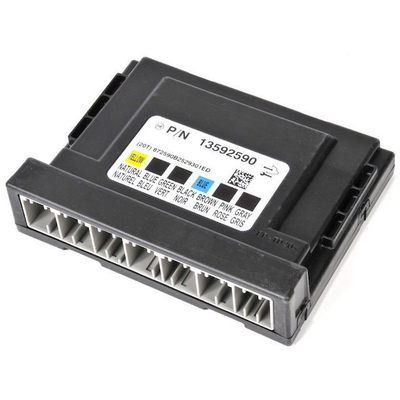
Below are the parts most often responsible for code B2328, ranked by how frequently each one is the actual culprit (per the diagnosis above). Tap any to see what we have for your vehicle.


The information in this article is provided for general reference and educational purposes only. Vehicle specifications, procedures, and part compatibility can vary by production date, trim level, and region. Always consult your vehicle's factory service manual and verify part numbers before purchasing or performing repairs. Safety-critical components such as airbags, seat belts, and braking systems should be installed by a qualified professional.
- 🧭 Diagnostic Flowchart
- 🎬 Helpful Videos
- 🛍️ Shop This Part
- What Does B2328 Mean?
- Can I Drive With B2328?
- Common Causes
- Symptoms
- Common Fixes & Costs
- Used vs. New Parts: Buying Guide
- What Happens If You Wait — Timeline
- Cost of Not Fixing It
- Diagnosis Steps
- When This Code Triggers (Freeze-Frame Conditions)
- Related Codes
- Climate & Environmental Factors
- How to Talk to a Mechanic About This Code
- Where to Take It: Dealer vs Independent vs Chain
- When to Walk Away From the Repair
- What Scan Tool You Need for This Code
- How to Clear the Code After You Fix It
- Will This Fail Emissions / State Inspection?
- Most Commonly Affected Vehicles
- Manufacturer-Specific Notes
- Real Owner Stories
- 2002 C5 Corvette with 75K miles
- 2011 Ford F-150 with 130K miles
- 2016 Subaru Outback with 85K miles
- How to Prevent This Code From Triggering
- Frequently Asked Questions
- Can I fix code B2328 myself?
- Will clearing the code fix the problem?
- Why does my mirror work intermittently?
- What is the biggest mistake when diagnosing B2328?
- What is a Subaru 'Cancel Code'?
- Why does my C5 Corvette say 'Service Column Lock' and shut off?
- How much does it cost to diagnose this code at a shop?
- I replaced the part but the code is still there. What's next?
- Key Takeaways
- 🎟️ Get 5% Off