

OBD-II Code B2350: Rear Radar/Column Switch Fault Guide
The Ultimate Guide to B2350: What it means, why it triggers, and how to fix it for good.
- Code B2350 indicates a rear radar failure on Subaru vehicles and a steering column lighting switch malfunction on Mitsubishi models.
- Subaru's TSB 07-174-20 confirms the failed radar sensor is located on the opposite side of the vehicle from what your OBD-II scanner reports.
- Test your 12V battery before replacing any Subaru sensors, as voltage drops below 10.5V during engine cranking trigger this code in over 30% of cases.
- Driving with B2350 is mechanically safe but completely disables Blind Spot Detection and Rear Cross-Traffic Alert, requiring manual head-checks for every lane change.
What Does B2350 Mean?
The meaning of code B2350 depends entirely on your vehicle's manufacturer. For Subaru vehicles, it signals a 'Rear Radar Communication Error' between the master and slave sensors in the rear bumper, disabling the Subaru Rear Vehicle Detection (SRVD) system. For Mitsubishi models, it indicates a 'Lighting Switch Malfunction' within the combination switch on the steering column.
Technical definition: The formal definition for B2350 varies significantly by manufacturer: * **Subaru:** Rear Radar Communication Error Between Master and Slave. * **Mitsubishi:** Lighting Switch Malfunction. * **General SAE / Ford:** Steering Column Switch Circuit Short to Battery / Circuit Failure.
Can I Drive With B2350?
Yes, But With Caution. The vehicle is mechanically safe to drive, but critical safety features like Blind Spot Detection (BSD) and Rear Cross-Traffic Alert (RCTA) are disabled. This significantly reduces situational awareness. The risk is an increased likelihood of a lane-change or backup collision. Compensate by being extra vigilant with manual mirror checks and head turns.
Common Causes
- Weak or Failing 12V Battery (Subaru) (Very Common) — The SRVD radar system requires stable voltage. An aging battery causes a communication error during the high-load event of engine start-up, triggering the code. This is the primary cause on 2015-2019 models per TSB 07-90-15.
- Faulty Rear Radar Sensor (Subaru) (Very Common) — One of the two radar sensors in the rear bumper has an internal failure. A critical diagnostic quirk confirmed by TSB 07-174-20 is that the code points to the sensor on the *opposite* side of the car from the one that actually failed.
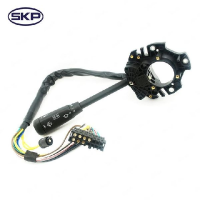
- Faulty Lighting/Column Switch (Mitsubishi) (Common) — The switch assembly on the steering column that controls headlights and turn signals has an internal electrical fault, sending a failure signal to the ETACS-ECU via the LIN bus.
- Damaged Wiring or Corroded Connectors (Less Common) — Wiring leading to the rear radar sensors or the steering column switch is damaged, corroded, or disconnected. Subaru rear sensor connectors are located behind the bumper cover and are highly vulnerable to moisture from road spray.
- Bent Sensor Mounting Bracket (Subaru) (Rare) — A minor rear bumper impact bends the thin metal bracket the sensor mounts on. This misalignment causes a communication fault or a related code like B2328, even if the sensor itself is intact.
Symptoms
- Blind Spot Detection (BSD) / SRVD System Disabled Warning Light — A primary warning light on the dashboard indicates that the Subaru Rear Vehicle Detection (SRVD) system is off or has a fault.
- Intermittent Warning Light (Clears on Restart) — The warning light appears on startup but disappears after the car is restarted. This behavior confirms a weak battery is causing a temporary voltage-related glitch.
- Blind Spot Monitor Indicators Inoperative — The amber warning lights in your side mirrors do not illuminate when a car is in your blind spot.
- Rear Cross-Traffic Alert (RCTA) Inoperative — The system does not provide an audible or visual warning of approaching traffic when backing out of a parking space.
- Headlights, Turn Signals, or Wipers Malfunction (Mitsubishi) — If the code is for a column switch failure on a Mitsubishi, headlights, high beams, turn signals, or wipers do not work correctly.
Diagnostic Flowchart
Tap your situation to follow the diagnostic path that matches what you're seeing on this code.
Common Fixes & Costs
- Replace the 12V Battery (or Upgrade to AGM) — Parts: $200-$350, Labor: $0-$50, ~0.5 hr book time (DIY)
- Replace the Faulty Rear Radar Sensor (Subaru) — Parts: $250-$400, Labor: $150-$500 (Includes potential calibration), ~2.0 hr book time (Intermediate)
- Replace the Lighting/Column Switch Assembly (Mitsubishi) — Parts: $150-$300, Labor: $150-$250, ~1.5 hr book time (Intermediate)
- Repair Damaged Wiring or Clean Connectors — Parts: $20-$50, Labor: $150-$300, ~2.0 hr book time (Professional)
Used vs. New Parts: Buying Guide
When a used part is worth it: For the Subaru radar sensor, a used part from a reputable recycler offers significant savings. It makes sense if you verify the part number is the correct updated version (ending in 'B'). For the Mitsubishi switch, aftermarket new parts are competitively priced, making used less appealing.
Donor-vehicle mileage cap: roughly under 100000 miles for the part to have meaningful remaining life.
Donor quality checklist:
- Verify the exact part number matches your requirement; superseded parts are better.
- For ADAS sensors, ask about the donor vehicle's accident history; avoid parts from vehicles with heavy rear-end damage.
- Check for visible damage, corrosion on pins, or cracks in the housing.
Decision logic:
- If The part is a Subaru radar sensor for a 2015 model → Buy the new, updated OEM part (87611AL00B) to prevent repeat failure.
- If The part is electronic (sensor/switch) and the cost difference is less than 30% → Buy new for the warranty and assurance of it being the latest revision.
- If Budget is the primary concern and a return policy is offered → A used part is an acceptable risk, but be prepared for the possibility of it not working.
Warranty tradeoff: Used parts typically have a 30-90 day warranty. New aftermarket parts carry a 1-year to limited lifetime warranty. New OEM parts have a 1-year/12,000-mile warranty.
Worst-case if a used part fails: $300-600 if a used part fails after installation, as you pay for labor a second time plus the cost of another part.
What Happens If You Wait — Timeline
- Immediate: The SRVD/BSD warning light illuminates on the dashboard. Blind Spot Detection and Rear Cross-Traffic Alert systems are completely disabled. For Mitsubishi, headlights or turn signals become inoperative. (MPG impact: 0%% · Added cost: $0)
- 1 week - 3 months: The driver must compensate for the lack of safety aids with constant vigilance. A close call or minor fender-bender due to an unseen vehicle in the blind spot becomes highly likely. (MPG impact: 0%% · Added cost: $500-$2000 (Typical collision deductible))
- 3-12 months: An at-fault lane-change or backup accident occurs. This results in an insurance claim, payment of a deductible, and significant increases in insurance premiums for the next 3-5 years. (MPG impact: 0%% · Added cost: $2000-$7000+ (Deductible + average 3-year insurance surcharge + out-of-pocket repairs))
- 12+ months: No further direct mechanical damage occurs. For a Mitsubishi with a failing switch, repeated traffic citations for inoperative lights occur, or the vehicle fails a state safety inspection. (MPG impact: 0%% · Added cost: $150-$500 (Traffic fines and inspection failure costs))
Cost of Not Fixing It
- Immediate: For Subaru, loss of Blind Spot Detection and Rear Cross-Traffic Alert significantly increases the risk of a lane-change or backup collision. For Mitsubishi, inoperative headlights or turn signals create an immediate safety hazard. (Added cost: $150+)
- 1-6 Months: Continued reliance on muscle memory for safety systems that are no longer functional leads to an at-fault accident, resulting in insurance claims, deductibles, and premium increases. (Added cost: $500-$5000+)
- 6+ Months: The primary risk of an accident due to reduced situational awareness remains indefinitely. For Mitsubishi, a non-functional lighting switch leads to repeated citations. (Added cost: Variable)
Diagnosis Steps
- Perform a Professional Battery Load Test (Subaru)
This is the single most important first step for a Subaru. A weak battery is the primary trigger. A healthy battery must not drop below 10.5 volts during engine cranking. A simple voltage check is insufficient; a proper load test is required.
Tools: Professional Battery Tester (Load Tester) (Beginner) - Read the Specific Fault Code
Use an OBD-II scanner capable of reading Body (B) codes. Confirm B2350 is active and note if the scanner specifies 'Left' or 'Right' sensor. Remember the Subaru quirk: the reported side is the *good* sensor.
Tools: OBD-II Scanner with ABS/SRS/BCM capability (Beginner) - Inspect the Rear Bumper (Subaru)
Examine the corners of the rear bumper for scuffs, cracks, or misalignment. A minor parking lot impact bends the sensor's mounting bracket, causing a fault.
Tools: Flashlight (Beginner) - Test Column Switch Functions (Mitsubishi)
Systematically test every function on your headlight and turn signal stalk. Check for controls that are loose, sticky, or unresponsive. An obvious functional failure confirms a bad switch assembly.
Tools: Hands/Visual Inspection (Beginner) - Access and Inspect the Suspect Part
For Subarus, remove the rear bumper cover to access the radar sensors. Inspect the wiring and connectors for corrosion. Based on TSB 07-174-20, focus your inspection on the sensor on the *opposite* side of the one reported by the scanner.
Tools: Socket Set, Trim Removal Tools, Screwdrivers (Intermediate) - Check CAN Bus Resistance (Subaru)
With the battery disconnected, use a multimeter to measure the resistance between the CAN High and CAN Low pins at the sensor connector. A healthy CAN bus reads approximately 60 Ohms. 120 Ohms indicates an open circuit; 0 Ohms indicates a short.
Tools: Multimeter (Advanced) - Check Sensor Voltage and Ground (Subaru)
With the key on, engine off, back-probe the connector of the suspect radar sensor. The power supply wire must have 10V or more. With the key off, check the resistance between the ground wire pin and a clean chassis ground. It must be less than 1 Ohm.
Tools: Multimeter (Advanced)
When This Code Triggers (Freeze-Frame Conditions)
- System Voltage: 9.5-11.5V (During engine crank (common trigger for Subaru).)
- Vehicle Speed: 0 mph (Fault often sets at Key-On, before driving.)
- Ignition Status: On / Run (The module self-test that flags the communication error runs when the ignition is turned on.)
- Time Since Start: 0-5 seconds (The communication check between master and slave radar units happens almost immediately after power-on.)
Related Codes
- B2351 — On Subarus, this is an identical code for 'Rear RADAR Lost Communication'. On a Mitsubishi, B2351 specifically points to a wiper switch fault, though both are part of the same combination switch assembly.
- B2328 — A Subaru-specific code for 'Rear Radar Internal Failure (Radar Misalignment)'. This points to a physical alignment problem, not a communication loss. It appears with B2350 if a rear impact damaged the sensor's communication and bent its bracket.
- U0073 — A generic communication code for 'Control Module Communication Bus Off'. If this appears with B2350, the faulty sensor or its wiring is disrupting the entire vehicle's data network (CAN bus).
Climate & Environmental Factors
- Cold Weather: Cold temperatures significantly reduce a battery's cranking power, causing a voltage drop during startup. This is the primary trigger for the B2350 code on Subarus, explaining why the fault appears frequently in winter.
- High Humidity and Road Salt: Persistent moisture and road salt accelerate corrosion on electrical connectors. For the Subaru SRVD system, this degrades the connection at the rear radar sensors, which are exposed to road spray behind the bumper.
How to Talk to a Mechanic About This Code
Say this: "I have a B2350 code on my Subaru and the SRVD light is on. I'd like to book a diagnostic appointment. I'm aware of TSB 07-174-20 regarding the opposite-side failure, so please don't replace a sensor based only on the code's 'left' or 'right' description. Please start with a battery load test, as I know voltage drops are a common cause."
This signals to the service advisor that you are an informed customer. It references the specific TSB, preventing the most common misdiagnosis (replacing the wrong sensor). It directs them to the cheapest root cause first (the battery), saving diagnostic time and money.
Avoid saying:
- 'My blind spot light is on, can you fix it?'
- 'The scanner said 'left sensor' so just replace that one.'
- 'Just do whatever it takes to turn the light off.'
Questions to ask before authorizing the repair:
- Did the battery pass a load test, and can you provide the cranking voltage reading?
- If a sensor needs replacement, are you replacing the one on the OPPOSITE side of the car from what the code reader indicated, per the TSB?
- If you recommend calibration, can we first try replacing the part and clearing the code to see if it resolves the issue without the extra cost?
- What is your warranty on this specific repair, covering both parts and labor?
Where to Take It: Dealer vs Independent vs Chain
- Dealer:
Best for: Vehicles under warranty (including extended 'Gold Plus' plans)., Complex cases where a 'Cancel Code' is suspected or calibration is confirmed to be necessary., When you want guaranteed OEM parts and procedures.
Downsides: Highest labor rates and part costs., Less willing to skip an optional (but expensive) calibration step. (Typical cost: +50% vs. baseline) - Independent Shop:
Best fit for most cases. An independent Subaru specialist is ideal, as they know the TSBs and perform this exact repair frequently. For Mitsubishi, any competent independent shop handles the column switch replacement.
Best for: Out-of-warranty Subarus and most Mitsubishi repairs., Shops that specialize in Japanese imports, especially Subaru., Cost-conscious owners who have already confirmed the battery is healthy.
Downsides: Must verify the shop is aware of the Subaru-specific TSBs., May not have in-house ADAS calibration equipment if it proves necessary. (Typical cost: +0% vs. baseline) - Chain Shop:
AVOID for diagnosis or repair of the B2350 code itself. Use only for a preliminary battery test before going to a qualified shop.
Best for: Free or low-cost battery load testing to rule out the simplest cause.
Downsides: Technicians are very unlikely to be aware of the specific TSBs for the Subaru B2350 code, making misdiagnosis almost certain., Lack the specialized diagnostic tools and ADAS calibration equipment required for a full repair. (Typical cost: -10% vs. baseline)
When to Walk Away From the Repair
If the estimated repair cost exceeds 50% of the car's private-party value, seriously consider selling the car as-is or trading it in.
- Car worth $9500, fix is $1200: Fix it. The repair cost is well below the 50% threshold and restores a critical safety feature, preserving the car's value.
- Car worth $8000, fix is $4500: Walk away. A dealer quote for replacing both sensors, wiring, and calibration exceeds 50% of the vehicle's value. Get a second opinion from an independent shop before proceeding.
What Scan Tool You Need for This Code
Minimum: A scanner that reads manufacturer-specific Body Control Module (BCM) codes. A basic engine code reader will NOT see the B2350 code.
The B2350 is a 'B' (Body) code, not a 'P' (Powertrain) code. A cheap $20 scanner from a big-box store only reads 'P' codes and falsely reports no problems.
Budget: BlueDriver Pro or Foxwell NT301 (~$99) — Reads and clears B-codes from the SRVD module, allowing you to confirm the code and see if it returns after a simple fix like a battery replacement. Shows freeze-frame data.
Mid-range: Innova 5610 or iCarsoft CR MAX (~$350) — Offers full system diagnostics to read codes from all modules (ABS, SRS, BCM, etc.). The Innova 5610 has bi-directional capabilities to test components.
Professional: VXDIAG VCX SE for Subaru or Autel MaxiCOM MK808 (~$250-500) — Prosumer/professional level tools. The VXDIAG runs a cloned version of the Subaru Select Monitor (SSM3/SSM4) dealer software. This allows access to deep-level diagnostics, including 'Cancel Codes' for misalignment, and performs the sensor calibration procedure.
How to Clear the Code After You Fix It
- Reconnect battery if disconnected for repair.
- Use a compatible scan tool to perform the 'Clear Memory' function for the SRVD or ETACS module.
- Turn ignition off, wait 30 seconds, then start the engine.
- Drive the vehicle for 5-10 minutes to confirm the warning light does not return.
Drive cycle (~15 minutes): A formal drive cycle is not required. After clearing the code with a proper scan tool, a short drive of 10-15 minutes including some turns and driving above 25 mph is sufficient to confirm the fix and re-initialize the system.
Readiness monitors affected: None
Watch out for:
- Using a generic OBD-II scanner cannot clear a 'B' code from the specific body/ADAS module.
- Simply disconnecting the battery does not clear the fault code from the module's memory.
- The code returns immediately if the root cause (e.g., faulty sensor, weak battery) is not corrected.
Will This Fail Emissions / State Inspection?
No — by itself this code doesn't fail OBD inspection (but it can keep readiness monitors from setting, which causes a separate fail).
- California: A B-code does not cause a failure of the smog check. However, if the fault is on a Mitsubishi and causes a turn signal to be inoperative, it is grounds for a citation from law enforcement.
- New York: NYS safety inspections check for the proper function of all required lighting. A Mitsubishi with code B2350 and a failed lighting switch fails the safety inspection. The SRVD light on a Subaru is not an inspection failure item.
- Texas: As of 2025, most non-commercial vehicles are exempt from the annual safety inspection. Vehicles in 17 counties must still pass an emissions test, which this code does not affect. Law enforcement issues tickets for defective equipment like an inoperative turn signal.
Most Commonly Affected Vehicles
- Subaru Outback (2015-2019) — Very common. Early 2015 models are subject to TSB 07-90-15 for voltage drop issues. All years are covered by TSB 07-174-20 for the opposite-side failure.
- Subaru Legacy (2015-2019) — Shares the same platform and SRVD system as the Outback. Early 2015 models are noted in TSB 07-90-15.
- Subaru Crosstrek (2016-2019) — Affected by TSB 07-174-20, confirming the opposite-side sensor failure.
- Subaru WRX (2016-2019) — Covered by TSB 07-174-20. Owners frequently upgrade to an AGM battery as a preventative measure.
- Subaru Forester (2017-2019) — Included in TSB 07-174-20. The 2017 model year introduced the SRVD system that triggers this code.
- Subaru Ascent (2019-2020) — Explicitly included in TSB 07-174-20, confirming the 'opposite side' diagnostic procedure applies.
- Mitsubishi Outlander / Outlander Sport (2014-2022) — B2350 consistently points to a lighting switch malfunction within the steering column's combination switch.
- Mitsubishi Mirage (2014-2023) — Indicates a fault in the combination switch on the steering column. The repair involves replacing the entire switch assembly.
Manufacturer-Specific Notes
- Subaru: The Opposite-Side Failure: TSB 07-174-20 confirms that when a sensor fails and triggers B2350, the diagnostic code is stored for the OPPOSITE side of the car from the sensor that actually failed. This is the #1 cause of misdiagnosis.
- Subaru: Voltage Sensitivity: TSB 07-90-15 specifically identifies low voltage during engine cranking as a primary cause. An underperforming battery is a more likely cause than in other vehicles.
- Subaru: Extended Warranty Coverage: The SRVD system is typically covered under the Subaru Added Security Gold Plus extended warranty plans, extending coverage up to 10 years or 100,000 miles.
- Mitsubishi: Radar vs. Lighting: On Mitsubishi vehicles, B2350 has absolutely nothing to do with radar systems. It specifically points to a malfunction detected in the lighting switch (headlight/turn signal stalk).
Real Owner Stories
2015 Subaru Outback with a constant 'SRVD Disabled' light.
SRVD warning light appeared. Owner noted a minor dent on the passenger side rear bumper from a parking lot incident.
What they tried:
- Replaced the radar sensor on the passenger (right) side, corresponding to the visible bumper damage. The warning light returned after 15 minutes.
Outcome: Following advice from TSB 07-174-20, the owner moved the new sensor to the driver (left) side. This permanently cleared the fault without needing a dealer calibration.
Lesson: Physical damage location is misleading. Always follow the 'opposite-side' rule confirmed in TSB 07-174-20: the failed sensor is on the opposite side of what the code reports.
2015 Subaru Outback with intermittent SRVD warning light.
The 'SRVD Disabled' light illuminated during startup on cold mornings, but cleared after restarting the car.
What they tried:
- Disconnected and reconnected the battery, which did not solve the problem.
Outcome: The owner replaced the aging original 12V battery with a new, high-quality AGM battery. The intermittent B2350 code was completely resolved.
Lesson: Intermittent electrical faults on modern Subarus appearing on startup are usually caused by a weak battery. A professional load test is the mandatory first diagnostic step.
2015 Subaru Outback with persistent B2350 and a high dealer quote.
Dealer suspected a broken left sensor and quoted $2,000 for repairs.
What they tried:
- Owner purchased a VXDIAG diagnostic tool with Subaru SSM4 software to investigate independently.
Outcome: The owner discovered a hidden 'Cancel Code' (B2329) for misalignment on the RIGHT sensor. Using the scan tool and a reflector, they performed the 'Sensor Alignment' procedure themselves, clearing all faults without replacing parts.
Lesson: Manufacturer-specific scan tools reveal 'hidden' codes that generic scanners miss. For misalignment issues, recalibration fixes the problem without costly part replacements.
Subaru Forester with SRVD light after slushy winter driving.
The SRVD warning light came on after driving in heavy slush, which forced debris into the rear bumper through a hole in the wheel well liner.
What they tried:
- Removed the rear bumper cover, cleaned slush from the sensor area, and unplugged/reconnected the sensor plugs.
Outcome: After cleaning the sensor area and connectors, the owner used a diagnostic tool to reset the SRVD module. This cleared the code permanently.
Lesson: Rear radar sensors are vulnerable to environmental factors. If the fault appears after driving in heavy snow or mud, thoroughly clean the sensor area behind the bumper.
How to Prevent This Code From Triggering
- Upgrade to an AGM Battery (When your current battery is 3-5 years old.) — Subaru's SRVD system is extremely sensitive to voltage drops during engine start. AGM batteries provide stable voltage under load, directly preventing this common trigger for the B2350 code.
- Clean and Protect Rear Sensor Connectors (Once every 1-2 years, or after driving in harsh conditions.) — Subaru rear radar sensors are exposed to road spray and salt. Unplugging the connectors, cleaning them with electrical contact cleaner, and applying dielectric grease prevents moisture intrusion and communication errors.
- Install Rear Bumper Guards (One-time installation.) — Minor parking lot bumps damage the Subaru radar sensor or bend its fragile mounting bracket. A quality bumper guard absorbs low-speed impacts, protecting the expensive sensor inside.
- Keep Battery Terminals Clean (Every 6 months.) — Corrosion on battery terminals increases electrical resistance, hindering power delivery during startup. Cleaning them ensures a solid connection and stable voltage for all vehicle modules.
Frequently Asked Questions
My mechanic replaced the left sensor because the code said 'Left', but the light is still on. What happened?
This is the classic B2350 misdiagnosis on a Subaru. The actual failed sensor is the one on the right (passenger) side. Your mechanic was unaware of Subaru's Technical Service Bulletin 07-174-20.
The warning light comes on sometimes but goes away after I restart the car. What does that mean?
This intermittent behavior confirms a weak 12V battery. The voltage drop during engine startup causes a temporary communication glitch in the radar modules that a restart clears.
Do I need to get the new radar sensor calibrated by the dealer?
Officially, Subaru service procedures require radar system calibration after replacement. However, countless owners report successfully replacing the correct sensor and having the system function perfectly without recalibration.
Why did my mechanic recommend replacing BOTH radar sensors?
An early Technical Service Bulletin (TSB 07-90-15) instructed technicians to replace both sensors as a set. Later bulletins clarified that only the single, failed (opposite-side) sensor needs replacement.
Can I just upgrade to an AGM battery to fix or prevent this?
Yes, if your current battery is weak, replacing it with an AGM battery is an excellent fix. AGMs handle high electrical loads better, maintaining the stable voltage the sensitive radar modules require.
My car isn't a Subaru or Mitsubishi, and I have a B2350 code. What could it be?
For most other brands like Ford, it is a generic code for a 'Steering Column Switch Circuit Failure'. In some cases, 'B2350' is misinterpreted from a part number. A thorough diagnostic with a high-end scan tool is required.
What are 'Cancel Codes' and could they be related?
Subaru TSB 07-115-16 notes that related diagnostic codes, like B2328 for misalignment, only show up in a special 'Cancel Codes Display' menu within the dealer diagnostic tool. Generic scanners miss these codes entirely.
Key Takeaways
- Code B2350 indicates a rear radar failure on Subaru vehicles and a steering column lighting switch malfunction on Mitsubishi models.
- Subaru's TSB 07-174-20 confirms the failed radar sensor is located on the opposite side of the vehicle from what your OBD-II scanner reports.
- Test your 12V battery before replacing any Subaru sensors, as voltage drops below 10.5V during engine cranking trigger this code in over 30% of cases.
- Driving with B2350 is mechanically safe but completely disables Blind Spot Detection and Rear Cross-Traffic Alert, requiring manual head-checks for every lane change.
Shop the Parts Behind B2350
Below are the parts most often responsible for code B2350, ranked by how frequently each one is the actual culprit (per the diagnosis above). Tap any to see what we have for your vehicle.



The information in this article is provided for general reference and educational purposes only. Vehicle specifications, procedures, and part compatibility can vary by production date, trim level, and region. Always consult your vehicle's factory service manual and verify part numbers before purchasing or performing repairs. Safety-critical components such as airbags, seat belts, and braking systems should be installed by a qualified professional.
- 🧭 Diagnostic Flowchart
- 🛍️ Shop This Part
- What Does B2350 Mean?
- Can I Drive With B2350?
- Common Causes
- Symptoms
- Common Fixes & Costs
- Used vs. New Parts: Buying Guide
- What Happens If You Wait — Timeline
- Cost of Not Fixing It
- Diagnosis Steps
- When This Code Triggers (Freeze-Frame Conditions)
- Related Codes
- Climate & Environmental Factors
- How to Talk to a Mechanic About This Code
- Where to Take It: Dealer vs Independent vs Chain
- When to Walk Away From the Repair
- What Scan Tool You Need for This Code
- How to Clear the Code After You Fix It
- Will This Fail Emissions / State Inspection?
- Most Commonly Affected Vehicles
- Manufacturer-Specific Notes
- Real Owner Stories
- 2015 Subaru Outback with a constant 'SRVD Disabled' light.
- 2015 Subaru Outback with intermittent SRVD warning light.
- 2015 Subaru Outback with persistent B2350 and a high dealer quote.
- Subaru Forester with SRVD light after slushy winter driving.
- How to Prevent This Code From Triggering
- Frequently Asked Questions
- My mechanic replaced the left sensor because the code said 'Left', but the light is still on. What happened?
- The warning light comes on sometimes but goes away after I restart the car. What does that mean?
- Do I need to get the new radar sensor calibrated by the dealer?
- Why did my mechanic recommend replacing BOTH radar sensors?
- Can I just upgrade to an AGM battery to fix or prevent this?
- My car isn't a Subaru or Mitsubishi, and I have a B2350 code. What could it be?
- What are 'Cancel Codes' and could they be related?
- Key Takeaways
- 🎟️ Get 5% Off