

B2350 on 2015-2019 Subaru Outback: SRVD Communication Error Causes and Fixes
This code means your Outback's rear radar system has a communication problem, disabling blind-spot detection. The most common cause is a weak battery causing a voltage drop during startup. If the battery is healthy, a faulty radar sensor is likely, and due to a system quirk, the failed sensor is often on the opposite side of the car from what the scan tool reports.
- B2350 means the Blind Spot Detection (SRVD) system is off due to a communication error.
- Before buying any parts, have your battery professionally tested. A weak battery is the most common trigger for this code on this platform.
- If a sensor has failed, the fault code will point to the WRONG side. The sensor on the opposite side of the car from what the scanner says is the one that needs replacement.
- Minor rear-end collisions can easily damage these sensors or their thin mounting brackets, leading to this code.
What's Unique About the 2015-2019 Subaru OUTBACK

On this generation of Outback, the SRVD system is particularly sensitive to voltage drops that can occur during engine cranking, especially with an aging or underpowered OEM battery. Subaru issued technical service bulletin 07-90-15 specifically to address this cause on 2015 models. Critically, a diagnostic quirk exists where the B2350 code often points to the sensor on the *opposite* side of the car from the one that has actually failed, a fact confirmed by TSB 07-174-20. This can easily lead to replacing the wrong part if technicians are not aware of this specific Subaru bulletin.
Diagnostic Flowchart

Tap your situation to follow the diagnostic path that matches what you're seeing on this vehicle.
Symptoms You May Notice

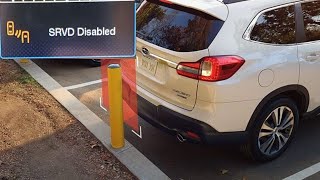
- "SRVD Disabled" message on the instrument panel
- Illuminated Blind Spot Detection (BSD) / Rear Cross Traffic Alert (RCTA) warning light
- Blind spot monitors in the side mirrors will not light up
- Rear Cross Traffic Alert will not function when reversing
- In some cases, the error may appear intermittently, especially after the vehicle sits for several days or during cold weather, pointing towards a battery issue. 🎬 Watch: Common reasons for the SRVD Disabled warning
- Replacing the radar sensor that the scan tool indicates is faulty. Due to a quirk in the system's reporting confirmed by TSB 07-174-20, the actual faulty sensor is often on the opposite side.
- Assuming a sensor is bad when the actual cause is a weak battery. The voltage sensitivity of this system means the battery should always be the first component tested.
Most Likely Causes

- Weak or Failing Battery 🔴 High Probability → Shop Vehicle Battery Subaru Technical Service Bulletin 07-90-15 identifies that a voltage drop during engine cranking is a primary trigger for this communication error code. Subarus of this era are known for having OEM batteries that are sometimes underpowered or fail prematurely, making them sensitive to voltage-dependent errors.
How to confirm: Test the battery voltage with a multimeter before starting the engine (should be ~12.4-12.6V). Perform a load test to check the battery's health. Many auto parts stores offer this service for free. A battery that reads below 12.4V is a strong suspect.
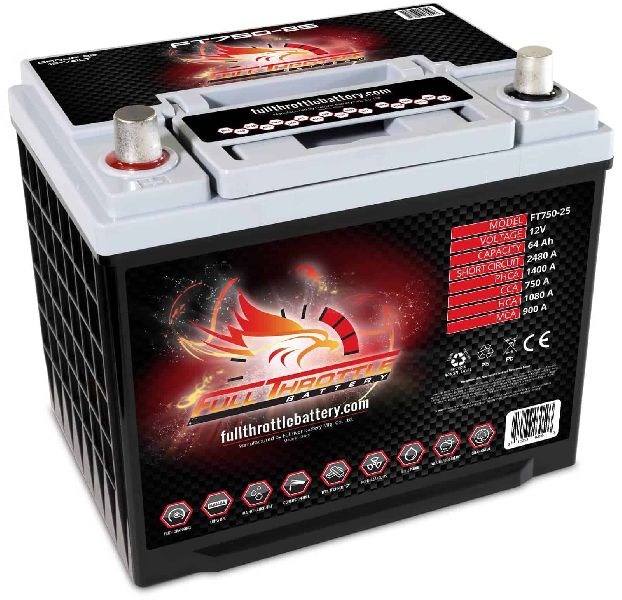
Typical fix: Replace the vehicle's 12V battery, preferably with a high-quality AGM (Absorbed Glass Mat) battery with sufficient Cold Cranking Amps (CCA).
Est. part cost: $150-$350 - Faulty Rear Radar Sensor 🟡 Medium Probability → Shop Collision Avoidance Sensor Early production units for the 2015 model year had radar assemblies (Part No. 87611AL00A) that were more prone to this failure, leading to an updated part (87611AL00B). Physical damage from minor rear-end impacts can also damage the sensor or its thin mounting bracket, causing misalignment and failure.
How to confirm: After confirming the battery and wiring are good, the sensor itself is the likely culprit. A key diagnostic note from Subaru TSB 07-174-20 states that the code often registers for the opposite side of the failed sensor. For example, if the scan tool reports B2350 for the left sensor, the right sensor is the one that needs to be replaced. Owners have confirmed this by swapping a new sensor to the side opposite the code report, which resolved the issue.
Typical fix: Replace the faulty radar sensor. TSB 07-90-15 recommends replacing both sensors as a set on 2015 models with the updated part. The part is the same for the left and right sides. Recalibration after replacement is recommended but some owners have reported success without it if only the sensor is swapped.
Est. part cost: $90-$250 (used/eBay), $300-$600 (new OEM) per sensor. - Wiring or Connector Issue ⚪ Low Probability The sensors are located behind the rear bumper cover, making their wiring susceptible to moisture intrusion from car washes or slush, or damage from rear impacts. The mounting brackets are also reportedly thin and can bend easily, misaligning the sensor.
How to confirm: Remove the rear bumper cover and visually inspect the wiring harnesses and connectors going to both radar units. Check for corrosion, pinched wires, or physical damage. Some owners have had success by simply unplugging and replugging the connectors.
Typical fix: Clean the connectors with electrical contact cleaner or repair the damaged section of the wiring harness. If a mounting bracket is bent, it should be replaced to ensure proper sensor alignment.
Est. part cost: $5-$50 for cleaning supplies or wiring repair materials. Bracket replacement cost is minimal for the part, but labor is similar to sensor replacement.
Rare But Worth Checking
- Software Glitch:
Diagnosis Steps
- Check Battery Health: Start by testing the battery. Ensure it has a static charge of at least 12.4V and passes a load test. A weak battery is a known primary cause of this code.
- Scan for Codes: Use an OBD-II scanner to confirm B2350 is the primary code. Note which side the scanner reports the fault on (Left or Right). Be aware that a more advanced scanner may be needed to check for 'Cancel Codes' like B2328.
- Inspect for Physical Damage: Check the rear bumper for any signs of impact, which could have damaged a sensor or its mounting bracket. Even minor impacts can misalign the sensor.
- Inspect Wiring (if accessible): Some owners report being able to reach the connectors from underneath the bumper to try unplugging and replugging them. For a full inspection, remove the rear bumper cover. 🎬 See this walkthrough on removing the rear bumper cover Inspect the connectors and wiring for any signs of corrosion, moisture, or damage.
- Identify the Correct Sensor: Crucially, remember that if a sensor is faulty, it is likely on the *opposite* side of the one reported by the scan tool, per TSB 07-174-20. If the code says 'Left', suspect the 'Right' sensor.
- Replace the Sensor: If the battery and wiring are good, replace the suspected faulty radar sensor (the one on the opposite side of the code). For 2015 models, replacing both sensors with the updated part 87611AL00B is recommended by Subaru. You can often do this by only partially removing the bumper cover for access.
- Clear Codes and Calibrate: After replacement, clear the trouble codes. The system may require recalibration with a Subaru-specific scan tool, although many owners have found the system works immediately after replacing the correct sensor without this step.
Parts You'll Likely Need
- Radar Assembly, Back and Side
(OEM #87611AL00B)— This is the updated radar sensor unit specified by Subaru in TSB 07-90-15 to fix communication errors on 2015 models, superseding part 87611AL00A. It is also the part that fails in later models due to internal faults or physical damage. The same part number is used for both left and right sides.
Trusted brands: Subaru (OEM)
OEM price range: $400-$600
Aftermarket price range: $90-$250 (Used from sources like eBay) - AGM Vehicle Battery — A weak battery causing a voltage drop during startup is a primary trigger for the B2350 code. Upgrading to a quality AGM battery is a common preventative fix.
Trusted brands: Interstate, DieHard, Optima Yellow Top, Duralast
OEM price range: $250-$350
Aftermarket price range: $150-$250
Related Codes That Often Appear With This One
- DTC B2328: 'Rear Radar Internal Failure (Radar Misalignment)' may be stored as a 'Cancel Code' rather than a primary DTC, requiring a more advanced scan tool to find. This often points to a physically damaged or misaligned sensor.
Technical Service Bulletins (TSBs) & Recalls
- 07-174-20: Details a correction to the diagnostic procedure, noting the code points to the sensor opposite the one that failed.
- 07-90-15: Provides a repair procedure for 2015 models, identifying voltage drop on startup as a cause and recommending the replacement of both radar units with part 87611AL00B.
- 07-115-16: Explains that some related fault codes, like B2328 for misalignment, may only appear in the 'Cancel Codes Display' menu of the Subaru diagnostic tool, not the main DTC screen.
Platform-Specific Known Issues
- TSB 07-90-15 notes that for 2015 models, a voltage drop during engine start can trigger this code, and recommends replacing both radar units with the updated part 87611AL00B.
Mechanic-Grade Diagnostic Values
- CAN Bus Resistance — expected: Approximately 60 Ω. Failure: A reading of 120 Ω indicates an open circuit on the network, likely one of the two terminating modules/resistors has failed or is disconnected. A reading of 0 Ω indicates a short between CAN High and CAN Low.
- Data Link Connector (DLC) Power Supply — expected: 10 V or more. Failure: Voltage below 10 V indicates a problem with the power supply circuit to the diagnostic port, which can prevent proper communication with scan tools.
- Data Link Connector (DLC) Ground Circuit Resistance — expected: Less than 5 Ω. Failure: Resistance higher than 5 Ω indicates a poor ground connection for the diagnostic port, which can cause communication errors.
Hidden / Shadow Codes Worth Checking
- B2328: Rear Radar Internal Failure (Radar Misalignment). This code often indicates the sensor itself has an internal fault or has been physically knocked out of alignment, even if no DTC for B2350 is present. (see via This is often stored as a 'Cancel Code' which is not visible on a standard OBD-II code read. A dealer-level tool like the Subaru Select Monitor (SSM) or a high-end aftermarket scanner (e.g., Autel, VXDIAG) with a 'Cancel Code(s) Display' function is required to view it.)
Scan Tool Commands That Help
- Subaru Select Monitor (SSM) or equivalent (VXDIAG, Autel): Cancel Code(s) Display — Use this function when diagnosing the SRVD system, especially if B2350 is present or if the system is inoperative with no other codes. It is required to check for hidden codes like B2328 that point to internal sensor failures.
- Subaru Select Monitor (SSM) or equivalent: Radar Alignment / Calibration — This function, found under 'Work Support', is required after replacing a radar sensor or if DTC B2328 is found. It performs a calibration routine to ensure the sensor is correctly aimed.
Wiring & Ground Locations
- SRVD Sensor Connectors (R25, R61, R104) — Located on the back of each radar sensor unit, which are mounted in the left and right corners of the vehicle behind the rear bumper cover.. These connectors are the direct interface to the sensors. Corrosion, moisture, or damage to these connectors or their wiring is a potential cause of the B2350 communication error.
- Rear Chassis Ground Point — There are multiple chassis ground points. A readily accessible one is located in the rear cargo area, near the fender well, often used for trailer wiring harnesses.. While not the specific ground for the SRVD module, a poor chassis ground in the rear of the vehicle can introduce electrical noise and voltage issues that may affect sensitive modules like the radar sensors.
- ECU Ground (Intake Manifold) — The main engine control unit (ECU) on many Subarus gets its primary ground connection from a point on top of the intake manifold.. A poor ECU ground is a known cause of widespread, seemingly unrelated electrical issues on Subarus. While less likely to be the direct cause of a specific B-code, it should not be overlooked if other electrical anomalies are present.
Real Owner Repair Stories
- vxdiagshop.com blog/forum post (2015 Subaru Outback) — SRVD disabled warning light was on.
❌ Tried (didn't work) Replaced the right (passenger side) radar sensor with a new one. The warning remained.
✅ What actually fixed it The owner moved the new sensor to the left (driver's side), put the old sensor back on the right side, and the warning light went away. This confirms the 'opposite side' failure pattern. The fix did not require a dealer visit or calibration.
When the Usual Fixes Don't Work
- While Subaru service procedures and TSBs state that radar alignment/calibration is required after replacing a sensor, multiple owner- and technician-documented repairs show that this is not always necessary. In cases where only the faulty sensor is swapped (especially the 'slave' unit) and the mounting bracket is not disturbed, the system can often function correctly immediately after clearing the codes, without requiring the special calibration procedure. This can save a significant amount in dealer labor costs.
OEM Part Supersession History
87611AL00A→87611AL00B— The 'B' revision is a more reliable, updated version released to address failures in the early 'A' units.
Heads up: The parts are fully cross-compatible. A vehicle can have one 'A' and one 'B' revision sensor installed and function correctly.
Model Year Variations Within This Range
- 2015: The original 2015 factory service manual did not include the procedure for checking 'Cancel Codes' like B2328. A Technical Service Bulletin (TSB) was later issued to provide this missing diagnostic step, which was included in the manuals for 2016 and newer models. The hardware is the same, but the initial documentation was incomplete.
Helpful Videos
We Have This Part in Stock


The information in this article is provided for general reference and educational purposes only. Vehicle specifications, procedures, and part compatibility can vary by production date, trim level, and region. Always consult your vehicle's factory service manual and verify part numbers before purchasing or performing repairs. Safety-critical components such as airbags, seat belts, and braking systems should be installed by a qualified professional.
- Subaru OUTBACK:
- 🧭 Diagnostic Flowchart
- 🎬 Helpful Videos
- 🛍️ Shop This Part
- What's Unique About the 2015-2019 Subaru OUTBACK
- Symptoms You May Notice
- Most Likely Causes
- Rare But Worth Checking
- Diagnosis Steps
- Parts You'll Likely Need
- Related Codes That Often Appear With This One
- Technical Service Bulletins (TSBs) & Recalls
- Platform-Specific Known Issues
- Mechanic-Grade Diagnostic Values
- Hidden / Shadow Codes Worth Checking
- Scan Tool Commands That Help
- Wiring & Ground Locations
- Real Owner Repair Stories
- When the Usual Fixes Don't Work
- OEM Part Supersession History
- Model Year Variations Within This Range
- 🎟️ Get 5% Off