

OBD-II Code B2401: A Comprehensive Guide to Audio, Keyless, and Sensor Faults
What B2401 means, why it triggers, and how to fix it like a pro
- B2401 definitions vary strictly by brand: it signals a keyless entry failure on Mitsubishi, an audio fault on Ford, a blind-spot monitor issue on Hyundai/Kia, and a rain sensor error on Subaru.
- Symptoms directly match the brand definition, ranging from a completely dead key fob to a silent radio or an inoperative blind-spot detection system.
- You can safely drive with a B2401 code, but you must manually check your blind spots and use the physical key if the remote fob fails.
- Repairing a faulty Ford Audio Control Module (ACM) via a mail-in service costs $150-$300, saving you over $800 compared to a dealership replacement.
- Always test the key fob battery (must read above 3.0V) and inspect the relevant fuses before replacing a $400+ control module.
What Does B2401 Mean?
B2401 is a body trouble code (B-code) pointing to a problem in comfort, convenience, or secondary safety systems. Unlike powertrain 'P' codes, this code's meaning changes dramatically between car brands. It signifies anything from an unregistered key fob to a faulty radio, automatic wiper sensor, or blind-spot detection failure. Note that B2401 is entirely different from the powertrain code P2401 (EVAP system).
Technical definition: The SAE/ISO definition for B2401 varies by manufacturer. Common definitions include 'Audio Tape Deck Mechanism Fault' (Ford), 'Keyless/KOS Key ID Not Registered' (Mitsubishi), 'Sensor Installation Incorrect' (Subaru), 'Lost Communication With Digital Audio Control Module' (Hyundai), and 'WCM/Wireless Control Module Internal' (Chrysler/Dodge).
Can I Drive With B2401?
Yes. This code affects convenience features like the radio, keyless entry, or blind-spot monitoring. It does not impact core engine performance, braking, or primary safety systems, making the vehicle safe to drive. However, related driver aids like blind-spot detection will be inoperative, requiring extra manual caution.
Common Causes
- Failed Key Fob or Keyless Entry Module Registration (Very Common) — On Mitsubishi and Chrysler/Dodge vehicles, the system that recognizes your key fob (KOS-ECU or WCM) loses the key's ID. This happens due to a dead key fob battery, a failed programming attempt, or a faulty control module.
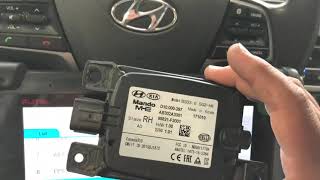
- Faulty Blind Spot Detection (BSD) Module (Very Common) — On modern Hyundai and Kia vehicles, B2401 triggers when a rear blind-spot radar sensor fails. Located in the rear bumper corners, these modules suffer from moisture intrusion and minor impact damage, causing total communication loss.
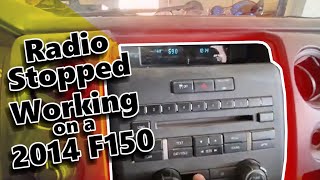
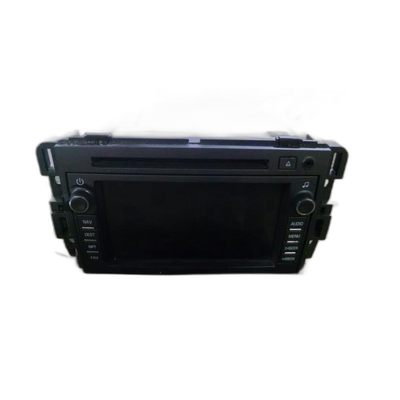
- Faulty Audio Control Module (ACM) or Head Unit (Common) — On Ford vehicles, this code points to an internal hardware failure of the radio head unit, specifically the Audio Control Module (ACM). 🎬 Watch: Troubleshooting a Ford radio that has stopped working. This causes dead audio, loud popping noises, or a blank display.
- Corroded Wiring Harnesses or Water Intrusion (Common) — Damaged wires, loose connectors, or water leaking into the cabin/trunk shorts out the circuits for keyless entry, audio, or sensor systems. Rear bumper harnesses and under-seat modules are highly susceptible.
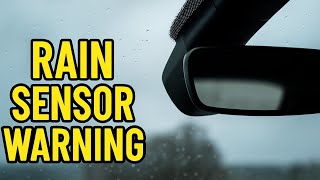
- Incorrectly Installed Rain/Light Sensor (Less Common) — On Subaru vehicles, this code indicates the automatic wiper/headlight sensor is installed incorrectly. This almost always occurs after a windshield replacement if the sensor's silicone gel pad traps air bubbles. 🎬 Watch: How to relearn rain sensing wipers after windshield replacement.
- Faulty Intelligent Battery Sensor (IBS) (Less Common) — On BMW models, a faulty Intelligent Battery Sensor (IBS) on the negative battery terminal disrupts widespread electrical communication. The IBS fails from age or alternator over-voltage.
- Communication Error on the CAN Bus (Rare) — A short between the CAN High and CAN Low wires prevents the Body Control Module from communicating with the keyless entry or audio system, setting this code.
Symptoms
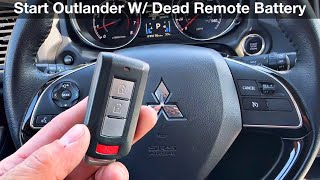
- Key Fob Not Working — Remote lock, unlock, and push-to-start features fail. You must use the physical key to enter and start the car. 🎬 See how to start a Mitsubishi with a dead key fob.
- Blind Spot Detection System Inoperative — A 'Check BSD System' message appears on the dash, and the warning lights in the side mirrors remain off.
- Radio or Audio System Malfunction — The car stereo produces no sound, emits loud popping noises, displays a blinking clock, or fails to power on.
- Automatic Wipers or Headlights Not Working — The automatic function for wipers and headlights fails; they only operate in manual mode.
- Dashboard Warning Message (also visible on scanner) — While a 'Check Engine' light is rare, specific text warnings regarding the keyless system, audio, or blind-spot monitor appear on the instrument cluster.
Diagnostic Flowchart
Tap your situation to follow the diagnostic path that matches what you're seeing on this code.
Common Fixes & Costs
- Reprogram or Replace Key Fob — Parts: $5-$15 (battery), $150-$400 (new fob), Labor: $50-$150 (programming), ~0.8 hr book time (Professional)
- Replace Blind Spot Detection (BSD) Module — Parts: $250-$800, Labor: $200-$400 (includes calibration), ~2.5 hr book time (Professional)
- Repair or Replace Audio Control Module (ACM) — Parts: $150-$300 (repair service), Labor: $100-$200, ~1.5 hr book time (Intermediate)
- Replace Keyless Entry Module (KOS-ECU/WCM) — Parts: $150-$400, Labor: $100-$250, ~1.8 hr book time (Professional)
- Replace Rain/Light Sensor — Parts: $100-$250, Labor: $50-$125, ~0.7 hr book time (DIY)
- Replace Intelligent Battery Sensor (IBS) — Parts: $150-$250, Labor: $50-$100, ~0.5 hr book time (Intermediate)
Used vs. New Parts: Buying Guide
When a used part is worth it: Buying used electronic modules (ACM, BSD sensor, KOS-ECU) is highly discouraged. They require VIN-specific dealer programming and often suffer from the same inherent defects as your broken part.
Donor-vehicle mileage cap: roughly under 40000 miles for the part to have meaningful remaining life.
Donor quality checklist:
- Match the part number exactly; minor variations cause incompatibility.
- Ensure the seller offers a minimum 90-day warranty.
- Factor in the mandatory cost of dealer programming for security modules.
Decision logic:
- If The fix is for a Ford Audio Control Module (ACM) → Use a reputable mail-in repair service for your original module. It retains original programming and is cheaper than buying new.
- If The part is a safety system module (BSD, KOS-ECU, WCM) → Buy a new OEM part. Used parts carry high failure risks, and mandatory calibration works best with new components.
- If The part is a simple sensor (Rain Sensor, IBS) → A new aftermarket part provides a better warranty and reliability for a similar cost to a used OEM part.
Warranty tradeoff: Used parts carry 30-90 day warranties. New aftermarket parts offer 1-year to lifetime warranties. Mail-in repair services often provide lifetime warranties on their specific board-level repairs.
Worst-case if a used part fails: 300-800
What Happens If You Wait — Timeline
- 0-1 month: A single convenience feature fails (radio, keyless entry, BSD). A warning message appears on the dash. The issue is often intermittent during rain or cold weather. (MPG impact: 0% · Added cost: 0)
- 1-6 months: The intermittent issue becomes permanent. A faulty module (Ford ACM) develops a parasitic draw, killing the battery overnight. Accident risk increases without BSD. (MPG impact: 0% · Added cost: 150-300)
- 6-12 months: A water leak or wiring short spreads to other systems. A security module failure (KOS/WCM) causes an intermittent no-start, eventually requiring a tow. (MPG impact: 0% · Added cost: 150-500)
- 12+ months: Cascading failure. A water-damaged BCM causes bizarre, unrelated electrical problems. Ignoring a security system fault requires replacing multiple matched security components. (MPG impact: 0% · Added cost: 1000-2500)
Cost of Not Fixing It
- Immediate: Total loss of function for the associated system: keyless entry fails, radio goes silent, or blind-spot sensors deactivate. (Added cost: 0)
- 1-6 months: Increased accident risk due to inoperative driver aids. A faulty module (like a Ford ACM) develops a parasitic draw, killing the battery overnight. (Added cost: 150-300)
- 6+ months: A minor water leak or wiring short destroys the main Body Control Module (BCM) or Keyless Operation System (KOS), turning a simple fix into a major electrical overhaul. (Added cost: 800-1500)
Diagnosis Steps
- Identify Your Vehicle's Specific Definition
Determine what code B2401 means for your specific make. Troubleshooting a Mitsubishi key fob requires an entirely different approach than fixing a Ford radio.
Tools: Internet access or repair manual (Beginner) - Check the Key Fob Battery
If the code relates to keyless entry, replace the key fob battery. A standard CR2032 battery must measure at or above 3.0V; anything below 2.8V causes communication failures.
Tools: New key fob battery (CR2032), small screwdriver, multimeter (Beginner) - Inspect Fuses
Check the cabin and under-hood fuse boxes for blown fuses related to the audio system, body control module (BCM), keyless entry, or blind-spot monitors.
Tools: Fuse puller, multimeter, owner's manual (Beginner) - Visually Inspect Wiring and Connectors
Look for damage, corrosion, or loose connections at the affected component. For Ford audio, check behind the radio. For Subaru, inspect the rearview mirror sensor. For Hyundai/Kia BSD, inspect the rear bumper corners for moisture.
Tools: Flashlight, basic hand tools (Intermediate) - Analyze Scan Tool Live Data (PIDs)
Connect a professional scan tool to view live data from the relevant module. For Mitsubishi, look for 'Number of Registered Keys' (a '0' confirms the fault). For Hyundai, check 'BSD Sensor Voltage' (should be 11-14V).
Tools: Professional OBD-II scan tool (Advanced) - Test the Component with a Bi-Directional Scan Tool
Command the specific system (keyless module, audio unit) to operate via the scan tool. This confirms whether the module itself failed or if the issue lies in the wiring.
Tools: Bi-directional OBD-II scan tool (Advanced) - Attempt to Re-register the Key Fob
Follow the manufacturer's procedure to reprogram the key fob. If manual methods fail, use a professional scan tool with immobilizer capabilities.
Tools: Owner's manual, key fob, professional scan tool (Advanced) - [PRO TIP] Perform CAN Bus Resistance Check
With the battery disconnected, measure resistance between Pin 6 (CAN High) and Pin 14 (CAN Low) at the OBD-II port. A healthy network reads 60 ohms. 120 ohms indicates an open circuit; 0 ohms indicates a short.
Tools: Digital Multimeter (Advanced) - [PRO TIP] Perform CAN Bus Voltage Check
With ignition on, check CAN bus voltages at the OBD-II port. High-speed CAN High (Pin 6) should be 2.6-2.7V; CAN Low (Pin 14) should be 2.3-2.4V. Voltages stuck at 0V or battery voltage indicate a network short.
Tools: Digital Multimeter (Advanced) - [PRO TIP] Analyze CAN Bus Waveform
Connect an oscilloscope to CAN High and Low. A healthy network shows a clean, square-wave 'mirror image'. Distorted signals prove a short to power, ground, or between the CAN lines.
Tools: Automotive Oscilloscope (Advanced)
When This Code Triggers (Freeze-Frame Conditions)
- Module Voltage: 11.5-14.5V (Low voltage during startup causes modules to fail self-tests and set communication codes.)
- Ignition Status: ON / RUN (The code sets during the module's power-on self-test immediately after turning the ignition on.)
- System-Specific Status: Varies (Sets if Mitsubishi 'Number of Registered Keys' = 0, Hyundai 'BSD Communication Status' = Lost, or Subaru rain sensor fails initialization.)
- Vehicle Speed: 0 mph (Communication or configuration errors are detected at startup before the vehicle moves.)
Related Codes
- U0140 — Means 'Lost Communication With Body Control Module (BCM)'. If present with B2401, the root cause is a BCM failure or main CAN network problem, not the individual component.
- B1026 — Relates to the electronic steering column lock on advanced keyless systems. If present with B2401, it indicates a wider failure in the vehicle's immobilizer system.
- U0232 — Means 'Lost Communication With Left Side Obstacle Detection Control Module'. On Hyundai/Kia, seeing this with B2401 confirms the left rear Blind Spot Detection sensor is the culprit.
- B10AD — A specific rain sensor communication error. If it appears with B2401 on a Subaru, it definitively confirms the fault lies with the rain sensor or its connector.
Climate & Environmental Factors
- High Humidity / Heavy Rain: Moisture penetrates the seals of Hyundai/Kia Blind Spot Detection (BSD) radar modules in the rear bumper, causing severe corrosion and internal communication failure.
- Cold Weather: Cold temperatures trigger Mitsubishi KOS-ECU failures (notably on 2012-2013 Outlander Sports), preventing the engine from starting. Cold also severely drops key fob battery voltage.
- Improper Windshield Replacement: If a glass shop reuses the old gel pad or traps air bubbles between the rain/light sensor and the new glass, Subaru EyeSight systems fail their self-test and log B2401.
How to Talk to a Mechanic About This Code
Say this: "I have a B2401 trouble code on my [Year, Make, Model]. Based on my research, this points to an issue with the [keyless entry system / audio module / blind spot sensor]. I'd like to schedule a diagnostic to confirm the specific failure."
This proves you understand the manufacturer-specific nature of the code and directs the technician to the exact system, preventing broad, expensive electrical diagnostics.
Avoid saying:
- 'My key stopped working, just replace it.' (The problem is often the car's module, not the key).
- 'My radio is broken, how much for a new one?' (It could be a simple wiring or amplifier issue).
- 'Just fix whatever's wrong.' (This invites unnecessary diagnostics and upselling).
Questions to ask before authorizing the repair:
- For Hyundai/Kia: 'Did you inspect the rear bumper wiring connector for corrosion before condemning the BSD module?'
- For Mitsubishi: 'Did you try to re-register the existing keys before recommending a new KOS module?'
- For Ford: 'Is the fault in the head unit (ACM) or the separate amplifier? Can we use a module repair service instead of buying new?'
- Will the new part require programming or calibration, and is that included in the quote?
Where to Take It: Dealer vs Independent vs Chain
- Dealer:
Recommended only for fixes requiring proprietary software, like keyless security module replacement or blind-spot radar calibration.
Best for: Vehicles under warranty., Complex programming or calibration (Hyundai/Kia BSD, Mitsubishi KOS-ECU)., Manufacturer-specific quirks or TSB-related repairs.
Downsides: Highest labor rates and parts costs., Dealers replace entire assemblies rather than attempting cheaper board-level repairs. (Typical cost: +40% vs. baseline) - Independent Shop:
Best overall fit for most B2401 scenarios, provided the shop is well-equipped for modern vehicle electronics.
Best for: Out-of-warranty vehicles where cost is a factor., Diagnosing wiring issues, replacing straightforward components, or investigating parasitic draws.
Downsides: Shop quality varies; ensure they have a modern, bi-directional scan tool., May lack specific tools for module programming or ADAS calibration. (Typical cost: +0% vs. baseline) - Chain Shop:
AVOID for B2401 diagnosis and repair. They are not equipped for this type of electronic work.
Best for: Checking or replacing the car battery if you suspect low voltage is causing the issue.
Downsides: Technicians lack the training and tools for diagnosing complex body electrical codes., High risk of misdiagnosis and unnecessary parts replacement. (Typical cost: -15% vs. baseline)
When to Walk Away From the Repair
Since B2401 affects non-essential features, the decision is about value. If repairing a convenience feature (radio, auto-wipers) exceeds 15-20% of the car's value, live with the issue or use a cheaper workaround.
- Car worth $4000, fix is $800: Walk away. An $800 radio fix on a $4000 car is poor value. Install a cheap aftermarket stereo or use a Bluetooth speaker.
- Car worth $15000, fix is $900: Fix it. Repairing a safety-related feature like Blind Spot Detection preserves vehicle value and safety.
- Car worth $2500, fix is $1200: Walk away. If a critical security module (keyless entry) prevents the car from starting, and the cost is 50% of the car's value, sell it as-is.
What Scan Tool You Need for This Code
Minimum: A scanner that reads manufacturer-specific Body Control Module (BCM) codes. Basic $20 readers that only show powertrain (P-codes) will NOT see a B2401 code.
A standard code reader reports 'No Codes Found' because it only checks for Check Engine Light faults. You need a tool that communicates with the BCM, radio, and security modules.
Budget: BlueDriver Pro (~$100) — Reads and clears enhanced codes (ABS, Airbag, BCM) for most major brands. It confirms the B2401 code exists and provides repair reports based on verified fixes.
Mid-range: Foxwell NT510 Elite / Autel MaxiCOM MK808S (~$150-380) — Offers bi-directional control to test components directly (e.g., command a module to respond). Essential for determining if the module itself is bad or if it's a wiring issue.
Professional: Launch X431 series / Autel MaxiSYS series (~$450-1200) — Provides full dealer-level functionality. Required for complex tasks like programming a new keyless entry module (KOS/WCM) or performing calibration for a new Blind Spot Detection sensor.
How to Clear the Code After You Fix It
- Use an OBD-II scan tool to clear the B-prefix codes from the Body Control Module.
- Perform a hard reset by disconnecting the negative battery terminal for 15-30 minutes to drain residual power from all modules.
- Perform the manufacturer-specific calibration or initialization procedure for newly installed components (BSD sensors, rain sensors).
Drive cycle (~15 minutes): A specific drive cycle is not required. Cycle the ignition off, then on. Operate the affected system (use the key fob, turn on the radio, activate auto wipers) to confirm the repair.
Readiness monitors affected: Not applicable for emissions
Watch out for:
- Clearing the code without fixing the root cause guarantees it will return immediately.
- Skipping mandatory calibration for new modules (BSD, KOS-ECU) causes the repair to fail.
- Disconnecting the battery erases radio presets, trip odometers, and learned transmission adaptations.
Will This Fail Emissions / State Inspection?
No — by itself this code doesn't fail OBD inspection (but it can keep readiness monitors from setting, which causes a separate fail).
- California: A B-code like B2401 does NOT cause a smog check failure. California tests focus strictly on powertrain (P-codes) and the Check Engine Light.
- New York: This code passes the OBD-II emissions inspection. However, a non-functional safety system (blind-spot monitor) may be flagged during the annual safety inspection.
- Texas: B2401 passes the emissions inspection. A non-functional convenience or secondary safety device does not fail the safety inspection unless it impacts required items like the horn or brakes.
Most Commonly Affected Vehicles
- Mitsubishi Outlander, Lancer, Eclipse Cross (2007-2020) — Experiences B2401 due to failures in the Keyless Operation System (KOS) ECU or key fob registration issues. KOS-ECU part numbers often start with 8637B.
- Ford F-150, Focus, Fusion, Escape (2009-2020) — Prone to audio system faults where B2401 indicates an internal hardware failure of the Audio Control Module (ACM).
- Hyundai Santa Fe, Elantra, Sonata, Tucson (2013-2021) — Sets B2401 for faults in the Blind Spot Detection (BSD) system, caused by corroded wiring or failed radar modules in the rear bumper corners.
- Kia Sorento, Optima, Sportage (2014-2022) — Experiences B2401 related to Blind Spot Detection (BSD) module communication failures, identical to Hyundai models.
- Subaru Forester, Outback, Impreza, Ascent (2015-2022) — B2401 appears if the rain/light sensor is faulty or improperly installed, almost always following a windshield replacement.
- Chrysler/Dodge/Jeep Town & Country, Grand Caravan, Grand Cherokee (2008-2016) — Relates to an internal fault within the Wireless Control Module (WCM/SKEEM), preventing key recognition and causing a no-start condition.
- BMW 3-Series (E90/E91/E92), 5-Series (E60) (2006-2013) — Triggers body codes, including B2401, due to a failing Intelligent Battery Sensor (IBS) on the negative terminal disrupting module communication.
Manufacturer-Specific Notes
- Mitsubishi: B2401 exclusively means 'Keyless/KOS key ID not registered'. The official service manual mandates checking the CAN bus communication lines before replacing the expensive KOS-ECU.
- Ford: Defined as 'Audio Tape Deck Mechanism Fault', but triggers for any internal failure of the Audio Control Module (ACM), even on modern touchscreens. A loud 'pop' followed by silence is the hallmark symptom.
- Hyundai/Kia: Linked to a 'BSD C-CAN Communication Error'. The blind-spot radar modules in the rear bumper are notorious for failing due to moisture bypassing the factory seals.
- Subaru: Means 'Sensor Installation Incorrect' and points directly to the rain/light sensor. This is almost exclusively caused by glass shops trapping air bubbles under the sensor's adhesive gel pad during windshield replacement.
- Chrysler/Dodge/Jeep: Points to an internal fault in the Wireless Control Module (WCM). Symptoms range from intermittent remote functions to a complete crank-no-start condition.
Real Owner Stories
2012 Ford F-150 with 115K miles - Radio Failure
The radio made a loud 'pop' noise from the speakers, then all audio cut out. The display clock flashed, and the radio was unresponsive.
What they tried:
- Checked all fuses related to the radio and audio system.
- Disconnected the battery for 30 minutes to reset the system.
- Sent the Audio Control Module (ACM) to a repair service, but the problem remained.
Outcome: The owner found the separate amplifier/DSP module behind the rear seat. A capacitor on the circuit board had blown, scorching the board and a surface-mount fuse. Replacing the capacitor and bridging the fuse restored the audio system.
Lesson: On Ford systems with premium audio, the B2401 fault often lies in the separate amplifier (DSP), not the main head unit (ACM). A loud pop points directly to a failed capacitor.
2017 Hyundai Santa Fe with 70K miles - 'Check BSD System' Warning
The 'Check BSD System' warning light appeared after heavy rain. The blind-spot indicators in the mirrors stopped working.
What they tried:
- Cleaned the rear bumper corners.
- Checked related fuses.
- Scanned the vehicle, revealing code U0232 (left-side BSD module communication loss) alongside B2401.
Outcome: A mechanic inspected the left rear BSD module wiring harness and found heavy corrosion inside the connector. Cleaning the pins and applying dielectric grease cleared the codes and permanently restored the system.
Lesson: For Hyundai/Kia BSD faults after rain, the issue is almost always moisture-related corrosion in the rear bumper connectors, not a failed module. Clean and seal the connectors first.
2013 Mitsubishi Outlander with 95K miles - Intermittent No Start
The vehicle cranked but would not start intermittently. The security light on the dash behaved normally.
What they tried:
- Replaced the key fob battery.
- A shop replaced the starter and battery, but the problem returned.
- A second shop scanned the system and found code B2401 - 'Keyless/KOS key ID not registered'.
Outcome: Following the service manual, the technician checked the CAN bus lines and found no issues. Instead of replacing the KOS-ECU, they performed a 30-minute battery hard reset and successfully re-registered the existing keys using a scan tool. The no-start issue was resolved.
Lesson: A Mitsubishi 'lost key' error is often a software glitch in the KOS-ECU. Attempting a system reset and key re-registration saves hundreds of dollars over replacing the module.
2018 Subaru Forester - Wipers Failed After Windshield Replacement
Immediately after a third-party windshield replacement, the automatic wipers and headlights stopped working. Code B2401 'Sensor Installation Incorrect' was stored.
What they tried:
- Attempted manual re-learning procedures (ignition on/off cycles).
- Returned to the glass shop, who re-seated the sensor without success.
Outcome: A Subaru dealership technician identified air bubbles in the silicone gel pad between the rain sensor and the windshield. The glass shop had reused the old pad. The dealer installed a new OEM gel pad, ensuring a bubble-free application, which restored all functions.
Lesson: A Subaru B2401 code immediately following a windshield replacement is always caused by a reused or improperly applied rain sensor gel pad. Insist on a new OEM pad.
How to Prevent This Code From Triggering
- Apply Dielectric Grease to At-Risk Connectors (Whenever a connector is serviced) — Applying non-conductive dielectric grease inside Hyundai/Kia BSD connectors seals them from moisture, preventing the corrosion that causes communication failures.
- Insist on a New Gel Pad During Windshield Replacement (Every windshield replacement (Subaru)) — The optical gel pad for the rain sensor is single-use. Reusing it traps air bubbles, scattering infrared light and triggering a B2401 fault.
- Maintain a Healthy Battery and Terminals (Annually) — Low system voltage during startup causes modules to fail self-tests. A weak battery causes a Mitsubishi KOS-ECU to lose key registration or a Ford ACM to glitch.
- Regularly Clean Sensor Areas (Monthly) — Keeping Hyundai/Kia rear bumper corners free of mud and snow ensures the BSD radar has a clear line of sight, preventing false warnings.
- Check for and Clear Sunroof Drains (Annually) — Clogged sunroof drains cause water to overflow onto the BCM or fuse box. This water intrusion causes widespread electrical communication faults.
Frequently Asked Questions
Can I fix a B2401 code myself?
It depends on the cause. Replacing a key fob battery, checking fuses, or swapping a BMW IBS sensor are easy DIY tasks. However, replacing a control module (ACM, KOS-ECU) or calibrating a blind-spot sensor requires professional bi-directional scan tools.
What is a common misdiagnosis for B2401?
A common mistake is replacing the component mentioned in the code's definition without checking for simpler causes. Technicians must inspect fuses, check for corroded wiring, and verify CAN bus communication before condemning an expensive module. For example, Mitsubishi service manuals mandate checking the CAN bus before replacing the KOS-ECU.
Why does my blind spot monitor say 'Check BSD System'?
On Hyundai and Kia vehicles, this message is the primary symptom of a B2401 code. It means the main computer lost communication with a rear bumper blind-spot radar sensor. This is usually caused by moisture intrusion, wiring damage, or a failed sensor.
Will clearing the code make it go away?
No, clearing the code with a scanner only turns off the warning temporarily. If the underlying electrical or communication problem remains, the code returns immediately when the module runs its next self-test.
Why does my Ford radio make a loud popping noise?
On Ford vehicles, a loud pop or crackle from the speakers followed by dead silence is the classic symptom of a failing Audio Control Module (ACM). This internal hardware failure is a primary trigger for the Ford-specific B2401 code.
My key fob stopped working after I changed the battery. Did I cause the B2401 code?
Yes, removing the battery for too long or installing it incorrectly causes the fob to lose synchronization with the car. The vehicle's computer no longer recognizes the key, triggering the 'ID not registered' fault.
What is the CAN bus and how does it relate to B2401?
The Controller Area Network (CAN bus) allows all electronic modules to communicate over a pair of twisted wires. A break, short, or corrupted data on these wires triggers a B2401 communication fault.
Key Takeaways
- B2401 definitions vary strictly by brand: it signals a keyless entry failure on Mitsubishi, an audio fault on Ford, a blind-spot monitor issue on Hyundai/Kia, and a rain sensor error on Subaru.
- Symptoms directly match the brand definition, ranging from a completely dead key fob to a silent radio or an inoperative blind-spot detection system.
- You can safely drive with a B2401 code, but you must manually check your blind spots and use the physical key if the remote fob fails.
- Repairing a faulty Ford Audio Control Module (ACM) via a mail-in service costs $150-$300, saving you over $800 compared to a dealership replacement.
- Always test the key fob battery (must read above 3.0V) and inspect the relevant fuses before replacing a $400+ control module.
Helpful Videos


Shop the Parts Behind B2401
Below are the parts most often responsible for code B2401, ranked by how frequently each one is the actual culprit (per the diagnosis above). Tap any to see what we have for your vehicle.





The information in this article is provided for general reference and educational purposes only. Vehicle specifications, procedures, and part compatibility can vary by production date, trim level, and region. Always consult your vehicle's factory service manual and verify part numbers before purchasing or performing repairs. Safety-critical components such as airbags, seat belts, and braking systems should be installed by a qualified professional.
- 🧭 Diagnostic Flowchart
- 🎬 Helpful Videos
- 🛍️ Shop This Part
- What Does B2401 Mean?
- Can I Drive With B2401?
- Common Causes
- Symptoms
- Common Fixes & Costs
- Used vs. New Parts: Buying Guide
- What Happens If You Wait — Timeline
- Cost of Not Fixing It
- Diagnosis Steps
- When This Code Triggers (Freeze-Frame Conditions)
- Related Codes
- Climate & Environmental Factors
- How to Talk to a Mechanic About This Code
- Where to Take It: Dealer vs Independent vs Chain
- When to Walk Away From the Repair
- What Scan Tool You Need for This Code
- How to Clear the Code After You Fix It
- Will This Fail Emissions / State Inspection?
- Most Commonly Affected Vehicles
- Manufacturer-Specific Notes
- Real Owner Stories
- 2012 Ford F-150 with 115K miles - Radio Failure
- 2017 Hyundai Santa Fe with 70K miles - 'Check BSD System' Warning
- 2013 Mitsubishi Outlander with 95K miles - Intermittent No Start
- 2018 Subaru Forester - Wipers Failed After Windshield Replacement
- How to Prevent This Code From Triggering
- Frequently Asked Questions
- Can I fix a B2401 code myself?
- What is a common misdiagnosis for B2401?
- Why does my blind spot monitor say 'Check BSD System'?
- Will clearing the code make it go away?
- Why does my Ford radio make a loud popping noise?
- My key fob stopped working after I changed the battery. Did I cause the B2401 code?
- What is the CAN bus and how does it relate to B2401?
- Key Takeaways
- 🎟️ Get 5% Off