

OBD-II Code B2409: Body Control Module Fault
What B2409 means, why it triggers, and how to fix it
- Code B2409 is manufacturer-specific, meaning it signals a failed liftgate module on a 2019 Nissan Rogue, but a faulty HVAC blend door on a 2015 Hyundai Santa Fe.
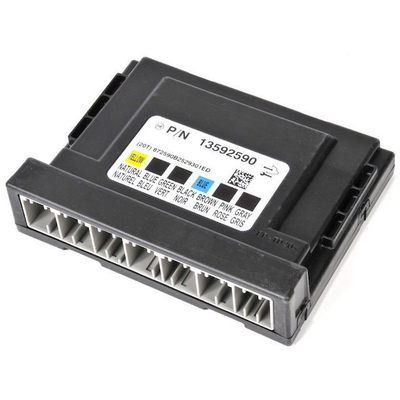
- For 2018-2020 Nissan and Infiniti SUVs, B2409 almost always requires replacing the Automatic Back Door Control Module as outlined in TSB NTB20-050.
- Always test your 12-volt battery before replacing expensive modules, as a resting voltage below 12.4V frequently triggers false B2409 communication errors.
- Attempt a hard reset by disconnecting the negative battery terminal for 30 minutes to clear temporary software glitches before buying replacement parts.
What Does B2409 Mean?
Code B2409 is a manufacturer-specific code, meaning it has different definitions depending on your vehicle. Most commonly, especially on newer Nissan and Infiniti SUVs, it signals a failure in the power liftgate control module. For other brands, it points to problems with the climate control system, steering lock, keyless entry, or radio reception.
Technical definition: The official SAE/ISO definition of B2409 varies by manufacturer. For 2018-2020 Nissan and Infiniti vehicles, it is a fault within the Automatic Back Door Control Module. For Mitsubishi, it is 'Steering Lock Unit Communication (No Response)'. For Hyundai and Kia models, it is 'Direction Control Motor-Driver' related to the HVAC system. For Ford models, it indicates an 'AM receiving signal error'. For GM vehicles, it means 'RF/Passenger seat assembly horizontal sensor open'.
Can I Drive With B2409?
Yes, But With Caution. Driving is safe as this code does not affect the engine or transmission. However, key features like the power liftgate, climate control, or keyless entry will not work. On Mitsubishi vehicles, this code indicates a steering lock communication failure, which prevents the vehicle from starting and leaves you stranded.
Common Causes
- Failed Automatic Back Door Control Module (Very Common) — On 2018-2020 Nissan and Infiniti SUVs, this is the most frequent cause. The original modules are highly vulnerable to moisture intrusion and internal failure. Both manufacturers issued Technical Service Bulletins (Nissan NTB20-050, Infiniti ITB20-018) addressing this exact defect.
- Weak or Failing 12V Battery (Common) — Body control modules require stable voltage to work correctly. A weak battery causes communication errors and triggers this code, often resulting in a power liftgate that only works when the engine is running and the alternator is supplying power.
- Faulty HVAC Blend Door Actuator (Common) — On Hyundai and Kia vehicles, this code points to a problem with the motor that directs airflow in the climate control system. The actuator fails electrically or mechanically, permanently sticking the airflow in one position.
- Software Glitch / Need for Reset (Less Common) — Particularly after a battery replacement or a voltage drop, the body control module enters a confused state. A 'hard reset' by disconnecting the battery for 30 minutes, or reseating the relevant fuse, resolves the issue without replacing parts.
- Damaged Wiring or Loose Connectors (Less Common) — Wires fray, corrode, or break in high-stress areas like the flexible rubber harness between a vehicle's body and the liftgate. A poor connection prevents the module from communicating or receiving power.
- Blown Fuse (Rare) — A blown fuse for a body control module or related component cuts power to the system and sets this code immediately.
- Failed Steering Lock Unit (Rare) — For Mitsubishi vehicles, this code indicates the Keyless Operation System (KOS) ECU lost communication with the electronic steering lock unit, preventing the vehicle from starting.
- Faulty Half-Latch Switch (Rare) — On older Nissan models, like the 2010 Murano, B2409 is triggered by a faulty half-latch switch integrated into the back door lock assembly. This switch detects if the door is fully latched, and a failure confuses the control module.
Symptoms
- Power liftgate does not work — The rear hatch will not open or close using the key fob, dashboard button, or the switch on the liftgate itself.
- HVAC airflow is stuck in one position — You cannot change the airflow from the vents to the floor or defroster because the blend door actuator failed.
- Vehicle will not start — On affected Mitsubishi models, a failure in the steering lock unit communication prevents the ignition from activating.
- Battery drain when vehicle is off — A malfunctioning Body Control Module fails to go into a low-power 'sleep' mode, causing a parasitic drain that depletes the battery overnight.
- Intermittent electrical issues — Because this code relates to a body control module, you experience strange electrical behavior with interior lights, door locks, or the security system.
- Poor AM Radio Reception — On Ford models, this code is associated with a fault in the antenna system, leading to poor or no AM radio reception.
Diagnostic Flowchart
Tap your situation to follow the diagnostic path that matches what you're seeing on this code.
Common Fixes & Costs
- Replace Automatic Back Door Control Module — Parts: $250-$450, Labor: $150-$300, ~1.5 hr book time (Intermediate)
- Replace 12V Battery — Parts: $150-$250, Labor: $50-$100, ~0.5 hr book time (DIY)
- Replace HVAC Blend Door Actuator — Parts: $50-$150, Labor: $150-$400, ~2.5 hr book time (Intermediate)
- Repair Damaged Wiring — Parts: $10-$50, Labor: $100-$300, ~2.0 hr book time (Professional)
- Replace Steering Lock Unit — Parts: $400-$700, Labor: $150-$300, ~3.0 hr book time (Professional)
Used vs. New Parts: Buying Guide
When a used part is worth it: For a common failure part like the Nissan/Infiniti liftgate module, a used part from a newer, low-mileage vehicle that was in a collision is a cost-effective option. For HVAC actuators, used parts are generally acceptable due to lower cost and complexity.
Donor-vehicle mileage cap: roughly under 60000 miles for the part to have meaningful remaining life.
Donor quality checklist:
- Match the part number exactly; modules can be physically identical but have different software.
- Purchase from a reputable seller that offers a warranty (even 30-90 days) and a return policy.
- Visually inspect the part for any signs of water damage or corrosion, especially on the connector pins.
Decision logic:
- If The part requires programming or VIN-matching (like a steering lock or some BCMs) → Buy new, or ensure you have a plan and budget for professional programming of the used part.
- If The vehicle is old and the new part is very expensive or unavailable → A used part is a practical choice, but accept the higher risk of premature failure.
- If The part is a known high-failure item with a TSB (like the liftgate module) → A new, updated OEM part is strongly recommended to avoid a repeat failure.
Warranty tradeoff: Used parts from salvage yards typically have a 30-90 day warranty. Refurbished modules offer up to a 1-year warranty. New OEM parts carry the manufacturer's standard parts warranty (typically 1 year/12,000 miles).
Worst-case if a used part fails: $200-$500 if a used part fails after installation, as you will pay for repeat labor costs plus the cost of another part.
What Happens If You Wait — Timeline
- 0-1 month: An intermittent fault occurs. The power liftgate hesitates, or the HVAC blend door makes a noise before correcting itself. The code is stored but does not trigger a warning light. No other symptoms are present. (MPG impact: 0%% · Added cost: $0)
- 1-3 months: The symptom becomes consistent. The power liftgate fails to operate entirely, or the HVAC is permanently stuck on one setting. For Mitsubishi, the vehicle intermittently fails to start, requiring multiple key cycles. (MPG impact: 0%% · Added cost: $0 - $200 (for towing if a no-start condition leaves you stranded))
- 3-6 months: The failing module begins to affect the broader electrical system. A parasitic battery drain develops as the module fails to enter 'sleep' mode, causing the battery to go flat if the vehicle sits for a few days. (MPG impact: 0%% · Added cost: $150 - $250 (for a new battery killed by the parasitic drain))
- 6+ months: A complete failure of the Body Control Module occurs. This leads to multiple, seemingly unrelated electrical issues (erratic lights, security system faults, no-start) and communication breakdown on the CAN bus network, making the vehicle unreliable. (MPG impact: 0%% · Added cost: $500 - $1500 (for a new BCM and diagnostic labor to chase multiple symptoms))
Cost of Not Fixing It
- Immediate: Loss of a key convenience feature, such as the power liftgate or ability to direct HVAC airflow. For Mitsubishi vehicles, the vehicle will not start, leaving you stranded. (Added cost: $0 - $200 (for towing if vehicle won't start))
- 1-6 months: A malfunctioning body control module causes a parasitic battery drain, leading to a dead battery and the need for a replacement. Continued manual operation of a failed power liftgate strains the latch mechanism. (Added cost: $150 - $250 (for a new battery))
- 6+ months: Ignoring a no-start condition is not feasible. For other symptoms, the primary consequence remains the ongoing inconvenience. There is a low risk of the faulty module causing unpredictable behavior in other related body electronic systems. (Added cost: N/A)
Diagnosis Steps
- Identify Your Vehicle's Specific Definition
Since B2409 has multiple meanings, search for the code along with your vehicle's make, model, and year (e.g., '2019 Nissan Rogue B2409'). This identifies exactly which system is affected.
Tools: Internet access (Beginner) - Check for Technical Service Bulletins (TSBs)
Manufacturers issue TSBs for common problems. For Nissan (NTB20-050) and Infiniti (ITB20-018), a TSB directly identifies the failed liftgate module as the cause, bypassing hours of diagnostic time.
Tools: Internet access (Beginner) - Test the 12V Battery and Charging System
A weak battery is a primary cause of body module communication errors. Use a multimeter to check the voltage. A reading below 12.4V with the engine off indicates a weak battery. Get it load-tested at an auto parts store to confirm its health.
Tools: Multimeter, Battery load tester (Beginner) - Perform a System Reset
Before replacing parts, attempt a hard reset by disconnecting the negative battery terminal for 30 minutes. For liftgate issues, turn the master liftgate switch off, manually cycle the gate open and closed, then press and hold the close button on the gate itself for 5-10 seconds until it beeps.
Tools: Wrench for battery terminal (Beginner) - Inspect Fuses
Check your owner's manual to locate the fuse box. Find the fuses related to the Body Control Module, Power Liftgate, or HVAC system and visually inspect them. Reseat the fuse to ensure a solid connection.
Tools: Fuse puller or needle-nose pliers (Beginner) - Scan and Clear the Code
Use an OBD-II scanner that reads Body (B) codes to confirm B2409 is present. Clear the code and see if it returns immediately to determine if the fault is constant or intermittent.
Tools: OBD-II scanner (capable of reading BCM codes) (Intermediate) - Visually Inspect Wiring
Look for obvious signs of damage to the wiring harness connected to the affected component. Pay close attention to the flexible rubber boot that carries wires between the liftgate and the vehicle body, as this is a common failure point.
Tools: Flashlight (Intermediate) - Pro Tip: Test HVAC Actuator Voltage and Resistance (Hyundai/Kia)
For Hyundai/Kia HVAC issues, disconnect the Direction Control Motor. With the key on, use a multimeter to check for 12V power and a good ground at the motor connector. To test the internal feedback potentiometer, check for specific voltage readings at the signal wire: VENT ≈ 0.4V, BI-LEVEL ≈ 1.45V, FLOOR ≈ 2.5V, MIX ≈ 3.55V, and DEFROST ≈ 4.6V. An open circuit indicates a failed motor.
Tools: Multimeter, OBD-II scanner with live data (Advanced) - Pro Tip: Check CAN Bus Communication (Nissan/Mitsubishi)
For a no-start (Mitsubishi) or unresponsive module (Nissan), check network communication. Using an oscilloscope, probe the CAN High and CAN Low lines at the module connector. You should see mirror-image square wave patterns. A flat line or distorted signal points to a wiring fault or a failed module pulling down the network.
Tools: Professional scan tool, Oscilloscope, Multimeter (Professional)
When This Code Triggers (Freeze-Frame Conditions)
- Vehicle Speed: 0 mph (Vehicle is stationary when the fault is detected, as liftgate, HVAC, or start requests occur at rest.)
- System Voltage: 11.5-12.5V (Engine Off) or 13.5-14.5V (Engine On) (The code sets during a key-on cycle or when a command (e.g., press liftgate button) is given.)
- Engine Status: Off or On (For liftgate issues, the fault is logged when a request is made with the engine off. For HVAC or starting issues, the engine is typically being started or is running.)
- Ambient Temperature: Any (The failure is electronic and not dependent on a specific ambient temperature.)
Related Codes
- U0140 — This code means 'Lost Communication With Body Control Module'. If you see U0140 alongside B2409, it points to a more serious problem. B2409 alone suggests an internal fault within the module, but U0140 means the entire module is offline and not communicating with the rest of the vehicle.
- B2250 / B2251 — These codes are specific to the power liftgate latch and its internal position switches. If your liftgate won't latch or unlatch properly, you see B2250. B2409 points to a failure of the control module that commands the latch, rather than the latch itself.
- U0446 — This code means 'Invalid Data Received From Body Control Module E'. It indicates a data communication problem. B2409 means the module has an internal problem, and U0446 is the symptom of that problem—the module is sending out corrupt data to other modules on the network.
- B101D — This code translates to 'Electronic Control Unit Hardware'. It is a generic code indicating an internal failure of a module. Seeing B101D along with B2409 confirms that the control module itself failed internally and requires replacement.
Climate & Environmental Factors
- High Humidity / Rain / Snow: For Nissan and Infiniti vehicles, the location of the Automatic Back Door Control Module in the rear of the vehicle makes it susceptible to moisture intrusion. Climates with high humidity, heavy rain, or snow accelerate corrosion and lead to internal failure of the module.
- Temperature Swings: Frequent and significant changes in temperature cause expansion and contraction of electronic components and solder joints within control modules. This thermal stress contributes to the premature failure of the liftgate control module in affected Nissan and Infiniti models.
How to Talk to a Mechanic About This Code
Say this: "I have a B2409 code on my [Your Car's Year, Make, Model]. I know this means different things, but for my car, the main symptom is [e.g., 'the power liftgate doesn't work' or 'the car won't start']. I've already checked the battery and it's healthy. I'd like to schedule a diagnostic to confirm the faulty component."
This shows you've done basic research, states the specific symptom, and preemptively rules out the most common misdiagnosis (the battery). It focuses the technician's diagnostic time on the correct system (liftgate, HVAC, etc.) and prevents them from starting from scratch, saving you money.
Avoid saying:
- 'My car has an electrical problem.' (Too vague, invites a long and expensive diagnostic process)
- 'I think the BCM is bad.' (Don't diagnose it for them; describe the symptoms and let them confirm the failure).
- 'Just fix whatever is wrong.' (This gives the shop a blank check to replace parts without your approval).
Questions to ask before authorizing the repair:
- What were the specific steps you took to confirm this part failed?
- If the new module needs programming or initialization, is that included in the labor quote?
- Can you confirm the power and ground connections to the module are good before we replace it?
- What is the warranty on the replacement part and the labor?
Where to Take It: Dealer vs Independent vs Chain
- Dealer:
Recommended for Nissan/Infiniti liftgate issues due to the TSB and potential need for programming. Also the best choice for a no-start Mitsubishi, as it involves security systems.
Best for: Vehicles under warranty, as the repair is covered., Known issues covered by a Technical Service Bulletin (TSB), like on Nissan/Infiniti models., Complex issues requiring module programming or initialization, as they have manufacturer-specific tools.
Downsides: Typically higher labor rates and parts costs., Less willing to diagnose component-level issues, opting to replace entire assemblies. (Typical cost: +40% vs. baseline) - Independent Shop:
A strong choice for most B2409 issues, especially on common domestic or Asian vehicles with non-security-related faults. Ensure the shop has experience with modern vehicle electronics and module programming.
Best for: Out-of-warranty vehicles where the cause is straightforward (e.g., Hyundai/Kia HVAC actuator)., Owners looking for a more personal relationship and potentially lower costs., Diagnosing wiring issues or parasitic draws.
Downsides: May not have the expensive, manufacturer-specific software to program a new module., Diagnostic ability for complex electronics varies widely between shops. (Typical cost: +0% vs. baseline) - Chain Shop:
AVOID for diagnosing the root cause of a B2409. Only use them if you have already confirmed the problem is just a weak battery.
Best for: Simple, related fixes like a battery replacement.
Downsides: Not equipped for in-depth electronic diagnostics or module replacement., Technicians lack the specialized experience needed for body control module issues. (Typical cost: -10% vs. baseline)
When to Walk Away From the Repair
If the estimated repair cost for the B2409 fault exceeds 50% of your car's private-party value, it's time to seriously consider selling or trading it in.
- Car worth $5000, fix is $2800: Walk away. The repair cost is over 50% of the car's value, making it a poor investment.
- Car worth $15000, fix is $1200: Fix it. The repair is a small fraction of the car's value and restores a key feature.
- Car worth $3000, fix is $1400: Borderline. The cost is close to the 50% threshold. Consider the car's overall health before deciding.
What Scan Tool You Need for This Code
Minimum: A scanner that reads and clears manufacturer-specific Body ('B') codes. Basic engine-only code readers will not see this fault.
A standard $20 OBD-II reader from an auto parts store typically only reads Powertrain ('P') codes. It will not see, diagnose, or clear a 'B' code like B2409, making it useless for this problem.
Budget: BlueDriver Pro (~$100) — Reads and clears codes from all modules, including the Body Control Module. It views live data, which helps confirm if a switch or sensor is working correctly.
Mid-range: Innova 5610 (~$350) — Offers bidirectional control, which is crucial for advanced diagnosis. This allows you to command a module to perform a function (e.g., 'close liftgate motor') directly from the scanner to see if the component responds. This confirms if the module, wiring, or motor is the problem.
Professional: Autel MK808S / Topdon Phoenix Series (~$500-1500) — Provides full bidirectional control and includes special functions for module programming and initialization. If you replace a liftgate module or steering lock unit, this level of tool is required to make the new part work with the vehicle.
Rent vs buy: For a one-time diagnosis, auto parts stores like AutoZone scan your codes for free. However, their scanners cannot perform the necessary programming or initialization after a part is replaced. If you plan to do the repair yourself, buying a mid-range or pro-level scanner is a worthwhile investment for this and future repairs.
How to Clear the Code After You Fix It
- Reconnect the battery if disconnected during repair.
- Use an OBD-II scan tool capable of reading body codes to clear the B2409 code.
- For liftgate repairs, perform the initialization/calibration procedure as specified by the manufacturer.
- For HVAC repairs, cycle the system through all modes (vent, floor, defrost) to allow the new actuator to calibrate.
Drive cycle (~10 minutes): A specific drive cycle is not required for a body code. After clearing the code, operate the affected system (e.g., power liftgate, HVAC controls) multiple times to ensure the fault does not return. For a no-start issue, simply attempting to start the vehicle confirms if the fix was successful.
Readiness monitors affected: None
Watch out for:
- Using a basic OBD-II scanner that cannot read or clear manufacturer-specific 'B' codes.
- Failing to initialize a new liftgate control module, which results in it not working even after replacement.
- Clearing the code without addressing the root cause, leading to its immediate return.
Will This Fail Emissions / State Inspection?
No — by itself this code doesn't fail OBD inspection (but it can keep readiness monitors from setting, which causes a separate fail).
- California: This is a body control module code ('B' code) and will not cause a failure of the emissions inspection (smog check), which primarily looks at powertrain ('P' codes) and readiness monitors.
- New York: The NYS inspection checks for the check engine light's operation but does not fail vehicles for non-powertrain 'B' codes. This code will not cause an inspection failure.
- Texas: Texas OBD inspections focus on powertrain codes that indicate an emissions problem. A B2409 code will not cause the vehicle to fail the state emissions inspection.
Most Commonly Affected Vehicles
- Nissan Rogue (2018-2020) — Prone to Automatic Back Door Control Module failure, documented in Nissan TSB NTB20-050. Affects models built before late 2019. Part numbers are 284G0-4BA4B for 2018 and 284G0-4BA5B for 2019-2020.
- Nissan Pathfinder (2018-2020) — Affected by the same faulty liftgate control module as the Rogue, covered by TSB NTB20-050. Most common on Pathfinders built before October 11, 2019.
- Infiniti QX60 (2018-2020) — Has a known issue with the Automatic Back Door Control Module, addressed by Infiniti TSB ITB20-018. Affects models built before October 20, 2019.
- Hyundai Various (e.g., Santa Fe, Tucson) (2008-2024) — Frequently uses code B2409 to indicate a fault with an HVAC blend door actuator (Direction Control Motor). The ECM sets the code if the motor doesn't reach its intended position within 40 seconds.
- Kia Various (e.g., Sportage) (2008-2024) — Similar to Hyundai, this code points to a failure in the HVAC Direction Control Motor.
- Chevrolet Cruze (2014-2015) — On these models, B2409 indicates a fault with the HVAC temperature or mode door actuator, causing incorrect air temperature or distribution.
- Ford Focus (2012-2018) — For some Ford models, B2409 has an unusual definition of 'AM receiving signal error', pointing to a problem with the radio or antenna system.
- Chevrolet / GMC Silverado 1500 / Sierra 1500 (2011-2013) — For some GM trucks, B2409 is defined as 'RF/Passenger seat assembly horizontal sensor open', which relates to the passenger presence system for the airbag.
Manufacturer-Specific Notes
- Nissan / Infiniti: For 2018-2020 models like the Rogue, Pathfinder, and QX60, B2409 guarantees the Automatic Back Door Control Module failed. The diagnosis is confirmed by TSBs NTB20-050 and ITB20-018, which direct technicians to replace the module.
- Mitsubishi: This code means the steering lock unit is not communicating with the keyless entry module. This is a security-related fault that prevents the car from starting.
- Hyundai / Kia: The code points to a 'Direction Control Motor' fault, which is the blend door actuator in the climate control system. The control module sets this code if the actuator fails to reach its commanded position within 40 seconds.
- Older Nissan (e.g., 2009-2010 Murano): On older models, B2409 indicates a problem with the driver's side key cylinder switch or a half-latch switch in the power liftgate assembly.
- General Motors (Chevrolet / GMC): On some vehicles, B2409 refers to a fault in the passenger seat position sensor, which is part of the airbag's passenger presence detection system. On others, like the Cruze, it relates to the HVAC system.
Real Owner Stories
2019 Nissan Rogue SV with inoperative power liftgate
The power liftgate suddenly stopped working from the interior button, the key fob, and the button on the hatch itself. No other symptoms or warning lights were present.
What they tried:
- Resetting the 'storage fuse' inside the vehicle.
- Disconnecting the 12V battery for 30 minutes to perform a hard reset.
Outcome: The owner tested the original 12V battery and found its resting voltage was only 11.8V. After replacing the weak battery, the power liftgate began working perfectly again without any other repairs.
Lesson: Always test the 12V battery before assuming a control module failed. The liftgate system is very sensitive to low voltage, and a weak battery is a common and much cheaper root cause.
2015 Nissan Rogue with liftgate that won't latch
After replacing a weak battery, the power liftgate would open but then fail to latch when closing. It required a reset with an OBD-II tool to function again, but the problem quickly returned, throwing a B2419 'Open Switch' code.
What they tried:
- Replaced hydraulic liftgate struts.
- Replaced the actuator motor.
- Replaced the liftgate control module with a used part.
- Performed manual recalibration procedure.
Outcome: None of the part replacements solved the issue. The owner suspected a short in a wiring harness or the need for a dealer-level 'relearn' procedure using Nissan's CONSULT III Plus software, which was not available to them.
Lesson: Aftermarket scan tools and part-swapping do not resolve issues that require proprietary, dealer-level software for initialization or calibration, especially after a battery disconnect or module replacement.
2006 Chevrolet Suburban with parasitic battery drain
The vehicle's battery died after sitting for 12 hours. This started after experiencing issues with a 'door ajar' message and the security system activating frequently.
What they tried:
- Disabling the security system.
- Attempting a key relearn procedure.
Outcome: The owner performed a full system reset by disconnecting both battery cables and clamping them together overnight. This procedure discharges all modules completely, clearing adaptive memory and internal glitches, which resolved the parasitic draw.
Lesson: For complex parasitic drain issues related to a Body Control Module, a full 'hard reset' (disconnecting and joining battery terminals) resolves software glitches that cause modules to stay 'awake' and drain the battery.
2013 Infiniti JX35 with non-functional power liftgate after battery change
Immediately after a new battery was installed, the power liftgate stopped working from all switches and could only be opened manually from the inside.
What they tried:
- Checked all related fuses in both interior and engine bay fuse boxes.
- Took it to a dealer who diagnosed a bad liftgate lock actuator.
Outcome: The owner was skeptical of the dealer's diagnosis. Before approving the repair, they tested the supposedly 'bad' actuator with a 9V battery and found that it worked perfectly. The actual issue was a loss of calibration in the control module due to the battery change, which required a specific reset procedure to fix.
Lesson: Don't automatically trust a diagnosis, even from a dealer. A simple component test saves you from paying for unnecessary parts. Battery replacements cause modules to lose their settings, and a recalibration is the first step, not part replacement.
How to Prevent This Code From Triggering
- Maintain a healthy 12V battery (Every 3-4 years) — A weak or failing battery is the number one cause of erratic behavior in body control modules. Stable voltage is critical for their operation. Have your battery load-tested annually after the 3-year mark and replace it proactively.
- Keep electronics dry (During/after rain or car washes) — Moisture is the enemy of electronic modules. For liftgate modules located in the rear, ensure weather seals are intact. For interior modules, quickly address any water leaks from sunroof drains or door seals to prevent corrosion and short circuits.
- Ensure battery terminals are clean and tight (Every oil change) — Corrosion on battery terminals acts as a resistor, causing voltage drops under load that starve electronic modules of power, leading to communication errors like B2409. A loose terminal causes intermittent power loss, scrambling module memory.
- Avoid excessive aftermarket accessories on one circuit (During installation of new electronics) — Overloading a circuit with too many aftermarket accessories causes an excessive electrical load on the Body Control Module, leading to overheating and premature failure.
- Perform periodic system resets (Annually or after any electrical work) — Software glitches cause a module to behave erratically. A 'hard reset' by disconnecting the battery for 30 minutes clears temporary faults and restores normal communication between modules, preventing minor issues from becoming persistent codes.
Frequently Asked Questions
My liftgate works when the car is running but not when it's off. Is it the module?
This symptom strongly suggests a weak 12V battery, not a failed control module. Liftgate motors draw heavy current, so they rely on the alternator's 13.7V-14.7V output when the battery is weak. Always load-test the battery before replacing expensive parts.
Can I try a reset before replacing expensive parts?
Yes, a simple 'hard reset' often resolves software glitches without part replacement. Disconnect the negative terminal of your 12V battery for 30 minutes. Alternatively, locate and reseat the fuse for the power liftgate or Body Control Module.
Why did my power liftgate just stop working?
On newer Nissan and Infiniti SUVs, the liftgate control module is a known weak point that fails suddenly due to internal electronic faults or moisture intrusion. This triggers code B2409 and completely disables the power function.
Can I fix a B2409 code myself?
Replacing a weak battery or blown fuse is a simple DIY fix. However, replacing a liftgate module or HVAC actuator requires removing interior trim panels. These module replacements also typically require a dealer-level scan tool for calibration.
Is code B2409 covered by a recall?
No, this issue is not part of a safety recall. Manufacturers have issued Technical Service Bulletins (TSBs) to guide dealer repairs. These TSB repairs are only free if your vehicle is still under the original warranty.
How can the same code mean so many different things?
Unlike standardized 'P' (Powertrain) codes, 'B' (Body) codes are manufacturer-specific. Automakers assign these codes to their proprietary electronic systems. This means B2409 indicates a liftgate issue on a Nissan but an HVAC issue on a Hyundai.
What does it mean to 'initialize' or 'calibrate' a new liftgate module?
A new power liftgate module must learn the fully open and closed positions of the hatch to function correctly. This calibration requires a dealer-level scan tool to program the limits into the module. Without this step, the new part will not operate.
Key Takeaways
- Code B2409 is manufacturer-specific, meaning it signals a failed liftgate module on a 2019 Nissan Rogue, but a faulty HVAC blend door on a 2015 Hyundai Santa Fe.
- For 2018-2020 Nissan and Infiniti SUVs, B2409 almost always requires replacing the Automatic Back Door Control Module as outlined in TSB NTB20-050.
- Always test your 12-volt battery before replacing expensive modules, as a resting voltage below 12.4V frequently triggers false B2409 communication errors.
- Attempt a hard reset by disconnecting the negative battery terminal for 30 minutes to clear temporary software glitches before buying replacement parts.
Shop the Parts Behind B2409
Below are the parts most often responsible for code B2409, ranked by how frequently each one is the actual culprit (per the diagnosis above). Tap any to see what we have for your vehicle.



The information in this article is provided for general reference and educational purposes only. Vehicle specifications, procedures, and part compatibility can vary by production date, trim level, and region. Always consult your vehicle's factory service manual and verify part numbers before purchasing or performing repairs. Safety-critical components such as airbags, seat belts, and braking systems should be installed by a qualified professional.
- 🧭 Diagnostic Flowchart
- 🛍️ Shop This Part
- What Does B2409 Mean?
- Can I Drive With B2409?
- Common Causes
- Symptoms
- Common Fixes & Costs
- Used vs. New Parts: Buying Guide
- What Happens If You Wait — Timeline
- Cost of Not Fixing It
- Diagnosis Steps
- When This Code Triggers (Freeze-Frame Conditions)
- Related Codes
- Climate & Environmental Factors
- How to Talk to a Mechanic About This Code
- Where to Take It: Dealer vs Independent vs Chain
- When to Walk Away From the Repair
- What Scan Tool You Need for This Code
- How to Clear the Code After You Fix It
- Will This Fail Emissions / State Inspection?
- Most Commonly Affected Vehicles
- Manufacturer-Specific Notes
- Real Owner Stories
- 2019 Nissan Rogue SV with inoperative power liftgate
- 2015 Nissan Rogue with liftgate that won't latch
- 2006 Chevrolet Suburban with parasitic battery drain
- 2013 Infiniti JX35 with non-functional power liftgate after battery change
- How to Prevent This Code From Triggering
- Frequently Asked Questions
- My liftgate works when the car is running but not when it's off. Is it the module?
- Can I try a reset before replacing expensive parts?
- Why did my power liftgate just stop working?
- Can I fix a B2409 code myself?
- Is code B2409 covered by a recall?
- How can the same code mean so many different things?
- What does it mean to 'initialize' or 'calibrate' a new liftgate module?
- Key Takeaways
- 🎟️ Get 5% Off