

OBD-II Code B2417: Horn Control Circuit Malfunction
What B2417 means, why it triggers, and how to fix it
- Code B2417 indicates a horn circuit failure, with over 80% of cases tracing back to a $5 blown fuse, a $30 faulty relay, or a broken clock spring.
- If the horn works via the key fob panic button but not the steering wheel, or the airbag light is illuminated, replace the clock spring to restore the circuit.
- Swap the horn relay with an identical relay in the fuse box (like the A/C relay) to instantly rule out a $30 component failure before buying expensive parts.
- Verify your manufacturer's specific code definitions, as Toyota, Nissan, and Mitsubishi use B2417 to flag headlight, liftgate, or keyless entry faults instead of the horn.
- Driving with a B2417 code is mechanically safe, but a non-functional horn guarantees a safety inspection failure in the 15+ states that mandate an audible warning device.
What Does B2417 Mean?
The B2417 code means the Body Control Module (BCM) detects a fault in the horn's electrical circuit. This is an open circuit (broken wire), a short circuit (wire touching ground), or a component failure. When you press the horn button, the BCM does not receive the expected electrical response.
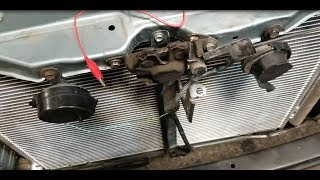
Technical definition: The SAE/ISO definition is Horn Control Circuit Malfunction. The Body Control Module (BCM) logs this fault 🎬 Watch: A professional guide on how to diagnose horn problems when the horn circuit's voltage or resistance falls outside the specified range during operation or self-test. The BCM monitors the current draw, expecting 3 to 8 amps. A reading outside this range triggers the code.
Can I Drive With B2417?
Yes, But With Caution. Yes, you can drive, but your horn will not work. A non-functional horn is a significant safety risk and guarantees a safety inspection failure in jurisdictions requiring a horn audible from 200 feet. Driving without a horn eliminates your ability to warn others of imminent danger. There is no risk of mechanical damage, but the legal and safety implications are serious.
Common Causes
- Blown Horn Fuse (Very Common) — The fuse protects the circuit from excess electricity. It is the most common and easiest part to fail, blowing due to a momentary short circuit or simple old age.
- Failed Clock Spring (Common) — The clock spring is a ribbon of wires in the steering column maintaining electrical connections for the airbag, horn, and steering wheel buttons. These thin wires fatigue and break over time, causing an open circuit.
- Faulty Horn Relay (Common) — The relay is an electromagnetic switch using a low-power signal from the horn button to control the high-power horn circuit. Relays wear out internally, suffer contact corrosion, or fail completely.
- Defective Horn Assembly (Common) — The horn fails internally due to age, corrosion, or water intrusion. Vehicles often have two horns (high and low tone), and one failing before the other leads to a weak sound and incorrect current draw.
- Broken or Corroded Wiring/Connectors (Less Common) — Wires leading to the horn are exposed to moisture, road salt, and debris at the front of the vehicle. This causes corrosion on connectors or physical wire breaks, creating an open or short circuit.
- Faulty Horn Switch/Button (Less Common) — The physical steering wheel button contains electrical contacts that wear out or get dirty. This prevents the ground signal from reaching the BCM or horn relay.
- Poor Ground Connection (Less Common) — The horn circuit requires a solid ground connection to the vehicle's chassis. A rusted, loose, or painted-over ground point creates high resistance and disables the horn.
- Weak or Failing Battery (Rare) — A battery with low or unstable voltage causes unpredictable behavior in electronic modules. The BCM sets false codes, including B2417, due to improper voltage supply during self-tests.
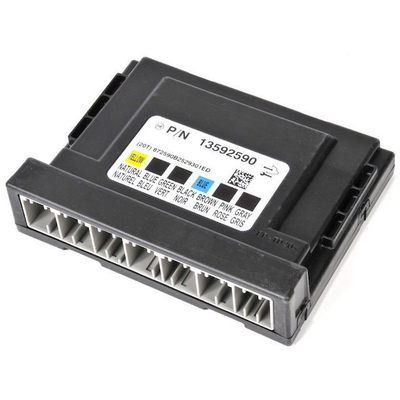
- Faulty Body Control Module (BCM) (Rare) — The BCM controls the horn circuit. An internal failure of the BCM's driver circuit prevents it from sending the signal to the horn relay or interpreting the horn switch signal.
Symptoms
- Horn does not work at all — Pressing the horn button on the steering wheel produces no sound. This is the primary symptom.
- Horn works with key fob panic button, but not steering wheel — This confirms the fuse, relay, wiring, and horn assembly are working, isolating the fault to the steering column circuit (usually the clock spring).
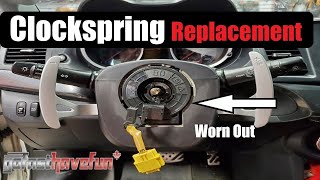
- Airbag warning light is on alongside horn failure 🎬 See this walkthrough on how to replace a faulty clock spring — If the clock spring fails, the airbag warning light illuminates because the airbag circuit runs through the same ribbon cable. Other steering wheel buttons (cruise control, radio) also stop working.
- Horn sounds weak or high-pitched — If your vehicle has dual horns, one failing results in a quiet or 'wimpy' sound. 🎬 Watch: How to fix a weak horn and restore full volume The BCM detects the lower current draw and sets the code.
- Horn works intermittently or only when turning — Working only in certain steering wheel positions strongly indicates a failing clock spring with a broken internal wire making intermittent contact.
- Horn is stuck on continuously — A short circuit in the horn relay (stuck closed) or horn switch causes the horn to sound continuously. Pulling the fuse silences it.
- BCM Live Data shows 'Horn Switch Status' as 'Inactive' (scan-tool only — no driver-felt sign) — A scan tool reveals the BCM is not receiving the 'on' signal from the steering wheel, pointing directly to a fault in the horn switch or clock spring.
Diagnostic Flowchart
Tap your situation to follow the diagnostic path that matches what you're seeing on this code.
Common Fixes & Costs
- Replace Horn Fuse — Parts: $1-$5, Labor: $0, ~0.1 hr book time (DIY)
- Replace Horn Relay — Parts: $15-$40, Labor: $0-$50, ~0.2 hr book time (DIY)
- Replace Clock Spring — Parts: $70-$400, Labor: $134-$200, ~1.5 hr book time (Professional)
- Replace Horn Assembly — Parts: $30-$150, Labor: $50-$270, ~1 hr book time (DIY)
- Repair Wiring or Ground Connection — Parts: $5-$25, Labor: $100-$300, ~2 hr book time (Professional)
- Replace Body Control Module (BCM) — Parts: $550-$800, Labor: $120-$250, ~2 hr book time (Professional)
Used vs. New Parts: Buying Guide
When a used part is worth it: For a simple horn assembly, a used part from a low-mileage, accident-free vehicle saves money. For a clock spring, buying new is mandatory due to its role as a wear item and critical safety component.
Donor-vehicle mileage cap: roughly under 60000 miles for the part to have meaningful remaining life.
Donor quality checklist:
- Verify the donor vehicle was not in a frontal collision.
- For horn assemblies, avoid parts from vehicles in rust-belt states due to corrosion risk.
- Match the part number exactly, especially for clock springs.
Decision logic:
- If The failed part is the clock spring. → Buy a new OEM or high-quality aftermarket part. The safety risk of a used part failing is too high.
- If The failed part is the horn assembly and budget is a primary concern. → A used OEM horn from a verified low-mileage donor is an acceptable option.
- If The part is a simple fuse or relay. → Always buy new; the cost is negligible.
Warranty tradeoff: Used parts from a salvage yard typically have a 30-90 day warranty. New aftermarket parts offer 1-year to limited lifetime warranties. New OEM parts carry a 1-year warranty.
Worst-case if a used part fails: $200-$500 if a used clock spring fails prematurely, requiring repeat labor costs. If a cheap clock spring fails to deploy the airbag in a crash, the cost is immeasurable.
What Happens If You Wait — Timeline
- Immediate: Code B2417 sets. The horn is inoperative, causing an immediate loss of a critical safety feature and increasing accident risk. (MPG impact: 0%% · Added cost: $0, but the potential cost of an at-fault accident is thousands.)
- Next Vehicle Inspection: The vehicle automatically fails the safety inspection in states requiring an operational horn, preventing registration renewal. (MPG impact: 0%% · Added cost: $50-$250 in potential fines, tickets, and re-inspection fees.)
- 1-6 months (if caused by clock spring): Continued turning of the wheel stresses the remaining wires in a failing clock spring. The airbag (SRS) circuit fails next, disabling the driver's airbag. (MPG impact: 0%% · Added cost: Immeasurable safety risk. The airbag will not deploy in a collision.)
- 6+ months (if caused by clock spring): Multiple circuits within the clock spring (airbag, cruise control, radio) fail completely. The internal ribbon severs. (MPG impact: 0%% · Added cost: $200-$800+ for full clock spring replacement.)
Cost of Not Fixing It
- Immediate: Inability to warn other drivers or pedestrians, significantly increasing the risk of an accident. (Added cost: Potential cost of an at-fault accident, which could be thousands of dollars.)
- Next Vehicle Inspection: Guaranteed failure of the state safety inspection in most jurisdictions, preventing vehicle registration renewal. (Added cost: $50-$250 in fines and re-inspection fees, plus the cost of the eventual repair.)
- Ongoing (if caused by clock spring): The driver's airbag is disabled. In a frontal collision, the airbag will not deploy, drastically increasing the risk of serious injury or death. (Added cost: Incalculable personal safety cost. Continued driving causes further damage to the clock spring's internal ribbon cable.)
Diagnosis Steps
- Check the Horn Fuse
Locate the fuse box and find the fuse labeled 'HORN'. Visually inspect it. If the metal strip inside is broken, replace it with a fuse of the exact same amperage.
Tools: Fuse puller or small pliers (Beginner) - Listen for the Horn Relay Click
With the engine off, have a helper press the horn button while you listen for a 'click' from the under-hood fuse box. A click means the relay receives the signal, placing the problem in the high-current side (wiring or horn). No click means the problem is in the low-current control side (switch, clock spring, or relay coil).
Tools: A helper (Beginner) - Swap the Horn Relay
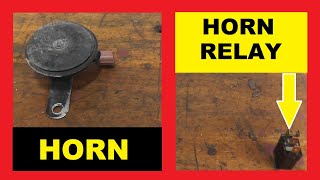
Find a matching relay in the fuse box (like the A/C clutch relay) and swap it with the horn relay. If the horn works, the original relay failed. Note: Some vehicles have relays soldered to the fuse box, making this impossible.
Tools: Pliers (optional) (Beginner) - Test the Horn Directly
Locate the horn assembly behind the grille and disconnect its electrical connector. Use jumper wires to connect the horn's terminals directly to the 12V battery. If it sounds, the horn is good. If not, replace the horn assembly.
Tools: Jumper wires, basic hand tools (Intermediate) - Check for Power at the Horn Connector
With the horn unplugged, have a helper press the horn button. Use a multimeter set to DC Volts to check for 12V+ at the connector's power pin. If you get ~12V, power delivery is good, indicating a bad ground connection. If there is no power, the fault is upstream in the wiring, relay, or BCM.
Tools: Multimeter or 12V test light (Intermediate) - [PRO TIP] Perform a Voltage Drop Test
Connect the multimeter's red lead to the battery positive and the black lead to the horn connector's power pin. Press the horn button. A reading over 0.5 volts indicates excessive resistance (corroded wire, faulty relay). Repeat for the ground side (red lead to horn ground pin, black lead to battery negative). A reading over 0.2 volts points to a bad ground.
Tools: Multimeter with long leads (Advanced) - Inspect the Clock Spring and Steering Wheel Controls
If cruise control, radio buttons, and the airbag light are malfunctioning alongside the horn, the clock spring is the primary suspect. Stop DIY diagnosis and consult a professional shop unless you have specific experience with supplemental restraint systems (SRS).
Tools: None (Visual inspection) (Beginner) - [PRO TIP] Test the Clock Spring Circuit
Disconnect the battery and remove the airbag module. Disconnect the clock spring connectors. Use a multimeter set to Ohms (Ω) to check the resistance of the horn switch wire through the clock spring. It must read less than 1 ohm. An 'OL' (Open Loop) reading confirms a broken wire inside the clock spring.
Tools: Socket set, trim removal tools, multimeter, screwdriver set, vehicle-specific service manual (Advanced) - [PRO TIP] Check Horn Circuit Current Draw
Use an amp clamp multimeter to measure the current on the power wire to the horn assembly when activated. A single horn draws 3-5 amps; a dual-tone system draws 6-8 amps. Readings >10A indicate a short circuit. Readings <2A indicate high resistance or a failing horn.
Tools: Amp clamp multimeter (Advanced) - [PRO TIP] Analyze Scan Tool Live Data
Connect a bi-directional scan tool and access BCM live data. Monitor 'Horn Switch Status'. It must change from 'Inactive' to 'Active' when pressed. If it doesn't change, the fault is in the clock spring or switch. If it changes but the 'Horn Relay Command' does not, the BCM is faulty.
Tools: Bi-directional OBD-II Scan Tool (Advanced)
When This Code Triggers (Freeze-Frame Conditions)
- System Voltage: 11.5-14.5V (Ignition On)
- Horn Switch Status: Active/Pressed (The moment the horn button is pressed)
- Horn Relay Command: On (BCM attempting to activate the horn)
- Horn Circuit Current: < 2A or > 10A (BCM detects current draw outside the expected range (e.g., 3-8A) when the horn is commanded on)
Related Codes
- B1B02 / B1B06 — Driver Airbag Squib Circuit Open. When appearing alongside B2417, the root cause is definitively a failed clock spring.
- U0140 — Lost Communication With Body Control Module. If present with B2417, the BCM itself is faulty or has a power/ground issue.
- U1109 — Lost Communication With LIN Steering Wheel Controls. Indicates the BCM cannot communicate with steering wheel switches, strongly pointing to a clock spring failure.
- B1103 — An alternative code used by manufacturers like Ford for 'Vehicle Horn Control Circuit Failure'. Diagnosis is identical to B2417.
Climate & Environmental Factors
- Road Salt / Salty Air: Salt spray dramatically accelerates corrosion of the horn assembly, electrical connectors, and chassis ground points, especially in the Rust Belt and coastal regions.
- High Humidity / Water Intrusion: Moisture penetrates poorly sealed horn assemblies, causing internal corrosion or short circuits. This is the primary cause of dual-tone horn failures.
- Extreme Cold: Grease inside the horn switch contacts thickens, preventing electrical contact. The plastic ribbon of the clock spring becomes brittle and susceptible to breaking.
How to Talk to a Mechanic About This Code
Say this: "I have a B2417 horn circuit code and need a diagnostic. My horn doesn't work from the steering wheel, but it DOES work with the panic button. The airbag light is also on. Based on this, I suspect a clock spring failure and would like you to start your diagnosis there."
This directs the technician to the most likely cause, preventing them from wasting time checking the fuse, relay, and horn, which your test already proved are working. It protects you from unnecessary parts sales.
Avoid saying:
- 'My horn is broken, please fix it.'
- 'My car has an electrical problem.'
- 'Just replace the clock spring.' (Don't order a specific repair without a professional diagnosis to confirm; you are liable for the cost even if it doesn't fix the problem.)
Questions to ask before authorizing the repair:
- Did you verify the clock spring is the failure point by checking for an open circuit or by seeing the 'Horn Switch Status' fail to change on your scan tool?
- What is the cost of the OEM vs. a high-quality aftermarket clock spring?
- Does the repair estimate include performing a steering angle sensor recalibration if required?
- What is the warranty on both the part and your labor?
Where to Take It: Dealer vs Independent vs Chain
- Dealer:
Recommended only if the vehicle is under warranty or if you suspect a rare BCM failure. Otherwise, an independent shop is more cost-effective.
Best for: Vehicles under warranty or covered by a recall/extended warranty for the clock spring., Complex electrical issues where a Body Control Module (BCM) replacement and programming is suspected., Owners who prioritize OEM parts.
Downsides: Highest labor rates, often 1.5-2x more than independent shops., Less willing to install aftermarket parts or repair wiring, preferring to replace entire assemblies. (Typical cost: +50% vs. baseline) - Independent Shop:
Best fit for most B2417 repairs. A reputable independent shop easily handles fuse, relay, horn, wiring, and clock spring replacements at a lower cost than a dealer.
Best for: Out-of-warranty vehicles where cost is a major factor., Common repairs like a clock spring or horn assembly replacement., Getting a second opinion on a dealership quote.
Downsides: Quality and expertise vary. Vet shops by checking for ASE certifications., May lack the latest manufacturer-specific tools for BCM programming on very new vehicles. (Typical cost: +0% vs. baseline) - Chain Shop:
AVOID for this code. They are not the right choice for diagnosing an electrical circuit fault or safely handling an airbag system.
Best for: Simple part swaps like a fuse or plug-in relay if you cannot do it yourself.
Downsides: Technician skill varies dramatically. High pressure to upsell services., Not equipped or trained for complex electrical diagnosis or repairs involving airbags. (Typical cost: -10% vs. baseline)
When to Walk Away From the Repair
If the estimated repair cost exceeds 40-50% of the car's private-party value, pause and consider your options. For a safety-related repair like this, the threshold is slightly higher.
- Car worth $4000, fix is $650: Fix it. A $650 clock spring replacement is well below the threshold and restores a critical safety system.
- Car worth $2500, fix is $1200: Walk away. If the repair requires a new BCM and programming ($1200), this exceeds 40% of the car's value. Consider selling the car or trading it in.
- Car worth $15000, fix is $800: Fix it. The repair cost is a small fraction of the vehicle's value and essential for safety and passing inspection.
What Scan Tool You Need for This Code
Minimum: A scanner that reads and clears Body Control Module (BCM) and SRS (airbag) codes. A basic engine-only (P-code) reader is insufficient.
A $20 code reader cannot see the B2417 code, airbag codes, or live data from the horn switch. You need a tool that accesses the BCM to diagnose the issue beyond checking the fuse.
Budget: BlueDriver Pro (~$100) — Reads and clears BCM and SRS codes. Provides live data to see if the horn switch status changes when pressed, which is key for diagnosing a clock spring.
Mid-range: Foxwell NT510 Elite / Kingbolen S6 Elite (~$150) — Offers budget features plus active test (bidirectional) capabilities. Allows you to command the horn relay to turn on directly from the scan tool, isolating a faulty relay or wiring.
Professional: Autel MaxiCOM MK808S / Launch X431 CRP919X (~$400-550) — Full bidirectional control of all components in the horn circuit. Commands the BCM to activate the horn, reads switch status, and views all related data streams simultaneously.
Rent vs buy: Most auto parts stores' free rental scanners CANNOT read BCM or SRS codes. You must buy a capable scanner. The budget pick is often cheaper than a single diagnostic hour at a shop.
How to Clear the Code After You Fix It
- Fix the underlying electrical fault (e.g., replace fuse, relay, clock spring).
- Use an OBD-II scan tool capable of reading BCM codes to clear the fault memory.
- Test the horn multiple times to ensure it functions correctly.
Drive cycle: No specific drive cycle is required. The code sets during self-test or when the horn is used. Once cleared with a scan tool, it will not return if the fix was successful.
Watch out for:
- Clearing the code without fixing the root cause results in the code returning the next time the horn is used.
- Using a basic code reader that only clears powertrain (P-codes) cannot clear a body (B-code) from the BCM.
Will This Fail Emissions / State Inspection?
No — by itself this code doesn't fail OBD inspection (but it can keep readiness monitors from setting, which causes a separate fail).
- California: A B2417 code will not fail the OBD-II emissions portion of the smog check. However, a non-operational horn is a mandatory check item and causes a failure of the overall vehicle safety inspection.
- New York: An operational horn is required on the NYS safety inspection. A vehicle with a broken horn fails the inspection.
- Texas: Texas law requires every motor vehicle to be equipped with a horn audible from at least 200 feet. A non-working horn results in failure during the annual safety inspection.
Most Commonly Affected Vehicles
- Ford F-150 (2004-2014) — Prone to clock spring failure. On 2004-2008 models, the horn relay is soldered into the main fuse box (SJB), requiring full replacement if it fails.
- Chevrolet / GMC Silverado / Sierra 1500/2500 (2007-2018) — Horn failures are common, often related to the horn assembly itself or wiring connectors. Clock spring failures are also frequent.
- Dodge / Ram 1500 / 2500 (2002-2018) — Frequently experience clock spring failures, disabling the horn, cruise control, and illuminating the airbag light.
- Jeep Wrangler (JK) (2007-2017) — Clock spring failure is heavily documented due to dust intrusion. FCA issued multiple recalls and extended warranties (X41, X68) covering this issue.
- Hyundai Elantra (2021-2025) — Subject to a warranty extension (TSB 25-BE-005H-1) for 10 years/120,000 miles due to premature horn failure caused by water intrusion.
- Kia Forte (2014-2023) — Horn failures are a common complaint, typically caused by one of the dual-note horns failing internally.
- Subaru Outback / Legacy (2013-2021) — Known to experience horn failure pointing to a faulty clock spring, which Subaru calls a 'roll connector'.
- Ford F-150 Lightning (2022-2025) — The horn assembly is located under the front trunk ('frunk') tub, which must be removed for access.
Manufacturer-Specific Notes
- Toyota / Lexus: Code B2417 indicates a 'Headlight Beam Level Control Motor LH Malfunction', a fault in the automatic headlight leveling system, not the horn.
- Nissan / Infiniti: Particularly on 2015-2016 Murano and Rogue, B2417 indicates a fault in the power liftgate system ('Touch Sensor Circuit LH Open').
- Mitsubishi: B2417 points to an 'OSS authentification error', a communication problem between the Keyless Operation System and the One-touch Start System.
- Mazda: B2417 defines a 'Passenger Compartment Module Communication Fault', indicating a network communication issue with the BCM rather than a horn circuit problem.
Real Owner Stories
2013 Jeep Wrangler JK at 95K miles - The Classic Clock Spring Failure
The airbag light illuminated intermittently, followed by the horn and cruise control failing entirely. The B2417 code was present alongside an airbag code (B1B02).
Outcome: The owner purchased an aftermarket clock spring for $135 and replaced it themselves in an hour. The repair restored the horn, cruise control, and cleared the airbag light.
Lesson: If B2417 is accompanied by an airbag light and non-functional steering wheel buttons, the clock spring is the definitive cause.
2017 Chevy Silverado at 60K miles - The 'Wimpy' Horn
The horn suddenly sounded weak and high-pitched. The B2417 code was stored in the BCM.
Outcome: GM trucks use a dual-horn assembly. The low-tone horn failed due to water intrusion. The owner replaced the dual-horn assembly (GM Part No. 85130076) for $40, fixing the issue.
Lesson: A weak horn sound on a dual-tone system points to one horn failing. The BCM sets a fault code because the electrical current draw drops below the expected threshold.
2011 Ford F-150 at 146K miles - Chasing an Electrical Gremlin
The horn stopped working from the steering wheel but worked using the key fob panic button. No other warning lights were on.
Outcome: A shop used a scan tool to monitor BCM live data, confirming the 'Horn Switch Status' did not change when pressed. The single wire trace for the horn inside the clock spring ribbon had broken. Replacing the clock spring fixed the issue.
Lesson: The 'panic button' test perfectly isolates the fault. While a failed clock spring usually triggers the airbag light, a single circuit (like the horn) can fail independently.
2000 Acura Integra - The Simple Fix
After lightly hitting a plastic construction pole, the horn stopped working. Pressing the horn button produced a 'click' from the fuse box, but no sound.
Outcome: The impact knocked the electrical connector loose at the horn itself. Re-seating the connector on the horn assembly fixed the problem instantly.
Lesson: If you hear the relay click, the problem is downstream. Always check that the electrical connector is secure at the horn before buying parts.
How to Prevent This Code From Triggering
- Apply dielectric grease to electrical connectors (When servicing or replacing related parts) — Applying a thin layer to the horn connector and relay pins seals out moisture, preventing the corrosion that causes high resistance and open circuits.
- Wash vehicle undercarriage and engine bay (Monthly, especially in rust-belt or coastal areas) — Removes road salt and grime that dramatically accelerate corrosion on the exposed horn assembly and chassis ground points.
- Inspect and clean major chassis ground points (Every 30,000 miles or during battery replacement) — The horn circuit relies on a clean chassis ground. Sanding contact points to bare metal prevents high-resistance faults that mimic a bad horn.
- Secure the clock spring during steering column service (Any time the steering wheel is removed) — Use tape to prevent the clock spring from rotating. If it spins freely, it installs improperly 'indexed', snapping the internal ribbon on the first turn.
Frequently Asked Questions
Can I just replace the fuse to fix code B2417?
Yes, if the fuse blew from age, a new one fixes it. However, if an underlying short circuit exists, the new fuse will blow immediately. This indicates a deeper wiring or component problem requiring diagnosis.
Why does my horn work with the remote but not the steering wheel button?
The remote's panic alarm triggers the horn through the BCM directly, bypassing the steering wheel controls. This proves the BCM, relay, and horn are functional. The problem is isolated to the clock spring or horn switch.
Why did my airbag light come on with the horn code?
This confirms the clock spring has failed. The clock spring is a ribbon cable connecting both the horn and the driver's airbag to the vehicle. When it breaks, both systems fail simultaneously.
What should I do if my horn is stuck on?
A stuck horn is caused by a shorted horn switch or a stuck-closed horn relay. Immediately pull the horn fuse or relay from the fuse box under the hood to silence it. Then, test the relay and switch to identify the short.
Is it safe to replace the clock spring myself?
Replacing the clock spring requires removing the driver's airbag, an explosive device that causes serious injury if mishandled. Stop DIY diagnosis and consult a professional shop unless you have specific experience with supplemental restraint systems (SRS).
My horn sounds weak. Is that also a B2417 fault?
Yes. Many vehicles use a dual-tone horn assembly, and if one horn fails, the remaining horn sounds weak or high-pitched. The BCM detects the lower-than-expected amperage draw and sets the B2417 code.
How much does it cost for a shop to diagnose the problem?
Most repair shops charge a diagnostic fee equivalent to one hour of labor. Expect to pay between $100 and $180 for an electrical diagnosis. This fee is often applied to the final repair cost if you authorize the work.
What are the most common misdiagnosis mistakes?
The biggest mistake is replacing an expensive clock spring or BCM without testing the fuse and relay first. Overlooking a bad ground connection or corroded wiring also mimics component failure. Always verify battery voltage, as low power causes false BCM codes.
Key Takeaways
- Code B2417 indicates a horn circuit failure, with over 80% of cases tracing back to a $5 blown fuse, a $30 faulty relay, or a broken clock spring.
- If the horn works via the key fob panic button but not the steering wheel, or the airbag light is illuminated, replace the clock spring to restore the circuit.
- Swap the horn relay with an identical relay in the fuse box (like the A/C relay) to instantly rule out a $30 component failure before buying expensive parts.
- Verify your manufacturer's specific code definitions, as Toyota, Nissan, and Mitsubishi use B2417 to flag headlight, liftgate, or keyless entry faults instead of the horn.
- Driving with a B2417 code is mechanically safe, but a non-functional horn guarantees a safety inspection failure in the 15+ states that mandate an audible warning device.
Helpful Videos

Shop the Parts Behind B2417
Below are the parts most often responsible for code B2417, ranked by how frequently each one is the actual culprit (per the diagnosis above). Tap any to see what we have for your vehicle.




The information in this article is provided for general reference and educational purposes only. Vehicle specifications, procedures, and part compatibility can vary by production date, trim level, and region. Always consult your vehicle's factory service manual and verify part numbers before purchasing or performing repairs. Safety-critical components such as airbags, seat belts, and braking systems should be installed by a qualified professional.
- 🧭 Diagnostic Flowchart
- 🎬 Helpful Videos
- 🛍️ Shop This Part
- What Does B2417 Mean?
- Can I Drive With B2417?
- Common Causes
- Symptoms
- Common Fixes & Costs
- Used vs. New Parts: Buying Guide
- What Happens If You Wait — Timeline
- Cost of Not Fixing It
- Diagnosis Steps
- When This Code Triggers (Freeze-Frame Conditions)
- Related Codes
- Climate & Environmental Factors
- How to Talk to a Mechanic About This Code
- Where to Take It: Dealer vs Independent vs Chain
- When to Walk Away From the Repair
- What Scan Tool You Need for This Code
- How to Clear the Code After You Fix It
- Will This Fail Emissions / State Inspection?
- Most Commonly Affected Vehicles
- Manufacturer-Specific Notes
- Real Owner Stories
- 2013 Jeep Wrangler JK at 95K miles - The Classic Clock Spring Failure
- 2017 Chevy Silverado at 60K miles - The 'Wimpy' Horn
- 2011 Ford F-150 at 146K miles - Chasing an Electrical Gremlin
- 2000 Acura Integra - The Simple Fix
- How to Prevent This Code From Triggering
- Frequently Asked Questions
- Can I just replace the fuse to fix code B2417?
- Why does my horn work with the remote but not the steering wheel button?
- Why did my airbag light come on with the horn code?
- What should I do if my horn is stuck on?
- Is it safe to replace the clock spring myself?
- My horn sounds weak. Is that also a B2417 fault?
- How much does it cost for a shop to diagnose the problem?
- What are the most common misdiagnosis mistakes?
- Key Takeaways
- 🎟️ Get 5% Off